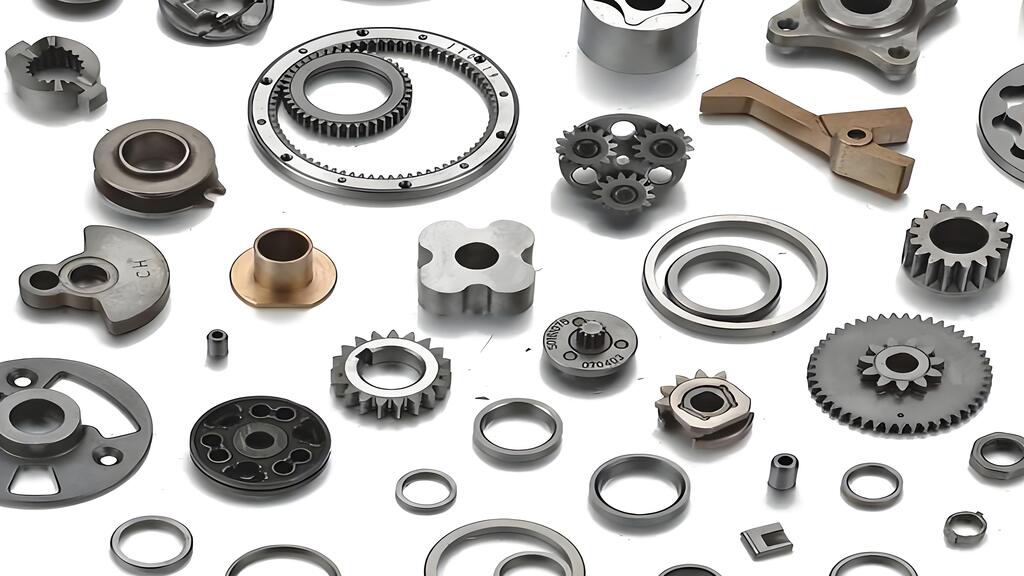


Powder Metallurgy vs. Casting
Powder metallurgy's benefits are clear in modern manufacturing, with almost no material waste when you compare it to traditional casting methods. Casting has been around since 3200 BC, but Powder Metallurgy has become the quickest way to produce complex parts. The process delivers exceptional accuracy at ±0.04 mm, while casting's precision falls short. Parts can range from tiny 0.68-gram components to big 15-pound pieces, which shows how versatile this production method really is.
Casting may have ruled manufacturing historically, but powder metallurgy's advantages are now crystal clear to industry experts. The metal powder process uses less energy because Sintering needs less power than melting does in casting. Casting's tooling costs might be lower, but powder metallurgy cuts overall production costs through fewer secondary operations and minimal waste. This detailed look will get into how these processes match up in terms of budget-friendly options, environmental effects, and performance potential to help manufacturers choose what works best for their production needs.
Cost Savings in Manufacturing: PM vs Casting
Manufacturing efficiency starts with cost management. Powder metallurgy (PM) and casting show very different economic profiles. Manufacturers need this information to pick the most budget-friendly process that meets their needs.
Per-Part Cost: High Volume Advantage of PM
PM really shines when it comes to cost savings at scale. The cost per part drops as tooling expenses get spread across thousands of components. The process saves money by cutting down steps, using materials better, and making complex shapes easier. Small batch runs of 10-50 parts might not make financial sense with PM. However, the process becomes highly competitive with higher volumes, especially for complex parts.
Tooling Investment: Die Casting vs PM Tooling
Both processes need big upfront investments in tooling. Die casting tools and dies cost a lot more to start. PM tools cost less overall, which works great for complex shapes. PM tools last longer too - they keep making quality parts even after extended production runs.
Labor and Automation: Manual vs Automated Processes
PM excels at automation throughout production. The whole process runs automatically from mixing powders to compacting and sintering them. Automated blenders measure precisely while automated presses create consistent density. This setup cuts labor costs compared to casting, which needs more hands-on work for trimming and finishing.
Energy Use: Melting vs Sintering Efficiency
Sintering beats melting when it comes to energy costs. PM uses about 5 kWh/kg overall, while die casting needs 6 kWh/kg. Sintering works below melting temperature, so it uses less energy and offers better control. Melting metals in casting uses lots of energy and creates waste gasses. This makes PM a greener choice.
Material Utilization and Environmental Impact
Material efficiency plays a vital role in modern manufacturing sustainability, beyond just costs. Looking at how powder metallurgy and casting use materials shows eco-friendly implications that need our attention.
Scrap Rates: PM's Near-Zero Waste Advantage
Powder metallurgy shows amazing efficiency in production. It is a green technology that uses up to 97% of input material in metal manufacturing. This near-net shape capability makes it much better than casting, which wastes more material through extra processing. Parts made through regular machining can waste up to 50%, based on their shape. This becomes a big deal when working with pricey materials like copper and stainless steel .
Recyclability and Waste Management
PM and casting show different recycling patterns. Metal powders are easy to recycle, and many manufacturers now use at least 30% recycled materials in their feedstock powders. PM creates parts that stay eco-friendly by using materials well. Casting creates waste through runners, sprues, and trimming, though workers can usually recycle this extra material. All the same, the primary metals manufacturing sector recycled 1.6 billion pounds of metals in 2022 - more than any other sector.
Eco-Friendliness: Emissions and Water Use
The environmental benefits go beyond just using materials wisely. PM's sintering needs less energy than melting metal for casting, which means fewer emissions. Using one ton of recycled stainless steel scrap could save about 4.3 tons of CO2 in steel production. Casting needs water for cooling, which often gets dirty with oil, grease, and metal bits. PM processes create fewer pollutants and don't have water contamination issues. The Fraunhofer Institute found that using recycled materials cuts CO2 and energy use by at least 50% compared to new materials.
Performance and Design Capabilities
Manufacturing decisions depend on technical excellence and cost considerations. Powder metallurgy (PM) changes what manufacturers can achieve in metal component design with its unique performance benefits.
Dimensional Accuracy: PM's Precision Advantage
Powder metallurgy components deliver exceptional precision with tolerances that typically reach ±0.04 mm. The controlled compaction process creates this precision when metal powders compress into exact shapes before sintering. Traditional casting methods, especially sand casting, can't match this dimensional accuracy and need extra machining to meet strict specifications.
Mechanical Strength: Uniform Microstructure in PM
PM's sintering process creates components that have remarkably uniform microstructures. The process bonds metal particles at the molecular level, unlike casting which struggles with segregation and uneven cooling rates. These molecular bonds result in parts with better density and improved mechanical properties. PM manufacturing lets producers control material composition precisely, which leads to consistent properties in every production batch.
Design Flexibility: Complex Shapes and Porosity Control
PM stands out because it can create complex geometries that casting simply can't handle. Parts don't need draft angles or parting lines, which allows more detailed components. PM also gives manufacturers a unique experience in controlling porosity. The range spans from 20-30% in compacted samples to 50-60% in sintered loose samples. This precise control helps create specialized components like self-lubricating bearings, filters, and parts with internal channels.
Magnetic and High-Temp Applications
PM excels at specialized applications that need specific material properties. The process offers many magnetic material options, unlike die casting materials which typically lack magnetic properties. Components made through PM can withstand extreme conditions in high-temperature applications. PM's ability to mix different metal powders creates materials with custom characteristics. These materials boost wear resistance and magnetic properties, making them perfect for electric motor components.
Production Volume and Lead Time Considerations
Production volume and lead time play a key role in choosing between manufacturing methods. Powder metallurgy (PM) and casting each shine at different production scales.
Low vs High Volume: When PM Becomes Economical
Casting makes more financial sense for small production runs due to lower mold costs. PM requires a big initial tooling investment that companies must spread across many parts . The economics start making sense at medium-to-high volumes. PM shows its true value by producing hundreds or thousands of parts every hour. The process becomes remarkably cost-effective for productions above 100,000 parts. Unit costs drop quickly as numbers go up.
Lead Time: Tooling Setup vs Machining Speed
The processes have very different startup times. PM tooling development takes about a month just to get the right metal powders. Casting timelines depend on part complexity. Large, complex components need up to a month. PM manufacturing runs much faster once the tooling is ready. Die casting achieves quick cycles through high-pressure injection and rapid cooling. PM's compaction and sintering process needs less machining and finishing. This leads to quicker production times for big batches.
Scalability: Batch Production vs Continuous Casting
PM works best with batch processing. This suits medium-to-large production runs of small, complex components. Manufacturers can quickly adjust to market needs and run their supply chains better with batch processing. Continuous casting works great for making large volumes of standard shapes. Direct casting happens one piece at a time. This gives more flexibility but reduces efficiency. That's why continuous casting works better for high-volume products like car parts. PM's batch approach shines when material efficiency matters most.
Comparison Table
| Characteristic | Powder Metallurgy (PM) | Casting |
|---|---|---|
| Technical Specifications | ||
| Dimensional Accuracy | ±0.04 mm | Less precise (exact value not specified) |
| Component Size Range | 0.68g to 15 pounds | Not mentioned |
| Cost Factors | ||
| Energy Consumption | ~5 kWh/kg | ~6 kWh/kg |
| Original Tooling Cost | Needs higher upfront investment | Requires lower tooling costs |
| Labor Requirements | Less labor (highly automated) | More labor (needs manual work) |
| Cost-effectiveness | Makes sense for high volume | Suits low volume production |
| Environmental Impact | ||
| Material Utilization | Up to 97% | Can be as low as 50% |
| Emissions | Produces fewer emissions | Creates more emissions |
| Water Usage | Few contamination problems | Needs water cooling, risks contamination |
| Production Characteristics | ||
| Volume Sweet Spot | >100,000 parts | Best for small batches (10-50 parts) |
| Process Type | Batch processing | Continuous or independent casting |
| Secondary Operations | Needs minimal work | Requires more post-processing |
| Performance Capabilities | ||
| Microstructure | Uniform | Shows segregation and uneven cooling |
| Complex Geometries | Handles well | More restricted |
| Porosity Control | 20-60% controllable range | Not mentioned |
| Magnetic Properties | Many options available | Usually lacks magnetic properties |
Conclusion
A detailed look at powder metallurgy versus casting shows key differences that manufacturers need to think about when choosing production methods. PM shows amazing material efficiency and uses up to 97% of input materials. Casting wastes much more material than that. This makes PM a great choice for companies that care about sustainability. The dimensional accuracy of PM components (±0.04 mm) is nowhere near what casting can achieve, which makes it perfect for precision work.
Money-wise, the original cost of PM tooling is a big deal. But this investment makes more sense as production numbers go up. Casting works better for small batches of 10-50 parts, but PM becomes cost-effective once you hit 100,000 units. PM's energy efficiency is also better - it uses about 5 kWh/kg while casting needs 6 kWh/kg. These savings add up over time.
These manufacturing approaches differ in performance too. PM creates even microstructures with boosted mechanical properties. Casting struggles with segregation problems because it cools unevenly. Plus, PM excels at making complex shapes without draft angles or parting lines, and it controls porosity precisely from 20-60%.
The choice between powder metallurgy and casting ends up depending on specific manufacturing needs. Casting still works great for low-volume production and bigger components. In spite of that, PM offers great advantages for high-volume production of complex, precise parts - especially when you have material efficiency and environmental effects to consider. Manufacturers should match their production needs against these different capabilities to pick the right process for their specific uses.
FAQs
Q1. Is powder metallurgy more cost-effective than casting for high-volume production? Yes, powder metallurgy becomes more cost-effective than casting for high-volume production, especially when producing over 100,000 parts. The initial tooling investment is offset by lower per-part costs, reduced material waste, and fewer secondary operations.
Q2. How does the dimensional accuracy of powder metallurgy compare to casting? Powder metallurgy offers superior dimensional accuracy, typically achieving tolerances of ±0.04 mm. This precision is significantly better than casting, which generally requires additional machining to meet tight specifications.
Q3. What are the environmental benefits of powder metallurgy over casting? Powder metallurgy is more environmentally friendly than casting. It utilizes up to 97% of input materials, produces fewer emissions, and has minimal water contamination issues. Casting, in contrast, often has higher material waste and requires water cooling that can lead to contamination.
Q4. Can powder metallurgy produce parts with better mechanical properties than casting? Yes, powder metallurgy can produce parts with superior mechanical properties compared to casting. The sintering process in powder metallurgy creates uniform microstructures with enhanced density and strength, while casting may suffer from segregation and inconsistent cooling issues.
Q5. What types of components are best suited for powder metallurgy manufacturing? Powder metallurgy excels in producing small, complex components that require high precision and specific material properties. It's ideal for parts like gears, bearings, and components for electric motors, especially when high strength, wear resistance, or magnetic properties are needed.