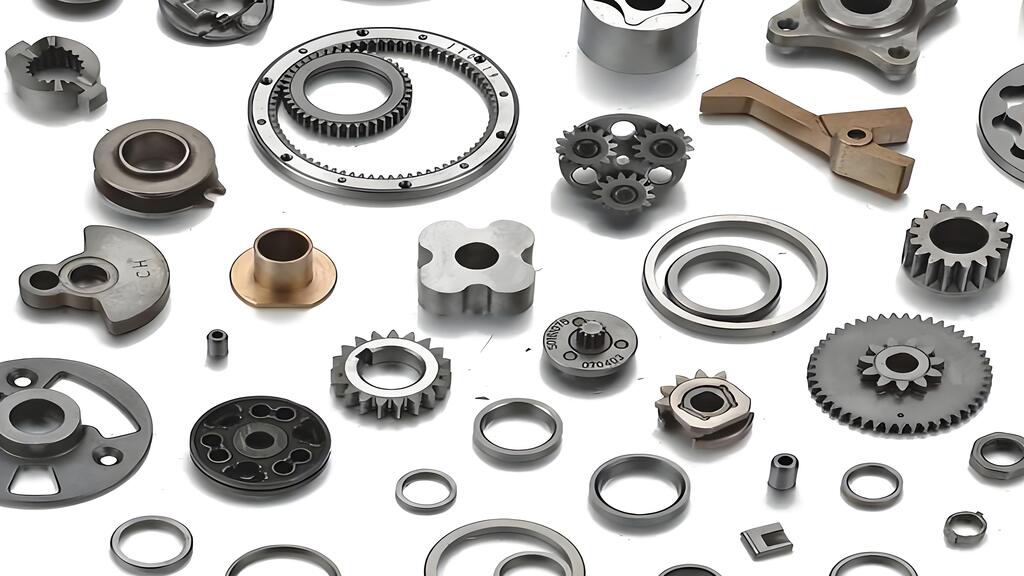


Hidden Benefits of Powdered Metal Process for Lawn & Garden Parts

The powdered metal process helps cut manufacturing costs by more than 50% when making products like drills. Car manufacturers use over 80% of powder Metal Parts right now. Lawn and garden equipment makers are starting to see the huge benefits of this technology. The precision of powder metallurgy makes it perfect for critical parts like gears that need to work smoothly. This method also lets engineers add unique features to single parts without major cost increases.
These metal parts do much more than just save money. They make equipment run quieter and ensure each part matches perfectly with others. After oil impregnation, powder metallurgy bearings can lubricate themselves. This makes them perfect for lawn and garden tools that need little maintenance. The process is also good for the environment. It uses raw materials better, needs less energy, and makes work more productive. This makes powdered metal manufacturing a great alternative to traditional metal forming. Manufacturers of lawn and garden equipment can get better performance while being environmentally responsible.
Current Use of Powder Metal Parts in Lawn & Garden Equipment

Powder metal parts are vital components in today's lawn and garden equipment. These parts give manufacturers exceptional performance at lower costs and have become everything in applications where durability meets efficiency.
Lawn mower blade adapters and structural gears
Lawn mower blade adapters represent one of the most common powder metallurgy applications in garden equipment. These adapters link the blade to the mower motor shaft and must handle high stress, impact, and corrosion. The powder metal manufacturing process creates adapters that are incredibly durable and meet tight dimensional tolerances. MTD blade adapters showcase this versatility with their 4-point hub design for push mowers and self-propelled series.
Powder Metal Gears are common in lawn equipment because they're easy to produce uniformly and economically. The porous structure of these gears provides several advantages:
- Lighter weight makes handling easier
- Better sound dampening leads to quieter operation
- Oil impregnation creates self-lubricating properties
Electric drill planetary gear sets
Planetary gear systems made through the powder metal process work remarkably well in electric drills. These compact systems combine a sun gear, planet gears, and a ring gear that work together to reduce speed while increasing torque. A great example is a drill transmission that uses dozens of powder metal parts in its planetary gear set, which cuts manufacturing costs by over 50% compared to traditional machining.
These planetary systems reach impressive efficiency rates of 96% to 98%, which wastes minimal energy. Battery-powered garden tools benefit greatly from this high efficiency since power conservation matters most.
Generic PM components in commodity tools
Many lawn, garden, and tool manufacturers use commodity-type powder metal components. The powder metal process capabilities go way beyond the reach and influence of simple applications. Some notable components include:
- Spacers and seat adjusters for riding equipment
- Lever arms and pulleys for various mechanisms
- Steering and hinge mechanisms for operational control
- Bearings that work better with self-lubrication properties
Yes, it is powder metallurgy that gives unique advantages for these applications. Parts can be produced to near-net shape with minimal secondary operations, which ensures outstanding repeatability in this competitive market. This eco-friendly technology produces almost no waste during manufacturing and aligns perfectly with modern sustainability goals.
Hidden Performance Benefits of Powder Metallurgy

Powder metallurgy has more than just cost benefits. It makes lawn and garden equipment work better in ways you might not expect.
Reduced noise through optimized gear design
Powder metal components have a porous structure that works as a natural sound dampener. This cuts down operational noise by a lot. Sintered drive pulleys keep their exact dimensions and reduce noise and vibration when you mow. Modern powder metal gears have up to 10% porosity that absorbs sound waves instead of passing them along. This helps a lot in areas where noise rules limit when you can use your equipment. The manufacturing process lets engineers build parts with different properties in one piece. They can combine hard, wear-resistant tooth surfaces with main bodies that dampen sound. These "Silent Gears" cut down noise but keep their strength and performance intact.
Improved battery life via lightweight PM components
Powder metal parts help electric lawn and garden equipment's batteries last longer. The lightweight build needs less power to move parts around. Metal powders like nickel, cobalt, and iron boost the energy density in rechargeable batteries. Powder metallurgy cuts weight by up to 10% compared to solid steel parts but performs just as well. Your equipment runs longer as a result - up to 20 extra minutes before needing a recharge. Self-lubricating bearings made through powder metallurgy work better by cutting friction without needing extra lubrication.
Emission reduction with efficient PM motor parts
Powder metal parts are great for the environment. The manufacturing process uses 60% less energy than regular methods. On top of that, soft magnetic composites from powder metallurgy help make super-efficient electric motors that save space and work better. The process uses almost 100% of materials with almost no waste. Oil-impregnated bearings create thin lubricating films while running. This means less maintenance and fewer contaminants. These benefits help manufacturers meet tough emissions rules through better materials and fuel savings.
Design and Manufacturing Advantages of Powdered Metal Process

Manufacturing excellence starts with choosing the right process. The powdered metal process stands out as one of the best manufacturing methods because it creates complex parts for lawn and garden equipment with amazing efficiency and precision.
Net shape capability with minimal secondary machining
Powder metallurgy creates components that just need little to no extra processing after sintering. This "net shape" or "near-net shape" capability means parts come out of the press at 90% of their final form. Traditional manufacturing needs extensive machining, but powder metal components come out with smooth surface finishes and precise features. This works great with expensive materials like titanium alloys, where machining waste costs a lot. On top of that, it gives you high-dimensional accuracy from the start and eliminates the need for multiple machining operations.
Design flexibility for multi-feature components
The powdered metal process gives you amazing design options that regular methods can't match. Engineers can "sculpt" components and put material exactly where it's needed. The process excels at making helical gears with angles up to 35° without wasting any material. You can create undercuts and internal cavities that are tough to make with CNC machining. Maybe even better, manufacturers can unite multipiece assemblies into single components without welding or brazing, which makes production much simpler.
Lower scrap rates compared to traditional machining
Powder metallurgy is incredibly efficient with materials. While machining operations usually waste 50% of material, the powdered metal process only has a 3% scrap rate. This material utilization of over 95% makes powder metallurgy one of the most green metal manufacturing processes available. You can even break apart and reuse "green" compacts if needed. This efficiency saves money, especially when you have high-volume production runs.
Material Innovations and Electrification Opportunities

Material science advancements keep expanding powder metallurgy applications in lawn and garden equipment. We focused on state-of-the-art developments that support electrification trends.
Soft magnetic composites for compact electric motors
Soft Magnetic Composites (SMCs) represent a breakthrough in powdered metal technology. These composites consist of iron powder particles with individual electrically insulating layer coatings. The unique structure delivers excellent magnetic performance and minimizes eddy current losses at high frequencies. SMCs make three-dimensional magnetic circuit designs possible, which traditional laminated steels cannot achieve. The components reach unprecedented efficiency at low RPM, making them perfect for compact electric motors in battery-powered garden tools. SMCs perform better than laminated steels in total core loss at frequencies above 1 kHz. This superior performance creates motors that run cooler and need smaller cooling systems.
High-performance PM alloys vs cast aluminum
Powder metal alloys show better strength-to-weight ratios than cast aluminum components. Traditional die casting materials lack magnetic properties, yet powder metallurgy provides many more magnetic material options. High-strength PM solutions achieve the same performance with less material, which saves space and weight in electric motor designs. On top of that, PM-HIP (Hot Isostatic Pressing) processes use 65% less energy than traditional hot forging. These energy savings create substantial sustainability benefits.
Weight reduction through part consolidation
Powder metallurgy excels at creating complex shapes. This capability lets designers unite multiple components into unified structures. The unified approach reduces assembly time by about 30% and decreases part count from 19 to 8 in certain applications. The united PM parts ended up achieving 13% weight reduction, which improves energy efficiency in battery-powered equipment.
Conclusion
Powder metallurgy is changing how lawn and garden equipment manufacturers gain competitive advantages. The benefits of this process are clear - costs drop by more than 50% while performance improves dramatically. This technology's value comes from less noise, longer battery life, and lower emissions without sacrificing precision.
The near-net shape capabilities help manufacturers minimize secondary machining operations. The design flexibility lets them create complex components that once needed assembly from multiple parts. This approach reduces weight and streamlines production efficiently.
The process uses more than 95% of materials, which means much less waste than traditional machining methods. Energy use drops by about 60%, which supports the growing push for sustainability across industries.
The technology's biggest advantage lies in supporting electrification trends. Soft Magnetic Composites help develop compact, efficient electric motors that work great in battery-powered equipment. The high-performance PM alloys are stronger and lighter than cast aluminum alternatives.
Powder metallurgy's future in lawn and garden equipment looks promising. Manufacturers need to cut costs, boost performance, and meet tough environmental standards. This technology tackles all these challenges at once. While automotive industries lead in powder metal use now, lawn and garden equipment makers who adopt this technology will gain big advantages through better products, lower costs, and improved sustainability.
Key Takeaways
Powder metallurgy offers lawn and garden equipment manufacturers a powerful combination of cost savings, performance improvements, and environmental benefits that go far beyond traditional manufacturing methods.
• Dramatic cost reduction: Powder metal process cuts manufacturing expenses by over 50% while achieving 95%+ material utilization compared to traditional machining's 50% waste rate.
• Enhanced performance features: Components deliver reduced noise through natural sound dampening, extended battery life via lightweight construction, and improved efficiency in electric motors.
• Superior design flexibility: Near-net shape capability eliminates secondary machining while enabling complex multi-feature components that consolidate multiple parts into single assemblies.
• Electrification advantages: Soft Magnetic Composites enable compact, efficient electric motors ideal for battery-powered equipment, positioning manufacturers ahead of industry electrification trends.
• Environmental sustainability: Process consumes 60% less energy than conventional methods while achieving virtually zero waste, helping manufacturers meet stringent emissions requirements.
The technology represents a strategic opportunity for lawn and garden equipment manufacturers to gain competitive advantages through simultaneous improvements in cost, performance, and sustainability—making it an essential consideration for future-focused companies.
FAQs
Q1. What are the main advantages of using powder metal parts in lawn and garden equipment? Powder metal parts offer significant cost savings, reduced noise, improved battery life, and decreased emissions. They also provide excellent design flexibility, allowing for complex shapes and part consolidation, which can lead to weight reduction and improved overall efficiency.
Q2. How does powder metallurgy contribute to environmental sustainability in manufacturing? Powder metallurgy is highly sustainable, with material utilization rates over 95%, drastically reducing waste compared to traditional machining. The process also consumes about 60% less energy than conventional methods, helping manufacturers meet stringent environmental standards.
Q3. What role does powder metallurgy play in the electrification of lawn and garden equipment? Powder metallurgy enables the production of Soft Magnetic Composites (SMCs) that are ideal for compact, efficient electric motors in battery-powered garden tools. These components perform exceptionally well at low RPM and high frequencies, making them crucial for electrification trends.
Q4. How does the powder metal process impact the design of lawn and garden equipment components? The powder metal process offers near-net shape capabilities, reducing the need for secondary machining. It allows for the creation of complex, multi-feature components that can consolidate multiple parts into a single piece, simplifying production and enhancing overall efficiency.
Q5. What performance benefits do powder metal parts offer in lawn and garden equipment? Powder metal parts provide reduced operational noise through natural sound dampening, extended battery life due to lightweight construction, and improved efficiency in electric motors. They also offer excellent durability, tight dimensional tolerances, and self-lubricating properties in certain applications.