


Introduction
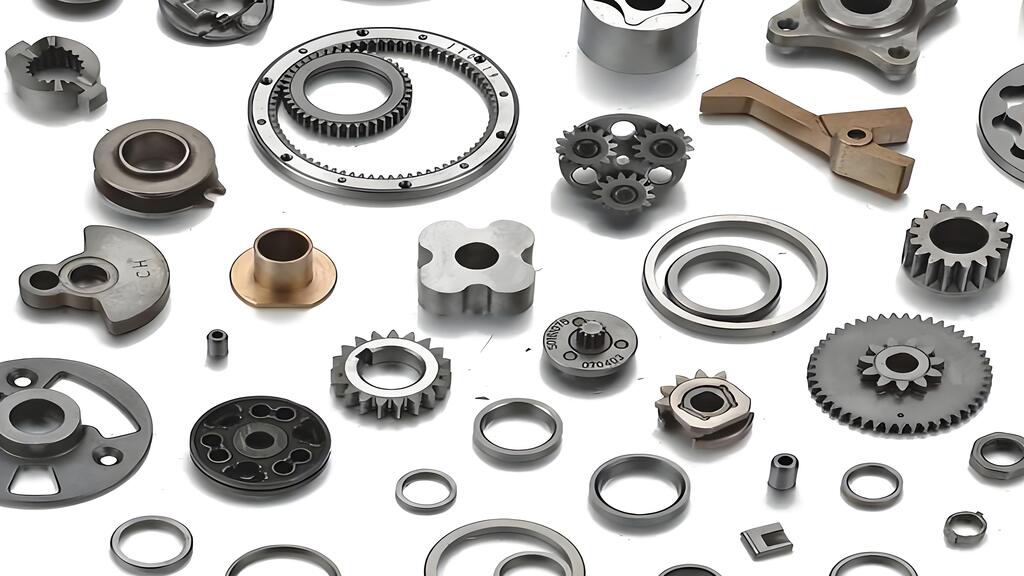
Ceramic pins are increasingly chosen where metal components fail under wear, heat, corrosion, or contamination constraints. This article explains how precision ceramic pins, produced through custom Ceramic Injection molding, deliver tight tolerances, consistent performance, and scalable manufacturing for demanding applications. You will learn which material properties matter most, how molded ceramics compare with traditional alloys, and why industries such as electronics, medical devices, semiconductor processing, and automation rely on these components. The discussion also sets up the key manufacturing and design factors that determine part quality, durability, and cost efficiency.
Why Use Precision Ceramic Pins and Custom Ceramic Injection Molding
Precision ceramic pins represent a critical advancement in industrial components, replacing traditional metal alloys in environments that demand extreme durability, thermal stability, and chemical inertness. By leveraging custom ceramic injection moldingg](https://www.jhpim.com/de/) (CIM), manufacturers can produce these complex, high-performance parts at scale with exceptional repeatability.
How ceramic pins reduce wear, contamination, and dimensional var
iation
Unlike stainless steel or tungsten carbide, advanced ceramics exhibit remarkable resistance to abrasive wear and chemical degradation. Materials such as yttria-stabilized zirconia (YTZP) routinely achieve Vickers hardness ratings exceeding 1,200 HV, effectively extending component lifespan by 5 to 10 times compared to hardened tool steels. Furthermore, ceramic pins do not gall or shed metallic particulates, eliminating a primary source of contamination in cleanroom environments. Their low coefficient of thermal expansion—typically ranging from 3.0 to 8.0 x 10^-6/K depending on the specific composition—ensures that dimensional variation remains negligible even under aggressive thermal cycling.
Which industries use custom ceramic injection molding
The unique properties of molded ceramic pins make them indispensable across several high-tech sectors. In semiconductor manufacturing, they serve as non-conductive, heat-resistant alignment pins that withstand plasma etching chambers operating at temperatures up to 1,400°C. The medical device industry relies on CIM for producing biocompatible structural pins used in surgical instruments and implantable devices, benefiting from the material's inert nature. Additionally, automotive and aerospace applications utilize custom ceramic pins in fuel injection systems and sensor housings, where resistance to corrosive fluids and extreme high-frequency vibration is paramount.
What Defines High-Quality Ceramic Pins
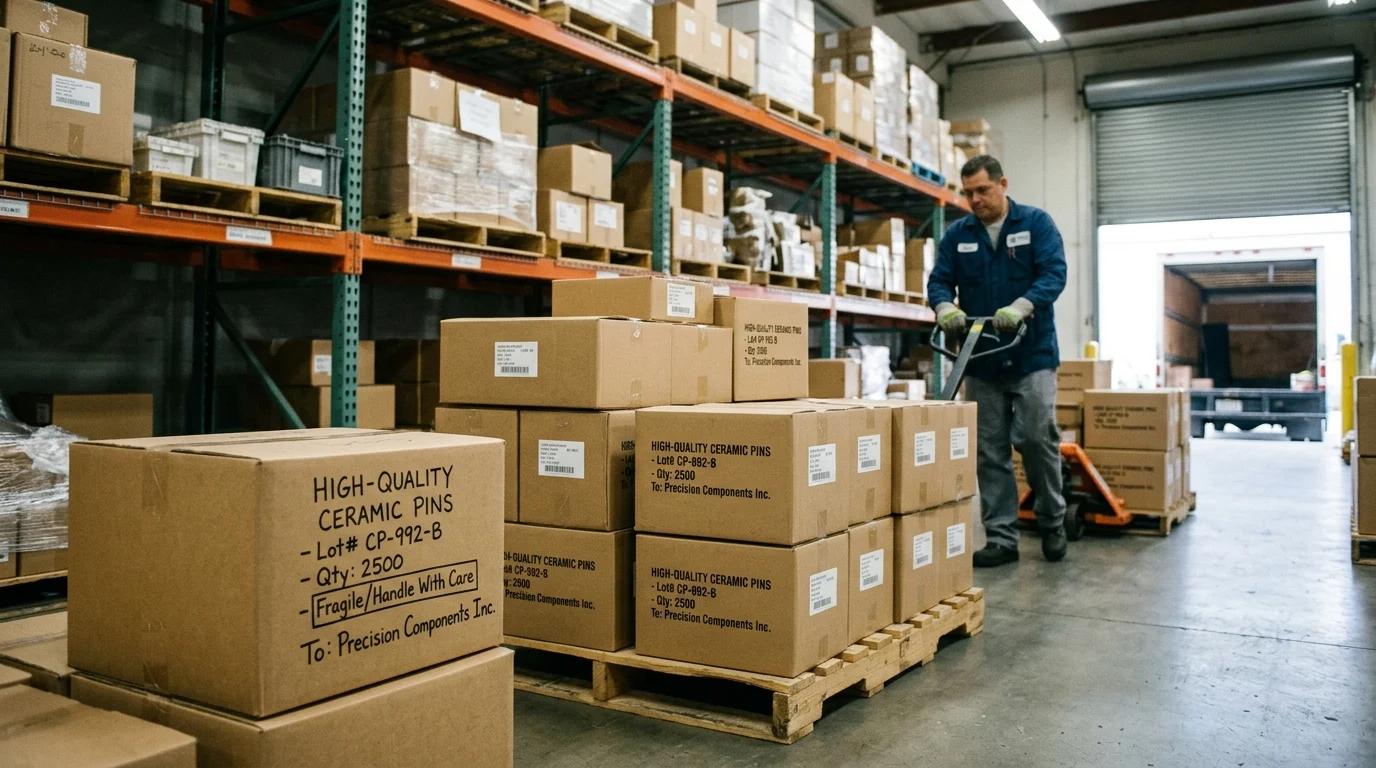
The quality of a ceramic pin is determined by the purity of its base material and the precision of its final geometry. High-quality components require stringent control over both the powder formulation and the post-Sintering finishing processes.
Which ceramic materials matter most for performance
The selection of the base powder fundamentally dictates the mechanical and thermal limits of the final pin. Alumina (Al2O3), typically specified at 95% to 99.8% purity, offers an excellent balance of electrical insulation and cost-effectiveness. Zirconia (ZrO2), specifically yttria-stabilized variants, provides superior fracture toughness (up to 8.0 MPa·m^1/2), making it ideal for pins subjected to high impact or bending forces. For the most extreme thermo-mechanical environments, Silicon Nitride (Si3N4) is preferred due to its exceptional thermal shock resistance and high-temperature strength.
How to evaluate tolerances, surface finish, and hardness
Evaluating a ceramic pin requires close inspection of its dimensional accuracy and surface characteristics. High-precision applications often demand diametric tolerances as tight as ±0.002 mm and straightness within 0.005 mm over a 50 mm length. Surface finish is equally critical; a polished ceramic pin should achieve a roughness average (Ra) of 0.05 µm or better to minimize friction and prevent premature wear on mating components. Hardness testing, typically conducted via the Vickers or Knoop scales, verifies that the Sintering Process achieved the required densification without introducing micro-porosity.
How to compare key specifications
Engineers must weigh various material specifications to determine the optimal balance for their specific use case. The following table compares the typical properties of the three most common ceramic materials used in pin manufacturing.
| Material | Vickers Hardness (HV) | Flexural Strength (MPa) | Max Operating Temp (°C) | Fracture Toughness (MPa·m^1/2) |
|---|---|---|---|---|
| Alumina (99.5%) | 1,500 | 350 | 1,600 | 4.0 |
| Zirconia (YTZP) | 1,250 | 1,000 | 500 | 8.0 |
| Silicon Nitride | 1,600 | 850 | 1,200 | 6.5 |
How Does Ceramic Injection Molding Compare with Machining
Manufacturing advanced ceramic components typically involves either subtractive machining from green/sintered blanks or near-net-shape forming via Ceramic Injection Molding (CIM). Understanding the technical and economic differences between these methods is crucial for optimizing production strategies.
When ceramic injection molding is the right process
Ceramic injection molding is highly advantageous for medium to high-volume production runs where the pin geometry includes complex features such as flanges, internal threads, or non-cylindrical profiles. Because CIM is a near-net-shape process, it drastically reduces the need for expensive diamond grinding after sintering. Generally, CIM becomes the most cost-effective manufacturing route when production volumes exceed a Minimum Order Quantity (MOQ) of 10,000 to 20,000 units annually, as the per-unit cost savings outpace the initial tooling investment.
What affects cost, tooling, lead time, and shrinkage
The economics of CIM are heavily front-loaded. Custom mold tooling typically requires an initial investment ranging from $5,000 to $15,000, depending on cavitation and mold complexity. Lead times for first-article inspection (FAI) samples usually span 6 to 10 weeks, encompassing mold fabrication, compounding, molding, debinding, and sintering. A critical engineering challenge in CIM is managing material shrinkage; ceramic binders account for a significant volume of the green part, resulting in isotropic shrinkage rates of 15% to 22% during sintering. Precise mold design and rigorous process control are required to predict and accommodate this shrinkage.
How the process flow differs from machining
The process flow for machining typically involves pressing a raw ceramic billet, followed by extensive CNC grinding using diamond-tipped tooling—a slow process that incurs high tool wear and limits scalability. Conversely, the CIM process flow mirrors plastic injection molding but includes vital post-molding steps. A ceramic powder is mixed with a thermoplastic binder to create a feedstock, which is injected into a mold cavity. The resulting 'green part' undergoes thermal or catalytic debinding to remove the polymer, creating a fragile 'brown part.' Finally, sintering at temperatures exceeding 1,500°C fuses the ceramic particles, achieving full density and the final mechanical properties.
How Should Buyers Evaluate a Ceramic Pins Manufacturer
Partnering with a capable ceramic pins manufacturer mitigates supply chain risks and ensures component reliability. Buyers must systematically evaluate potential suppliers based on their technical capabilities, quality management systems, and production consistency.
Which quality control and metrology methods matter
Because ceramic pins are often utilized in high-stakes applications, rigorous quality control and advanced metrology are non-negotiable. Top-tier manufacturers employ Coordinate Measuring Machines (CMM), laser micrometers, and optical comparators to verify tight tolerances at scale. Non-destructive testing (NDT) methods, such as ultrasonic inspection or dye penetrant testing, are critical for detecting subsurface micro-cracks that could lead to catastrophic failure under load. Buyers should look for suppliers capable of maintaining defect rates below 50 Parts Per Million (PPM) for high-volume CIM runs.
How documentation and material traceability support compliance
Robust documentation is the backbone of industrial compliance. Manufacturers must provide comprehensive material test reports (MTRs) detailing powder purity, particle size distribution, and sintered density. For specialized sectors, facility certifications such as ISO 9001 (Quality Management), ISO 13485 (Medical Devices), or AS9100 (Aerospace) are mandatory. Complete material traceability, from the raw powder batch to the final sintered pin, ensures that any performance anomalies can be rapidly isolated and resolved without necessitating a total product recall.
What steps help compare suppliers
Comparing suppliers requires looking beyond the initial piece price. A holistic evaluation encompasses tooling lifespan, secondary finishing capabilities, and engineering support. The following matrix outlines key criteria for comparing manufacturers based on their core competencies.
| Evaluation Criteria | CIM-Focused Supplier | Machining-Focused Supplier |
|---|---|---|
| Optimal Volume | > 10,000 units/year | < 5,000 units/year |
| Geometry Complexity | High (flanges, blind holes) | Low to Medium (simple cylinders) |
| Initial Tooling Cost | High ($5,000 - $15,000) | Low to Zero |
| Lead Time (Initial) | 6 - 10 weeks | 2 - 4 weeks |
| Per-Unit Cost at Scale | Very Low | High |
How to Select the Right Ceramic Pins
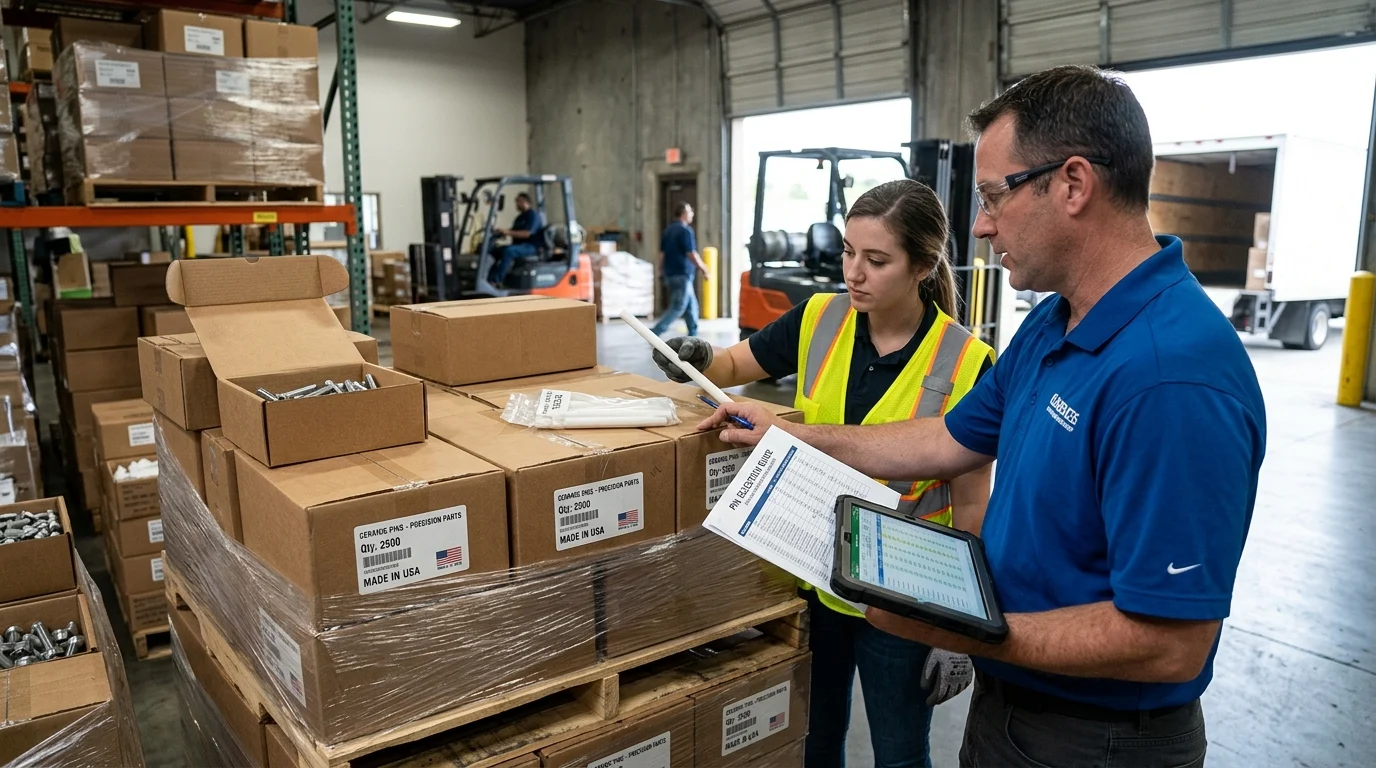
Selecting the optimal ceramic pin requires a strategic alignment of material science, mechanical design, and commercial realities. A disciplined approach prevents both premature component failure and unnecessary manufacturing expenses.
How to match material and design to application demands
Material selection must be directly mapped to the primary failure modes of the application. If the pin acts as a pivot in a high-impact mechanism, the high fracture toughness of Zirconia (YTZP) is required to prevent shattering. Conversely, if the pin is utilized as an alignment dowel in a high-temperature furnace exceeding 1,000°C, Alumina or Silicon Nitride must be selected to prevent thermal degradation. Design engineers should collaborate closely with the manufacturer to ensure that draft angles and wall thicknesses are optimized for the CIM process, thereby reducing internal stresses.
Which specification mistakes and overengineering risks to avoid
One of the most common pitfalls in ceramic procurement is overengineering, particularly regarding dimensional tolerances. Specifying a ±0.001 mm tolerance when a ±0.01 mm tolerance is functionally sufficient can increase the final unit cost by upwards of 300% due to the intensive diamond lapping and grinding required after sintering. Additionally, specifying an unnecessarily high surface finish (e.g., Ra 0.02 µm instead of Ra 0.2 µm) drastically extends processing time. Buyers must rigorously differentiate between critical-to-function specifications and arbitrary requirements.
What decision framework speeds supplier selection
A structured decision framework accelerates the sourcing process. Begin by defining the annual volume and geometric complexity to determine whether CIM or subtractive machining is appropriate. Next, issue a Request for Quotation (RFQ) that clearly outlines the required material properties, tolerances, and compliance standards. It is highly recommended to request a prototype run or a small batch of machined pins to validate the material choice in the actual application environment before committing to the capital expenditure of a multi-cavity injection mold. This phased approach minimizes risk and ensures long-term commercial viability.
Key Takeaways
- The most important conclusions and rationale for Ceramic Pins.
- Specs, compliance, and risk checks worth validating before you commit
- Practical next steps and caveats readers can apply immediately
Frequently Asked Questions
What materials are best for ceramic pins?
Alumina suits cost-sensitive insulating parts, zirconia fits tougher impact-loaded pins, and silicon nitride handles thermal shock and high heat. Selection depends on temperature, load, and chemical exposure.
When is ceramic injection molding better than machining?
Use CIM for medium to high volumes and complex pin shapes like flanges, grooves, or non-cylindrical profiles. It improves repeatability and lowers unit cost after tooling.
What tolerances can precision ceramic pins achieve?
High-precision ceramic pins can reach about ±0.002 mm diameter tolerance and 0.005 mm straightness over 50 mm, depending on material, geometry, and finishing requirements.
Why choose ceramic pins over metal pins?
Ceramic pins offer higher wear resistance, low thermal expansion, electrical insulation, and no metal particle shedding. They are ideal for cleanrooms, corrosive media, and high-temperature environments.
Can JHPIM customize ceramic pins for specific applications?
Yes. JHPIM can support custom ceramic injection molding for application-specific sizes, shapes, materials, and finishing needs, especially for repeat production of precision ceramic pins.