

Introduction
Choosing a Powder Metallurgy parts manufacturer affects far more than piece price. For automotive and industrial programs, the right partner influences material efficiency, dimensional consistency, mechanical performance, and the ability to keep high-volume production on schedule. Powder metallurgy is especially valuable for complex, near-net-shape components where reducing waste and secondary machining can significantly improve total manufacturing economics. This article explains what sets a capable manufacturer apart, from process control and tooling expertise to quality assurance and production scalability. It also highlights the practical criteria OEMs should use to evaluate suppliers when balancing cost targets, performance requirements, and long-term supply reliability.
Why the right powder metallurgy parts manufacturer matters
Partnering with a specialized powder metallurgy parts manufacturer is a strategic necessity for original equiPment manufacturers (OEMs) seeking to optimize production economics without compromising mechanical integrity. The powder metallurgy (PM) process offers unparalleled advantages in net-shape manufacturing, fundamentally altering the total cost of ownership for complex components.
As global supply chains face increasing pressure to deliver high-precision components at scale, the reliance on advanced metallurgical processes has intensified. Selecting a manufacturing partner capable of navigating the intricacies of powder blending, compaction, and sintering dictates not only the financial viability of a product line but also its long-term reliability in the field.
Cost, performance, and supply continuity
The most immediate advantage of utilizing a proficient powder metallurgy parts manufacturer is the dramatic improvement in material utilization. Traditional subtractive machining methods often yield scrap rates exceeding 40%, whereas powder metallurgy consistently achieves material utilization rates of 95% or higher. This near-net-shape capability translates to direct cost reductions, frequently lowering per-part expenses by 20% to 50% for high-volume production runs.
Beyond unit cost, performance and supply continuity are deeply intertwined. A reliable manufacturer ensures consistent microstructural properties across millions of cycles, which is critical for dynamic load-bearing applications. Furthermore, established PM suppliers typically operate with minimum order quantities (MOQs) starting around 10,000 units, providing the necessary scale to buffer against raw material shortages and stabilize supply chain continuity during market fluctuations.
Best-fit automotive and industrial parts
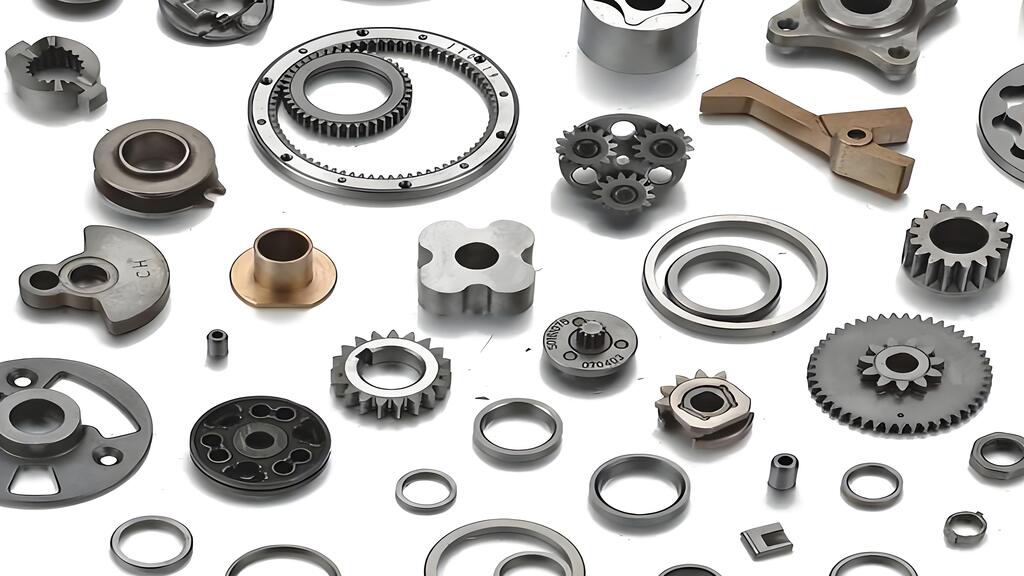
The automotive sector remains the largest consumer of PM components, relying heavily on the technology for engine, transmission, and chassis systems. A capable powder metallurgy parts manufacturer will routinely produce transmission gears, variable valve timing (VVT) sprockets, and ABS sensor rings. These automotive applications demand strict density targets, often requiring structural components to achieve densities between 6.8 g/cm³ and 7.2 g/cm³ to withstand high torque and fatigue stresses.
In industrial sectors, the applications are equally demanding but functionally distinct. PM is the preferred method for manufacturing hydraulic pump rotors, power tool gears, and self-lubricating bearings. The ability of a manufacturer to tailor the porosity of a part allows for oil impregnation in bearings, typically retaining 15% to 25% oil by volume, ensuring maintenance-free operation in remote or inaccessible industrial machinery.
What defines a top powder metallurgy parts manufacturer
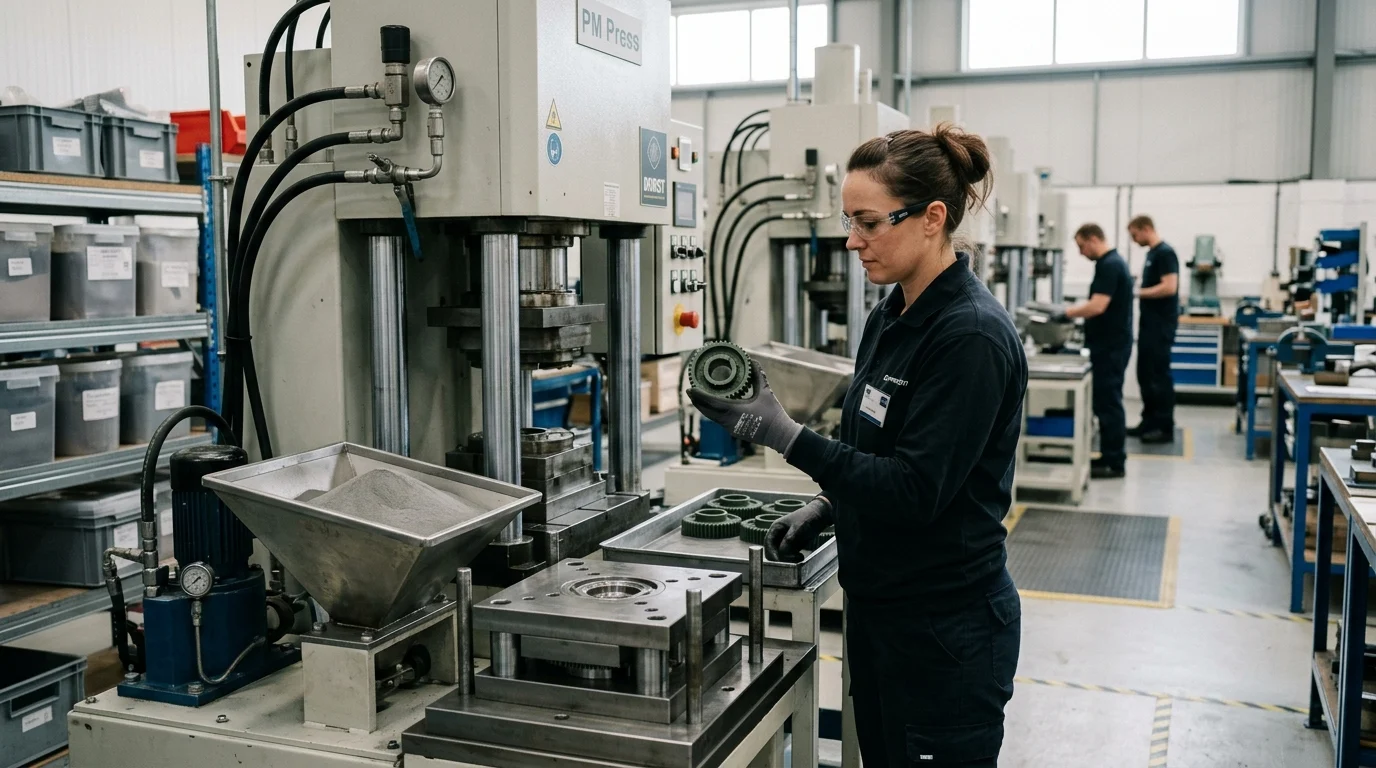
Distinguishing an elite powder metallurgy parts manufacturer from a standard vendor requires examining their technical capabilities and process controls. Top-tier manufacturers do not merely press and sinter metal powder; they engineer the entire lifecycle of the component, from raw material formulation to final surface finishing.
The defining characteristics of an industry leader lie in their metallurgical expertise, their investment in state-of-the-art compaction technology, and their ability to scale production while maintaining stringent statistical process controls.
Materials, density, tolerances, and secondary operations
Material selection and density control are the foundational pillars of high-quality PM manufacturing. Top suppliers expertly blend base iron with alloying elements like copper, nickel, and molybdenum to achieve specific mechanical properties. While standard compaction yields densities around 6.5 g/cm³, advanced manufacturers utilize warm compaction techniques and specialized lubricants to achieve high-density pressing up to 7.4 g/cm³, significantly enhancing tensile and yield strength.
Achieving tight dimensional accuracy is equally critical. Premium manufacturers consistently hold tolerances within IT 7 to IT 9 grades, minimizing the need for secondary machining. When secondary operations are required, top vendors offer comprehensive in-house services. These include resin impregnation to seal porosity for pressure applications, and steam treating, which creates a protective magnetite layer that increases surface hardness to 50+ HRC and improves corrosion resistance.
Tooling design, process control, and production scale
Tooling design is a major differentiator in powder metallurgy. A top-tier manufacturer employs advanced CAD/CAM and finite element analysis (FEA) to design compaction tooling that ensures uniform powder distribution. High-quality tooling made from tungsten carbide or advanced tool steels can achieve a lifespan exceeding 100,000 to 500,000 shots before requiring refurbishment, drastically reducing long-term tooling amortization costs for the OEM.
Production scale and process control dictate a manufacturer's ability to deliver consistent quality. Leading facilities operate a diverse fleet of mechanical and hydraulic presses, with tonnages ranging from 15 tons for micro-components to over 1,000 tons for massive structural parts. Furthermore, these manufacturers enforce rigorous process control metrics, consistently demonstrating a Process Capability Index (Cpk) greater than 1.33 for critical dimensions, ensuring that variations remain well within acceptable specification limits.
How to compare powder metallurgy with other manufacturing methods
To justify the transition to powder metallurgy, engineering and procurement teams must objectively compare it against alternative manufacturing methods such as CNC machining, die casting, and forging. Each process presents a unique set of economic and mechanical variables.
Understanding where a powder metallurgy parts manufacturer excels—and where the process faces physical limitations—is essential for optimizing part design and achieving the lowest total cost of ownership.
Key comparison criteria
When evaluating manufacturing methods, the primary criteria include material utilization, production throughput, and initial tooling investment. Powder metallurgy excels in high-volume scenarios where the cost of tooling can be aggressively amortized across hundreds of thousands of units.
| Manufacturing Method | Material Utilization | Typical Production Rate (parts/hour) | Initial Tooling/Setup Cost |
|---|---|---|---|
| Powder Metallurgy | > 95% | 500 - 3,000 | High ($10,000 - $50,000) |
| CNC Machining | 40% - 60% | 10 - 100 | Low |
| Die Casting | 85% - 90% | 100 - 500 | Very High |
| Forging | 70% - 80% | 50 - 200 | Very High |
As the data illustrates, PM offers superior material utilization and production rates compared to machining, making it the dominant choice once production volumes cross the threshold that justifies the initial tooling expenditure.
Trade-offs in geometry, strength, porosity, and surface finish
Despite its economic advantages, powder metallurgy involves specific trade-offs. Geometrically, PM is constrained by the unidirectional nature of the compaction process. Features such as cross-holes, severe undercuts, and reverse tapers cannot be molded directly and require secondary machining operations. Conversely, features like internal splines and non-circular gears, which are notoriously expensive to machine, are easily formed in the PM pressing stage.
Strength and porosity also represent a critical trade-off. While conventional PM parts achieve tensile strengths ranging from 300 MPa to 800 MPa, they generally exhibit lower impact resistance than fully dense forged components due to inherent residual porosity. However, this porosity is highly advantageous for applications requiring self-lubrication or acoustic dampening. Surface finish is another area of distinction; as-sintered PM parts typically present a surface finish of Ra 0.8 to 1.6 µm, which is exceptionally smooth and often eliminates the need for subsequent grinding.
How to qualify a powder metallurgy parts manufacturer
Qualifying a powder metallurgy parts manufacturer is a rigorous process that protects the OEM from catastrophic field failures and costly supply chain disruptions. Due to the metallurgical complexity of sintering, defects are not always visible to the naked eye, necessitating strict systemic controls.
A comprehensive qualification process goes beyond a basic facility tour; it requires a deep audit of the supplier's quality management systems, metallurgical laboratory capabilities, and historical defect data.
Quality systems, traceability, and PPAP
For any manufacturer supplying the automotive or heavy industrial sectors, IATF 16949 certification is a mandatory baseline, indicating compliance with the most stringent global quality standards. A qualified powder metallurgy parts manufacturer must also demonstrate flawless traceability, ensuring that any finished part can be traced back to the specific lot of metal powder, the exact compaction press parameters, and the specific sintering furnace zone temperatures.
The Production Part Approval Process (PPAP) is critical during the qualification phase. OEMs should require a Level 3 PPAP submission, which includes comprehensive dimensional results, material test reports, and control plans. Top manufacturers operate with defect rates measured in parts per million (PPM), typically targeting and sustaining a quality level of < 10 PPM for mature, high-volume part numbers.
Practical supplier review steps
Conducting a practical supplier review involves specific, targeted audits of the manufacturing floor. Evaluators must scrutinize the sintering furnace atmosphere controls. Sintering requires precise atmospheric management to prevent oxidation and ensure proper carbon control; therefore, continuous dew point monitoring and automated nitrogen/hydrogen ratio controllers are non-negotiable requirements.
| Audit Area | Key Metric / Requirement | Red Flag Indicating Risk |
|---|---|---|
| Quality Certification | Active IATF 16949 | Expired certs or ISO 9001 only (for auto) |
| Process Capability | Cpk ≥ 1.33 for critical dimensions | High reliance on 100% manual sorting |
| Furnace Control | Continuous, automated gas & dew point monitoring | Manual, infrequent atmosphere checks |
| Scrap Management | Internal scrap rate consistently < 2% | High scrap piles, lack of root-cause analysis |
Additionally, the supplier's metallurgical lab should be evaluated. A qualified manufacturer will possess in-house spectrometers for chemical analysis, metallography equipment to inspect grain structure and pore distribution, and microhardness testers to verify the depth and consistency of heat treatments.
How to choose the best powder metallurgy parts manufacturer

Choosing the best powder metallurgy parts manufacturer is the final step in transitioning a component from design to mass production. This decision requires balancing commercial viability with long-term technical alignment.
The ideal partner will not only offer competitive piece-price economics but will also act as an extension of the OEM's engineering team, actively contributing to design optimizations that maximize the benefits of the PM process.
Commercial, technical, and operational selection criteria
Commercial evaluation must extend beyond the initial quote to encompass the Total Cost of Ownership (TCO). Lead times are a primary commercial criterion; standard tooling development typically requires 8 to 12 weeks, with subsequent production lead times averaging 4 to 6 weeks. A top-tier manufacturer will offer transparent timelines and possess the financial stability to support Vendor Managed Inventory (VMI) or consignment programs, mitigating cash flow impacts for the OEM.
Technically, the manufacturer must possess the specific equipment profile required for the part. If a component requires a 500-ton multi-action press, selecting a supplier whose capacity maxes out at 200 tons will result in compromised density or the inability to produce the part entirely. Operational criteria also include geographic proximity and logistics, which heavily influence freight costs and the speed of response to engineering changes.
Aligning part design with volume and production goals
The most successful OEM-supplier relationships leverage Early Supplier Involvement (ESI). By engaging a powder metallurgy parts manufacturer during the initial CAD phase, engineers can align the part design with the realities of PM production. This includes eliminating sharp internal corners, designing uniform cross-sections to prevent density gradients, and maintaining a minimum wall thickness of 1.5 mm to ensure tooling integrity under high compaction pressures.
Finally, volume alignment is crucial. The PM process is inherently suited for scale. To properly amortize the $10,000 to $50,000 investment typically required for rigid compaction tooling, the projected production volume should ideally exceed 25,000 to 50,000 units annually. By aligning design for manufacturability (DFM) principles with appropriate volume thresholds, OEMs can fully realize the economic and performance benefits offered by top-tier powder metallurgy manufacturing.
Key Takeaways
- The most important conclusions and rationale for powder metallurgy parts manufacturer
- Specs, compliance, and risk checks worth validating before you commit
- Practical next steps and caveats readers can apply immediately
Frequently Asked Questions
What parts are best suited for a powder metallurgy parts manufacturer?
High-volume, near-net-shape parts work best, such as gears, sprockets, ABS sensor rings, pump rotors, and self-lubricating bearings for automotive and industrial use.
How does powder metallurgy reduce manufacturing cost?
It uses near-net-shape production, often achieving 95%+ material utilization and reducing machining, scrap, and per-part cost in large production runs.
What quality indicators should I check in a PM supplier?
Check density capability, tolerance control, tooling design, process consistency, and in-house secondary services like sizing, steam treating, or impregnation.
Can JHPIM support custom powder metallurgy parts for OEM projects?
Yes. JHPIM can support custom PM parts with tooling development, material selection, and production planning for automotive and industrial applications.
When are secondary operations needed for PM parts?
They are needed when parts require tighter tolerances, sealed porosity, improved surface hardness, or better corrosion resistance after sintering.