

Introduction
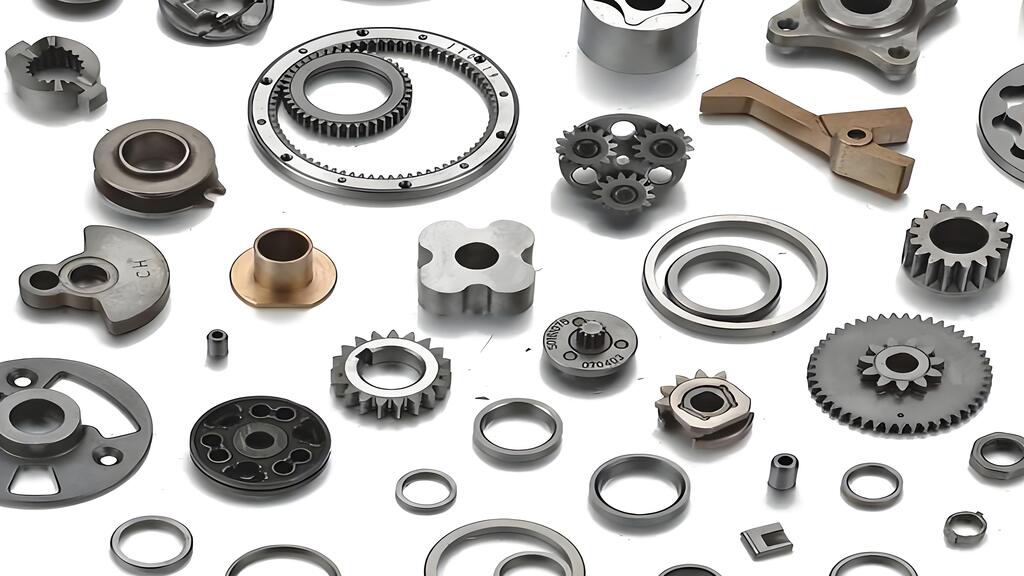
MIM parts are precision metal components made through metal injection molding, a process designed for high-volume production of small, complex shapes that would be costly or inefficient to machine. For buyers, engineers, and product teams, understanding MIM means knowing when it can reduce waste, improve dimensional consistency, and lower per-part costs without sacrificing strength. This article explains how MIM works, where it fits best across industries, what advantages and limitations to expect, and which manufacturer capabilities matter most when evaluating quality, scale, and long-term reliability.
What Are MIM Parts and How Does Metal Injection Molding
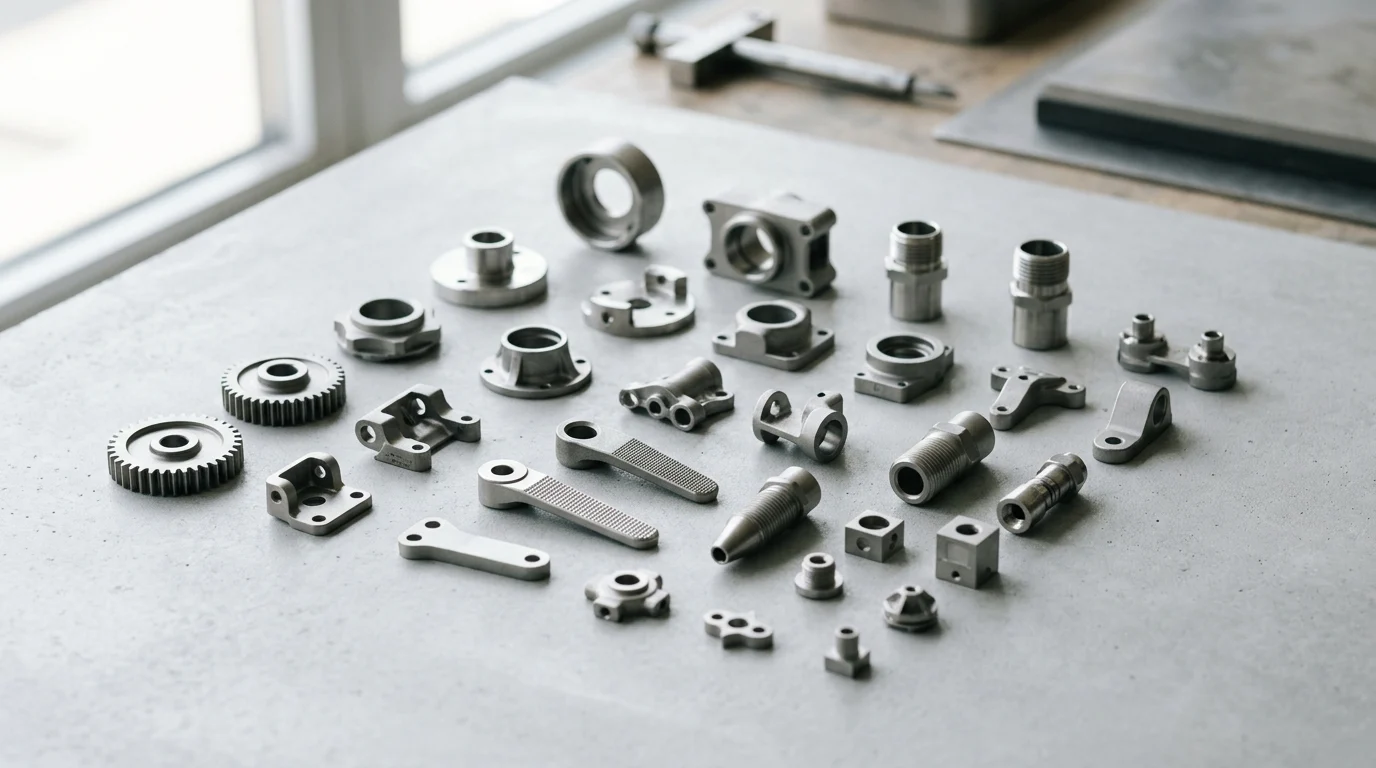
Metal injection molding (MIM) is a manufacturing hybrid that combines the design freedom of plastic injection molding with the mechanical strength of forged or machined metal. For engineers and product designers, MIM parts solve a specific challenge: mass-producing tiny, highly complex metal components without incurring prohibitive machining costs.
While traditional metalworking processes often force teams to compromise on geometry or accept high material waste, MIM allows for the creation of intricate, net-shape parts directly from the mold. To understand why this process is so effective for high-volume production, it helps to examine how it works.
How does the MIM process work from feedstock to sintering
The MIM process begins with feedstock, a precise blend of fine metal powders (usually under 20 microns in diameter) and thermoplastic binders. This mixture behaves similarly to plastic, allowing it to be fed into standard injection molding machines. The machine injects the feedstock into a custom mold cavity under high pressure to create a "green part." At this stage, the part is roughly 20% larger than its final size and remains quite fragile.
Next is debinding, a chemical or thermal process that removes the majority of the polymer binder, leaving behind a porous "brown part." Finally, this brown part enters a high-temperature Sintering furnace. Heating the part to just below its melting point burns off the remaining binder and causes the metal particles to fuse. During sintering, the part shrinks by a predictable 15% to 20%, densifying into a solid metal component ready for use or secondary finishing.
What materials, tolerances, density, and surface finishes are typical
MIM supports a wide variety of metals. Common materials include stainless steels like 316L and 17-4 PH, low-alloy steels, titanium, and heavy alloys like tungsten. Thanks to the sintering process, typical MIM parts achieve a final density between 96% and 99%, yielding mechanical properties that rival wrought metals.
Standard MIM tolerances typically range from ±0.3% to ±0.5% of the nominal dimension. If a feature requires tighter control, secondary machining can achieve the necessary precision. Surface finishes directly from the furnace are smooth, generally ranging from 32 to 63 micro-inches Ra (0.8 to 1.6 µm), which often eliminates the need for post-process polishing.
| Feature | Typical MIM Specification |
|---|---|
| Material Density | 96% – 99% of theoretical density |
| Standard Tolerances | ±0.3% to ±0.5% of nominal size |
| Surface Finish (Ra) | 32 – 63 µin (0.8 – 1.6 µm) |
| Common Alloys | 316L, 17-4 PH, Titanium, Tool Steels |
When are MIM parts a better choice than machining
Choosing between MIM and CNC machining typically depends on production volume and part complexity. For runs of only 500 parts, machining is usually preferable to avoid upfront tooling costs. However, once production volumes exceed 10,000 units per year, MIM becomes highly cost-effective.
MIM excels when a part's geometry would otherwise require multiple setups on a 5-axis CNC mill. Features such as internal threads, cross-holes, and undercuts can be molded directly. Furthermore, while machining complex parts can yield scrap rates up to 50%, MIM generates less than 2% material waste, as runners and sprues can often be recycled.
Why Are MIM Parts Gaining Ground in High-Precision Manufacturing
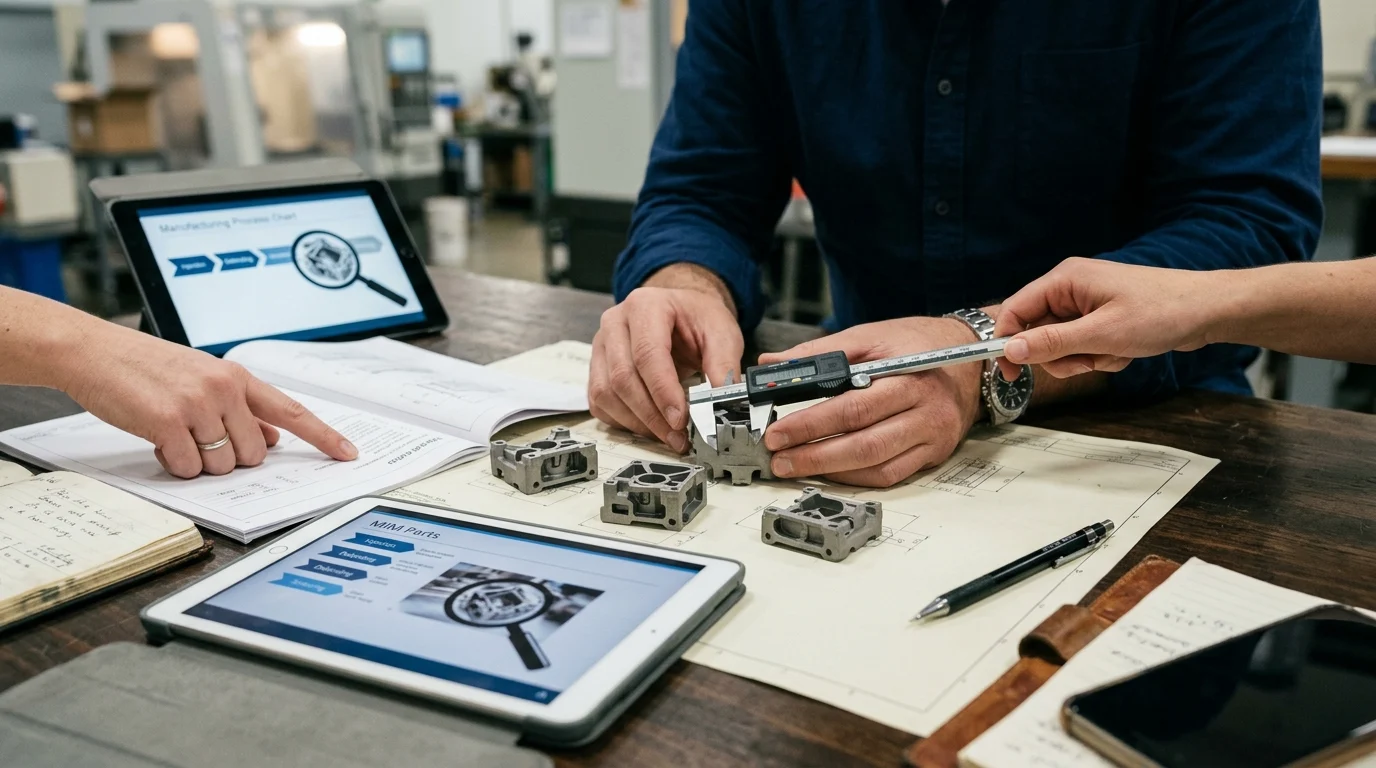
The push for smaller, lighter, and smarter devices has prompted manufacturers to rethink how they fabricate metal components. As products shrink, the internal real estate for mechanical parts diminishes. MIM parts are gaining ground by replacing bulky multi-part assemblies and expensive micro-machined components.
Beyond miniaturization, high-precision manufacturing demands absolute consistency over massive production runs. By locking the geometry into a steel mold, the MIM process enables manufacturers to produce millions of identical parts with minimal variance.
How do MIM parts support complex designs at scale
A major advantage of MIM is part consolidation. Instead of stamping a bracket, machining a pin, and welding them together, a designer can merge these separate pieces into a single, complex MIM part. This eliminates assembly time, reduces inventory SKUs, and mitigates the risk of assembly failure.
At scale, MIM supports geometries that are highly challenging for traditional tooling, including wall thicknesses as low as 0.2 mm, intricate internal splines, and complex asymmetric profiles. Once the mold is finalized and the sintering shrink curve is validated, a single mold can produce hundreds of thousands of parts before requiring significant maintenance.
Which industries are driving demand for MIM parts
Several key sectors rely on MIM to solve engineering challenges. The medical device industry uses MIM for surgical instruments, orthodontic brackets, and implantable devices, often utilizing 17-4 PH stainless steel for its high strength and biocompatibility. In consumer electronics, MIM enables the tiny, robust hinges in folding smartphones and intricate laptop charging ports, with production volumes frequently exceeding 100,000 units per month.
The automotive and firearms industries are also major adopters. Automakers use MIM for high-stress engine components, turbocharger vanes, and locking mechanisms to reduce weight without sacrificing durability. Meanwhile, firearms manufacturers use the process to mass-produce triggers, sears, and safety catches that require exact dimensional accuracy directly from the mold.
What Benefits and Trade-Offs Should Buyers Evaluate for MIM Parts
Like any specialized manufacturing process, MIM is not a universal solution. It has a distinct operational "sweet spot" where it excels, but pushing it beyond those boundaries can lead to budget overruns and engineering challenges.
Buyers must weigh upfront tooling investments against long-term piece-price savings. Understanding the specific benefits, limitations, and how MIM compares to legacy forming methods is critical before committing to a tooling purchase order.
Which benefits make MIM parts attractive for tight-tolerance applications
For tight-tolerance applications, the primary advantage of MIM is its exceptional repeatability. Once the feedstock formulation and sintering profiles are established, dimensional stability from batch to batch is highly consistent. It is common to see Process Capability Index (Cpk) values exceeding 1.33 on critical dimensions during runs of 50,000 parts or more.
Another significant benefit is the isotropic nature of MIM parts. Because the metal powder is uniformly injected and sintered, mechanical properties—such as tensile strength and hardness—are consistent in all directions. This offers a distinct advantage over 3D-printed metals or certain forged parts, which can exhibit directional weaknesses along grain boundaries.
What are the key limitations, cost drivers, and design constraints
The primary limitation of MIM is the initial tooling cost. Designing and machining a hardened steel mold typically ranges from $10,000 to $50,000 or more, depending on the number of cavities and side actions. Consequently, low-volume runs cannot effectively absorb the tooling amortization.
Design constraints also play a major role. MIM is optimized for small parts, with an ideal weight under 100 grams, though up to 250 grams is possible with the right geometry. Crucially, cross-sectional thickness should generally not exceed 6 mm. Thicker sections complicate the debinding process, as binder trapped in the center struggles to escape, potentially causing internal voids or cracking during sintering.
How does MIM compare with machining and other metal forming methods
Comparing MIM to other methods requires balancing size, volume, and complexity. Investment casting is effective for complex shapes but generally struggles with the micro-scale precision and surface finish achieved by MIM. CNC machining offers tighter initial tolerances (often down to ±0.005 mm) but scales poorly when part complexity drives up cycle times.
| Process | Ideal Part Weight | Tooling Cost | Economic Volume | Typical Tolerance |
|---|---|---|---|---|
| MIM | < 100g | High ($10k - $50k+) | > 10,000 parts/yr | ±0.3% to ±0.5% |
| Investment Casting | 100g to 100kg+ | Moderate ($3k - $15k) | > 1,000 parts/yr | ±0.5% to ±1.0% |
| CNC Machining | Any | None / Low | 1 to 5,000 parts/yr | ±0.005 mm to ±0.05 mm |
| Die Casting | 50g to 5kg | Very High ($20k+) | > 20,000 parts/yr | ±0.1% to ±0.2% |
For large and bulky parts, investment casting or sand casting is preferable. For simple, rotational profiles, Swiss lathe machining outperforms MIM. However, for palm-sized components with complex internal geometries produced in volumes of 50,000 or more, MIM is virtually unbeatable.
How Are MIM Parts Used Across Key Industries
To fully understand the value of MIM, it helps to examine real-world applications. Industries with zero tolerance for failure rely heavily on sintered components to ensure product functionality under extreme stress.
From surgical theaters to automotive highways, MIM parts are subjected to rigorous performance standards. Evaluating the geometries suited for these sectors and the documentation required to validate them highlights the process's versatility.
Which part geometries and performance requirements are best suited to MIM
MIM excels at producing geometries with asymmetric profiles, off-axis holes, knurling, and D-shaped shafts. In the aerospace and defense sectors, parts often require high tensile strength combined with weight-saving cutouts. A MIM part made from 17-4 PH stainless steel can achieve an ultimate tensile strength (UTS) of 1150 MPa after heat treatment, making it ideal for locking lugs or actuator arms.
In fluid dynamics and hydraulics, internal passageways and manifolds that are difficult to drill can be molded using specialized cores. The high density of MIM parts (often over 97%) ensures they are pressure-tight and leak-proof, a strict requirement for hydraulic spools and pneumatic valves.
What compliance, validation, and quality documentation may be required
Because MIM parts frequently serve critical applications, documentation and validation are as important as the manufacturing process itself. Medical device buyers require MIM partners to hold ISO 13485 certification, ensuring strict traceability of feedstock lots and furnace run data to guarantee biocompatibility.
In the automotive sector, IATF 16949 certification is the standard. Automotive buyers typically demand a Level 3 PPAP (Production Part Approval Process), which includes comprehensive dimensional layouts, material certifications, and capability studies. When supplying high-stakes industries, top-tier MIM manufacturers target defect rates below 50 PPM (parts per million).
How Can Buyers Choose a Reliable MIM Parts Manufacturer
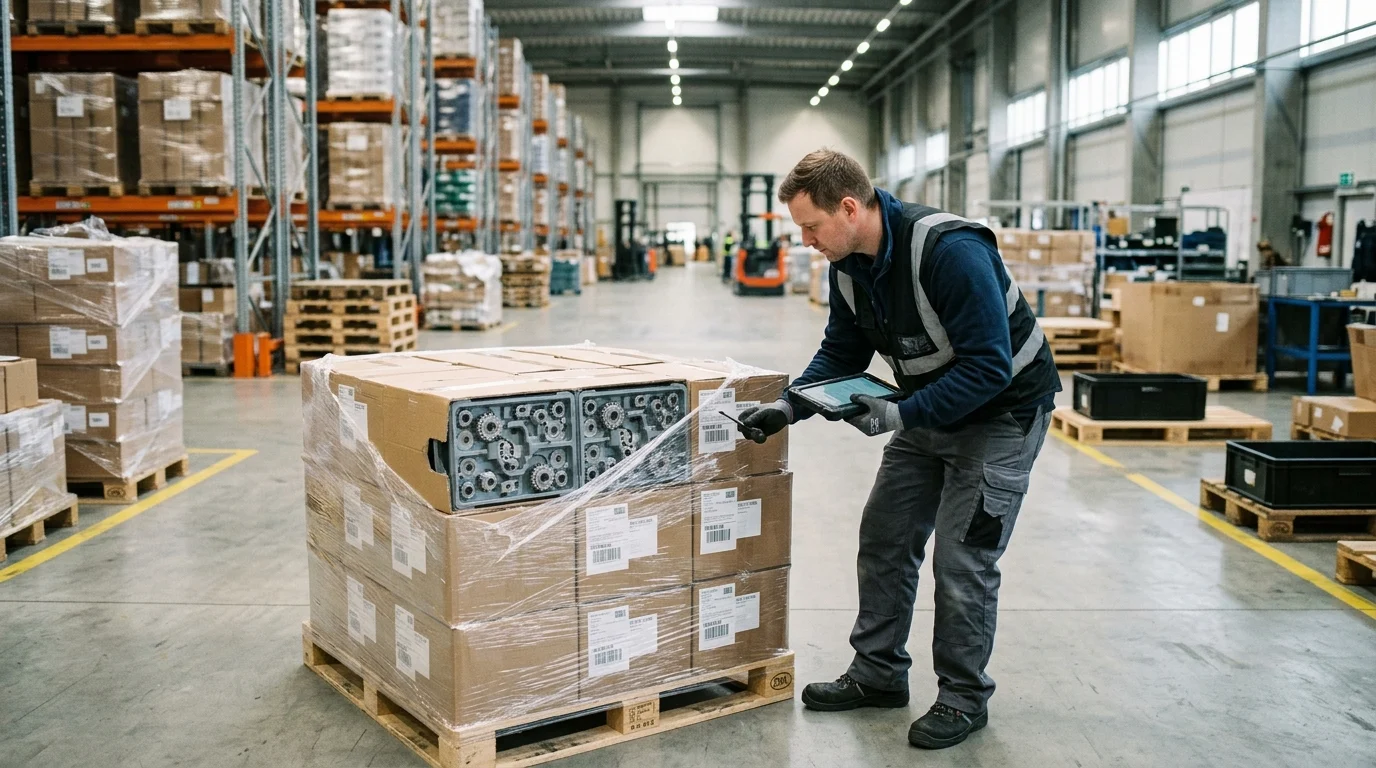
Sourcing a MIM manufacturer is different from buying off-the-shelf hardware. It requires a long-term partnership, as moving a MIM mold between factories is notoriously difficult due to variations in feedstock formulations and furnace shrinkage rates.
Choosing the right partner significantly impacts a project's return on investment. Buyers must thoroughly vet potential suppliers regarding their technical expertise, quality control systems, and commercial viability.
What technical and commercial questions should buyers ask
When initiating conversations with a MIM supplier, start with the commercial basics.
Key Takeaways
- The most important conclusions and rationale for MIM Parts
- Specs, compliance, and risk checks worth validating before you commit
- Practical next steps and caveats readers can apply immediately
Frequently Asked Questions
What are MIM parts best suited for?
MIM parts are ideal for small, complex metal components made in high volumes, especially where CNC machining would need multiple setups or create excessive scrap.
When should I choose MIM instead of CNC machining?
Choose MIM when annual demand is typically above 10,000 pieces and the part has intricate features like undercuts, cross-holes, or internal threads.
What materials are commonly used for MIM parts?
Common MIM materials include 316L stainless steel, 17-4 PH stainless steel, low-alloy steels, titanium, and tungsten-based heavy alloys.
What tolerances and surface finish can MIM parts achieve?
Typical MIM tolerances are about ±0.3% to ±0.5% of nominal size, with as-sintered surface finish around 0.8 to 1.6 µm Ra.
How do I choose a reliable MIM manufacturer like JH PIM?
Check material options, tooling experience, in-house debinding and sintering, quality control, and proven ability to deliver consistent high-volume MIM parts.