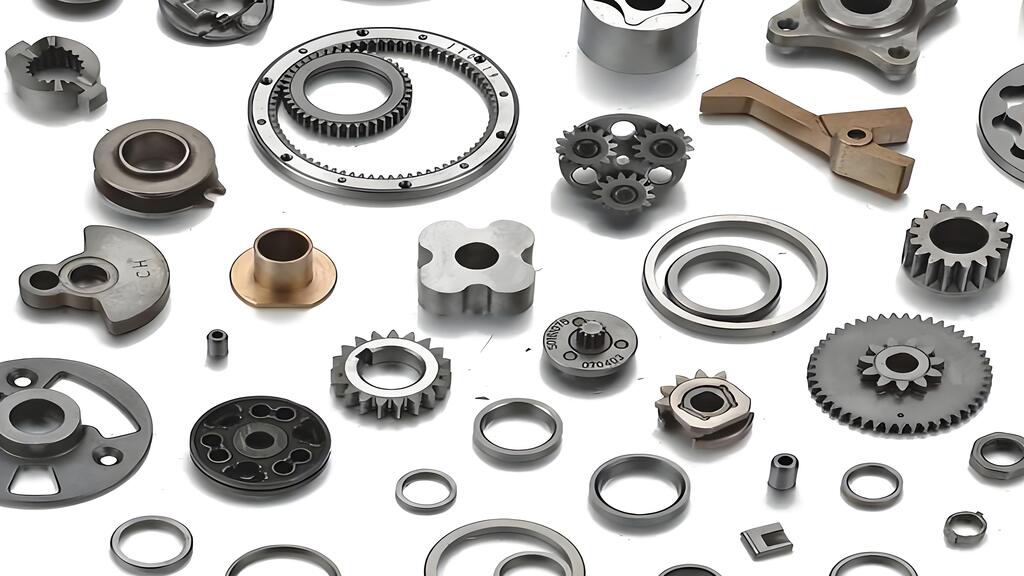


What Are Timing Belts and Pulleys?
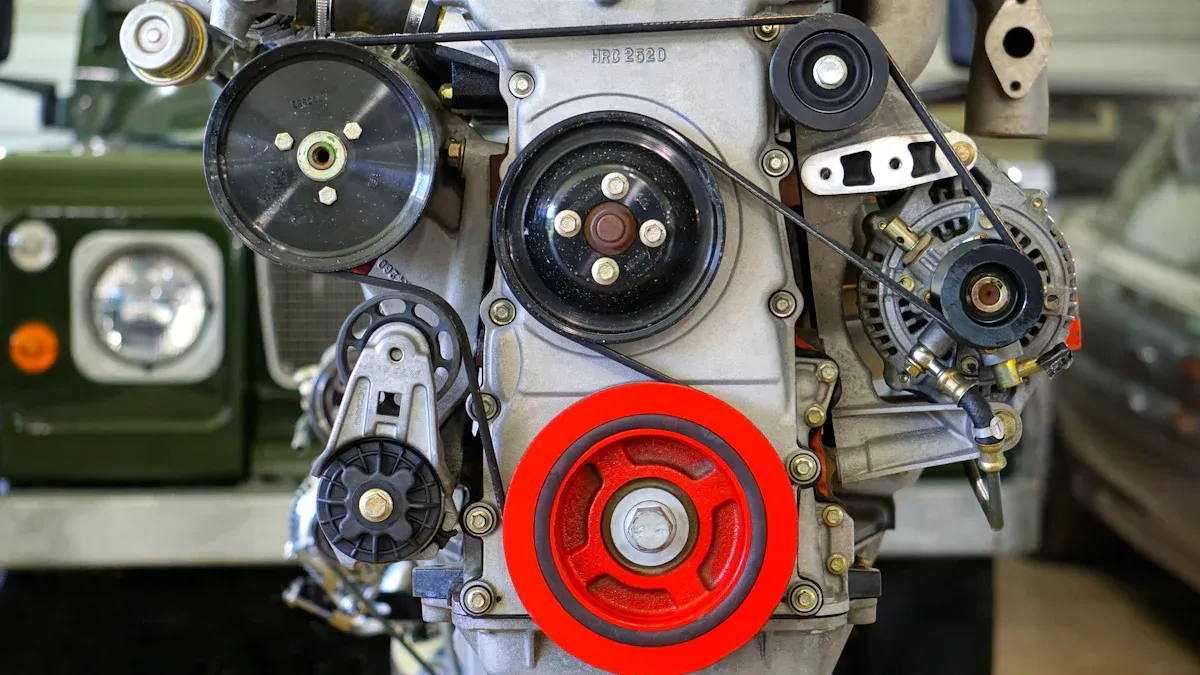
What Are Timing Belts and Pulleys? Timing belts and pulleys are vital mechanical components used to transmit power and synchronize motion between rotating parts. Their precise engineering ensures smooth operation by eliminating slippage, which is crucial for systems that demand accurate timing. These components are widely utilized across industries to boost efficiency and durability.
- What Are Timing Belts and Pulleys? The global market for timing belt pulleys is forecasted to expand from $2.8 billion in 2023 to $4.7 billion by 2032, with a compound annual growth rate (CAGR) of 5.5%.
- Research highlights that precision-engineered pulleys can enhance efficiency by up to 15%, especially in heavy-duty applications.
- The automotive industry, which manufactured 81 million vehicles globally in 2023, relies heavily on timing belts for engine synchronization.
What Are Timing Belts and Pulleys? The growing popularity of electric and hybrid vehicles has further driven the need for advanced timing belt systems to maximize engine efficiency.
Key Takeaways
- Timing belts and pulleys help transfer power and keep movements in sync in machines.
- Picking the right timing belt and pulley means thinking about the surroundings, size, and material for best results.
- Timing belts work well because they don’t slip much, making them great for car engines and factory machines.
- You can customize timing belts and pulleys to fit special needs, which makes systems work better and last longer.
- Checking and caring for timing belts often stops sudden problems and helps machines last longer.
What Are Timing Belts and Pulleys?
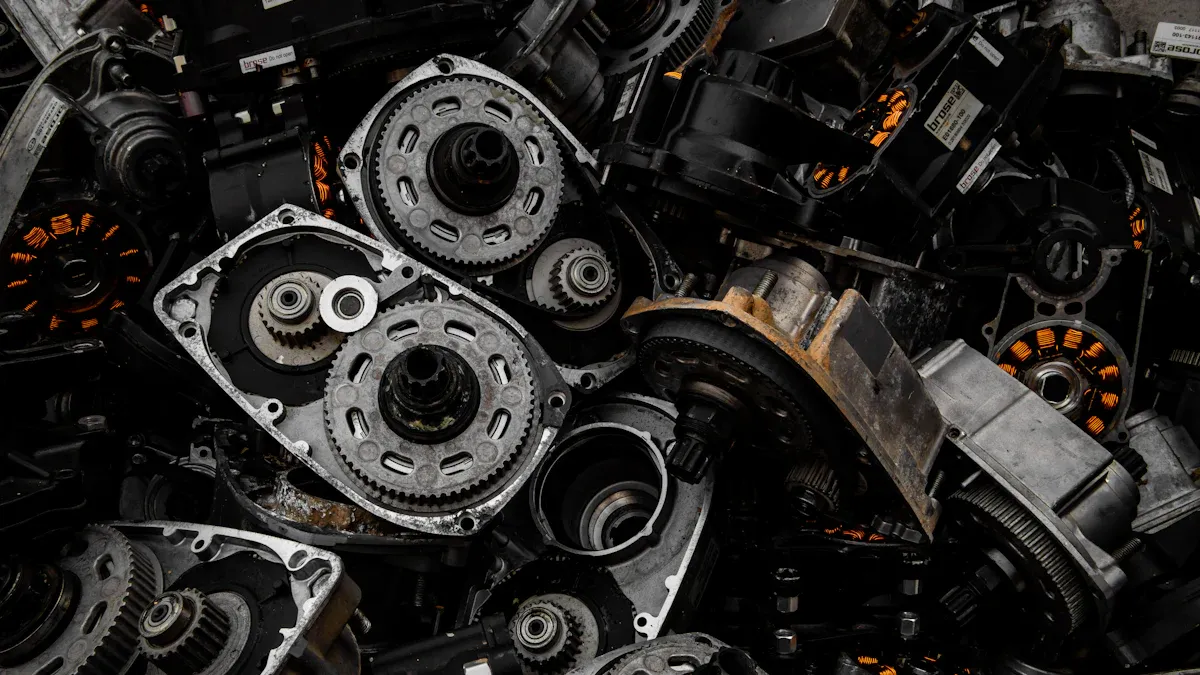
Definition and key features of timing belts
Timing belts are specialized components designed to transmit power and synchronize motion between mechanical parts. These belts feature teeth along their inner surface, which interlock with corresponding grooves on pulleys. This design ensures precise movement without slippage, making them ideal for applications requiring accuracy. Timing belts are typically made from durable materials such as rubber, polyurethane, or neoprene, often reinforced with fiberglass or steel cords for added strength and flexibility.
The technical specifications of timing belts vary based on their application. For instance, the pitch (distance between teeth) and width determine their compatibility with specific systems. The table below outlines common belt sections and their specifications:
| Belt Section | Meaning | Pitch (mm) | Widths Available (mm) |
|---|---|---|---|
| MXL | Extra Light | 2.032 | 3.05, 4.826, 6.35 |
| XL | Extra Light | 5.08 | 6.35, 9.652 |
| L | Light | 9.525 | 12.7, 19.05, 25.4 |
| H | Heavy | 12.7 | 19.05, 25.4, 38.1, 50.8, 76.2 |
| XH | Extra Heavy | 22.225 | 50.8, 76.2, 101.6, 127 |
| XXH | Double Extra Heavy | 31.75 | 50.8, 76.2, 101.6, 127 |
The ISO 5294:1989 standard governs synchronous belt drives, ensuring compatibility and performance across industries. This standard replaced the older British Standard BS 4548:1987, which is now considered obsolete.
Definition and key features of timing pulleys
Timing pulleys are the complementary components to timing belts. These pulleys feature grooves or teeth that match the belt's design, ensuring a secure fit and synchronized motion. They are typically constructed from materials like aluminum, steel, or plastic, chosen based on the application's load and environmental conditions.
Key features of timing pulleys include their diameter, number of teeth, and material composition. These factors influence the system's speed, torque, and overall efficiency. Properly designed pulleys minimize wear on the belt and enhance the system's lifespan.
How timing belts and pulleys work together in mechanical systems
Timing belts and pulleys function as a cohesive unit to deliver synchronized motion. The belt's teeth engage with the pulley's grooves, ensuring precise power transmission without slippage. This interaction is crucial in systems where timing is critical, such as automotive engines or industrial machinery.
For example, in automotive applications, timing belts and pulleys synchronize the movement of the crankshaft and camshaft, ensuring optimal engine performance. Research studies, such as those conducted by NSERC, have analyzed the dynamics of timing belt systems in micro-hybrid vehicles, highlighting their role in enhancing efficiency and reducing emissions.
The chart below illustrates the pitch variations across different belt sections, showcasing their adaptability for various applications:
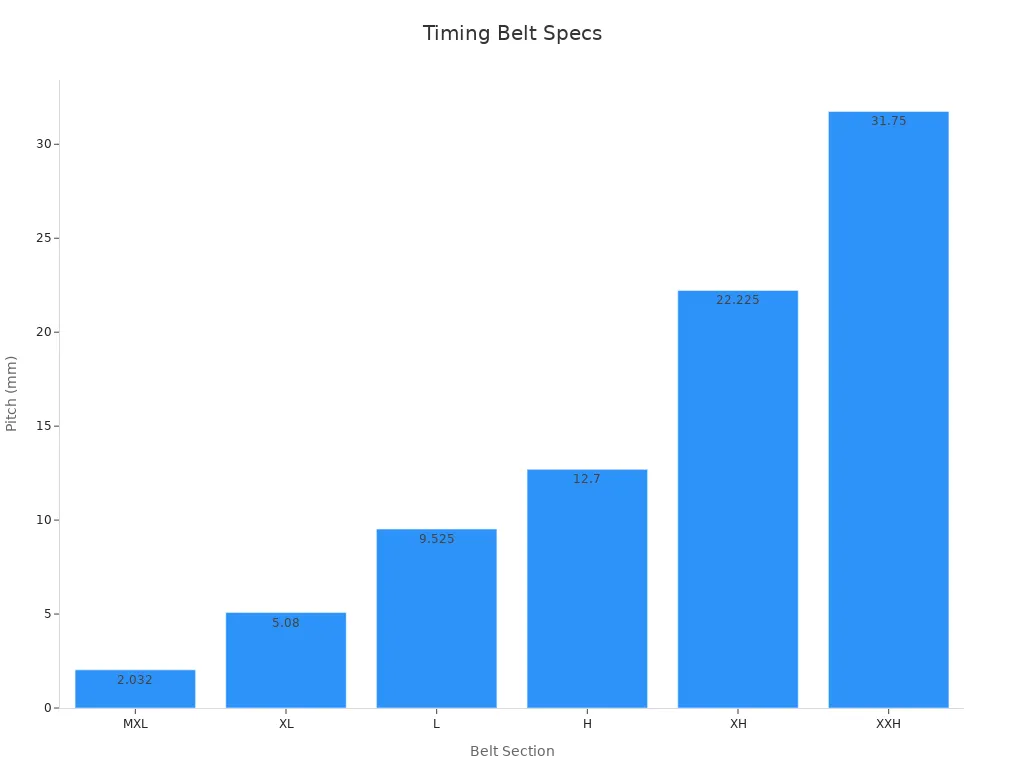
By working together, timing belts and pulleys ensure smooth, efficient, and reliable operation in a wide range of mechanical systems.
Common Uses and Applications of Timing Belts and Pulleys
Role in industrial machinery
Timing belts and pulleys play a critical role in industrial machinery by ensuring precise power transmission and synchronized motion. These components are widely used in manufacturing processes, where efficiency and reliability are paramount. Industrial automation, in particular, relies heavily on timing belts to drive conveyor systems, robotic arms, and other automated equiPment.
The global timing belts and pulleys market, valued at $9.5 billion in 2023, is projected to reach $13.8 billion by 2032, growing at a CAGR of 4.1%. This growth reflects the increasing demand for efficient power transmission systems in industrial sectors. Industries such as mining, agriculture, and food processing also benefit from these components due to their durability and ability to handle heavy loads.
| Sector | Key Insights |
|---|---|
| Industrial Automation | Widespread adoption creates a fertile environment for belt drives. |
| Mining Industry | Remains a major revenue contributor for belt drives. |
| Food & Beverage Industry | Timing belts offer ideal solutions for hygienic and efficient operations. |
Importance in automotive systems
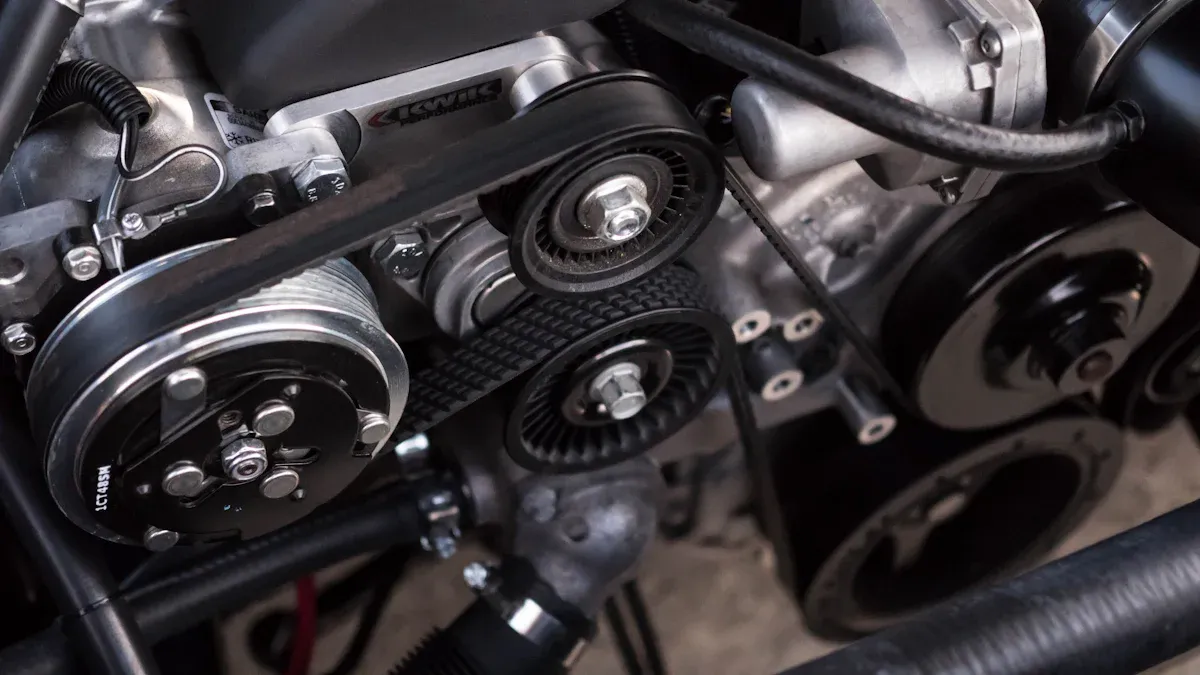
In automotive systems, timing belts and pulleys are essential for engine synchronization. They ensure the crankshaft and camshaft operate in harmony, which directly impacts vehicle performance and fuel efficiency. High-quality timing belts enhance engine durability, reducing the likelihood of mechanical failures.
The automotive pulley market is expected to grow from $12.5 billion in 2023 to $20.3 billion by 2032, driven by advancements in automotive technology and the rise of electric vehicles. Manufacturers are increasingly using lightweight materials to improve fuel economy and reduce emissions. Timing belts also play a vital role in hybrid and electric vehicles, where precision and efficiency are critical.
| Insight | Description |
|---|---|
| Role in Performance | Synchronizes engine valve operations, improving vehicle performance. |
| Fuel Efficiency | Ensures optimal engine operation, contributing to better fuel economy. |
| Durability | Reduces engine failures, enhancing reliability and lifespan. |
Applications in robotics and automation
Timing belts and pulleys are indispensable in robotics and automation. These components enable precise movement, which is crucial for tasks such as pick-and-place operations, conveyor belt systems, and robotic arm articulation. Their ability to maintain synchronization ensures accuracy and efficiency in automated processes.
The robotics industry increasingly relies on timing belts for their low maintenance requirements and high performance. Technical documentation highlights their use in synchronizing robotic movements, which is vital for industrial automation. As automation continues to expand across sectors, the demand for timing belts and pulleys is expected to grow significantly.
Timing belts and pulleys are vital for industries requiring precision and efficiency. Their applications span industrial machinery, automotive systems, and robotics, showcasing their versatility and importance in modern mechanical systems.
Use in other specialized fields
Timing belts and pulleys find applications in several specialized fields, where precision and reliability are critical. These components play a vital role in ensuring smooth operation and efficiency in unique environments.
One notable application is in medical equipment. Devices such as MRI machines, CT scanners, and surgical robots rely on timing belts for accurate motion control. Their ability to operate quietly and without lubrication makes them ideal for sterile and noise-sensitive environments. For example, surgical robots use timing belts to synchronize the movement of robotic arms, ensuring precise and safe operations.
In the aerospace industry, timing belts and pulleys contribute to the functionality of aircraft systems. They are used in actuators, control systems, and even satellite mechanisms. Their lightweight construction and ability to withstand extreme temperatures make them indispensable in this field. Engineers often select materials like polyurethane or Kevlar-reinforced belts to meet the demanding conditions of aerospace applications.
Tip: Timing belts designed for aerospace applications often undergo rigorous testing to ensure durability and performance under high stress.
The printing and packaging industries also benefit from timing belts and pulleys. These components enable the precise movement of conveyor belts, rollers, and cutting mechanisms. In high-speed printing presses, timing belts ensure accurate alignment of paper and ink, reducing waste and improving productivity.
Lastly, timing belts are essential in renewable energy systems. Wind turbines and solar tracking systems use these components to optimize energy generation. For instance, timing belts help adjust the angle of solar panels to maximize sunlight exposure throughout the day.
These examples highlight the versatility of timing belts and pulleys in specialized fields, showcasing their ability to meet diverse operational demands.
Timing Belts and Pulleys vs. Other Pulley Systems
Comparison with V-belt systems
Timing belts and V-belt systems differ significantly in design and functionality. Timing belts feature a toothed profile that ensures precise synchronization between components, while V-belts rely on friction to transmit power. This distinction makes timing belts ideal for applications requiring accuracy, such as camshaft drives in automotive engines. In contrast, V-belts are better suited for general power transmission where precision is less critical.
One key advantage of timing belts is their ability to maintain consistent performance without slippage. V-belts, however, may experience slippage under high loads, reducing efficiency. Additionally, timing belts require less maintenance due to their durable materials and lack of lubrication needs, whereas V-belts often demand regular adjustments and replacements.
Comparison with flat belt systems
Flat belts and timing belts serve different purposes in mechanical systems. Flat belts, known for their simplicity, are commonly used in general power transmission applications. Timing belts, on the other hand, excel in scenarios requiring precise motion control. Their toothed design eliminates the risk of slippage, a common issue with flat belts.
The table below highlights key distinctions between these two systems:
| Feature/Metric | Timing Belts (Synchronous) | Flat Belts |
|---|---|---|
| Slip | Minimal due to toothed profile | Significant potential for slip |
| Reinforcement | Steel, glass fiber, aramid | Typically not reinforced |
| Applications | Machine tools, textile machinery, camshaft drives | General power transmission |
| Efficiency | High efficiency, especially in high-speed applications | Moderate efficiency |
| Load Capacity | High load capacity | Varies, generally lower |
| Cost | Higher relative cost | Generally lower cost |
| Noise | Tends to be noisy due to tooth engagement | Quieter operation |
| Alignment Requirement | Requires accurate alignment of pulleys | Less critical alignment |
Unique advantages of timing belts and pulleys
Timing belts and pulleys offer several unique advantages over other pulley systems. Their design flexibility allows for compact configurations, making them suitable for space-constrained applications. Unlike gear systems, which require larger components, timing belts can transmit power efficiently over longer distances.
Another notable benefit is torque management. Timing belts can slip slightly under overload conditions, preventing motor stalling. This feature proves invaluable in applications like band saws, where blade jams could otherwise damage the motor. Additionally, their toothed design ensures precision control, maintaining synchronization between components.
The table below summarizes a study investigating timing belt dynamics, showcasing their performance under various conditions:
| Aspect | Description |
|---|---|
| Study Focus | Investigation of timing belt drive dynamics with oval and circular pulleys. |
| Methodology | Experimental and numerical analysis using a test rig to measure belt tensions, speeds, and torques. |
| Configurations Tested | Three configurations: circular driving pulley, oval driving pulley without load, and with load torque. |
| Analysis Domains | Time and frequency domains were analyzed based on the driving pulley rotation angle. |
These advantages make timing belts and pulleys indispensable in industries requiring precision, efficiency, and reliability.
Choosing the Right Timing Belt and Pulley
Key factors: environment, size, and material
Selecting the right timing belt and pulley begins with evaluating key factors such as the operating environment, size, and material. Environmental conditions, including temperature, humidity, and exposure to chemicals, significantly influence the performance and lifespan of these components. For instance, Gates designs solutions that minimize energy consumption and reduce environmental impact, ensuring sustainability in various applications.
The size of the belt and pulley also plays a critical role in ensuring smooth operations. Tools like the Design Power TPU Module help adapt systems to different sizes, enhancing compatibility and efficiency. Material selection is equally important. Durable materials, such as polyurethane or rubber reinforced with steel cords, extend product lifespan and eliminate the need for lubrication. The table below summarizes these factors:
| Key Factor | Description |
|---|---|
| Environmental Impact | Gates designs solutions to minimize energy consumption and reduce environmental impact. |
| Size | The Design Power TPU Module helps ensure smooth operations and is adaptable to various sizes. |
| Material | Gates focuses on materials that extend product lifespan and eliminate the need for lubrication. |
Evaluating load capacity and speed requirements
Understanding load capacity and speed requirements is essential for selecting the appropriate timing belt and pulley. These components must handle the mechanical stress and rotational speed of the system without compromising performance. Guides like the Gates Timing Belt Application Guide emphasize the importance of considering factors such as speed, load, and operating temperature. Proper evaluation ensures the belt can maintain synchronicity and high power density, making it suitable for high-performance applications.
Additionally, choosing the right belt pulley tensioner enhances machinery efficiency and safety. Engineers should compare options based on specific needs to ensure optimal performance. Accurate installation and regular maintenance checks prevent premature wear and extend the belt's longevity.
Ensuring compatibility with your system
Ensuring compatibility between timing belts, pulleys, and the mechanical system is vital for optimal performance. A systematic approach simplifies this process:
- Identify application parameters, including speed, load, and environmental conditions.
- Select the appropriate belt type using a reliable selection guide, such as Gates’ comprehensive specifications for ISO Trapezoidal and Locking Type pulleys.
- Confirm precise installation by aligning pulleys and sprockets accurately and tensioning the belt with calibrated tools.
- Establish a maintenance schedule to inspect for wear, adjust tension, and ensure long-term reliability.
These steps ensure the system operates efficiently while minimizing downtime and maintenance costs.
Exploring customizable options for specific needs
Timing belts and pulleys offer remarkable flexibility, making them suitable for a wide range of specialized applications. Engineers can tailor these components to meet unique system requirements, ensuring optimal performance and efficiency. Customization often involves adjustments to material composition, belt dimensions, and pulley configurations to address specific operational challenges.
For instance, industries operating in extreme environments may require belts made from heat-resistant materials like polyurethane or Kevlar. These materials withstand high temperatures and maintain durability under stress. Similarly, systems exposed to corrosive chemicals benefit from belts coated with protective layers, enhancing their longevity. Pulley designs can also be modified to accommodate unique load capacities or rotational speeds, ensuring seamless integration into existing machinery.
Several real-world examples demonstrate the impact of customized timing belts and pulleys. The table below highlights notable case studies:
| Case Study Title | Description |
|---|---|
| Real-Life Applications | Case studies from metal belt customers showcasing organizational impact. |
| A Custom Solution for Extreme Temperature Change | A tailored solution for a client facing challenges with extreme temperature changes. |
| A Custom Solution for a Longstanding Customer | A custom belt solution provided for the SFS Group's new rotary indexing table. |
| Precision Measurement Technology | Use of PureSteel belts in the automotive sector for precision measurement technology. |
These examples highlight the versatility of timing belts and pulleys in addressing diverse operational needs. Custom solutions not only enhance system performance but also extend the lifespan of components, reducing maintenance costs over time.
Tip: Collaborating with experienced manufacturers ensures that timing belts and pulleys are designed to meet specific requirements, maximizing efficiency and reliability in any application.
By leveraging customizable options, industries can achieve precision and adaptability, even in the most demanding environments.
Timing belts and pulleys are indispensable components in modern mechanical systems. Their ability to deliver precise motion and efficient power transmission makes them essential across industries. From automotive engines to industrial machinery, these components enhance performance and reliability.
The table below highlights real-world applications that demonstrate their effectiveness:
| Application | Problem Statement | Solution | Results |
|---|---|---|---|
| Conveyor Belt | Excessive wear and tear, frequent breakdowns | Increased pulley size | Significant decrease in wear and tear, increased efficiency |
| Motor-Driven Fan | Running at fewer RPMs, reduced airflow | Reduced belt tension | Significant increase in fan speed, improved airflow |
| V-Belt Drive System | Slipping issues, increased downtime | Increased pulley size, adjusted tension | Significant reduction in slipping, improved performance |
Selecting the right timing belt and pulley ensures optimal performance, reduces maintenance, and extends system longevity. Their versatility and precision make them a cornerstone of mechanical innovation.
FAQ
What are the main benefits of using timing belts and pulleys?
Timing belts and pulleys provide precise motion control and efficient power transmission. Their toothed design eliminates slippage, ensuring synchronization in mechanical systems. They also require minimal maintenance, offer high durability, and can operate in various environments, making them ideal for industrial, automotive, and specialized applications.
How do I know when to replace a timing belt?
Signs of wear include visible cracks, fraying, or missing teeth on the belt. Unusual noises or reduced system performance may also indicate the need for replacement. Regular inspections, as the manufacturer recommends, help identify issues early and prevent unexpected failures.
Can timing belts and pulleys handle high-speed applications?
Yes, timing belts and pulleys are designed for high-speed applications. Their toothed design ensures accurate power transmission without slippage, even at high rotational speeds. Selecting the right material and specifications for the belt and pulley ensures optimal performance under such conditions.
Are timing belts better than chains for power transmission?
Timing belts are quieter, require less maintenance, and do not need lubrication, unlike chains. They also provide smoother operation and precise synchronization. However, chains may handle higher loads in some cases. The choice depends on the specific application and operational requirements.
How do I choose the right timing belt for my system?
Consider factors like load capacity, speed, operating environment, and material compatibility. Evaluate the belt's pitch, width, and reinforcement type to match your system's requirements. Consulting manufacturer guides or working with an expert ensures the best selection for your application.