

Introduction
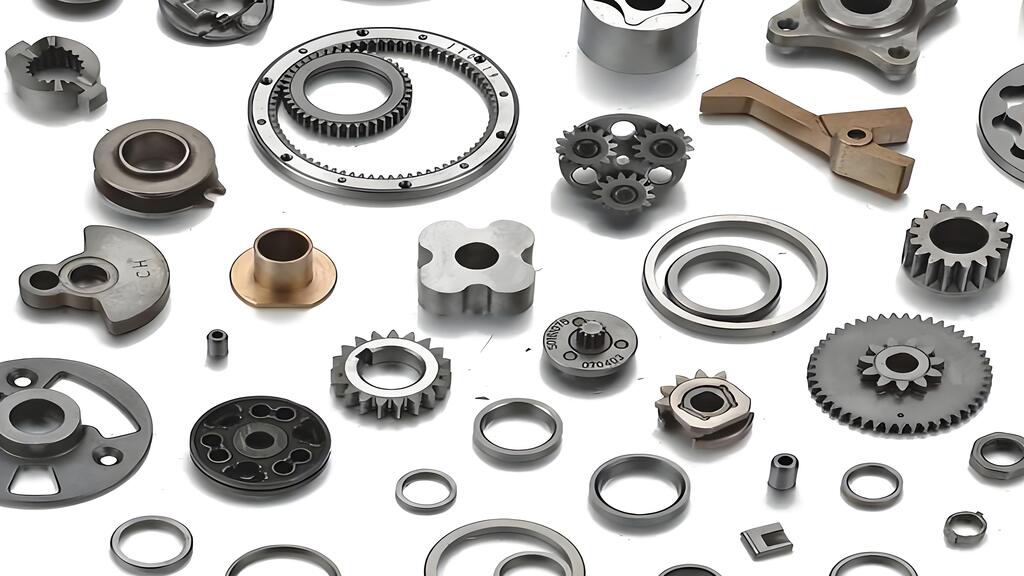
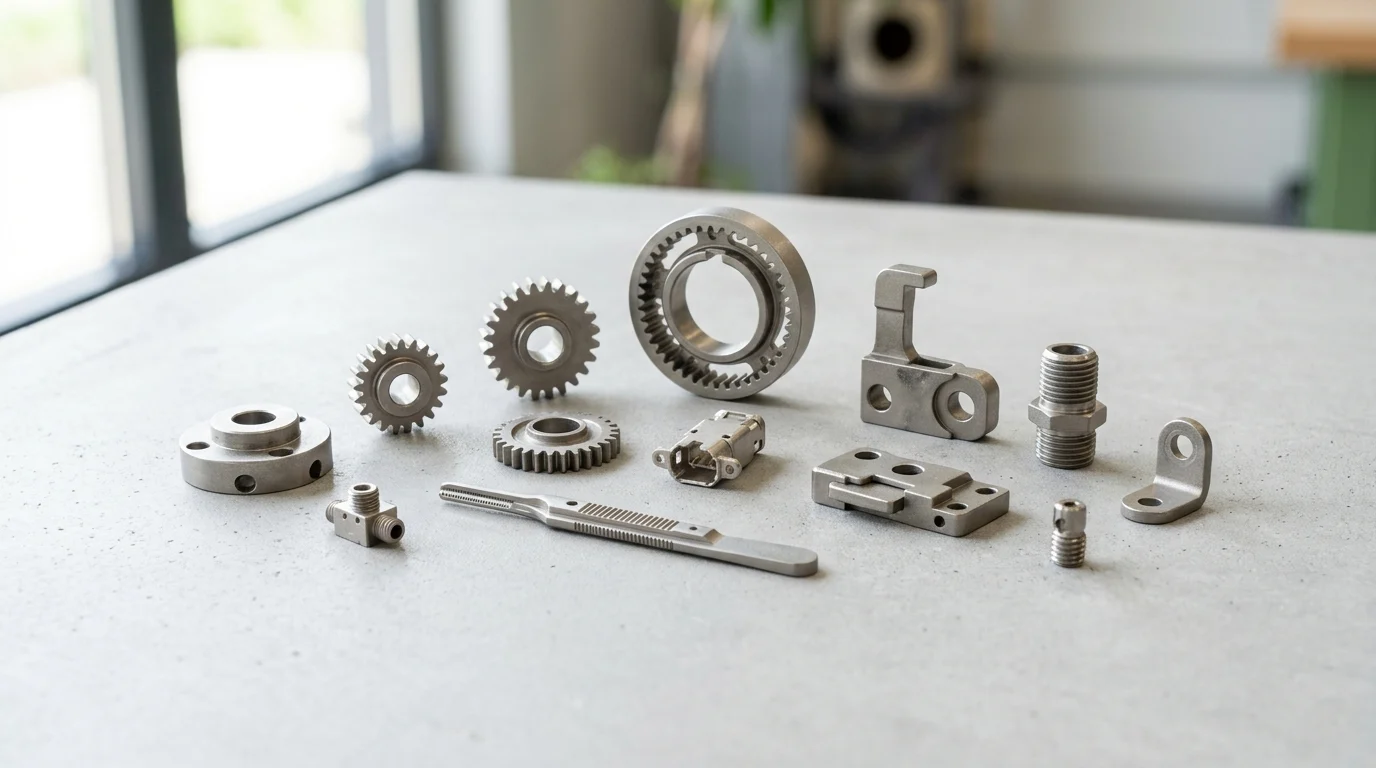
Metal injection molding combines fine metal powders with injection molding methods to create small, complex parts in large volumes with strong mechanical properties and tight tolerances. It sits between machining and Die Casting, offering more design freedom than traditional metalworking while reducing material waste and secondary operations. This article explains how the process works from feedstock preparation through debinding and sintering, which materials are commonly used, where the main cost and performance advantages come from, and which industries rely on it. By the end, readers will have a practical framework for judging when MIM is the right manufacturing choice.
Why Is Metal Injection Molding Important for High-Volume Production
Metal Injection Molding (MIM) represents acritical manufacturing advancement, merging the geometric versatility of plastic injection molding with the mechanical integrity of forged or machined metals. By utilizing fine metal powders mixed with polymer binders, manufacturers can produce complex, high-density metal parts at scale. For industrial buyers and design engineers, understanding where this technology fits within the broader manufacturing ecosystem is essential for optimizing both production costs and product performance.
How does metal injection molding bridge the gap between machining and die casting?
Machining and die casting have traditionally dominated the production of metal components, yet both present distinct limitations. Computer Numerical Control (CNC) machining offers exceptional precision and material strength but scales poorly for highly complex geometries, often resulting in extended cycle times and material scrap rates exceeding 50%. Conversely, die casting delivers high-volume efficiency but is largely restricted to lower-melting-point alloys such as zinc, magnesium, and aluminum.
Metal injection molding bridges this gap by enabling the high-volume production of complex parts in high-temperature, high-strength metals, including stainless steel, titanium, and cobalt-chrome. The process achieves near-net-shape geometries without the severe tool wear associated with machining hard alloys, offering a scalable alternative that maintains mechanical properties comparable to wrought materials. Typical production thresholds where metal injection molding outpaces machining range from 10,000 to 100,000 parts annually, depending on part complexity.
Where does metal injection molding create commercial value?
The primary commercial value of metal injection molding lies in the consolidation of multi-part assemblies and the elimination of secondary operations. Components that previously required a combination of turning, milling, and specialized joining can be consolidated into a single molded part. This reduction in manufacturing steps directly lowers direct labor costs, minimizes work-in-progress inventory, and streamlines quality assurance protocols.
While initial tooling investments for metal injection molding can range from $15,000 to $50,000 or more, these costs are rapidly amortized over high production volumes. The near-net-shape capability ensures material utilization often exceeds 95%, which represents a significant cost advantage when processing expensive alloys like titanium or specialized medical-grade stainless steels. Ultimately, the commercial viability relies on crossing the break-even volume threshold where tooling amortization is eclipsed by per-part savings.
What Is the Metal Injection Molding Process and Which Materials
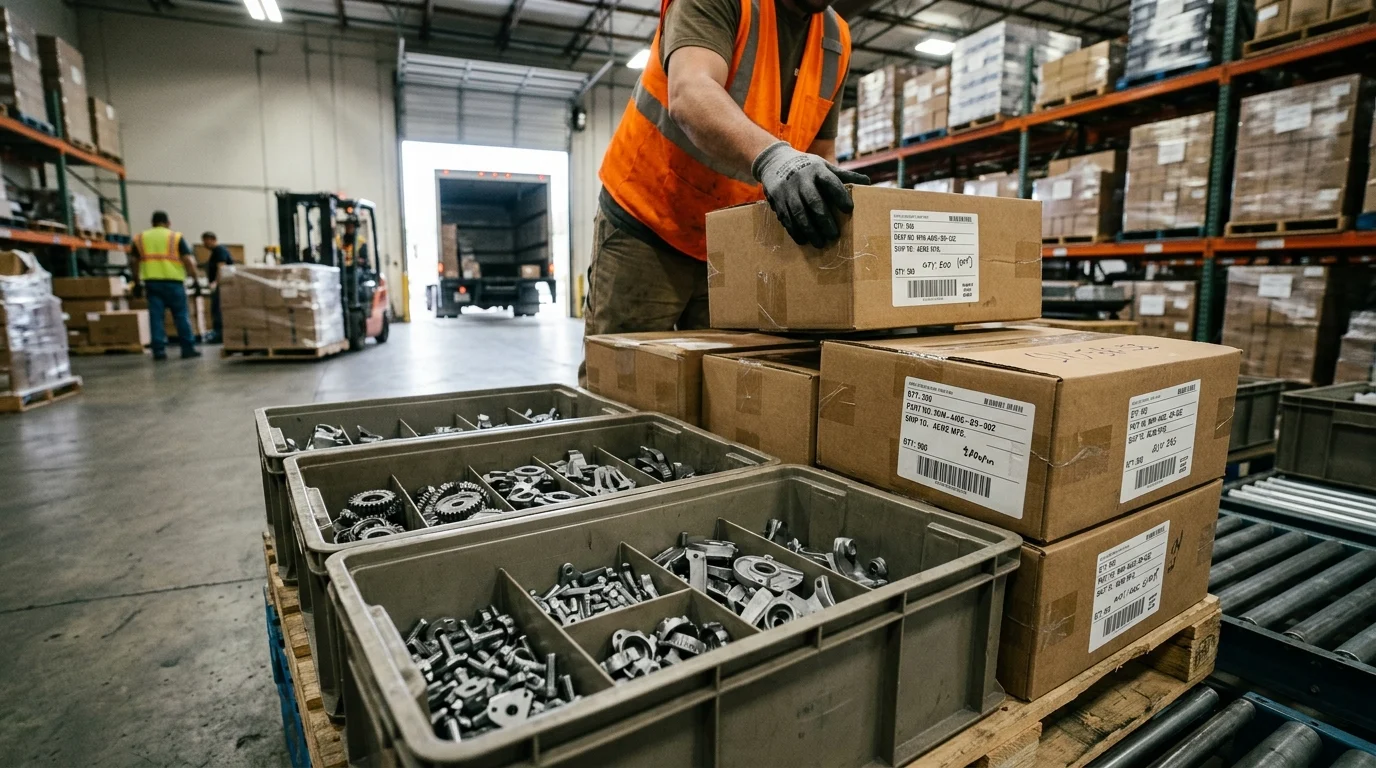
The fundamental mechanics of metal injection molding rely on a multi-stage process that transforms loose metallic powder into a fully dense, solid metal component. Success in this manufacturing discipline requires precise control over thermal and chemical parameters at every stage, as well as rigorous material selection.
How do feedstock preparation, molding, debinding, and sintering work?
The process begins with feedstock preparation, where fine metal powders (typically under 20 microns in diameter) are compounded with thermoplastic and wax binders. This creates a homogeneous mixture comprising approximately 60% to 70% metal powder by volume. The feedstock is then fed into standard injection molding machines to produce a 'green part.' Because the binder takes up substantial volume, the green part is molded approximately 15% to 22% larger than the final specified dimensions to account for predictable shrinkage.
Following molding, the green part undergoes debinding to remove the majority of the polymer binder. Depending on the feedstock system, this is achieved through thermal, catalytic, or solvent-based methods, resulting in a fragile, porous structure known as a 'brown part.' Finally, the brown part is transferred to a high-temperature atmosphere-controlled furnace for sintering. During sintering, temperatures are elevated to just below the melting point of the metal (often exceeding 1,300°C for steels). The remaining binder burns off, and the metal particles fuse via capillary action and solid-state diffusion, shrinking the part to achieve a final density greater than 96% of the theoretical maximum.
Which metal injection molding materials are most common?
Material selection in metal injection molding heavily favors alloys that are notoriously difficult or expensive to machine. Stainless steels, particularly 17-4 PH and 316L, account for the majority of the global market due to their excellent corrosion resistance and mechanical strength. Low-alloy steels like 4605 are frequently utilized for structural components requiring high hardness and wear resistance.
Beyond ferrous alloys, manufacturers increasingly utilize titanium (such as Ti-6Al-4V) for weight-critical aerospace and biocompatible medical applications. Copper and tungsten alloys are also processed for thermal management and high-density weighting applications, respectively. The table below outlines common materials and their typical as-sintered properties:
| Material Grade | Yield Strength (MPa) | Ultimate Tensile Strength (MPa) | Hardness | Typical Application |
|---|---|---|---|---|
| 17-4 PH Stainless | 730 | 900 | 27 HRC | Surgical instruments, firearms |
| 316L Stainless | 175 | 450 | 67 HRB | Medical implants, wearables |
| MIM-4605 Low Alloy | 600 | 1,600 (Heat Treated) | 48 HRC | Automotive mechanisms |
| Ti-6Al-4V | 820 | 900 | 30 HRC | Aerospace brackets, implants |
How Does Metal Injection Molding Compare With Other Manufacturing Method
Selecting the optimal manufacturing process requires a rigorous comparative analysis of technical capabilities and economic boundaries. Metal injection molding occupies a specific niche, competing directly with investment casting, powder metallurgy (press and sinter), and multi-axis CNC machining.
Which comparison best clarifies tolerances, geometry limits, and cost?
When evaluating manufacturing methods, tolerances, geometry, and cost form the critical triad. CNC machining sets the benchmark for precision, routinely achieving tolerances of ±0.005 mm, whereas metal injection molding typically maintains nominal tolerances of ±0.3% to ±0.5% of the feature dimension (e.g., ±0.05 mm on a 10 mm feature). However, as geometric complexity increases—such as the inclusion of internal splines, blind hexes, or non-linear cross-holes—machining costs scale exponentially. Metal injection molding absorbs complexity at virtually zero marginal cost once the mold is fabricated.
Investment casting can also produce complex geometries but struggles with thin walls and fine details, generally requiring tolerances of ±0.5% to ±1.0%. Traditional powder metallurgy is cost-effective for simple, flat profiles like gears but is restricted to 2D complexity due to unidirectional pressing forces. The following comparison clarifies these operational thresholds:
| Process | Typical Tolerance | Max Geometric Complexity | Material Utilization | Economic Minimum Order Quantity (MOQ) |
|---|---|---|---|---|
| CNC Machining | ±0.005 mm | High (but expensive) | Low (20% - 40%) | 1 to 5,000 |
| Investment Casting | ±1.0% | Moderate to High | High (80%+) | 1,000+ |
| Press & Sinter PM | ±0.1 mm | Low (2D extrusion profiles) | Very High (95%+) | 10,000+ |
| Metal Injection Molding | ±0.3% to ±0.5% | Very High (3D complexity) | Very High (95%+) | 10,000 to 20,000+ |
What are the main trade-offs of metal injection molding?
Despite its advantages, metal injection molding carries distinct trade-offs that engineers must navigate. The most prominent constraint is component size and mass. The process is optimized for small parts; components weighing under 100 grams are ideal, while those exceeding 250 grams become economically and technically challenging due to extended debinding times and sagging risks during sintering.
Lead times also present a significant barrier. Designing, cutting, and validating the complex injection molds typically requires 8 to 12 weeks before first-article inspection (FAI) parts are available. Furthermore, the reliance on thermal processing means that achieving ultra-tight tolerances often requires post-sintering secondary operations, such as grinding or coining, which can incrementally erode the cost advantages of the net-shape process.
What Design, Quality, and Production Factors Matter Most in Metal
Translating a functional concept into a successful metal injection molded component requires strict adherence to Design for Manufacturing (DFM) guidelines. Because the part undergoes significant thermal and physical transformations, proactive design and stringent quality control are non-negotiable.
How should engineers approach wall thickness, tolerances, and undercuts?
Engineers must prioritize uniform wall thickness to ensure consistent shrinkage and prevent internal voids or surface sink marks. Optimal wall thicknesses range from 0.5 mm to 5.0 mm. Sections thicker than 10 mm severely impede the extraction of binder during the debinding phase, leading to cracking or blistering during sintering. Where thick sections are unavoidable, engineers should utilize coring techniques to hollow out the mass.
Tolerances must be applied judiciously. Over-tolerancing a part forces the supplier into costly secondary machining operations. Designers should specify ±0.5% for general dimensions and reserve tighter bands only for critical mating surfaces. Undercuts, threads, and side-holes are entirely feasible but require molds equipped with sliders or lifters. While these mechanisms enable extreme complexity, they increase tooling costs and maintenance requirements.
Which quality control methods and validation steps matter most?
Quality control in metal injection molding must validate both dimensional accuracy and metallurgical integrity. Because the process relies on powder consolidation, verifying the final sintered density is paramount. Manufacturers utilize the Archimedes method to confirm parts achieve >96% theoretical density, as lower densities severely compromise tensile strength and fatigue life.
Non-destructive testing (NDT), including X-ray imaging and ultrasonic inspection, is frequently deployed to detect internal voids or micro-cracking that cannot be identified visually. Surface finish is also systematically evaluated; a standard as-sintered part exhibits a roughness of 0.8 to 1.2 µm Ra, which is superior to most investment castings but may still require media blasting or polishing for cosmetic applications.
How can buyers evaluate suppliers, tooling readiness, and production risk?
When sourcing metal injection molding services, buyers must evaluate a supplier's end-to-end capabilities. A critical differentiator is whether a supplier compounds their feedstock in-house or purchases commercial off-the-shelf (COTS) feedstock. In-house compounding allows for custom alloy development and tighter control over shrinkage rates, though COTS feedstock ensures high batch-to-batch consistency for standard materials.
Evaluating production risk also involves auditing the supplier's furnace capacity. Continuous walking-beam furnaces are highly efficient for massive volumes of identical parts, whereas batch furnaces offer the flexibility required for specialized alloys or complex thermal profiles. Buyers should verify industry-specific quality certifications, such as ISO 13485 for medical devices or IATF 16949 for automotive components, and target a production defect rate of less than 1% to ensure stable supply chain dynamics.
When Is Metal Injection Molding the Right Choice
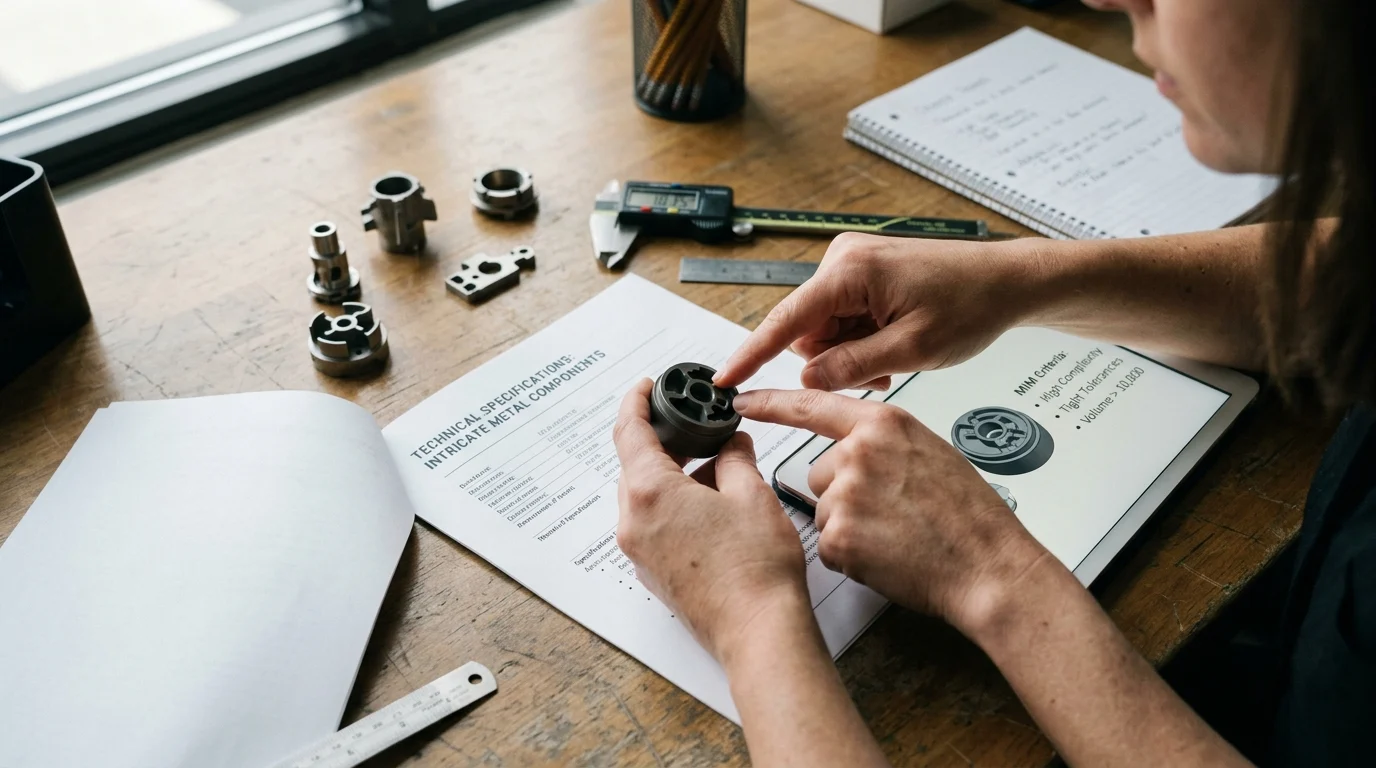
Adopting metal injection molding is a strategic decision that relies on aligning part requirements with the distinct physical and economic realities of the process. When deployed correctly, it serves as an enabler for miniaturization and performance enhancement.
Which applications benefit most from metal injection molding?
The applications that benefit most from metal injection molding are characterized by a confluence of small size, complex geometry, and high mechanical demands. In the medical sector, surgical instruments, articulating jaws, and orthodontic brackets rely heavily on the process to produce biocompatible 316L and 17-4 PH stainless steel parts with intricate micro-features. The firearms industry utilizes the technology extensively for triggers, sears, and fire-control components, demanding high hardness and impact resistance.
Consumer electronics represent another massive growth sector, utilizing the technology for structural hinges, camera bezels, and wearable device enclosures where aesthetic finish and structural rigidity are paramount. In aerospace and defense, the ability to process titanium into complex, lightweight brackets and fasteners without generating massive volumes of expensive machining scrap has accelerated adoption.
How should manufacturers decide whether metal injection molding fits a project?
Manufacturers should rely on a specific decision framework to determine if a project fits the metal injection molding profile. The ideal candidate part weighs less than 100 grams, fits within the palm of a hand, and features geometries that would require three-axis or five-axis CNC machining to produce from bar stock. Furthermore, the annual production volume should reliably exceed 20,000 units to justify the upfront tooling investment and engineering validation.
If a component requires the strength of wrought steel, features thin walls or complex internal cavities, and is demanded in high volumes, metal injection molding is highly likely to offer the lowest total cost of ownership.
Key Takeaways
- The most important conclusions and rationale for metal injection molding
- Specs, compliance, and risk checks worth validating before you commit
- Practical next steps and caveats readers can apply immediately
Frequently Asked Questions
What is metal injection molding used for?
It is used to make small, complex metal parts in high volumes, especially when machining is costly or slow. Common uses include medical, automotive, electronics, and industrial components.
How does metal injection molding compare with CNC machining?
MIM is usually better for complex shapes and volumes above roughly 10,000 parts. It reduces scrap and secondary machining, while CNC is better for low-volume parts and rapid design changes.
Which materials are commonly used in metal injection molding?
Common MIM materials include 17-4 PH and 316L stainless steel, 4605 low-alloy steel, titanium, and cobalt-chrome. Material choice depends on strength, corrosion resistance, wear, and application needs.
Why do MIM parts shrink during production?
The molded green part contains binder, so it is made oversized. During debinding and sintering, the binder is removed and the metal densifies, causing predictable shrinkage of about 15% to 22%.
Can JHPIM help with custom metal injection molding projects?
Yes. JHPIM focuses on custom MIM solutions, helping with material selection, part design review, tooling, and volume production to improve manufacturability and cost efficiency.