

Introduction
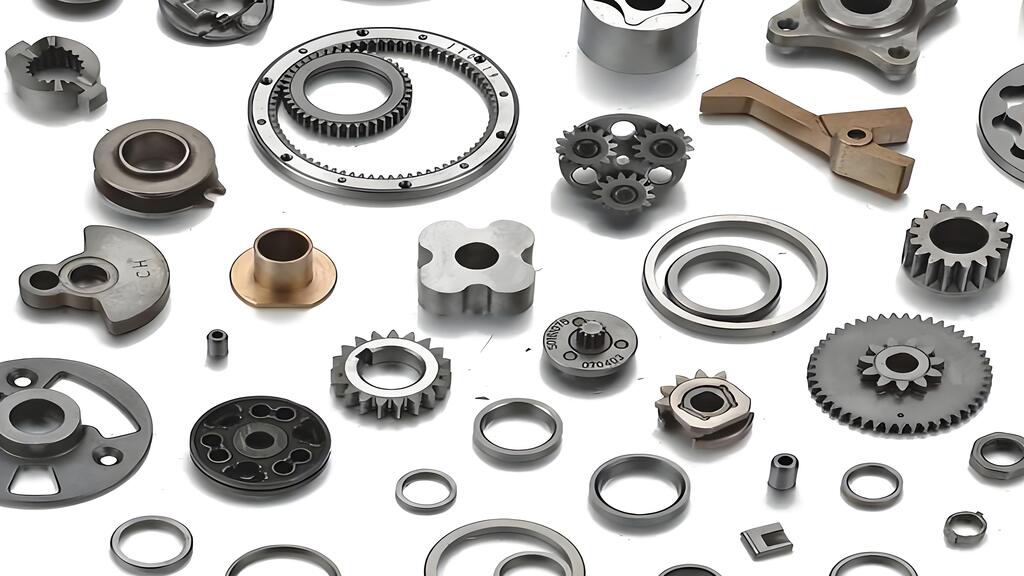
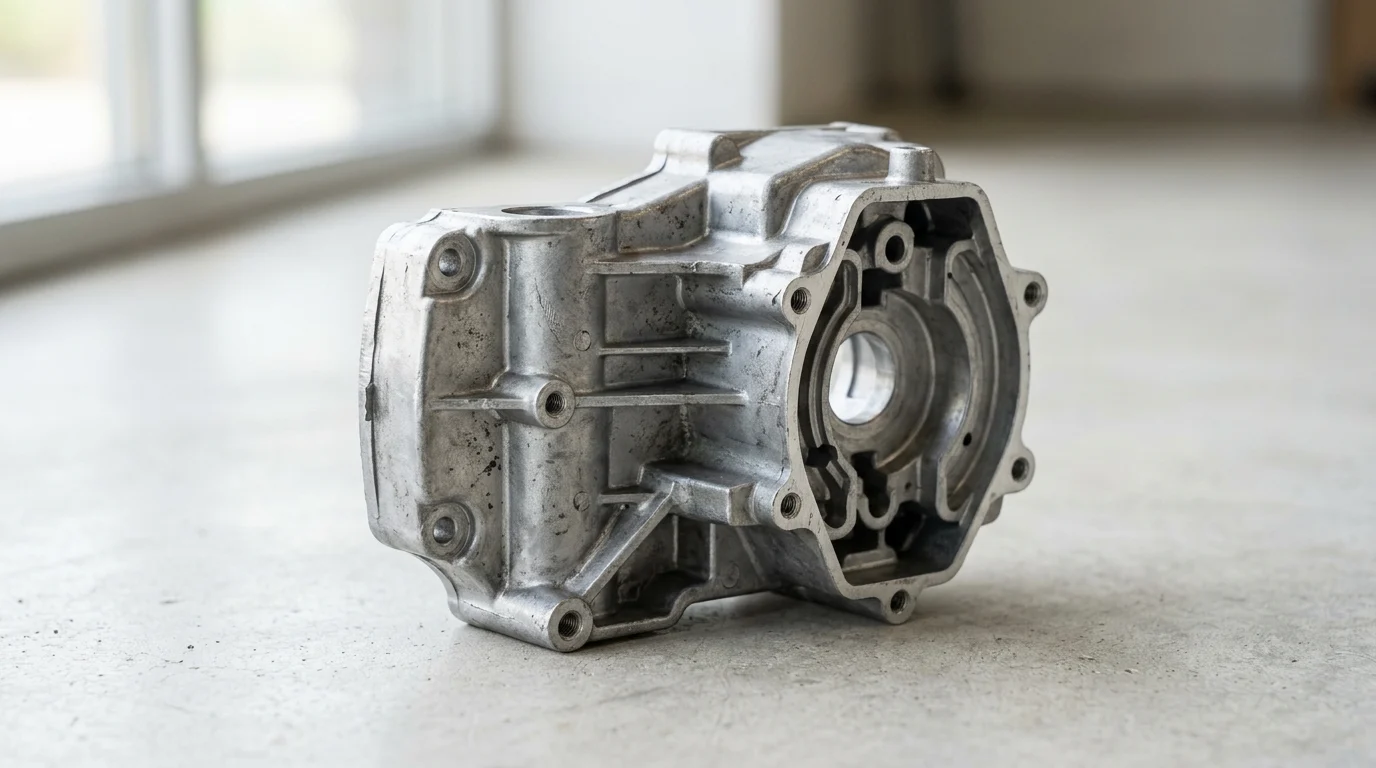
Zinc die casting is widely used when custom Metal Parts need tight tolerances, complex geometry, and consistent production at scale. Its low melting point, strong fluidity, and long tool life make it a practical choice for both engineers refining part performance and buyers managing unit cost over long production runs. This article explains where zinc die casting delivers the most value, which applications benefit from it, and what manufacturing factors influence quality, speed, and cost. By the end, readers will have a clear framework for judging whether zinc die casting fits their design, sourcing, and production requirements.
Why Choose Zinc Die Casting for Custom Parts
Zinc die casting stands as one of the most efficient and reliable manufacturing processes for producing highly complex, durable metal components. By forcing molten zinc into customized steel cavities under high pressure, manufacturers can achieve exceptional dimensional stability and intricate geometries that are difficult or impossible to replicate with other metalworking techniques. For procurement teams and engineers, understanding the operational and economic advantages of this process is critical for optimizing supply chains.
Cost, precision, and production advantages
The primary technical advantages of zinc die casting revolve around cycle speed, dimensional precision, and extended tool life. Because zinc alloys melt at relatively low temperatures, the casting process operates at rapid cycle times, frequently achieving between 150 and 400 shots per hour depending on part size. This lower thermal impact translates directly to exceptional tooling longevity. A well-maintained steel mold for zinc components can routinely exceed 1,000,000 shots before requiring major refurbishment, drastically reducing long-term capital expenditures. Furthermore, the material's excellent fluidity allows for the casting of net-shape parts with tolerances as tight as ±0.025 mm (±0.001 inches), often eliminating the need for secondary machining.
Commercial reasons buyers prefer zinc
Commercially, buyers gravitate toward zinc due to its predictable Total Cost of Ownership (TCO) over high-volume production runs. The ability to cast complex features—such as thin walls, internal threads, and intricate gear teeth—directly into the component reduces the number of individual parts required in an assembly. This consolidation lowers bill-of-materials (BOM) complexity and minimizes assembly labor. Additionally, zinc's inherent EMI/RFI shielding capabilities make it highly attractive for electronics enclosures, saving buyers the added expense of applying specialized conductive coatings to plastic alternatives.
What Is Zinc Die Casting
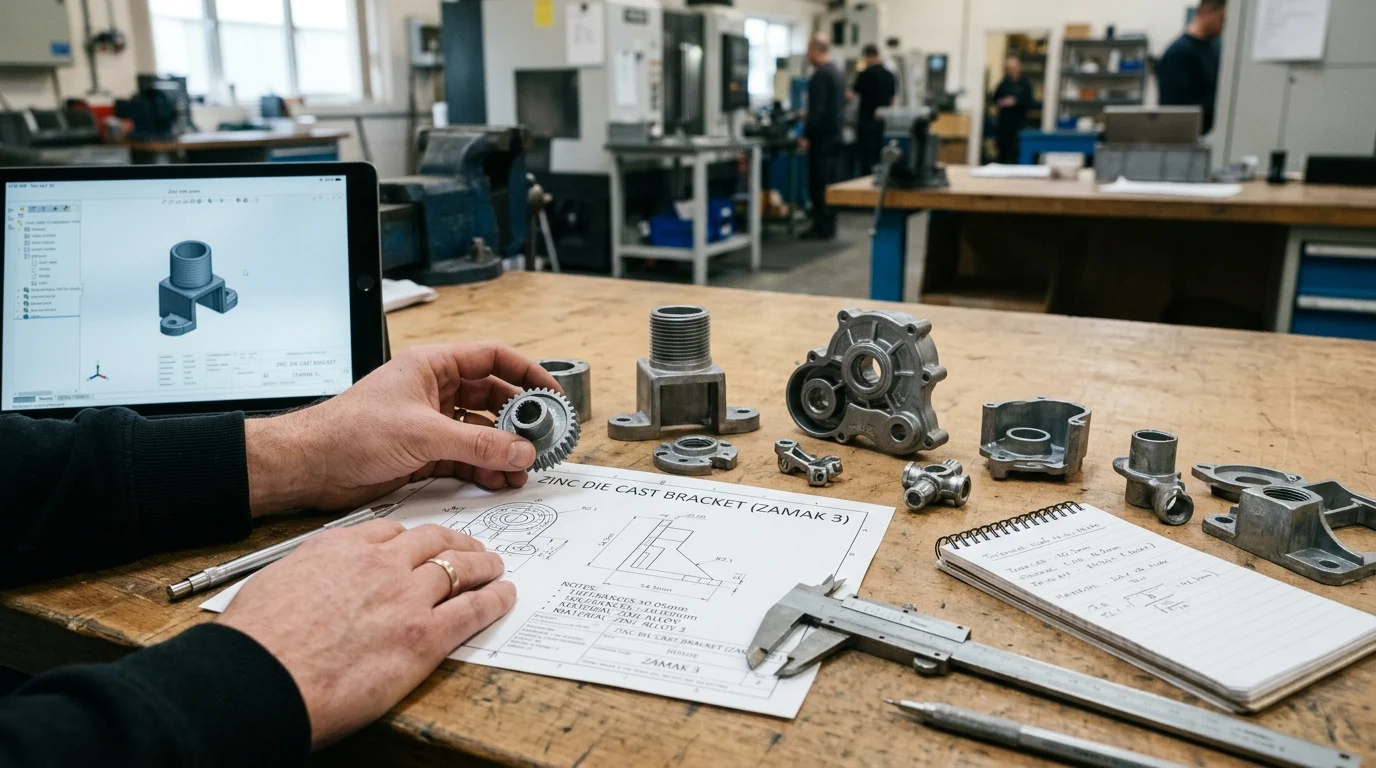
At its core, zinc die casting is a high-pressure manufacturing method utilizing a hot-chamber machine setup. This process differs fundamentally from the cold-chamber methods typically required for metals with higher melting points, allowing for greater automation, faster output, and reduced energy consumption.
How the process works in manufacturing
In a hot-chamber manufacturing environment, the injection mechanism—often referred to as the gooseneck—is continuously submerged in a furnace holding molten zinc at temperatures ranging from 400°C to 430°C. When a cycle initiates, a hydraulically actuated plunger forces the liquid metal through the gooseneck and into the closed steel die at high pressures, typically between 1,500 and 3,500 psi. The metal solidifies in milliseconds due to the relatively cool temperature of the die block. The die then opens, ejector pins push the solidified part out, and the machine immediately resets for the next shot. This continuous submersion prevents the molten metal from oxidizing and minimizes temperature fluctuations during injection.
Key alloy properties, tolerances, and finishes
Zinc alloys, predominantly the Zamak series and ZA alloys, offer a unique combination of strength, ductility, and finishing readiness. Zamak 3 is the industry standard, accounting for the vast majority of zinc die casting volume due to its excellent balance of physical properties and long-term dimensional stability. When higher tensile strength is required, Zamak 5 provides increased hardness. The smooth as-cast surface of zinc components allows for highly cosmetic finishes, accepting electroplating, powder coating, and chromate conversions with minimal surface preparation.
| Alloy | Tensile Strength (MPa) | Hardness (Brinell) | Primary Characteristic |
|---|---|---|---|
| Zamak 3 | 283 | 82 | Excellent balance of physical and mechanical properties |
| Zamak 5 | 331 | 91 | Higher strength and hardness, good castability |
| ZA-8 | 374 | 103 | High performance, excellent creep resistance |
Zinc vs Aluminum Die Casting
Selecting the right metal alloy is a foundational engineering decision. While both zinc and aluminum are dominant players in the die casting industry, their distinct physical and thermal properties dictate entirely different manufacturing approaches and commercial outcomes.
Main trade-offs in tooling, performance, and cost
The most significant trade-off between zinc and aluminum involves tooling degradation and part weight. Aluminum melts at approximately 660°C, necessitating a cold-chamber casting process where the molten metal is ladled into the injection cylinder for each shot. This higher heat causes rapid thermal fatigue on the steel dies, typically limiting aluminum tool life to between 100,000 and 150,000 shots. In contrast, zinc's lower melting point of roughly 385°C enables hot-chamber casting, preserving tool life for upwards of one million shots. However, zinc is substantially heavier, with a density of 6.6 g/cm³ compared to aluminum's 2.7 g/cm³. For automotive or aerospace applications where lightweighting is a strict mandate, aluminum is generally preferred despite the higher tooling replacement costs.
Key comparison points for buyers
For buyers, the comparison often comes down to the required wall thickness, secondary finishing needs, and upfront tooling budgets. Zinc allows for much thinner wall sections—down to 0.38 mm—which can offset some of its weight penalty by requiring less material overall. Furthermore, zinc is inherently easier to plate than aluminum, making it the superior choice for decorative consumer hardware.
| Metric | Zinc Die Casting | Aluminum Die Casting |
|---|---|---|
| Melting Point | ~385°C | ~660°C |
| Tool Life | 1,000,000+ shots | 100,000 - 150,000 shots |
| Density | 6.6 g/cm³ | 2.7 g/cm³ |
| Min. Wall Thickness | 0.38 mm (0.015 in) | 1.0 mm (0.040 in) |
| Casting Process | Hot-Chamber | Cold-Chamber |
Applications of Zinc Die Casting
Because of its unique blend of mechanical toughness, precision, and finishing versatility, zinc die casting is utilized across a broad spectrum of demanding industrial and consumer applications.
Common parts and industries
Common applications include automotive safety components like seatbelt retractor gears and sensor housings, where impact resistance and tight tolerances are critical. In the telecommunications and electronics sectors, zinc is heavily relied upon for fiber optic transceiver housings and RF connectors; its natural density provides excellent attenuation of electromagnetic interference. The consumer hardware industry also utilizes zinc extensively for door handles, lock cylinders, and plumbing fixtures, capitalizing on its ability to take on premium aesthetic finishes.
Process controls, secondary operations, and coatings
While zinc die casting yields excellent net-shape parts, secondary operations and process controls are often required to meet final specifications. Advanced foundries utilize real-time shot monitoring to ensure consistent injection velocities and pressures, minimizing internal porosity. Post-casting, components may undergo vibratory deburring to remove flash, followed by electroplating. Zinc's compatibility with copper-nickel-chrome plating is unmatched, routinely achieving highly durable, mirror-like finishes with plating thicknesses controlled to within 10 to 15 microns to prevent tolerance stack-up issues on threaded features.
How to evaluate supplier capability
Evaluating a zinc die casting supplier requires looking beyond basic machine tonnage. While a diverse equipment list—ranging from 20-ton machines for miniature parts up to 400-ton machines for larger enclosures—is beneficial, quality management systems are paramount. Buyers should seek suppliers with ISO 9001 or IATF 16949 certifications, demonstrating rigorous process controls. Additionally, top-tier suppliers should consistently demonstrate defect rates below 50 PPM (Parts Per Million) and offer in-house tool maintenance programs to guarantee the longevity of the customer's mold investments.
How to Decide If Zinc Die Casting Fits Your Part
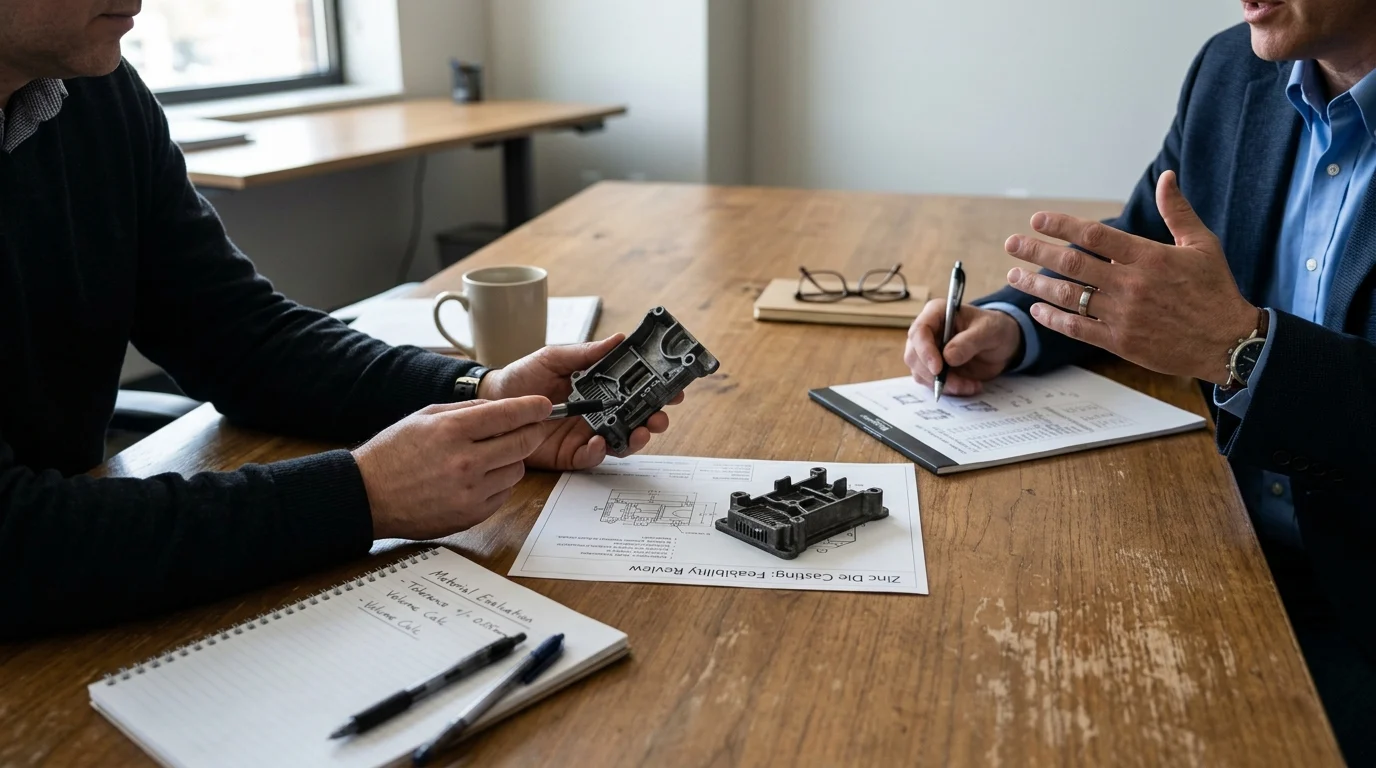
Determining whether zinc die casting is the optimal manufacturing route requires a careful analysis of production volumes, mechanical requirements, and lifecycle costs. A strategic qualification process prevents costly misalignments between part design and manufacturing capability.
Qualification steps for part and volume fit
The first qualification step involves assessing production volume. Because die casting requires a significant upfront investment in custom steel tooling, it is rarely suitable for prototyping or low-volume runs. The break-even point for zinc die casting—where the lower piece price offsets the tooling cost compared to CNC machining—typically falls between 5,000 and 10,000 units annually. Part size and weight also dictate suitability. While zinc is excellent for micro-components weighing less than 10 grams, parts exceeding 2 kilograms may become prohibitively heavy and expensive due to raw material costs, making aluminum or magnesium more viable alternatives.
Decision criteria for sourcing
When establishing decision criteria for sourcing, procurement teams must evaluate the Total Cost of Ownership rather than just the raw piece price. If a part currently requires multiple machined components to be welded or fastened together, redesigning it as a single zinc die cast piece can eliminate assembly labor and reduce inventory carrying costs. Furthermore, buyers should consider sustainability mandates; zinc is 100% recyclable, and die cast scrap can be remelted with negligible loss of mechanical properties. By factoring in tooling longevity, finishing requirements, and assembly consolidation, engineers can accurately determine if zinc die casting aligns with their commercial and technical objectives.
Key Takeaways
- The most important conclusions and rationale for Zinc Die
- Specs, compliance, and risk checks worth validating before you commit
- Practical next steps and caveats readers can apply immediately
Frequently Asked Questions
What makes zinc die casting a cost-effective choice for custom metal parts?
It combines fast cycles, long tool life, and near-net-shape accuracy, which cuts machining, assembly steps, and total cost on medium to high-volume programs.
Which zinc alloy is best for most custom die cast parts?
Zamak 3 is the usual first choice for balanced strength, stability, and castability. Use Zamak 5 when you need higher hardness and tensile strength.
How precise can zinc die cast parts be?
Zinc die casting can often hold tolerances around ±0.025 mm, depending on part geometry, die design, and process control. This often reduces or avoids secondary machining.
Where is zinc die casting commonly used?
Typical uses include electronics housings, automotive hardware, gears, locks, connectors, and decorative components. It works well for thin walls, detailed features, and EMI/RFI shielding needs.
Can JHPIM support custom zinc die casting projects from design to production?
Yes, JHPIM can support custom part development with DFM input, tooling planning, alloy selection, and production guidance to help improve manufacturability and cost efficiency.