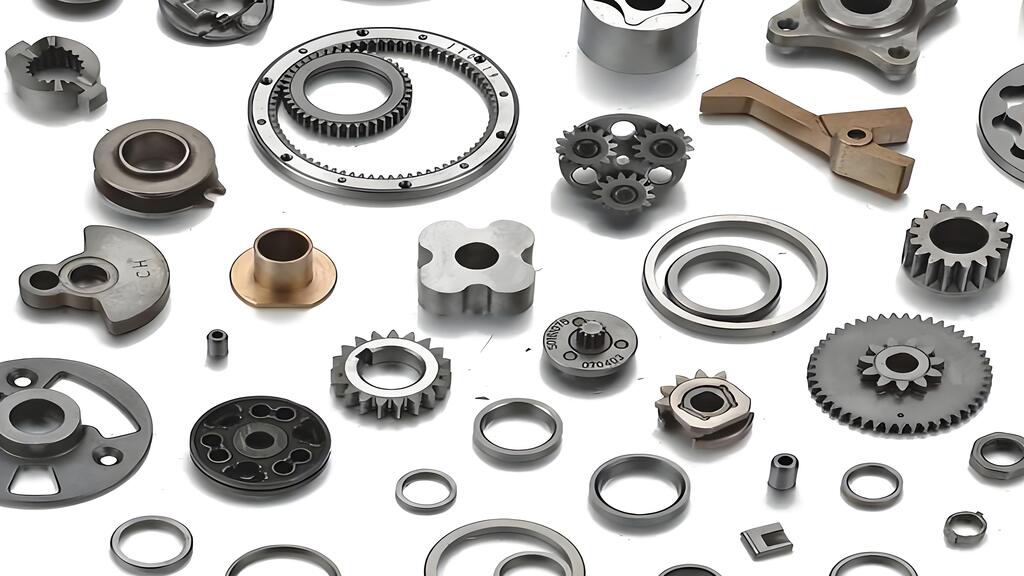


Flanged Sintered Bushings
Flanged sintered bushings are self-lubricating components. They provide critical support and reduce friction in countless mechanical applications. These components ensure smooth operation and extend machine life. They often go unnoticed despite their vital role. The global market for these essential parts is significant, reaching hundreds of millions of USD. Experts project a Compound Annual Growth Rate of 6.7% for the slide bearings with flange market, highlighting their growing demand.
Key Takeaways
- Flanged sintered bushings are self-lubricating parts. They support machines and reduce friction.
- These bushings have a special flange. This flange provides support and handles forces along the shaft.
- The bushings have tiny holes. These holes hold oil and release it during use for constant lubrication.
- They reduce maintenance needs. They also save money and make machines last longer.
- These bushings reduce shaking and noise. They work well in many different places, even hot or dirty ones.
- They are used in cars, home appliances, and factory machines. They help these items work smoothly.
- Choosing the right bushing means picking the correct material and size. Consider where the machine will be used.
- Proper installation and regular checks help bushings last longer. Avoid overloading them.
What Are Flanged Sintered Bushings?
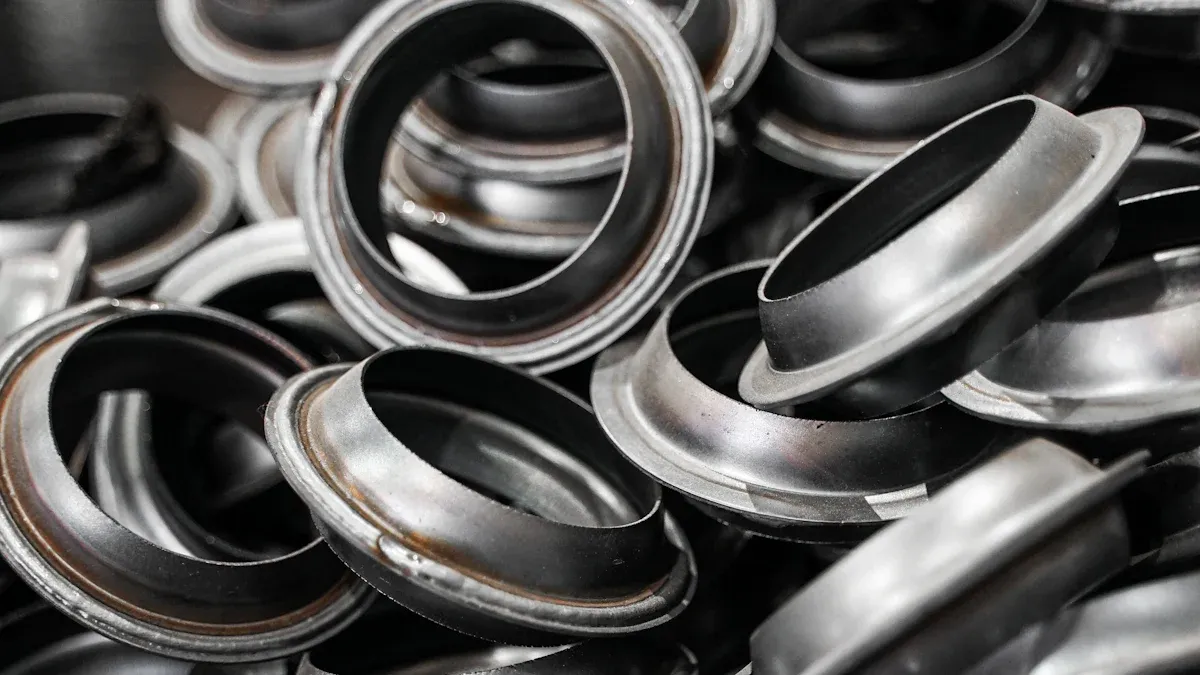
Defining Flanged Sintered Bushings
Flanged sintered bushings are specialized components. They provide crucial support and reduce friction in mechanical systems. Manufacturers create these bushings through Powder Metallurgy. This process involves compacting metal powders into a desired shape. Then, they heat the compacted part below its melting point. This creates a porous structure. This structure allows for oil impregnation, making them self-lubricating.
The manufacturing process for these parts is precise. It begins with blending metal powders and lubricants. Next, briquetting compresses these powders under high pressure. Sintering then heats the compressed parts in a furnace. This bonds the particles into a solid mass. Further steps like repressing, infiltrating, and impregnation refine the part. Impregnation fills the pores with lubricant. Sometimes, heat treating or machining occurs for specific properties or shapes.
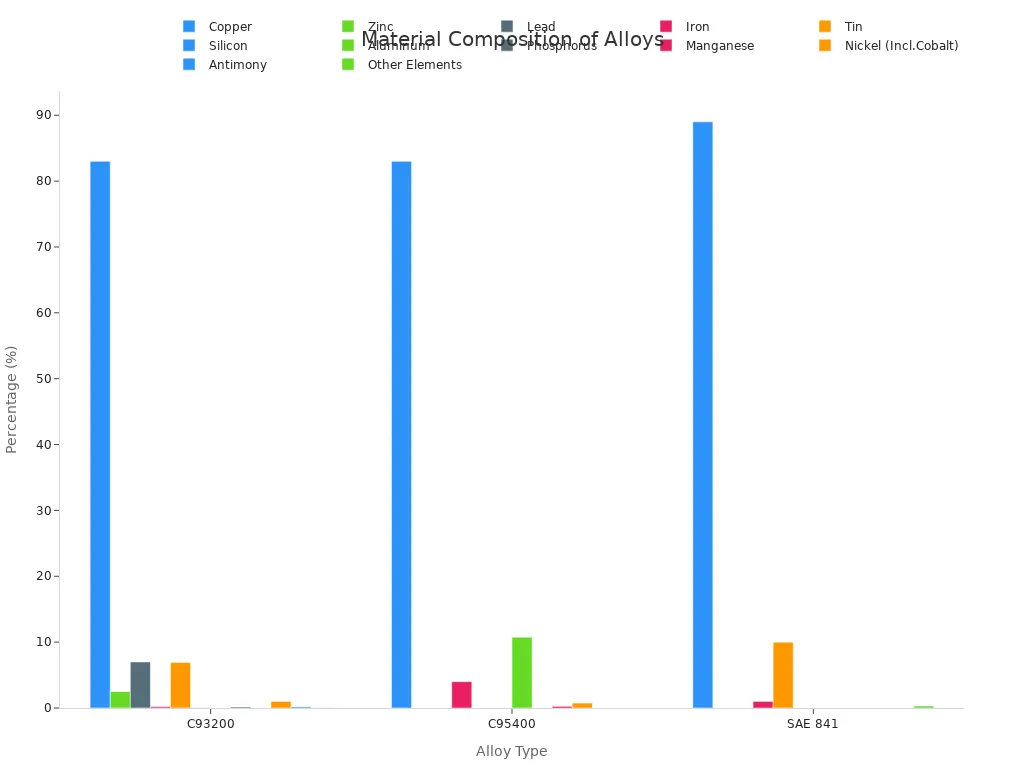
Various metals form flanged sintered bushings. SAE 841 Sintered Bronze Flanged Bearings are a common type. They use powder metallurgy. This process utilizes metals like copper, tin, and iron. Other materials include aluminum, nickel, brass, steel, stainless steel, and titanium. The specific alloy composition determines the bushing's properties. For example, different bronze alloys offer varied performance characteristics.
| ALLOY | COPPER (%) | ZINC (%) | LEAD (%) | IRON (%) | TIN (%) | SILICON (%) | ALUMINUM (%) | PHOSPHORUS (%) | MANGANESE (%) | NICKEL (INCL.COBALT) (%) | ANTIMONY (%) | OTHER ELEMENTS (%) |
|---|---|---|---|---|---|---|---|---|---|---|---|---|
| C93200 | 81-85 | 1-4 | 6-8 | 0.2 | 6.3-7.5 | 0.005-0.08 | 0.005 | 0.15 | None | 1 | 0-0.35 | 0-0.08 Sulfur |
| C95400 | 83 (minimum) | None | None | 3-5 | None | None | None | None | 0-0.5 | 0-1.5 | None | None |
| SAE 841 | 87.5-90.5 | None | None | 1 | 9.5-10.5 | None | None | None | None | None | None | 0.3 Carbon |
The Unique Flange Design
The flange is a distinctive feature of these bushings. It is a built-in rim or collar. This design element sets them apart from plain cylindrical bushings. The flange provides several critical functions. It enhances the bushing's overall performance and versatility.
Axial Support and Location
The flange offers precise axial location. It acts as a stop or shoulder. This prevents the bushing from moving along the shaft's axis. This precise positioning is crucial in many applications. It ensures components remain correctly aligned. Some flanges even include mounting holes. These holes provide enhanced stability. They secure the bushing firmly in place.
Thrust Bearing Capabilities
Flanged sintered bushings also incorporate thrust bearing capabilities. The flange surface can withstand axial loads. These are forces acting parallel to the shaft. This design prevents excessive shaft movement. It manages forces that push or pull the shaft along its axis. This makes them ideal for applications demanding precise alignment and axial load management.
The Sintered Advantage: How Flanged Sintered Bushings Work
Porous Structure and Oil Impregnation
The unique functionality of flanged sintered bushings stems from their distinct internal structure. This structure allows them to operate without external lubrication for extended periods. Manufacturers engineer these bushings for self-sufficiency.
The Sintering Process Explained
The creation of this porous structure begins with the sintering process. This manufacturing method involves compacting fine metal powders, such as bronze or iron, into a specific shape. Workers then heat this compacted "green" part in a controlled atmosphere furnace. The temperature remains below the metal's melting point. During heating, the metal particles bond together at their contact points. This bonding forms a solid, yet porous, matrix. The spaces between the bonded particles create a network of interconnected microscopic pores. This porous network is crucial for the bushing's self-lubricating capabilities.
Self-Lubrication Mechanism
After sintering, manufacturers impregnate these pores with lubricating oil. This process involves submerging the porous bushing in oil under vacuum. The vacuum removes air from the pores, allowing the oil to fill them completely. The bushing then stores this oil within its material. This stored oil forms a continuous lubrication film. This film becomes active during the operation.
Oil impregnation significantly enhances the performance of sintered bushings through several lubrication mechanisms:
- Capillary Action: Oil within the microscopic pores forms a continuous lubrication film. This mechanism proves effective in low-load, high-speed applications.
- Boundary Lubrication: A thin layer of oil deposits on the metal surface. This layer forms a protective boundary. It reduces friction and wear, making it suitable for moderate to high-load applications.
- Hydrodynamic Lubrication: Under heavy loads, oil forces itself into a wedge-shaped film. This creates a hydrodynamic cushion that separates surfaces. This mechanism is ideal for high-load, low-speed applications.
Constant Lubrication for Smooth Operation
The self-lubricating nature of flanged sintered bushings ensures constant lubrication during operation. The heat and motion generated by moving parts cause the stored oil to release gradually. This oil release occurs primarily through capillary action. The oil migrates from the pores to the bearing surface. This provides continuous lubrication between the moving parts. This mechanism effectively reduces friction and prevents metal-to-metal contact. It also minimizes maintenance needs.
This continuous lubrication offers substantial advantages. It significantly improves the performance characteristics of sintered bushings.
- Reduced Maintenance: The self-lubricating feature minimizes the need for frequent manual lubrication. This lowers operating costs.
- Enhanced Durability: Bushings can withstand heavy loads, shock, and vibration. This extends equipment life.
- Temperature and Environment Resistance: They exhibit high resistance to extreme temperatures and harsh environments. This broadens their application suitability.
- Reduced Friction and Wear: The continuous lubrication provided by the oil minimizes friction and wear on mating surfaces.
- Increased Longevity: The self-lubricating nature and robust design contribute to a longer operational lifespan for both the bushings and the equipment they support.
Key Benefits of Flanged Sintered Bushings
Reduced Maintenance and Self-Lubrication
These components offer significant advantages. Their self-lubricating nature stands out as a primary benefit. The porous material holds oil within its structure. This oil is released during operation. It creates a constant lubricating film between moving parts. This mechanism eliminates the need for frequent manual lubrication. Machines require less downtime for maintenance tasks. Operators save on labor costs associated with lubrication schedules. The consistent lubrication ensures reliable performance over extended periods. This feature makes them ideal for applications where access for lubrication is difficult. It also suits environments demanding minimal human intervention. This inherent self-sufficiency simplifies machine operation and reduces ongoing operational expenses. It also minimizes the risk of lubrication failure, which can lead to costly repairs.
Cost-Effectiveness and Extended Longevity
These components provide excellent long-term value. They contribute significantly to the overall cost-effectiveness of mechanical assemblies. Bushings are generally less expensive to produce than traditional rolling element bearings. Their design is simpler. Manufacturing processes are also less complex. Installation and replacement are often straightforward. They do not require complex assembly or disassembly procedures. This saves valuable time and labor during machine setup or repair. Furthermore, bushings can act as a sacrificial component. They protect more expensive parts like shafts or casings from wear. This extends the life of critical machine elements. While the initial investment for high-quality flanged sintered bushings might be slightly higher than basic alternatives, they lead to substantial long-term savings. This comes from increased operational efficiency, reduced maintenance needs, and prolonged equipment lifespan. Their robust construction and self-lubricating properties ensure a long operational lifespan for the entire system, making them a smart economic choice.
Vibration Damping and Noise Reduction
These components also excel in managing machine dynamics. Their unique material composition helps dampen vibrations effectively. The porous structure, filled with lubricating oil, absorbs kinetic energy. This reduces the transmission of vibrations throughout the mechanical system. Less vibration means quieter operation. This creates a more comfortable and safer working environment for operators. It also reduces mechanical stress on other machine components. Lower vibration levels contribute to increased machine accuracy and precision. This benefit is particularly valuable in sensitive equipment. It also helps in applications where noise pollution is a significant concern. The inherent damping properties of these bushings contribute to smoother, more stable machine performance, enhancing overall machine reliability and user experience.
Versatility Across Diverse Environments
The robust design and inherent properties of these components allow them to perform reliably in a wide array of operating conditions. Manufacturers engineer them to withstand challenges that would compromise other bearing types. This adaptability makes them a preferred choice for many industries. Their self-lubricating nature is a key factor in this versatility. It ensures consistent performance even when external lubrication is impractical or impossible.
These bushings excel in environments with:
- Extreme Temperatures: They maintain their structural integrity and lubricating properties across broad temperature ranges. Specialized alloys and lubricants allow operation in both freezing cold and intense heat. This makes them suitable for applications from aerospace to industrial ovens.
- Contaminant Exposure: The porous structure, once impregnated with oil, resists the ingress of dust, dirt, and other airborne particles. The oil creates a barrier. This barrier prevents abrasive materials from reaching critical bearing surfaces. This feature is vital in construction equipment, agricultural machinery, and dusty manufacturing plants.
- Moisture and Humidity: Certain material compositions and oil types provide resistance to moisture. This prevents corrosion and maintains lubrication effectiveness in damp or humid conditions. Marine applications and outdoor machinery benefit greatly from this resilience.
- Chemical Exposure: Engineers can select specific metal powders and impregnating oils to resist various chemicals. This allows the bushings to operate in corrosive environments without degradation. Chemical processing plants and certain automotive applications utilize this capability.
- Vacuum Conditions: In applications where traditional lubricants would evaporate, the oil impregnated within the bushing's pores remains stable. This makes them suitable for space applications or vacuum chambers.
- High Loads and Speeds: While self-lubricating, their material strength allows them to handle significant radial and axial loads. The continuous oil film reduces friction and wear under dynamic conditions.
This broad environmental tolerance reduces the need for complex sealing mechanisms or frequent maintenance. It simplifies machine design and lowers operational costs. The ability of flanged sintered bushings to adapt to such varied and demanding conditions truly highlights their indispensable role in modern machinery.
Where Flanged Sintered Bushings Excel: Common Applications
Flanged sintered bushings find widespread use across numerous industries. Their unique properties make them indispensable components in various mechanical systems. They ensure smooth operation and extend the lifespan of equipment.
Automotive Industry Applications
The automotive industry heavily relies on these components for critical functions. Engineers integrate them into various vehicle systems. They provide essential support and reduce friction. For example, steering systems benefit greatly from their design. Bushings offer both axial and radial support. This specialized design addresses particular mechanical requirements. It enhances the flexibility and performance of the steering system.
Sintered bushings are utilized in steering columns and linkages. They ensure precise and responsive steering. They contribute to smooth and accurate steering control. These bushings reduce play and guarantee an accurate steering response. This improves vehicle safety and overall performance. They also play a role in providing a comfortable driving experience. Aluminum flange bushings are crucial for maintaining correct alignment in steering systems. They ensure a smooth mechanical response. Their low friction allows handling components to move easily. This reduces resistance that could make a vehicle feel stiff or slow to react. This ensures that the driver's steering inputs are accurately transmitted to the wheels. It leads to improved vehicle handling and road feedback. These bushings also resist bending under repeated steering loads. They maintain shape stability over time. They help keep tolerances tight and minimize wear. This prevents steering play and uneven tire wear. Ultimately, they provide the driver with greater confidence, better high-speed control, and a more responsive driving experience.
Home Appliances and Consumer Electronics
Many everyday items in homes also incorporate these versatile components. They contribute to the quiet and efficient operation of various appliances. Manufacturers use them in:
- Refrigerators
- Clothes washing machines
In these applications, the bushings reduce friction in moving parts. They ensure smooth rotation of motors and shafts. This minimizes noise and extends the appliance's operational life. Their self-lubricating nature means these appliances require less maintenance. This provides convenience for consumers.
Industrial Machinery and Equipment
Industrial settings present some of the most demanding environments for mechanical components. These bushings excel in such conditions. They are crucial in heavy machinery, conveyor systems, and pumps. Their durability and self-lubricating properties make them ideal for continuous operation. They reduce wear on critical moving parts. This minimizes downtime for maintenance and repairs. Their ability to withstand high loads and harsh environments ensures reliable performance. This contributes to the overall efficiency and productivity of industrial operations.
Office Equipment and Other Mechanisms
Flanged sintered bushings also play a crucial role in the smooth operation of various office equipment and other intricate mechanisms. These components ensure reliability and quiet performance in devices people use daily. Their precise design and self-lubricating properties make them ideal for applications requiring consistent movement and minimal maintenance.
In printers and copiers, for example, numerous moving parts require support and friction reduction. Bushings guide paper trays, support rollers, and facilitate the movement of print heads. They ensure these machines operate quietly and efficiently. The self-lubricating nature of the bushings prevents wear on critical shafts and pivots. This extends the lifespan of the equipment. Without these bushings, the constant friction would lead to rapid degradation and increased noise levels.
Tip: The self-lubricating feature of flanged sintered bushings is particularly beneficial in office environments. It eliminates the need for messy external lubricants, keeping equipment clean and reducing maintenance demands.
Beyond traditional office machines, these bushings appear in a wide array of other mechanisms. They are essential in small motors, actuators, and control systems. Consider their use in:
- Vending machines: Bushings support the mechanisms that dispense products, ensuring smooth delivery.
- Medical devices: Precision instruments often rely on these bushings for accurate and reliable movement.
- Robotics: Small robotic arms and joints utilize bushings for controlled and fluid motion.
- HVAC systems: Dampers and fan motors incorporate bushings to reduce friction and noise.
The ability of flanged sintered bushings to provide consistent performance in diverse conditions makes them invaluable. They handle varying loads and speeds effectively. Their compact size allows integration into complex designs where space is limited. Manufacturers appreciate their cost-effectiveness and durability. These characteristics contribute significantly to the overall quality and longevity of the final product. The bushings ensure that these mechanisms function reliably over extended periods, often without requiring any intervention. This silent contribution underscores their status as unsung heroes in the world of mechanical engineering.
Selecting the Right Flanged Sintered Bushings
Selecting the correct flanged sintered bushings is crucial for machine performance. Engineers consider several factors. These factors ensure optimal function and longevity.
Material Composition Considerations
A bushing's material composition significantly impacts its performance. Different applications require specific material properties.
Sintered Bronze Flanged Bushings (SAE 841)
Sintered bronze bushings offer excellent self-lubricating properties and good wear resistance. These characteristics suit them for moderate-load environments. SAE 841 is a common bronze alloy. It exhibits specific physical properties.
| Alloy | Nominal Density (lbs./cu.in) | Modulus of Elasticity (ksi) | Melting Point or Range (degrees F) |
|---|---|---|---|
| C93200 | 0.322 | 14,500 | 1570-1790 |
| C95400 | 0.269 | 15,500 | 1880-1900 |
| SAE 841 | 0.231-0.246 | Not Rated | 1800-2000 |
Sintered Iron Flanged Bushings
Sintered iron bushings provide higher tensile strength and superior load-bearing capacity. These properties make them ideal for heavy-duty machinery. They perform well in applications with frequent shock loads or vibrations, offering high wear resistance. At higher temperatures, sintered iron bushings can experience decreased strength and hardness. Changes in the material's atomic structure cause this. It makes the material more malleable, potentially leading to deformation under loads it handles at room temperature. However, the porous structure of sintered iron acts as a lubricant reservoir. This allows lubricant to flow more easily at high temperatures. It ensures continuous lubrication, reducing friction and wear even in extreme heat.
Other Specialized Alloys
Manufacturers also produce bushings from other specialized alloys. These alloys meet unique application demands. They include materials like aluminum or stainless steel. These materials offer specific benefits, such as corrosion resistance or lighter weight.
Dimensions and Tolerances for Optimal Fit
Precise dimensions are critical for bushing selection. Engineers match the bushing's inner and outer diameters to the shaft and housing. Proper fit prevents excessive play and avoids binding. Tolerances define the acceptable range of variation. Tight tolerances ensure optimal performance and prevent premature wear.
Operating Environment Factors
The operating environment significantly influences bushing choice. Engineers consider various environmental conditions.
Temperature Ranges and Resistance
Bushings must withstand the operating temperature range. High-temperature applications require specific material properties. The porous structure acts as a reservoir for specialized bearing oil. This oil ensures continuous lubrication even under extreme heat. Manufacturers choose the oil for thermal stability and viscosity at elevated temperatures. The metal matrix can be tailored with specific alloys. These alloys enhance heat resistance and durability, maintaining structural integrity and dimensional stability under thermal cycling. Controlled porosity allows flexibility. It accommodates thermal expansion without compromising performance. The sintering process ensures precise dimensional control. It maintains specified tolerances at high temperatures for reliable operation.
Contaminant and Chemical Exposure
Exposure to contaminants and chemicals affects bushing longevity. Dust, dirt, and moisture can degrade performance. Chemical exposure requires materials resistant to corrosion. Engineers select materials and lubricants that resist specific environmental threats. This ensures reliable operation and extends service life.
Maximizing Performance and Longevity of Flanged Sintered Bushings
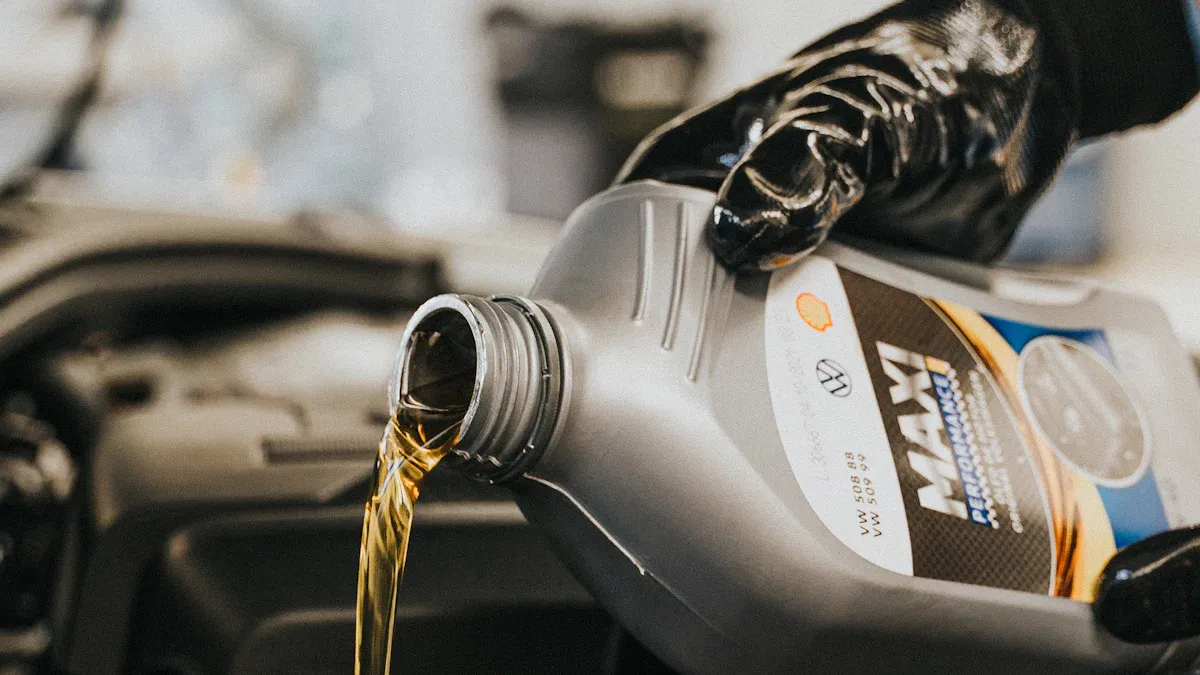
Ensuring the long-term reliability of mechanical systems depends heavily on the proper handling and maintenance of their components. Flanged sintered bushings, while robust, perform best and last longest with correct practices. Engineers and technicians must follow specific guidelines to maximize their operational life and efficiency.
Proper Installation Techniques
Correct installation is paramount for the optimal performance of any bushing. Technicians must first ensure the housing bore and shaft are clean and free from burrs or debris. Any contamination can impede proper seating and lead to premature wear. They should use an arbor press for installation, applying steady, even pressure to the bushing's flange or outer diameter. This prevents distortion of the bushing or damage to its porous structure. Hammering or using excessive force can deform the bushing, compromising its fit and self-lubricating capabilities. Proper alignment during installation also prevents uneven loading, which can significantly reduce the bushing's lifespan.
Inspection and Replacement Guidelines
Regular inspection helps identify potential issues before they escalate into major failures. Technicians should look for several key indicators signaling a need for replacement. These include:
- Excessive looseness in the assembly.
- Unusual noise emanating from the bearing point.
- Increased vibration during operation.
- Noticeable increases in friction, leading to higher operating temperatures.
Beyond these immediate signs, technicians also monitor for signs of too much wear, contamination, or low moisture within the bushing. Proactive measures, such as monitoring temperature and analyzing vibrations, help detect problems before they worsen. These diagnostic tools show how bearings wear out over time, allowing for scheduled replacements rather than reactive repairs.
Avoiding Common Operational Pitfalls
Several operational pitfalls can shorten the life of these critical components. Overloading the bushing beyond its specified radial or axial capacity is a common mistake. This leads to accelerated wear and potential failure. Operating outside the recommended temperature range can also degrade the lubricant within the pores or compromise the material integrity. Exposure to harsh chemicals or excessive contaminants without adequate protection can also damage the bushing. Even though they are self-lubricating, extreme conditions might necessitate additional protective measures or specialized materials. Proper machine design and adherence to manufacturer specifications prevent these issues, ensuring the bushings deliver their intended performance and longevity.
The Indispensable Role of Flanged Sintered Bushings
Enhancing Machine Efficiency and Reliability
Flanged sintered bushings significantly boost machine efficiency and reliability. They achieve this by reducing friction and wear between moving parts. Their self-lubricating properties are key. Solid lubricants distribute evenly within the material. These lubricants form a protective film during operation. This mechanism minimizes friction and heat generation. It enables smoother shaft movement. This reduces energy loss. The result is improved operational stability and reliability in mechanical systems. Machines operate more consistently. They experience fewer breakdowns. This leads to increased productivity and lower operating costs. The bushings ensure components move freely, preventing premature failure.
Contributing to Sustainable Engineering
These components also play a vital role in sustainable engineering practices. Bronze, an alloy of copper and tin, is highly recyclable. A significant portion of copper used today comes from recycled sources. This means sintered bronze bushings can be recycled into new products. This reduces the need for virgin materials. Iron, another common material in sintered bushings, is one of the most recycled metals globally. Recycling iron uses considerably less energy than producing it from iron ore. This promotes a more circular economy.
Sintered metal bushings offer excellent wear resistance and low friction. This leads to a long service life. Their longevity reduces the frequency of replacements. This minimizes the consumption of new materials and the generation of waste. Unlike less durable options, sintered bushings provide years of reliable service. This positively impacts the environment by lowering overall material consumption. Some flanged sintered bushings, like Flanged Oilite Bushings, are self-lubricating. They contain tiny pores that hold and gradually release lubricant during operation. This reduces the need for external lubrication. It minimizes the risk of environmental pollution from leaking or spilling external lubricants. These could contaminate soil and water. Even if the lubricant depletes, technicians can often re-lubricate these bushings instead of replacing them. This further extends their lifespan and reduces waste.
Why They Are Truly Unsung Heroes
Flanged sintered bushings are truly unsung heroes in the mechanical world. They perform critical functions quietly and consistently. They ensure smooth operation, extend machine life, and contribute to energy efficiency. Their self-lubricating nature reduces maintenance needs. Their durable construction withstands harsh environments. They support sustainable practices through recyclability and longevity. These small components often go unnoticed. Yet, they are fundamental to the reliable performance of countless machines. They enable the complex systems we rely on daily to function flawlessly. Their silent contribution makes them indispensable.
These small but mighty components are fundamental to the smooth, efficient, and reliable operation of countless machines. Their self-lubricating properties, durability, and versatility make them indispensable. They truly earn the title of 'unsung heroes' in the mechanical world. They ensure systems function flawlessly, often without notice. Their quiet contribution enables the complex machinery we rely on daily.
FAQ
What is a flanged sintered bushing?
A flanged sintered bushing is a self-lubricating component. Manufacturers create it from compacted metal powders. It features a collar or rim. This design provides both radial and axial support in mechanical systems.
How do flanged sintered bushings lubricate themselves?
These bushings have a porous structure. Manufacturers impregnate this structure with oil. During operation, heat and motion release the stored oil. This creates a continuous lubricating film between moving parts.
What are the main benefits of using flanged sintered bushings?
They offer reduced maintenance due to self-lubrication. They provide cost-effectiveness and extended longevity. They also dampen vibrations and reduce noise. Their versatility allows use in diverse environments.
Where do flanged sintered bushings get used?
They find extensive use in the automotive industry. Home appliances and consumer electronics also use them. Industrial machinery and office equipment rely on them. Many other mechanisms benefit from their properties.
How do you choose the right material for a bushing?
Engineers consider the application's specific needs. Sintered bronze (SAE 841) suits moderate loads. Sintered iron handles heavy loads. Specialized alloys offer corrosion resistance or lighter weight.
Do flanged sintered bushings require maintenance?
Their self-lubricating nature significantly reduces maintenance needs. They do not require frequent external lubrication. Regular inspection helps identify wear or damage. This ensures optimal performance and longevity.
Can flanged sintered bushings handle high temperatures?
Yes, they can. Manufacturers select specific alloys and lubricants for high-temperature applications. The porous structure ensures continuous lubrication. This maintains performance even in extreme heat.
Are flanged sintered bushings environmentally friendly?
They contribute to sustainable engineering. Bronze and iron are highly recyclable. Their long service life reduces material consumption. Self-lubrication minimizes the need for external lubricants, preventing pollution.