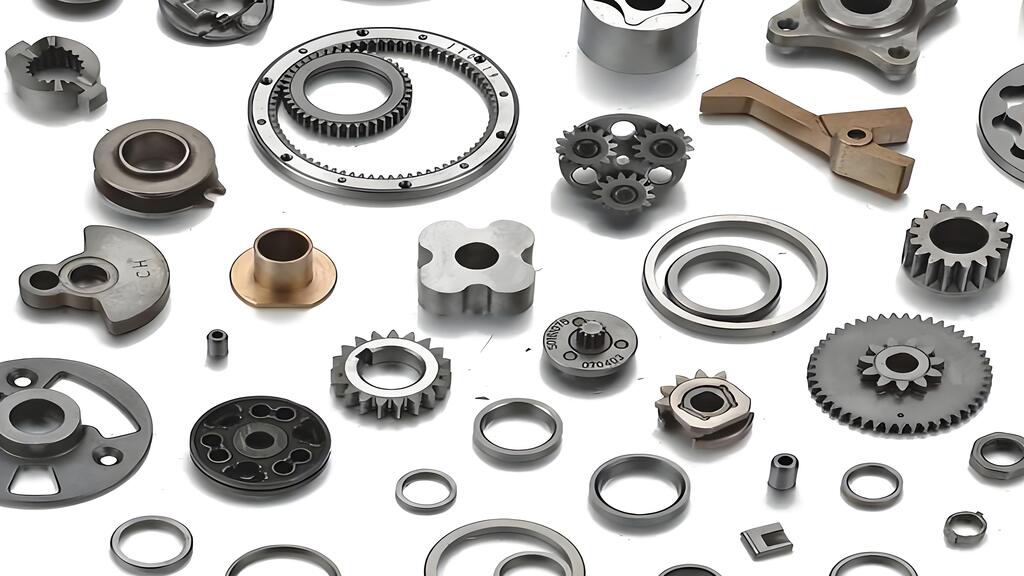


Powder Metallurgy for Gears, Bearings, and Structural Parts
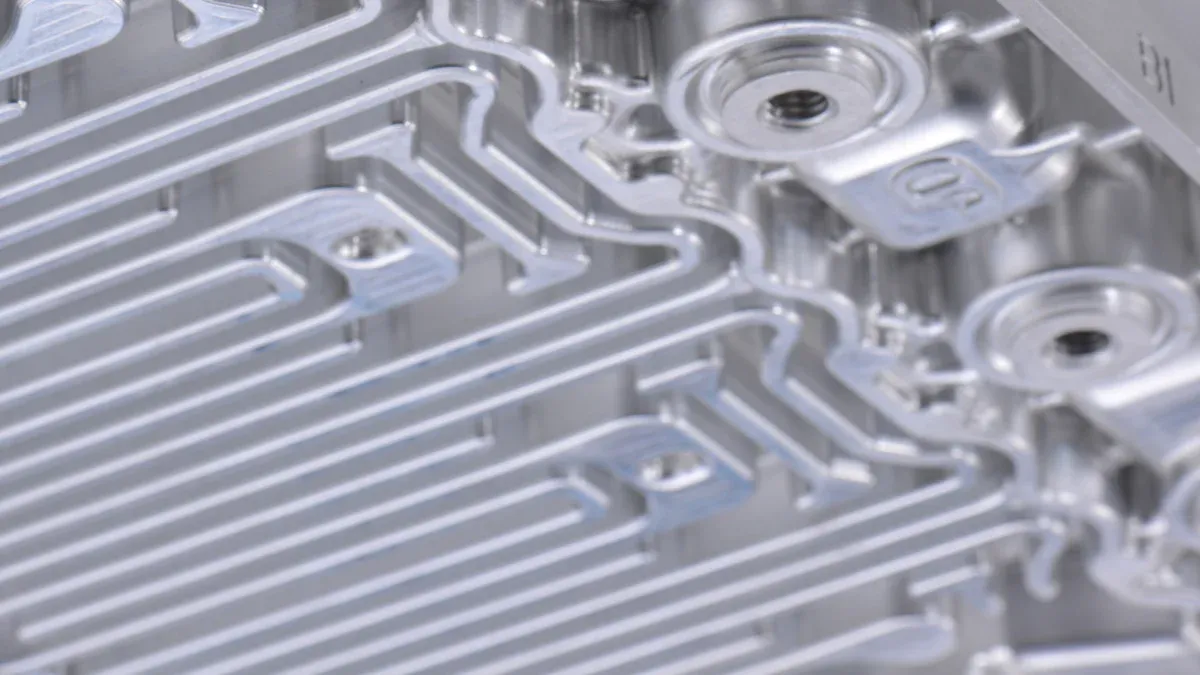
Powder Metallurgy is a metalworking process. It forms parts from metal powders. This method offers significant advantages for manufacturing complex and high-performance components. These include gears, bearings, and structural parts. The global market for this technology is substantial. It was estimated at USD 2.96 billion by Grand View Research and USD 3.10 billion by Maximize Market Research in 2024. Experts project continued growth. Various reports indicate a Compound Annual Growth Rate (CAGR) from 6.77% to 14.89% between 2025 and 2034. This process is crucial for modern component manufacturing. It produces precision, high-accuracy, and cost-effective parts. These parts also have unique material properties.
Key Takeaways
- Powder metallurgy (Pm) forms parts from metal powders. It makes complex, high-performance components like gears and bearings.
- PM involves several steps. These include powder making, mixing, pressing, and heating. Each step is important for the final product.
- PM offers great control over part density. It allows for unique material mixes. This reduces waste and saves money.
- PM makes strong gears. It creates complex shapes with high accuracy. This lowers costs by needing less extra work.
- PM is good for bearings. It makes them self-lubricating. This means they need less care and last longer.
- PM creates strong structural parts. It makes complex shapes easily. This uses materials well and reduces waste.
- PM has some limits. Tooling costs are high for small orders. PM parts may not be as strong as forged parts.
- PM is growing. New materials and methods are coming. It is important for electric cars and medical devices.
Understanding Powder Metallurgy: The Core Process

Powder metallurgy is a versatile manufacturing method. It transforms metal powders into finished components. This process involves several distinct stages, each crucial for the final product's quality and performance.
The Powder Metallurgy Manufacturing Steps
Powder Production Methods
Manufacturers create metal powders through various methods. Atomization is a common technique. It involves melting metal and then breaking the molten stream into fine droplets using gas or water jets. These droplets solidify into powder particles. Other methods include chemical reduction and electrolysis.
Blending and Mixing
After powder production, engineers blend and mix different powders. They combine various metal powders, such as iron and copper, to achieve specific material properties. Lubricants and binders are often added during this stage. These additives help with compaction and improve the green strength of the pressed part.
Compaction Techniques
Compaction is the process of pressing the blended powder into a desired shape. Manufacturers typically use high pressure in a die. This forms a "green compact," which is a fragile, unsintered part. Isostatic pressing, which applies pressure from all directions, is another compaction method for more complex shapes.
Sintering: The Bonding Process
Sintering is a critical heat treatment step. Manufacturers heat the green compact in a controlled atmosphere, usually below the metal's melting point. During sintering, particles bond together through atomic diffusion. This process increases the part's strength and density.
Secondary Operations and Finishing
After sintering, parts may undergo secondary operations. These include sizing, coining, or machining to achieve tighter tolerances. Heat treatment can enhance hardness and strength. Surface treatments like plating or impregnation with oil also improve performance.
Key Characteristics of Powder Metallurgy Materials
Controlled Porosity and Density
Powder metallurgy offers precise control over a part's porosity and density. Manufacturers can create components with specific pore structures. This is particularly useful for self-lubricating bearings, which require interconnected pores to hold oil.
Material Combinations and Alloys
This process allows for the creation of unique material combinations. Engineers can tailor properties to meet specific performance requirements. These tailored properties include operating wear resistance, suitability for corrosive environments, and performance at high temperatures. Powder metallurgy materials exhibit various important characteristics. These include mechanical properties like ultimate tensile strength, yield strength, and ductility. Physical properties such as corrosion resistance, surface finish, and sound dampening are also achievable. Density-related properties like overall density, porosity, and permeability are precisely controllable.
Net-Shape and Near Net-Shape Capabilities
Powder metallurgy excels at producing parts close to their final dimensions. This "net-shape" or "near net-shape" capability significantly reduces the need for subsequent machining. It saves both time and material.
Material Utilization Efficiency
The PM process is highly efficient in material use. It generates very little scrap compared to traditional machining methods. This makes it an environmentally friendly and cost-effective manufacturing choice.
Types of Metal Powders Used in Powder Metallurgy
Ferrous Powders (Iron, Steel)
Ferrous powders, primarily iron and steel, are widely used. Iron powder forms the base for many structural components. Steel powders, including stainless steel, offer enhanced strength and corrosion resistance.
Non-Ferrous Powders (Copper, Aluminum, Titanium)
Non-ferrous powders also play a significant role. Copper powder is common in electrical components and bearings. Aluminum powder is used for lightweight applications. Titanium powder finds use in aerospace and medical implants due to its high strength-to-weight ratio and biocompatibility.
Specialty Alloys and Composites
Beyond basic metals, manufacturers use specialty alloys and composites. These include pre-alloyed powders, which are created by melting and atomizing metal alloys into fine, homogeneous particles. Examples include stainless steel powder, tool steel powder, and copper-tin alloy powder. These powders offer high strength, corrosion resistance, or wear resistance. Elemental metal powders, derived from pure metals like aluminum, copper, iron, and titanium, form the basis for many alloyed powders. Alloyed metal powders, combinations of two or more pure metals, provide enhanced properties. Examples include bronze and nickel-based superalloys.
Powder Metallurgy for Gears: Precision, Performance, and Cost-Effectiveness
Powder metallurgy offers significant advantages for manufacturing gears. This process ensures high precision, excellent performance, and cost-effectiveness. Manufacturers can produce intricate gear designs efficiently.
Advantages of Powder Metallurgy in Gear Manufacturing
Achieving Complex Geometries
Powder metallurgy enables the creation of complex gear geometries. It forms intricate tooth profiles and internal cavities. These designs are often difficult or impossible to achieve with traditional methods. This allows for advanced tooth designs and integrates multiple features into a single component. Many gears achieve their desired shape directly from sintering, eliminating additional machining.
High Dimensional Accuracy and Repeatability
The process produces highly precise parts with consistent quality. It ensures exact tolerances and uniform mechanical properties. This allows for more accurate dimensional control than casting or forging. Homogeneous distribution of metal particles ensures uniform strength and longevity.
Cost Reduction Through Reduced Machining
Powder metallurgy significantly reduces manufacturing costs. It streamlines production by creating complex geometries and integrated features in a single step. Traditional methods would require multiple operations. The process also boasts high material utilization.
| Manufacturing Method | Raw Material Utilization |
|---|---|
| Powder Metallurgy | 97% |
| Traditional Machining | 60-70% |
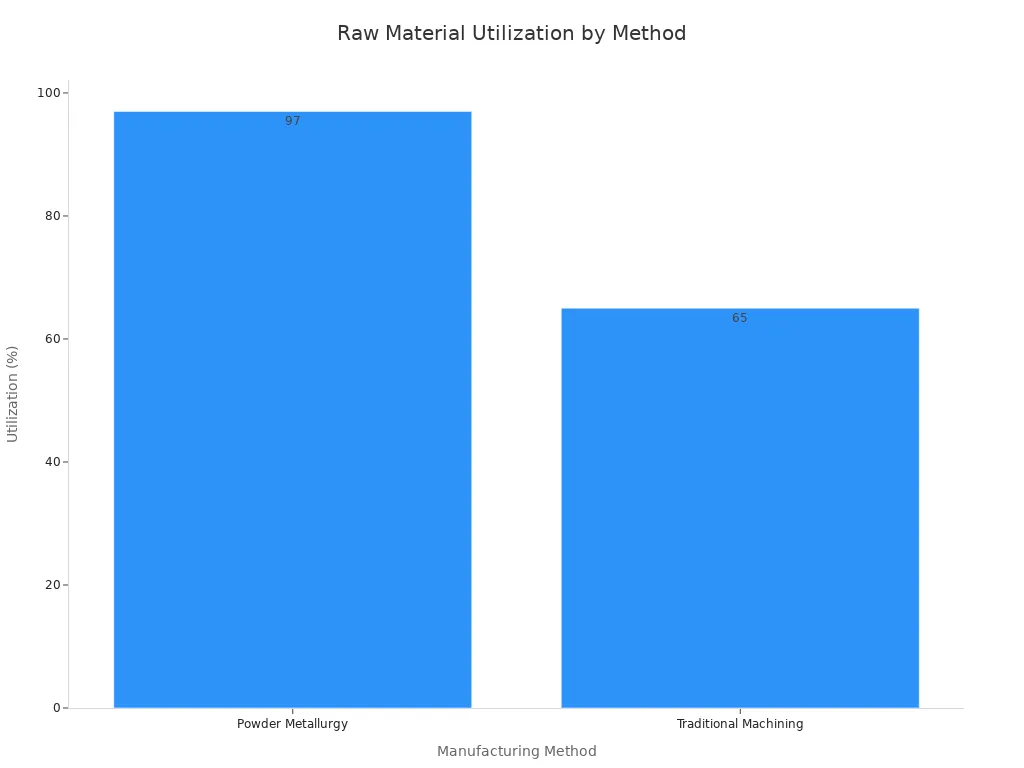
This high material efficiency minimizes scrap and reduces labor costs.
Material Customization for Specific Performance
Manufacturers can precisely control material composition. This enhances mechanical and physical properties like wear resistance, corrosion resistance, and hardness. They select specific alloys for high-stress applications. This results in highly durable and wear-resistant gears.
High Production Volume Efficiency
Powder metallurgy is ideal for mass production. It uses material and energy efficiently. This leads to minimal material waste and fewer processing steps compared to conventional methods.
Common Powder Metallurgy Gear Types and Applications
Powder metallurgy produces a wide range of gear types. These gears find applications across various industries.
Spur Gears and Helical Gears
Spur gears and helical gears are common types. Manufacturers use them in many mechanical systems.
Bevel Gears and Planetary Gears
Bevel gears and planetary gears are also frequently produced using this method. They are essential in complex power transmission systems. Other common types include oil pump gears, double gears, worm gears, and ratchets.
Automotive Transmissions and Engines
The automotive industry widely uses PM gears. Examples include oil pump rotors, timing gears, and ABS ring gears.
Power Tools and Appliances
Power tools and home appliances also benefit from PM gears. These include hammer-drill output gears, planetary gear sets, and washing machine transmissions.
Industrial Machinery and Robotics
Industrial machinery and robotics incorporate PM gears for reliable operation. These applications include small hydraulic/fuel/lube pump gearsets and various drive components.
Enhancing Powder Metallurgy Gear Properties
Manufacturers employ several techniques to improve the properties of PM gears.
Heat Treatment for Hardness and Strength
Heat treatments significantly enhance gear properties. Quenching heats sintered steel above its critical point. It then rapidly cools the steel to form a Martensite structure. This increases strength, hardness, and wear resistance. Tempering follows quenching. It reduces brittleness and eliminates internal stress. Annealing and normalizing are preparatory treatments. They relieve internal stress and improve mechanical properties. Case-hardening treatments like high-frequency quenching and carbonitriding also improve surface hardness and wear resistance.
Surface Densification Techniques
Achieving high density is crucial for strength. Companies use patented densification processes. These processes achieve densities over 7.6g/cm³, making strength comparable to solid steel.
Alloying Elements for Improved Wear Resistance
Material choices are critical. Manufacturers use low-alloy steels, iron-based alloys, and non-ferrous alloys. These materials provide specific mechanical properties like strength, hardness, and wear resistance. Alloying elements like chromium, nickel, and molybdenum improve wear resistance. Precise composition control also contributes to enhanced durability.
Gear Design Optimization for Powder Metallurgy
Optimizing the powder metallurgy process itself is vital. This involves adjusting compaction pressure and die design to increase density and uniformity. Controlling sintering temperature, time, and atmosphere reduces porosity. Post-sintering treatments like shot peening improve surface hardness and fatigue resistance.
Powder Metallurgy for Bearings: Self-Lubrication and Durability
Powder metallurgy offers distinct advantages for producing bearings. This process creates components with inherent self-lubricating properties and exceptional durability.
Why Powder Metallurgy is Ideal for Bearing Production
Inherent Porosity for Oil Impregnation
Powder metallurgy parts possess a unique porous structure. Manufacturers can impregnate these interconnected pores with oil or other lubricants. This creates a reservoir within the bearing itself.
Self-Lubricating Properties
The impregnated oil slowly releases during operation. This provides continuous lubrication to the bearing surfaces. This self-lubricating capability eliminates the need for external lubrication systems in many applications. It also reduces maintenance requirements.
Excellent Wear Resistance
Powder metallurgy components generally exhibit excellent wear resistance. This is attributed to the manufacturing process's ability to incorporate hard and wear-resistant materials directly into the parts. For instance, carburized powder metallurgy parts demonstrate enhanced wear resistance when processed under optimal conditions. This inherent resistance ensures a longer operational life for bearings.
Consistent Performance and Long Service Life
The controlled manufacturing process ensures consistent material properties and dimensional accuracy. This leads to reliable and predictable performance over an extended service life.
Cost-Effective Mass Production
Powder metallurgy is highly efficient for mass production. It produces complex bearing shapes with minimal material waste and reduced machining. This results in significant cost savings compared to traditional manufacturing methods.
Types of Powder Metallurgy Bearings and Their Applications
Powder metallurgy produces a diverse range of bearing types for various applications.
Sleeve Bearings and Bushings
Sleeve bearings and bushings are common PM bearing types. They provide support and reduce friction for rotating shafts.
Flange Bearings and Thrust Bearings
Flange bearings offer axial and radial support, while thrust bearings handle axial loads. PM effectively produces both types.
Here are some common types of powder metallurgy bearings and their characteristics:
| Type of Bearing | Characteristics |
|---|---|
| Porous Bronze Bearings | Made from bronze powder, these bearings are self-lubricating due to their porous structure, which retains oil. They are suitable for high-speed, low-load applications and offer good corrosion resistance. |
| Porous Iron Bearings | Produced from iron powder, these bearings are also self-lubricating and are ideal for applications requiring higher strength and wear resistance than bronze, but at lower speeds. They are more cost-effective than bronze. |
| Porous Iron-Graphite Bearings | Combining iron powder with graphite, these bearings offer enhanced self-lubrication and improved wear resistance, making them suitable for applications with intermittent operation or where additional lubrication is difficult. |
| Porous Bronze-Graphite Bearings | Similar to porous bronze, but with added graphite for improved self-lubrication and reduced friction. They are often used in applications requiring good electrical conductivity and corrosion resistance. |
| Porous Stainless Steel Bearings | Made from stainless steel powder, these bearings provide excellent corrosion resistance and higher strength, making them suitable for harsh environments or applications requiring cleanliness, such as in food processing or medical equipment. |
Electric Motors and Small Appliances
PM bearings are widely used in electric motors, washing machines, and other small appliances due to their self-lubricating nature.
Pumps and Fans
Pumps and fans often incorporate PM bearings for reliable, maintenance-free operation.
Automotive Components (e.g., shock absorbers)
The automotive industry uses PM bearings in various components, including shock absorbers, steering systems, and engine accessories.
Material Selection for Powder Metallurgy Bearings
Selecting the right material is crucial for bearing performance.
Bronze-Based Compositions
Bronze-based compositions are popular for their excellent self-lubricating properties and corrosion resistance. They are ideal for high-speed, low-load applications.
Iron-Based and Iron-Graphite Materials
Iron-based materials offer higher strength and wear resistance than bronze. Iron-graphite composites enhance self-lubrication and are suitable for intermittent operations.
Polymer-Impregnated Composites
Manufacturers sometimes impregnate PM bearings with polymers. This further improves friction reduction and wear characteristics.
Impregnation Oils and Lubricants
The choice of impregnation oil or lubricant significantly impacts bearing performance. Engineers select lubricants based on operating temperature, load, and environmental conditions.
Material selection for powder metallurgy bearings considers several factors:
| Material Type | Key Properties | Applications (including Bearings) |
|---|---|---|
| Iron-Based Alloys | Good mechanical strength and durability; can be alloyed for enhanced properties; heat-treatable for hardness and wear resistance | Automotive components, structural parts, bearings and bushings |
| Copper-Based Alloys | High electrical and thermal conductivity; good wear resistance and self-lubricating properties; excellent corrosion resistance | Electrical contacts, bearings and bushings, automotive and industrial machinery parts |
Engineers also consider specific requirements:
- Mechanical Requirements: They choose iron-based or stainless steel alloys for strength and hardness. Tungsten and nickel alloys provide excellent wear resistance. Aluminum and titanium are options for lightweight needs.
- Corrosion and Environmental Resistance: Stainless steel or nickel-based alloys suit humid or chemical environments. Nickel or tungsten alloys perform well in high-temperature applications.
- Electrical and Thermal Conductivity: Copper and aluminum alloys are suitable for electrical applications. Aluminum and tungsten alloys aid heat dissipation.
- Cost and Production Efficiency: Iron-based alloys offer low-cost options. Titanium and nickel-based alloys provide specialized properties for premium applications.
Powder Metallurgy for Structural Parts: Strength, Design Freedom, and Efficiency
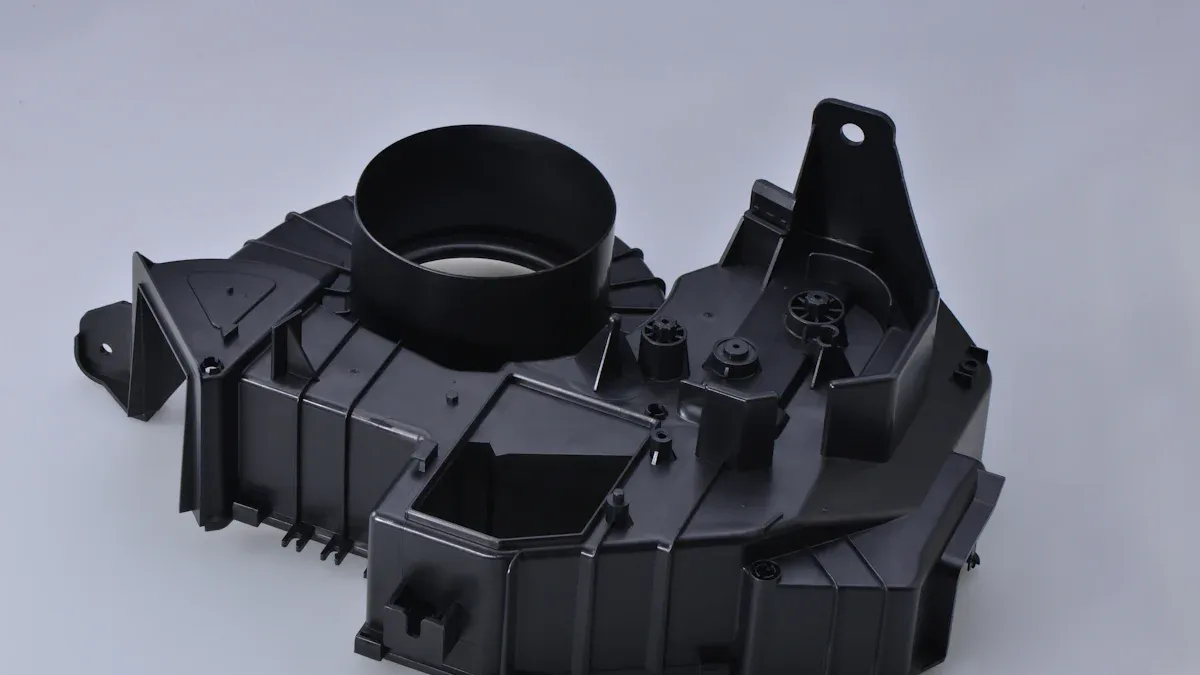
Powder metallurgy offers significant advantages for manufacturing structural components. This process delivers strong, precise parts with remarkable design freedom and efficiency. Manufacturers leverage these benefits across various industries.
Benefits of Powder Metallurgy for Structural Component Production
Net-Shape Manufacturing of Complex Forms
Powder metallurgy excels at producing complex shapes. Manufacturers create intricate designs that are difficult or impossible with other methods. This capability allows for near-net shapes, significantly reducing the need for extensive machining. It also enhances product quality by achieving good dimensional properties.
High Material Utilization and Reduced Scrap
The powder metallurgy process is highly efficient. It utilizes up to 97% of the starting material. Unused powder can often be reused, minimizing scrap. This efficiency makes it an environmentally friendly and economical manufacturing choice.
Ability to Create Strong, Load-Bearing Parts
This method produces strong, load-bearing components. Manufacturers precisely control powder type, particle size, and sintering conditions. This allows them to tailor mechanical properties like strength, ductility, and hardness. Materials can also undergo heat treatment for increased strength or wear resistance.
Design Flexibility for Integrated Features
Powder metallurgy provides extensive design flexibility. Engineers can create custom-tailored alloys through powder blending. This is especially beneficial for materials with different melting points. The process also facilitates the repeatable production of complex, lightweight parts, integrating multiple features into a single component.
Consistent Mechanical Properties
The automated nature of the powder metallurgy process ensures consistency. It provides excellent part-to-part reproducibility and repeatability. This leads to uniform mechanical properties and reliable performance across all manufactured parts.
Examples of Powder Metallurgy Structural Parts
Powder metallurgy produces a wide array of structural components for diverse applications.
Connecting Rods and Valve Guides
Automotive engines frequently use PM connecting rods and valve guides. These parts require high strength and precision for reliable operation.
Flanges, Brackets, and Levers
Industrial machinery and various assemblies utilize PM flanges, brackets, and levers. These components benefit from the process's ability to create complex forms efficiently.
Automotive Chassis Components
The automotive industry employs PM for various chassis parts. Examples include ABS sensor rings and water pump pulleys. Structural powder metal materials, often premixes of iron and graphite, also form many shock absorber components.
Industrial Machine Components
Industrial machines rely on PM parts for durability and performance. These include oil pump rotors and timing pulleys.
Hardware and Fasteners
Powder metallurgy also produces various hardware items and fasteners. These include lock parts like cylinders, bolts, rods, and pins, which demand precision and strength.
Achieving High Strength in Powder Metallurgy Structural Parts
Manufacturers employ several techniques to enhance the strength of PM structural parts.
High-Density PM Techniques (e.g., warm compaction, double press/double sinter)
Achieving high density is crucial for strength. Techniques like warm compaction and double press/double sinter increase the density of the green compact. This results in stronger, more robust final parts.
Selection of High-Strength Alloying Elements
Material selection plays a vital role. Engineers choose high-strength alloying elements such as nickel, molybdenum, and copper. These elements, when combined with iron, form alloys that exhibit superior mechanical properties.
Post-Sintering Treatments (e.g., heat treatment, forging)
After sintering, parts can undergo further treatments. Heat treatment, including quenching and tempering, significantly increases hardness and strength. Forging can further densify the material and refine its microstructure.
Powder Forging and Hot Isostatic Pressing (HIP)
Advanced processes like powder forging and hot isostatic pressing (HIP) achieve near-full density. Powder forging combines PM with forging techniques. HIP applies high pressure and temperature to eliminate internal porosity. These methods produce parts with mechanical properties comparable to wrought materials, offering enhanced damage tolerance and improved elongation.
Advantages and Limitations of Powder Metallurgy Across Applications
Powder metallurgy (PM) offers numerous benefits across diverse industries. However, manufacturers must also consider certain limitations. Understanding both aspects helps in making informed decisions for component production.
Overall Benefits of Powder Metallurgy
Significant Cost Savings
Powder metallurgy significantly reduces manufacturing costs. It minimizes material waste, often achieving 97% material utilization. This process requires fewer secondary machining operations due to its near-net shape capabilities. It also uses single-piece tooling and consumes less energy, contributing to overall lower production expenses.
High Material Efficiency and Sustainability
The PM process is highly efficient in material use. It generates minimal scrap, and manufacturers can often reuse unused powder. This efficiency makes PM an environmentally friendly choice, reducing energy consumption and emissions compared to traditional methods.
Exceptional Design Flexibility
Powder metallurgy provides exceptional design flexibility. It enables the production of complex and intricate shapes, which are challenging to achieve with conventional methods. Designers can create custom-tailored alloys through powder blending, offering a wide range of applications and diverse products. This includes watch dial cases, surgical implants, and various gears.
Consistent Part Quality and Repeatability
The PM process ensures high-dimensional precision. It achieves tight tolerances and consistent dimensions. This reduces the need for additional processing and ensures excellent part-to-part reproducibility. The automated nature of PM leads to uniform mechanical properties and reliable performance.
Reduced or Eliminated Machining
Powder metallurgy excels at producing parts close to their final dimensions. This near-net shape capability significantly reduces or eliminates the need for subsequent machining. This saves both time and material, streamlining the production process.
Ability to Produce Unique Material Combinations
PM offers material versatility. It allows for various material options, including metal and non-metal powders. Manufacturers can tailor compositions to achieve specific properties like enhanced strength, wear, heat resistance, corrosion resistance, and self-lubrication. This includes improving magnetic efficiency for soft magnetic materials.
Considerations and Challenges in Powder Metallurgy
High Tooling Costs for Low Production Volumes
The upfront investment in PM tooling can be substantial. This makes PM less cost-effective for low-volume production. However, for medium to high-volume production, PM becomes highly economical due to reduced material waste and minimal secondary machining.
Material Property Limitations Compared to Wrought Materials
Powder metallurgy parts are typically not as strong or ductile as forged parts. Forged parts are a type of wrought material. Even small amounts of porosity in sintered materials significantly affect their mechanical properties. These pores can act as initiation points for cracks, contributing to failure. Sintered stainless steel can also exhibit corrosion rates significantly worse than its wrought counterparts.
Challenges in Porosity Control and Density Uniformity
Achieving precise porosity control and uniform density throughout a PM part presents a challenge. A typical 2-to-1 fill to final compact ratio means a 1-inch part needs 2 inches of fill. This limits the length of parts produced on high-tonnage presses. Multi-level parts require unique tool members for each level, driven by the press.
Size and Weight Limitations for Certain Parts
PM has certain size and weight limitations. Designing parts with very thin walls can lead to fragile tooling prone to breaking. Manufacturers must consider tool strength when specifying wall thickness.
Complexities in Material Selection and Process Optimization
Determining the best components or industries for PM can be challenging. Switching from familiar manufacturing methods to PM can feel risky due to a lack of expertise. Collaborating with an experienced PM supplier helps bridge this gap through design consultation and material expertise.
The Future of Powder Metallurgy in Component Manufacturing
Powder metallurgy continues to evolve rapidly. This manufacturing method promises even greater capabilities and wider adoption in the coming years. Innovations in materials, processes, and integration with other technologies drive this growth.
Advancements in Powder Metallurgy Technology
The field of powder metallurgy constantly sees new developments. These advancements enhance material properties and manufacturing efficiency.
New Powder Materials and Alloys
Researchers actively explore novel materials. They create nanostructured materials using powder metallurgy. This allows precise control over particle size and composition at the nanoscale. These materials offer unique mechanical, electrical, and magnetic properties. They find applications in electronics, aerospace, and energy. Investigations also cover nanocrystalline materials, intermetallics, and composites for various applications. Furthermore, powder metallurgy provides opportunities to design and customize alloys. Manufacturers blend different metal powders or add alloying elements. This creates materials with specific properties like improved corrosion resistance, wear resistance, and thermal performance.
Improved Compaction and Sintering Techniques
Advancements in processing techniques are crucial. Ultra-high-temperature sintering is one such technique. It significantly improves properties like tensile strength, bending fatigue strength, and impact energy for structural applications. This pushes beyond traditional sintering limits. Another focus involves breaking the soft magnetic composite (SMC) barrier. This aims to improve permeability while reducing eddy losses in motors. Using nontraditional alloys helps broaden SMC applications. Advanced powder characterization techniques also optimize processes. These include laser light scattering, X-ray diffraction, and microscopy. They help understand particle size, shape, and flow behavior, leading to better compaction and higher densities.
Additive Manufacturing (3D Printing) Integration
The integration of powder metallurgy with additive manufacturing (AM) is a significant trend. AM technologies like powder bed melting or binder spraying enable complex, custom parts. These designs were previously difficult to achieve. AM is often used for rapid prototyping and design validation. Then, PM handles mass production. This reduces time-to-market and investment risk. AM also creates complex tooling for PM, such as conformally cooled dies. Furthermore, PM techniques like Hot Isostatic Pressing (HIP) densify porous AM parts, improving their mechanical properties. Binder jetting combined with PM-style sintering merges AM's flexibility with PM's established densification capabilities. Both AM and PM are powder-based technologies. They share common ground in powder production and post-processing. This facilitates process integration and hybrid workflows.
Digitalization and Automation in Powder Metallurgy
Digitalization plays a growing role. Simulation and modeling tools predict powder particle behavior during compaction and sintering. This allows engineers to optimize process parameters. It reduces trial and error and accelerates product development. The future involves a "toolbox approach." Engineers select the best technology for each stage. This includes digital twins for simulating both PM and AM processes. AI-optimized alloy design and smart hybrid manufacturing lines integrate pressing, printing, sintering, and machining.
Expanding Applications and Market Growth
Powder metallurgy's versatility drives its expansion into new markets. It also fuels growth in existing sectors.
Electric Vehicles and Sustainable Technologies
Electric Vehicles (EVs) represent a significant growth opportunity. They demand lightweight, high-performance components. PM enables the creation of lightweight structural elements, battery components, and electric motor parts. These materials reduce vehicle weight, enhancing energy efficiency. PM allows for endless material compositions. These are not feasible with traditional wrought steels. This enables the design of magnetically active materials for electrified applications. Powder metal components are found in linear actuators, e-drive traction motors, and electric pumps. Soft magnetic sintered and non-sintered iron types (SMCs) are particularly suitable. PM also supports by-wire applications like steer-by-wire and brake-by-wire systems. It provides cost-effective solutions. For example, PM transforms electric signals into actuation force in brake discs using lightweight mechanical actuators.
Medical Devices and Aerospace
The aerospace and defense sectors continue to demand high-performance materials. They use PM for components like turbine blades, structural parts, and missile components. These applications require strength, durability, and weight reduction. Miniaturization also creates opportunities in medical devices. PM produces precise, intricate parts with controlled porosity and high performance for these applications.
Miniaturization and High-Performance Demands
Miniaturization and microstructural engineering are key growth areas. They apply to electronics, medical devices, and microelectronics. PM creates precise, intricate parts with controlled porosity and high performance for these demanding applications. The focus on advanced materials and alloys also drives growth. This includes high-performance steels, superalloys, and metal matrix composites. These materials offer enhanced mechanical properties and tailored performance.
Customization and On-Demand Production
The integration with additive manufacturing supports customization. It also enables on-demand production. This allows for the creation of unique, complex geometries and customized parts. This trend aligns with market demands for tailored solutions and rapid manufacturing.
Powder metallurgy remains a vital and dynamic manufacturing process. It offers unparalleled advantages. PM produces high-performance, cost-effective gears, bearings, and structural parts. These components serve diverse industries. PM drives innovation in component design and functionality. This process will play an even larger role in future manufacturing.
FAQ
What is powder metallurgy (PM)?
Powder metallurgy is a metalworking process. It forms parts from metal powders. Manufacturers compact metal powders into a desired shape. They then heat the compacted part below its melting point. This process creates strong, precise components.
What are the primary advantages of PM for manufacturing?
PM offers significant benefits. It achieves complex geometries and high-dimensional accuracy. The process reduces machining needs and material waste. It also allows for material customization and efficient mass production. This results in cost-effective, high-performance parts.
Can powder metallurgy parts achieve high strength?
Yes, PM parts achieve high strength. Manufacturers use high-density techniques like warm compaction. They select high-strength alloying elements. Post-sintering treatments, such as heat treatment and forging, further enhance strength. Advanced methods like powder forging also produce robust components.
Why is PM ideal for self-lubricating bearings?
PM is ideal for bearings due to its inherent porosity. Manufacturers impregnate these pores with oil. This creates self-lubricating properties. The bearings provide continuous lubrication during operation. This reduces maintenance and extends service life.
What types of gears does powder metallurgy produce?
Powder metallurgy produces a wide range of gears. These include spur, helical, bevel, and planetary gears. It also manufactures oil pump gears and ratchets. PM excels at creating complex tooth profiles and integrated features for various applications.
What are the main limitations of powder metallurgy?
PM has some limitations. High tooling costs make it less economical for low-volume production. PM parts generally have lower strength and ductility than wrought materials. The process also faces challenges in porosity control and density uniformity for very large or thin-walled parts.
How does powder metallurgy contribute to sustainability?
Powder metallurgy significantly contributes to sustainability. It boasts high material utilization, often exceeding 97%. The process generates minimal scrap, and manufacturers can often reuse unused powder. This reduces waste and energy consumption compared to traditional manufacturing methods.