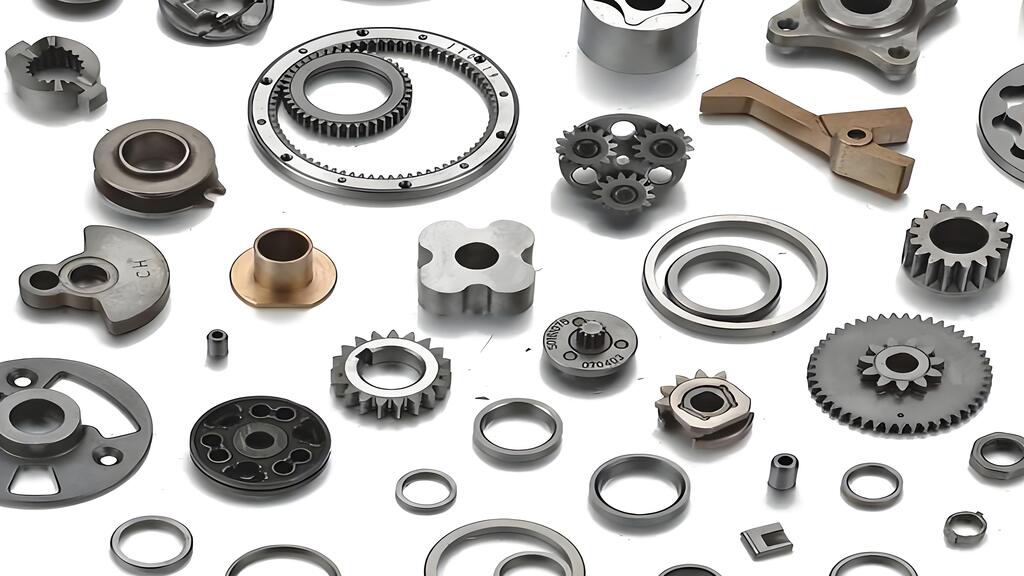


Is your project suitable for powder metallurgy technology?
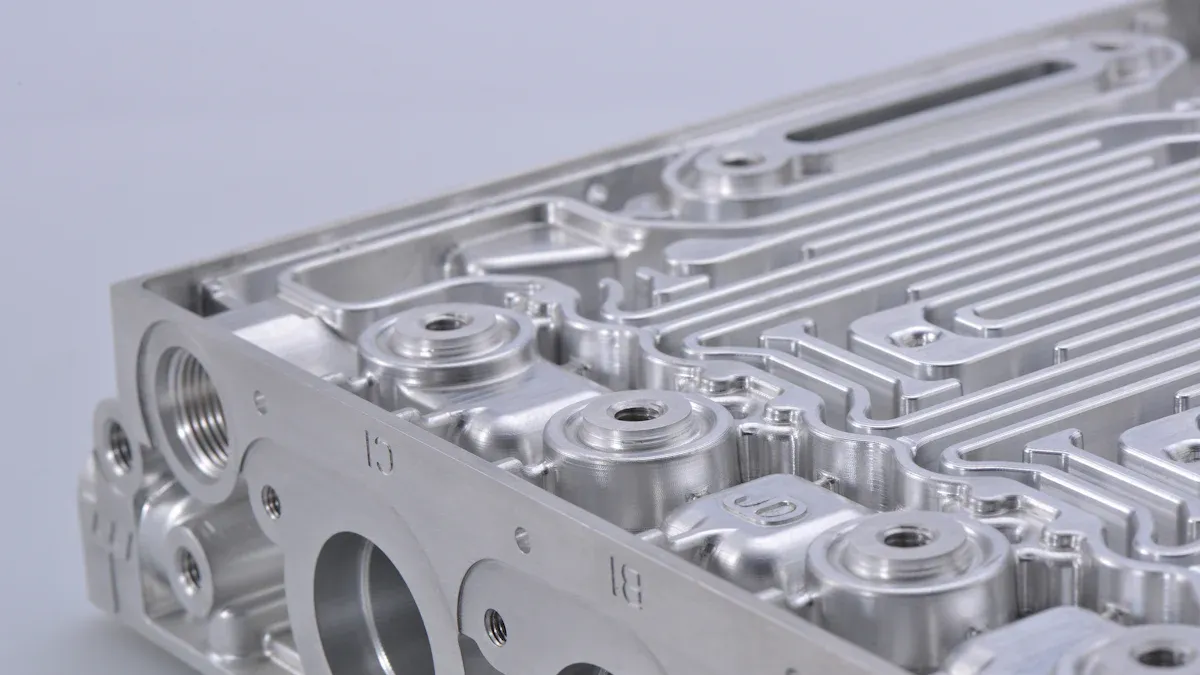
Your project is likely suitable for Powder Metallurgy technology if it requires complex, high-volume, net-shape or near-net-shape components with specific material properties. This manufacturing method often offers a lower cost than traditional methods. Powder metallurgy can achieve significant cost savings, with some sources indicating up to a 70% reduction compared to other processes. This efficiency comes from reduced waste, less need for secondary machining, and an efficient use of input material, often upwards of 97%. This guide will help determine if powder metallurgy technology is the optimal choice for your manufacturing needs.
Key Takeaways
- Powder metallurgy turns metal powders into finished parts. It is good for complex shapes and high production.
- This method saves money. It uses over 95% of materials and needs less extra work on parts.
- Powder metallurgy makes parts with special features. These include unique material mixes and controlled holes.
- It is best for large orders. High tooling costs spread out over many parts make it cheaper.
- Powder metallurgy makes precise parts. It holds tight sizes and keeps the quality the same for many items.
- This method is not good for small orders or very simple parts. Other ways are cheaper for them.
- Powder metallurgy helps the environment. It uses less material and energy than other ways.
- Consider part use, number of parts, and material needs. This helps decide if powder metallurgy is right for your project.
Understanding Powder Metallurgy Technology: Fundamentals and Advantages

Powder metallurgy technology offers a unique approach to manufacturing, transforming metal powders into finished components. This process provides significant advantages for various industrial applications.
The Core Process of Powder Metallurgy Technology
The powder metallurgy process involves several distinct stages, each crucial for the final product's quality and performance.
Powder Production and Blending Techniques
The initial stage focuses on creating the metal powders. Their characteristics significantly influence the final product's quality. Common methods include atomization, reduction, and chemical decomposition. Following production, blending and mixing occur. This involves combining metal powder with lubricants or other alloying elements to achieve a uniform mixture. This can involve pre-alloyed powders, which offer a uniform microstructure and good mechanical properties, or mixed powders, which are easier to produce dense workpieces. Lubricants improve powder fluidity, increase loose density and compressibility, and reduce friction with the mold.
Compaction and Green Part Formation
Compaction is a forming process where metal powder is pressed into a mold cavity. This creates a "green compact," a fragile, un-Sintered Part. Different compaction methods exist, such as single-action, suitable for thinner components, and double-action, which provides uniform green density.
Sintering for Metallurgical Bonding
The green compact, initially fragile, undergoes sintering to enhance its mechanical strength. This process involves heating the compact to temperatures below the metal's melting point. During sintering, particles diffuse and bond, forming a solid, cohesive structure. It typically includes pre-sintering to remove lubricants and binders, followed by the main sintering process, which involves neck formation, densification, and pore closure.
Inherent Benefits of Powder Metallurgy Technology for Project Suitability
Powder metallurgy technology provides several inherent benefits that make it suitable for many manufacturing projects.
Cost-Effectiveness Through High Material Utilization
This manufacturing method achieves material utilization of over 95%, which is superior to other processes. The material utilization rate for powder metallurgy technology can be as high as 97%. This significantly reduces waste and contributes to overall cost savings.
Capability for Complex Geometries
Powder metallurgy excels at shaping complex, multilevel components. It enables complex 3D shapes and intricate designs without extensive machining. Manufacturers can create internal features, gears with complex tooth profiles, and bearings with precise oil channels. This capability requires precise control over powder properties, press capacity, and tooling design.
Versatility in Material Composition and Alloys
Powder metallurgy technology can produce components from a wide variety of materials. These include iron and steel, stainless steel, aluminum, copper, and bronze. It also allows for the creation of unique alloys with tailored properties to meet specific performance requirements. Beyond traditional metals, it can produce components from advanced particulate materials like cermets and metal matrix composites.
Achieving Net-Shape or Near-Net-Shape Components
One of the primary advantages is the ability to produce parts that are net-shape or near-net-shape. This means the components require minimal or no secondary machining operations, further reducing production costs and lead times.
Key Indicators Your Project Benefits from Powder Metallurgy Technology
Several key indicators suggest powder metallurgy technology offers significant advantages for a manufacturing project. These factors include the complexity of part geometry, required production volumes, specific material properties, and overall cost reduction goals.
Complex Geometries and Net-Shape Requirements
Powder metallurgy excels at producing parts with intricate designs. This capability often eliminates the need for extensive post-processing.
Intricate Designs Without Extensive Machining
Manufacturers can create complex 3D shapes and internal features directly from the compaction process. This method avoids the time and cost associated with machining. Designers should avoid sharp corners to reduce stress concentrations and improve manufacturability. They can utilize chamfers (30° or 45°) instead of radii to prevent burrs and lower tooling costs. A minimum width of 0.13 mm for chamfers is advisable.
Features Like Undercuts and Internal Channels
Powder metallurgy allows for the incorporation of features like undercuts and internal channels. It also enables the design of holes in various shapes along the pressing direction for better efficiency. Lightening holes can reduce part weight. Designers should keep flanges small enough for easy ejection. They should also incorporate generous radii at the bottom flange edge and juncture. Consistent wall thickness is vital for part integrity. Thin sections, below 0.06-0.08 inches, can lead to fragility, distortion, and reduced strength.
Eliminating Secondary Operations with Powder Metallurgy Technology
The ability to produce net-shape or near-net-shape components is a major benefit. This means parts emerge from the sintering furnace requiring minimal or no additional machining. This significantly reduces manufacturing steps and overall production time.
High Production Volumes and Cost Efficiency
Powder metallurgy becomes highly cost-effective when projects involve large production quantities.
Cost-Effectiveness at Scale with Powder Metallurgy Technology
Powder metallurgy's cost-effectiveness generally hinges on large production quantities. If a project requires 10,000 components, powder metal presents an ideal scenario. Machining 5-10 components is faster, but powder metallurgy technology offers superior efficiency for mass production.
Amortization of Tooling Costs Over Large Batches
The initial investment in tooling for powder metallurgy can be substantial. However, high production volumes allow for the amortization of these tooling costs over many parts. This makes the per-part cost significantly lower than other manufacturing methods. If volumes are too low, the costs of long-lasting tooling cannot be amortized. Time lost to frequent tool changeovers also cannot be mitigated.
Consistent Part-to-Part Quality in Mass Production
Powder metallurgy ensures superior precision and consistency in high-volume production. Strict control at every stage contributes to this reliability. Automated inspection systems are integrated throughout the process to perform quality control. These systems detect potential errors or defects proactively. This allows for quick correction of issues, saving time and costs. Advanced sensors monitor critical parameters like temperature and pressure in real-time. This ensures identical conditions for each part. It leads to uniform shrinkage and final dimensions. Predictive modeling uses advanced software to forecast material shrinkage accurately. Engineers design molds that compensate for this change. This ensures excellent part-to-part consistency. High-pressure molds precisely shape metal powders. This ensures accurate dimensions in the green (unsintered) part. During sintering, powder particles fuse without complete melting. This preserves the part's shape and dimensional accuracy. Engineers meticulously manage density during compaction and sintering. This meets specific performance goals. Techniques such as high-temperature sintering or copper infiltration reduce porosity. This results in denser, stronger parts. This precise control over density is crucial for achieving the desired strength and performance.
Specific Material Properties and Performance Needs
Powder metallurgy offers unique capabilities for tailoring material properties to meet specific application requirements.
Unique Alloy Combinations and Custom Materials
Powder metallurgy allows for the creation of unique materials impossible to achieve through melting or forming. This includes Fe-Al-Si alloys with very good oxidation resistance. These alloys also show anomalous yield/ultimate tensile strength that increases with temperature (e.g., at 400–500 °C). NiTi shape memory alloys can achieve very high ultimate compressive strength (over 2000 MPa). Manufacturers can also create materials with tailored magnetic characteristics, such as Nd-Fe-B magnets with enhanced coercivity. Magnesium aluminate spinels are possible for optical applications. Self-healing composite materials, like aluminum alloy and nickel particles, are also achievable. Novel biodegradable composite materials, such as zinc and magnesium for temporary implants, represent another possibility. Powder metallurgy can also produce significantly finer microstructure and higher ultimate tensile strength compared to melting metallurgy, as seen in Ti-Al-Si alloys.
Controlled Porosity for Filtration or Self-Lubrication
The process allows for precise control over a component's porosity. This is crucial for applications like self-lubricating bearings. Pores allow fluid lubricants to flow inside the part, eliminating the need for external lubrication. High porosity can also create porous filters. These filters control the size of particles removed from fluids, trapping particulate matter. Other applications include many types of hard and soft magnetic components.
High Strength-to-Weight Ratios and Durability
Powder metallurgy can produce components with excellent strength-to-weight ratios. This is vital for industries like automotive and aerospace. It can significantly increase rupture strength, for example, tungsten carbide with 2.8 GPa compared to 550 MPa for uncoated materials.
Enhanced Heat and Wear Resistance
The ability to combine different materials allows for enhanced heat and wear resistance. This includes improved high-temperature creep strength, such as iron compacts with Al2O3 coatings. This makes powder metallurgy parts suitable for demanding environments.
Cost Reduction Goals and Material Savings
Powder metallurgy offers significant opportunities for cost reduction. It achieves this through efficient material use and reduced processing steps.
Minimizing Material Waste (Up to 97% Utilization)
Powder metallurgy is a highly efficient manufacturing process. It significantly reduces material waste compared to traditional methods. This efficiency directly translates into cost savings.
"When printing a component, approximately 95 percent of the powder you put into the process is used, the rest we can recycle in a new melt. Compare that to traditional manufacturing where you start off with a chunk of material and reduce large amounts of chips," says Mikael Schuisky, Head of Business Unit Additive Manufacturing within Sandvik.
This high material utilization rate, often exceeding 95%, minimizes scrap. Manufacturers save money by buying less raw material. They also reduce costs associated with waste disposal.
Reducing Machining Time and Labor Costs
The ability to produce net-shape or near-net-shape components is a major advantage. This means parts require little to no secondary machining. Traditional manufacturing often involves extensive cutting, grinding, and finishing operations. These steps add significant time and labor costs. Powder metallurgy eliminates many of these expensive post-processing steps. This streamlines the production process. It also reduces the overall labor required per part.
Lowering Overall Part Cost with Powder Metallurgy Technology
All these factors combine to lower the total cost per part. High material utilization, reduced machining, and efficient mass production contribute to this. For projects with high volumes, the initial tooling investment becomes negligible when spread across thousands or millions of parts. This makes powder metallurgy technology a very economical choice for many applications.
Tight Tolerances and Surface Finish Precision
Powder metallurgy can produce components with impressive precision. It often achieves tight tolerances directly from the manufacturing process.
Achieving Precision Directly from the Process
Manufacturers can achieve precise dimensions without extensive post-processing. This is a key benefit of powder metallurgy. The process controls part size and shape very accurately.
- For features below 7.5mm (0.300" inch): ±0.038mm (0.0015" inch)
- For features of 10mm (0.400" inch): ±0.05mm (0.002" inch)
- For features of 25mm (1.000" inch): ±0.125mm (0.005" inch)
Sintered powder metallurgy technologies generally achieve a tolerance range from ±0.5% of the nominal dimension down to ±0.038mm (±0.0015") for features of 7.5mm (0.300") or less. Sintered ceramics tend to have larger tolerances.
Consistency in Dimensional Accuracy
The process ensures consistent dimensional accuracy from part to part. This is crucial for mass production. Engineers design molds to account for material shrinkage during sintering. This ensures the final parts meet exact specifications.
| Dimension Type | Processing Stage | Typical Tolerance (IT Grade) |
|---|---|---|
| Radial (perpendicular to pressing) | After sintering | IT8-IT9 |
| Radial | With sizing (secondary operation) | IT6-IT7 |
| Axial (length/height) | Even with secondary operations | IT12 |
| Small parts | With secondary operations | ±5 μm |
| Sintered bushings (diameter) | With sizing | IT5-IT7 |
After sintering, powder metallurgy components typically expand by 1-3%. The material composition significantly impacts achievable tolerances. For instance, a 50mm component's tolerance class can improve from IT12 to IT8 by changing from FC-0205 to FC-0208 and utilizing diffusion-alloyed copper powder.
Surface Finish Considerations for Powder Metallurgy Technology
The surface finish of powder metallurgy parts depends on several factors. These include powder particle size, compaction pressure, and sintering conditions. Parts typically have a matte finish. This finish is often acceptable for many applications. If a smoother surface is required, secondary operations like sizing, coining, or grinding can improve it. However, these operations add to the cost. Designers should consider the required surface finish early in the design process.
When Powder Metallurgy Technology May Not Be the Optimal Choice
While powder metallurgy offers many advantages, it is not always the best manufacturing solution. Certain project characteristics make other processes more suitable. Understanding these limitations helps manufacturers make informed decisions.
Low Production Volumes and Tooling Costs
The initial investment in powder metallurgy tooling can be a significant factor. This often makes it less ideal for small-scale production.
High Tooling Costs for Small Batches
Powder metallurgy requires specialized tooling, including dies and punches, which can be expensive to design and produce. Short product runs are not well-suited for powder metallurgy due to these per-part and tooling costs. The initial tooling costs associated with this process tend to be higher, even for low-volume production. Manufacturers cannot amortize these high upfront costs over a small number of parts. This makes the cost per unit prohibitively high.
Alternative Processes for Prototypes and Low-Volume Runs
For very small production runs or prototypes, alternative manufacturing methods offer more cost-effective solutions. CNC machining is a more cost-effective alternative for these scenarios because it does not incur any tooling costs. CNC machining is ideal for low-volume production due to quick setup times, allowing continuous manufacturing either manually or automatically. Urethane casting provides a cost-effective method for producing plastic parts when complex injection molds are too expensive, as it does not require high temperatures and pressures. Additive manufacturing, or 3D printing, has also evolved to produce functional parts, including high-quality steel parts with metal printers. This technology moves beyond just rough prototyping and does not require expensive 5-axis CNC machines.
Extremely Large or Simple Parts
Powder metallurgy has specific limitations regarding part size and geometric complexity. These limitations can make it an unsuitable choice for certain components.
Economic Disadvantages for Very Large Components
Powder metallurgy technology faces size limitations for components. The largest presses available in the industry can only produce parts with a practical size of approximately 40-50 square inches of planar area. More commonly, average presses are in the 500-ton range, further restricting the size of components manufacturers can produce using this method. These constraints mean that certain large designs are not feasible for production via powder metallurgy. Other manufacturing methods, such as casting or forging, often prove more economical and practical for very large parts.
Simpler Manufacturing for Basic Shapes
Powder metallurgy excels at creating complex, intricate geometries. However, for very simple or basic shapes, other manufacturing processes often offer a more straightforward and cost-effective approach. Stamping, traditional machining, or even basic casting methods can produce simple components efficiently without the need for specialized powder and sintering steps. Manufacturers should consider these simpler methods when a part's design does not leverage the complexity capabilities of powder metallurgy.
Very High Ductility or Impact Strength Requirements
Certain applications demand materials with exceptional ductility or impact strength. Powder metallurgy materials sometimes face limitations in these areas.
Limitations of Some Powder Metallurgy Materials
Ductility, defined as a material's ability to deform under tensile strength, is crucial for components that need to bend during operation. However, powder metallurgy components, particularly those made of ferrous material, typically show lower ductility, often around 2% elongation. While pore size management can influence this property, the inherent nature of PM materials generally restricts them from achieving very high ductility levels. For ferrous PM materials, elongation is typically less than 10%. While some PM brasses and stainless steels can achieve elongations between 15% and 25%, the inherent porosity remains a limiting factor for very high ductility requirements. This property can be improved through processes like hot or cold re-pressing followed by re-sintering, but the initial state is characterized by lower ductility.
A primary limitation of powder metallurgy components, especially concerning impact strength, is their inherent porosity. These pores act as sites for crack initiation and provide pathways for crack propagation throughout the material. This characteristic directly impacts the mechanical properties and long-term reliability of sintered components, particularly under cyclic loading conditions. This limits their suitability for applications requiring very high impact strength.
When Wrought Materials Offer Superior Performance
Wrought materials, produced through processes like forging or rolling, achieve full density and a refined grain structure. This often results in superior ductility and impact strength compared to powder metallurgy parts, which inherently contain some level of porosity. For applications demanding extreme toughness, high resistance to sudden impacts, or significant plastic deformation without fracture, wrought materials typically offer better performance. Engineers should specify wrought materials when a component's function critically depends on these high-performance mechanical properties.
Specific Surface Finish or Full Density Needs
While powder metallurgy offers many advantages, certain requirements for surface finish or material density can make it less suitable. These specific needs often necessitate additional processing, which can negate the core benefits of the technology.
When Secondary Operations Negate Powder Metallurgy Benefits
Powder metallurgy typically produces components with a matte finish and some inherent surface roughness. This finish suits many applications. However, certain projects demand extremely smooth surfaces or specific aesthetic finishes. Meeting these critical surface finish requirements often necessitates additional machining or finishing operations. These post-processing steps include grinding, polishing, or plating. Such operations add high cost and complexity to the manufacturing process. This can negate the benefits of powder metallurgy technology. The inherent advantages of powder metallurgy, such as producing net-shape or near-net-shape parts, become less impactful when extensive secondary operations are unavoidable. These added steps can outweigh the initial cost savings and efficiency gains.
Achieving Full Density for Critical Applications
Standard powder metallurgy parts inherently contain some level of porosity. This porosity can be controlled for specific applications, like self-lubricating bearings. However, certain critical applications demand components with full density. Full density means the material has no internal voids. These applications often require maximum strength, superior fatigue resistance, or hermetic sealing. Examples include high-stress aerospace components or parts exposed to corrosive environments. Achieving full density with powder metallurgy often requires advanced and more expensive techniques. These techniques include hot isostatic pressing (HIP) or powder forging. These specialized processes add high cost and complexity to the production. Other manufacturing methods, such as traditional forging or casting, naturally produce fully dense parts. If full density is a non-negotiable requirement for a component, the added expense and intricacy of advanced powder metallurgy processes might make alternative manufacturing methods more optimal.
Critical Questions to Ask Before Adopting Powder Metallurgy Technology
Before committing to powder metallurgy for a project, manufacturers must ask several critical questions. These questions help determine if the technology aligns with project goals and requirements.
Part Function and Required Performance
Understanding a component's role and the environment it operates in is fundamental. This guides material selection and process design.
What is the Component's Role and Operating Environment?
Consider where the component will function. Powder metallurgy excels in various demanding applications. For instance, in automotive systems, it produces critical parts.
| Component Role | Common Applications | Key Features and Advantages of Powder Metallurgy |
|---|---|---|
| Transmission and Drivetrain Parts | ||
| Gears (Spur, Helical, Bevel, Internal) | Automotive transmission, power tools, industrial machinery | High precision, wear resistance, durability, complex shapes, impact resistance, quiet operation |
| Bearings | Automotive drivetrain | High strength, wear resistance, uniform material structure |
| Clutches | Automotive powertrain | High precision, durability, improved transmission efficiency |
| Gear Shafts | Automotive and motorcycle | High load resistance, smooth power transfer, uniform material structure |
| Sprocket Wheels | Chain drive systems in automotive | Excellent wear resistance, impact strength, dimensional precision |
| Timing Belt Pulleys | Synchronous drive systems in engines | High strength, wear resistance, stable dimensional precision, reliable operation under high stress |
| Braking System Elements | ||
| ABS Speed Sensor Rings | Anti-lock braking systems | High quality, longevity, prevents wheel lockup |
| Gear Sets | Electric parking brakes | Meets strict performance and durability standards |
| Brake Pads and Friction Materials | Braking systems | Improved safety, wear resistance, friction stability, reduced wear rates (e.g., hBN-based lubricants) |
| Fuel System Components | ||
| Oil Pump Gears | Fuel systems | Withstands harsh environments (fuel, heat, vibration), optimal wear resistance and strength |
| Engine Manifold Actuators | Fuel systems | Withstands harsh environments (fuel, heat, vibration), optimal wear resistance and strength |
| Engine Management Sensor Rings | Fuel systems | Withstands harsh environments (fuel, heat, vibration), optimal wear resistance and strength |
What Stresses and Conditions Will It Endure?
Components often face challenging conditions.
- High loads and varying temperatures: Gears and bearings in transmission systems operate reliably under these conditions.
- Demanding conditions for braking: Braking system elements require consistent performance, safety, and durability. Powder metallurgy provides improved wear resistance and friction stability, even at high speeds and temperatures.
- Harsh operating environments (fuel, heat, vibration): Fuel system components such as oil pump gears and engine management sensor rings are tailored to withstand these conditions. They ensure optimal wear resistance and strength.
Annual Production Volumes and Future Projections
Production volume significantly impacts the economic viability of this manufacturing method.
How Many Parts Are Needed Per Year?
The number of parts required annually is a crucial factor.
For most parts, medium- to high-volume production is the sweet spot for PM efficiency.
This means projects needing thousands or millions of parts per year benefit most. Lower volumes may make other processes more cost-effective.
Anticipated Growth and Demand Fluctuations
Consider future demand. Will production volumes increase over time? Planning for growth helps amortize tooling costs more effectively. It also ensures the chosen manufacturing method can scale with demand.
Geometric Complexities and Dimensional Tolerances
The part's design and precision requirements are key considerations.
Are There Intricate Features or Unique Designs?
Evaluate the part's geometry. Does it have intricate features, internal channels, or complex 3D shapes? This manufacturing method excels at producing such designs without extensive machining.
What are the Critical Dimensions and Required Tolerances?
Identify all critical dimensions. Determine the required tolerances for each. This process can achieve tight tolerances directly from the manufacturing process. However, extremely tight tolerances might require secondary operations, impacting cost.
Material Specifications and Property Requirements
Understanding the required material properties is crucial for component design. This guides material selection and process design.
What Essential Material Properties are Required?
Manufacturers must identify the essential material properties for a component. These properties include strength, hardness, wear resistance, and corrosion resistance. Some applications also require specific magnetic properties or electrical conductivity. Powder metallurgy offers significant flexibility. It can tailor these properties to meet precise performance demands. For example, engineers can achieve high strength-to-weight ratios for aerospace parts. They can also create materials with excellent wear resistance for industrial tools.
Are There Specific Alloy Needs or Custom Material Blends?
Powder metallurgy excels at creating unique alloy combinations. These combinations are often impossible to achieve through traditional melting processes. Manufacturers can blend different metal powders. They can also incorporate non-metallic elements. This allows for the development of custom materials. These materials possess specific characteristics. For instance, a project might require a material with both high thermal conductivity and good wear resistance. Powder metallurgy can create such a blend. This capability provides designers with immense freedom. They can optimize material performance for highly specialized applications.
Target Cost Per Part and Budget Constraints
Cost is a primary driver in manufacturing decisions. Evaluating the budget for each component is essential.
What is the Budget for Each Component?
Manufacturers must establish a clear target cost per part. This budget guides the selection of the most economical manufacturing method. Powder metallurgy often presents a cost-effective solution. This is especially true for high-volume production. The process minimizes material waste. It also reduces the need for extensive secondary operations. These factors contribute to a lower overall unit cost. Understanding the budget helps determine if the initial tooling investment for powder metallurgy is justifiable.
Cost Comparison with Alternative Manufacturing Processes
A thorough cost comparison with alternative manufacturing processes is vital. Traditional methods like machining often generate significant material waste. They also require more labor for finishing. Casting can produce complex shapes. However, it may lack the precision or material properties achievable with powder metallurgy. Forging offers high strength. Yet, it is typically limited to simpler geometries. Powder metallurgy often provides a superior cost advantage. This advantage comes from its high material utilization and ability to produce net-shape parts. These benefits lead to reduced material costs and lower labor expenses.
Real-World Applications of Powder Metallurgy Technology
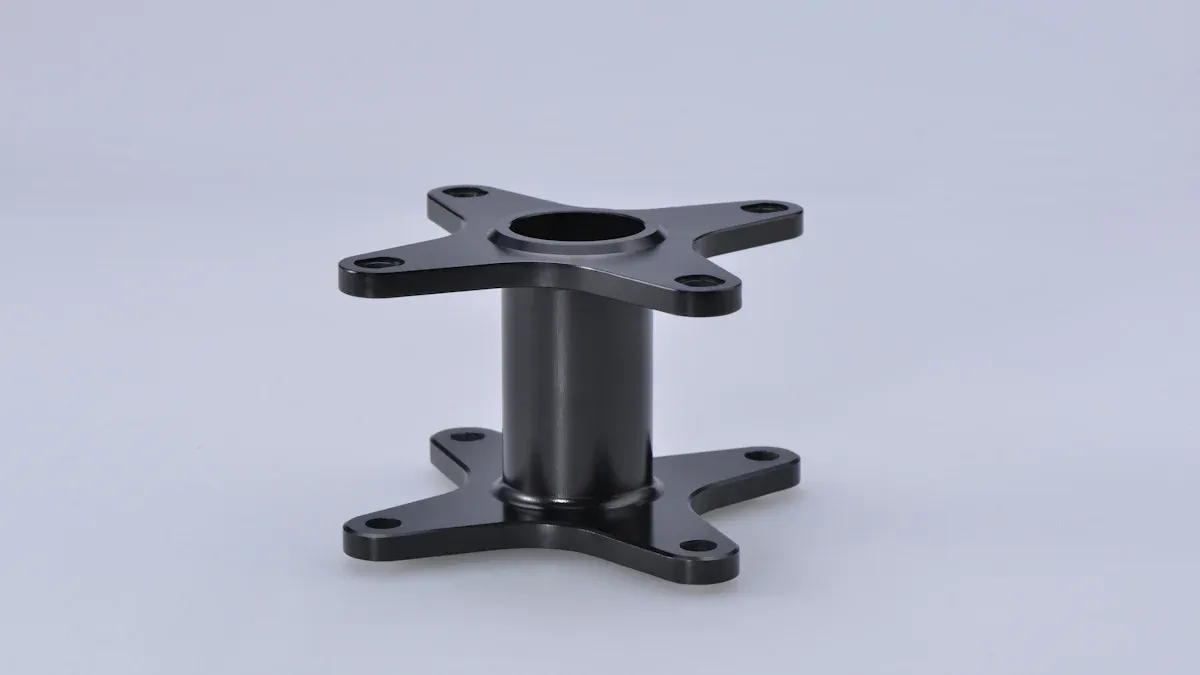
Powder metallurgy finds extensive use across diverse industries. Its unique capabilities make it ideal for manufacturing components with specific performance requirements.
Automotive Components Utilizing Powder Metallurgy Technology
The automotive industry heavily relies on powder metallurgy for its efficiency and ability to produce complex, high-performance parts.
Gears and Bushings for Transmissions
Automotive transmissions frequently use gears and bushings made through powder metallurgy. Manufacturers value these components for their precision, wear resistance, and ability to achieve complex shapes. This method ensures durability and quiet operation in demanding environments.
Engine Components and Structural Parts
Beyond transmissions, powder metallurgy produces various engine components and structural parts. These include connecting rods, valve guides, and exhaust flanges. The process delivers parts with high strength and consistent quality, crucial for engine performance.
Demonstrating High Volume and Complexity
The automotive sector exemplifies the benefits of powder metallurgy for high-volume production. It also showcases the technology's capability to create intricate designs. Manufacturers can produce millions of identical, complex parts efficiently and cost-effectively.
Medical Devices Manufactured with Powder Metallurgy Technology
The medical field demands extreme precision, specific material properties, and biocompatibility. Powder metallurgy meets these stringent requirements.
Surgical Instruments and Implants
Surgical instruments and various implants, such as orthopedic and dental implants, often utilize powder metallurgy. This manufacturing method ensures the necessary strength, corrosion resistance, and precise dimensions for critical medical applications.
Highlighting Precision and Material Specificity
Medical devices require exact specifications. Powder metallurgy excels at achieving tight tolerances and tailoring material compositions. This precision is vital for the functionality and safety of instruments and implants.
Biocompatible Materials for Critical Applications
The process allows for the use of biocompatible materials like titanium alloys and stainless steel. These materials integrate safely with the human body. This capability is essential for long-term implants and devices that contact biological tissues.
Industrial Tools and Wear Parts via Powder Metallurgy Technology
Industrial tools and wear parts operate in harsh conditions. They require exceptional hardness, durability, and abrasion resistance.
Cutting Inserts and Abrasion-Resistant Components
Powder metallurgy produces high-performance cutting inserts, drill bits, and other abrasion-resistant components. These tools withstand extreme forces and temperatures during manufacturing processes.
Showcasing Unique Material Properties
Powder metallurgy is suitable for industrial tools and wear parts due to its ability to produce components with superior mechanical properties, including high strength and durability. The sintering process significantly enhances these characteristics, making the parts ideal for demanding, high-stress applications. This method allows for granular control over material properties in finished parts. It enables customization of powder blends to achieve optimal characteristics like hardness, wear resistance, and corrosion resistance. It also facilitates the development of wear parts with maximum compressive strength and fracture toughness for specific applications. The sintering process can achieve fine-grained microstructures, leading to superior mechanical properties and extended service life.
High Hardness and Durability for Demanding Environments
Tungsten carbide, a common material in powder metallurgy wear parts, offers exceptional strength, hardness, and resistance to corrosive elements. This leads to extended wear life even under high temperatures, friction, and physical stress. Tungsten carbide parts exhibit excellent abrasion resistance, preventing scratches and surface damage. They are also resistant to corrosion from various chemicals, making them suitable for harsh operating conditions.
Consumer Electronics and Miniaturized Components
The consumer electronics sector significantly drives the powder metallurgy market. This industry constantly demands miniaturized and high-performance components. Powder metallurgy offers solutions for these critical needs.
Small, Complex Parts for Modern Devices
Modern electronic devices require increasingly smaller and more complex components. Powder metallurgy excels at creating intricate designs with high dimensional accuracy. This capability is vital for the ongoing miniaturization of electronic devices. Manufacturers use powder metallurgy to produce essential electronic components. These include electrical contacts, connectors, heat sinks, and magnetic components. The process allows for the creation of complex geometries, such as gears and electronic housings. It achieves this with minimal material waste. This precision and complexity are crucial for enhancing performance in compact devices.
Miniaturization and Cost-Effectiveness in Electronics
Powder metallurgy is a favored manufacturing method in electronics due to its ability to produce parts with excellent electrical and thermal conductivity. These properties are essential for consumer electronics, renewable energy systems, and communication devices. Metal Injection Molding (MIM), a key powder metallurgy process, combines the advantages of plastic injection molding and powder metallurgy. MIM enables the production of intricate, high-precision parts with complex geometries. It achieves this with minimal material waste and energy consumption. This process is cost-effective, potentially reducing production costs by up to 30% compared to traditional manufacturing methods. The Asia Pacific region, a major electronics producer, widely adopts powder metallurgy. It supports the creation of high-performance and miniaturized components like heat sinks, magnetic materials, and casings. The growing demand for smaller and more efficient electronic devices is a primary factor driving the adoption of powder metallurgy in the electronics industry.
The Environmental Benefits of Powder Metallurgy Technology
This manufacturing method offers significant environmental advantages. It promotes sustainability through efficient resource use and reduced waste.
High Material Utilization and Reduced Waste
Powder metallurgy significantly reduces environmental impact by maximizing material use.
Efficient Use of Raw Materials (Over 95%)
The process boasts an impressive material utilization rate. It achieves as high as 98%. This contrasts sharply with other methods. Die casting, investment casting, and sand casting typically reach 90%-95%. CNC machining has a much lower utilization rate. This high efficiency means manufacturers use less raw material.
Minimizing Scrap Compared to Traditional Methods
This technology significantly reduces material waste. It uses up to 90% less material than machining for complex components. This minimizes landfill waste. It also conserves valuable resources.
| Factor | Powder Metallurgy | CNC Machining |
|---|---|---|
| Material Waste | ~3% | Up to 50% |
Minimizing waste generation involves optimizing powder compaction. It also reduces rejects from sintering defects. Effective powder recovery and recycling systems are crucial. Advanced process control and simulation tools help predict and prevent waste.
Energy Efficiency in Production
The process also contributes to environmental benefits through its energy-efficient production.
Less Energy Per Unit of Production
The process consumes approximately 15% less energy than conventional methods. This is primarily due to lower temperature sintering. It also excludes extensive machining steps. This energy saving reduces the overall carbon footprint of manufacturing.
Sustainable Manufacturing Practices
Energy efficiency improves through several methods. These include low-temperature sintering and induction heating. Optimized furnace designs also contribute. The integration of renewable energy sources further enhances sustainability. Novel powder production methods, such as atomization techniques, minimize energy input and material loss.
Use of Recycled Materials
The use of recycled materials is a cornerstone of this technology's environmental benefits.
Metal Powder from Recycled Scrap Steel
More than 75% of the raw materials utilized in components originate from recycled scrap steel. This significantly reduces the demand for virgin materials. It also lessens the environmental impact of mining and refining.
Contributing to a Circular Economy
The inherent recyclability of components is a key environmental benefit. Both by-products and discarded components integrate seamlessly back into the production cycle. This reduces dependence on virgin materials. It also supports a circular economy. The use of recycled materials, including scrap metal and industrial waste, drives green manufacturing.
Deciding if a project is suitable for powder metallurgy technology requires a thorough evaluation. Consider part complexity, production volume, material specifications, and cost objectives. By carefully assessing these factors, manufacturers confidently determine if powder metallurgy offers the most efficient, cost-effective, and high-performance solution for their needs. This strategic approach ensures optimal manufacturing outcomes.
FAQ
What is powder metallurgy technology?
Powder metallurgy technology transforms metal powders into finished components. It involves compacting powders into a desired shape, then heating them below their melting point. This process creates a strong, solid part.
What are the main advantages of powder metallurgy?
Powder metallurgy offers several benefits. It produces complex shapes, uses materials efficiently, and allows for unique material compositions. Manufacturers achieve net-shape or near-net-shape components, reducing secondary operations and costs.
What types of materials can powder metallurgy process?
Powder metallurgy processes a wide range of materials. These include iron, steel, stainless steel, aluminum, copper, and bronze. It also creates custom alloys and advanced composites, tailoring properties for specific applications.
Is powder metallurgy suitable for small production runs?
Generally, powder metallurgy is not ideal for small production runs. High tooling costs make it less economical for low volumes. Other methods like CNC machining or 3D printing are often more cost-effective for prototypes or small batches.
How does powder metallurgy contribute to cost savings?
Powder metallurgy saves costs through high material utilization, often over 95%. It minimizes waste and reduces the need for extensive machining. This leads to lower labor and material expenses, especially in high-volume production.
Can powder metallurgy achieve complex shapes?
Yes, powder metallurgy excels at creating complex geometries. It produces intricate designs, internal channels, and multilevel components directly. This capability often eliminates the need for extensive post-processing.
What industries commonly use powder metallurgy?
Many industries use powder metallurgy. The automotive sector uses it for gears and engine parts. Medical device manufacturers create surgical instruments and implants. Industrial tools and consumer electronics also rely on this technology for specialized components.