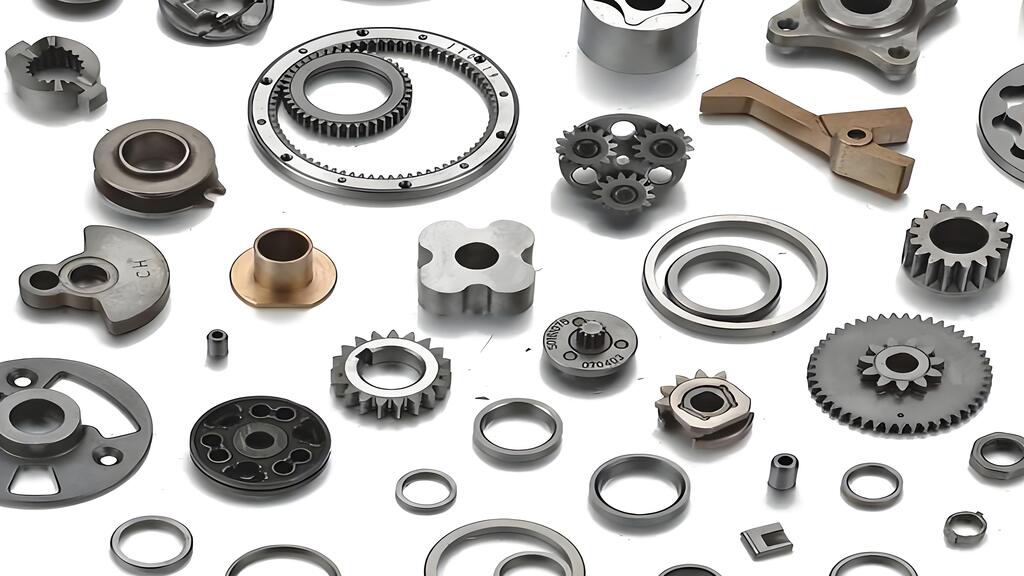


Key Design Considerations for Powder Metallurgy Tooling

Powder Metallurgy tooling is a manufacturing process that involves the production of metal parts from powdered materials. The tooling aspect plays a vital role in this process, as it directly influences the efficiency and quality of the final products. Effective powder metallurgy tooling ensures that designs are simple and robust, which minimizes production complications. Recent industry studies indicate that innovations in tooling significantly enhance component performance through improved particle size and morphology, emphasizing the critical connection between tooling and successful powder metallurgy outcomes.
Key Takeaways
- Effective powder metallurgy tooling enhances precision and efficiency in manufacturing, leading to high-quality metal components.
- Simplicity in design reduces costs and extends the lifespan of tooling, making it essential for successful powder metallurgy processes.
- Choosing the right materials and applying surface treatments significantly improves the durability and performance of tooling.
- Regular maintenance and inspections are crucial for extending the life of tooling and ensuring consistent production quality.
- Integrating advanced technology into tooling processes boosts efficiency and reduces waste, making powder metallurgy a competitive manufacturing option.
Significance of Powder Metallurgy Tooling
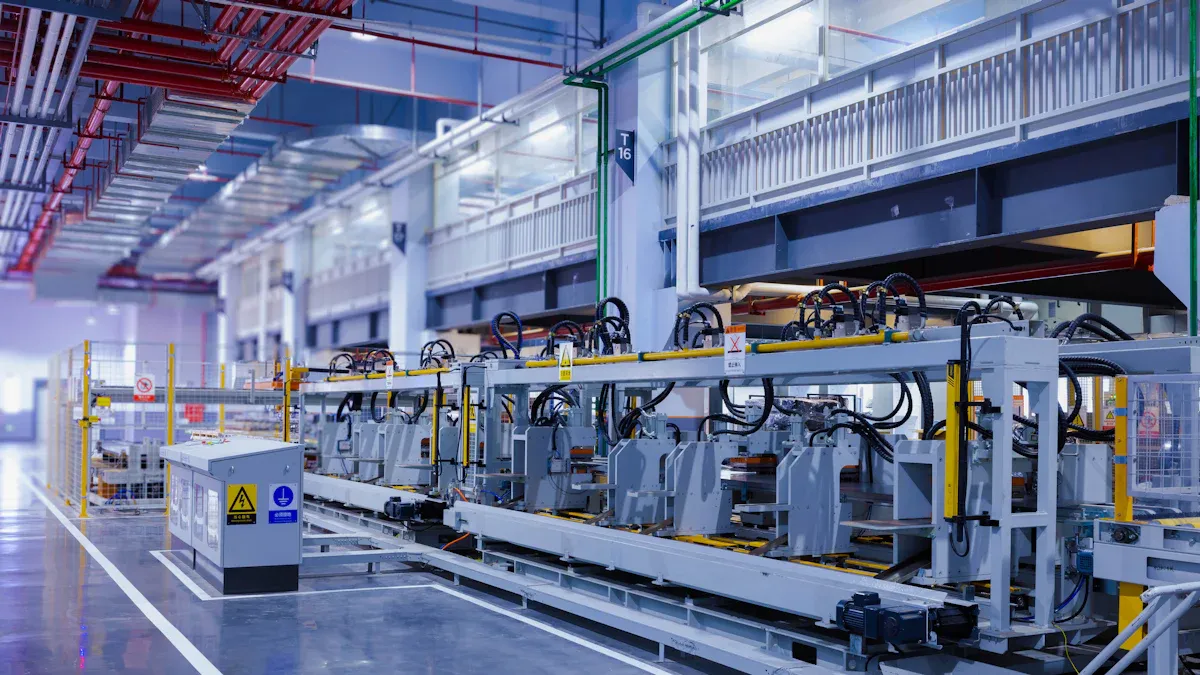
Powder metallurgy tooling plays a crucial role in the manufacturing landscape. It directly impacts the precision, efficiency, and cost-effectiveness of producing metal components. The significance of this tooling can be understood through several key aspects:
-
Precision Manufacturing: Powder metallurgy enables the production of near-net-shape components. This capability leads to significant material savings and reduces the need for extensive machining. The tooling ensures that parts meet tight tolerances, which is essential for applications in industries such as automotive and aerospace.
-
Material Properties: The tooling used in powder metallurgy allows for better properties compared to traditional manufacturing methods. For instance, advanced tooling materials can enhance mechanical and physical properties, making parts more durable and wear-resistant. This is particularly important for applications requiring high strength and controlled porosity, such as oil-impregnated bearings.
-
Cost Efficiency: The cost savings associated with powder metallurgy tooling are notable. A recent analysis indicates that powder metallurgy can provide 40% or more cost savingscompared to casting, extrusion, forging, and machining due to lower energy requirements. This efficiency makes it a competitive option against conventional processes like Die Casting and forging.
-
Sustainability: The environmental impact of powder metallurgy tooling is also significant. The process minimizes material waste, using nearly 100% of the starting material. This contributes to sustainability efforts and aligns with modern manufacturing goals focused on reducing carbon footprints. Companies like GKN Powder Metallurgy aim for net-zero greenhouse gas emissions by 2050, showcasing the industry's commitment to environmental responsibility.
-
Historical Context: The roots of powder metallurgy date back to 3000 BC, when it was used to create tools from iron powder. The modern development of this technology began in the early 20th century, leading to mass production of tungsten carbide powders. This historical perspective highlights the evolution and growing importance of powder metallurgy tooling in contemporary manufacturing.
Key Design Considerations for Powder Metallurgy Tooling
Design Simplicity
Design simplicity is a fundamental principle in powder metallurgy tooling. Simple designs, such as basic cylinders, require minimal tooling, which includes a single upper and lower punch, die, and core rod. This straightforward approach results in lower costs and shorter design times. In contrast, complex designs, like gears with splines, necessitate sophisticated tooling. Such complexity can significantly increase both costs and lead times.
Tooling life also varies based on design simplicity. Under optimal conditions, die sets can produce between 300,000 to 500,000 parts. However, more intricate designs may lead to reduced lifespans. For example, molds for simple shapes, such as oil-containing bearings, can last for about 300,000 to 500,000 pieces, while molds for complex shapes, like oil pump rotors, may only achieve around 100,000 pieces. By prioritizing simplicity, manufacturers can enhance both the lifespan and performance of their tooling.
Tooling Protection
Protecting tooling from wear and damage is essential for maintaining efficiency in powder metallurgy processes. Tooling protection strategies include using high-quality materials and coatings that resist abrasion and corrosion. Implementing these protective measures can significantly extend the lifespan of tooling components.
For instance, using high-quality tool steels and advanced coatings can enhance the lifespan of punches and core rods by 30-50%. This improvement translates to fewer replacements and reduced downtime, ultimately leading to cost savings. Additionally, regular inspections and maintenance practices can identify potential issues before they escalate, ensuring that tooling remains in optimal condition.
Wall Thickness Considerations
Wall thickness plays a critical role in the mechanical properties of powder metallurgy products. The minimum wall thickness typically ranges from 0.06 to 0.08 inches. Thinner walls can lead to increased fragility and distortion during heat treatment, while thicker walls provide better structural integrity and uniform density.
The relationship between wall thickness and mechanical properties is significant. A reduction in wall thickness can decrease tensile properties, with yield strength (YS) potentially dropping by up to 33% and ultimate tensile strength (UTS) decreasing by up to 30% compared to bulk specimens. Furthermore, variations in density can occur in parts with high length-to-wall thickness ratios (over 8:1). Therefore, careful consideration of wall thickness is essential for achieving desired performance characteristics in powder metallurgy tooling.
Avoiding Sharp Edges
In powder metallurgy tooling, avoiding sharp edges is crucial for several reasons. Sharp edges can lead to various issues during the manufacturing process and affect the final product's performance. Here are some key considerations:
-
Safety Concerns: Sharp edges pose a risk to operators and workers. They can cause cuts or injuries during handling and assembly. By designing tooling with rounded edges, manufacturers can enhance workplace safety and reduce the likelihood of accidents.
-
Material Flow: Sharp edges can disrupt the flow of powdered materials during the compaction process. This disruption may lead to uneven density and compromised mechanical properties in the final product. Smooth transitions and rounded edges facilitate better material flow, ensuring uniformity in density and strength.
-
Tooling Longevity: Tooling with sharp edges tends to wear out more quickly. The stress concentration at these points can lead to premature failure. By incorporating rounded edges, manufacturers can extend the lifespan of their tooling, resulting in fewer replacements and lower operational costs.
-
Quality of Finished Parts: Sharp edges can create defects in the finished parts. These defects may include burrs or rough surfaces that require additional machining, increasing production time and costs. A well-designed tooling system that avoids sharp edges contributes to higher-quality parts and reduces the need for secondary operations.
To achieve these benefits, designers should consider the following strategies:
-
Edge Radiusing: Implementing a slight radius on edges can significantly reduce sharpness. This approach not only enhances safety but also improves the overall performance of the tooling.
-
Fillet Design: Using fillets at junctions where two surfaces meet can help eliminate sharp corners. This design choice promotes smoother transitions and reduces stress concentrations.
-
Regular Maintenance: Regular inspections and maintenance of tooling can help identify and address any wear that may create sharp edges over time. Keeping tooling in optimal condition ensures consistent performance and safety.
By prioritizing the avoidance of sharp edges in powder metallurgy tooling, manufacturers can enhance safety, improve product quality, and increase the efficiency of their operations.
Ensuring Durability in Powder Metallurgy Tooling
Durability in powder metallurgy tooling is essential for maintaining efficiency and reducing costs. Three primary factors contribute to this durability: material selection, surface treatments, and maintenance practices.
Material Selection
Choosing the right materials for powder metallurgy tooling significantly impacts its performance and longevity. Various metal powders, such as 316L, Zn, Cu, Fe, Bronze, Ti, Sn, Al, Mn, and Mo, exhibit different flow properties. These properties are crucial for effective tooling. For instance, half of the samples, including 316L and Zn, demonstrated excellent flow characteristics with Span values below 1.5. The predominant spherical shape of particles in powders like 316L and Ti enhances their flowability, which is vital for achieving high-quality components.
Surface Treatments
Surface treatments enhance the durability and performance of powder metallurgy tooling. The following table summarizes common surface treatments and their benefits:
| Surface Treatment | Description | Benefits |
|---|---|---|
| Phosphate treatment | A chemical reaction forming a phosphate coating on iron-based parts. | Improves corrosion and wear resistance. |
| Induction hardening | A local surface hardening method creating a hardened layer. | Suitable for parts requiring toughness. |
| Carburizing | A heat treatment process that hardens the surface by diffusing carbon. | Increases surface hardness and wear resistance. |
| Tumbling process | A process that seals pores in stainless steel parts. | Enhances corrosion resistance. |
| Dacromet coating | A coating with high temperature resistance and excellent corrosion resistance. | Environmentally friendly and durable. |
| Stream treatment | A blackening process that improves hardness and creates a protective layer. | Enhances hardness and corrosion resistance. |
These treatments not only improve the lifespan of tooling but also ensure consistent performance during production.
Maintenance Practices
Regular maintenance practices are vital for prolonging the life of powder metallurgy tooling. Operators should implement a routine inspection schedule to identify wear and tear early. Addressing issues promptly can prevent costly downtime. Additionally, maintaining optimal operating conditions, such as temperature and pressure, helps avoid common failure modes like insufficient compaction force and product cracking. By adopting these practices, manufacturers can ensure that their tooling remains effective and durable over time.
Enhancing Efficiency in Powder Metallurgy Tooling
Efficiency in powder metallurgy tooling can significantly impact production outcomes. Manufacturers can enhance this efficiency through several strategies.
Process Optimization
Optimizing processes is essential for improving the efficiency of powder metallurgy tooling. Key techniques include:
- Material selection: Choosing the right materials can enhance flow characteristics and reduce waste.
- Design adjustments: Simplifying designs can lead to fewer components, reducing assembly costs and time.
- Machining strategies: Implementing effective machining techniques can minimize tool wear and improve overall performance.
By converting multi-component parts into a single powdered metal piece, manufacturers can enhance structural integrity while minimizing waste to just 3-5%. Traditional machining processes often generate up to 50% scrap material, making powder metallurgy a more efficient choice.
Technology Integration
Integrating advanced technology into powder metallurgy tooling processes can yield significant benefits. Automation and digital monitoring systems improve reliability and efficiency. For instance, the SPR-Pathfinder® software by Solukon utilizes CAD files to simulate powder flow, optimizing the depowdering process. This automation reduces the need for manual programming, leading to a more efficient operation.
| Technology Integration | Benefits of Powder Metallurgy Tooling Outcomes |
|---|---|
| Smart Manufacturing | Greater automation and digital integration in processes, enabling predictive maintenance and process optimization. |
| Real-time Monitoring | Early detection and correction of deviations, minimizing defects, and improving efficiency. |
| Automated Depowdering | Simplifies the depowdering process, enhancing reliability and reducing manual intervention. |
Quality Control Measures
Implementing stringent quality control measures is vital for ensuring consistent performance in powder metallurgy tooling. Effective measures include:
- Stringent Quality Control: Ensures components meet specifications and reduces failure risks.
- Adherence to Industry Standards: Following benchmarks set by organizations like MPIF and ISO for quality assurance.
- Advanced Inspection Equipment: Utilizing state-of-the-art tools for dimensional accuracy and structural integrity.
By maintaining a skilled quality control team and comprehensive testing procedures, manufacturers can validate product reliability and enhance overall performance.
Quality tooling in powder metallurgy significantly enhances product performance and efficiency. Effective tooling leads to improved particle quality, increased density, and reduced waste, all of which contribute to superior final products. Key design considerations include simplicity, durability, and protection, which ensure that tooling remains effective over time.
Investing in high-quality powder metallurgy tooling offers long-term benefits such as cost savings, reduced material waste, and the ability to achieve complex geometries. These advantages ultimately lead to lower production times and enhanced overall performance.
In summary, effective tooling is essential for achieving optimal outcomes in powder metallurgy, driving both innovation and sustainability in manufacturing.
FAQ
What is powder metallurgy tooling?
Powder metallurgy tooling refers to the tools and dies used in the powder metallurgy process to shape and compact metal powders into desired forms. It plays a crucial role in achieving precision and efficiency in manufacturing.
How does tooling affect the quality of powder metallurgy products?
Tooling directly influences the dimensional accuracy, surface finish, and mechanical properties of powder metallurgy products. High-quality tooling ensures consistent compaction and uniform density, leading to superior final components.
What materials are commonly used for powder metallurgy tooling?
Common materials for powder metallurgy tooling include tool steels, carbide, and high-speed steels. These materials offer excellent wear resistance and durability, essential for maintaining tooling performance over time.
How can manufacturers extend the lifespan of their tooling?
Manufacturers can extend tooling lifespan by selecting appropriate materials, applying surface treatments, and implementing regular maintenance practices. These strategies help reduce wear and prevent premature failure.
What role does technology play in powder metallurgy tooling?
Technology enhances powder metallurgy tooling through automation, real-time monitoring, and advanced simulation software. These innovations improve efficiency, reduce defects, and optimize production processes, leading to better overall outcomes.