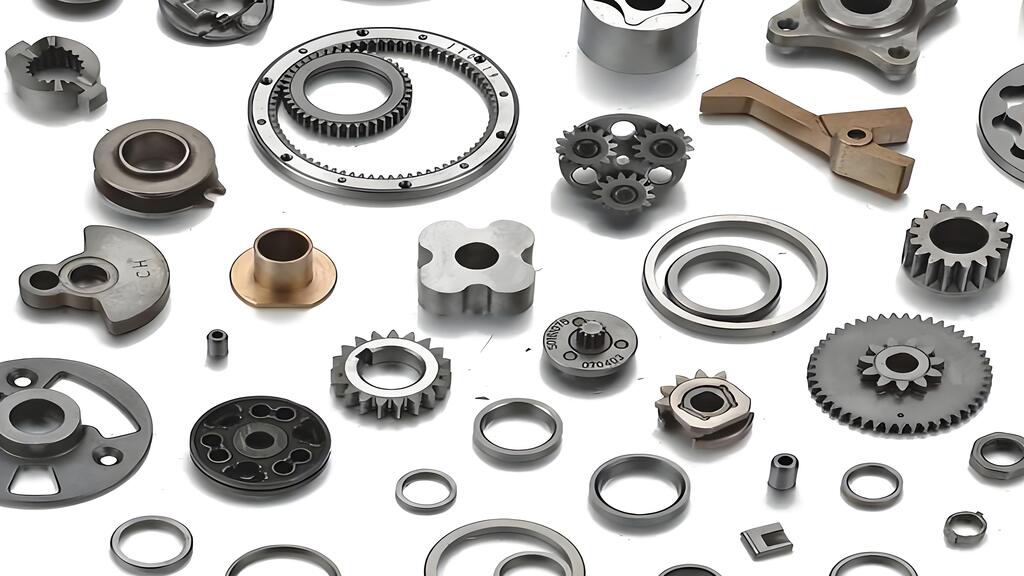


How Powder Metallurgy Manufacturing Cuts EV Motor Costs by 40%

Powder metallurgy manufacturing has become more significant as electric vehicles transform the automotive industry with simpler drivetrains. Traditional internal combustion engines contain approximately 2000 parts, while electric drivetrains need only about 20 parts. This dramatic reduction in complexity creates new opportunities for specialized manufacturing processes.
The electric vehicle market shows rapid growth, which creates a growing need for lightweight, efficient, and high-performance metal components. Powder Metallurgy part manufacturing aids mass production of intricate EV components and minimizes raw material waste. The powder metallurgy manufacturing process brings several advantages: lighter weights, greater part-to-part consistency, and reduced operational noise. It also provides excellent precision for critical drivetrain components.
Weight reduction is one of the most important factors in EV efficiency. The carefully controlled powder metallurgy manufacturing process steps help engineers create components with precise specifications. This approach delivers substantial cost benefits and quality improvements. It also provides a more eco-friendly manufacturing alternative than conventional methods. Leading powder metallurgy manufacturing companies recognize these advantages and quickly adapt their capabilities to meet electric vehicle production changing needs.
From ICE to EV: How Powder Metallurgy is Adapting

The automotive industry's switch from internal combustion engines (ICE) to electric vehicles (EVs) needs major changes in manufacturing approaches. This affects component production methods. Powder metallurgy manufacturing processes are adapting to these new needs through innovative techniques and materials.
Changes in Component Requirements for Electric Drivetrains
Electric drivetrains are completely different from their ICE counterparts. This means powder metallurgy part manufacturing must adapt. Traditional ICE vehicles use at least five gears. EVs work with single-speed or sometimes two-speed automatic transmission systems. The operational demands on these components have changed.
EV transmission systems keep their gears permanently engaged. This creates unique material strength requirements. The components handle loads differently because EV transmissions regenerate energy. They need to be durable on both drive side and coast flank. EV gears are also much larger than ICE equivalents, even in smaller vehicles. This creates new challenges for traditional manufacturing methods.
Challenges in Electrified Transmission Systems
Durability is the biggest concern in powder metallurgy gear manufacturing for EVs. Components must work for at least 300,000km. They need to withstand the unique stress patterns in electric drivetrains. The powder metallurgy manufacturing process steps must produce parts that can handle continuous mechanical stress under tough operating conditions.
EV component size creates another challenge. Press capacity limits the maximum dimensions of individual components. A 500-ton press handles parts with planar areas of about 11 square inches. An 850-ton press manages up to 17 square inches. Engineers often break down larger parts into smaller interlocking sections to solve this problem.
Powder Metallurgy Manufacturing Companies Responding to EV Trends
Major powder metallurgy manufacturing companies are positioning themselves to take advantage of the growing EV market. The global powder metallurgy market for electric vehicles was valued at approximately USD 8.00 billion in 2024. It should reach around USD 20.00 billion by 2034, showing a strong compound annual growth rate of about 9.5%.
GKN Powder Metallurgy plans to enter the permanent magnets market specifically for EVs. They aim to build capacity for up to 4,000 tons per year by 2024. This strategic move addresses the automotive industry's supply challenges during its transition to electric mobility.
Automotive manufacturers use up to 65% of all powder metallurgy components, with a market size of USD 2.9 billion in 2024. This market share shows powder metallurgy's importance in the automotive sector's electric transformation.
Design and Performance Benefits of PM in EV Motors

Soft Magnetic Composites (SMCs) are transforming electric vehicle motor design with their unique material properties and versatile manufacturing capabilities. These components show how much powder metallurgy part manufacturing technologies have advanced.
Improved Magnetic Properties with SMCs
SMCs create three-dimensional magnetic flux paths that conventional laminated materials can't match. These powder-based components cut core losses by more than 20%, which makes them much more energy efficient and helps extend battery range. The motors become 30% smaller while delivering 20% more peak torque. The Somaloy family of SMC products comes with different performance levels and maximum heat treatment temperatures from 550°C to 650°C, giving manufacturers flexible options based on their needs.
Noise Reduction and Vibration Damping in PM Components
Powder metallurgy components naturally dampen sound really well. Pm gears have a porous structure—up to 10% porosity—that absorbs vibrations and cuts down operational noise. This feature becomes especially important when you have electric vehicles without ICE noise, which makes other component sounds stand out more. The natural porosity of powder metal gears acts as a built-in dampening system that creates a smoother, quieter ride.
Durability Under High Load and Thermal Stress
Managing heat remains crucial in EV operations. Powder metallurgy creates components that handle heat exceptionally well. PM aluminum alloys deliver tensile strength above 280 MPa with 7% ductility while staying stable at temperatures below 200°C. Advanced post-sintering processes like T4 solution pre-treatment and thermomechanical processing help these components develop uniform microstructures that resist elemental segregation. On top of that, PM parts can include self-lubricating features that make them last longer and reduce friction, which creates more durable components that handle continuous mechanical stress better.
Cost Breakdown: Where the 40% Savings Come From

The financial benefits of powder metallurgy (PM) manufacturing for electric vehicle motors come from several areas that help manufacturers cut costs remarkably.
Material Cost Savings Through Efficient Powder Use
PM technology uses almost 100% of input materials and cuts waste compared to traditional machining processes. This near-net shape capability needs 90% less material than conventional methods when making complex components. Manufacturers working with expensive specialty alloys see these savings multiply by a lot during mass production. Smart material substitutions—like using iron additions to cut expensive niobium content—bring raw material costs down even further.
Labor and Energy Cost Reduction in PM Manufacturing
PM manufacturing runs at lower temperatures than casting or forging and uses 15% less energy than conventional methods. Advanced automation in large-scale production cuts labor costs. Some advanced processing routes need just 16-17 minutes with minimal power usage of about 1.6 kW·h per component. PM's near-net shape capabilities eliminate extensive post-processing steps, which is a big deal as it means that costs drop even more.
Lifecycle Cost Benefits: Less Wear, Longer Life
PM parts deliver exceptional value over time. Compaction rolling boosts component density to 99.99% of steel in critical areas, which makes parts more durable. These components dampen vibrations better and reduce noise—a vital feature in quiet electric vehicles. On top of that, part consolidation cuts assembly needs, inventory costs, and makes supply chains simpler. This creates ongoing savings throughout the vehicle's service life.
Future Outlook: Scaling PM for Next-Gen EVs
Powder metallurgy continues to evolve and new technologies are expanding its potential for next-generation electric vehicles.
Integration with Additive Manufacturing for Complex Parts
Powder metallurgy materials now power metal 3D printing to create intricate parts that traditional methods couldn't produce. This combination makes it possible to create complex geometric shapes with detailed interior structures that make EV motors better. The EU-funded SOMA project's specialized iron silicon "soft magnetic" powder lets manufacturers print electrical motor components that are more ductile and magnetically competitive. These improvements help manufacturers overcome the brittleness issues that previously limited the printing of larger motor parts.
Sustainability Gains in Powder Metallurgy Manufacturing Process
Net-shape manufacturing gives powder metallurgy a natural edge in environmental protection by reducing material waste and the need for post-processing. Companies that use PM manufacturing have smaller carbon footprints while staying cost-effective through circular economy models that focus on material reuse. This eco-friendly approach puts the industry in a strong position as environmental regulations become stricter.
Opportunities in Battery Systems and Auxiliary Motors
Battery components and thermal management systems represent key areas where powder metallurgy shows promise [19]. PM-manufactured thermal management components boost battery system efficiency with excellent conductivity, thermal resistance, and protection against corrosion. Electric auxiliaries for air conditioning, power brakes, and power steering now rely more on PM components since internal combustion engines no longer power these systems.
Conclusion
Powder metallurgy is pioneering electric vehicle manufacturing breakthroughs that change how manufacturers produce vital components. This technology delivers a substantial 40% cost reduction, as discussed in this piece. Electric drivetrains have replaced internal combustion engines, creating new challenges. PM technology tackles these head-on through near-net shape capabilities, material efficiency, and specialized production methods.
PM's detailed benefits make a compelling case for adoption. The process uses almost 100% of input materials and cuts waste compared to traditional machining. On top of that, it makes three-dimensional magnetic flux paths possible where conventional materials fall short. These improvements cut core losses by over 20% while batteries last longer and use energy better.
Without doubt, PM manufacturing saves money in several ways. Material waste drops, energy costs decrease, labor expenses shrink, and post-processing needs minimal work. These savings add up to make PM the most economical choice for mass EV production. PM components' noise-dampening qualities improve the electric vehicle experience by solving acoustic issues that surface when engine noise fades away.
Powder metallurgy's future looks bright as it evolves with electric vehicle development. Combining it with additive manufacturing creates complex shapes that were impossible before. The technology's green advantages position it well among stricter environmental rules and growing consumer interest in sustainable transport.
PM has become vital to electric vehicle progress by producing lighter, stronger, and more efficient components at lower costs. This approach will remain a significant part of the automotive industry's electric evolution. It delivers the performance gains and cost benefits needed for EVs to succeed widely.
Key Takeaways
Powder metallurgy is revolutionizing EV motor manufacturing by delivering substantial cost savings and performance improvements that make electric vehicles more accessible and efficient.
• Powder metallurgy cuts EV motor costs by 40% through near-zero waste manufacturing, using 100% of input materials versus traditional machining methods.
• Material efficiency drives major savings - PM processes consume 90% less material than conventional methods while requiring 15% less energy than casting or forging.
• Enhanced performance with Soft Magnetic Composites reduces core losses by 20%, increases peak torque by 20%, and enables 30% smaller motor designs.
• Superior durability and noise reduction - PM components offer natural vibration dampening and can withstand 300,000km+ service life in EV applications.
• Future integration with 3D printing opens possibilities for complex geometries previously impossible, positioning PM as essential for next-generation EV development.
The combination of cost reduction, performance enhancement, and sustainability makes powder metallurgy manufacturing a game-changing technology for the electric vehicle industry's continued growth and adoption.
FAQs
Q1. How does powder metallurgy reduce costs in EV motor manufacturing? Powder metallurgy cuts EV motor costs by up to 40% through efficient material use, reduced energy consumption, and minimal post-processing needs. The process utilizes nearly 100% of input materials, consumes 15% less energy than conventional methods, and produces near-net shape components, significantly reducing waste and labor costs.
Q2. What performance benefits does powder metallurgy offer for EV motors? Powder metallurgy, particularly with Soft Magnetic Composites (SMCs), enables 3D magnetic flux paths that reduce core losses by over 20%, increase peak torque by 20%, and allow for 30% smaller motor designs. These improvements enhance energy efficiency and extend battery range in electric vehicles.
Q3. How does powder metallurgy address noise and vibration issues in EVs? Powder metallurgy components have inherent sound dampening properties due to their porous structure. This characteristic is particularly valuable in electric vehicles, where the absence of engine noise makes other sounds more noticeable. The natural vibration absorption of PM parts creates a more comfortable and quiet driving experience.
Q4. What are the sustainability advantages of powder metallurgy in EV manufacturing? Powder metallurgy offers significant sustainability benefits through its near-net shape manufacturing capability, which minimizes material waste and reduces post-processing requirements. This results in a lower carbon footprint compared to traditional manufacturing methods, aligning with tightening environmental regulations and consumer demand for greener transportation options.
Q5. How is powder metallurgy evolving to meet future EV manufacturing needs? Powder metallurgy is integrating with additive manufacturing to create complex geometries previously impossible through conventional methods. This synergy enables the production of intricate parts with detailed interior structures that benefit EV motors. Additionally, PM is expanding into battery systems and auxiliary motors, contributing to overall EV efficiency and performance improvements.