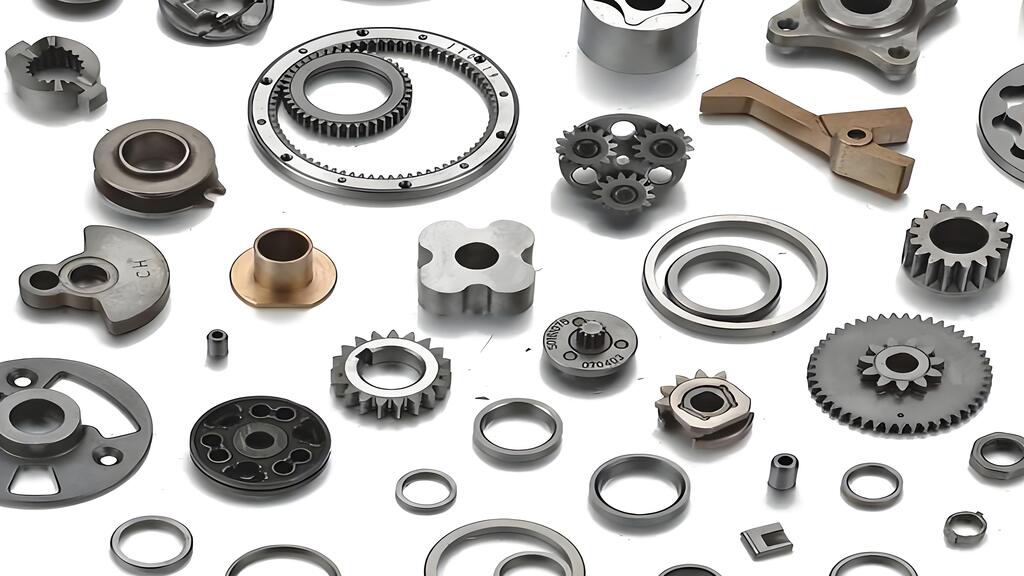


Powder Metallurgy Materials for Off Highway Vehicles
Powder Metallurgy materials offer critical solutions for off-highway vehicles facing demanding environments. These materials provide high consistency and exacting tolerances, which support reliability in heavy-duty applications. Manufacturers achieve complex shapes and superior finishes that extend component lifespan. The use of up to 95% recycled materials also promotes sustainability. The table below highlights essential benefits that powder metallurgy materials deliver in off-road settings.
| Benefit | Description |
|---|---|
| Consistent Quality | Maintains high reliability through precise tolerances. |
| Cost-Effective for Complex Shapes | Enables the production of intricate parts not feasible with other processes. |
| Superior Finishes and Properties | Improves surface quality and extends functional lifespan. |
| Sustainable Approach | Utilizes recycled content to reduce energy use and carbon footprint. |
Key Takeaways
- Powder metallurgy materials provide high consistency and precise tolerances, ensuring reliable performance in off-highway vehicles.
- These materials enable the production of complex shapes, reducing waste and allowing for cost-effective manufacturing.
- Superior wear resistance and mechanical strength make powder metallurgy ideal for components like gears and bearings in harsh environments.
- The use of recycled materials in powder metallurgy supports sustainability and reduces the carbon footprint of manufacturing.
- Customizability allows manufacturers to tailor the properties of components, enhancing performance for specific applications.
- Powder metallurgy reduces overall manufacturing costs by minimizing energy use and scrap material during production.
- Components made from powder metallurgy materials often have longer lifespans, leading to lower maintenance costs and improved operational efficiency.
- Future innovations in powder metallurgy, such as advanced alloys and additive manufacturing, promise to enhance performance and sustainability in off-highway vehicles.
What Are Powder Metallurgy Materials?
Definition and Process Overview
Powder metallurgy materials refer to engineered metals and alloys produced by compacting and Sintering fine metal powders. This process enables manufacturers to create components with precise dimensions and tailored properties. Powder metallurgy stands apart from traditional metalworking by allowing the formation of complex shapes with minimal waste. Manufacturers can select and blend different powders to meet specific performance requirements, which is not always possible with conventional methods.
Powder Production Methods
The production of powder metallurgy materials involves several key steps:
- Production of metal powder: Manufacturers use techniques such as water atomization and the sponge iron process to create fine metal powders.
- Mixing and blending: Technicians combine different powders, often with lubricants, to form high-strength alloys.
- Compacting: The blended powder is compressed into molds under controlled pressure, forming what is known as a green compact.
- Sintering: The green compact is heated in a furnace. This step bonds the particles together and increases strength without melting the material.
- Secondary operations: Additional processes, such as sizing or heat treatment, are applied to achieve the desired density and dimensional accuracy.
Powder metallurgy materials offer a streamlined manufacturing process that reduces waste and energy consumption compared to traditional metalworking.
Compaction and Sintering Techniques
Compaction applies high pressure to the powder mixture, ensuring uniform density and shape. Sintering then heats the compacted part to a temperature below its melting point. This step fuses the particles, resulting in a solid component with enhanced mechanical properties. Secondary operations, such as machining or surface finishing, further refine the part for its intended application.
Key Properties Relevant to Off-Highway Vehicles
Mechanical Strength
Powder metallurgy materials deliver impressive mechanical strength, which is essential for off-highway vehicle components. The fine powder particles and precise sintering process improve strength and hardness. Components often achieve tensile strengths around 291 MPa, supporting structural integrity under heavy loads.
| Property | Value | Significance |
|---|---|---|
| Tensile Strength | 291 MPa | Withstands pulling forces, crucial for vehicle structure. |
| Ductility | 17% | Deforms without breaking, important for impact resistance. |
| Microstructure | Improved with treatment | Prevents brittleness and promotes strength. |
Wear Resistance
Off-highway vehicles operate in harsh environments where components face constant friction and abrasion. Powder metallurgy materials exhibit superior wear resistance due to their controlled microstructure and the ability to incorporate hard phases during blending. This property extends the lifespan of gears, bushings, and bearings, reducing maintenance needs.
Customizability
Manufacturers value the flexibility of powder metallurgy materials. The process allows for the selection and combination of various metals and alloys, enabling the creation of parts tailored to specific applications. This customizability supports the development of components with unique properties, such as enhanced corrosion resistance or optimized weight, which are critical for off-highway vehicles.
Powder metallurgy materials provide a unique advantage by enabling the production of complex shapes and tailored properties with minimal waste, setting them apart from traditional metalworking processes.
Key Benefits of Powder Metallurgy Materials for Off-Highway Vehicles
Enhanced Performance
Precision and Consistency
Manufacturers rely on powder metallurgy materials to achieve high levels of precision and consistency in off-highway vehicle components. The process allows for tight control over part dimensions and material composition. This control ensures that each component meets strict specifications, which is essential for assemblies that demand reliable performance. Consistent part quality reduces the risk of failure in critical systems, such as transmissions and drivetrains.
Improved Load-Bearing Capacity
Off-highway vehicles operate under extreme loads and stresses. Powder metallurgy materials provide excellent load-bearing capacity due to their dense microstructure and uniform composition. Engineers can design parts that withstand heavy forces without deformation or premature wear. This capability supports the use of these materials in gears, axles, and other structural components where strength is a top priority.
Superior Durability
Resistance to Wear and Fatigue
Powder metallurgy materials excel in resisting wear and fatigue. The manufacturing process enables the inclusion of hard phases and lubricating additives, which enhance surface hardness and reduce friction. As a result, components such as bushings and bearings maintain their integrity over long periods, even in abrasive environments. This resistance to wear extends maintenance intervals and lowers the risk of unexpected breakdowns.
Longevity in Harsh Environments
Off-highway vehicles often face challenging conditions, including exposure to moisture, chemicals, and extreme temperatures. Powder metallurgy materials, especially those with powder-coated finishes, offer outstanding durability in these environments.
- The protective finish of powder coating significantly increases the durability and longevity of products made from powder metallurgy materials.
- Powder-coated products resist weathering, including UV rays, rain, snow, and humidity, which enhances their longevity in harsh conditions.
- Powder-coated surfaces create a barrier that prevents moisture and oxygen from reaching the metal. These surfaces can endure over 1,000 hours of salt spray testing, demonstrating reliability in challenging environments.
This level of protection ensures that critical vehicle components continue to perform, even after prolonged exposure to the elements.
Cost-Effectiveness
Reduced Material Waste
Powder metallurgy materials support efficient manufacturing by minimizing material waste. The process achieves near-net shape production, which reduces the need for extensive machining. Manufacturers can recycle surplus metal powders back into the production cycle, further enhancing material efficiency.
- Powder metallurgy achieves near-net shape production, minimizing the need for additional machining and reducing material waste.
- Surplus metal powders can be recycled back into the production cycle, enhancing material efficiency.
- Traditional manufacturing methods often produce significant scrap due to machining processes.
- In contrast, powder metallurgy uses only the necessary amount of material, drastically reducing scrap rates.
This approach not only conserves resources but also supports sustainable manufacturing practices.
Lower Manufacturing Costs
By reducing waste and streamlining production, powder metallurgy materials help lower overall manufacturing costs. The process requires less energy and fewer secondary operations compared to traditional methods. Manufacturers benefit from shorter production cycles and reduced labor expenses. These savings become especially significant when working with expensive metals or producing large volumes of parts for off-highway vehicles.
Powder metallurgy not only minimizes waste but also leads to direct cost savings, especially when working with expensive metals or alloys. By using just the right amount of material needed for each part, it significantly reduces the scrap rates compared to traditional machining methods, which often result in substantial material waste.
The combination of material efficiency and lower production costs gives manufacturers a competitive edge in the off-highway vehicle market.
Common Powder Metallurgy Materials Used in Off-Highway Vehicles
Iron-Based Materials
Applications in Structural Components
Iron-based materials form the backbone of many off-highway vehicle components. Engineers select these materials for their strength, versatility, and cost-effectiveness. Manufacturers often use iron-based steels in structural parts such as gears, shafts, and housings. These components must withstand heavy loads and repeated stress. By alloying iron with elements like chromium and molybdenum, they achieve higher strength and density, which supports demanding applications.
- Iron-based steels: Used for gears, shafts, and structural supports.
- Alloyed with chromium and molybdenum: Enhances strength and density for critical parts.
Advantages in Heavy-Duty Parts
Iron-based powder metallurgy materials deliver several advantages in heavy-duty environments. They provide excellent wear resistance and maintain dimensional stability under stress. Their dense microstructure supports high load-bearing capacity. Manufacturers also benefit from the ability to produce complex shapes with minimal machining. This efficiency reduces production time and cost.
Copper-Based Materials
Electrical and Thermal Conductivity
Copper-based materials play a vital role in off-highway vehicles, especially where electrical and thermal performance matter. Copper alloys, such as Cu–Sn bronzes, offer high electrical and thermal conductivity. These properties make them ideal for electrical contacts, heat sinks, and other components that require efficient energy transfer.
| Advantage | Description |
|---|---|
| High Electrical Conductivity | Copper P/M parts have electrical conductivities of 80% to 95% IACS, essential for electrical components. |
| High Thermal Conductivity | High electrical conductivity correlates with high thermal conductivity, beneficial for thermal applications. |
| Excellent Ductility | Copper exhibits excellent ductility, allowing for flexibility in design and application. |
| Corrosion Resistance | Copper's natural resistance to corrosion enhances durability in various environments. |
Use in Bushings and Bearings
Manufacturers frequently use copper-based materials in bushings and bearings. These components benefit from copper’s self-lubricating properties, which reduce friction and wear. The durability of copper alloys ensures long service life, even in harsh operating conditions. Copper-based bushings and bearings help maintain smooth operation in moving parts, supporting reliability in off-highway vehicles.
Stainless Steels
Corrosion Resistance
Stainless steels provide superior corrosion resistance, making them suitable for components exposed to moisture, chemicals, and extreme temperatures. Powder metallurgy stainless steels show better adherence of oxide scale compared to wrought stainless steels. This property leads to less mass loss due to spalling. For example, wrought stainless steels can lose 10–30% of their mass, while powder metallurgy stainless steels may gain up to 3% due to the adherent scale. To pass the High Temperature Oxidation/Corrosion Test, a minimum sintered density of 7.20 g/cm³ is required for powder metallurgy stainless steel flanges.
| Evidence | Description |
|---|---|
| Resistance to Scaling | PM stainless steels exhibit better adherence of oxide scale compared to wrought stainless steels. |
| Mass Loss Comparison | Wrought stainless steels can lose 10–30% of their mass due to spalling; PM stainless steels may gain up to 3%. |
| Sintered Density Requirement | PM stainless steel flanges require a minimum sintered density of 7.20 g/cm³ for corrosion resistance. |
Applications in Exposed Components
Stainless steels see frequent use in parts exposed to the elements. Grades such as 304, 316, 410, and 420 protect against rust and chemical attack. Manufacturers use these materials for exhaust systems, fasteners, and exterior fittings. Their durability ensures long-term performance, even in the most challenging environments.
Stainless steels produced by powder metallurgy methods offer enhanced protection and reliability for off-highway vehicles operating in corrosive or high-temperature conditions.
Aluminum and Titanium Alloys
Lightweight Structural Applications
Aluminum and titanium alloys play a vital role in off-highway vehicles that require both strength and reduced weight. Engineers select these materials for components where minimizing mass is essential to improve fuel efficiency and maneuverability. Aluminum alloys, known for their low density, help manufacturers produce lightweight frames, panels, and housings. Titanium alloys, especially β-titanium grades, offer even greater advantages in specific strength and toughness.
Vehicle designers often choose titanium alloys for critical parts that must withstand high stress while keeping weight to a minimum. The Ti-185 alloy stands out in this category. It delivers a tensile strength close to 1,700 megapascals, which is nearly double the strength of typical automotive steel. At the same time, Ti-185 weighs almost half as much as steel. This combination allows manufacturers to reduce the overall mass of off-highway vehicles without sacrificing durability or safety.
Titanium alloys also provide excellent corrosion resistance, which extends the lifespan of components exposed to moisture, chemicals, or extreme weather. This property makes them ideal for vehicles operating in challenging environments.
Key benefits of aluminum and titanium alloys for lightweight structural applications include:
- Significant reduction in vehicle weight, leading to improved fuel efficiency and easier handling.
- High specific strength, allowing for thinner and lighter parts that still meet demanding performance standards.
- Enhanced corrosion resistance, which protects components from environmental damage.
High-Strength Specialty Parts
Off-highway vehicles often require specialty parts that must endure extreme loads, impacts, and vibrations. Powder Metallurgy Materials enable manufacturers to produce aluminum and titanium alloy components with tailored properties for these demanding roles. Titanium alloys, such as Ti-185, provide exceptional strength and toughness, making them suitable for suspension arms, drive shafts, and protective armor.
A comparison of material properties highlights the advantages of titanium alloys:
| Material | Tensile Strength (MPa) | Relative Weight | Application Example |
|---|---|---|---|
| Automotive Steel | 800–900 | 1.0 | Chassis, body panels |
| Ti-185 Alloy | ~1,700 | 0.5 | Suspension, armor plating |
Aluminum alloys also serve in specialty parts where weight savings and moderate strength are required. Manufacturers use these alloys for brackets, housings, and covers that must resist corrosion and wear. The powder metallurgy process allows precise control over alloy composition and microstructure, resulting in parts with consistent quality and performance.
- Titanium alloys deliver high toughness and fatigue resistance, supporting long-term reliability in harsh conditions.
- Aluminum alloys provide a balance of lightness and durability, making them suitable for secondary structural components.
Engineers rely on powder metallurgy to create specialty parts that meet strict requirements for strength, weight, and environmental resistance. This approach supports innovation in off-highway vehicle design and performance.
Typical Applications of Powder Metallurgy Materials in Off-Highway Vehicles

Gears and Transmission Components
Performance Requirements
Gears and transmission components in off-highway vehicles must handle high torque, repeated shock loads, and continuous operation. These parts require precise dimensions and uniform material properties to ensure smooth power transfer. Engineers design gears to resist wear, minimize noise, and maintain alignment under heavy stress. Transmission components must also withstand temperature fluctuations and exposure to lubricants.
Material Selection Rationale
Manufacturers choose powder metallurgy materials for gears and transmission parts because of their ability to deliver consistent quality and tailored properties. The process allows for the production of complex shapes with tight tolerances, which is essential for gear teeth and splines. Powder metallurgy materials also enable the integration of hard phases, improving surface durability. In recent years, engineers have used these materials in high-stress engine and transmission components, such as gears and sleeves. Successful testing of powder metallurgy gears in truck transmissions demonstrates their reliability and suitability for demanding applications.
- Gears
- Sleeves
- Synchronizer hubs
These components benefit from the precise control over microstructure and density that powder metallurgy provides.
Bushings and Bearings
Wear and Friction Considerations
Bushings and bearings in off-highway vehicles operate under constant motion and heavy loads. They must resist wear and minimize friction to ensure efficient movement of shafts and joints. Powder metallurgy materials allow engineers to incorporate self-lubricating elements, such as graphite or solid lubricants, directly into the part. This feature reduces the need for external lubrication and extends service intervals.
Longevity in Operation
Durability remains a top priority for bushings and bearings. Powder metallurgy materials offer a dense and uniform structure, which helps distribute loads evenly and prevents premature failure. The ability to customize alloy composition further enhances resistance to corrosion and fatigue. As a result, bushings and bearings made with powder metallurgy materials deliver long operational life, even in abrasive or dirty environments.
Structural and Chassis Parts
Load-Bearing Needs
Structural and chassis parts form the backbone of off-highway vehicles. These components must support the vehicle’s weight and absorb forces from rough terrain. Powder metallurgy materials provide the necessary strength and rigidity for parts such as brackets, supports, and crossmembers. The process enables the creation of parts with optimized geometry, reducing unnecessary mass while maintaining structural integrity.
Impact Resistance
Off-highway vehicles often encounter impacts from rocks, debris, and uneven ground. Structural parts must absorb and dissipate energy to protect critical systems. Powder metallurgy materials can be engineered for enhanced toughness, allowing them to withstand repeated impacts without cracking or deforming. This resilience ensures that vehicles remain operational in the harshest conditions.
Engineers rely on powder metallurgy materials to meet the demanding requirements of off-highway vehicle applications. These materials combine strength, durability, and design flexibility, supporting reliable performance in every critical component.
Fluid, Vacuum, and Air System Components
Fluid, vacuum, and air systems in off-highway vehicles demand components that deliver reliable sealing and precise performance. Powder metallurgy (PM) materials meet these requirements by offering tailored properties and manufacturing advantages. Engineers select PM materials for critical parts such as pump covers, end caps, and valve seats. These components must withstand high pressures, prevent leaks, and maintain dimensional accuracy throughout their service life.
High-Pressure Sealed Parts
Sealing components in fluid, vacuum, and air systems face intense operational demands. PM materials excel in these applications due to their ability to form dense, leak-proof structures. Manufacturers use vacuum impregnation to seal interconnected pores within PM parts. This process ensures that pump covers and end caps remain leak-proof, even under high pressure. Oil impregnation further enhances lubrication, which increases the durability of moving parts.
| Application Area | Benefit Description |
|---|---|
| Sealing Components | PM materials are used in parts like pump covers and end caps to prevent leaks. |
| Performance Enhancement | Enhances overall performance in fluid, vacuum, and air systems for vehicles. |
| Cost Efficiency | Reduces manufacturing costs compared to traditional machining methods. |
PM materials provide a distinct advantage in sealing applications. Their controlled porosity allows for effective impregnation, which blocks fluid migration and supports system integrity. Engineers rely on these materials to maintain pressure and prevent contamination in hydraulic and pneumatic systems. The ability to produce complex shapes with tight tolerances also reduces the risk of leaks at joints and interfaces.
PM sealing components deliver consistent leak-proof performance, supporting the reliability of off-highway vehicles in demanding environments.
Precision Finished Components
Precision finished components play a vital role in fluid, vacuum, and air systems. These parts require exact dimensions and smooth surfaces to ensure proper function and longevity. PM materials enable manufacturers to achieve high levels of dimensional accuracy and surface finish directly from the sintering process. This capability minimizes the need for extensive machining, which lowers production costs and shortens lead times.
- Vacuum impregnation seals interconnected pores, ensuring leak-proof performance.
- Oil impregnation enhances lubrication, improving component durability.
Engineers use PM materials for valve seats, pistons, and actuator housings. These components must operate smoothly and resist wear over extended periods. The uniform microstructure of PM parts supports consistent performance, even in high-cycle applications. Manufacturers benefit from the ability to customize alloy composition, which allows for the optimization of hardness, corrosion resistance, and thermal stability.
PM materials also contribute to cost efficiency. The near-net shape manufacturing process reduces material waste and energy consumption. Companies can produce large volumes of precision components without sacrificing quality or reliability.
Precision finished PM components ensure that fluid, vacuum, and air systems in off-highway vehicles operate efficiently, with minimal maintenance and downtime.
Performance and Durability Considerations for Powder Metallurgy Materials
Resistance to Wear and Fatigue
Testing and Validation Methods
Engineers must ensure that components made from powder metallurgy materials can withstand the demanding conditions of off-highway vehicles. They use a variety of laboratory and field tests to evaluate wear and fatigue resistance. These tests help manufacturers predict how parts will perform over time and under stress.
| Testing Method | Description |
|---|---|
| Pin-on-disk tests | Measures friction and wear between a pin and a rotating disk, simulating sliding contact. |
| Abrasion tests on laboratory stands | Assesses material wear in controlled abrasive environments. |
| Wear rate measurements | Quantifies wear by tracking mass or volume loss of samples during lab and field testing. |
These methods provide valuable data on how materials respond to repeated motion, friction, and abrasive forces. Engineers use this information to select the best materials for gears, bushings, and other high-wear components.
Real-World Performance Data
Field data confirms the reliability of powder metallurgy materials in off-highway vehicle applications. For example, brake pads made from these materials show strong performance in terms of braking force, wear, and noise levels.
| Brake Pad | Braking Force (N) | Coefficient of Friction | Mass Loss (g/h) | Noise (dB) | Vibration (m/s²) | Hardness (HRC) |
|---|---|---|---|---|---|---|
| BP1 | 640.99 | 0.3873 | 1.2 | 17.5 | 0.743 | 46 |
| BP3 | N/A | N/A | 1.07 | 14.8 | 0.571 | 44 |
Brake pads maintain high braking force and low mass loss, which indicates strong wear resistance. The hardness values also support long service life, even in tough environments.
Suitability for Harsh Environments
Corrosion and Temperature Resistance
Powder metallurgy materials can be engineered from specialized alloys that deliver excellent performance in corrosive and high-temperature environments. Manufacturers tailor the composition and microstructure to resist rust, oxidation, and thermal degradation. This customization ensures that parts continue to function even when exposed to moisture, chemicals, or extreme heat. Advanced sintering and manufacturing technologies further enhance the strength and efficiency of these components, making them ideal for construction and agricultural vehicles.
Components produced with powder metallurgy methods often outlast those made with traditional techniques, especially in harsh conditions.
Maintenance and Lifecycle Benefits
Off-highway vehicles require parts that minimize downtime and reduce maintenance costs. Powder metallurgy materials provide a cost-effective solution by producing strong, wear-resistant components that withstand harsh environments. Their durability leads to longer service intervals and fewer replacements. Over the lifecycle of a vehicle, this reliability translates into significant savings and improved operational efficiency.
- Reduced need for frequent part replacement
- Lower maintenance costs due to extended component life
- Consistent performance in demanding applications
Operators and fleet managers benefit from the long-term value that powder metallurgy materials deliver, ensuring vehicles remain productive and reliable in the field.
Cost and Sustainability Advantages of Powder Metallurgy Materials
Material Efficiency
Near-Net Shape Manufacturing
Manufacturers achieve near-net shape manufacturing with powder metallurgy materials. This process forms components close to their final dimensions, reducing the need for extensive machining. Engineers design parts with complex geometries and tight tolerances, which minimizes excess material. Near-net shape production supports efficient use of resources and lowers operational costs.
Reduced Scrap and Waste
Powder metallurgy materials stand out for their ability to minimize scrap and waste. The process uses more than 97% of the starting raw material in the finished part. Unlike casting or machining, which often generate high levels of scrap, powder metallurgy maximizes material utilization.
| Process Type | Material Waste | Material Utilization |
|---|---|---|
| Casting | High | Low |
| Powder Metallurgy | Low | High |
| Machining | High | Low |
| Stamping | High | Low |
- Powder metallurgy minimizes scrap losses by typically using more than 97% of the starting raw material in the finished part.
- It allows for the production of complex and precise metal parts with minimal material waste.
Environmental Benefits
Energy Savings in Production
Powder metallurgy materials offer significant energy savings during production. Sintering powders at lower temperatures reduces energy consumption compared to traditional melting and casting processes. Manufacturers also benefit from fewer hazardous substances, which leads to lower harmful emissions.
- Reduced energy use through sintering powders at lower temperatures.
- Minimized waste and efficient recycling processes.
- Fewer hazardous substances leading to lower harmful emissions.
Recyclability of Powder Metallurgy Parts
Recyclability remains a key advantage of powder metallurgy materials. Manufacturers can recycle surplus powders and finished parts, supporting a circular economy. The use of local resources further reduces the environmental footprint and strengthens community economies. Many operations now use solar energy, which significantly lowers carbon emissions.
| Commitment Type | Target | Year |
|---|---|---|
| Scope 1 and 2 GHG Emissions | 42% reduction | 2030 |
| Scope 3 GHG Emissions | 25% reduction | 2030 |
| Scope 1 and 2 GHG Emissions | 90% reduction | 2050 |
| Scope 3 GHG Emissions | 90% reduction | 2050 |
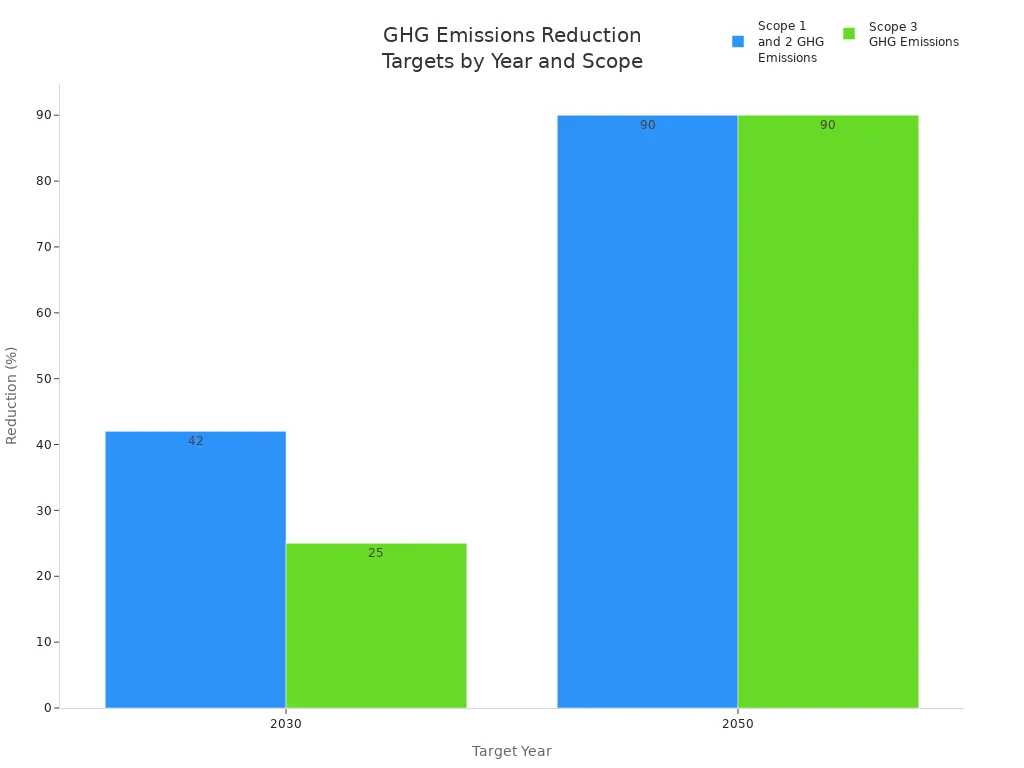
Net shape manufacturing processes minimize waste and optimize resource utilization. Use of local resources and renewable energy supports sustainability goals.
Economic Impact
Lower Total Cost of Ownership
Powder metallurgy materials help manufacturers lower the total cost of ownership for off-highway vehicles. Efficient material use and reduced energy requirements decrease production costs. Durable components require less frequent replacement, which reduces maintenance expenses over the vehicle’s lifecycle.
Competitive Advantage for Manufacturers
Manufacturers gain a competitive advantage by adopting powder metallurgy materials. The ability to produce high-quality, sustainable parts at lower costs supports market growth. Companies meet environmental targets and deliver reliable products, which strengthens their reputation in the industry.
Future Trends and Innovations in Powder Metallurgy Materials
Advanced Material Development
High-Performance Alloys
Researchers continue to develop high-performance alloys for off-highway vehicles. These alloys offer improved strength, toughness, and resistance to wear. Engineers select advanced compositions to meet the demands of heavy-duty applications. For example, new iron-based alloys withstand higher loads and provide longer service life. Manufacturers also experiment with alloying elements such as nickel, chromium, and molybdenum to enhance mechanical properties. These innovations help vehicles operate efficiently in challenging environments.
Nanostructured Materials
Nanostructured materials represent a significant advancement in powder metallurgy. Scientists design these materials with ultra-fine grains, which increase hardness and durability. The unique microstructure improves resistance to fatigue and corrosion. Off-highway vehicles benefit from components that last longer and require less maintenance. Nanostructured materials also enable lighter parts without sacrificing strength. This development supports the trend toward more efficient and sustainable vehicle designs.
Process Improvements
Additive Manufacturing Integration
Additive manufacturing, also known as 3D printing, transforms the production of Powder Metallurgy Materials. Companies like GKN Powder Metallurgy partner with HP and Volkswagen to advance metal 3D printing for vehicle components. The HP Metal Jet technology boosts productivity by up to 50 times compared to traditional methods. It operates at nearly half the cost of older binder jetting systems. Manufacturers reduce time-to-market for mass-produced parts from months to weeks. The technology also provides greater design flexibility, allowing engineers to create complex shapes and optimize performance.
| Aspect | Details |
|---|---|
| Partnership | GKN Powder Metallurgy collaborates with HP and Volkswagen to advance metal 3D printing. |
| Productivity | HP Metal Jet technology increases productivity by up to 50 times compared to other methods. |
| Cost Reduction | Operates at nearly half the cost of traditional binder jetting systems. |
| Time-to-Market | Reduces time for mass-produced parts from months to weeks. |
| Design Flexibility | Provides greater design and manufacturing flexibility for off-highway vehicle components. |
Automation and Quality Control
Automation plays a vital role in modern powder metallurgy processes. Manufacturers use robotics and advanced sensors to monitor production. Automated systems ensure consistent quality and reduce human error. Real-time data collection allows engineers to adjust parameters and maintain tight tolerances. Improved quality control leads to reliable components and fewer defects. Off-highway vehicles benefit from parts that meet strict industry standards.
Sustainability Initiatives
Green Manufacturing Practices
Sustainability drives innovation in powder metallurgy. Companies adopt green manufacturing practices to lower energy consumption and reduce emissions. They use renewable energy sources and recycle metal powders. These efforts minimize the environmental impact of production. Manufacturers also design processes that generate less waste and use local resources. Green practices support the long-term viability of off-highway vehicle manufacturing.
Lifecycle Analysis
Lifecycle analysis helps manufacturers understand the environmental impact of Powder Metallurgy Materials. Engineers evaluate energy use, emissions, and recyclability throughout a component’s life. This analysis guides decisions about material selection and process improvements. Companies aim to produce parts that last longer and can be recycled at the end of their service life. Lifecycle analysis supports sustainability goals and helps manufacturers meet regulatory requirements.
The future of powder metallurgy combines advanced materials, innovative processes, and sustainable practices to meet the evolving needs of off-highway vehicles.
Powder metallurgy materials play a vital role in off-highway vehicles. They deliver unmatched performance, durability, and cost savings. Manufacturers choose these materials for their ability to meet strict demands in tough environments. Key reasons for their rising use include:
- Superior strength and wear resistance
- Efficient, sustainable production
- Lower total ownership costs
Powder metallurgy materials offer clear value by combining reliability, longevity, and economic benefits for the off-highway vehicle industry.
FAQ
What is powder metallurgy and why does it matter for off-highway vehicles?
Powder metallurgy uses metal powders to create parts with precise shapes and properties. Off-highway vehicles benefit from improved durability, reduced waste, and lower production costs. Manufacturers select powder metallurgy for its ability to meet strict performance standards.
Which powder metallurgy materials work best in harsh environments?
Stainless steels and titanium alloys offer strong corrosion resistance and high strength. These materials withstand moisture, chemicals, and extreme temperatures. Engineers choose them for exposed components in construction and agricultural vehicles.
How does powder metallurgy reduce manufacturing costs?
Powder metallurgy achieves near-net shape production, which minimizes machining and material waste. Manufacturers recycle unused powders and use less energy during processing. This approach lowers overall expenses and supports sustainable practices.
Can powder metallurgy parts match the strength of forged or cast components?
Engineers design powder metallurgy parts to meet or exceed the strength of forged or cast components. Advanced alloys and controlled microstructures provide high load-bearing capacity and wear resistance. Manufacturers rely on powder metallurgy for critical structural applications.
What are common applications of powder metallurgy in off-highway vehicles?
Manufacturers use powder metallurgy for gears, bushings, bearings, chassis parts, and fluid system components. These parts require precision, durability, and resistance to wear. Powder metallurgy supports complex designs and consistent quality.
Is powder metallurgy environmentally friendly?
Powder metallurgy uses recycled materials and energy-efficient processes. Manufacturers minimize waste and emissions. Many powder metallurgy operations use renewable energy sources. This method supports environmental goals and reduces the carbon footprint.
How do manufacturers ensure the quality of powder metallurgy parts?
Manufacturers use automated systems and advanced sensors to monitor production. They perform rigorous testing, including wear and fatigue assessments. Quality control ensures that each part meets industry standards for reliability and performance.
What future innovations are expected in powder metallurgy for off-highway vehicles?
Researchers develop high-performance alloys and nanostructured materials. Additive manufacturing and automation improve production speed and flexibility. Sustainability initiatives drive the adoption of green practices and lifecycle analysis.