

Future of Magnesium Alloys in Electric Vehicles
In the quest for energy efficiency, lightweight materials play a crucial role in electric vehicles. The market for these materials is rapidly expanding, driven by the need for improved performance and environmental compliance. Among these materials, magnesium alloys stand out due to their remarkable properties. They are 4.5 times lighter than steel and 1.7 times lighter than aluminum, making them an ideal choice for various automotive applications. As the industry moves towards innovative designs, the future applications of magnesium alloys will significantly enhance vehicle performance and sustainability.
Key Takeaways
- Magnesium alloys are significantly lighter than steel and aluminum, making them ideal for electric vehicles. This lightweight nature enhances energy efficiency and extends driving range.
- The mechanical strength of magnesium alloys provides a favorable strength-to-weight ratio, allowing for safe and effective use in structural components of electric vehicles.
- Recent advancements in corrosion resistance have improved the longevity and reliability of magnesium alloys, making them suitable for harsh automotive environments.
- Magnesium alloys exhibit excellent thermal conductivity, which aids in effective heat dissipation, crucial for maintaining optimal operating temperatures in electric vehicle components.
- The integration of magnesium alloys in battery casings and structural components can lead to substantial weight savings, improving overall vehicle performance and safety.
- Despite their advantages, magnesium alloys face challenges such as high production costs and susceptibility to corrosion, which manufacturers must address for wider adoption.
- Innovative manufacturing techniques and advancements in alloy compositions are enhancing the usability and performance of magnesium alloys in electric vehicles.
- Embracing magnesium alloys can significantly contribute to the sustainability of electric vehicles, aligning with global efforts to reduce environmental impact.
Unique Properties of Magnesium Alloys

Lightweight Nature
Magnesium alloys possess an exceptional lightweight nature, making them a preferred choice in the automotive industry. With a density of only 1.74 g/cm³, magnesium is significantly lighter than both aluminum and steel. The following table illustrates the density comparison:
| Material | Density (g/cm³) |
|---|---|
| Magnesium | 1.74 |
| Aluminum | 2.70 |
This lightweight characteristic allows manufacturers to reduce the overall weight of electric vehicles, enhancing energy efficiency and extending driving range. By utilizing magnesium alloys, automakers can achieve substantial weight savings without compromising structural integrity.
Mechanical Strength
The mechanical strength of magnesium alloys is another critical property that supports their application in electric vehicles. Although magnesium alloys generally exhibit lower tensile strength compared to the strongest aluminum alloys, they still provide a favorable strength-to-weight ratio. Key points regarding their mechanical strength include:
- Magnesium alloys can support greater column loading per unit weight, enhancing their application in structural components.
- Alloys such as AZ80 and AZ61 demonstrate high yield strength, allowing them to endure significant stress before permanent deformation.
- Despite some limitations in creep resistance, magnesium alloys remain ideal for weight-critical applications due to their superior strength-to-weight ratio compared to traditional materials like steel.
These attributes make magnesium alloys a viable option for various structural components in electric vehicles, contributing to improved performance and safety.
Corrosion Resistance
Corrosion resistance is a vital property for materials used in automotive applications, particularly in electric vehicles exposed to harsh environments. Recent advancements have significantly improved the corrosion resistance of magnesium alloys. Notable develoPments include:
- Innovative surface coating techniques that enhance corrosion resistance.
- A revolutionary surface coating method utilizing cavitation, which improves adhesion and thickness compared to traditional methods.
- New coatings formed through this technique exhibit superior resistance to corrosion, especially in chloride environments.
These advancements address a significant challenge in the automotive industry, facilitating the use of magnesium alloys in electric vehicles. Enhanced corrosion resistance not only improves the longevity of components but also ensures reliable performance over time.
Thermal Conductivity
Thermal conductivity is a crucial property of magnesium alloys that significantly impacts electric vehicle performance and safety. Magnesium alloys exhibit excellent thermal conductivity, which enhances their suitability for various automotive applications. This property allows for efficient heat dissipation, a vital factor in maintaining optimal operating temperatures for electric vehicle components.
The following table summarizes key properties of magnesium alloys, highlighting their thermal conductivity:
| Property | Magnesium Alloys |
|---|---|
| Thermal Conductivity | Excellent thermal conductivity |
| Density | 1.74 g/cm³ (lightest engineered metal) |
| Specific Strength and Stiffness | Higher than steel and aluminum |
Efficient thermal management is essential in electric vehicles, particularly for battery systems and power electronics. High thermal conductivity in magnesium alloys helps to regulate temperatures, preventing overheating and ensuring reliable operation. This capability contributes to the overall safety of electric vehicles, as it reduces the risk of thermal runaway in battery systems.
The benefits of magnesium alloys' thermal conductivity extend beyond safety. Enhanced heat dissipation leads to improved vehicle dynamics, which can positively influence overall performance. Key advantages include:
- Reduced weight leads to lower fuel consumption.
- Enhanced vehicle dynamics improve overall performance.
- Lower emissions contribute to environmental sustainability.
By utilizing magnesium alloys, manufacturers can create lightweight components that not only improve energy efficiency but also enhance the driving experience. The combination of low density and high thermal conductivity allows for innovative designs that prioritize both performance and safety.
In addition to these benefits, the thermal properties of magnesium alloys facilitate the integration of advanced cooling systems. These systems can effectively manage heat in critical areas, such as battery packs and electric motors. As the automotive industry continues to evolve, the demand for materials that offer superior thermal management will likely increase.
Current Applications of Magnesium Alloys in Electric Vehicles

Magnesium alloys find extensive applications in electric vehicles due to their unique properties. Their lightweight nature, combined with mechanical strength, makes them suitable for various components.
Structural Components
In electric vehicles, structural components play a vital role in ensuring safety and performance. Magnesium alloys are increasingly used in parts such as frames and supports. Their lightweight properties contribute to overall vehicle efficiency. By reducing weight, manufacturers can enhance energy efficiency and extend driving range.
Battery Casings
Battery casings are critical for protecting the sensitive components within electric vehicles. Magnesium alloys offer several advantages for this application:
| Advantage | Description |
|---|---|
| Lightweight properties | Magnesium is the lightest engineered metal, providing significant weight savings. |
| Strength | Higher specific strength and stiffness compared to steel and aluminum. |
| Thermal management capabilities | Excellent thermal conductivity allows for effective heat management in battery systems. |
| Vibration dampening | Helps protect components from wear and enhances durability. |
| Weight savings | Up to 40% lighter than traditional aluminum designs without compromising strength. |
These benefits make magnesium alloys an ideal choice for battery casings, ensuring that electric vehicles remain lightweight while maintaining structural integrity.
Interior Parts
The use of magnesium alloys in interior parts significantly impacts vehicle weight. These alloys are increasingly integrated into components such as instrument panels, seat frames, and steering wheel frames. The following table illustrates the impact of magnesium alloys on weight reduction in various interior applications:
| Application | Impact on Weight Reduction | Additional Benefits |
|---|---|---|
| Instrument panel frame | Significant weight reduction | Integrates functional modules like air-conditioning outlets and airbag brackets |
| Seat frame | Reduces weight | Improves collision safety |
| Steering wheel frame | Reduces weight by ~20% | Enhances texture through surface treatment |
| Vehicle frames | Reduces weight by >60% | Potential for high-stress component applications |
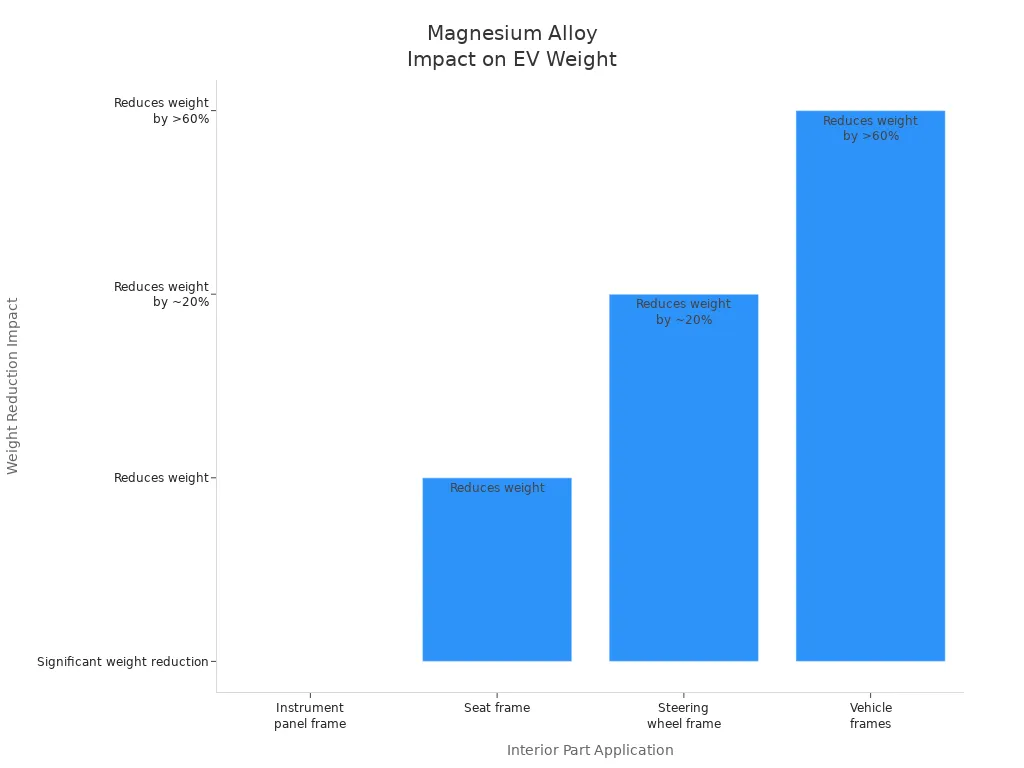
The integration of magnesium alloys in these interior components not only reduces weight but also enhances safety and functionality. As the automotive industry continues to evolve, the demand for lightweight materials like magnesium alloys will likely increase, driving innovation in electric vehicle design.
Chassis and Body Panels
Magnesium alloys are increasingly becoming a preferred choice for chassis and body panels in electric vehicles. Their lightweight nature significantly contributes to overall vehicle efficiency. By reducing weight, manufacturers can enhance the driving range and performance of electric vehicles.
Key Benefits of Using Magnesium Alloys in Chassis and Body Panels:
-
Weight Reduction: Magnesium alloys can reduce the weight of chassis and body panels by up to 30% compared to traditional materials like steel. This reduction leads to improved energy efficiency and extended battery life.
-
Enhanced Structural Integrity: Magnesium alloys provide excellent strength-to-weight ratios. They can withstand high stress and impact forces, making them suitable for critical structural applications.
-
Improved Safety Features: The use of magnesium alloys in chassis and body panels can enhance safety. Their ability to absorb energy during collisions helps protect passengers.
-
Corrosion Resistance: Advanced coatings improve the corrosion resistance of magnesium alloys. This property is crucial for components exposed to environmental elements, ensuring longevity and reliability.
Tip: Automakers can leverage the unique properties of magnesium alloys to create innovative designs that prioritize both performance and safety.
The integration of magnesium alloys into chassis and body panels also allows for more flexible design options. Manufacturers can create complex shapes and structures that were previously challenging with traditional materials. This flexibility can lead to improved aerodynamics and aesthetics, enhancing the overall appeal of electric vehicles.
| Property | Magnesium Alloys | Traditional Materials |
|---|---|---|
| Weight Reduction | Up to 30% lighter | Heavier |
| Strength | High strength-to-weight ratio | Lower strength-to-weight ratio |
| Corrosion Resistance | Enhanced with coatings | Varies by material |
| Design Flexibility | High | Limited |
The automotive industry is witnessing a shift towards sustainable practices. Magnesium alloys align with this trend by offering a lightweight solution that reduces energy consumption. Their recyclability further enhances their appeal, as manufacturers can minimize waste and promote a circular economy.
Advantages of Magnesium Alloys Over Other Materials
Weight Reduction Benefits
One of the most significant advantages of magnesium alloys is their ability to reduce vehicle weight. This reduction plays a crucial role in enhancing the overall energy efficiency of electric vehicles. For instance, replacing traditional materials with magnesium alloys can lead to substantial weight savings. The highest average usage of magnesium alloy per vehicle in China is approximately 19 kg. Notably, companies like NIO and XPeng Motors utilize magnesium alloy Cross Car Beams (CCB) in nearly all their models, achieving a weight reduction of about 5 kg.
The impact of weight reduction is profound. A decrease of just 10% in vehicle weight can yield a 6%-8% improvement in fuel efficiency. This means that electric vehicles can carry additional systems without increasing overall weight, thereby improving their all-electric range. Furthermore, magnesium alloy seat frames can achieve a weight reduction of about 20 kg, further contributing to energy efficiency.
Cost-Effectiveness
While magnesium alloys generally incur higher raw material and processing costs compared to aluminum, their cost-effectiveness can be justified in specific applications. The following table outlines the cost factors associated with magnesium alloys and other lightweight materials:
| Material | Cost Factors | Advantages/Disadvantages |
|---|---|---|
| Aluminum | - Lower raw material cost - Established recycling infrastructure - Fast production cycles due to HPDC | - Cost-effective for high-volume production - Higher density slightly increases costs - Die wear raises maintenance costs |
| Magnesium | - Higher raw material cost - Specialized processing increases expenses - Less developed recycling infrastructure | - Justified in aerospace/premium applications due to weight savings - Limited mass production use due to costs and infrastructure |
Despite the higher base cost, magnesium's energy efficiency during processing can lead to reduced overall production costs. The cost of magnesium alloys has decreased relative to aluminum since 2004, allowing for improved fuel efficiency in vehicles. This trend indicates that as the industry evolves, the cost-effectiveness of magnesium alloys will likely improve, making them a more viable option for mass production.
Environmental Impact
The environmental impact of using magnesium alloys in electric vehicles is another compelling advantage. Magnesium alloys contribute to sustainability by reducing the overall weight of vehicles, which in turn enhances fuel economy. A lighter vehicle requires less energy to operate, leading to lower emissions and reduced environmental footprint.
Moreover, the recyclability of magnesium alloys supports a circular economy. As manufacturers increasingly focus on sustainable practices, the ability to recycle magnesium alloys will become more critical. The integration of lightweight materials like magnesium alloys not only improves vehicle performance but also aligns with global efforts to minimize environmental impact.
Tip: Embracing magnesium alloys can significantly enhance the sustainability of electric vehicles, making them a more attractive option for environmentally conscious consumers.
Performance Enhancements
Magnesium alloys significantly enhance the performance of electric vehicles (EVs) in several key areas. Their unique properties contribute to improved efficiency, handling, and overall driving experience. Below are some of the primary performance enhancements associated with the use of magnesium alloys in EVs:
-
Improved Acceleration:
- The lightweight nature of magnesium alloys allows for quicker acceleration. A lighter vehicle requires less energy to reach higher speeds. This characteristic is particularly beneficial for electric vehicles, where battery efficiency is paramount.
-
Enhanced Handling:
- Magnesium alloys improve the vehicle's center of gravity. A lower center of gravity enhances stability during cornering and reduces body roll. This leads to a more responsive driving experience, allowing drivers to navigate turns with greater confidence.
-
Better Braking Performance:
- The reduced weight of magnesium components contributes to shorter stopping distances. Lighter vehicles experience less inertia, allowing for quicker deceleration. This improvement in braking performance enhances safety and driver control.
-
Increased Range:
- By reducing the overall weight of the vehicle, magnesium alloys help extend the driving range of electric vehicles. A lighter vehicle consumes less energy, allowing for longer trips on a single charge. This factor is crucial for consumers concerned about range anxiety.
-
Optimized Thermal Management:
- The excellent thermal conductivity of magnesium alloys aids in effective heat dissipation. This property is vital for maintaining optimal operating temperatures in electric motors and battery systems. Efficient thermal management prevents overheating, ensuring reliable performance and longevity of components.
Tip: Utilizing magnesium alloys can lead to significant performance improvements in electric vehicles, making them more appealing to consumers.
The integration of magnesium alloys into electric vehicle design not only enhances performance but also aligns with the industry's push for sustainability. As manufacturers continue to innovate, the potential for magnesium alloys to revolutionize the automotive landscape remains promising.
| Performance Aspect | Benefit of Magnesium Alloys |
|---|---|
| Acceleration | Quicker response due to reduced weight |
| Handling | Improved stability and reduced body roll |
| Braking Performance | Shorter stopping distances |
| Driving Range | Extended range due to lower energy consumption |
| Thermal Management | Effective heat dissipation |
Challenges Facing Magnesium Alloys in Electric Vehicles
Despite their advantages, magnesium alloys face several challenges that hinder their widespread adoption in electric vehicles. Understanding these challenges is crucial for manufacturers and stakeholders aiming to leverage the benefits of these materials.
Manufacturing Limitations
Manufacturing magnesium alloys presents unique challenges that can affect production efficiency and product quality. Key limitations include:
- Susceptibility to Cracking: Magnesium alloys are prone to cracking during forming processes. This susceptibility can lead to defects in the final product, necessitating careful handling and processing.
- Low Corrosion Resistance: While advancements have improved corrosion resistance, magnesium alloys still require special anti-corrosion coatings. This additional step increases production complexity and costs.
- High Production Costs: The overall cost of producing magnesium alloys remains high. Factors such as raw material prices and specialized processing contribute to this expense.
- Flammability: Magnesium alloys pose safety concerns due to their flammability. This characteristic necessitates stringent safety measures during manufacturing and handling.
These manufacturing limitations can deter manufacturers from fully embracing magnesium alloys, impacting their integration into electric vehicle designs.
Cost of Production
The cost of producing magnesium alloys is another significant barrier to their adoption in electric vehicles. A comparison of material costs reveals that magnesium alloys are generally more expensive than other lightweight materials. The following table illustrates the price per kilogram for various materials:
| Material Type | Price per kg (USD) |
|---|---|
| Automotive-grade Aluminum | $1.50 - $4.00 |
| Magnesium Alloy (USA) | $2.71 |
| Magnesium Alloy (China) | $2.52 |
| Magnesium Alloy (Germany) | $2.17 |
| Magnesium Alloy (France) | $2.64 |
| Magnesium Alloy (Netherlands) | $2.42 |
The higher cost of magnesium alloys compared to aluminum and other materials can limit their use in mass production. Manufacturers often seek cost-effective solutions, making it challenging for magnesium alloys to compete in the market.
Recycling Issues
Recycling magnesium alloys from end-of-life electric vehicles presents several challenges. The complexity of recycling processes and economic factors complicate the establishment of a dedicated recycling industry. The following table outlines the primary challenges associated with recycling magnesium alloys:
| Challenge Type | Description |
|---|---|
| Economic Viability | Low profitability from recovering basic components complicates establishing a dedicated recycling industry. |
| Uncertainty | Uncertainty surrounding the development of magnesium-based systems complicates recycling efforts. |
| Cost-Effectiveness | Revenue from material extraction must exceed recycling costs, which is difficult in emerging markets. |
Additionally, the recycling process itself faces obstacles, as highlighted in the table below:
| Recycling Process | Challenges |
|---|---|
| Scrap Classification | Current recycling effectiveness is unsatisfactory, indicating a need for improved methods. |
| Separation and Sorting | Existing challenges in the recycling of complex scrap hinder the effective recovery of magnesium alloys. |
| Pre-treatment | Comprehensive review highlights obstacles in reincorporating magnesium alloy scrap into industrial products. |
These recycling issues not only affect the sustainability of magnesium alloys but also limit their long-term viability in electric vehicle applications. Addressing these challenges will be essential for the future success of magnesium alloys in the automotive industry.
Market Acceptance
Market acceptance of magnesium alloys in the electric vehicle (EV) industry hinges on several critical factors. As the automotive sector increasingly prioritizes lightweight materials, understanding these factors becomes essential for manufacturers and stakeholders.
| Factor | Description |
|---|---|
| Demand for Lightweight Materials | The automotive industry's focus on reducing vehicle weight aims to improve fuel efficiency and meet regulations. |
| Stringent Emission Regulations | Manufacturers face pressure to use lightweight materials to achieve fuel efficiency targets. |
| Increased Electric Vehicle Popularity | The rise in EV sales necessitates lightweight materials to offset battery weight and enhance range. |
| Challenges with Costs | High costs of magnesium alloys may hinder market growth. |
| Concerns about Weldability and Corrosion | Issues related to the weldability and corrosion resistance of magnesium alloys can limit their use. |
The demand for lightweight materials stems from the automotive industry's ongoing efforts to enhance fuel efficiency. As manufacturers strive to meet stringent emission regulations, they increasingly recognize the importance of reducing vehicle weight. This trend aligns with the growing popularity of electric vehicles, where the need for lightweight materials becomes even more pronounced. The weight of batteries significantly impacts the overall performance of EVs, making magnesium alloys an attractive option.
However, challenges remain. The high costs associated with magnesium alloys can deter manufacturers from adopting these materials. Additionally, concerns about weldability and corrosion resistance may limit their application in certain components. Addressing these issues is crucial for increasing market acceptance.
Government policies and incentives also play a role in shaping market dynamics. While no specific policies directly promote magnesium alloys in electric vehicle manufacturing, broader trends exist. Manufacturers can leverage a focus on domestic production and sustainability to adapt to the growing demand for lightweight materials in EVs. For instance:
- Manufacturers may benefit from a focus on domestic production and sustainability, aligning with the growing demand for lightweight materials in EVs.
- Policies may create indirect opportunities for U.S. manufacturers through tariffs on imports, potentially supporting the use of magnesium alloys in EVs.
- Manufacturers are encouraged to invest in research and development for advanced magnesium alloys that meet the needs of the emerging EV market.
As the electric vehicle market continues to evolve, the acceptance of magnesium alloys will depend on addressing cost challenges and enhancing material properties. By focusing on innovation and aligning with regulatory trends, stakeholders can pave the way for magnesium alloys to play a significant role in the future of electric vehicles.
Future Potential and Innovations of Magnesium Alloys
Advances in Alloy Composition
Recent advancements in alloy composition have significantly improved the properties of magnesium alloys for electric vehicle applications. These innovations allow manufacturers to enhance the performance and durability of components. The following table summarizes key developments:
| Evidence Description | Impact on Magnesium Alloys for EVs |
|---|---|
| Magnesium alloys are used in battery housings, transmission cases, and motor housings | They achieve a balance between weight and strength, critical for enhancing battery efficiency and vehicle range. |
| Rising production of electric vehicles drives the use of magnesium alloys | EV manufacturers are using magnesium to offset the weight of heavy batteries, extending vehicle range and performance. |
| Innovations in coating technologies and alloy compositions | These advancements are improving the durability and performance of magnesium components, making them more viable for use. |
These developments position magnesium alloys as a key material in the evolving landscape of electric vehicles.
New Manufacturing Techniques
Innovative manufacturing techniques are emerging to enhance the usability of magnesium alloys in electric vehicles. Researchers are exploring various methods to improve production efficiency and component quality. Notable advancements include:
- Researchers in Japan have created a new additive manufacturing technology for magnesium alloys.
- This technology allows for the production of high-precision, lightweight parts.
- It utilizes a laser to melt magnesium wire under a shielding gas, enabling the creation of complex components.
- The process is more energy-efficient and environmentally friendly compared to traditional methods.
These new techniques not only streamline production but also expand the design possibilities for electric vehicle components.
Integration with Other Materials
Integrating magnesium alloys with other materials optimizes electric vehicle performance. This approach enhances the electrochemical capabilities of components and improves overall efficiency. Key integration strategies include:
- Magnesium alloys are being combined with metals like silicon (Si) and aluminum (Al) to enhance electrochemical capabilities.
- AI-driven optimization techniques are utilized to improve battery performance by addressing voltage stability, internal resistance, and cycle degradation.
- Researchers are exploring innovative electrolyte formulations, such as magnesium tetrakis(hexafluoroisopropyloxy)borate (Mg(TFSI)₂), to improve compatibility with magnesium anodes and enhance overall battery performance.
These integration efforts highlight the versatility of magnesium alloys and their potential to revolutionize electric vehicle technology.
Role in Sustainable Mobility
Magnesium alloys play a pivotal role in promoting sustainable mobility within the electric vehicle (EV) sector. Their unique properties contribute significantly to the overall efficiency and environmental impact of electric vehicles. The following table summarizes the key benefits of magnesium alloys for EVs:
| Property | Benefit to EVs |
|---|---|
| Lightweight | Reduces vehicle weight, enhancing energy efficiency. |
| High strength-to-weight ratio | Improves vehicle performance and safety. |
| Recyclability | Contributes to sustainability in material use. |
| Abundance | Offers a less harmful alternative to lithium. |
| Low environmental impact | The extraction process is less damaging than lithium. |
| High thermal conductivity | Useful for heat dissipation systems in EVs. |
The lightweight nature of magnesium alloys allows manufacturers to reduce the overall weight of electric vehicles. This reduction enhances energy efficiency, enabling longer driving ranges on a single charge. A lighter vehicle requires less energy to operate, which is crucial for maximizing battery performance.
Moreover, the high strength-to-weight ratio of magnesium alloys improves vehicle performance and safety. These alloys can withstand significant stress while maintaining structural integrity. This characteristic is particularly important in the automotive industry, where safety is paramount.
Recyclability is another critical aspect of magnesium alloys. As the automotive industry shifts towards sustainable practices, the ability to recycle materials becomes increasingly important. Magnesium alloys can be recycled effectively, contributing to a circular economy. This capability reduces waste and minimizes the environmental impact associated with material extraction and processing.
Additionally, magnesium alloys present an abundant resource compared to lithium, which is often used in batteries. The extraction process for magnesium is less damaging to the environment, making it a more sustainable choice for manufacturers. This aspect aligns with the growing demand for eco-friendly materials in the automotive sector.
Finally, the high thermal conductivity of magnesium alloys plays a vital role in heat dissipation systems within electric vehicles. Efficient thermal management is essential for maintaining optimal operating temperatures in battery systems and electric motors. By utilizing magnesium alloys, manufacturers can enhance the reliability and performance of these critical components.
Magnesium alloys play a crucial role in the development of electric vehicles (EVs). Their lightweight nature enhances energy efficiency and extends driving range. Recent advancements in alloy formulations and manufacturing processes make these materials increasingly suitable for automotive applications. The automotive industry is adopting magnesium in structural components to reduce weight and improve fuel efficiency. Regulatory pressures for lower emissions further drive the demand for lightweight materials.
Looking ahead, the magnesium alloy market is projected to reach USD 11.1 billion by 2034, fueled by the transition to electric vehicles. Innovations in manufacturing processes will likely lower costs, making magnesium alloys more accessible. Stakeholders in the automotive industry should embrace magnesium alloys to enhance vehicle performance and sustainability.
Tip: By prioritizing the use of magnesium alloys, manufacturers can contribute to a greener future while meeting the demands of an evolving market.
FAQ
What are magnesium alloys?
Magnesium alloys are lightweight materials made by combining magnesium with other metals. They offer excellent strength-to-weight ratios, making them ideal for applications in electric vehicles.
Why are magnesium alloys important for electric vehicles?
Magnesium alloys reduce vehicle weight, enhancing energy efficiency and extending driving range. Their unique properties improve performance and safety in electric vehicles.
How do magnesium alloys compare to aluminum?
Magnesium alloys are lighter than aluminum, providing better weight reduction benefits. However, aluminum generally offers higher tensile strength, making both materials suitable for different applications.
Are magnesium alloys recyclable?
Yes, magnesium alloys are recyclable. Their recyclability supports sustainable practices in the automotive industry, reducing waste and promoting a circular economy.
What challenges do magnesium alloys face in automotive applications?
Magnesium alloys encounter challenges such as high production costs, susceptibility to corrosion, and manufacturing limitations. Addressing these issues is crucial for broader adoption of electric vehicles.
How do magnesium alloys contribute to sustainability?
Magnesium alloys enhance sustainability by reducing vehicle weight, leading to lower energy consumption and emissions. Their recyclability further supports eco-friendly practices in the automotive sector.
What advancements are being made in magnesium alloy technology?
Recent advancements include improved alloy compositions, innovative manufacturing techniques, and integration with other materials. These developments enhance the performance and applicability of magnesium alloys in electric vehicles.
Can magnesium alloys be used in battery casings?
Yes, magnesium alloys are increasingly used in battery casings due to their lightweight nature, strength, and thermal management capabilities. They help protect sensitive components while reducing overall vehicle weight.