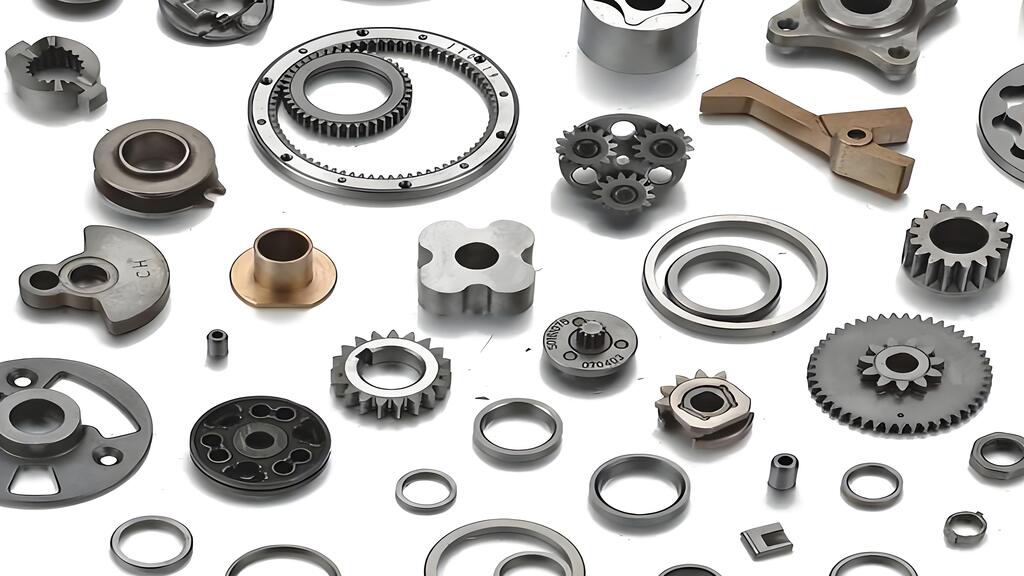


Hidden Powder Metallurgy Products Making Your Home Appliances More Efficient

The Powder Metal Process Behind Appliance Components

Modern home appliances work smoothly because of sophisticated manufacturing processes that create their components. The powder metallurgy (PM) process is the quickest way to produce complex Metal Parts found in household appliances.
Powder compaction and sintering explained
The conventional powder metallurgy process starts when manufacturers mix elemental or alloy metal powders with lubricants or additives to create a uniform mixture. These additives make the final part easier to machine and more resistant to wear. The mixture then goes through compaction in a die. Pressure ranges from 138 MPa (10 tsi) to 965 MPa (70 tsi), depending on the density needed.
This compressed material becomes what experts call a "green compact." The next step takes it through a controlled-atmosphere furnace to sinter. The compact heats up to a temperature that stays below the base metal's melting point. Metal particles join together without completely melting and form solid bonds. These bonds give strength while keeping the part's shape intact.
The Sintering process works differently from traditional metal forming. The powdered metal doesn't melt completely. To cite an instance, see how ice cubes stick together at contact points before they fully melt - that's what happens here. The bonds between particles grow stronger as porosity decreases and density increases. This makes parts stronger and more durable.
Material selection: ferrous and non-ferrous powders
The type of metal powder you choose will substantially affect how appliance components perform.
Iron-based ferrous powders give you better mechanical properties. They're durable, hard, and strong with magnetic properties that cost less. These features make them perfect for parts that need strength and wear resistance, like washing machine transmission components.
Non-ferrous powders made from aluminum, copper, or nickel come with their benefits. They weigh less, resist corrosion better, and most don't have magnetic properties (except nickel). The downside? They cost more and need different manufacturing methods. Copper's resistance to water corrosion makes it ideal for dishwasher and washing machine parts.
Secondary operations after sintering
Many powder metallurgy parts work fine right after sintering, but secondary operations can boost their properties. These processes include:
- Repressing or sizing that improves dimensional accuracy
- Heat treating to boost strength and hardness
- Steam treating for better corrosion and wear resistance
- Machining when exact tolerances or complex features are needed
- Impregnation with oil for bearings or resin to improve machinability
- Surface treatments such as plating or coating that protect against corrosion
These operations play a vital role in making appliance components. Steam treating creates a protective oxide layer on iron-based parts. This layer helps parts last longer in wet environments like washing machines. Oil impregnation in fan bearings lets them lubricate themselves. This reduces maintenance needs and makes the bearings last longer.
Performance-Driven PM Parts in Home Appliances

Your household appliances work thanks to hidden powder metallurgy components that boost their performance, efficiency, and lifespan. These engineered parts work quietly in the background and make everyday functionality possible.
Compressor valve plates: pressure control and durability
Powder metallurgy valve plates are vital parts in refrigeration systems that control refrigerant flow through compressors. These parts need to handle extreme pressure cycles while keeping exact tolerances. The sintering process helps create these plates with high dimensional accuracy. They achieve material use rates of about 97%.
The plates' sintered iron parts come close to their final shape during manufacturing and have great uniformity. This cuts costs while keeping performance high. These plates also give excellent pressure control and last long in tough conditions. That's why they work so well in both refrigerators and air conditioning systems.
Spin tubes and locking tubes in washing machines
Washing machines need powder metallurgy parts to work well, especially when spinning clothes. The spin tube (also called drive tube) moves rotational force from the motor to the wash basket and keeps everything lined up. This key part faces heavy stress but must stay stable.
The locking tubes team up with the spin tube assembly to lock everything in place during high-speed spins. These sintered parts resist wear better and keep tighter tolerances than parts made through other manufacturing methods.
Oil-impregnated bearings in electric fans
Electric fans use one of powder metallurgy's clever breakthroughs: oil-impregnated sintered bearings. These parts have tiny holes that hold lubricating oil inside their metal structure. The oil comes out to the bearing surface through a "pumping action" when the fan runs, which creates a self-lubricating system.
These bearings run quieter than ball bearings. This makes them perfect for home fans, where you want less noise. The bearings can hold 18-20% oil by volume, which helps them last longer.
Sintered filters and mounts in HVAC systems
Sintered metal filters make HVAC systems work better by filtering with high efficiency. These filters catch 99.9% or more of particles. They protect equipment downstream and make the air cleaner. You can backwash these filters easily, and they last a long time.
These filters can handle temperatures up to 1000°C, depending on the metal alloy. This makes them great for tough HVAC jobs. The sintered mounts that hold these parts also reduce vibration, which helps the system run better and last longer.
Engineering Benefits of Powder Metallurgy in Appliances

Powder metallurgy (PM) creates precise, high-performance components that improve appliance efficiency through better engineering properties. These unsung heroes in household devices offer clear advantages that help products last longer and work better.
Dimensional accuracy and surface finish advantages
PM parts deliver exceptional dimensional tolerances of ±0.05 mm to ±0.10 mm, which ensures consistent quality in high-volume production runs. Sintered components achieve surface finish ratings of Ra 63µ"/1.6µm or better without extra processing. The manufacturing's ejection process naturally creates an even better surface finish in areas meant for sliding or contact. This level of precision leads to better assembly fit and improved appliance performance.
Reduced friction and wear in moving parts
PM components shine in moving applications because manufacturers can customize materials and consolidation processes for demanding mechanical interactions. Oil-impregnated bearings show remarkable self-lubrication properties that reduce friction at contact points. These parts' natural porosity retains oil while staying structurally sound, which creates self-lubricating components. Appliance motors run more efficiently as a result, using less energy and generating less heat.
Thermal and corrosion resistance in harsh environments
PM parts deliver excellent thermal conductivity because careful material selection and processing create uniform microstructures without directional properties. The thermal conductivity changes with density, but properly sintered components provide reliable heat transfer paths needed for efficient operation. Steam oxidation treatments create protective layers that boost corrosion resistance in moisture-rich environments. A thin oxide layer (Fe3O4) forms during steam treatment and protects against corrosion, which helps components last longer in challenging appliance environments.
Sustainability and Cost Efficiency in PM Manufacturing

Powder metallurgy stands out as a sustainable manufacturing method in today's environmentally conscious world. The environmental advantages of this process span from raw material usage through production and operation phases.
Material utilization: 97% input-to-output efficiency
The powder metal process achieves exceptional material efficiency, with input-to-output ratios reaching 97%. PM manufacturing uses nearly 100% of raw materials and reduces waste significantly compared to conventional metalworking methods like machining or casting. This high efficiency comes from the net-shape capability of the powder metallurgy process, where components take their final dimensions with minimal material removal.
Energy savings vs traditional casting or machining
A comparative study between Powder Metallurgy-Hot Isostatic Pressing (PM-HIP) and hot forging shows PM-HIP used only 5.27 MWh compared to 15.09 MWh for hot forging - a substantial 65% reduction in total energy use. PM processes work at lower processing temperatures than casting and forging, which means less energy consumption during production. Jiehuang, a leading powder metallurgy products company in China, shows these energy-saving benefits through its optimized manufacturing processes.
Lower lifecycle cost of powder metallurgy parts
PM parts result in lower overall costs despite higher original tooling investments. The minimal need for secondary operations cuts production expenses, and the self-lubricating properties of oil-impregnated bearings extend component lifespan, which decreases maintenance costs. Industry practice shows these combined efficiencies make powder metallurgy components an attractive choice for manufacturers focused on sustainability and cost-effectiveness.
Conclusion
Powder metallurgy components work as hidden champions that make household appliances more efficient. These precision-engineered parts operate quietly in the background to extend appliance life and reduce energy use through their special properties.
PM components' remarkable accuracy creates a continuous operation in complex systems like washing machine transmissions and refrigerator compressors. Their self-lubricating features reduce friction and wear a lot. This allows appliances to run cooler and use less electricity.
Powder metallurgy proves to be an eco-friendly manufacturing choice. The process uses 97% of materials, which wastes much less raw material than traditional methods like machining or casting. It needs 65% less energy than other processes, which makes PM a sustainable option for manufacturing.
These advantages help manufacturers, too. Near-net-shape capabilities need minimal secondary processing, while consistent quality in high-volume production runs delivers reliability. The tooling costs might be higher at first, but overall lifecycle expenses stay lower because of reduced waste and fewer processing steps.
New appliance designs will include more powder metallurgy components as companies look to improve efficiency and sustainability. Simple parts like oil-impregnated bearings and sintered filters play a vital role in creating efficient, durable household appliances.
Next time your refrigerator runs quietly or your washing machine spins smoothly, note that sophisticated powder metallurgy components work silently inside. These small engineering marvels make your everyday appliances more efficient, durable, and environmentally friendly.
Key Takeaways
Powder metallurgy creates the hidden components that make your home appliances run more efficiently, quietly, and sustainably than you might realize.
• 97% material efficiency: Powder metallurgy wastes almost no raw materials compared to traditional manufacturing, making it highly sustainable.
• Self-lubricating bearings: Oil-impregnated PM parts in fans and motors reduce friction automatically, cutting energy consumption and noise.
• Precision without waste: PM components achieve ±0.05mm tolerances while using 65% less energy than conventional casting or forging processes.
• Extended appliance lifespan: Steam-treated PM parts resist corrosion and wear, reducing maintenance costs and replacement frequency.
• Hidden performance heroes: From refrigerator valve plates to washing machine spin tubes, PM components operate silently to enhance appliance efficiency.
These microscopic engineering marvels demonstrate how advanced manufacturing can deliver both superior performance and environmental responsibility, proving that the most impactful innovations often work behind the scenes.
FAQs
Q1. What are the main advantages of powder metallurgy in home appliances? Powder metallurgy offers several benefits for home appliances, including high dimensional accuracy, reduced friction in moving parts, and excellent material utilization (up to 97% efficiency). It also provides components with superior thermal and corrosion resistance, making them ideal for harsh operating environments.
Q2. How do powder metallurgy components contribute to energy efficiency in appliances? Powder metallurgy parts, such as oil-impregnated bearings, reduce friction and wear in moving components. This leads to lower energy consumption and heat generation in appliance motors. Additionally, the precise tolerances achieved through powder metallurgy result in better assembly fit and improved overall performance.
Q3. What are some common powder metallurgy components found in household appliances? Common powder metallurgy components in household appliances include compressor valve plates in refrigerators, spin tubes and locking tubes in washing machines, oil-impregnated bearings in electric fans, and sintered filters and mounts in HVAC systems. These parts are crucial for the efficient operation of these appliances.
Q4. How does powder metallurgy compare to traditional manufacturing methods in terms of sustainability? Powder metallurgy is more sustainable than traditional manufacturing methods like casting or machining. It achieves up to 97% material utilization, significantly reducing waste. The process also consumes less energy, with some studies showing up to 65% reduction in energy use compared to hot forging for certain applications.
Q5. Are powder metallurgy components cost-effective for appliance manufacturers? While initial tooling costs for powder metallurgy may be higher, the overall lifecycle costs are typically lower. This is due to reduced material waste, minimal need for secondary operations, and the extended lifespan of components. The process is particularly cost-effective for high-volume production runs, making it attractive for appliance manufacturers focused on both sustainability and cost-efficiency.