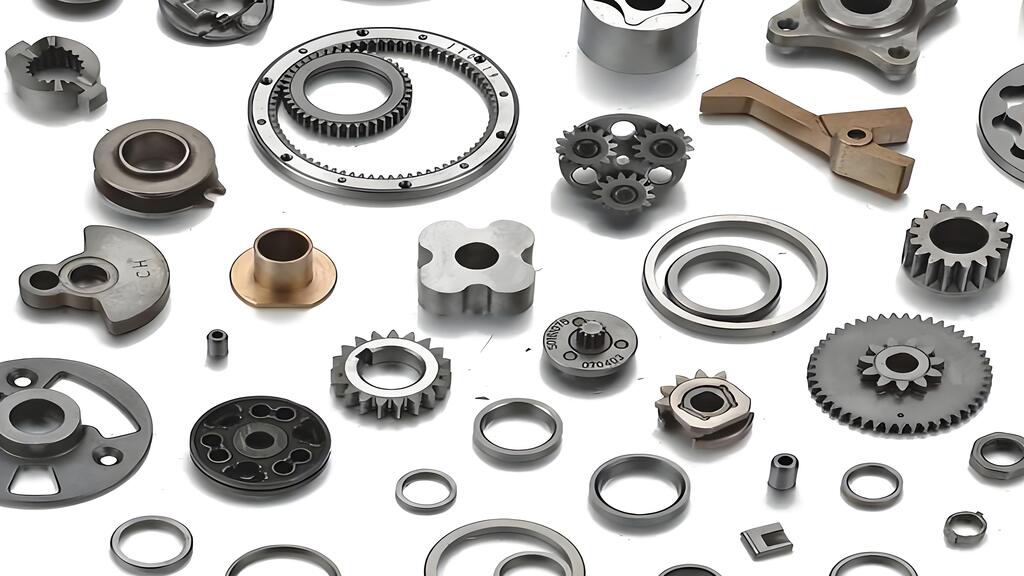


Hot Pressing Ceramics: Why Engineers Choose This Method for Critical Components
 Hot pressing changes regular Ceramic Materials into remarkable components. The process happens at temperatures between 1000 and 2000 degrees Celsius. This manufacturing technique applies heat and pressure to ceramic powders at the same time. The result is parts with exceptional properties that standard methods can't match.
The process creates ceramic components with near-theoretical density and minimal porosity. Engineers pick this technique because it delivers precise dimensions. Hot-pressed ceramics provide exact tolerances and better surface finishes. The process compresses and heats materials together, which cuts down Sintering time. This substantially improves the material's strength and hardness.
Hot pressed ceramics shine in applications that just need extreme performance. You'll find them in automotive brake systems with carbon-silicon compounds and advanced semiconductor materials that need excellent thermal stability. These materials can handle temperatures from 1000 to 3000°C and keep thermal conductivity low to limit heat transfer. This piece shows why engineers rely more on hot pressing to develop critical components. The applications span across industrial, medical, and aerospace sectors where performance matters most.
What Is Hot Pressing in Ceramics?
The hot pressing technique uses heat and mechanical pressure together to turn ceramic powders into high-performance components. This Powder Metallurgy process works at temperatures between 1400°C and 2000°C with uniaxial pressures of 30 to 50 MPa. The process is different from regular sintering because it speeds up particle bonding by using controlled pressure.
Definition of the Hot Pressing Process
Hot pressing puts ceramic powder into a graphite mold that can be heated up to 2400°C through induction or resistance heating. The powder gets both heat and pressure at the same time, which makes particles bond together in various ways. The ceramic goes through several steps: powder preparation, die filling, heating, pressing, cooling, and post-processing. This method works best to make hard, brittle materials like diamond-metal composites, technical ceramics, and non-oxide ceramics that are tough to densify normally.
Difference Between Hot Pressing and Pressureless Sintering
Pressureless sintering only uses heat energy, but hot pressing adds mechanical pressure that changes everything. Hot pressing needs only half the melting temperature that regular sintering methods use. The ceramics made through hot pressing have better density and mechanical properties than those made without pressure. But hot pressing has its limits—it struggles with complex shapes and costs more because of complicated equipment. Pressureless sintering saves money but can't match the performance, especially when making components that need few additives.
Role of Heat and Pressure in Densification
Heat and pressure together create several ways to remove porosity. Particles start rearranging first, then plastic deformation happens where particles touch and create very high stress. Diffusion takes over as the main process at higher temperatures. These steps work together to create products with almost perfect density and very little porosity. The added pressure drives densification forward and lets shape formation and densification happen in one step. Materials like ZrB2-SiC ceramics show different behaviors at various temperatures—mechanical interweaving and breaking at lower temperatures, plastic deformation at medium temperatures, and diffusion when it's hotter.
Step-by-Step Breakdown of the Hot Pressing Process

The process from ceramic powder to finished component follows five critical stages in hot pressing. Each step needs precise control to achieve the best material properties.
Powder Preparation and Particle Size Control
Hot pressing success starts with careful powder preparation. The ceramic powders go through ball milling for 4 hours to reach specific particle sizes. To cite an instance, α-SiC powder with particle sizes from 0.17 to 5 μm needs uniform mixing with binders like polyethylene glycol (PEG) or polyvinyl alcohol (PVA). Slurries with 40 wt% solid content create the best consistency for later processing.
Die Design and Material Considerations
Graphite stands out as the main die material thanks to its thermal stability, low density, and mechanical strength up to 35-45 MPa. High-purity graphite grades deliver a consistent surface finish, and their natural lubricity helps with easy demolding. Technicians place graphite paper around the mold walls and bottom to prevent sticking before loading ceramic powder.
Compaction Using Hydraulic Presses
Hydraulic presses apply uniaxial pressure between 30-50 MPa once the prepared powder sits in the die. The process starts with 30 MPa pre-loading pressure for 5 minutes. Pressure rises steadily as temperature increases and reaches final values of 30-40 MPa during the holding stage.
Sintering Temperature Range: 1000–2000°C
Temperature patterns follow specific profiles throughout the process. The furnace heats to 400°C at 6°C/min and holds for 15 minutes. Heating continues to final sintering temperatures between 1000-2000°C at 10°C/min. The sintering time takes 1-2 hours, much shorter than traditional sintering methods.
Cooling and Demolding Procedures
Controlled cooling prevents thermal stresses and cracks. The cooling rate affects material properties - faster cooling creates stronger but less ductile materials. The dense ceramic component comes out of the mold at room temperature and might need final machining for precise dimensions.
Why Engineers Prefer Hot Pressing for Critical Components

Engineers choose hot pressing when creating mission-critical ceramic components because it delivers exceptional material properties. Hot-pressed ceramics consistently reach 98-99.5% of theoretical density. This creates parts with almost perfect molecular consolidation.
Near-Theoretical Density and Low Porosity
Heat and pressure work together to eliminate internal voids, which creates ceramics with almost zero porosity. External pressure changes the material structure at the microscopic level through improved particle bonding mechanisms.
Improved Mechanical Properties: Strength and Hardness
Hot-pressed ceramics show remarkable performance advantages. They are 30-50% stronger than their dry-pressed counterparts. Hot-pressed alumina ceramics reach flexural strength values of 550-700 MPa, while conventional dry-pressed versions only achieve 300-450 MPa. Hot-pressed zirconia demonstrates impressive flexural strength at 1154 ± 182 MPa.
Dimensional Accuracy and Surface Finish
Large components up to 80mm maintain warpage under 40 μm and flatness below 27 μm. This precision enables perfect fits in complex assemblies. Specific surfaces achieve surface roughness below 0.41 μm, which reduces operational friction and wear.
Reduced Sintering Time Compared to Traditional Methods
Hot pressing needs temperatures 150-200°C lower than conventional sintering methods, but produces better results faster. This quick process happens because mass transfer accelerates at particle contact points.
Material and Application Suitability in Hot Pressing Ceramics

Hot pressing creates ceramic materials with exceptional properties that serve specialized needs in many industries.
Zirconia and Alumina for Wear-Resistant Parts
Hot-pressed zirconia and alumina ceramics shine in applications that need superior wear resistance. These materials reach near theoretical density with minimal porosity. Zirconia-toughened alumina (ZTA) ceramics achieve hardness values up to 21.5 GPa. The ceramics stay stable at temperatures up to 1,500°C. This makes them perfect for rollers, guides, and high-pressure equipment like ball valve seats.
Silicon Carbide in High-Temperature Applications
Silicon carbide (SiC) ceramics made through hot pressing show remarkable strength in extreme environments. These materials deliver superior mechanical stability at high temperatures and excellent thermal conductivity. The ceramics reach fracture toughness values of 5.8 MPa·m1/2 when sintered at 1980°C under 40 MPa pressure. Common uses include high-temperature kiln materials, radiation tubes, and heat exchangers.
Bioceramics for Medical Implants
Hot-pressed bioceramics match surrounding tissue properties, which helps improve implant stability over time. Aluminum oxide (Al₂O₃) and zirconium oxide (ZrO₂) bioceramics show excellent biocompatibility and osseointegration capabilities. Doctors use these materials mainly in orthopedic applications such as knee fixation devices and hip replacements.
Nickel-Based Alloys for Aerospace Components
Nickel-based superalloys processed through hot pressing stay structurally stable above 600°C. A unique face-centered cubic structure prevents allotropic transformation in these materials. This helps maintain structural integrity under extreme conditions. Engineers use them in turbine blades and aerospace engine components that need exceptional thermal stability.
Magnetic Ceramics in Electronics
Hot pressing creates dense magnetic ceramics with precise property control. Hexaferrites made this way control 85% of the permanent magnet market. Optimized sintering strategies help improve their performance. These materials work best in electronic components where specific magnetic properties must stay stable during operation.
Conclusion
Hot pressing ceramics is a remarkable manufacturing technique that engineers use more often to make critical components. This process uses heat and pressure at the same time to turn ceramic powders into high-quality parts. The end result gives materials that are almost perfectly dense with very few pores, which makes them structurally sound.
These hot-pressed parts are a big deal as they mean that they're much stronger than regular sintered ceramics. The components are 30-50% stronger, harder, and more resistant to wear. On top of that, they keep their shape really well with minimal warping, which makes them perfect for projects that need exact measurements.
This is also the quickest way to make these parts. Hot pressing works at lower temperatures than regular sintering but still gives better results in less time. This happens because materials transfer faster where particles touch during the manufacturing process.
You can use this technique with many materials like zirconia, alumina, silicon carbide, bioceramics, and special alloys. Then industries from aerospace and medical to electronics and manufacturing use these parts where quality is essential. These ceramics are a great way to get reliable performance because they handle extreme heat, keep their shape, and work well in tough conditions.
Engineers just need more from their materials these days, so hot pressing ceramics will without doubt stay a top choice for making high-performance parts. These materials will keep playing vital roles in tough applications because they pack molecules together almost perfectly, have superior mechanical properties, and maintain precise measurements.
Key Takeaways
Hot pressing ceramics combines heat and pressure to create superior components that outperform conventional manufacturing methods, making it the go-to choice for critical applications.
• Hot pressing achieves 98-99.5% theoretical density with near-zero porosity, creating exceptionally strong ceramic components • Components show 30-50% higher flexural strength than dry-pressed alternatives while maintaining precise dimensional accuracy • Process operates at 150-200°C lower temperatures than conventional sintering yet delivers superior results in less time • Materials like zirconia, alumina, and silicon carbide excel in aerospace, medical, and high-temperature applications • Engineers choose hot pressing when component failure isn't an option—from turbine blades to medical implants
This manufacturing technique essentially transforms ordinary ceramic powders into extraordinary components through controlled heat and pressure application, delivering the reliability and performance that mission-critical applications demand.
FAQs
Q1. What are the main advantages of hot pressing ceramics? Hot pressing ceramics offers several key benefits, including near-theoretical density, improved mechanical properties like strength and hardness, excellent dimensional accuracy, and reduced sintering time compared to traditional methods.
Q2. What types of materials are suitable for hot pressing? Hot pressing is suitable for various materials, including zirconia and alumina for wear-resistant parts, silicon carbide for high-temperature applications, bioceramics for medical implants, nickel-based alloys for aerospace components, and magnetic ceramics for electronics.
Q3. How does hot pressing differ from conventional sintering methods? Hot pressing combines heat and pressure simultaneously, whereas conventional sintering relies solely on heat. This allows hot pressing to achieve higher densities and better mechanical properties at lower temperatures and in less time than traditional sintering methods.
Q4. What are some common applications of hot-pressed ceramics? Hot-pressed ceramics are used in various critical applications, including aerospace engine components, medical implants, high-temperature kiln materials, wear-resistant industrial parts, and electronic components requiring specific magnetic properties.
Q5. Why do engineers prefer hot pressing for critical components? Engineers choose hot pressing for critical components because it produces parts with exceptional density, minimal porosity, superior mechanical properties, and precise dimensional accuracy. This makes hot-pressed ceramics ideal for applications where performance and reliability are crucial.