

Magnesium Die Casting for Automotive Parts
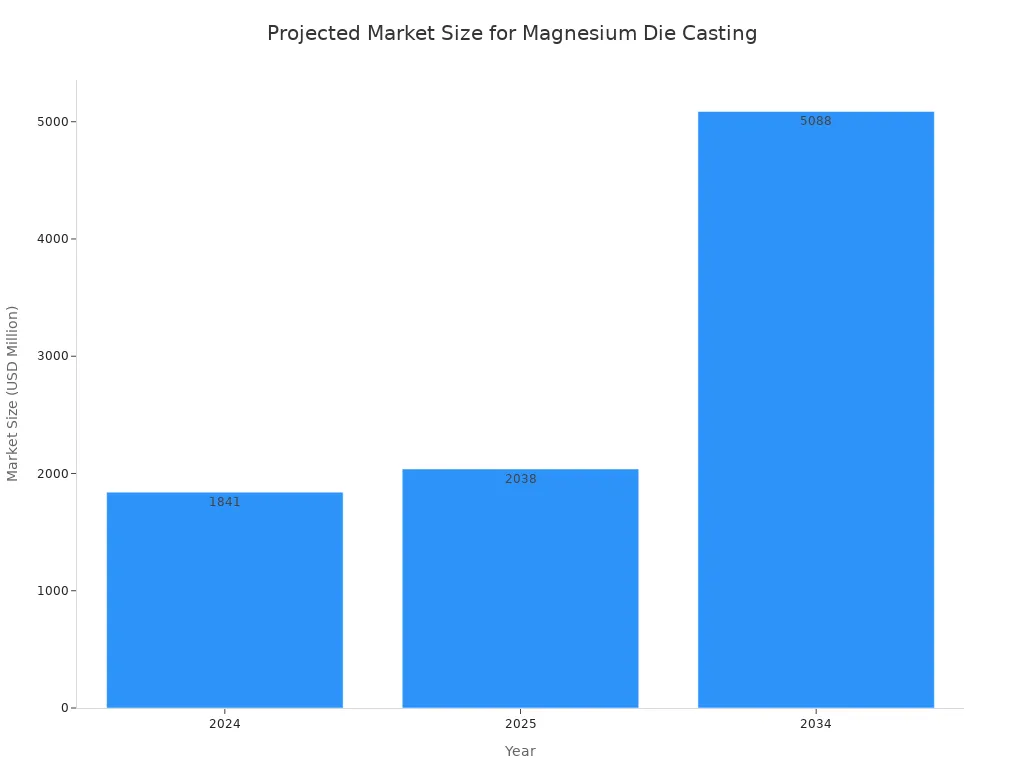
Magnesium Die Casting is vital for automotive parts. It offers lightweight properties, a high strength-to-weight ratio, and excellent castability. This process directly addresses the automotive industry's demand for fuel efficiency, reduced emissions, and extended EV range. This unique combination of advantages drives modern vehicle innovation. The market for automotive magnesium die casting shows significant growth, with projections indicating an increase from USD 1,841 million in 2024 to USD 5,088 million by 2034.
Key Takeaways
- Magnesium die casting makes car parts lighter. This helps cars use less fuel and electric cars go farther.
- Magnesium parts are strong but light. They also help stop car vibrations and protect electronics.
- Many car parts use magnesium die casting. These include engine parts, car frames, and inside panels.
- Electric cars use magnesium for battery cases and motor parts. This makes them lighter and more efficient.
- Magnesium die casting helps car makers save money. It allows fast production and makes complex parts easy.
- Magnesium parts are good for the environment. They can be recycled easily and help reduce pollution.
- New types of magnesium and better ways to cast it are coming. This will make magnesium even more useful for cars.
Understanding Magnesium Die Casting Technology

The Fundamentals of Magnesium Die Casting
High-Pressure Die Casting Process
High-pressure die casting is a precise manufacturing method. It involves melting metal alloys at high temperatures in a furnace. Workers then pour the molten magnesium into a shot cylinder connected to a die cavity. A piston accelerates the molten magnesium into the die cavity at high pressure, typically ranging from 1,000 to 20,000 psi. The process maintains this pressure until the metal solidifies. After cooling, the casting is ejected from the machine. Finally, workers remove excess material, such as flash and the runner system, from the cast unit through trimming or machining. This method often uses cold chamber die casting, where the metal melts in a separate furnace before being injected into an unheated chamber. A cover gas prevents oxide formation during this stage.
Advantages for Complex Geometries
Magnesium die casting offers significant advantages for producing parts with complex geometries. The high pressure used in the process allows the molten metal to fill intricate molds. This capability results in components with thin walls and detailed features. Manufacturers can create parts that would be difficult or impossible to achieve with other casting methods.
Magnesium Alloys in Automotive
Magnesium alloys are crucial for automotive applications. They possess a unique combination of properties that benefit vehicle design and performance. These alloys are specifically formulated to meet the demanding requirements of the automotive industry, balancing strength, weight, and durability.
Key Properties of Magnesium Alloys for Automotive
Exceptional Strength-to-Weight Ratio
Magnesium alloys boast an exceptional strength-to-weight ratio. They have a low density but maintain high strength and good rigidity. This property allows manufacturers to produce lighter components without compromising structural integrity. Lighter parts contribute to improved fuel economy and extended range for electric vehicles.
Superior Vibration Damping
Magnesium alloys exhibit superior vibration-damping capabilities. Their inherent material structure effectively absorbs kinetic energy. This characteristic helps reduce noise, vibration, and harshness (NVH) in vehicles. Better damping contributes to a more comfortable ride for occupants.
Effective Electromagnetic Shielding
Magnesium alloys provide effective electromagnetic shielding. This property is particularly valuable in modern vehicles with increasing electronic components. The material helps protect sensitive electronics from electromagnetic interference, ensuring reliable operation of vehicle systems.
Good Thermal Conductivity
Magnesium alloys also possess good thermal conductivity. This property allows for efficient heat dissipation from components. Effective thermal management is crucial for parts exposed to high temperatures, such as engine components or battery housings in EVs.
Corrosion Resistance Strategies
While magnesium can be susceptible to corrosion, manufacturers employ various strategies to enhance its resistance. These include surface treatments, coatings, and the develoPment of new corrosion-resistant alloys. These measures ensure the long-term durability of magnesium components in diverse automotive environments.
Diverse Applications of Magnesium Die Casting in Automotive
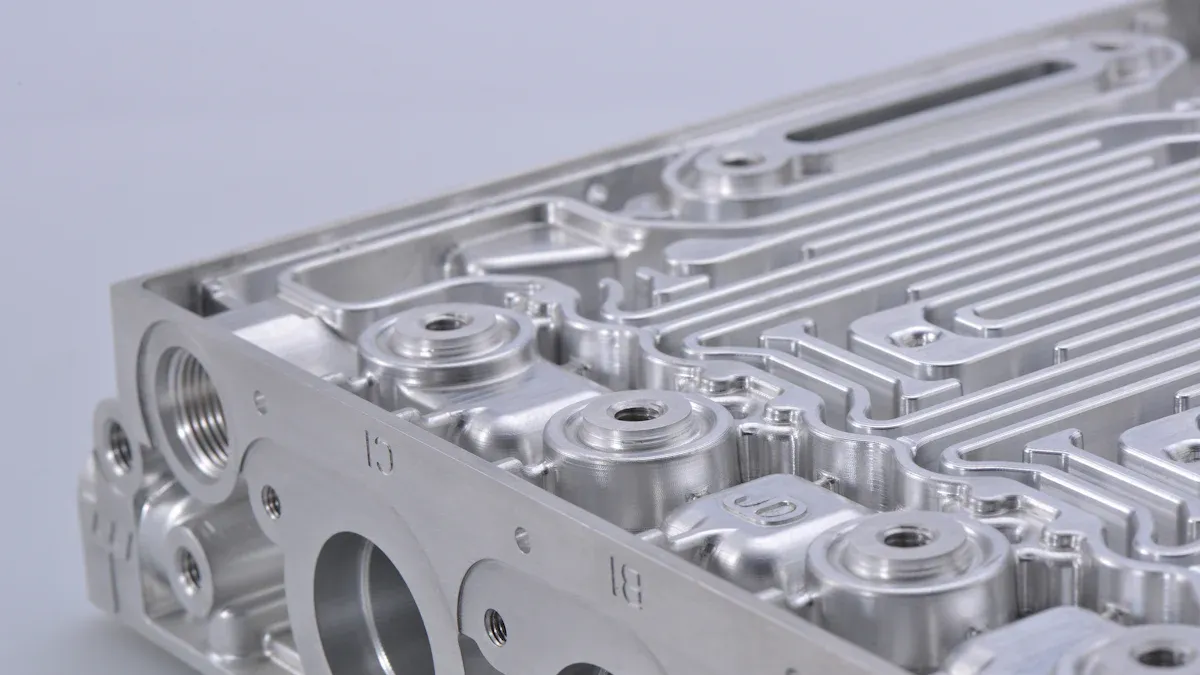
Magnesium die casting plays a crucial role across numerous automotive systems. Manufacturers leverage its unique properties to produce a wide array of components. These parts contribute to vehicle performance, safety, and efficiency.
Powertrain and Drivetrain Components
Magnesium die casting significantly impacts powertrain and drivetrain systems. It enables the creation of lighter, yet robust, components. This directly supports the automotive industry's goals for reduced weight and improved fuel economy.
Engine Blocks and Cylinder Heads
Engine blocks and cylinder heads benefit from magnesium's lightweight nature. Using magnesium alloys in these critical engine parts reduces overall engine mass. This weight reduction improves vehicle dynamics and fuel efficiency.
Transmission Cases and Housings
Automakers frequently use magnesium die casting for transmission cases and housings. These powertrain components require high strength and dimensional stability. Magnesium alloys provide these characteristics while keeping weight to a minimum. This application is particularly common for automatic transmission housings, where precision and weight savings are paramount.
Oil Pans and Valve Covers
Oil pans and valve covers are other common applications for magnesium die casting. The process allows for intricate designs and thin walls. This results in lightweight components that effectively contain fluids and protect engine internals.
Clutch Housings and Brackets
Clutch housings and various brackets within the powertrain also utilize magnesium die casting. These parts benefit from the material's strength-to-weight ratio. Lighter clutch housings contribute to reduced rotational inertia, improving responsiveness.
Structural and Chassis Elements
Magnesium die casting is essential for many structural and chassis elements. These components enhance vehicle safety, stability, and overall driving experience.
Instrument Panel Beams
Instrument panel beams, often referred to as cross-car beams, frequently use magnesium die casting. These one-piece magnesium castings meet stringent crash and structural requirements. They also reduce weight and eliminate tolerance stack-up issues common with welded steel structures. Dashboard and console structures, situated between front seats and the center stack, also benefit from this manufacturing method.
Seat Frames and Components
Seat frames represent a significant application for magnesium die casting. They offer a lighter-weight alternative to traditional steel frames. Magnesium seat frames contribute to overall vehicle weight reduction. Some designs even consist of multiple magnesium die-casting parts, showcasing the material's versatility.
Steering Column Brackets
Steering column brackets are another area where magnesium die casting excels. These components require precise dimensions and structural integrity. Magnesium provides the necessary strength while minimizing weight, contributing to overall vehicle mass reduction.
Cross Car Beams
Cross-car beams are prime examples of magnesium die casting's structural advantages. These components contribute significantly to vehicle strength, stability, and safety. Their single-piece construction through die casting simplifies assembly and improves structural performance.
Interior and Exterior Body Parts
Magnesium die casting extends its utility to various interior and exterior body parts. It helps create aesthetically pleasing and functional components while maintaining a focus on weight reduction.
Door Frames and Inner Panels
Door frames and inner panels increasingly incorporate magnesium die casting. A prototype of a magnesium alloy door inner die casting demonstrates the potential for significant weight savings in these large components. This application helps reduce overall vehicle weight, improving efficiency.
Liftgate Inner Structures
Liftgate inner structures also benefit from magnesium die casting. The lightweight nature of magnesium makes liftgates easier to operate. It also contributes to better vehicle balance and fuel economy.
Dashboard Components
Dashboard components frequently utilize magnesium die casting. This allows for complex designs and integrated features. Magnesium dashboards contribute to a lighter vehicle interior without compromising structural integrity or aesthetics.
Headlamp and Taillamp Housings
Headlamp and taillamp housings are often produced using magnesium die casting. The material's good thermal conductivity helps manage heat from lighting elements. Its lightweight properties also contribute to overall vehicle weight reduction.
Electric Vehicle (EV) Specific Applications for Magnesium Die Casting
Electric vehicles (EVs) represent a significant growth area for magnesium alloys. The increasing adoption of EVs is a key driver for the automotive magnesium alloy die castings market. EVs require lighter components to optimize battery efficiency and overall performance. Major automakers like Tesla and Nissan already incorporate magnesium alloys in their manufacturing processes for lighter batteries and other components. This significantly boosts demand for these castings. Magnesium components are crucial for EV powertrain systems, battery enclosures, and chassis components. These applications leverage magnesium's lightweight properties to extend range and enhance efficiency.
Battery Pack Housings
Battery pack housings are critical components in electric vehicles. They protect the battery cells from external damage and manage thermal conditions. Magnesium alloys offer an excellent solution for these housings. Their low density significantly reduces the overall weight of the battery pack. This weight reduction directly translates into an extended driving range for the EV. Magnesium also provides good thermal conductivity, which helps dissipate heat generated by the battery cells. This thermal management is vital for maintaining battery performance and longevity. Furthermore, magnesium housings offer robust structural integrity, protecting the expensive and sensitive battery components during impacts.
Electric Motor Casings
Electric motor casings also benefit greatly from magnesium die casting. These casings enclose and protect the electric motor, which powers the vehicle. Manufacturers use magnesium alloys for these parts due to their lightweight nature and excellent heat dissipation capabilities. A lighter motor casing reduces the overall mass of the powertrain. This contributes to improved vehicle dynamics and efficiency. The good thermal conductivity of magnesium helps manage the heat generated by the electric motor during operation. Effective heat management prevents overheating and ensures the motor operates efficiently over its lifespan.
Inverter and Converter Enclosures
Inverters and converters are essential electronic components in EVs. They manage the flow of electrical power between the battery and the motor. These devices generate heat and are sensitive to electromagnetic interference. Magnesium alloys provide an ideal material for their enclosures. The material's effective electromagnetic shielding properties protect the sensitive electronics from external interference. This ensures the reliable operation of the EV's power electronics. Additionally, magnesium's good thermal conductivity helps dissipate heat from these components. This prevents thermal runaway and maintains optimal operating temperatures.
Thermal Management Components
Thermal management is paramount in electric vehicles, especially for battery packs and power electronics. Magnesium die casting offers solutions for various thermal management components. These include heat sinks, cooling plates, and other heat exchange structures. The high thermal conductivity of magnesium alloys allows for efficient heat transfer away from critical components. This helps maintain optimal operating temperatures for batteries, motors, and inverters. Effective thermal management extends the lifespan of EV components and improves overall vehicle performance and safety.
Core Benefits of Magnesium Die Casting for Automotive Manufacturers
Magnesium die casting offers automotive manufacturers a compelling suite of advantages. These benefits span from vehicle performance and efficiency to production economics and design flexibility. Manufacturers leverage these properties to meet modern automotive demands.
Achieving Significant Weight Reduction
Weight reduction stands as a primary benefit of magnesium die casting. This material's inherent lightness directly addresses critical industry goals. Lighter vehicles consume less energy and produce fewer emissions.
Impact on Fuel Economy
Reducing vehicle weight directly improves fuel economy for internal combustion engine (ICE) vehicles. Less mass requires less energy to move. This translates into fewer stops at the gas pump for consumers. Automakers can meet stricter fuel efficiency standards more easily.
Extending EV Range
For electric vehicles (EVs), weight reduction is even more critical. A lighter EV can travel further on a single charge. This directly extends the vehicle's range, addressing a key concern for EV adoption. Magnesium components help maximize the efficiency of battery power.
Reducing Overall Vehicle Mass
Magnesium alloys offer substantial mass reduction compared to traditional materials. Lightweight die casting solutions can achieve up to a 40% weight reduction compared to traditional materials like steel. Specifically, magnesium alloy AZ91D reduces mass by 35% when compared to Aluminum A380. When replacing steel components, lightweight die casting offers an average weight reduction of 40%. This significant decrease in overall vehicle mass contributes to numerous performance and efficiency gains.
Enhancing Vehicle Performance and Dynamics
Beyond efficiency, magnesium die casting significantly enhances a vehicle's performance and driving dynamics. Lighter components contribute to a more responsive and enjoyable driving experience.
Improved Acceleration and Braking
Reducing vehicle weight directly improves both acceleration and braking performance. Vehicles that are lighter accelerate faster because the engine has less mass to move. Similarly, lighter vehicles require less force to slow down, leading to shorter braking distances. Magnesium alloy die casting contributes to improved vehicle acceleration and braking performance primarily by reducing the overall weight of vehicles. This lightweight material helps decrease fuel consumption and lower emissions. Its superior strength-to-weight ratio allows for the design of more structurally efficient components, further enhancing performance. Magnesium is 75% lighter than steel and 33% lighter than aluminum. Chassis parts can see up to a 35% weight reduction compared to stamped steel, and up to 30% weight reduction compared to stamped steel parts overall. These reductions lead to enhanced acceleration and braking efficiency.
Better Handling and Ride Comfort
Lighter vehicles generally exhibit better handling characteristics. Reduced mass allows for quicker changes in direction and improved cornering stability. This contributes to a more agile and responsive feel for the driver. Additionally, lower overall vehicle weight can positively impact ride comfort by allowing suspension systems to operate more effectively. Magnesium alloys contribute to better handling and maneuverability, which indirectly supports better braking control.
Lower Unsprung Weight
Unsprung weight refers to the mass of components not supported by the suspension system, such as wheels, tires, brakes, and parts of the suspension itself. Reducing unsprung weight is crucial for vehicle dynamics. Lighter unsprung components allow the suspension to react more quickly and effectively to road imperfections. This improves tire contact with the road, enhancing grip, handling, and ride comfort. Magnesium die casting can produce lighter wheels and suspension components, directly lowering unsprung weight.
Driving Cost-Effectiveness in Production with Magnesium Die Casting
Magnesium die casting offers significant cost-effectiveness benefits for automotive manufacturers. These advantages stem from various aspects of the manufacturing process and material properties.
High Production Rates
The high-pressure die casting process allows for rapid production cycles. Manufacturers can produce a large volume of complex parts quickly. This high throughput reduces per-unit manufacturing costs. It also helps meet the demands of mass production in the automotive industry.
Near-Net-Shape Casting
Magnesium die casting produces parts very close to their final desired shape. This "near-net-shape" capability minimizes the need for extensive secondary machining operations. Less machining saves time, reduces material waste, and lowers labor costs.
Material Efficiency
The die casting process is highly material-efficient. Excess material, such as flash and runners, can often be recycled and reused. This reduces raw material waste and contributes to overall cost savings. Magnesium's low density also means less material is needed by weight to achieve a given volume.
Part Consolidation
Magnesium die casting enables the creation of complex, multi-functional parts as a single unit. This allows for the consolidation of several smaller components into one larger casting. Part consolidation reduces assembly time, simplifies supply chains, and lowers the total number of parts required. This leads to significant cost savings in manufacturing and logistics. Continuous advancements in manufacturing processes have boosted production efficiency, shortened production cycles, and lowered costs. The decreasing cost of raw magnesium, coupled with projections that the price ratio of magnesium to aluminum will eventually equalize their raw material and processing costs, further enhances the cost-effectiveness of magnesium alloys in automotive applications.
Maximizing Design Flexibility and Integration
Automotive manufacturers gain significant advantages from the design flexibility and integration capabilities of die casting. This process allows engineers to push the boundaries of component design. It enables the creation of parts that optimize performance, weight, and aesthetics.
Complex, Thin-Walled Designs
Die casting offers exceptional design freedom. It allows for the creation of intricate shapes and detailed features. This level of design flexibility is often not achievable with traditional manufacturing methods like CNC machining. The high-pressure injection process ensures molten metal fills even the most complex mold cavities. This capability results in components with very thin walls, which further contributes to weight reduction. Engineers can design parts with optimized internal structures, enhancing strength where needed and reducing material elsewhere. This precision allows for highly efficient and lightweight designs.
Opportunities for Part Consolidation
Die casting facilitates the integration of multiple functions into a single component. This capability allows manufacturers to consolidate several smaller parts into one larger, more complex casting. Part consolidation significantly reduces the total number of components in an assembly. It simplifies the manufacturing process and cuts overall production costs. For example, a single die-cast housing can incorporate mounting points, fluid channels, and structural ribs. This eliminates the need for separate brackets, tubes, and fasteners. This approach streamlines assembly lines and reduces inventory management complexities.
Integration of Fasteners
The die casting process also allows for the direct integration of fasteners. Manufacturers can cast threaded inserts, studs, or other fastening elements directly into the component during the casting cycle. This eliminates secondary operations like drilling, tapping, or welding. Integrating fasteners directly into the part improves structural integrity. It also reduces assembly time and labor costs. This method ensures precise alignment of fastening points, enhancing the overall quality and reliability of the assembled product.
Promoting Sustainability and Recyclability
The automotive industry increasingly focuses on environmental responsibility. Die casting with magnesium alloys offers significant sustainability benefits. These benefits span the entire product lifecycle, from manufacturing to end-of-life considerations.
High Recyclability Rate
Magnesium alloys boast a very high recyclability rate. Manufacturers can remelt and reuse scrap material from the casting process. This includes runners, risers, and rejected parts. This closed-loop recycling minimizes waste and conserves natural resources. The energy required to recycle magnesium is also considerably lower than producing primary magnesium. This makes it an environmentally friendly material choice for automotive components.
Lower Carbon Footprint
Using magnesium in automotive applications directly contributes to a lower carbon footprint. Lightweight magnesium components reduce vehicle mass. This reduction leads to improved fuel efficiency in internal combustion engine vehicles. It also extends the range of electric vehicles. Both outcomes result in lower energy consumption and reduced greenhouse gas emissions over the vehicle's operational life. The energy savings from recycling magnesium further enhance its environmental credentials.
End-of-Life Vehicle Considerations
Magnesium components simplify end-of-life vehicle (ELV) processing. Their high recyclability means they can be easily separated and recovered from scrapped vehicles. This reduces landfill waste and promotes a circular economy for automotive materials. As regulations for ELV recycling become stricter, magnesium's inherent recyclability positions it as a preferred material. It helps automakers meet their environmental obligations and sustainability targets.
Addressing Challenges and Future Outlook for Magnesium Die Casting
The automotive industry increasingly recognizes the value of magnesium die-cast components. However, manufacturers face several challenges in its widespread adoption. Addressing these hurdles is crucial for magnesium's continued growth in vehicle production. Simultaneously, ongoing innovations promise to expand its applications and benefits.
Overcoming Current Hurdles
Manufacturers must overcome specific technical and economic challenges to fully leverage magnesium's potential. These issues often relate to the material's inherent properties and the complexities of its processing.
Enhanced Corrosion Resistance
Magnesium is a highly reactive metal. Its alloys are prone to corrosion, particularly in humid or saltwater environments. This reactivity historically limited its use in automotive applications due to durability concerns. When magnesium pairs with other metals, galvanic corrosion can occur. This requires specific protection strategies. Successful implementation of magnesium components requires addressing these corrosion resistance issues. Manufacturers employ various surface treatments, coatings, and alloy developments to enhance corrosion resistance.
Raw Material Costs and Supply
The cost of magnesium presents a significant barrier to adoption. Magnesium is more expensive to produce and process compared to aluminum and steel. This impacts price-sensitive markets. The casting process for magnesium alloys is also more expensive and technically demanding than for traditional materials. Despite magnesium's abundance, underdeveloped mining and processing infrastructure can lead to supply chain issues if demand increases significantly. Geopolitical factors and limited regional production of high-quality magnesium raw materials also pose challenges to supply chain stability.
Joining and Assembly Techniques
Joining magnesium components to other materials or even to other magnesium parts presents unique challenges. Traditional welding methods can be difficult due to magnesium's reactivity and low melting point. Manufacturers must develop and refine specialized joining techniques. These include friction stir welding, adhesive bonding, and mechanical fastening. These methods ensure strong, durable, and corrosion-resistant joints in complex automotive assemblies.
Fire Safety Considerations
Magnesium has a lower ignition temperature than many other metals. This raises fire safety considerations, especially during machining and in certain high-temperature applications. Manufacturers must implement strict safety protocols during processing. They also need to consider the material's behavior in extreme conditions. Research focuses on developing alloys with higher ignition temperatures and incorporating design features that mitigate fire risks in vehicle applications.
Innovations and Future Trends in Magnesium Die Casting
Research and development efforts continuously push the boundaries of magnesium die casting technology. These innovations promise to overcome current limitations and unlock new possibilities for automotive applications.
New High-Performance Alloys
Material science research continuously reveals new possibilities for magnesium alloys. Innovations include alloys with enhanced strength and improved corrosion resistance. These advancements are expected to broaden magnesium's application across various sectors, including automotive. New alloy formulations also address limitations such as maintaining strength at elevated temperatures, typically up to 175°C. Artificial intelligence (AI) is transforming the market by enabling the development of new alloy formulations.
Advanced Casting Processes
Process innovations are optimizing magnesium die casting. Advanced simulation and modeling techniques optimize part design, mold filling, and solidification. This reduces development time and improves quality. Vacuum-assisted die casting minimizes porosity and allows for thinner-walled components with superior mechanical properties. Advanced die materials and coatings extend die life and enable casting of challenging alloys at higher temperatures. Industry 4.0 technologies improve process control, predictive maintenance, and overall efficiency. These advanced casting techniques enable the production of more intricate and durable magnesium components.
Adoption in Autonomous Vehicles
The future of automotive technology, including autonomous vehicles, will heavily rely on lightweight materials. Autonomous vehicles require extensive sensor arrays, computing power, and often larger battery packs. Magnesium's lightweight properties help offset the added mass of these systems. AI is transforming the market by enabling higher precision, efficiency, and optimization in design and production. This facilitates defect prediction, waste reduction, improved product quality, and automated quality checks. These advancements streamline workflows and enhance cost-efficiency, making magnesium more viable for complex autonomous vehicle components.
Hybrid Material Solutions
Hybrid manufacturing processes combine die casting with other techniques like additive manufacturing. This allows for new component designs and functionalities. Manufacturers are also exploring hybrid material solutions. These solutions combine magnesium with other materials to leverage the best properties of each. For example, magnesium can be combined with composites or other metals to create components with optimized strength, weight, and corrosion resistance. This approach allows for tailored solutions that meet specific performance requirements in various automotive applications.
Magnesium die casting is indispensable for modern automotive manufacturing. This advanced process critically contributes to lightweighting, enhancing vehicle performance, and achieving crucial sustainability goals. The ongoing evolution of magnesium technology, including new alloys and advanced casting methods, promises an even greater role in the automotive sector's future. It will drive further innovation and efficiency.
FAQ
What makes magnesium die casting vital for automotive parts?
Magnesium die casting is vital due to its lightweight properties and high strength-to-weight ratio. It helps automakers achieve fuel efficiency, reduce emissions, and extend EV range. This process offers a unique combination of advantages for modern vehicle innovation.
What are the key properties of magnesium alloys for automotive use?
Magnesium alloys offer an exceptional strength-to-weight ratio, superior vibration damping, and effective electromagnetic shielding. They also provide good thermal conductivity. Manufacturers employ strategies to enhance their corrosion resistance for long-term durability.
Which automotive components commonly use magnesium die casting?
Automotive components like engine blocks, transmission cases, and instrument panel beams frequently use magnesium die casting. It also appears in seat frames, door inner panels, and dashboard components. This diverse application highlights its versatility.
How does magnesium die casting benefit Electric Vehicles (EVs)?
Magnesium die casting significantly benefits EVs by reducing weight. This extends dthe riving range and improves battery efficiency. Manufacturers use it for battery pack housings, electric motor casings, and inverter enclosures. It also aids thermal management.
What are the core benefits for automotive manufacturers using magnesium die casting?
Manufacturers achieve significant weight reduction, enhancing vehicle performance and dynamics. It drives cost-effectiveness through high production rates and part consolidation. The process also maximizes design flexibility and promotes sustainability through high recyclability.
What challenges does magnesium die casting face in the automotive industry?
Challenges include enhancing corrosion resistance and managing raw material costs. Manufacturers also address complex joining techniques and fire safety considerations. Ongoing innovations aim to overcome these hurdles for broader adoption.
What is the future outlook for magnesium die casting in automotive?
The future outlook is promising, driven by new high-performance alloys and advanced casting processes. Its adoption in autonomous vehicles and hybrid material solutions will expand. Magnesium will play an even greater role in the automotive sector's future.