


Tungsten Alloy vs Steel

Tungsten Alloy consistently demonstrates superior density, exceptional hardness, and impressive high-temperature strength, making it ideal for demanding environments. Conversely, steel offers greater ductility, remarkable cost-effectiveness, and broad versatility, allowing its use in a vast array of general applications. These fundamental differences mean that the optimal material choice between tungsten alloy and steel hinges entirely on the specific performance requirements and operational conditions of an application.
Key Takeaways
- Tungsten alloy is very dense and hard. It works well in extreme heat.
- Steel is flexible and costs less. It is good for many general uses.
- Tungsten alloy is best for things needing high weight in small spaces. It is also good for cutting tools and radiation shields.
- Steel is easy to shape and weld. It is often used in buildings, cars, and home items.
- Tungsten alloy resists wear and corrosion well. It keeps its strength in very hot places.
- Steel is much cheaper to make than tungsten alloy. It is also easier to find and work with.
- Choose tungsten alloy for tough jobs. Choose steel for common jobs where cost is important.
Understanding Tungsten Alloy Properties
Key Characteristics of Tungsten Alloy
Extreme Density of Tungsten Alloy
Tungsten alloy possesses an exceptionally high density. This property makes it valuable in applications requiring significant mass in a compact volume. Its atomic structure contributes to this impressive density, surpassing many other common metals.
Exceptional Hardness of Tungsten Alloy
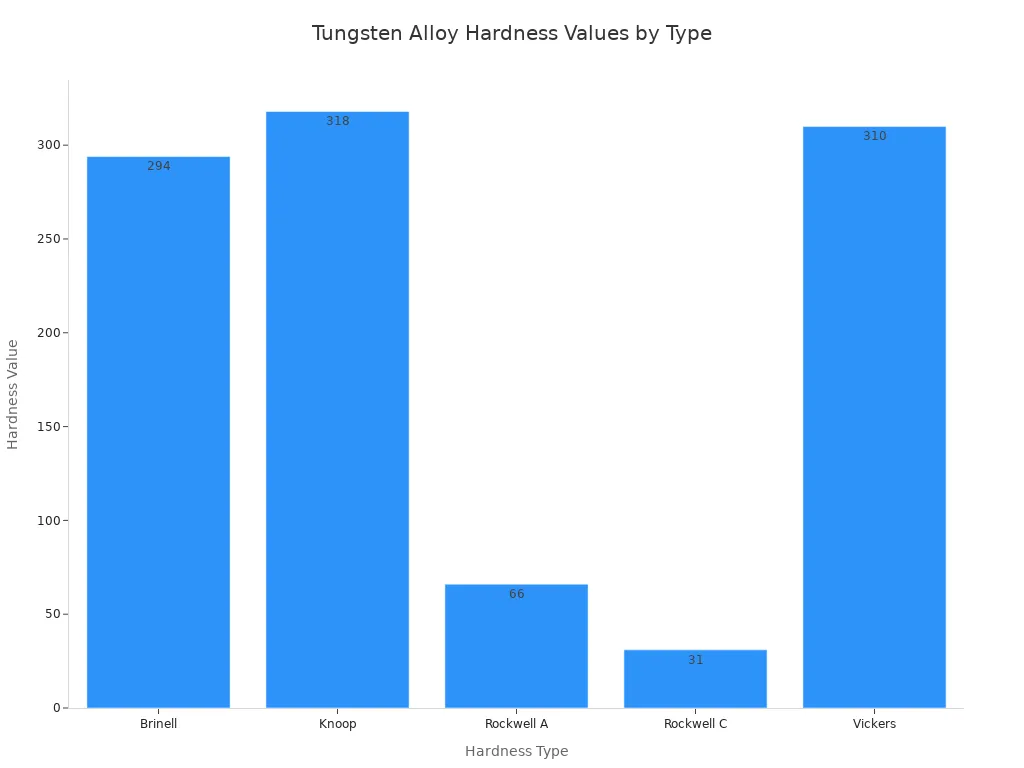
The hardness of tungsten alloy is a defining characteristic. This material resists deformation and indentation effectively. Different compositions exhibit varying hardness levels.
High Melting Point of Tungsten Alloy
Tungsten boasts the highest melting point of all metals. This characteristic allows tungsten alloys to perform in extreme thermal environments. Alloying tungsten with other elements can influence this property.
| Alloy | Melting Point (approx.) |
|---|---|
| W-25Re | 3100 °C |
Mixing tungsten with rhenium generally reduces its melting point. Additionally, tungsten-copper composites, often used in electronics, can have their melting temperatures adjusted by altering their composition.
Superior Wear Resistance of Tungsten Alloy
Tungsten alloy exhibits superior wear resistance, making it suitable for abrasive conditions. Tungsten carbide hard alloy materials possess high hardness and wear resistance. Studies indicate that cemented carbides with fine grains and low binder content exhibit superior wear resistance. Wear increases with higher cobalt content and larger WC grain size. The wear resistance is directly proportional to hardness, and the wear rate is linearly proportional to the average free path. The presence of chromium can also enhance wear resistance in cemented carbides.
Carbide self-matching thrust bearings exhibit a low friction coefficient in a water lubrication environment, and this friction coefficient decreases as the load increases.
| Material | Sliding Friction (Mean Friction Coefficient) | Micro-abrasion (Wear Rate) | Erosion (Eroded Volume) |
|---|---|---|---|
| Ni–P coating | 0.16–0.21 | Lowest wear rate | Medium |
| Cemented Carbides | N/A | Lowest wear rate | High |
| SAE 4140 Steel | N/A | Medium | Lowest |
| Mg–PSZ | N/A | High | Highest |
Corrosion Resistance of Tungsten Alloy
Tungsten alloy demonstrates good corrosion resistance in various environments. This property ensures durability and longevity in challenging conditions.
| Alloy Type | Environment | Corrosion Resistance | Reason for Resistance |
|---|---|---|---|
| WC-Co | Acidic (HCl, H2SO4) | Good | Formation of a dense oxide film |
| WC-Co | Alkaline | Less effective | (Implied, compared to acidic performance) |
| WC-Ni | Alkaline (KOH) | Strong | Ni forms a stable oxide film |
| WC-10Ni3Al | Acidic, Alkaline, Neutral Salt (NaCl) | Excellent | Formation of stable oxide and hydroxide films |
- The corrosion rate of nanocrystalline Ni-W alloys is higher in pH 3 than in pH 10 NaCl environments.
- In acidic saline environments, the corrosion rate is controlled by the tungsten content.
- In alkaline conditions, grain boundaries and texture are the controlling factors for corrosion.
- Nanocrystalline Ni-W alloys exhibit superior localized corrosion resistance compared to microcrystalline Ni.
High-Temperature Strength of Tungsten Alloy
Tungsten alloys maintain significant strength at elevated temperatures. A W-based refractory HEA maintains a yield strength above 1 GPa at temperatures as high as 800 °C. A W-ZrO2 alloy retains over 1 GPa ultimate tensile strength at 800 °C. Additionally, this alloy retains 1.08 GPa yield strength at 800 °C, which is 77% of its room-temperature strength.
Common Types of Tungsten Alloy
Tungsten Heavy Alloys (WHA)
Tungsten Heavy Alloys (WHA) are composites with a high percentage of tungsten. They find use in applications requiring high density.
- Primary Applications of Tungsten Heavy Alloys (WHA):
- Counterweights
- Inertial masses
- Radiation shielding
- Ordnance products
- Typical Compositions of Tungsten Heavy Alloys (WHA):
- Pure tungsten blended with nickel and iron
- Modern formulations no longer contain significant amounts of copper.
Tungsten Carbide
Tungsten carbide is an extremely hard material. Manufacturers often use it in cutting tools and wear-resistant parts.
Tungsten-Copper Alloys
Tungsten-copper alloys combine the high thermal and electrical conductivity of copper with the high melting point and wear resistance of tungsten.
Manufacturing Processes for Tungsten Alloy
Powder Metallurgy Techniques
Manufacturers primarily use Powder Metallurgy techniques to produce tungsten alloy components. This method allows for the creation of complex shapes and precise material compositions. The common powder metallurgy techniques used for manufacturing tungsten alloys include:
- Powder Extrusion: This method allows for continuous manufacturing of complex-shaped parts in large volumes by forcing tungsten material through dies. It can be performed at room temperature (cold extrusion) or with pre-heated material (hot extrusion).
- Powder Injection Molding: An advanced metalworking process that combines metal injection molding (MIM) and powder metallurgy. It's used to produce large quantities of complex parts by heating finely ground metal powder until molten, then injecting it into a mold cavity to cool and solidify.
- Additive Manufacturing (3D Printing): This method minimizes material waste and is often used for rapid prototyping. It involves heating metal powder or billets with a laser beam to consolidate them, building a three-dimensional object layer by layer based on a CAD model.
Sintering Methods
Sintering is a crucial step in powder metallurgy. It involves heating compacted powder to a temperature below its melting point. This process fuses the particles, creating a solid, dense material.
Understanding Steel Properties
Key Characteristics of Steel
Variable Strength and Hardness in Steel
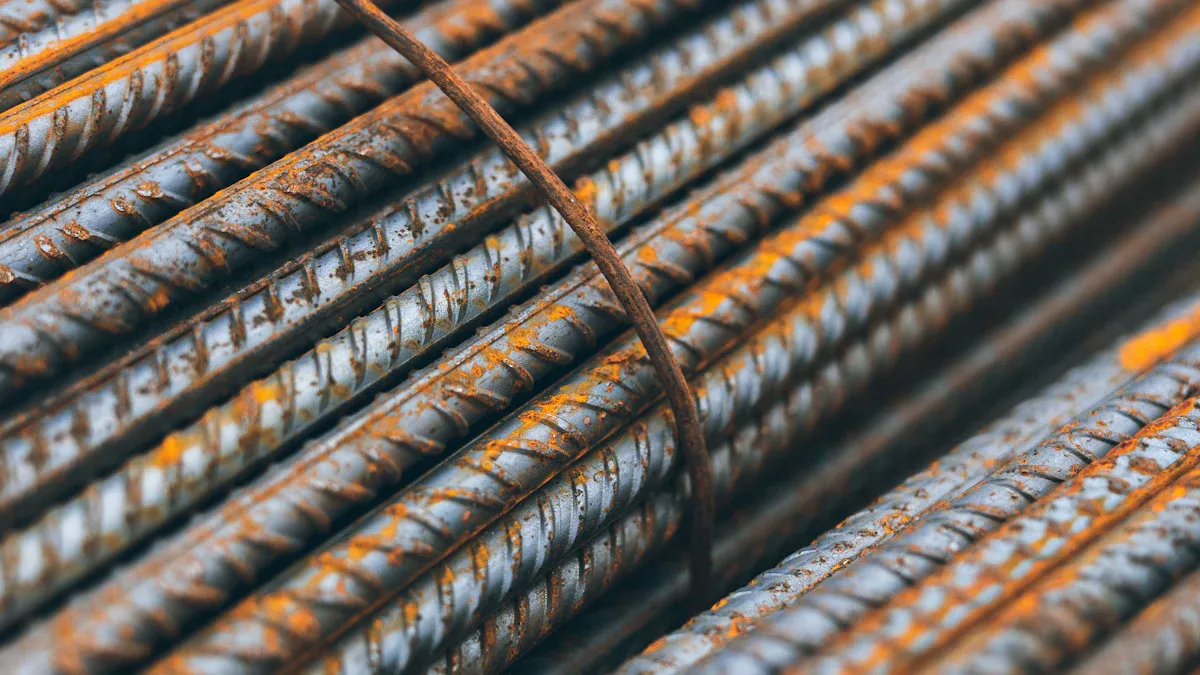
Steel exhibits a wide range of strength and hardness, depending on its composition and heat treatment. Manufacturers tailor steel grades to meet specific application demands. For instance, high carbon steel like 1085 offers approximately 100,000 PSI Ultimate Tensile Strength. Chromium-molybdenum steel (4140L) provides around 95,000 PSI. Nickel-chromium alloy (4340) can reach 130,000 PSI with Rockwell C Hardness between 58 to 63. Plain carbon steel (1095) achieves a Rockwell C Hardness of 66, while alloy steel (8620) ranges from 60 to 65 HRC. Low-alloy steel, containing less than 5% total alloying elements, typically shows a tensile strength range of approximately 450–1000 N/mm².
| Steel Grade | Type | Ultimate Tensile Strength (UTS) | Rockwell C Hardness (HRC) |
|---|---|---|---|
| 1085 | High carbon | ~100,000 PSI | N/A |
| 4140L | Chromium-molybdenum | 95,000 PSI | N/A |
| 4340 | Nickel-chromium alloy | 130,000 PSI | 58 to 63 |
| 1095 | Plain carbon | N/A | 66 |
| 8620 | Alloy steel | N/A | 60 to 65 |
Ductility and Malleability of Steel
Steel possesses significant ductility and malleability, crucial properties for various manufacturing processes. Ductility describes a material's ability to be pulled or stretched into wires. Engineers often measure it by percent elongation or reduction in area during a tensile test. Ductile materials absorb significant strain without failing. Malleability refers to a material's capacity for significant deformation under compression without breaking. Processes like rolling or hammering into thin sheets demonstrate this property. Malleable materials flatten without cracking, important for forging and extrusion.
Several factors influence the ductility of metals. Higher temperatures generally increase ductility. The addition of certain alloying elements can either enhance or reduce ductility. Finer grain sizes typically improve ductility. Processing methods, such as annealing, can also modify ductile properties.
| Steel Classification | Typical Elongation Range |
|---|---|
| Low Carbon Steel (AISI 1020) | 25-30% |
| Medium Carbon Steel (AISI 1045) | 12-20% |
| Austenitic Stainless Steel (304) | 40-60% |
| Martensitic Stainless Steel (410) | 15-25% |
| High-Strength Low-Alloy Steel (HSLA) | 10-25% |
| Advanced High-Strength Steel (TRIP) | 25-35% |
| Tool Steel (AISI D2) | 5-15% |

Versatile Corrosion Resistance in Steel
Steel offers versatile corrosion resistance, particularly with specific alloying. Unlike carbon steel, stainless steels do not suffer uniform corrosion in wet environments. Unprotected carbon steel rusts readily in air and moisture. It forms a porous, fragile iron oxide layer that expands, flakes, and exposes more steel to attack. In contrast, stainless steels contain sufficient chromium to form a self-repairing, microscopically thin, inert chromium oxide passive film. This film prevents further corrosion by blocking oxygen diffusion to the steel surface, even when scratched or temporarily disturbed.
Corrosion-resistant steel, or stainless steel, efficiently resists rust due to alloying with other metals, primarily chromium. When chromium content exceeds 10.5%, a protective passive oxide film forms on the steel's surface. This film shields it from oxygen and corrosive agents. Beyond chromium, elements like nickel enhance corrosion resistance and improve ductility. Manganese, silicon, aluminum, copper, molybdenum, tungsten, and titanium are added in varying amounts to fine-tune properties. This leads to diverse stainless steel grades.
Weldability and Formability of Steel
Steel generally exhibits excellent weldability and formability. Manufacturers can easily join steel components using various welding techniques. Its inherent ductility allows for shaping into complex forms through processes like bending, stamping, and rolling. This ease of fabrication makes steel a preferred material for many structural and manufacturing applications.
Cost-Effectiveness of Steel
Steel stands out as a highly cost-effective material. Its abundant raw materials and established manufacturing processes contribute to its relatively low production cost. This economic advantage makes steel a practical choice for large-scale projects and consumer goods.
Common Types of Steel
Carbon Steel
Carbon steel primarily consists of iron and carbon. Its properties vary significantly with carbon content. Low-carbon steel is ductile and easily formed. High-carbon steel is harder and stronger.
Stainless Steel
Stainless steel contains a minimum of 10.5% chromium. This element forms a passive layer, providing excellent corrosion resistance. Different grades offer varying levels of resistance and mechanical properties.
Alloy Steel
Alloy steel incorporates various elements like manganese, silicon, nickel, titanium, copper, chromium, and aluminum. These additions enhance specific properties such as strength, hardness, and corrosion resistance.
Tool Steel
Tool steel is a type of alloy steel. Manufacturers design it for high hardness, abrasion resistance, and deformation resistance. It is suitable for tools and dies.
Manufacturing Processes for Steel
Basic Oxygen Steelmaking
Basic Oxygen Steelmaking (BOS) involves blowing oxygen through molten pig iron. This process oxidizes carbon and converts it into steel. It was developed in 1948, reducing capital costs and smelting time. In 2013, it accounted for 70% of global steel output.
Electric Arc Furnace Steelmaking
Electric Arc Furnaces (EAFs) produce steel from scrap or direct reduced iron. They use an electrical current to melt the material. EAFs allow for larger alloy additions compared to the basic oxygen method. They can produce steel batches in 40 to 50 minutes. EAFs now account for over 70% of U.S. steel production.
Alloying and Heat Treatment of Steel
After primary steelmaking, secondary processes refine the molten metal. This includes adding or removing elements like alloying agents and dissolved gases. Tertiary steelmaking casts molten metal into various forms such as sheets or rolls. Continuous casting is the dominant method, used for over 95% of global production. Ingot casting is an older method for specific high-alloy steels or large components. Forming and finishing processes follow, such as hot rolling, which reduces thickness and refines the grain structure. Cold rolling further reduces thickness, improves surface finish, and enhances strength. Coating, like galvanizing or tinning, prevents corrosion.
Direct Comparison: Tungsten Alloy vs Steel
Density and Weight Comparison
Weight Advantage of Tungsten Alloy
Tungsten alloy offers a significant weight advantage in applications requiring high mass in a small volume. Tungsten has a density of 19.3 g/cm³. This makes it approximately 2.5 times denser than steel, which typically has a density of 7.9 g/cm³. Consequently, a 1 cm³ cube of tungsten weighs 19.3 grams, while a 1 cm³ cube of steel weighs only 7.9 grams. This substantial difference in density dictates material selection based on whether a heavier or lighter material benefits the component's function.
Impact on Design and Performance
The differing densities of tungsten and steel significantly impact component design and performance. Engineers select materials based on specific functional requirements.
- Aerospace components: In the aerospace industry, every gram counts when designing airplanes and spacecraft. Using lightweight materials helps reduce fuel consumption and increases efficiency. While tungsten is dense, its strategic use for specific properties, such as counterweights, can optimize balance and performance.
- Radiation shielding: Tungsten's high density makes it an excellent choice for shielding against radiation in medical and nuclear applications. Its weight effectively absorbs and blocks harmful radiation.
Strength and Hardness Comparison
Tensile Strength Differences
Tungsten and steel exhibit distinct tensile strength characteristics. Tungsten generally possesses high tensile strength.
| Material | Tensile Strength (MPa) |
|---|---|
| Tungsten | 980 |
| Stainless Steel | 860 |
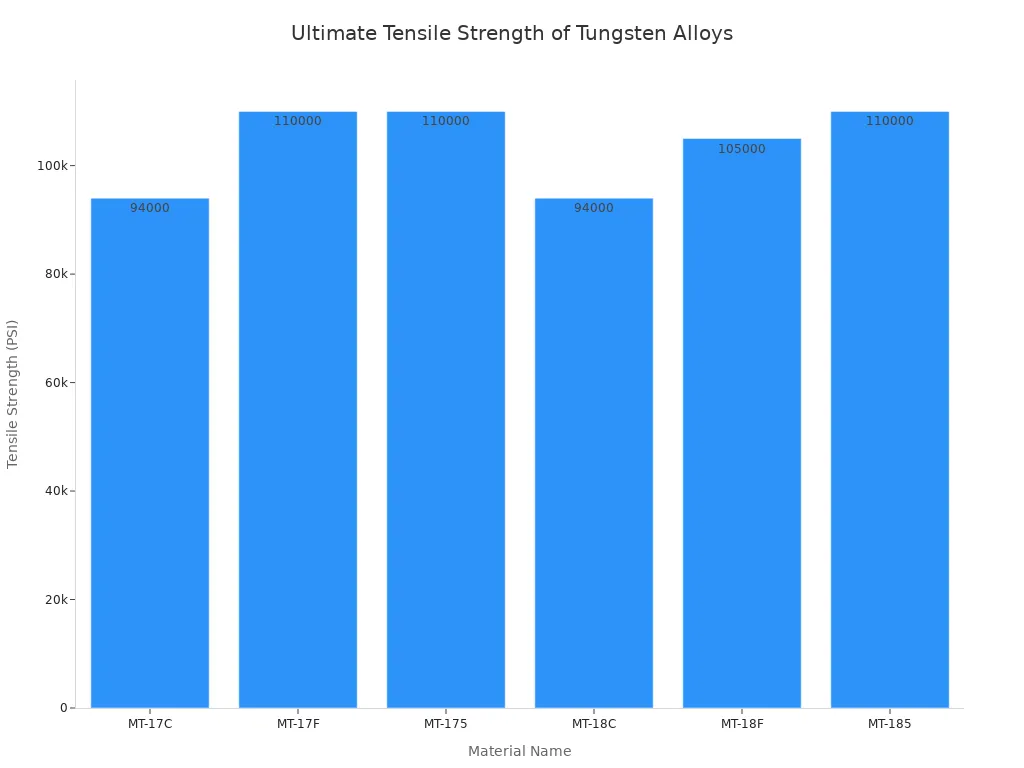
Specific tungsten alloy compositions also demonstrate impressive ultimate tensile strengths.
| Material Name | Material Composition | Ultimate Tensile Strength (PSI) |
|---|---|---|
| MT-17C | 90% W6% Ni4% Cu | ≥94,000 |
| MT-17F | 90% W7% Ni3% Fe | ≥110,000 |
| MT-175 | 92.5% W5.25% Ni2.25%Fe | ≥110,000 |
| MT-18C | 95% W3.5% Ni1.5% Cu | ≥94,000 |
| MT-18F | 95% W3.5% Ni1.5% Fe | ≥105,000 |
| MT-185 | 97% W2.1% Ni0.9% Fe | ≥110,000 |
Yield Strength Comparison
Comparing the yield strength of tungsten alloys and steel grades requires specific data for each material. ASTM B777 tungsten alloys have minimum ultimate tensile strength values ranging from 100 to 110 ksi, depending on the class. However, specific yield strength values for common tungsten alloys are not explicitly stated in all available information. This makes a direct comparison of yield strength with steel grades incomplete based on some data.
Steel grades offer a wide range of yield strengths.
| Metal Type | Yield Strength (MPa) |
|---|---|
| Mild Steel | 250-350 |
| Stainless Steel (304) | 215-505 |
| Steel (A36) | 250 |
| Carbon steel | 330-580 |
| High-yield steel | 345 |
| Stainless steel (ASTM A182) | 250 |
Hardness Scales: Rockwell and Vickers
Both tungsten alloys and steel utilize various hardness scales, including Rockwell and Vickers, to quantify their resistance to indentation. Tungsten carbide, a form of tungsten alloy, consistently ranks among the hardest materials known, often exceeding the hardness of most steels. Steel's hardness varies significantly based on its carbon content and heat treatment, allowing engineers to tailor it for specific applications.
Durability and Resistance Comparison
Wear and Abrasion Resistance
Tungsten steel, a type of high-speed steel (HSS), is renowned for its exceptional hardness and wear resistance. It maintains strength even at elevated temperatures. This material typically contains a significant percentage of carbon and other alloying elements like chromium, molybdenum, and vanadium. These elements enhance its mechanical properties. Key characteristics include high hardness, often exceeding 60 HRC, and excellent wear resistance against abrasive materials. This makes it ideal for high-speed machining operations and applications requiring high mechanical loading, such as cutting tools, drill bits, and dies. The inclusion of tungsten specifically enhances hardness and wear resistance, particularly at high temperatures.
| Property | Tungsten (W) | Steel (Carbon) |
|---|---|---|
| Hardness (Vickers) | 350–500+ | 100–800 (grade-dependent) |
Tungsten composites, especially tungsten carbide, are notable for their exceptional hardness and wear resistance. This makes them suitable for cutting tools, mining bits, and industrial wear parts.
Corrosion Resistance in Environments
Pure tungsten does not rust like iron or steel. Instead, it forms a stable oxide layer that protects the material. Carbon steel is highly vulnerable to rust in the presence of oxygen and moisture. It forms a destructive iron oxide. Stainless steel, while more resistant than carbon steel, can still corrode in saltwater or acidic environments. In contrast, tungsten maintains its integrity even under harsh chemical exposure and at much higher temperatures. This makes it suitable for extreme industrial settings.
However, tungsten alloys, especially those with reactive binder elements like cobalt, nickel, iron, or copper, can exhibit oxidation under certain environmental conditions. These conditions include moist or chemically aggressive environments. This oxidation, while not traditional rust, can lead to surface degradation. For instance, tungsten carbide with a cobalt binder can oxidize or corrode in moist or aggressive conditions. Tungsten-nickel-iron alloys may be prone to corrosion in high humidity or salt-laden air due to their iron content. The purity of the tungsten alloy and the specific environmental exposure (e.g., chlorine, high humidity, saltwater spray, acidic vapors) are critical factors in determining the overall corrosion resistance.
| Metal | Oxidation Behavior | Impact on Durability | Comparison to Tungsten |
|---|---|---|---|
| Iron | Rusts rapidly in presence of moisture and oxygen, forming flaky iron oxide that weakens metal structure. | Severe structural degradation over time. | Tungsten does not rust, making it far more durable in moist environments. |
| Cobalt | Oxidizes in moist oxygen environments forming cobalt oxides, which may degrade surface appearance and properties. | Can cause surface degradation; critical in tungsten alloys. | Oxidizes more readily than tungsten; binder oxidation can affect tungsten carbide parts. |
| Pure Tungsten | Forms a stable, protective oxide layer when exposed to air, preventing further corrosion. | Maintains integrity and performance; changes are typically cosmetic. | Superior resistance to rust and corrosion compared to iron and steel. |
| Tungsten Alloys (with reactive binders like cobalt, nickel, iron, copper) | Can exhibit oxidation or corrosion of the binder elements under certain environmental conditions (e.g., moist, acidic). | Surface degradation, weakening of structure, or altered surface properties. | While pure tungsten is highly resistant, alloying elements can introduce susceptibility to oxidation, which is not true rust but can affect overall corrosion resistance. |
High-Temperature Performance
Tungsten alloys excel in high-temperature environments due to tungsten's exceptionally high melting point. They maintain significant strength and hardness at elevated temperatures where many steels would soften or deform. Steel's high-temperature performance varies greatly with its composition; some alloy steels are designed for high-temperature applications, but generally, they do not match the thermal stability of tungsten.
Impact Resistance and Brittleness
Steel generally offers superior impact resistance and ductility compared to tungsten alloys. Steel's inherent malleability allows it to absorb energy and deform before fracturing. Tungsten alloys, particularly tungsten carbide, are extremely hard but can exhibit brittleness, meaning they may fracture under sudden, high-impact loads rather than deforming. Engineers must consider this trade-off between hardness and toughness when selecting materials for specific applications.
Cost and Availability Comparison
Raw Material Costs
The initial cost of raw materials significantly influences the overall expense of components. Tungsten, a relatively rare element, commands a higher price than iron ore, the primary component of steel. This scarcity directly translates into elevated raw material costs for tungsten-based products. Steel, benefiting from abundant raw materials and well-established global supply chains, maintains a considerably lower raw material cost.
Manufacturing and Machining Costs
Manufacturing and machining processes also contribute substantially to the final product cost. Producing tungsten carbide, a common form of tungsten, involves complex powder metallurgyand high-temperature sintering. These specialized processes require significant energy and advanced equiPment, leading to higher manufacturing expenses. Steel, conversely, utilizes more conventional and widely available manufacturing techniques, which reduces its production cost.
| Material | Cost per kg |
|---|---|
| Tungsten Carbide | $50-$200 |
| Steel | $5-$20 |
The upfront cost for tungsten carbide is notably higher. This stems from its scarce raw materials (tungsten and cobalt) and intricate manufacturing processes. However, tungsten carbide often delivers long-term cost savings. It achieves this through an extended lifespan, frequently lasting six to eight times longer than steel. This durability reduces downtime and ensures precision performance. Its inherent corrosion resistance further contributes to these savings, potentially lowering overall operational costs by up to 25%.
Market Availability and Supply Chains
Steel boasts widespread market availability and robust, mature supply chains globally. Numerous producers and distributors ensure a consistent and accessible supply of various steel grades. Tungsten, while essential for specific high-performance applications, has a more concentrated supply chain. Geopolitical factors and mining operations in specific regions can influence its availability and price stability. This difference in market dynamics affects both procurement lead times and overall project planning.
Machinability and Fabrication Comparison
Challenges with Tungsten Alloy Machining
Machining tungsten alloys presents significant challenges due to their unique material properties. Tungsten's hardness, measured at Mohs 7.5, and its extreme density make cutting and shaping difficult. The material is also very brittle at room temperature, which often leads to chipping during machining operations. Furthermore, tungsten's high melting point and exceptional heat resistance contribute to the difficulty of conventional machining processes.
- Challenges:
- Tungsten's hardness (Mohs 7.5) and density make it difficult to cut and shape.
- It is very brittle at room temperature, leading to chipping.
- Its high melting point and heat resistance contribute to machining difficulty.
Manufacturers often employ sintering, laser cutting, or other non-traditional methods for tungsten. Machining is possible for specialized devices, but it requires specific techniques. To overcome brittleness, heating the material to 400-800°F or cooling it to cryogenic temperatures can enhance machinability. However, these methods necessitate specialized equipment.
- Techniques:
- Tooling: C-2 tungsten carbide-tipped tools, solid carbide mill ends/inserts, aluminum oxide-type wheels, and diamond cutting tools are recommended.
- Turning/Boring/Roughing/Finishing: Use a positive rake to reduce cutting forces, vibration, and chipping. Coolant can be used, but air often serves as the primary cooling method.
- Milling: Use a feed of 0.003” per tooth. Speeds range from 75 to 750 surface feet per minute with tungsten carbide tools, adjusted for depth of cut. Down milling (climb milling) is preferred to reduce load and chipping.
- Drilling/Tapping: Use tungsten carbide tools. Air-cooling or moly disulfide cutting coolant can be used. Drill holes to 50-55% of tap hole requirements. Solid carbide drills are recommended for multiple holes. Thread-forming taps should only be used on small holes if necessary. Solid carbide taps ensure longer tool life. Maintain sharp tools to prevent damage and ensure precision.
| Operation | Feed/Inches Per Revolution (IPR) | Depth of Cut | Turning Speed |
|---|---|---|---|
| Roughing | 0.050”-0.200” | 0.008”-0.010” | 250-350 |
| Finishing | 0.010”-0.030” | 0.003”-0.005” | 250-350 |
Successful machining of tungsten requires a thorough understanding of its material properties. Recognizing tungsten's remarkable hardness, high melting point, excellent thermal conductivity, and low coefficient of thermal expansion helps engineers address conventional machining difficulties. Selecting the right tools is paramount; carbide or diamond-coated cutting tools are essential due to their hardness and wear resistance. Tools with high rake angles minimize cutting forces and reduce wear. Optimizing tool geometry and coatings further enhances performance.
Optimizing cutting parameters involves selecting appropriate cutting speed, feed rate, and depth of cut based on the tungsten grade and thickness. This balances cutting forces with material removal rates to prevent tool breakage and ensure surface finish quality. Implementing proper cooling and lubrication is also critical. High-pressure coolant systems dissipate heat and improve chip evacuation. Suitable cutting fluids or lubricants reduce friction, prolong tool life, and improve surface finish. Securing workpiece stability is vital; sturdy fixtures and clamps securely hold the tungsten and dampen vibrations, minimizing issues like chatter. Considering vibration-damping tool holders can also help. Finally, implementing post-machining processes like grinding, polishing, or heat treatment achieves desired surface finish and dimensional accuracy, always mindful of tungsten's brittleness and susceptibility to cracking.
Ease of Steel Fabrication
Steel, in stark contrast to tungsten, offers exceptional ease of fabrication. Its inherent ductility and malleability allow for a wide range of manufacturing processes. Fabricators can readily cut, bend, stamp, and weld steel into complex shapes using standard industrial equipment. This versatility makes steel a highly desirable material for mass production and custom fabrication alike. The established techniques and readily available tooling for steel significantly reduce fabrication time and cost, contributing to its widespread use across numerous industries.
Applications of Tungsten Alloy
Aerospace and Defense Uses for Tungsten Alloy
Counterweights and Ballast
Tungsten Alloy serves critical roles in aerospace and defense as counterweights and ballast. Its high density allows for smaller, lighter ballast solutions in missiles, ammunition, and radiation shielding. Engineers utilize Tungsten Alloy for crankshaft balancing weights, helicopter blade balancing weights, and eccentric weights in construction machinery. It also functions as mass weights in aircraft wing flaps and riots in automatic watches. In aerospace, it provides counterweights for satellite and helicopter rotor blades, missiles, and aerospace gyro control. Counterweights in the cockpit increase vibration-warning control. Small batches of Tungsten Alloy in flight control joysticks for fly-by-wire systems increase inertia and restore 'feel'. Bucking bars made from Tungsten Alloy absorb external forces and reduce vibration during riveting in aircraft manufacturing and maintenance.
Kinetic Energy Penetrators
Tungsten Alloy is a preferred material for kinetic energy penetrators due to its exceptional hardness and density. It forms the cores of large-caliber kinetic energy armor-piercing projectiles, machine gun shells, and rod-type kinetic energy armor-piercing projectile cores. Military applications include tactical missile fragmentation components, warheads for bullets and aircraft shells, and shells for shaped energy bombs. Submunitions, tungsten alloy projectiles, and small caliber tungsten alloy projectiles also incorporate this material.
Radiation Shielding
The high density of Tungsten Alloy makes it an excellent material for radiation shielding. It protects sensitive equipment in various defense applications.
Industrial and Manufacturing Uses for Tungsten Alloy
Cutting Tools and Dies
Tungsten Alloy, particularly in the form of tungsten carbide, is indispensable for cutting tools and dies. Its extreme hardness and wear resistance ensure longevity and precision in machining operations.
High-Temperature Furnace Components
Tungsten Alloy maintains its properties at extreme temperatures, making it ideal for high-temperature furnace components. It finds use in die casting, extrusion, and other high-temperature tooling.
Electrical Contacts
Tungsten Alloy's unique combination of high melting point and electrical conductivity makes it suitable for electrical contacts in various industrial applications.
Medical and Sports Uses for Tungsten Alloy
Radiation Therapy Shielding
In the medical field, Tungsten Alloy provides crucial radiation protection. Its high hardness and density make it suitable for X-ray and radiation protection, including X-ray anodes, anti-scatter plates, radioactive containers, and syringe shielding containers.
Fishing Weights and Golf Club Weights
Tungsten Alloy is popular in sports for its density. It is used in fishing weights and golf clubs for optimal weight and balance. Other applications include darts, horseshoes, and counterbalances for high-end firearms.
Applications of Steel
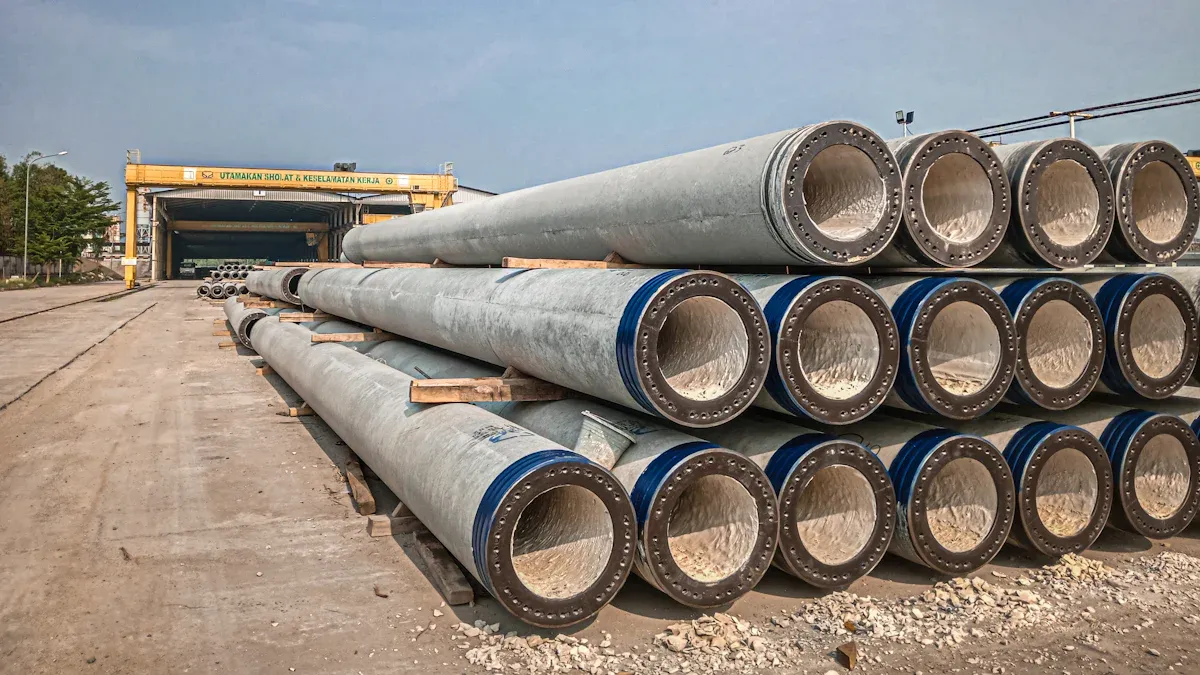
Steel plays a fundamental role across numerous industries. Its versatility, strength, and cost-effectiveness make it indispensable for a wide array of applications.
Construction and Infrastructure Uses for Steel
Steel forms the backbone of modern construction and infrastructure projects. It provides essential structural integrity and durability.
Structural Beams and Reinforcement
Buildings extensively use steel for structural elements. Structural steelwork provides strong, rigid frames, including steel beams and framing. Engineers also incorporate steel into reinforced concrete, which adds tensile strength and stiffness to concrete, aiding in deep foundations. Beyond structural components, non-structural steel appears in heating and cooling equipment and interior ducting. Residential buildings also use steel in internal fixtures and fittings.
Bridges and Buildings
Steel is crucial for large-scale infrastructure. It builds bridges, tunnels, and railways. Steel products, such as sheet piles and steel tubes, are widely used in waterways, tunnels, shipping locks, and highways. Steel also forms the transportation framework for consumable resources, including channels and canals. Desalinization plants use steel tubing. Pumps, hydraulic systems, and dams also incorporate steel components. The energy sector, including renewable energy, uses steel for mounting brackets for photovoltaic solar panels and structural steel for ethanol, biodiesel, and oil refineries.
Automotive and Transportation Uses for Steel
The automotive and transportation sectors rely heavily on steel for safety, performance, and efficiency.
Vehicle Chassis and Body Panels
Automakers utilize steel for its visual appeal, enhancing the outward appearance of modern road vehicles. Quality and durability are primary considerations. Beyond aesthetics, steel plays a crucial functional role in automotive construction. Manufacturers often choose it for unseen but vitally important parts. Specific applications include car exhaust systems, auto parts like hose clamps and seatbelt springs. Steel is also common in chassis, suspension, body, fuel tank, catalytic converter, and structural applications.
Engine Components
Steel is integral to critical components in various transportation modes. Aircraft engines and landing gear use steel. Trains and railcars also depend on steel. It accounts for 15% of the mass of high-speed trains, with the bogie, which includes wheels, axles, bearings, and motors, being a main steel component. Freight trains and wagons are almost entirely made of steel. Furthermore, structural steel plates are used for ship hulls. Modern high-tensile steel enables the efficient construction of large container ships. Corrosion-resistant steel is ideal for oil tankers.
Consumer Goods and Appliances Uses for Steel
Steel's properties make it suitable for countless consumer products and household appliances.
Kitchen Utensils and Cookware
Stainless steel is a popular choice for kitchen utensils and cookware. Its corrosion resistance, hygiene, and aesthetic appeal make it ideal for food preparation and serving.
Home Appliances
Many home appliances, including refrigerators, washing machines, and ovens, incorporate steel. Its durability, strength, and ability to be formed into various shapes contribute to the longevity and functionality of these everyday items.
Industrial Machinery Uses for Steel
Machine Parts and Tools
Steel forms the foundational material for a vast array of industrial machinery. Manufacturers extensively rely on steel for crafting critical machine parts and durable tools. Its inherent strength, coupled with impressive fatigue resistance, makes it an ideal choice for components subjected to repetitive stress. Steel components reliably withstand the heavy loads and continuous operational stresses common in industrial environments, ensuring long service life. Engineers meticulously develop various steel alloys, each tailored to meet specific tool requirements. For instance, tool steel, a specialized alloy, provides exceptional hardness and wear resistance. This characteristic makes it perfect for demanding applications like cutting, stamping, and forming operations within manufacturing processes, where precision and durability are paramount. Steel gears, shafts, and bearings are ubiquitous, ensuring the smooth and reliable function of complex machinery across sectors like automotive, aerospace, and energy. The material's excellent machinability allows for the creation of highly precise components, which is critical for maintaining efficiency and accuracy in modern industrial processes. Furthermore, steel's cost-effectiveness makes it a practical and sustainable choice for the mass production of essential industrial tools and equipment, balancing performance with economic viability.
Pipelines and Storage Tanks
Steel is an indispensable material for constructing the extensive networks of pipelines and massive storage tanks that underpin global infrastructure. These vital structures safely transport and contain vast quantities of liquids and gases, from potable water and natural gas to crude oil and various chemicals, often over long distances and under challenging conditions. Steel's robust nature provides the necessary structural integrity, allowing these systems to effectively contain materials, even under high internal pressures and challenging external conditions like seismic activity or extreme temperatures. Different steel grades offer varying levels of corrosion resistance, a crucial factor for longevity and safety. For example, stainless steel pipelines transport corrosive chemicals without degradation, while specially coated carbon steel forms extensive networks for oil and gas pipelines across continents, protecting against external corrosion. Large storage tanks for water, fuel, and chemicals also predominantly utilize steel due to its strength, durability, and ability to be fabricated into immense capacities. Its excellent weldability allows for the seamless and secure construction of these massive vessels and intricate pipeline systems, ensuring leak-proof integrity. Steel's ability to withstand a wide range of temperatures, from cryogenic to elevated, further benefits these applications, ensuring operational safety and longevity in diverse environmental conditions. The material's proven reliability helps prevent costly leaks and potential environmental contamination, making it a cornerstone of industrial containment and transport.
Choosing Between Tungsten Alloy and Steel
Selecting the appropriate material for any engineering project requires careful consideration of specific performance demands. Engineers must weigh the unique properties of tungsten alloy against those of steel. This decision often balances extreme performance needs with practical considerations like cost and ease of fabrication.
When to Choose Tungsten Alloy
Certain applications demand material properties that only tungsten alloy can provide. These scenarios often involve extreme conditions or precise functional requirements.
Requirements for Extreme Density
Applications requiring maximum mass within a minimal volume often necessitate tungsten alloy. Its extreme density is crucial for components like boring bars and grinding quills. Here, its high elastic modulus and density prevent chatter. This ensures high stiffness for effective inertial damping of cutting vibrations. In sporting goods, such as golf clubs and tennis rackets, tungsten alloy's maximum density allows for the smallest possible components. This increases spot size, adds stability, and decreases vibration and shock for enhanced power and control. Specialized racing teams also use it for fine-tuning chassis and skid plates, providing significant weight in a given volume. Other critical uses include radiation shielding in medical and industrial settings, various weights and counterbalances (including crankshaft weights), rotating inertia members, and high-temperature tooling.
Need for Superior Hardness and Wear Resistance
When components face severe abrasion or require exceptional durability against wear, tungsten alloy becomes the material of choice. Its remarkable hardness, particularly in forms like tungsten carbide, ensures prolonged service life. This makes it ideal for cutting tools, mining bits, and industrial wear parts that operate in harsh, abrasive environments.
High-Temperature Operating Environments
For applications where materials must maintain strength and integrity at extremely high temperatures, tungsten alloy excels. Its exceptionally high melting point and ability to retain mechanical properties under intense heat make it indispensable. Examples include high-temperature furnace components, aerospace parts, and specialized tooling used in thermal processing.
Radiation Shielding Applications
Tungsten alloy's high density makes it an outstanding material for radiation shielding. It effectively absorbs and blocks harmful radiation. This property is vital in medical equipment, nuclear facilities, and defense applications where protecting personnel and sensitive electronics from radiation exposure is paramount.
When to Choose Steel
Steel offers a versatile and often more practical solution for a vast range of applications. Its balanced properties and economic advantages make it a preferred material in many industries.
Cost-Effectiveness as a Priority
When budget constraints are a primary concern, steel often provides the most economical solution. Carbon steel is considerably more cost-effective due to fewer alloying elements and a simpler production process. It is ideal for high-volume jobs where raw material costs need to be reduced without compromising quality. This is especially true when surface treatments can compensate for performance limitations. If an application does not require extreme strength or environmental durability, carbon steel is a strong contender. Manufacturers favor it for its machinability in precision grinding and Swiss machining, where efficiency and keeping material costs down are key. Steel is also chosen for its cost-efficiency, alongside high strength and resilience, in heavy industries such as construction, mining, and transportation infrastructure. Its robustness and ability to withstand intense forces are paramount in these sectors. Furthermore, steel alloys are dominant in manufacturing heavy trucks, trains, and other heavy vehicles due to their unmatched durability and cost efficiency.
Need for Ductility and Formability
Applications requiring materials that can be easily shaped, bent, or drawn without fracturing benefit greatly from steel's inherent ductility and malleability. This property makes steel suitable for complex designs and mass production processes. Examples include automotive body panels, various consumer goods, and structural components that require forming.
General Structural and Mechanical Applications
Steel serves as the backbone for countless general structural and mechanical applications. Its excellent balance of strength, stiffness, and toughness makes it suitable for buildings, bridges, machinery frames, and everyday tools. These applications do not typically require the extreme properties of tungsten alloy.
Balanced Performance Requirements
Many projects require a material with a good balance of properties rather than exceptional performance in a single area. Steel offers this versatility. It provides adequate strength, reasonable corrosion resistance (especially stainless steel), and good workability. This makes it a practical and reliable choice for a wide array of industrial and consumer products.
The optimal material choice between tungsten alloy and steel is dictated by specific application demands. Tungsten alloy excels in niche applications. These require extreme properties like density, hardness, and high-temperature resistance. Steel offers a versatile, cost-effective solution for a vast array of general and structural uses. Careful evaluation of properties, cost, and environmental factors is crucial for informed material selection.
FAQ
What is the primary difference in density between tungsten alloy and steel?
Tungsten alloy possesses a significantly higher density than steel. This property allows for maximum mass within a compact volume. Engineers utilize it for applications like counterweights and radiation shielding. Steel offers lower density, suitable for general structural uses where weight is less critical.
Which material offers superior hardness and wear resistance?
Tungsten alloy, particularly tungsten carbide, provides superior hardness and wear resistance. It excels in abrasive environments. Steel's hardness varies. Heat treatment can enhance it, but it generally does not match tungsten alloy's extreme resistance.
Is tungsten alloy more expensive than steel?
Yes, tungsten alloy is generally more expensive than steel. Its raw materials are rarer. Manufacturing processes are also more complex. Steel benefits from abundant raw materials and established production methods, making it more cost-effective.
Which material performs better in high-temperature environments?
Tungsten alloy performs exceptionally well in high-temperature environments. It maintains strength and integrity due to tungsten's high melting point. Steel's high-temperature performance varies by grade. It generally softens or deforms at temperatures where tungsten alloy remains stable.
How do tungsten alloy and steel compare in terms of corrosion resistance?
Pure tungsten forms a stable oxide layer, protecting it from corrosion. Steel's corrosion resistance varies. Stainless steel offers good resistance. However, carbon steel rusts readily. Tungsten alloy often maintains integrity in harsh chemical exposures.
Which material is easier to machine and fabricate?
Steel is significantly easier to machine and fabricate. Its ductility and malleability allow for various shaping processes. Tungsten alloy presents machining challenges. Its hardness and brittleness often require specialized techniques like powder metallurgy or non-traditional methods.
What are the main applications for tungsten alloy?
Tungsten alloy finds use in aerospace counterweights, kinetic energy penetrators, and radiation shielding. Industrial applications include cutting tools, high-temperature furnace components, and electrical contacts. Medical and sports uses involve radiation therapy shielding and fishing weights.
Where is steel most commonly used?
Steel is widely used in construction for structural beams and bridges. The automotive industry uses it for chassis and body panels. Consumer goods and appliances also incorporate steel. Industrial machinery, pipelines, and storage tanks also rely heavily on steel.