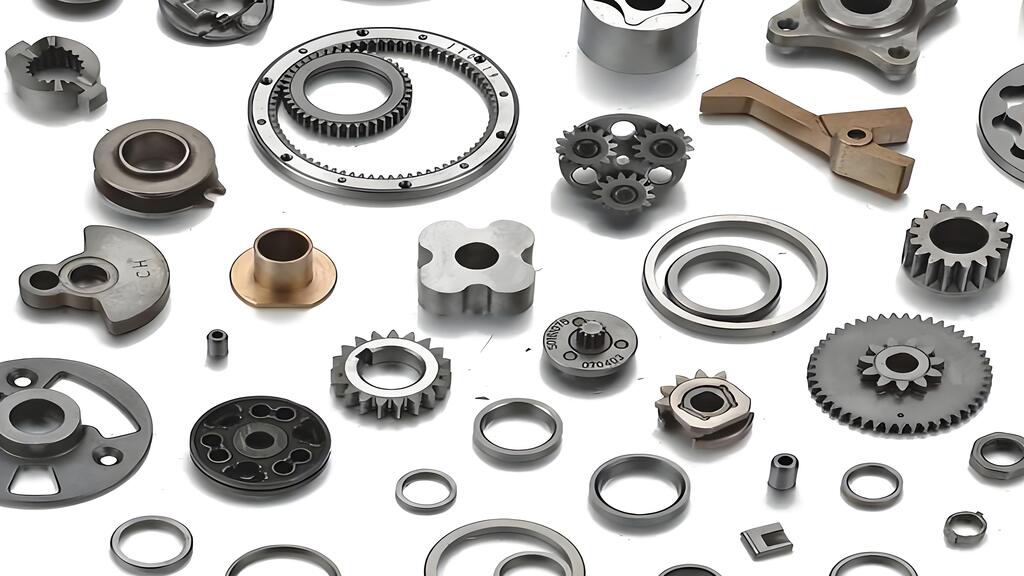


Advantages of powder metallurgy
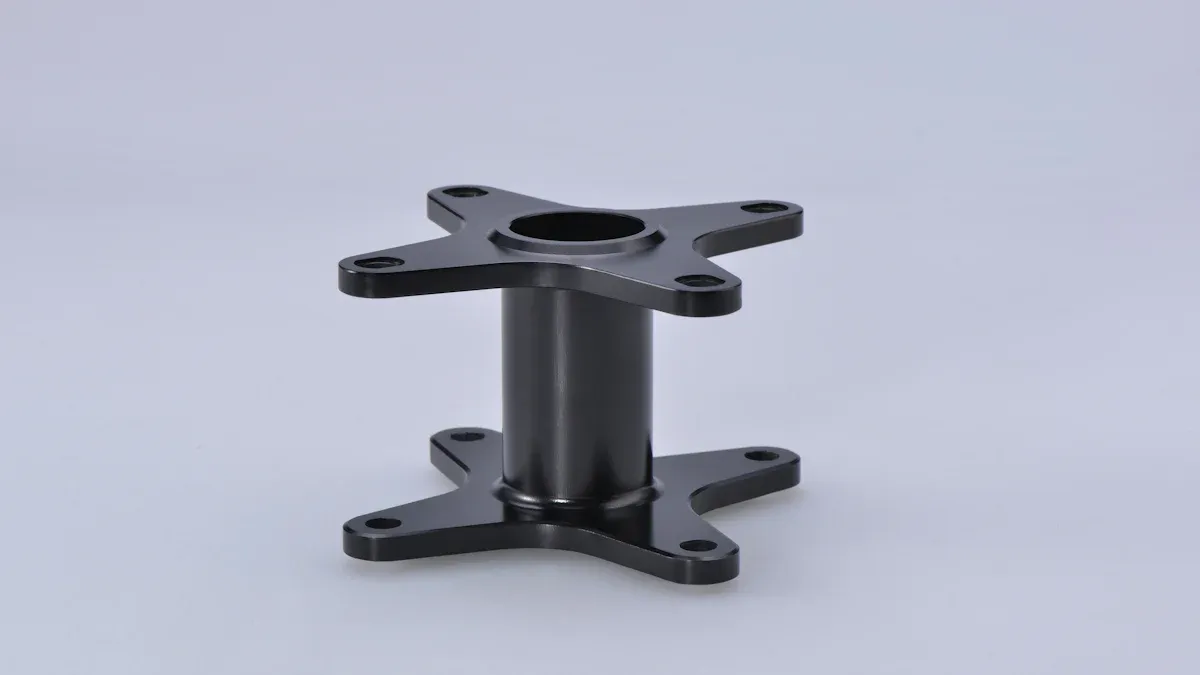
Manufacturers rely on Powder Metallurgy to achieve efficient material use and consistent product quality. The process offers design flexibility, cost savings, and enhanced material properties. Companies choose this approach for its energy efficiency and broad application potential. The advantages of powder metallurgy support sustainable manufacturing practices and deliver reliable results across many industries.
Key Takeaways
- Powder metallurgy uses raw materials efficiently, producing parts close to their final shape and generating very little waste.
- The process supports recycling by using recycled powders and reduces the need for extra machining or finishing steps.
- Manufacturers can create complex shapes with fine details and control material properties like strength and porosity.
- Powder metallurgy lowers production costs by cutting machining needs, enabling fast setup, and extending tool life.
- Parts made with powder metallurgy have uniform quality, tight tolerances, and consistent composition for reliable performance.
- The process saves energy by using lower temperatures and efficient sintering, reducing environmental impact and carbon footprint.
- Powder metallurgy serves many industries, including automotive, aerospace, medical, and electronics, offering versatile and high-performance solutions.
- Automated production and quality control ensure high repeatability, fewer defects, and faster manufacturing times.
Material Utilization and Waste Reduction: Key Advantages of Powder Metallurgy
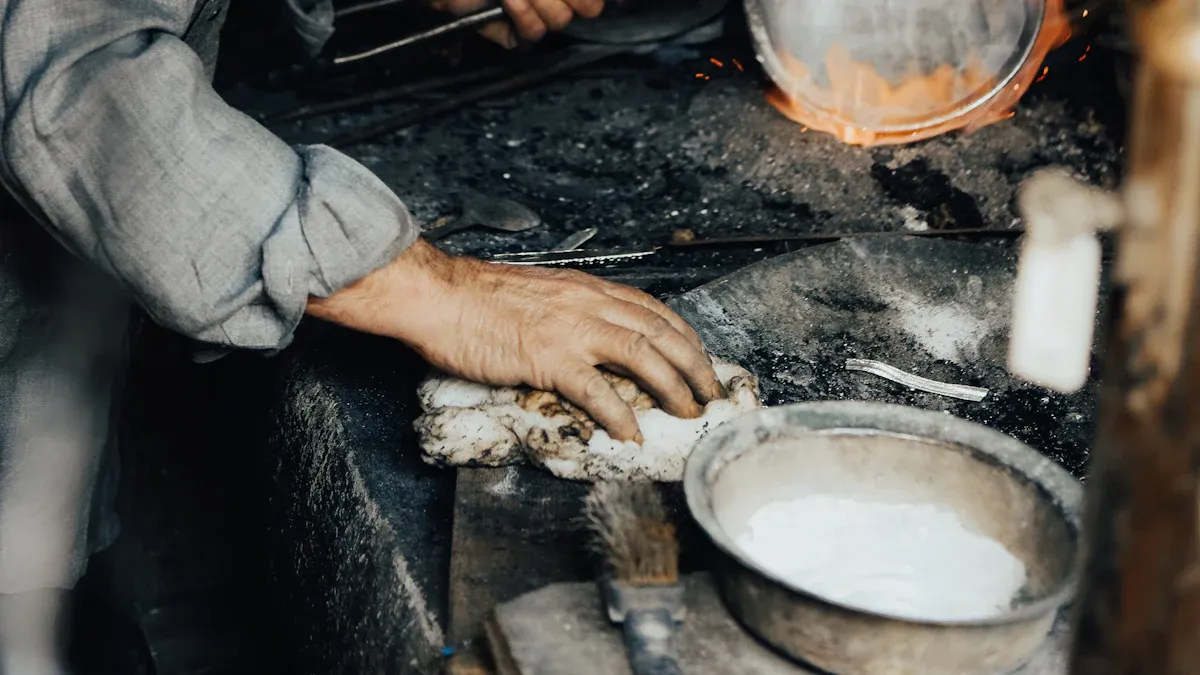
Efficient Use of Raw Materials
Near-Net Shape Production
Powder metallurgy allows manufacturers to create parts that closely match the final desired shape. This process, known as near-net shape production, reduces the need for extensive machining after forming. Engineers design components with precise dimensions, so the finished product requires little to no additional shaping. As a result, companies save both time and resources. Near-net shape production also supports the creation of complex parts that would be difficult or expensive to produce using traditional methods.
Minimal Scrap Generation
One of the main advantages of powder metallurgy lies in its ability to minimize material waste. During the process, manufacturers press metal powders into molds that match the final part’s shape. This approach generates very little scrap compared to casting or forging, where excess material often gets removed and discarded. The efficient use of raw materials leads to lower production costs and supports sustainable manufacturing practices. Powder metallurgy also benefits from high automation, which further reduces labor costs and enhances product consistency.
Tip: Companies that adopt powder metallurgy often see a significant reduction in waste disposal costs due to minimal scrap generation.
Recycling and Sustainability
Use of Recycled Powders
Powder metallurgy stands out for its ability to incorporate recycled materials. Manufacturers can use recycled metal powders without sacrificing quality or performance. This practice not only conserves natural resources but also reduces the environmental impact of production. Many industries choose powder metallurgy because it supports a circular economy, where materials are reused instead of discarded.
Reduced Need for Secondary Processing
The process of powder metallurgy often eliminates the need for secondary operations, such as machining or finishing. Since parts come out of the mold with precise dimensions and surface finishes, manufacturers can skip many post-processing steps. This reduction in secondary processing saves energy and further decreases material waste. Companies benefit from faster production times and lower overall costs.
The advantages of powder metallurgy include efficient material use, minimal waste, and strong support for recycling efforts. These features make it a preferred choice for industries seeking sustainable and cost-effective manufacturing solutions.
Design Flexibility: Unique Advantages of Powder Metallurgy
Powder metallurgy stands out for its exceptional design flexibility. Manufacturers can create parts with shapes and features that traditional methods cannot easily achieve. This flexibility opens new possibilities for engineers and designers across many industries.
Complex Geometries and Intricate Features
Intricate Internal Features
Powder metallurgy enables the production of components with intricate internal features. The process uses custom-designed tooling to compact metal powders into precise shapes. Sintering then bonds the particles at the molecular level. This approach allows for the creation of multilevel parts and complex internal channels that would be difficult or impossible to machine or cast. Studies show that powder metallurgy has evolved from producing simple shapes to manufacturing highly detailed, multilevel components. This capability gives manufacturers a significant advantage when designing parts for specialized applications.
Thin Walls and Fine Details
Engineers often require parts with thin walls or fine details. Powder metallurgy meets this need by maintaining tight tolerances during compaction and sintering. The process supports the formation of thin sections and delicate features without sacrificing strength or quality. Compared to casting, forging, or machining, powder metallurgy offers superior control over wall thickness and surface detail. This precision reduces the need for secondary operations and helps manufacturers save time and resources.
Note: Powder metallurgy minimizes material waste and tooling costs while delivering complex shapes and fine details.
Tailored Material Properties
Alloy Customization
Manufacturers can tailor the properties of powder metallurgy parts by adjusting the composition of metal powders. Alloy customization allows for the addition of specific elements or nanoparticles to enhance mechanical performance. For example, reinforcing a metal matrix with nanoparticles can improve strength, hardness, or wear resistance. This level of control gives engineers the ability to design materials that meet exact performance requirements.
Controlled Porosity
Powder metallurgy also offers precise control over porosity. By adjusting processing parameters, manufacturers can engineer parts with specific levels of porosity to achieve desired properties. Research on 7075 aluminum alloy shows that engineered porosity—about 1.14%—can suppress cracking and improve mechanical properties. Minor porosity interrupts the growth of columnar grains, promoting a more uniform microstructure. This change leads to a balance of strength and ductility, with tensile strength reaching 464 MPa and elongation at break of 9.7%. Controlled porosity, rather than full densification, can benefit applications that require unique combinations of strength, flexibility, or filtration.
- Key benefits of tailored material properties in powder metallurgy:
- Enhanced mechanical performance through alloying and reinforcement
- Improved crack resistance and material integrity with controlled porosity
- Custom solutions for demanding applications
The advantages of powder metallurgy in design flexibility empower manufacturers to innovate and meet the evolving needs of modern industries.
Cost Efficiency: Economic Advantages of Powder Metallurgy
Lower Production Costs
Reduced Machining Requirements
Powder metallurgy helps manufacturers lower production costs by reducing the need for machining. The process forms parts close to their final shape, so companies spend less time and money on cutting, grinding, or finishing. Many traditional manufacturing methods require extra steps to achieve the right dimensions. Powder metallurgy eliminates most of these steps. As a result, companies can produce more parts in less time. This efficiency leads to significant savings, especially for complex or high-precision components.
Tip: Reducing machining not only saves money but also shortens the overall production timeline.
Economies of Scale in High-Volume Production
When companies produce large quantities of parts, powder metallurgy offers strong economies of scale. The process uses automated presses and sintering furnaces, which can run continuously. This setup allows manufacturers to make thousands or even millions of identical parts with minimal labor. The cost per part drops as production volume increases. Industries such as automotive and electronics benefit from these savings. They can meet high demand without sacrificing quality or consistency.
Tooling and Setup Savings
Shorter Lead Times
Powder metallurgy provides shorter lead times compared to many traditional methods. Tooling for powder compaction often requires less time to design and manufacture. Companies can move from prototype to full production quickly. This speed helps businesses respond to market changes and customer needs. Faster setup also means less downtime between production runs.
Lower Tool Wear
The powder metallurgy process puts less stress on tools and dies. Pressing metal powders into shape requires less force than forging or stamping solid metal. As a result, tools last longer and need less frequent replacement. Lower tool wear reduces maintenance costs and keeps production lines running smoothly. Companies benefit from fewer interruptions and lower long-term expenses.
- Key cost-saving factors in powder metallurgy:
- Minimal machining and finishing
- High-volume efficiency
- Fast setup and changeover
- Extended tool life
The advantages of powder metallurgy include not only material savings but also significant reductions in production and tooling costs. These economic benefits make it a preferred choice for manufacturers seeking both quality and affordability.
Enhanced Material Properties: Performance Advantages of Powder Metallurgy
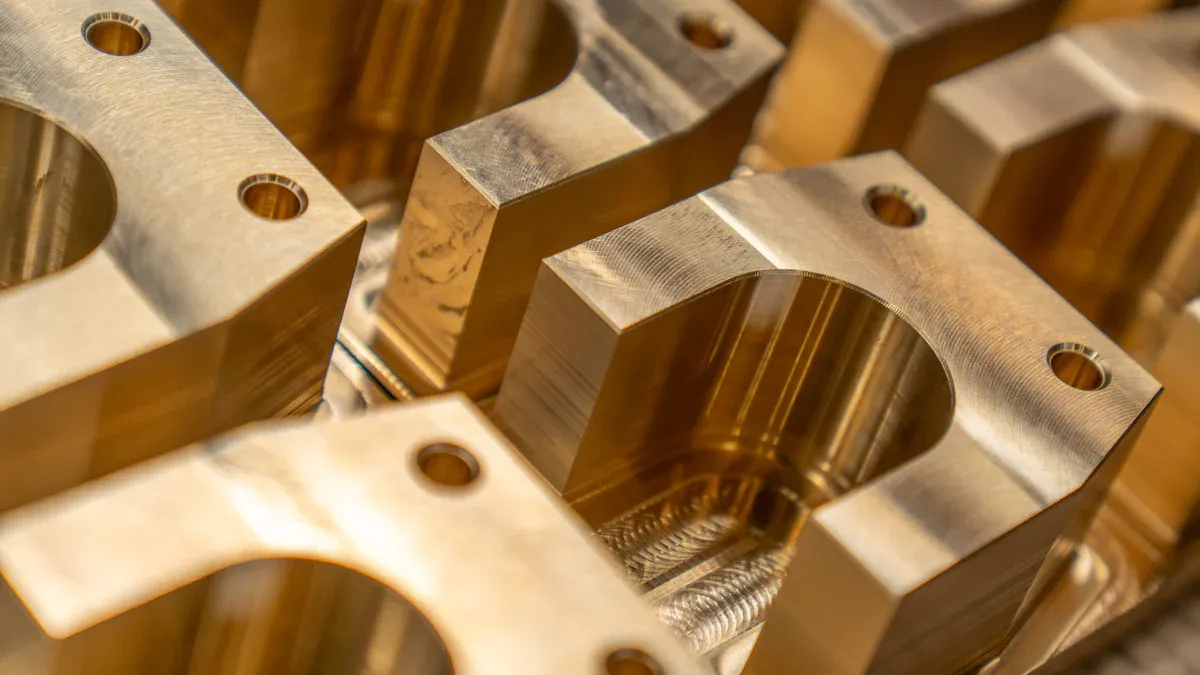
Improved Mechanical Strength and Uniformity
Uniform Microstructure
Powder metallurgy produces parts with a uniform microstructure. Manufacturers blend metal powders thoroughly before compaction. This blending ensures even distribution of alloying elements. During sintering, the particles bond together at a microscopic level. The result is a consistent grain structure throughout the part. Uniform microstructure improves mechanical properties such as strength, hardness, and wear resistance. Engineers rely on this consistency for critical applications in automotive, aerospace, and medical industries.
High Density Options
Engineers can achieve high-density components using powder metallurgy. By adjusting compaction pressure and sintering conditions, they control the final density of the part. High-density parts often show better mechanical performance. These parts resist deformation and fatigue under heavy loads. High density also reduces the risk of internal defects. Manufacturers use this advantage to produce gears, bearings, and structural components that must withstand demanding environments.
Porosity Control and Specialized Applications
Engineered Porous Components
Powder metallurgy allows precise control over porosity. Manufacturers can design parts with specific pore sizes and distributions. Engineered porous components serve unique functions. For example, some filters require controlled porosity to trap particles while allowing fluids to pass. Other parts, such as self-lubricating bearings, use interconnected pores to store and release lubricants during operation.
Applications in Filtration and Lubrication
Many industries use powder metallurgy to create filtration and lubrication solutions. Porous metal filters remove contaminants from liquids and gases. These filters offer high strength and durability compared to traditional materials. In lubrication, self-lubricating bearings reduce friction and wear. The pores in these bearings hold oil or grease, which release gradually during use. This feature extends the life of machinery and reduces maintenance needs.
Note: Porosity control stands out as one of the key advantages of powder metallurgy for specialized applications.
Consistent Composition and Quality
Homogeneous Alloy Distribution
Powder metallurgy ensures homogeneous alloy distribution in every part. Manufacturers mix powders with great precision. This process prevents segregation of alloying elements. Each finished component contains the same chemical makeup from surface to core. Homogeneous distribution leads to predictable performance and reliable quality.
Reduced Segregation
Traditional casting methods sometimes cause segregation, where certain elements concentrate in specific areas. Powder metallurgy minimizes this risk. The process keeps the composition even throughout the part. Reduced segregation means fewer weak spots and better overall durability. Manufacturers trust this method for parts that require strict quality standards.
The advantages of powder metallurgy include enhanced material properties, such as uniform microstructure, high density, controlled porosity, and consistent composition. These features help manufacturers deliver reliable, high-performance components for a wide range of industries.
Energy Savings and Environmental Benefits: Sustainable Advantages of Powder Metallurgy
Lower Energy Consumption
Reduced Melting Requirements
Powder metallurgy stands out for its lower energy requirements compared to traditional metalworking methods. Unlike melting metallurgy, which requires high temperatures to liquefy metals, powder metallurgy uses lower process temperatures during sintering. This difference leads to significant energy savings. For example, recycling grinding sludge through powder metallurgy can reduce both material and energy consumption by about 36.6% compared to conventional production. Advanced techniques such as field assisted sintering (FAST) can achieve energy savings of up to 90% over conventional hot pressing. Electric discharge sintering (EDS) also offers rapid cycle times and high energy efficiency, further lowering the energy needed for production.
Efficient Sintering Processes
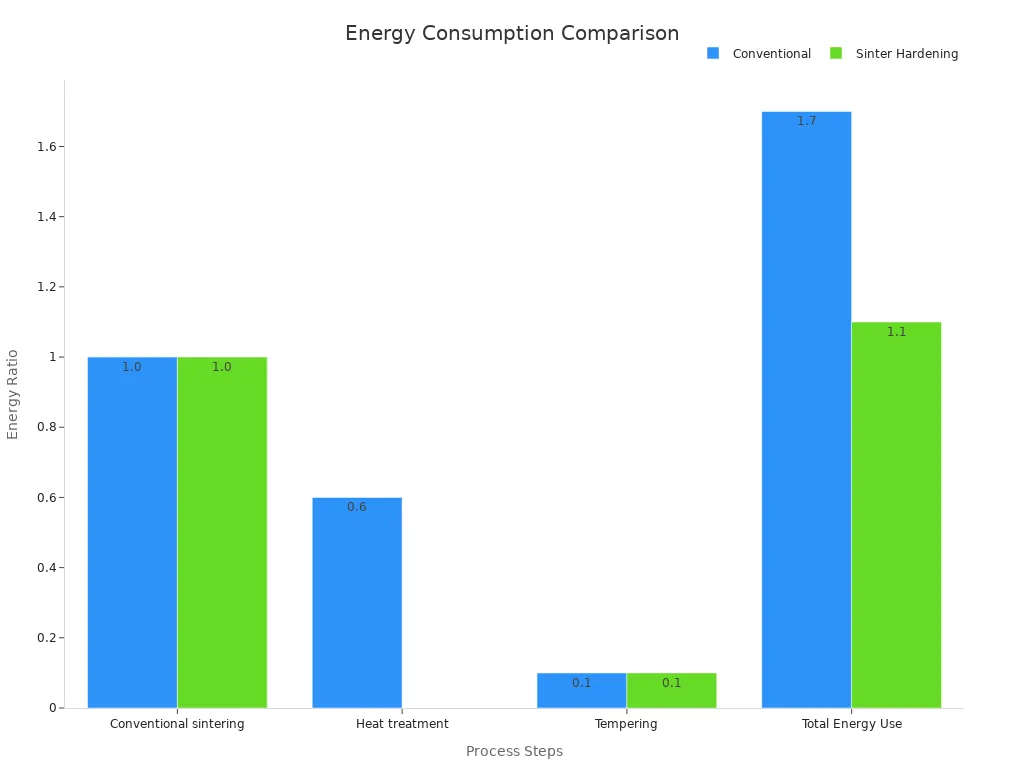
Sintering processes in powder metallurgy use energy more efficiently than traditional heat treatment methods. The following table compares energy consumption ratios for conventional sintering and sinter hardening:
| Process Step | Conventional Sintering Energy Consumption (ratio) | Sinter Hardening Energy Consumption (ratio) |
|---|---|---|
| Conventional sintering | 1.0 | 1.0 |
| Heat treatment | 0.6 (variable) | 0 |
| Tempering | 0.1 | 0.1 |
| Total Energy Use | 1.7 | 1.1 |
This data shows that sinter hardening reduces total energy consumption by about 35% compared to conventional sintering plus heat treatment. The chart below visually highlights this difference:
⚡ Powder metallurgy processes help manufacturers lower operational costs and support sustainable manufacturing by using less energy.
Reduced Environmental Impact
Less Industrial Waste
Powder metallurgy generates less industrial waste than subtractive manufacturing methods. The process forms parts close to their final shape, so manufacturers discard very little material. Additive manufacturing, which uses metal powders, builds parts layer by layer. This approach minimizes waste and allows for the creation of complex, lightweight components that save resources during use. Companies benefit from lower waste disposal costs and a cleaner production environment.
Lower Carbon Footprint
Life cycle assessment (LCA) data shows that powder metallurgy can reduce the environmental impact of metal part production. The global warming potential (GWP) for metal powder production ranges from 4.61 to 24.81 kg CO2-equivalent per kilogram of powder, depending on the atomization process and gas used. Cumulative energy demand (CED) varies from 77.94 to 112.43 MJ/kg. The choice of inert gas, such as nitrogen instead of argon, can significantly lower emissions. Preheating inert gases also helps reduce energy use and emissions. Overall, powder metallurgy offers ecological advantages over traditional methods due to material savings and reduced waste, but manufacturers should consider the environmental impact of powder production in sustainability assessments.
The advantages of powder metallurgy include lower energy consumption, less waste, and a smaller carbon footprint. These features make it a strong choice for companies seeking sustainable and efficient manufacturing solutions.
Consistency and Quality Control: Reliable Advantages of Powder Metallurgy
High Repeatability and Precision
Automated Production Processes
Modern powder metallurgy relies on automated production processes to achieve consistent results. Automated systems control each step, from powder mixing to compaction and sintering. These systems reduce human error and ensure that every part meets strict specifications. Automated powder characterization methods play a key role in this process. For example, these methods achieve a Structural Similarity Index of 0.8, which indicates high precision in image segmentation. Particle size distribution measurements show only about 7% deviation compared to standard laser diffraction methods. This level of accuracy demonstrates strong repeatability and reliability in production. Automated systems also measure particle morphology, such as circularity and aspect ratio, consistently. These metrics help manufacturers maintain high standards across large production runs.
Tip: Automated processes not only improve quality but also increase production speed and lower labor costs.
Tight Tolerances
Powder metallurgy enables manufacturers to produce parts with tight tolerances. The process controls the size and shape of each component with great accuracy. Engineers design molds and dies to exact specifications, and automated presses apply uniform pressure during compaction. As a result, finished parts often require little or no additional machining. Tight tolerances ensure that components fit together perfectly in assemblies, reducing the risk of failure. Industries such as automotive and aerospace depend on this level of precision for safety and performance.
Quality Assurance in Manufacturing
In-Process Monitoring
Quality assurance forms a core part of powder metallurgy manufacturing. In-process monitoring systems track key variables, such as temperature, pressure, and humidity, throughout production. Sensors and software detect any deviations from set parameters. When the system identifies an issue, operators can make immediate adjustments. This real-time feedback helps prevent defects before they occur. Consistent monitoring ensures that every batch meets the required quality standards.
Fewer Defects and Rework
Manufacturers using powder metallurgy experience fewer defects and less rework compared to traditional methods. The process minimizes variation by controlling each step with precision. Automated inspection systems check for flaws, such as cracks or incomplete sintering, before parts leave the production line. This approach reduces waste and saves time. Companies benefit from higher yields and lower costs, which strengthens their competitive position.
The advantages of powder metallurgy include reliable consistency and robust quality control. These features help manufacturers deliver high-quality products that meet the demands of modern industries.
Application Versatility: Broad Advantages of Powder Metallurgy
Powder metallurgy demonstrates remarkable versatility across many industries. Its unique processing methods and material options allow manufacturers to meet demanding requirements in automotive, aerospace, medical, and dental fields.
Automotive Industry Applications
Gears and Bearings
Automotive manufacturers rely on powder metallurgy to produce gears and bearings that must withstand high stress and deliver precise performance. The global automotive powder metallurgy components market reached about USD 8.5 billion in 2023 and is projected to grow to USD 13.6 billion by 2032. This growth reflects a compound annual rate of 5.3%. Steel powders dominate the market because they offer strong mechanical properties and cost savings. The press and sinter process creates gears, sprockets, and bearings with high strength and dimensional accuracy. Major automakers choose powder metallurgy to improve quality and reduce costs while meeting the demand for lightweight, high-performance components.
- Key facts about powder metallurgy in automotive:
- Steel powders are widely used for gears and bearings.
- The process supports high-volume, cost-effective production.
- Market growth is driven by the need for lighter, stronger parts.
Structural Components
Manufacturers use powder metallurgy to create structural components such as connecting rods, camshaft pulleys, and brackets. These parts benefit from the process’s ability to deliver consistent quality and tight tolerances. Powder metallurgy enables the production of complex shapes that would be difficult or expensive to machine from solid metal. This capability helps automakers reduce vehicle weight and improve fuel efficiency.
Aerospace and Defense Uses
Lightweight Parts
Aerospace and defense industries demand lightweight parts that maintain strength and durability. Powder metallurgy meets these needs by enabling the production of components with high strength-to-weight ratios. The process supports the creation of turbine blades, structural elements, and missile parts. These parts must meet strict requirements for fuel efficiency, emissions, and durability.
High-Performance Alloys
Engineers in aerospace and defense use powder metallurgy to develop advanced alloys and composites. The technology allows for precise control over composition and microstructure. Manufacturers produce high-performance steels, superalloys, and metal matrix composites that withstand extreme conditions. Powder metallurgy offers design flexibility and cost-effectiveness, making it essential for modern aerospace and defense manufacturing.
Note: Powder metallurgy’s design flexibility and ability to meet stringent performance metrics drive its adoption in aerospace and defense.
Medical and Dental Solutions
Implants and Prosthetics
Medical device manufacturers use powder metallurgy to produce implants and prosthetics with biocompatible materials. The process allows for the creation of porous structures that promote bone integration. Surgeons trust these components for their strength, precision, and compatibility with the human body.
Custom Tools and Devices
Dentists and surgeons benefit from custom tools and devices made with powder metallurgy. The process enables rapid production of specialized instruments tailored to individual patient needs. Powder metallurgy ensures high precision and consistent quality, which are critical in medical and dental applications.
The advantages of powder metallurgy extend across industries, offering solutions for complex challenges in automotive, aerospace, and healthcare sectors.
Consumer Products and Electronics
Small Precision Parts
Manufacturers in the consumer electronics industry depend on powder metallurgy to produce small precision parts. This process enables the creation of components with intricate shapes and tight tolerances. Companies can achieve near-net-shape production, which means parts come out of the mold almost ready for use. This reduces the need for extra machining and saves both time and resources.
Powder metallurgy stands out for its ability to minimize material waste. Scrap rates can drop as low as 3%, while traditional machining methods may waste up to 50% of the material. This efficiency supports sustainable manufacturing and lowers production costs. The process also allows for the addition of advanced elements like nickel, molybdenum, and chromium. These additives improve properties such as corrosion resistance, hardness, and strength.
- Key benefits of powder metallurgy for small precision parts:
- Minimal material waste
- High repeatability for large production runs
- Ability to form complex shapes, such as helical gears with steep angles
- Reduced or eliminated need for secondary machining
Note: Powder metallurgy produces over one million tons of components each year, many of which serve the consumer electronics market. The fine microstructure of these parts enhances their mechanical performance and reliability.
Magnetic Materials
Powder metallurgy plays a crucial role in the production of magnetic materials for electronics. The process enables the manufacture of soft magnetic composites and specialized cores used in devices like speakers, sensors, and electric motors. Engineers can design components with precise magnetic properties by adjusting the composition and structure of the powders.
This method allows for the creation of complex geometries without the need for extensive machining. Manufacturers can produce axial flux stators and other advanced shapes that improve device efficiency. The fine microstructure achieved through powder metallurgy enhances both mechanical and magnetic performance, making these materials ideal for high-tech applications.
- Advantages of powder metallurgy in magnetic material production:
- Enhanced magnetic properties due to nano-scale microstructures
- Consistent quality across large batches
- Ability to incorporate elements that boost performance and corrosion resistance
⚡ Powder metallurgy supports the electronics industry by delivering reliable, high-performance magnetic components with minimal environmental impact.
Powder metallurgy continues to transform modern manufacturing with its efficient material use, design versatility, and consistent quality. Industry data highlights rapid growth and broad adoption across sectors. The table below summarizes key statistics:
| Aspect | Evidence | Benefit Highlighted |
|---|---|---|
| Market Size & Growth | Market valued at USD 2.99 billion in 2024, projected to reach USD 8.15 billion by 2033 (CAGR 11.8%) | Indicates strong industry adoption and efficiency gains |
| Aerospace & Defense Demand | Use of lightweight materials and complex parts with internal chambers and lattice structures | Demonstrates versatility and quality improvements |
| Additive Manufacturing (AM) | AM segment projected to reach USD 3,505 million by 2030 with CAGR of 25% | Shows efficiency, quality, and environmental benefits |
| Automotive Sector Adoption | PM allows outstanding accuracy, minimal material waste, and meets lightweight and durability requirements | Highlights quality and efficiency in manufacturing |
| OEM Investment in Metal 3D Printing | OEMs projected to reach USD 4,423 million by 2030 (CAGR 12%) | Affirms versatility and quality benefits |
| Steel & AM Segment Growth | Steel and additive manufacturing segments show high CAGR values (12% and 25% respectively) | Supports efficiency and quality advantages |
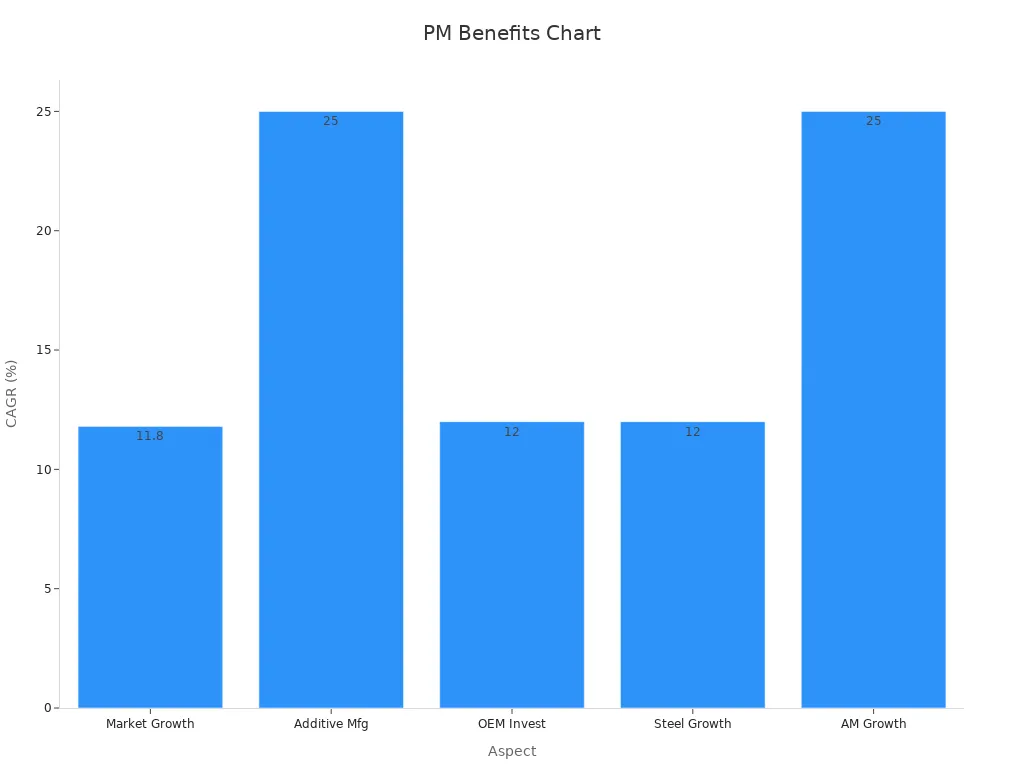
These advantages of powder metallurgy make it a smart, sustainable choice for manufacturers seeking innovation and reliability.
FAQ
What industries use powder metallurgy the most?
Automotive, aerospace, medical, and electronics industries use powder metallurgy extensively. These sectors value the process for its efficiency, design flexibility, and ability to produce high-performance components at scale.
How does powder metallurgy reduce material waste?
Powder metallurgy forms parts close to their final shape. This process minimizes scrap, as manufacturers use almost all the raw material. Companies benefit from lower waste disposal costs and improved sustainability.
Can powder metallurgy create strong parts?
Yes. Powder metallurgy produces parts with uniform microstructure and high density. Engineers can tailor material properties to meet demanding strength and durability requirements for critical applications.
Is powder metallurgy environmentally friendly?
Powder metallurgy supports sustainability. The process uses less energy, generates minimal waste, and often incorporates recycled powders. Many manufacturers choose it to lower their carbon footprint.
What are the limitations of powder metallurgy?
Powder metallurgy may not suit very large parts or those requiring extremely high density without advanced techniques. Some materials, such as certain alloys, can be challenging to process using this method.
How precise are powder metallurgy components?
Manufacturers achieve tight tolerances and high repeatability with powder metallurgy. Automated processes and precise tooling ensure consistent quality across large production runs.
Can powder metallurgy produce complex shapes?
Yes. Powder metallurgy excels at forming intricate geometries, thin walls, and internal features that traditional methods struggle to achieve. This capability enables innovative designs in many industries.
For more details or specific technical questions, consult a powder metallurgy specialist or industry standards documentation.