Magnesium alloy vs aluminum

Choosing the right material for specific applications can significantly impact performance and efficiency. Magnesium alloys have gained attention due to their lightweight properties and growing market, projected to reach USD 6.62 billion by 2027. In contrast, aluminum remains a staple in various industries, known for its versatility and excellent corrosion resistance. Understanding the distinct characteristics of each material aids in making informed decisions for applications ranging from automotive to aerospace.
Key Takeaways
- Magnesium alloys are lighter than aluminum alloys, offering a weight reduction of about 36%, which can enhance fuel efficiency in vehicles.
- Aluminum alloys generally provide higher strength and better corrosion resistance, making them suitable for structural applications in various industries.
- Magnesium alloys are easier to machine, requiring less cutting pressure, which can lower manufacturing costs.
- Corrosion resistance is a critical factor; magnesium alloys are more susceptible to corrosion, especially in marine environments, compared to aluminum alloys.
- Cost considerations are important; magnesium alloys are typically more expensive than aluminum alloys, which can influence material selection for projects.
- Magnesium alloys perform poorly at high temperatures, softening at around 200°F (95°C), while aluminum alloys can withstand higher temperatures without losing strength.
- Both materials have unique applications; magnesium alloys are preferred in aerospace for weight savings, while aluminum alloys are favored in automotive and construction for their strength and durability.
- Understanding the properties of each alloy helps manufacturers make informed decisions based on specific project requirements.
Properties Comparison

Mechanical Properties
When comparing the mechanical properties of magnesium alloys and aluminum alloys, several key factors emerge. Magnesium alloys typically exhibit lower yield and tensile strength than aluminum alloys. For instance, magnesium alloys such as AM60 and AZ91 have a yield strength of approximately 3,000 psi (20 MPa) and a tensile strength of around 12,000 psi (20 MPa). In contrast, aluminum alloys generally possess higher tensile strength and hardness, making them suitable for applications that prioritize mechanical strength.
| Property | Magnesium Alloys (e.g., AM60, AZ91) | Aluminum Alloys (not provided) |
|---|---|---|
| Yield Strength | ~3,000 psi (20 MPa) | N/A |
| Tensile Strength | ~12,000 psi (20 MPa) | N/A |
| Elongation | 6% | N/A |
Physical Properties
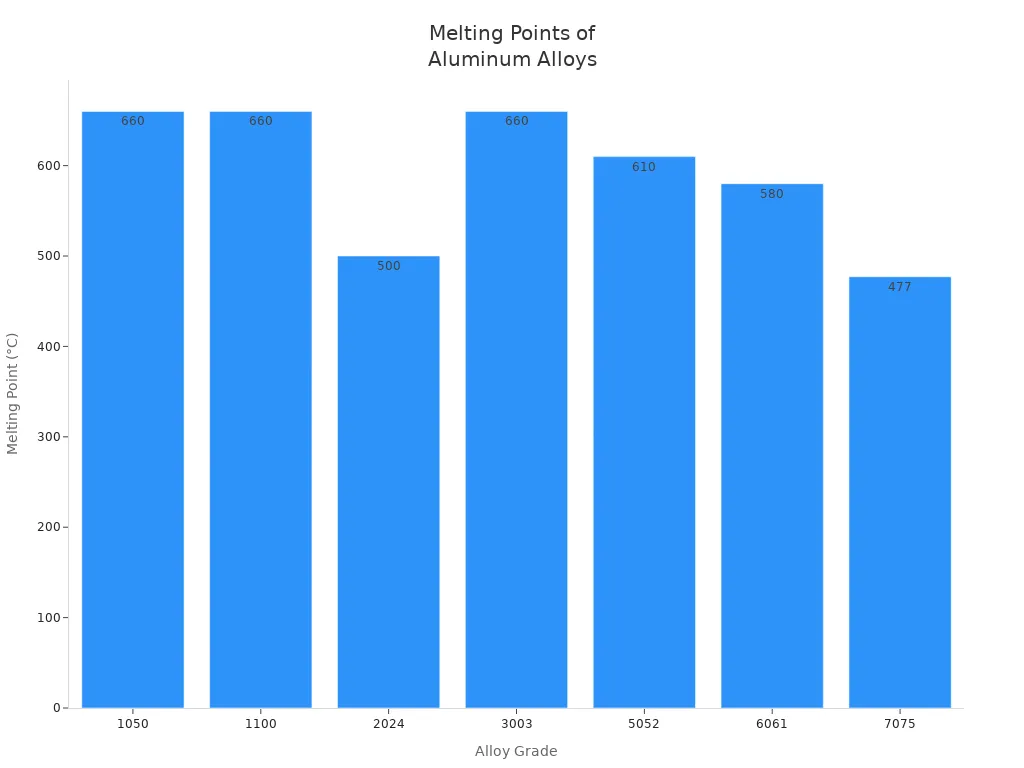
The physical properties of magnesium and aluminum alloys also differ significantly. Magnesium alloys have a lower melting point, typically ranging from 650°C to 700°C, compared to aluminum alloys, which can vary widely based on the specific grade. For example, the melting points of various aluminum alloy grades are as follows:
| Aluminum Alloy Grade | Melting Point (°C) | Coefficient of Thermal Expansion (/K) |
|---|---|---|
| 1050 | 660 | 23.1 × 10⁻⁶ |
| 1100 | 660 | 23.1 × 10⁻⁶ |
| 2024 | 500-635 | 23.1 × 10⁻⁶ |
| 3003 | 660 | 23.1 × 10⁻⁶ |
| 5052 | 610-650 | 23.1 × 10⁻⁶ |
| 6061 | 580-650 | 23.1 × 10⁻⁶ |
| 7075 | 477-635 | 23.1 × 10⁻⁶ |
Corrosion Resistance
Corrosion resistance is a critical factor when selecting materials for various applications. Magnesium alloys tend to be more susceptible to corrosion, especially in marine environments. Studies indicate that magnesium alloys can corrode at rates approximately two times higher than aluminum alloys in marine atmospheric conditions. In saltwater environments, the corrosion rates for magnesium alloys can reach around 4 × 10⁻⁴ ml·cm−2·h−1 in 0.1 M NaCl solutions and 8 × 10⁻⁴ ml·cm−2·h−1 in 0.6 M NaCl solutions. Conversely, aluminum alloys exhibit low corrosion rates in chloride solutions but can be prone to pitting attacks.
| Environment | Corrosion Rate Comparison |
|---|---|
| Marine atmospheric | ~2 times higher than rural/urban |
| Alloy Type | Corrosion Rate (mm/yr) |
|---|---|
| High-iron AZ91C | Poor performance |
| High-purity alloys (T5, T6 tempers) | < 0.25 |
To enhance the corrosion resistance of both magnesium and aluminum alloys, various protective coatings are commonly employed. These include:
- Chemical Conversion Coating: Superficial films of metal oxides, chromates, or phosphates that provide corrosion protection and good paint-base properties.
- Plating: Involves electroplating and electroless plating, where a metal salt is reduced to its metallic form and deposited on the surface.
- Surface Coating: Protective layers formed via thermal spraying, overlaying welding, and hot-dipping, which can include metal alloys, ceramics, and paints.
- Organic Coatings: Enhance corrosion resistance and decoration, involving processes like painting, powder coating, and lacquers.
These coatings significantly improve the longevity and performance of both magnesium and aluminum alloys in various environments.
Weight and Density
Weight and density play crucial roles in determining the suitability of materials for various applications. Magnesium alloys are significantly lighter than aluminum alloys, which can lead to substantial weight savings in practical applications.
The density values of these materials highlight this difference:
| Metal | Density (g/cm³) | Weight vs. Aluminum |
|---|---|---|
| Aluminum | 2.70 | – |
| Magnesium | 1.74 | 0.64x lighter |
From the table, it is evident that magnesium alloys possess a density of 1.74 g/cm³, making them approximately 36% lighter than aluminum alloys, which have a density of 2.70 g/cm³. This lower density translates into significant weight reductions in applications where every gram counts.
In the automotive industry, the weight reduction achieved by using magnesium alloys can be particularly advantageous. Consider the following points:
- Magnesium alloys can reduce component weight by about 25% compared to aluminum alloys.
- Despite magnesium's lower density, aluminum often compensates for its slightly higher weight with superior performance characteristics.
- Aluminum remains the preferred choice for structural components in the automotive sector due to its strength and reliability.
The lightweight nature of magnesium alloys makes them an attractive option for industries focused on enhancing fuel efficiency and performance. However, the choice between magnesium and aluminum often depends on the specific requirements of the application, including strength, cost, and environmental factors.
Advantages of Magnesium Alloy
Lightweight Nature
Magnesium alloys stand out for their lightweight nature, making them the lightest structural metals available. This characteristic allows for significant weight savings in various applications. The density of magnesium is only 1.74 g/cm³, compared to aluminum's density of approximately 2.7 g/cm³. This difference translates into a weight reduction of about 36% per unit volume when using magnesium alloys instead of aluminum.
- Key Benefits of Lightweight Nature:
- Magnesium alloys enable robust yet lightweight structures.
- Their low density contributes to improved fuel efficiency in vehicles and aircraft.
High Strength-to-Weight Ratio
The high strength-to-weight ratio of magnesium alloys provides substantial advantages in industries such as aerospace and automotive. These alloys can achieve tensile strengths comparable to other structural metals while maintaining a much lower weight.
- Advantages of High Strength-to-Weight Ratio:
- Magnesium alloys weigh 36% less than aluminum and 78% less than iron.
- Approximately 86% of a passenger car's total lifetime energy consumption relates to moving its own weight and occupants. Thus, using magnesium alloys can lead to significant energy savings.
Magnesium alloys possess a unique combination of light weight, high specific strength, and excellent castability. This combination makes them particularly valuable for applications where weight reduction is critical without compromising structural integrity.
Good Machinability
Magnesium alloys are known for their excellent machinability. They are easier to machine than many other metals, requiring less cutting pressure. This ease of machining simplifies the manufacturing process and reduces production costs.
| Property | Magnesium Alloys | Aluminum Alloys |
|---|---|---|
| Machinability | Easier to machine, less cutting pressure | Requires more effort to machine |
| Weight | About one-third lighter | Heavier than magnesium alloys |
| Applications | Preferred in automotive and aerospace | Common in various industries |
- Benefits of Good Machinability:
- Magnesium alloys can be cut, drilled, and shaped more easily than many other metals.
- Their lightweight nature enhances performance and fuel efficiency in applications.
Excellent Damping Capacity
Magnesium alloys exhibit excellent damping capacity, making them suitable for applications where vibration reduction is crucial. Damping capacity refers to a material's ability to dissipate energy from vibrations, which is essential in industries such as aerospace and automotive.
- Specific Damping Capacity (SDC) values categorize alloys:
- Low-damping metals: SDC > 0.1 but < 1
- Medium-damping metals: SDC > 1 but < 10
- High-damping metals: SDC > 10 but < 100
Most magnesium alloys, particularly Mg-X alloys, fall into the high-damping category, with SDC values typically exceeding 10. This high damping capacity allows magnesium alloys to effectively absorb vibrations, reducing noise and enhancing the comfort of vehicles and aircraft.
In contrast, aluminum alloys generally exhibit lower damping capacities. However, aluminum-magnesium alloys stand out due to their superior damping values. These alloys benefit from low stacking fault energy, which contributes to their enhanced vibration-dissipating properties. Rolled aluminum-magnesium alloys not only demonstrate high damping capacity but also maintain good mechanical properties, making them versatile for various engineering applications.
The balance between strength and damping capacity is vital for optimal performance in magnesium alloys. Engineers often prioritize this balance when designing components for high-performance applications. The high damping capacity of magnesium alloys is particularly beneficial in reducing vibrations in critical components, such as engine mounts and chassis parts.
- Key Benefits of High Damping Capacity:
- Enhanced vibration reduction leads to improved comfort and safety.
- Lower noise levels contribute to a more pleasant user experience in vehicles and aircraft.
- The ability to absorb vibrations can extend the lifespan of components by reducing fatigue.
Disadvantages of Magnesium Alloy
Cost Considerations
Cost remains a significant factor when evaluating magnesium alloys. While magnesium alloys generally cost between $3 to $6 per kilogram, aluminum alloys range from $2 to $4 per kilogram. This price difference can influence material selection, especially for large-scale projects. The higher cost of magnesium alloys stems from their complex extraction and processing methods, which necessitate special precautions.
| Metal | Cost per Kilogram (USD) |
|---|---|
| Aluminum | $2.50 |
| Magnesium | $2.00 |
Manufacturers must weigh the benefits of using magnesium alloys against their higher costs. In applications where weight savings are critical, the investment may be justified. However, for projects with tighter budgets, aluminum may present a more economical choice.
Limited Availability
Limited availability of magnesium alloys poses challenges for industries reliant on a consistent supply. Over 85% of global magnesium production occurs in China, creating a monopoly that heightens supply chain risks. This concentration can lead to significant disruptions. For instance, the 2021 magnesium shortage, caused by China's production cuts due to energy constraints, resulted in price increases exceeding 400%. Such fluctuations can severely impact the automotive and aerospace sectors, where timely access to materials is crucial.
- Key Points:
- The concentration of magnesium production in China creates supply chain vulnerabilities.
- Price volatility can disrupt manufacturing schedules and increase costs.
Susceptibility to Corrosion
Corrosion susceptibility is another drawback of magnesium alloys. These materials are particularly vulnerable to localized corrosion, especially in the presence of certain ions. Factors influencing corrosion include:
- Inorganic ions, proteins, and cells in physiological solutions can accelerate corrosion.
- Different ions can either promote or inhibit corrosion; for example, HPO4²⁻ can form a protective layer when combined with Ca²⁺.
- Proteins may increase the corrosion rate of magnesium alloys, particularly in the presence of serum proteins.
In contrast, aluminum alloys experience different corrosion mechanisms. The presence of Mg-rich intermetallic phases in aluminum alloys can lead to localized pitting corrosion. Understanding these differences is crucial for engineers when selecting materials for specific applications.
- Common Corrosion Mechanisms:
- Magnesium alloys are more susceptible to localized corrosion due to their anodic behavior.
- Aluminum alloys face pitting corrosion, influenced by the presence of alloying elements like Mg, Cr, and Mn.
The susceptibility of magnesium alloys to corrosion necessitates careful consideration of protective measures, such as coatings, to enhance their durability in challenging environments.
Lower Temperature Resistance
When evaluating the lower temperature resistance of magnesium alloys versus aluminum alloys, significant differences emerge. Magnesium alloys exhibit limitations in their performance at elevated temperatures. They begin to soften and lose strength at temperatures as low as 200°F (95°C). This characteristic restricts their use in applications where exposure to heat is a concern. However, certain specialized compositions can maintain strength up to 400°F (205°C) or higher, but these are exceptions rather than the norm.
In contrast, aluminum alloys demonstrate superior performance in high-temperature environments. They can withstand higher operating temperatures without significant degradation. The maximum operating temperature for magnesium-aluminum alloys is limited to 120°C under long-term loads. This limitation poses challenges for industries that require materials to perform reliably in demanding thermal conditions.
| Alloy Type | Maximum Operating Temperature (°F) | Maximum Operating Temperature (°C) |
|---|---|---|
| Magnesium Alloys | 685°F to 1200°F | 360°C to 650°C |
| Aluminum Alloys | Higher than magnesium alloys | Higher than magnesium alloys |
The table above illustrates the stark contrast in temperature resistance between the two materials. While magnesium alloys can operate effectively within a certain range, aluminum alloys consistently outperform them in high-temperature applications. This distinction is crucial for industries such as aerospace and automotive, where components often encounter extreme thermal conditions.
Engineers must consider these temperature limitations when selecting materials for specific applications. For instance, in the aerospace sector, where components may experience rapid temperature fluctuations, aluminum alloys often become the preferred choice. Their ability to maintain structural integrity at elevated temperatures ensures safety and reliability.
Advantages of Aluminum
Abundant and Cost-Effective
Aluminum stands out as one of the most abundant metals in the Earth's crust. Its widespread availability contributes to its cost-effectiveness in various applications. The production processes for aluminum have become more efficient over the years, further reducing costs. This affordability makes aluminum a preferred choice for manufacturers across multiple industries.
- Key Points:
- Aluminum is approximately one-third the weight of steel, making it ideal for applications where weight reduction is crucial.
- The cost of aluminum alloys typically ranges from $2 to $4 per kilogram, making them accessible for large-scale projects.
Excellent Corrosion Resistance
Aluminum alloys exhibit remarkable corrosion resistance, particularly in marine environments. Unlike magnesium alloys, which are prone to pitting and intergranular corrosion, aluminum naturally forms a protective oxide layer. This layer significantly enhances its ability to resist saltwater corrosion.
- Advantages of Aluminum's Corrosion Resistance:
- Aluminum is favored in marine applications due to its lightweight, strength, and excellent corrosion resistance.
- The 5000-series aluminum alloys demonstrate superior performance in marine environments compared to magnesium alloys.
- The protective oxide layer formed on aluminum alloys helps prevent corrosion, ensuring longevity in harsh conditions.
Versatile Applications
The versatility of aluminum alloys makes them indispensable in modern engineering and construction. Their excellent strength-to-weight ratio is critical in various sectors, including aerospace, automotive, and structural applications.
- Common Applications of Aluminum Alloys:
- Aircraft construction benefits from aluminum's low density and high strength-to-weight ratio, enhancing fuel efficiency.
- High-strength aluminum alloys are increasingly popular in building construction, providing strength, safety, and corrosion resistance.
- Aluminum alloys are favored in modern skyscrapers for their strength, safety, and natural insulation properties.
Good Thermal Conductivity
Aluminum alloys exhibit excellent thermal conductivity, making them ideal for applications requiring efficient heat dissipation. This property is particularly beneficial in the electronics industry, where managing heat is crucial for device performance and longevity.
The thermal conductivity of aluminum alloys allows for rapid heat transfer to the surface. This characteristic is essential for maintaining optimal operating temperatures in high-power electronic devices. Compared to traditional materials, aluminum alloys outperform steel and plastic significantly. In fact, aluminum alloys possess thermal conductivity that is three times higher than that of steel and substantially greater than that of plastic.
The advantages of aluminum alloys in thermal conductivity can be summarized as follows:
- Quick Heat Transfer: Aluminum alloys facilitate swift heat transfer, preventing overheating in electronic components.
- Enhanced Performance: Efficient heat dissipation contributes to the overall performance of devices, ensuring they operate within safe temperature ranges.
- Durability: By managing heat effectively, aluminum alloys help extend the lifespan of electronic devices, reducing the risk of thermal damage.
These properties make aluminum alloys particularly suitable for high-power electronic devices, such as processors and graphics cards. These components generate considerable heat during operation, and effective thermal management is vital to their functionality.
In addition to their thermal conductivity, aluminum alloys also offer other benefits that enhance their suitability for electronic applications. Their lightweight nature contributes to reduced overall device weight, which is crucial for portable electronics. Furthermore, aluminum alloys are easily machinable, allowing manufacturers to create intricate designs that optimize heat dissipation.
The combination of high thermal conductivity and lightweight characteristics positions aluminum alloys as a preferred material in the electronics sector. Engineers and designers increasingly choose aluminum alloys for applications ranging from consumer electronics to advanced computing systems.
Disadvantages of Aluminum
Heavier than Magnesium Alloy
One of the primary disadvantages of aluminum alloys is their weight. Compared to magnesium alloys, aluminum alloys are significantly heavier. The density of aluminum is approximately 2.7 g/cm³, while magnesium alloys have a density of only 1.74 g/cm³. This difference results in aluminum components being about 35% heavier than their magnesium counterparts.
| Material | Density (g/cm³) | Weight Difference |
|---|---|---|
| Magnesium Alloy | 1.74 | 35% lighter than aluminum |
| Aluminum Alloy | 2.7 | - |
This increased weight can be a critical factor in applications where reducing mass is essential, such as in the automotive and aerospace industries. Heavier components can lead to decreased fuel efficiency and increased operational costs.
Lower Strength-to-Weight Ratio
Aluminum alloys generally exhibit a lower strength-to-weight ratio compared to magnesium alloys. While common aluminum alloys, such as 7075Al and 6061Al, can achieve strengths of up to 600 MPa, they still fall short in terms of efficiency when weight is considered.
- Common aluminum alloys:
- Achieve strengths up to 600 MPa.
- Have a lower strength-to-weight ratio than magnesium alloys due to differences in density and material structure.
- Despite this, they exhibit superior tensile strength compared to magnesium alloys.
This lower strength-to-weight ratio can limit the use of aluminum alloys in applications where both strength and weight are critical factors. Engineers often seek alternatives that provide better performance without compromising structural integrity.
Susceptibility to Fatigue
Another disadvantage of aluminum alloys is their susceptibility to fatigue. Under cyclic loading, aluminum alloys can experience fatigue failure more readily than magnesium alloys.
- The fatigue resistance of the IMV-2 alloy shows no significant change across loading frequencies of 500–10,000 Hz.
- For the AMg6N alloy, increasing the loading frequency to 10 kHz results in a monotonically increasing fatigue limit for smooth specimens.
- Variability in fatigue life values is greater for welded specimens and those with stress concentrators compared to smooth specimens.
These factors highlight the importance of considering fatigue resistance when selecting materials for applications subjected to repeated stress. In high-performance environments, the fatigue characteristics of aluminum alloys may necessitate additional design considerations to ensure reliability and safety.
Limited High-Temperature Performance
Magnesium alloys exhibit limitations in high-temperature performance, which can restrict their applications in demanding environments. As temperatures rise, the mechanical properties of magnesium alloys tend to decrease. This decline in performance can pose challenges in industries such as aerospace, where components often encounter extreme thermal conditions.
The softening temperature for magnesium alloys begins at approximately 200°F (95°C). At this point, the material starts to lose its structural integrity. Standard magnesium alloys remain stable up to about 300°F (150°C). However, specialized alloys can maintain their strength at temperatures reaching 400°F (205°C) or higher. This characteristic makes them suitable for specific applications but limits their versatility in high-temperature environments.
In contrast, aluminum alloys demonstrate superior performance at elevated temperatures. They can withstand higher operating temperatures without significant degradation. The melting point of aluminum alloys varies, but they generally perform well in conditions that would compromise magnesium alloys.
The following table summarizes the performance of magnesium alloys at high temperatures:
| Property | Magnesium Alloys Performance at High Temperatures |
|---|---|
| Mechanical Properties | Decrease as temperature rises |
| Elongation | Increases with temperature until near the melting point |
| Melting Point | Ranges from 685°F to 1200°F (360°C to 650°C) |
| Softening Temperature | Begins to soften at 200°F (95°C) |
| Stability | Stable up to 300°F (150°C) for standard alloys |
| Specialized Alloys | Maintain strength up to 400°F (205°C) or higher |
The differences in high-temperature performance between magnesium and aluminum alloys are crucial for engineers and designers. In aerospace applications, where components may experience rapid temperature fluctuations, aluminum alloys often become the preferred choice. Their ability to maintain structural integrity at elevated temperatures ensures safety and reliability.
Furthermore, the lower temperature resistance of magnesium alloys can lead to increased maintenance costs and potential failures in critical applications. Engineers must carefully consider these limitations when selecting materials for high-performance environments. In summary, while magnesium alloys offer unique advantages, their limited high-temperature performance can restrict their use in applications that demand exceptional thermal stability.
Typical Applications

Aerospace Industry
In the aerospace sector, both magnesium and aluminum alloys play crucial roles. Their lightweight properties and strength make them ideal for various components. Magnesium alloys, while less common than aluminum, find applications in specific areas due to their advantageous characteristics.
| Alloy Type | Main Alloying Elements | Common Uses in Aerospace |
|---|---|---|
| 2024 Aluminum | Copper | Structural aircraft parts |
| 6061 Aluminum | Silicon and Magnesium | Aircraft frames, corrosion-resistant parts |
| 7075-T6 Aluminum | Zinc | Highly stressed structural parts |
Aluminum alloys dominate the market, particularly in structural components. Their high strength-to-weight ratio and excellent corrosion resistance make them suitable for aircraft frames and other critical parts. Magnesium alloys, on the other hand, are often used in applications where weight savings are paramount, such as in certain engine components and housings.
Automotive Industry
The automotive industry increasingly utilizes both magnesium and aluminum alloys to enhance vehicle performance. Magnesium alloys contribute to significant weight reductions, which improve fuel efficiency and handling. Automakers often incorporate magnesium in components like transmission cases and engine blocks.
- Key Benefits of Using Magnesium Alloys in Automotive:
- Weight reduction of up to 25% compared to aluminum components.
- Enhanced fuel efficiency due to lower overall vehicle weight.
- Improved handling and performance characteristics.
Aluminum alloys also play a vital role in automotive applications. They provide excellent strength and durability, making them suitable for structural components, body panels, and wheels. The combination of aluminum's strength and magnesium's lightweight properties allows manufacturers to optimize vehicle design for performance and efficiency.
Consumer Electronics
In the consumer electronics market, magnesium alloys are gaining traction due to their lightweight and durable properties. These alloys have a lower density (1.8 g/cm³) compared to aluminum alloys (2.7 g/cm³), making them ideal for portable devices.
- Applications of Magnesium Alloys in Consumer Electronics:
- Increasing use in smartphones, tablets, and laptop casings.
- Companies like Lenovo and LG Electronics have adopted magnesium alloys in their laptop designs, achieving significant weight reductions.
- The cold stamping of magnesium alloy sheets allows for thinner designs, enhancing usability in modern devices.
Magnesium alloys also enhance heat removal in electronics, which is crucial for performance. While aluminum alloys are traditionally used for heat sinks, magnesium's superior thermal properties make it a strong contender in this space. The consumer electronics market continues to evolve, with magnesium alloys becoming a preferred choice for manufacturers seeking lightweight and efficient materials.
Construction and Infrastructure
In the construction and infrastructure sectors, both magnesium and aluminum alloys play vital roles. Their unique properties make them suitable for various applications, from structural components to architectural elements.
Aluminum alloys dominate this field due to their excellent mechanical properties and corrosion resistance. They typically exhibit tensile strengths ranging from 200 to 400 MPa, depending on the specific alloy. Yield strengths for aluminum alloys can vary between 100 and 310 MPa. This strength allows aluminum to withstand significant loads, making it ideal for applications such as engine blocks and aerospace components.
In contrast, magnesium alloys offer tensile strengths between 180 and 270 MPa and yield strengths of 130 to 160 MPa. While these values are lower than those of aluminum, magnesium alloys excel in weight-sensitive applications. Their lightweight nature makes them suitable for chassis components in vehicles and lightweight structures in buildings.
| Property | Aluminum Alloys | Magnesium Alloys |
|---|---|---|
| Tensile Strength | 200–400 MPa (varies by alloy) | 180–270 MPa (varies by alloy) |
| Yield Strength | 100–310 MPa (varies by alloy) | 130–160 MPa (varies by alloy) |
| Ductility | 5–10% | 3–8% |
| Corrosion Resistance | Excellent due to natural oxide layer | Prone to corrosion, requires coatings |
| Applications | Engine blocks, aerospace components | Weight-sensitive applications like chassis |
The corrosion resistance of aluminum alloys is another significant advantage. They naturally form a protective oxide layer, which enhances their durability in harsh environments. This property makes aluminum a preferred choice for outdoor structures and marine applications. Conversely, magnesium alloys are more susceptible to corrosion. They often require protective coatings to ensure longevity in construction applications.
Notable examples of these materials in use include aluminum alloys in Volkswagen engine blocks, which handle thermal and mechanical stresses effectively. Meanwhile, magnesium alloys find applications in products like Apple's MacBook chassis, where lightweight and stiff structures are essential.
Recent research highlights the potential of magnesium alloys in construction. A 2022 study on the Mg-11Y-1Al alloy achieved a yield strength of 350 MPa, showcasing magnesium's capabilities in demanding applications. As industries continue to innovate, both magnesium and aluminum alloys will remain integral to advancing construction and infrastructure projects, balancing strength, weight, and durability.
Comparison Table
Summary of Key Differences
| Feature | Magnesium Alloys | Aluminum Alloys |
|---|---|---|
| Density | 1.74 g/cm³ (36% lighter than aluminum) | 2.70 g/cm³ |
| Strength-to-Weight Ratio | Higher than aluminum | Lower than magnesium |
| Corrosion Resistance | More susceptible, especially in marine environments | Excellent, forms protective oxide layer |
| Cost | Generally higher ($3 to $6 per kg) | More cost-effective ($2 to $4 per kg) |
| Temperature Resistance | Limited, softens at 200°F (95°C) | Superior, withstands higher temperatures |
Application Suitability
-
Aerospace:
- Magnesium Alloys: Used in specific components where weight savings are critical.
- Aluminum Alloys: Preferred for structural parts due to their strength and corrosion resistance.
-
Automotive:
- Magnesium Alloys: Ideal for lightweight components, improving fuel efficiency.
- Aluminum Alloys: Commonly used for structural components and body panels.
-
Consumer Electronics:
- Magnesium Alloys: Increasingly used in laptop casings and portable devices due to their lightweight nature.
- Aluminum Alloys: Widely used for heat sinks and structural parts.
-
Construction:
- Magnesium Alloys: Suitable for lightweight structures but require protective coatings.
- Aluminum Alloys: Favored for their durability and corrosion resistance in outdoor applications.
Cost Analysis
-
Magnesium Alloys:
- Cost ranges from $3 to $6 per kilogram. Higher costs stem from complex extraction and processing methods. Industries must consider this when budgeting for projects.
-
Aluminum Alloys:
- Cost ranges from $2 to $4 per kilogram. The abundance and established production processes contribute to lower prices. This affordability makes aluminum a popular choice for large-scale applications.
In summary, magnesium alloys and aluminum alloys each offer unique advantages and disadvantages. Magnesium alloys excel in lightweight applications and provide a high strength-to-weight ratio. However, they face challenges with corrosion resistance and cost. Aluminum alloys, on the other hand, are abundant, cost-effective, and exhibit excellent corrosion resistance, making them suitable for a wide range of applications.
Recommendations:
- Choose magnesium alloys for weight-sensitive applications, such as aerospace components.
- Opt for aluminum alloys when corrosion resistance and cost-effectiveness are priorities, especially in automotive and construction sectors.
By understanding these differences, manufacturers can make informed decisions that align with their specific project requirements.
FAQ
What are the main differences between magnesium alloys and aluminum alloys?
Magnesium alloys are lighter and have a higher strength-to-weight ratio than aluminum alloys. However, aluminum alloys offer better corrosion resistance and are generally more cost-effective.
Are magnesium alloys more expensive than aluminum alloys?
Yes, magnesium alloys typically cost between $3 to $6 per kilogram, while aluminum alloys range from $2 to $4 per kilogram. This price difference can influence material selection for projects.
In which industries are magnesium alloys commonly used?
Magnesium alloys find applications in the aerospace, automotive, and consumer electronics industries. Their lightweight nature makes them ideal for components where weight reduction is critical.
How do magnesium alloys perform in high-temperature environments?
Magnesium alloys have limited high-temperature performance. They begin to soften at around 200°F (95°C), while aluminum alloys can withstand higher temperatures without significant degradation.
What are the corrosion resistance properties of aluminum alloys?
Aluminum alloys exhibit excellent corrosion resistance due to their ability to form a protective oxide layer. This property makes them suitable for marine and outdoor applications.
Can magnesium alloys be used in marine environments?
While magnesium alloys can be used in marine environments, they are more susceptible to corrosion than aluminum alloys. Protective coatings are often necessary to enhance their durability in such conditions.
How does the weight of magnesium alloys compare to that of aluminum alloys?
Magnesium alloys are approximately 36% lighter than aluminum alloys. This significant weight reduction can lead to improved fuel efficiency and performance in various applications.
What are the machining characteristics of magnesium alloys?
Magnesium alloys are known for their excellent machinability. They require less cutting pressure compared to aluminum alloys, making them easier to shape and process in manufacturing.