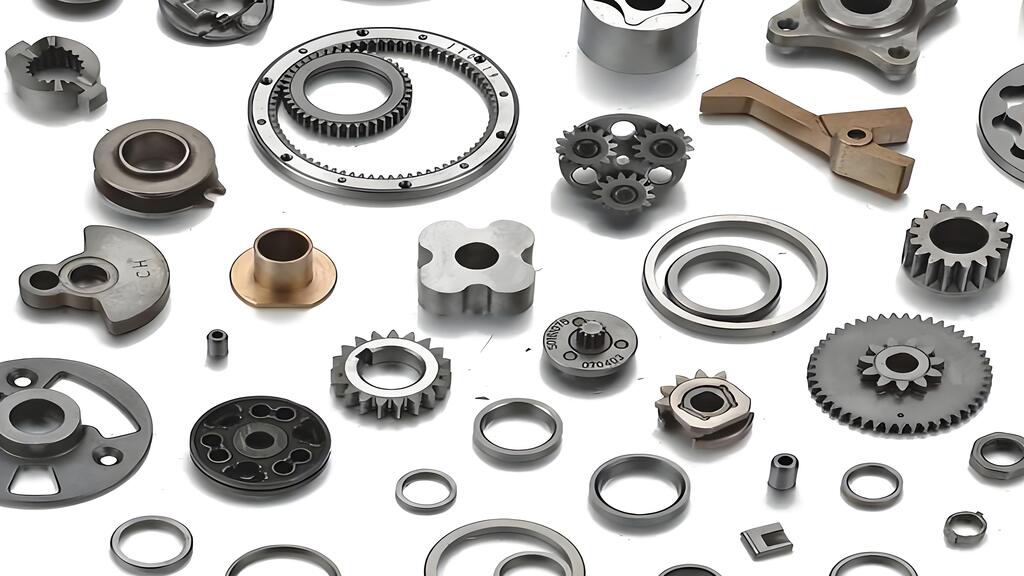


How Powder Metallurgy Enhances Oil Pump Design: New Performance Standards

Oil pump energy losses create major efficiency problems in automotive systems. These losses account for 10% of total engine losses and 20-30% of losses in automatic transmissions. Leading manufacturers like Melling, Motorcraft, and AC Delco/GM have responded by switching from traditional steel gears to powder metallurgy components in their oil pump designs. Powder Metallurgy provides remarkable benefits, particularly when creating internal and external rotors that offer better structural integrity.
The develoPment of gear oil pump design has produced impressive outcomes. Modern powder metallurgy materials now show wear resistance that is 2.6 times greater than standard components. These advances have led to internal gear rotors that deliver 12% higher theoretical displacement compared to conventional rotors of similar dimensions. Precise material compositions have completely reshaped oil pump design characteristics. These compositions include carefully balanced ratios of iron powder, nickel, copper, molybdenum, and various auxiliary agents. This piece gets into how powder metallurgy technology sets new performance benchmarks in oil pump design. It analyzes the material science, manufacturing processes, and mechanical properties that achieve HRC58 hardness and 1155MPa tensile strength.
Material Composition for Powder Metallurgy Oil Pump Rotors

The exact material mix in powder metallurgy components is the foundation of better oil pump performance. Powder metallurgy oil pump rotors require fine-tuned alloy formulas that balance strength, wear resistance, and lubricity—key properties that enable them to function effectively in demanding automotive environments.
Iron-Nickel-Copper Base Alloy Ratios
Iron-nickel-copper alloy base makes up the core material mix for powder metallurgy oil pump rotors. Patent documents show high-performance powder metallurgy rotors contain 75-78 parts iron powder as the main component, plus 7.5-7.8 parts nickel and 3.1-3.4 parts copper. These exact amounts create a matrix that gives the best structural strength while keeping the hardness needed for oil pumps.
Iron powder gives basic strength and structure. Nickel makes it resist corrosion better and adds to the part's toughness. Copper helps with the sintering process and makes the final product conduct heat better. These three elements together create a resilient base material that meets oil pump gear design needs.
The base alloy works with these additional elements:
| Element | Weight Portion | Primary Function |
|---|---|---|
| Chromium | 8.3-8.7 parts | Hardness enhancement |
| Titanium | 3.2-3.4 parts | Strength improvement |
| Bismuth | 1.3-1.4 parts | Machinability |
| Antimony | 0.4-0.6 part | Dimensional stability |
Role of Molybdenum and Graphite in Wear Resistance
Molybdenum and graphite play key roles in making oil pump rotors resist wear better. Adding 9.2-9.6 parts molybdenum by weight gives exceptional hardness and keeps the structure stable under load. This addition helps oil pump parts last longer against fatigue.
Graphite powder at 0.5-0.8 parts by weight works as a solid lubricant inside the metal matrix. Graphite's structure lubricates well up to about 1450°F (788°C) and can prevent seizing up to 2400°F (1316°C). But graphite needs moisture vapor to lubricate and won't work in a vacuum.
Molybdenum disulfide (MoS2) compounds work well in powder metallurgy because of their hexagonal crystal structure. Unlike graphite, MoS2 works in high-vacuum conditions since it doesn't need a vapor between the lattice plates. MoS2 stops working at 400°C (752°F) mainly due to oxidation, though it can lubricate up to 1300°F (704°C) in dry, oxygen-free environments.
These materials help create what manufacturers call "higher load-carrying capacity" and "high wear resistance" in powder metallurgy parts. This makes them vital for engine oil pump designs.
Effect of Manganese Sulfide and Paraffin on Lubricity
Manganese sulfide and paraffin make powder metallurgy oil pump parts much better at reducing friction and wear between moving surfaces. These compounds work through chemical and physical means at points where surfaces slide against each other.
Adding 0.3-0.5 parts manganese sulfide by weight creates a solid lubricant that cuts friction between metal surfaces. Less friction means lower peak stress where parts slide, which reduces wear from plasticity and delays abrasive wear.
Adding 2.5-2.8 parts paraffin creates boundary lubrication films on metal surfaces. Research shows these boundary films can cut the tensile stress near rough spots in sliding contact. To name just one example, linear alkyl compounds like paraffin can halve the friction coefficient and cut wear rates on sliding steel by up to 100 times.
Modern powder metallurgy formulas also use extra agents that help powder spread better during manufacturing. These additives spread alloy powder evenly, which ensures the finished products have the same structure throughout. This consistency helps oil pump parts keep working the same way throughout their service life.
Auxiliary Agent Formulation and Its Dispersion Role
Auxiliary agents are crucial in powder metallurgy for oil pump manufacturing. These agents work as essential components that help create uniform powder dispersion and structural integrity. They shape the microstructure during sintering and affect how oil pump components perform.
Kaolin and Alum as Structural Binders
Kaolin and alum serve as the main structural binders in auxiliary agent creation for powder metallurgy oil pump components. The perfect mix comes from combining iron powder with 2-3 parts kaolin and 1-2 parts alum by weight. This combination creates a strong framework that keeps everything stable throughout manufacturing.
Kaolin, which is a clay mineral, changes remarkably when heated between 600°C and 800°C. It turns into metakaolinite and becomes highly reactive. This happens because more than 50% of its disordered structure contains five-coordinated aluminum. The metakaolinite phase has two vital roles in oil pump design:
- It binds everything together and maintains dimensional stability during pressing and sintering
- It helps spread particles evenly throughout the powder mixture
Alum works together with kaolin to form mullite-corundum ceramic structures that make everything stronger. The heating process makes the aluminum in these binding agents oxidize completely. It reacts with metakaolinite and quartz before mullite forms. This chemical process builds strong ceramic bridges between metal particles. The result? Final oil pump components with impressive hardness values of HRC58.
Aluminate Coupling Agent DL-411 for Powder Uniformity
DL-411, an aluminate coupling agent, marks a breakthrough in powder metallurgy for oil pumps. Adding 1-2 parts by weight of this agent helps different powder ingredients mix better together.
DL-411 works by creating chemical bonds with particle surfaces, especially with the iron powder matrix. Research shows that it doesn't just stick to surfaces - it forms actual chemical bonds. The team adds this coupling agent after grinding the particles down to 200-300 mesh. This timing ensures the best surface interaction.
DL-411's biggest impact on oil pump design shows in how evenly it spreads alloy powders throughout the mixture. This even spread ensures the finished products have a consistent structure from all angles. The result? Oil pump components that offer:
- Longer fatigue life
- Better dimensional accuracy
- Better wear resistance during operation
Nano Carbon and Castor Oil Acid for Enhanced Sintering
Nano-sized carbon particles and castor oil acid make sintering better and improve performance in modern powder metallurgy for oil pump components. The recipe calls for 1-2 parts each of nano carbon and castor oil acid by weight. These materials change how sintering works and improve tribological properties.
Carbon nanomaterials help electrons move during sintering, which creates stronger bonds between particles. These carbon-based nanomaterials also make bio-lubricants work better in oil pump systems. They're especially good at boundary lubrication and creating tribofilms that control friction. Adding nano carbon leads to:
- Less friction between metal parts
- Better heat conduction in the sintered structure
- More resistance to scratches and wear
Castor oil acid makes the powder mixture better at handling oils and repelling water. This organic component helps the organic and inorganic parts mix better, creating more uniform structures after sintering. The preparation needs heating to 60-70°C and stirring at 1200-1500 revolutions per minute for 1-2 hours to mix everything properly.
These auxiliary agents, when mixed and used correctly, create oil pump components that last longer and work better throughout their service life.
Powder Preparation and Ball Milling Parameters

Powder processing plays a vital role in creating high-performance oil pump components through powder metallurgy. Metal powders need careful preparation with standard granularity, optimized ball milling, and proper drying techniques. These factors directly shape the structural integrity and how well engine oil pumps work.
250-400 Mesh Powder Granularity Standards
Particle size distribution in powder metallurgy oil pump components must meet strict mesh standards. This ensures the powder flows correctly and sinters well. Powders between 250-400 mesh (63-38 microns) work best for oil pump applications. These fine powders help create complex geometrical features needed in gear oil pump design without losing structural density.
Industry standards show that 100 mesh powder (around 150 microns) is the largest acceptable particle size for most oil pump parts. Research shows that finer powders in the 250-400 mesh range create more even microstructures with better mechanical properties. Mesh fineness directly relates to tensile strength. Components made from 400 mesh powder typically show strength values that exceed 1300 MPa after sintering.
Here's how standard mesh sizes relate to particle dimensions:
| Mesh Number | Particle Size (microns) | Application in Oil Pump Components |
|---|---|---|
| 100 | 150 | Base material for large components |
| 200 | 74 | General structural elements |
| 250 | 63 | Precision gears and rotors |
| 325 | 44 | High-load bearing surfaces |
| 400 | 38 | Critical wear interfaces |
Ball Milling Duration and Water Content Optimization
Ball milling duration significantly shapes powder characteristics and oil pump design features. Data shows that milling time from 1 to 11 hours gradually reduces particle size and improves distribution uniformity. Benefits drop sharply after this point. Longer milling creates clumping issues, reduces powder flow, and risks contamination from grinding media.
Best results come from a ball-to-powder ratio of 3:1, using high-hardness grinding media like Si₃N₄ balls (5mm diameter). Room temperature milling works best for most alloy systems used in engine oil pump design.
Water content makes a big difference in wet milling processes. Each alloy composition needs different water percentages. Proper moisture levels (usually 15-25% by volume) help particles spread evenly and prevent too much oxidation. Water content needs careful monitoring during later processing steps to avoid structural defects in the final oil pump parts.
Spray Drying and Pre-compaction Techniques
Spray drying changes the ball-milled slurry into pa powder that flows freely and compacts well. Specialized nozzles break the liquid suspension into droplets ranging from 10 to 500 μm. Most oil pump applications use the 100-200 μm range. Droplet size control shapes particle form and how the powder behaves later.
Key spray drying settings for oil pump powder include:
- Inlet air temperature: Usually 100°C or higher
- Atomization pressure: Adjusted for target particle size spread
- Feed rate: Managed to dry completely without heat damage
Pre-compaction makes the powder denser and easier to flow before final pressing. This middle step packs particles more tightly and reduces internal gaps. These factors help achieve the HRC58 hardness modern gear oil pumps need. Roll compaction works particularly well to make density even across the powder batch. This creates consistent thickness sheets or ribbons that can be milled into free-flowing granules.
Careful control of powder preparation creates the exact material properties needed for durable, precise, and efficient oil pump components.
Sintering and Cooling Process for Structural Integrity

The sintering phase marks a vital point in powder metallurgy manufacturing. This is the stage where oil pump components gain their permanent structural integrity. The thermal processing stage uses specific temperature profiles and atmospheric conditions to turn loose powder into strong mechanical parts.
Two-Stage Sintering: 850°C and 1150°C Profiles
Oil pump components benefit from two-stage sintering. This process allows full densification and controls grain growth. The compacted powder heats up to 850°C first. Then comes a second heating phase at 1150°C. The original lower temperature kicks off diffusion without too much grain growth. The higher temperature then finishes the densification.
Oil pump gear design needs a density above 75% at the time of the first sintering stage. This density makes pores unstable and small enough to shrink. The second stage can then complete the densification. The whole process boosts fatigue resistance by creating an even microstructure. This is a vital factor because engine oil pumps face constant cyclic loading.
Nitrogen Atmosphere Control for Oxidation Prevention
The sintering atmosphere will affect mechanical properties, looks, and production costs of oil pump parts. Nitrogen works best as a protective atmosphere because it:
- Stops metal particles from oxidizing
- Removes lubricants and binders from the compact
- Gets rid of oxide layers on powder surfaces
- Keeps carbon content in check
Nitrogen creates an environment that keeps the powder pure throughout sintering. This protection matters most when sintering stainless steel and high-speed steels for premium gear oil pumps. Parts that need better corrosion protection can use hydrogen with nitrogen. Hydrogen reduces oxides quickly because it moves fast through metals.
Controlled Cooling Rates and Soak Time Effects
Cooling rates shape the development of microstructure and mechanical properties in sintered oil pump parts. Parts cool slowly to get better microstructure, toughness, and strength. Research shows that powder injection molded parts cooled at 10°C/min work better than those cooled at 5°C/min.
Soak time - how long parts stay at peak sintering temperature - substantially affects strength and size accuracy. Parts get stronger when they soak longer . The bonds between particles improve. Yes, it is proper soaking that creates even properties throughout the part.
Water quenching from sintering temperature offers another way to improve mechanical properties. This quick cooling stops brittle precipitates from forming, which could make parts less ductile. This rapid cooling technique and the careful sintering process together create oil pump parts that meet tough performance standards.
Mechanical Properties and Performance Metrics

Mechanical properties shape how powder metallurgy oil pump components work and last. These properties affect performance reliability in demanding automotive conditions and set design parameters for next-generation oil pump systems.
Hardness: HRC58 and Its Implications
The hardness value of HRC58 from powder metallurgy processes strikes the right balance between wear resistance and structural integrity for oil pump components. This hardness level has the most important effects on bearing load capacity and operational lifespan. Surface hardness below HRC58 results in lower bearing load capacity and early failure. Modern oil pump design needs hardness values between HRC58-62 so components can handle intense pressure changes in high-performance engines.
UNSM-treated bearings showed a 70.1% better fatigue life when their surface hardness increased from HRC58 to HRC62 at 1484 MPa contact stress. This link between hardness and operational life now forms the foundations of modern gear oil pump design principles.
Tensile Strength: 1155 MPa Under Load
Powder metallurgy oil pump components show exceptional load-bearing capacity with a tensile strength of 1155 MPa. This high tensile strength makes them 3.5 times stronger than conventional aluminum alloys and allows substantial component downsizing without losing structural integrity. The strength-to-weight advantage lets engineers design oil pump gears with thinner wall sections. This design choice streamlines processes through reduced inertial mass.
Heat-treated powder metallurgy components reach 1200 N/mm², while traditional ferrous PM parts have tensile strengths of 900 N/mm². This puts oil pump components among the top performers in powder metallurgy applications.
Fatigue Life Improvement via Uniform Microstructure
Powder metallurgy creates a uniform microstructure that boosts fatigue performance in oil pump components. Component fatigue life associates with microstructural uniformity—a benefit we get from properly dispersed alloy powder. The structural uniformity reduces stress concentration points that could start fatigue cracks under cyclic loading.
This metallurgical advantage brings better reliability to engine oil pump design applications where components face repeated stress cycles throughout their service life. The even microstructure delays crack formation, which extends service intervals and cuts maintenance needs for automotive oil pump systems.
Application Benefits in Engine Oil Pump Design

Powder metallurgy makes engine performance better through specialized oil pump components that work better than traditional manufacturing methods. These components solve key challenges in modern automotive systems.
Improved Tooth Strength for High-RPM Engines
The helical asymmetrical gear design in powder metallurgy oil pumps reduces pressure pulsing and cyclic loading on drive shafts. Lower pressure leads to better distributor operation and minimizes spark scatter and drive gear wear. These pumps deliver reliable performance in demanding solid motor mount applications despite their compact size. The unique tooth profiles match the volumetric displacement of traditional spur gears and provide better sealing lands that cut down internal leakage.
Compatibility with Gear Oil Pump Design Standards
Powder metallurgy rotors are the foundations of oil pump configurations of all types, including external gear pumps, internal meshing cycloid pumps, and internal gear pumps. Manufacturers can create both constant and variable displacement systems because of this flexibility. Variable displacement pumps save 2-5% fuel and cut CO2 emissions by 1-2% compared to fixed displacement versions.
Machinability and Abrasion Resistance in Automotive Use
Powder metallurgy components' porous structure provides two key benefits: sound insulation and self-lubrication. Material modifications like copper infiltration boost machinability by filling natural porosity with polymers to create pressure-tight seals needed for critical applications. These infiltrated components show better strength, heat conduction, and wear resistance when used in demanding environments.
Conclusion
Powder metallurgy technology has set new performance standards for oil pump components over the past decade. The most important material and process advancements have made this possible. Iron-nickel-copper alloys with carefully balanced additives like molybdenum, graphite, and manganese sulfide create components that excel in wear resistance and structural integrity. These materials are 2.6 times more resistant to wear than conventional ones. They also allow 12% higher theoretical displacement in similarly sized rotors.
The mechanical capabilities of oil pump components have changed due to precise processing parameters. These include 250-400 mesh powder granularity standards, optimized ball milling, and controlled two-stage sintering. Manufacturers now achieve remarkable HRC58 hardness values and 1155 MPa tensile strength. These properties improve operational performance and durability. Energy losses have dropped sharply. These losses used to make up 10% of total engine losses and 20-30% of automatic transmission inefficiencies.
Leading car manufacturers have seen these benefits and switched from traditional steel gears to powder metallurgy components. The benefits are clear - better tooth strength for high-RPM engines, longer fatigue life through uniform microstructure, and excellent machinability with superior abrasion resistance. On top of that, the technology works with both constant and variable displacement systems. Variable displacement saves 2-5% fuel and cuts CO2 emissions by 1-2%.
Powder metallurgy has, without doubt, changed oil pump design completely. It has created performance standards that traditional manufacturing methods can't match. This technology tackles key challenges in modern automotive systems through specialized components. These components streamline processes while reducing environmental impact. The precision engineering in powder metallurgy means oil pumps will give optimal performance throughout their service life. This contributes to more efficient, reliable, and environmentally responsible automotive systems.
Key Takeaways
Powder metallurgy is revolutionizing oil pump design by delivering superior performance metrics that traditional manufacturing methods cannot match, addressing critical efficiency challenges in modern automotive systems.
• Exceptional wear resistance: Powder metallurgy components demonstrate 2.6 times greater wear resistance than conventional parts while achieving 12% higher displacement in identical rotor sizes.
• Superior mechanical properties: Precise iron-nickel-copper alloy compositions with molybdenum and graphite additives deliver HRC58 hardness and 1155 MPa tensile strength for demanding applications.
• Significant efficiency gains: These advanced oil pumps reduce energy losses that previously accounted for 10% of total engine losses and 20-30% of automatic transmission inefficiencies.
• Environmental benefits: Variable displacement powder metallurgy pumps save 2-5% fuel consumption and reduce CO2 emissions by 1-2% compared to fixed displacement systems.
• Industry adoption: Major manufacturers like Melling, Motorcraft, and AC Delco/GM have transitioned from traditional steel gears to powder metallurgy components for enhanced reliability.
The controlled manufacturing process—from 250-400 mesh powder preparation through two-stage sintering at 850°C and 1150°C—creates uniform microstructures that fundamentally improve fatigue life and operational durability. This technology enables oil pump designs that maximize efficiency while minimizing environmental impact, establishing new benchmarks for automotive component performance.
FAQs
Q1. What is powder metallurgy and how does it enhance oil pump design? Powder metallurgy is a manufacturing process that uses metal powders to create components. For oil pumps, it allows for the creation of parts with superior wear resistance, higher displacement, and improved structural integrity compared to traditional manufacturing methods.
Q2. What are the key material components used in powder metallurgy for oil pump rotors? The main components include an iron-nickel-copper alloy base, with additions of molybdenum, graphite, manganese sulfide, and paraffin. These materials are carefully balanced to optimize strength, wear resistance, and lubricity in the final product.
Q3. How does the sintering process work in powder metallurgy? Sintering involves heating the compacted metal powder to temperatures below its melting point, typically around 850°C and 1150°C in a two-stage process. This causes the powder particles to bond together, creating a solid, dense material with the desired properties.
Q4. What mechanical properties can be achieved through powder metallurgy for oil pump components? Powder metallurgy can produce oil pump components with hardness values of HRC58 and tensile strengths of 1155 MPa. These properties result in improved wear resistance, load-bearing capacity, and overall durability of the parts.
Q5. How does powder metallurgy compare to traditional manufacturing methods for oil pump parts? Powder metallurgy offers several advantages, including the ability to create more complex shapes, improved material uniformity, and enhanced mechanical properties. It can produce parts that are stronger than cast components and approach the strength of forged parts, while also allowing for more efficient production processes.