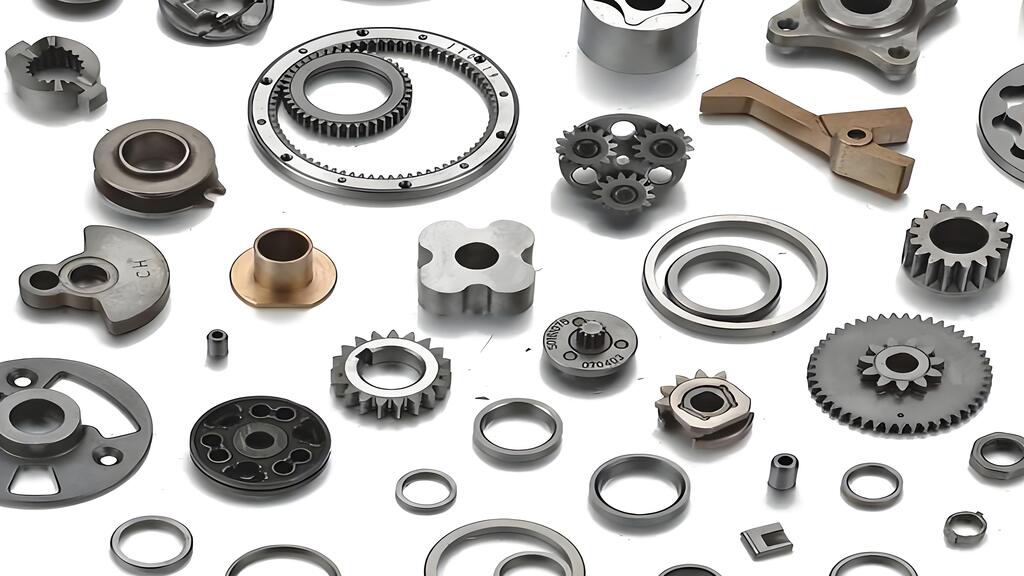


Powder Metallurgy Parts in Engine Timing
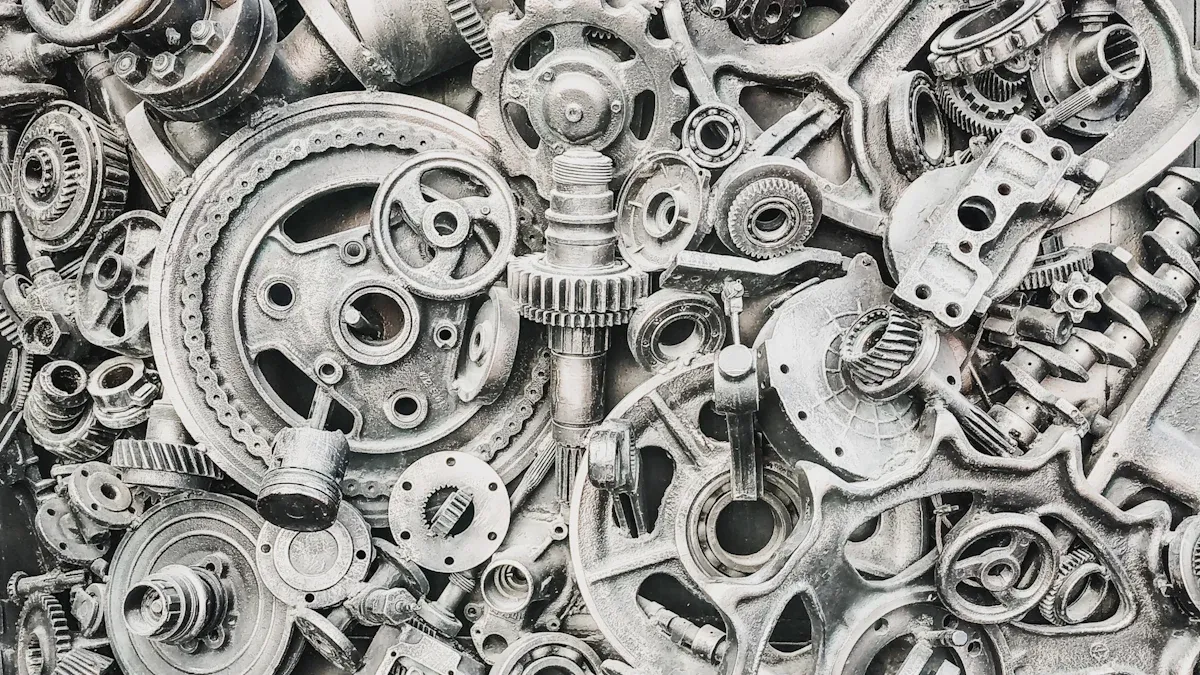
Powder Metallurgy parts play a critical role in engine timing systems by helping synchronize moving components with high precision. These parts offer several key advantages over traditional manufacturing. Manufacturers can achieve complex shapes, tight tolerances, and high strength in a single process. Powder metallurgy enables near-net-shape production, which reduces waste and machining costs. The process also delivers reliable wear resistance and long-lasting performance, making it ideal for demanding engine timing applications.
Key Takeaways
- Powder metallurgy creates precise engine timing parts that help synchronize moving components for better engine performance.
- This process allows making complex shapes with tight tolerances, reducing waste and cutting production costs.
- Powder metallurgy parts are strong, wear-resistant, and lightweight, improving fuel efficiency and engine reliability.
- Compared to traditional machining, powder metallurgy offers better strength, accuracy, and material use with less waste.
- Manufacturers use special powders and alloy blends to enhance strength, wear resistance, and durability of timing parts.
- Quality control ensures parts meet strict size and strength standards, supporting consistent engine timing and long life.
- Powder metallurgy supports advanced engine systems like variable valve timing by enabling custom, high-performance components.
- Future trends include new lightweight materials, improved manufacturing methods, and sustainable production to boost engine efficiency.
Powder Metallurgy in Engine Timing
Definition and Role in Engine Timing
Synchronization of Engine Components
Powder metallurgy parts play a vital role in the precise synchronization of engine components. These components, such as timing sprockets, pulleys, and rotors, must maintain exact phase relationships between the crankshaft, camshaft, and valves. Powder metallurgy enables manufacturers to achieve high dimensional accuracy with tight tolerances, often reaching ISO IT8–IT9 standards and improving to IT6–IT7 after sizing. This precision ensures that each part fits perfectly within the engine timing system, reducing the risk of slippage and misalignment. The near-net-shape forming capability of powder metallurgy also allows for the consistent production of complex internal features, such as oil passages and locking systems, which are essential for precise valve timing control. As a result, powder metallurgy parts help maintain accurate synchronization throughout the engine’s operation, supporting optimal performance and reliability.
Importance of Engine Performance
Accurate synchronization of engine components directly impacts overall engine performance. Powder metallurgy parts contribute to this by providing consistent quality and reliable material properties. In both automotive and aerospace applications, powder metallurgy enables the production of complex, high-strength, and lightweight components. These attributes enhance engine performance by reducing weight, improving corrosion resistance, and ensuring stable operation under varying conditions. Experimental studies on nitride ferrous powder metallurgy composites have shown that these parts offer enhanced wear resistance and stable friction coefficients, especially under lubricated conditions. Increased surface hardness and the formation of hard nitride phases reduce wear-related fuel loss and emissions. This leads to improved engine reliability and efficiency, making powder metallurgy a preferred choice for modern engine timing systems.
Comparison with Traditional Manufacturing
Machining vs. Powder Metallurgy
Traditional machining methods often struggle to achieve the same level of precision and complexity as powder metallurgy. Machined parts require multiple steps, including cutting, shaping, and finishing, which can introduce variability and increase production time. Powder metallurgy, on the other hand, uses high-speed pressing and Sintering to produce parts with tight dimensional tolerances and complex geometries in a single process. This approach minimizes material waste and reduces the need for secondary machining. The table below highlights key differences between powder metallurgy and traditional machining for engine timing parts:
| Property | Powder Metallurgy (PM) Parts | Traditional Machined Parts |
|---|---|---|
| Fatigue Strength | Up to 340 MPa (Fe-Mo-C alloys, heat treated) | Around 220 MPa (Fe-Cu-C material) |
| Dimensional Tolerance | ±0.04 mm | Less consistent, wider tolerances |
| Temperature Range | Maintains integrity from -40°C to 150°C | Less stable under wide temperature ranges |
| Wear Resistance | Enhanced by coatings; 10 microns wear after 200,000 km | Lower wear resistance without coatings |
| Weight | Up to 50% lighter (e.g., aluminum sprockets at 450g) | Heavier (e.g., sintered iron at 900g) |
| Surface Finish | Rougher (Ra 0.8–1.6 µm), improved by coatings and secondary operations | Generally smoother but limited by machining |
| Microstructural Control | Superior control leading to consistent properties | Variable due to cooling rates and machining |
This comparison shows that powder metallurgy parts often outperform machined parts in fatigue strength, dimensional precision, wear resistance, temperature durability, and weight reduction. These advantages make powder metallurgy highly suitable for producing engine timing components, especially in high-volume applications.
Unique Capabilities of PM Parts
Powder metallurgy offers unique capabilities that traditional manufacturing methods cannot easily match. Manufacturers can create intricate shapes and internal features, such as oil channels and locking mechanisms, directly during the forming process. This design flexibility supports the development of advanced engine timing systems, including variable valve timing and hybrid drive technologies. Powder metallurgy also enables cost-effective mass production by reducing material waste and energy consumption. The process ensures precise dimensional control, which minimizes rework and guarantees that parts meet strict tolerances without additional processing. These benefits make powder metallurgy an ideal solution for producing complex, high-performance engine timing parts in the automotive industry.
Tip: Powder metallurgy not only improves the efficiency of engine timing systems but also supports sustainable manufacturing by reducing waste and energy use.
Powder Metallurgy Process for Engine Timing Parts

Powder Selection and Blending
Material Choices for Engine Timing
Selecting the right powder is crucial for manufacturing reliable engine timing parts. Manufacturers consider several criteria when choosing powders:
- Mechanical properties such as strength, hardness, toughness, wear resistance, and fatigue strength.
- Operating conditions, including load, speed, temperature, and environmental factors.
- Powder characteristics like particle size, shape, and distribution influence compaction and sintering.
- Sintering parameters, such as temperature, atmosphere, and time, affect the final microstructure.
- Secondary operations, including heat treatments, coatings, and machining, further enhance properties.
These choices enable near-net-shape manufacturing, allow for complex geometries, and ensure uniform alloy distribution. As a result, engine timing parts achieve enhanced durability, reliability, and consistent mechanical properties.
Alloying for Strength and Wear Resistance
Engine timing parts often require alloying elements to boost strength and wear resistance. Manufacturers blend base powders with elements like molybdenum, copper, or nickel. This process creates alloys that withstand high loads and resist surface wear. Uniform blending of these powders ensures consistent material properties throughout each part.
Effective blending techniques involve thorough mixing of metal powders with binders. This step improves the uniformity and fluidity of the powder mixture, which leads to better consistency in the final product. Uniform blending also reduces the risk of weak spots or defects.
Compaction and Shaping
Tooling for Complex Geometries
Tooling design plays a vital role in shaping powder metallurgy parts. Manufacturers use precision dies and punches to form intricate features, such as oil channels or locking mechanisms, directly during compaction. Hydraulic presses offer better pressure control, which is essential for producing complex shapes and achieving higher densities.
Achieving Precision in Engine Timing Parts
The compaction process shapes and densifies metal powders under high pressure, forming a 'green' compact. Several factors influence the quality of this step:
- Uniform filling of powder into the die ensures consistent density.
- Applying sufficient and even pressure bonds particles and maintains shape.
- Lubricants reduce friction, improving green strength and dimensional control.
- Controlled compaction pressure and tooling design guarantee precise dimensions and uniform density.
Proper compaction reduces porosity and internal defects, which improves strength and extends the lifespan of engine timing parts. This process enables net shape or near-net shape manufacturing, minimizing the need for secondary machining.
Sintering and Finishing
Densification for Durability
Sintering transforms the 'green' compact into a durable, high-strength part. High temperatures bond the metal particles, increasing density and mechanical integrity. This step enhances the final strength, hardness, and wear resistance of engine timing components.
Surface Treatments for Engine Timing Applications
Manufacturers apply various finishing processes to improve surface quality and performance. The table below summarizes common finishing methods:
| Finishing Process | Purpose / Effect | Description |
|---|---|---|
| CNC Machining | Improve surface roughness and dimensional accuracy | Machining operations refine PM parts |
| Sizing | Restore dimensions and improve surface finish | Pressure in a die corrects deviations and seals pores |
| Resin Impregnation | Fill pores cost-effectively | Resin fills pores under pressure or vacuum |
| Oil Impregnation | Provide lubrication | Oil fills pores for self-lubricating bearings |
| Copper Infiltration | Enhance density, strength, hardness, and wear resistance | Molten copper fills pores, improving properties |
| Tumbling & Sandblasting | Remove burrs and improve surface finish | Friction or abrasive media clean and smooth surfaces |
| Electroplating | Boost corrosion and wear resistance | A thin metal layer is deposited to enhance surface properties |
Note: These finishing steps ensure that engine timing parts meet strict requirements for durability, precision, and long-term performance.
Quality Control in Engine Timing Parts
Dimensional Accuracy
Manufacturers place a strong emphasis on dimensional accuracy when producing powder metallurgy parts for engine timing systems. Each part must fit precisely within the assembly to ensure proper synchronization and reliable operation. To achieve this, quality control teams use a combination of visual inspections and advanced measuring equipment. They check every part for correct dimensions, weight, and material composition.
Statistical Process Control (SPC) plays a key role in monitoring production data. By tracking measurements throughout the manufacturing process, SPC helps detect any variations that could affect part quality. When a deviation appears, engineers can quickly adjust the process to maintain tight tolerances. This approach reduces the risk of producing non-conforming parts and supports consistent performance in engine timing applications.
Note: Dimensional accuracy not only ensures smooth assembly but also extends the lifespan of engine timing components by minimizing wear and misalignment.
Mechanical Property Testing
Mechanical property testing verifies that powder metallurgy parts meet the demanding requirements of engine timing systems. Quality control teams subject parts to simulated engine conditions, including stress, temperature, and pressure tests. These tests confirm that each component can withstand real-world operating environments without failure.
A structured approach to mechanical property testing includes:
- Stress testing to evaluate strength and fatigue resistance.
- Temperature cycling to ensure stability across a wide range of operating conditions.
- Pressure testing to confirm the integrity of internal features and seals.
Engineers also use Failure Mode and Effects Analysis (FMEA) to identify potential failure points before they occur. This proactive method allows teams to refine designs and manufacturing processes, reducing the likelihood of defects. Quality Management Systems, such as ISO 9001, provide a framework for managing procedures, handling non-conforming parts, and driving continuous improvement.
Supplier quality management ensures that raw materials meet strict standards. Regular audits and clear quality requirements help maintain consistency from the start of production. Employee training further supports high standards by keeping staff updated on best practices in manufacturing and quality control.
| Quality Control Measure | Purpose |
|---|---|
| Visual and Equipment Inspection | Verify dimensions and material composition |
| SPC Monitoring | Detect and correct process variations |
| Mechanical Testing | Confirm durability under real conditions |
| FMEA | Prevent potential failure modes |
| QMS Implementation | Manage quality and continuous improvement |
| Supplier Audits | Ensure raw material consistency |
| Employee Training | Maintain high manufacturing standards |
These combined efforts guarantee that powder metallurgy parts deliver the reliability and precision required for modern engine timing systems.
Engine Timing Components Made by Powder Metallurgy
Timing Gears and Sprockets
Function in Engine Timing Systems
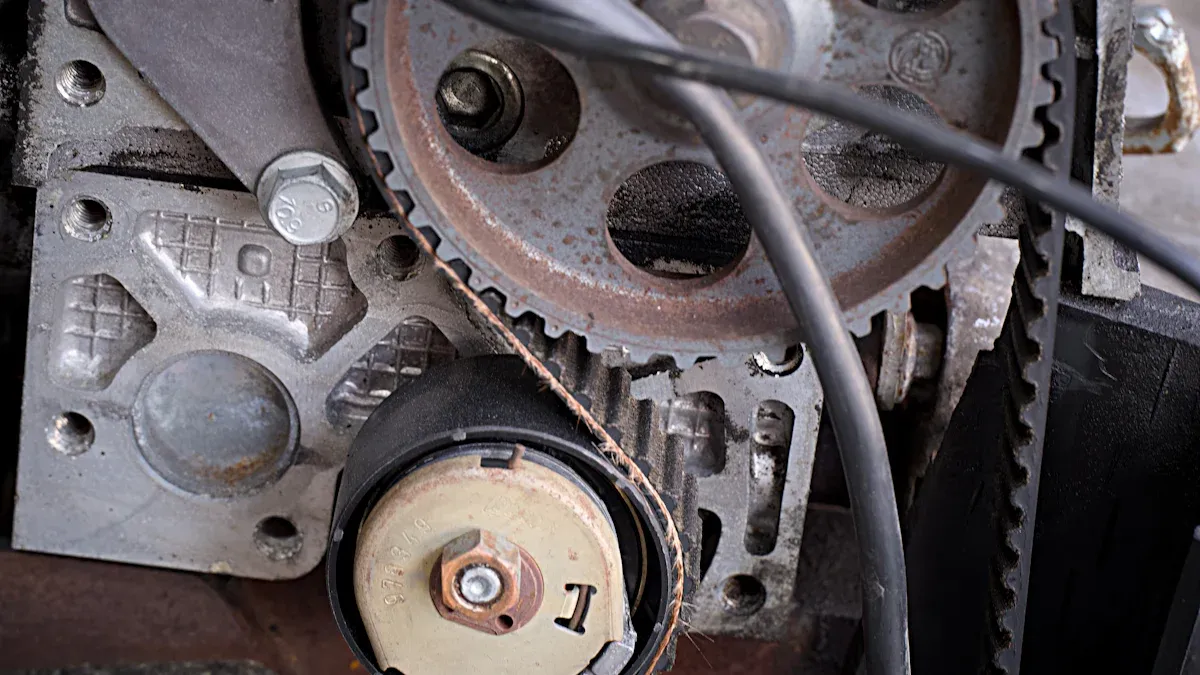
Timing gears and sprockets serve as the backbone of engine timing systems. They synchronize the rotation of the crankshaft and camshaft, ensuring that engine valves open and close at the correct intervals. This precise coordination is essential for optimal combustion and efficient engine operation. Manufacturers commonly use powder metallurgy to produce spur gears, helical gears, and bevel gears for these applications. These gears appear in automotive engines, motorcycles, industrial machinery, and even turbocharger systems. The process allows for the creation of lightweight, quiet-running gears that can be self-lubricated by impregnating the porous metal with oil. This feature proves especially valuable in high-performance timing and power transmission applications, where reliability and minimal maintenance are critical.
| Timing Gear/Sprocket Type | Common Powder Metallurgy Materials | Typical Applications | Key Features and Uses |
|---|---|---|---|
| Sprockets | FC-0205, FN-0205, FN-0208 | Automotive, Motorcycle, Industrial Machinery | Used in chain drive systems for power transmission; excellent wear resistance, impact strength, and dimensional precision for high-load, high-speed operation. |
| Spur Gears | FD-0205, FN-0205, FD-0405, FN-0208 | Gearbox, Automotive, Motorcycle, Power Tools, Industrial Machinery, Actuators | Cylindrical gears with parallel teeth; suitable for power transmission between parallel shafts; offer impact and wear resistance for high-load, high-speed environments. |
| Helical Gears | FD-0205, FN-0205, FD-0405, FN-0208, FD-0200 | Power Tools, Actuators, Industrial Machinery, Transmission Systems, Automotive, Motorcycle | Inclined teeth increase tooth overlap, reducing wear and noise; suitable for quieter, efficient power transmission. |
| Internal Gears | FD-0205, FD-0405 | Actuators, Medical Devices, Industrial Machinery | Teeth on inner circumference; low vibration and design flexibility; used in precise mechanical systems. |
| Timing Belt Pulleys | FC-0205 | Automotive, Industrial Machinery | Used in synchronous drive systems to ensure precise timing; high strength and wear resistance for reliable operation in high-stress environments. |
Advantages of PM Gears and Sprockets
Powder metallurgy gears and sprockets offer several performance and manufacturing benefits over traditional counterparts:
- Manufacturers achieve up to 50% weight reduction compared to conventional sintered iron parts, which improves fuel efficiency and reduces emissions.
- PM gears maintain structural integrity and high fatigue strength, making them suitable for demanding applications such as variable valve timing.
- The process enables precise control of friction characteristics through advanced surface treatments, resulting in lower friction and improved engine efficiency.
- Sintered gears and sprockets exhibit superior wear resistance, impact strength, and dimensional precision, ensuring stable operation under high loads and speeds.
- The manufacturing process utilizes over 98% of the raw material, minimizing waste and lowering energy consumption, which makes it cost-effective for mass production.
PM timing gears and sprockets also allow for tailored material compositions, enabling high strength, corrosion resistance, and self-lubrication. These features extend component life and reduce maintenance needs.
Timing Pulleys and Hubs
Role in Belt and Chain Drives
Timing pulleys and hubs play a crucial role in belt and chain drive systems. They transmit rotational motion between the crankshaft and camshaft, maintaining precise alignment and preventing slippage. Powder metallurgy enables the production of pulleys with teeth or pockets along the outer diameter, which engage with timing belts to ensure accurate shaft synchronization. This design is essential for reliable engine timing, especially in high-stress environments where consistent performance is required.
Benefits of PM Pulleys and Hubs
Powder metallurgy pulleys and hubs deliver several functional and economic advantages:
- The sintering process produces robust parts with enhanced strength, wear resistance, and durability, which are critical for long-lasting engine timing systems.
- PM pulleys maintain consistent tooth profiles and spacing, ensuring reliable and precise power transmission.
- Self-lubricating properties reduce friction and maintenance needs, contributing to smoother operation and longer service intervals.
- Near-net-shape production minimizes material waste and lowers costs, supporting sustainable and cost-effective manufacturing.
| Aspect | Powder Metallurgy (PM) | Machining | Stamping | Forging | Casting |
|---|---|---|---|---|---|
| Design Flexibility | Allows complex shapes and intricate features, including controlled porosity | Limited to shapes achievable by material removal | Limited by metal deformation knowledge and tooling | Limited to simpler shapes due to press size | Limited by draft angles, parting lines, and wall thickness |
| Material Utilization | Minimal waste due to additive process | Significant waste due to material removal | Produces considerable scrap | Requires machining post-forging, causing waste | Generates more waste due to molten metal handling |
| Dimensional Accuracy & Surface Finish | Good, but generally less precise than machining | Superior dimensional accuracy and surface finish | Moderate accuracy, depends on tooling | Good mechanical properties but less complex shapes | Moderate accuracy, depends on mold quality |
| Tooling and Lead Times | Tooling cost varies; generally lower for complex parts; shorter lead times | Expensive cutting tools; longer lead times for high volume | High tooling and setup costs; expensive dies | High capital investment for dies and presses | Significant investment in dies and molds |
| Cost-effectiveness | Cost-effective for moderate to high volumes with complex geometries | Costly due to waste and tooling | High initial cost but efficient for very high volumes | High tooling and labor costs | High tooling costs; less flexible for design changes |
| Functional Benefits | Consistent tooth profiles and spacing for reliable timing; customization possible | High precision but less design flexibility | Suitable for simple shapes; less design flexibility | Strong parts but limited complexity | Good for simple shapes; less precise timing features |
Powder metallurgy timing pulleys and hubs synchronize camshaft and crankshaft operations, ensuring reliable engine timing under high stress. Their enhanced strength and wear resistance extend component life and reduce maintenance.
Variable Valve Timing (VVT) Parts
PM Components in VVT Systems
Variable valve timing systems rely on precise and durable components to adjust valve operation dynamically. Powder metallurgy produces critical VVT parts such as sprockets and rotors. These components require tight dimensional tolerances and lightweight construction, which powder metallurgy delivers efficiently. The process supports cost-effective mass production, making it ideal for automotive manufacturers seeking high performance and reliability.
Impact on Engine Output and Efficiency
Powder metallurgy VVT components enable precise and reliable adjustment of valve timing. This capability optimizes air intake and exhaust timing, which leads to improved combustion efficiency. As a result, engines achieve better fuel economy, increased power output, and reduced emissions. The high material utilization and lower energy consumption of powder metallurgy also contribute to the sustainability and efficiency of VVT systems.
PM VVT sprockets and rotors play a key role in modern engines, supporting advanced timing strategies that enhance both performance and environmental responsibility.
Camshaft and Related Components
Sintered Camshaft Parts
Powder metallurgy has transformed the way manufacturers produce camshaft components. Sintered camshaft parts offer a unique combination of strength, precision, and design flexibility. Manufacturers use proprietary material blends and advanced processing techniques to achieve near full density in these parts. This results in high-strength and high-hardness camshaft lobes that withstand the demanding conditions inside modern engines.
Powder forged cam lobes have become a popular choice for assembled camshafts. The process allows for the creation of complex shapes, including intricate lobe profiles and integrated oil channels. These features are essential for precise valve actuation and efficient lubrication. Specialized material blends and powder forging techniques further enhance fatigue strength and wear resistance. Sinter hardening and heat treating processes increase surface hardness, ensuring long-lasting performance even under high loads.
Production efficiency also improves with powder metallurgy. Automated machining and in-house tooling design streamline the manufacturing process. Custom press designs enable the formation of complex geometries, such as helical gears and sprockets, directly during compaction. Manufacturers can produce camshaft parts with tighter dimensional control, reducing the need for secondary machining. Inline testing systems verify product quality at every stage, ensuring consistent performance and reliability.
Key advantages of powder metallurgy for camshaft and related components include:
- Ultra-high density and fatigue-resistant alloy parts.
- Ability to manufacture powder forged cam lobes for assembled camshafts.
- Achieving near full density and high strength through proprietary blends.
- Tighter dimensional control for precise fit and function.
- Enhanced strength, hardness, and wear resistance via advanced processing.
- Efficient production with automated machining and custom tooling.
- 100% inline testing for quality assurance.
- Capability to form complex shapes and profiles.
Note: Approximately 80% of powder metallurgy structural parts serve the automotive industry, with about 75% of these used in transmissions and engines. This widespread adoption highlights the reliability and value of sintered camshaft parts.
Integration in Engine Timing Assemblies
Sintered camshaft parts integrate seamlessly into modern engine timing assemblies. Manufacturers design these components to work in harmony with other powder metallurgy parts, such as sprockets, pulleys, and hubs. This integration ensures precise synchronization of the crankshaft and camshaft, which is vital for optimal engine performance.
A typical engine timing assembly may include the following powder metallurgy components:
| Component | Function in Assembly | PM Advantages |
|---|---|---|
| Camshaft Lobes | Control valve opening and closing | High wear resistance, precise profiles |
| Sprockets | Transmit rotational motion | Fatigue strength, dimensional accuracy |
| Timing Pulleys | Synchronize belt or chain drives | Consistent tooth profiles, lightweight |
| Hubs | Connect pulleys and gears to shafts | Robustness, near-net-shape manufacturing |
| Bearing Caps | Support camshaft rotation | Custom shapes, improved durability |
| Sensor Rings | Enable engine management feedback | Complex geometries, reliable performance |
Manufacturers often use powder metallurgy to produce valve seat inserts, valve guides, balancer gears, and camshaft bearing caps. These parts contribute to the overall durability and efficiency of the timing system. The ability to create custom shapes and integrate multiple functions into a single component reduces assembly complexity and enhances reliability.
Automated production and 100% inline testing ensure that each part meets strict quality standards. This approach minimizes the risk of defects and supports consistent engine operation. The integration of sintered camshaft parts with other powder metallurgy components delivers a robust, cost-effective solution for modern engine timing assemblies.
Tip: The use of powder metallurgy in camshaft and related components not only improves performance but also supports efficient, high-volume production for the automotive industry.
Advantages of Powder Metallurgy in Engine Timing
Design Flexibility and Complexity
Direct Shaping of Intricate Features
Powder metallurgy enables manufacturers to create highly intricate features directly during the forming process. This capability allows for the production of parts with complex shapes and internal geometries that traditional methods struggle to achieve. The process achieves dimensional accuracy up to 0.02mm, meeting strict requirements for automotive applications. Manufacturers can form tooth profiles, mounting features, and oil channels in a single compaction step, eliminating the need for extensive post-processing. This direct shaping not only reduces costs but also supports the development of advanced timing components with enhanced functionality.
- High-precision parts with tight tolerances
- Complex shapes formed without secondary machining
- Consistent geometry for reliable operation
- Enhanced strength and fatigue resistance for high-load applications
Customization for Engine Timing Needs
Customization stands as a core advantage of powder metallurgy. The process supports the selection of diverse metal powders, allowing engineers to tailor material properties for specific performance requirements. Manufacturers can adjust alloy compositions to achieve the desired balance of strength, wear resistance, and fatigue life. This flexibility enables the creation of specialized timing gears, pulleys, and cams that meet unique engine demands. Customization also extends to the integration of multiple functions within a single part, streamlining assembly and improving overall system reliability.
- Material diversity for targeted performance
- Single-process manufacturing of complex, custom parts
- Ability to integrate multiple features into one component
Material Efficiency and Cost Savings
Reduced Material Waste
Powder metallurgy stands out for its exceptional material efficiency. The process achieves over 95% material utilization by forming parts to near-net or net shape. This high efficiency minimizes scrap and reduces the environmental impact of manufacturing. Unlike traditional machining, which removes material to achieve the final shape, powder metallurgy compacts metal powders directly into the desired geometry. This approach conserves resources and supports sustainable production practices.
- Near-net-shape forming with minimal waste
- Efficient use of raw materials
- Environmentally friendly process
Streamlined Production for Engine Timing Parts
Manufacturers benefit from streamlined production when using powder metallurgy. The process eliminates many secondary machining steps, reducing tooling fees and energy consumption. High-volume production becomes more cost-effective due to consistent part quality and repeatable results. The ability to form full tooth geometry and mounting features in a single step further lowers production costs. These efficiencies make powder metallurgy an attractive choice for producing large quantities of timing components with complex designs.
- Fewer machining and finishing steps
- Lower production costs and tooling investment
- Consistent quality in high-volume manufacturing
Performance and Reliability
Wear Resistance and Durability
Powder metallurgy parts deliver outstanding wear resistance and durability, essential for demanding engine environments. Sintered construction enhances mechanical properties such as hardness and dimensional stability. Timing pulleys and gears produced by this method maintain precise synchronization between moving components, reducing timing errors and minimizing wear. These features contribute to longer service life and reduced maintenance needs.
- Excellent wear resistance under high-stress conditions
- High strength and hardness for an extended lifespan
- Stable performance in automotive and industrial applications
Consistent Quality in Engine Timing Applications
Consistency defines the quality of powder metallurgy components. The process ensures tight dimensional control and uniform material properties across large production runs. Manufacturers achieve over 97% material utilization and up to 30% cost savings in high-volume applications, supporting reliable and economical production. Real-world use in automotive engines and machinery demonstrates stable performance, reduced maintenance, and smooth operation even under high loads.
Powder metallurgy provides a proven path to reliable, efficient, and cost-effective timing components, supporting the evolving needs of modern engines.
Weight Reduction and Fuel Efficiency
Lightweight PM Parts
Automotive engineers prioritize weight reduction to enhance vehicle performance and efficiency. Powder metallurgy (PM) enables the production of lightweight timing components, such as pulleys and sprockets, that significantly decrease the overall mass of the engine assembly. By replacing traditional solid steel parts with PM alternatives, manufacturers can cut the weight of critical components by up to 50%. For example, a cam phaser produced through powder metallurgy can weigh as little as 450 grams, compared to 900 grams for a conventional design.
This reduction in mass offers several advantages:
- Lower engine assembly weight leads to improved fuel economy.
- Reduced weight helps decrease vehicle emissions.
- High material utilization in PM manufacturing minimizes waste and supports cost-effective production.
- Enhanced wear resistance and dimensional precision ensure long-term reliability.
The lightweight nature of PM parts does not compromise strength or durability. Advanced alloying and sintering techniques provide the necessary mechanical properties for demanding engine environments. These parts maintain precise synchronization between moving components, which is essential for optimal combustion and efficient operation.
Note: Lighter timing components contribute directly to better fuel efficiency by reducing the energy required to move engine parts.
Impact on Engine Response
The use of lightweight powder metallurgy parts in timing systems delivers noticeable improvements in engine response. Reduced rotating mass allows the engine to accelerate and decelerate more quickly. This responsiveness enhances driving dynamics, especially during rapid acceleration or gear changes.
Precise timing synchronization, achieved through the high-dimensional accuracy of PM parts, prevents timing errors that could otherwise lead to inefficient combustion or improper valve operation. Consistent timing ensures that the engine operates at peak efficiency, maximizing power output while minimizing fuel consumption.
Key benefits of lightweight PM timing components on engine response include:
- Faster acceleration due to lower inertia.
- Smoother transitions during gear shifts.
- Improved throttle response and overall drivability.
- Enhanced reliability, as wear-resistant PM parts maintain performance over extended periods.
Manufacturers also benefit from the ability to customize part geometry and material properties, further optimizing engine performance for specific applications. The combination of reduced weight, high precision, and robust wear resistance makes powder metallurgy an ideal solution for modern timing systems focused on efficiency and performance.
Limitations and Challenges in Engine Timing Applications
Material and Strength Constraints
Temperature Sensitivity
Powder metallurgy parts often face challenges related to temperature sensitivity. Certain alloys, such as copper-lead materials, display limited tensile and fatigue strengths. For example, copper-lead sintered bearings with 40-45% lead reach tensile strengths of about 76 MPa and fatigue strengths near 21 MPa. When exposed to high temperatures, these materials may experience changes in mechanical properties, which can affect their performance in demanding environments. Adding tin to copper-lead alloys increases both tensile and fatigue strength, but higher tin content can also make the material more prone to seizing, especially without proper lubrication. Steel-backed copper or copper-lead-tin materials offer improved temperature resistance, but they require careful processing to achieve low porosity and stable properties.
Load-Bearing Limitations
Load-bearing capacity remains a critical consideration for powder metallurgy components. Fatigue strength typically measures about 35% of the tensile strength, making fatigue resistance a key factor in design. Thinner walls, especially those below 1.52 mm, risk density variations and distortion during sintering or heat treatment. When the length-to-wall thickness ratio exceeds 8:1, density variations become more pronounced, which can compromise mechanical performance. Iron-copper alloys provide moderate strength, with copper additions increasing strength by 70-140 MPa. However, designers must carefully balance wall thickness and geometry to ensure reliable load-bearing performance.
- Copper-lead alloys with about 30% lead require overlays due to surface property limitations.
- Higher strength alloys, such as 80Cu-10Pb-10Sn, achieve hardness up to Vickers 130 but need grease lubrication to prevent seizing.
- Stainless steel PM parts offer corrosion resistance but demand controlled sintering atmospheres and high densities for effective carburizing.
Design and Manufacturing Considerations
Geometric Restrictions
The powder metallurgy process imposes certain geometric restrictions. Minimum wall thicknesses must be maintained to avoid density variations and distortion. Complex shapes with high length-to-wall thickness ratios can lead to uneven densification, which affects part strength and durability. Designers must consider these factors when developing new timing components, as exceeding recommended ratios can result in compromised mechanical properties.
Tolerance Management in Engine Timing Parts
Maintaining tight tolerances presents another challenge. Powder metallurgy parts can achieve good dimensional accuracy, but variations in powder filling, compaction, and sintering may introduce slight deviations. Secondary operations, such as sizing or machining, often become necessary to meet strict tolerance requirements. Consistent process control and quality assurance help minimize these issues, but achieving the highest precision may require additional steps.
Economic Factors
Initial Tooling Investment
Powder metallurgy production requires specialized tooling, including precision dies and punches. The initial investment for these tools can be significant, especially for complex or custom-designed parts. Manufacturers must weigh the upfront costs against the long-term benefits of high-volume, cost-effective production.
Production Volume Requirements
The economics of powder metallurgy favor large production runs. High tooling costs and setup times make the process most efficient for moderate to high volumes. For small batch sizes, alternative manufacturing methods may offer better cost efficiency. Manufacturers must evaluate production needs and market demand before committing to powder metallurgy for timing components.
Note: Careful consideration of material selection, part geometry, and production volume ensures that powder metallurgy remains a competitive choice for timing applications.
Future Trends for Powder Metallurgy in Engine Timing
Advanced Materials and Alloys
High-Performance Engine Timing Parts
Recent developments in powder metallurgy have led to the use of advanced materials that significantly improve the performance of timing components. Manufacturers now select lighter raw materials such as aluminum and titanium alloys to reduce part weight and enhance fuel efficiency. Aluminum alloys find application in pulleys, oil pump rotors, cylinder liners, and shock absorbers, making engines lighter and more responsive. Titanium alloys, including Ti-6Al-4V, are chosen for intake valves, timing pulleys, and fuel pump filters due to their low density, high strength, and excellent corrosion resistance. Metal matrix composites (MMC), which combine aluminum alloys with ceramics, deliver an outstanding strength-to-weight ratio, stiffness, and ductility. These materials help timing pulleys and other components withstand operational forces while maintaining durability.
Advancements in microstructure control have also played a crucial role. Fine grain size and uniform carbide distribution increase toughness, wear resistance, and fatigue life. By adjusting sintering parameters such as dew point, cooling rate, and atmosphere, manufacturers achieve consistent and predictable material properties. Techniques like hot isostatic pressing and controlled rolling temperatures further refine grains and enhance alloy strength. Alloying additions, such as yttrium in titanium aluminide alloys, purify the matrix and boost ductility. These improvements enable the production of high-performance timing parts with superior mechanical properties and reliability.
Hybrid and Composite Materials
Hybrid and composite materials are gaining traction in powder metallurgy for timing applications. Metal matrix composites, especially those combining aluminum with ceramic reinforcements, offer a unique blend of lightness and strength. These composites provide enhanced stiffness and ductility, making them ideal for high-stress engine environments. The use of such materials allows for the creation of timing components that are both lightweight and highly durable, supporting the ongoing trend toward more efficient and robust engines.
Process Innovations
Additive Manufacturing Integration
Additive manufacturing, or 3D printing, is beginning to influence powder metallurgy processes. This technology enables the creation of complex geometries that were previously difficult or impossible to achieve. Manufacturers can now produce intricate timing components with internal channels, optimized shapes, and reduced weight. Additive manufacturing also supports rapid prototyping, allowing engineers to test and refine designs quickly before moving to mass production.
Enhanced Sintering Techniques
Enhanced sintering techniques have improved the quality and consistency of powder metallurgy parts. Precise control over temperature, atmosphere, and cooling rates ensures uniform microstructures and predictable properties. Secondary processing, such as hot rolling and heat treatment, increases density, tensile strength, and ductility. These advancements result in timing components with longer service life and greater reliability.
Sustainability and Environmental Impact
Recyclability of PM Engine Timing Parts
| Aspect | Explanation |
|---|---|
| Waste Reduction | Near net-shape forming uses ~99.8% of material, minimizing waste and lowering costs. |
| Resource Efficiency | Uses recycled and scrap metals, reducing demand for new raw materials and conserving resources. |
| Carbon Footprint | Eliminates many secondary machining steps, reducing energy consumption and emissions. |
| Material Precision | Enables complex geometries and precise properties in a single step, enhancing material use. |
| Automation & Safety | Automation improves production efficiency and personnel safety, supporting sustainable goals. |
| Application Relevance | Produces high-precision, high-strength components like timing gears, aligning with green tech. |
Powder metallurgy supports sustainability by enabling the reuse and recycling of materials. Manufacturers design parts for recyclability and remanufacturing, which facilitates material recovery at the end of a product’s life. This approach conserves resources and reduces the environmental impact of engine manufacturing.
Energy Efficiency in Production
Powder metallurgy processes consume less energy by minimizing secondary machining steps. The ability to form complex geometries in a single step further conserves materials and energy. Automation enhances production efficiency and safety, supporting sustainable manufacturing practices. The process generates fewer harmful emissions, contributing to a lower overall environmental footprint.
As the industry advances, powder metallurgy will continue to drive innovation in materials, processes, and sustainability, shaping the future of high-performance timing systems.
Powder metallurgy parts have transformed engine timing systems by offering precision, durability, and efficient production. These components deliver strong wear resistance and support lightweight designs. Manufacturers face challenges with material selection and geometric limits, but ongoing research continues to address these issues. Future advancements in materials and processing will further improve engine timing performance.
- Powder metallurgy supports innovation in automotive engineering.
- New materials and processes promise even greater reliability.
FAQ
What is powder metallurgy in engine timing systems?
Powder metallurgy creates engine timing parts by pressing and sintering metal powders. This process forms gears, sprockets, and pulleys with precise shapes and properties. Manufacturers use powder metallurgy to achieve high strength, wear resistance, and dimensional accuracy in timing components.
Why do manufacturers prefer powder metallurgy for timing parts?
Manufacturers choose powder metallurgy for its ability to produce complex shapes, reduce material waste, and lower production costs. The process also delivers consistent quality and supports high-volume manufacturing, making it ideal for automotive engine timing applications.
Which engine timing components use powder metallurgy?
Engine timing systems often include powder metallurgy gears, sprockets, pulleys, hubs, and camshaft parts. These components synchronize the crankshaft and camshaft, ensuring accurate valve operation and optimal engine performance.
How does powder metallurgy improve fuel efficiency?
Powder metallurgy produces lightweight timing parts. Lighter components reduce engine mass, which improves fuel economy and lowers emissions. Enhanced wear resistance and precision also help maintain efficient engine operation over time.
What materials are common in powder metallurgy timing parts?
Manufacturers frequently use iron, steel, aluminum, and specialized alloys. These materials provide the necessary strength, hardness, and wear resistance for demanding engine environments. Alloy selection depends on the specific performance requirements of each timing component.
Are powder metallurgy parts reliable in high-stress engine conditions?
Yes. Powder metallurgy parts undergo rigorous quality control and mechanical testing. They demonstrate excellent wear resistance, fatigue strength, and dimensional stability, making them reliable for high-load and high-temperature engine timing applications.
Can powder metallurgy support custom timing part designs?
Powder metallurgy offers significant design flexibility. Engineers can create custom shapes, integrate multiple features, and tailor material properties to meet unique engine timing needs. This capability supports innovation in modern engine systems.
How does powder metallurgy contribute to sustainability?
Powder metallurgy minimizes material waste and energy use. The process uses recycled metals and near-net-shape forming, supporting environmentally friendly manufacturing. Many powder metallurgy parts are also recyclable at the end of their service life.