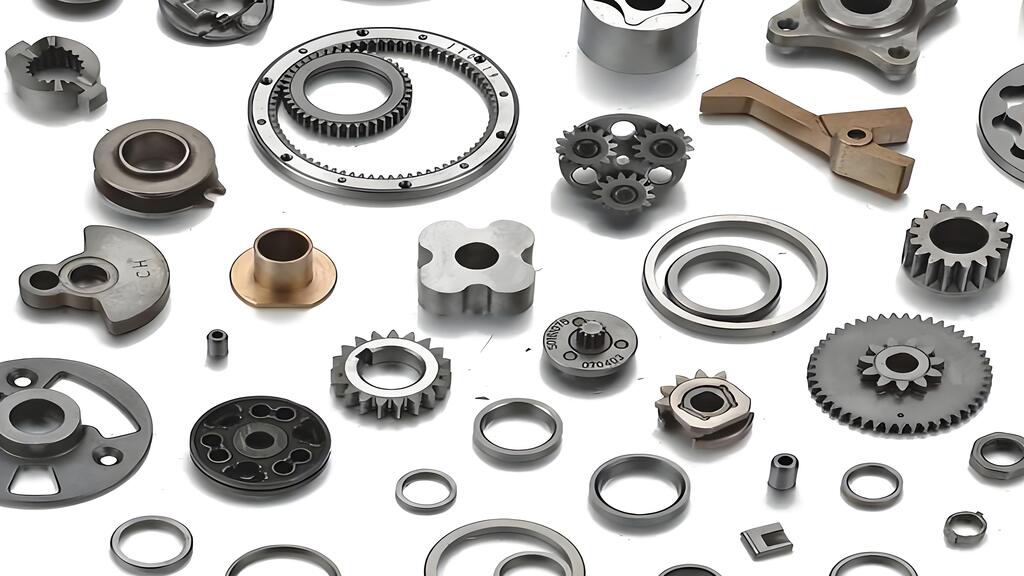
Sinter Hardening Explained
Sinter Hardening Explained: Why Engineers Choose This Process Over Traditional Heat Treatment
Sinter process technologies can substantially reduce manufacturing costs. Sinter hardening saves up to 60% of the energy that heat treating Powder Metallurgy parts typically needs . The process combines Sintering and hardening into one operation, which eliminates the need for secondary quench hardening treatments .
The sintering process heats compacted metal powder below its melting point until particles bond together to create solid components. The press and sinter process has evolved through innovations like sinter hardening that cools parts faster after sintering to form a martensitic microstructure . This streamlined approach provides better dimensional control because of less severe quenching . The process helps manufacturers reduce material consumption since oil quenchants and cleaners become unnecessary .
This piece reveals why engineers choose sinter hardening over traditional heat treatment methods more often today. We'll dissect the technical principles, advantages, and practical applications of this quick metallurgical process.
Understanding Sintering and the Press and Sinter Process
Powder metallurgy depends on sintering as the life-blood of component manufacturing. This thermal process changes loose metal particles into strong, functional parts through controlled heating without melting them completely.
What does sintered mean in powder metallurgy?
Sintering is a heat treatment that makes powder compacts stronger through atomic-level bonding. Cold welds hold neighboring powder particles together after compaction. These particles form metallurgical bonds when diffusion creates growing necks at their contact points. Metal atoms move between particle boundaries and create a dense, unified microstructure. The temperature stays below the melting point of the main material - usually between 70-90% of its melting temperature.
Two important steps must happen before sintering works properly. The pressing lubricants need to evaporate, and surface oxides must be removed from powder particles. These steps allow solid-state sintering to work. The particles join together but keep their basic structure, though some size changes occur.
Sintering vs melting: Key differences in material bonding
The main difference between sintering and melting lies in how materials change phase. Melting turns materials completely liquid for casting. Sintering joins particles through diffusion without fully liquefying them. This creates several practical differences:
- State transformation: Sintering keeps materials mostly solid with atoms moving locally. Melting turns solids completely into liquids
- Temperature requirements: Sintering happens at 60-80% of melting temperature. Melting needs temperatures at or above the material's melting point
- Structural outcome: Sintered parts stay somewhat porous (5-25% after processing). Melted and cast parts become fully dense
- Application focus: Sintering works best with materials like tungsten or molybdenum that don't cast well because they melt at very high temperatures
Overview of the press and sinter process
The standard powder metallurgy "press and sinter" process works in three stages. Manufacturers mix elemental or alloy powders with lubricants and additives until they're evenly blended. The mixture then gets compressed in a die. Pressures range from 138 MPa (10 tsi) to 965 MPa (70 tsi), creating a "green compact" strong enough to handle.
The green compact then goes into a controlled-atmosphere furnace where sintering takes place. A carefully controlled heating cycle removes lubricants, reduces oxides, bonds particles, and cools the part. Each phase plays a crucial role in developing the part's final properties. Time, temperature, and atmosphere must work together perfectly.
Manufacturers sometimes modify this basic process for special applications. High-temperature sintering costs more but delivers impressive results. It can boost tensile strength by 30%, bending fatigue strength by 15%, and impact energy by 50% compared to regular sintering.
How Sinter Hardening Works Inside the Furnace
The sinter hardening furnace creates optimal conditions by controlling multiple variables that transform powdered metal into hardened components. This complex process works through carefully coordinated thermal and atmospheric processes that function in perfect harmony.
Controlled atmosphere and oxide reduction
Strict atmospheric control protects parts from oxygen contamination during high-temperature exposure in sinter hardening. The furnaces use nitrogen-hydrogen mixtures (commonly 90/10 N₂/H₂) to maintain an oxygen-free environment. This protective atmosphere prevents new oxidation and reduces existing oxides on powder surfaces. Effective particle bonding cannot occur when oxides create barriers between metal particles. Each furnace zone's atmosphere composition changes with separate gas profiles that optimize delubrication, sintering, and cooling sections.
Rapid cooling and martensite formation
Sinter hardening uses accelerated cooling directly within the furnace, unlike conventional sintering with slow cooling. High-velocity gas mixtures flow through the hot zone and produce quenching rates of 3-5°C/s. These controlled cooling conditions transform the austenite microstructure into martensite without separate oil quenching operations. The cooling rate must be fast enough to form martensite yet gentle enough to minimize distortion.
Carbon control using SINTERFLEX™ technology
Carbon management plays a vital role throughout the sinter hardening process. The SINTERFLEX® Atmosphere Control System optimizes oxygen and carbon content levels in the sintering atmosphere. This technology creates a carbon-neutral atmosphere that prevents decarburization and results in uniform carbon content throughout finished parts. The system monitors furnace conditions with up-to-the-minute data analysis of carbon content, temperature, and oxygen levels to adjust the gas mixture precisely.
Impingement gas cooling with FRIOFLEX™
FRIOFLEX™ technology boosts cooling efficiency through impingement cooling with directed gas jets. The cooling nozzles target hot parts on the furnace belt and create localized high-velocity gas flow. This approach achieves rapid cooling while maintaining the protective atmosphere needed to prevent oxidation. Advanced systems use cryogenic nitrogen to boost cooling rates, especially when processing leaner alloys that need faster quenching.
Sinter Hardening vs Traditional Heat Treatment
A comparison of manufacturing approaches shows clear benefits of sinter hardening over traditional heat treatment in powder metallurgy operations. These differences affect everything from production efficiency to final part quality.
Eliminating secondary quenching and tempering
Sinter hardening combines sintering and hardening into a single integrated step, so it eliminates multiple secondary operations. Traditional heat treatment takes components through a longer path: sintering, cleaning, reheating, oil quenching, post-quench cleaning, and tempering. Sinter hardening achieves martensite formation directly during the cooling phase of the sintering process. The parts might still need tempering for stress relief and better mechanical properties.
Dimensional control and oil-free surfaces
The biggest advantage lies in dimensional precision. Sinter hardening improves dimensional variance by up to 50% compared to conventional quench and temper methods. High-velocity atmospheric quenching causes less severe effects than oil quenching, which leads to minimal warping and distortion. Parts come out clean without oil residue trapped in porous structures. This makes downstream operations like plating much easier.
Energy savings and reduced process steps
The economic benefits stand out clearly:
- 60% reduction in energy consumption compared to traditional heat treatment
- Elimination of multiple handling steps between processes
- No need for quenching oils or cleaning chemicals
Comparison of hardness and strength outcomes
Properly executed sinter hardening matches the mechanical properties of traditional heat treatment. The microstructure consists mainly of martensite, which forms through carefully controlled cooling rates and appropriate alloying elements. Carbon content plays a crucial role - higher carbon alloys (above 0.45%) typically produce better hardness results, though they show increased dimensional sensitivity.
Performance, Applications, and Limitations
Manufacturers use sinter hardened components extensively in many industries. These parts deliver excellent performance while keeping production costs low.
Industries using sinter hardened parts
The automotive sector leads the consumption of sinter hardened parts. A typical vehicle contains 7-20 kilograms of sintered components, which adds up to 600-700 individual parts. The core team from industrial machinery, lawn and garden equipment, firearms, aerospace, and military systems also rely heavily on these components. You'll find these parts in everything from gearing and torque control mechanisms to motion control systems for alternative energy applications.
Challenges with machining and secondary operations
Sinter hardened parts come with unique machining challenges. Their porous structure makes heat transfer during cutting operations difficult, which speeds up tool wear. Engineers used to call sinter-hardened steels "unmachinable" until recent decades. Green machining before sintering provides an alternative, but the surface finish isn't as good as machining after sinter-hardening.
Tempering requirements for stress relief
Parts need tempering after sinter hardening to remove leftover stresses and boost toughness. A tempering treatment at 150°C can boost tensile strength while reducing apparent hardness by about 10 HRC (85 HV). Parts with lower carbon content (0.65%) might need higher tempering temperatures (205°C) to get the best strength and impact resistance.
Material selection and alloying considerations
The material needs at least 0.45% carbon content to achieve high hardness. Elements like molybdenum, chromium, or nickel make the material more hardenable. Nickel additions create the highest fatigue strength values at less than 10^8 cycles. Chromium provides a cost-effective and environmentally friendly option.
Conclusion
Sinter hardening is a game-changer in powder metallurgy that has transformed how engineers manufacture components. This breakthrough process cuts out multiple secondary operations and delivers the same mechanical properties as traditional heat treatment methods.
The economic benefits make a strong case for manufacturers who want to improve efficiency. Energy consumption drops by 60%, and fewer process steps lead to direct cost savings. It also creates less environmental impact and optimized production by eliminating oil quenchants and cleaning operations.
Technical benefits go beyond just efficiency gains. Sinter hardened parts show up to 50% better dimensional precision compared to standard quench and temper methods. Less severe atmospheric quenching reduces warping and distortion. Parts come out clean without oil residue, which makes later operations easier.
Engineers need to think over some limitations of this process. Materials must have carbon content above 0.45% to achieve optimal hardness. Parts still need tempering after sinter hardening to reduce residual stresses and boost toughness. The porous structure creates unique machining challenges that need special approaches.
The automotive sector has embraced this technology with open arms. A typical vehicle now contains hundreds of sinter hardened components. Other industries like machinery, lawn equipment, firearms, and aerospace are also discovering the benefits of these manufacturing improvements.
Sinter hardening stands out as a major technological leap that combines performance with manufacturing efficiency. Merging sintering and hardening into one step optimizes production and improves product quality. Engineers who grasp both the strengths and limits of this process can discover the full potential of creating high-performance, economical components.
Key Takeaways
Sinter hardening revolutionizes powder metallurgy by combining sintering and hardening into one efficient process, delivering significant cost and performance advantages over traditional methods.
• Energy and cost savings: Sinter hardening reduces energy consumption by 60% and eliminates multiple secondary operations like oil quenching and cleaning.
• Superior dimensional control: Parts achieve 50% better dimensional precision compared to conventional quench-and-temper methods due to gentler atmospheric cooling.
• Streamlined manufacturing: The process eliminates oil quenchants and produces clean, residue-free surfaces, simplifying downstream operations like plating.
• Comparable performance: Properly executed sinter hardening delivers mechanical properties equivalent to traditional heat treatment while requiring carbon content above 0.45%.
• Wide industrial adoption: Automotive industry leads usage with 600-700 sinter hardened parts per vehicle, followed by industrial machinery and aerospace applications.
This integrated approach represents a paradigm shift in manufacturing efficiency, allowing engineers to achieve high-performance components while reducing environmental impact and production complexity. However, success requires careful material selection and understanding of the process's machining limitations.
FAQs
Q1. What is sinter hardening and how does it differ from traditional heat treatment? Sinter hardening is a process that combines sintering and hardening into a single operation. Unlike traditional heat treatment, which requires separate steps for sintering, quenching, and tempering, sinter hardening achieves martensite formation directly during the cooling phase of the sintering process. This integrated approach eliminates multiple secondary operations, resulting in significant energy savings and improved efficiency.
Q2. What are the main advantages of sinter hardening? Sinter hardening offers several benefits, including a 60% reduction in energy consumption compared to traditional heat treatment, improved dimensional precision (up to 50% better than conventional methods), and elimination of oil quenchants and subsequent cleaning operations. It also produces clean, residue-free surfaces, simplifying downstream processes like plating.
Q3. In which industries is sinter hardening commonly used? Sinter hardening is widely used in the automotive industry, with a typical vehicle containing 600-700 sinter hardened parts. Other sectors that benefit from this technology include industrial machinery, lawn and garden equipment, firearms, aerospace applications, and military systems.
Q4. Are there any limitations to sinter hardening? While sinter hardening offers many advantages, it does have some limitations. The process requires careful material selection, typically with carbon content above 0.45% for optimal hardness results. Additionally, sinter hardened parts can be challenging to machine due to their porous structure, which affects heat transfer during cutting operations.
Q5. Does sinter hardening completely eliminate the need for tempering? No, tempering is still necessary after sinter hardening to relieve residual stresses and improve toughness. A tempering treatment at around 150°C can significantly enhance tensile strength while slightly reducing hardness. The specific tempering parameters may vary depending on the desired final properties and the carbon content of the material.