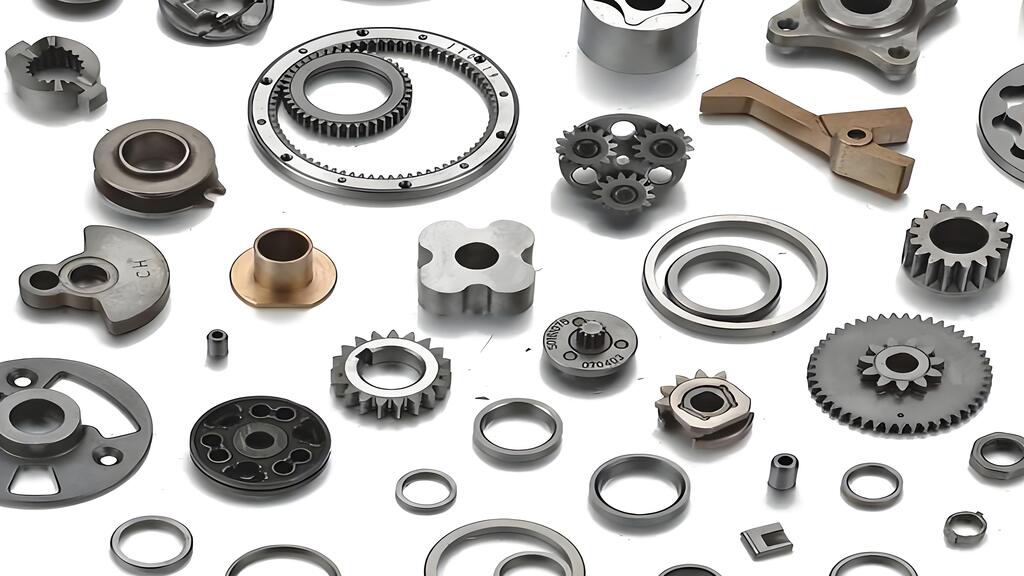


Sintering Behavior of Iron-Based Powders in Powder Metallurgy
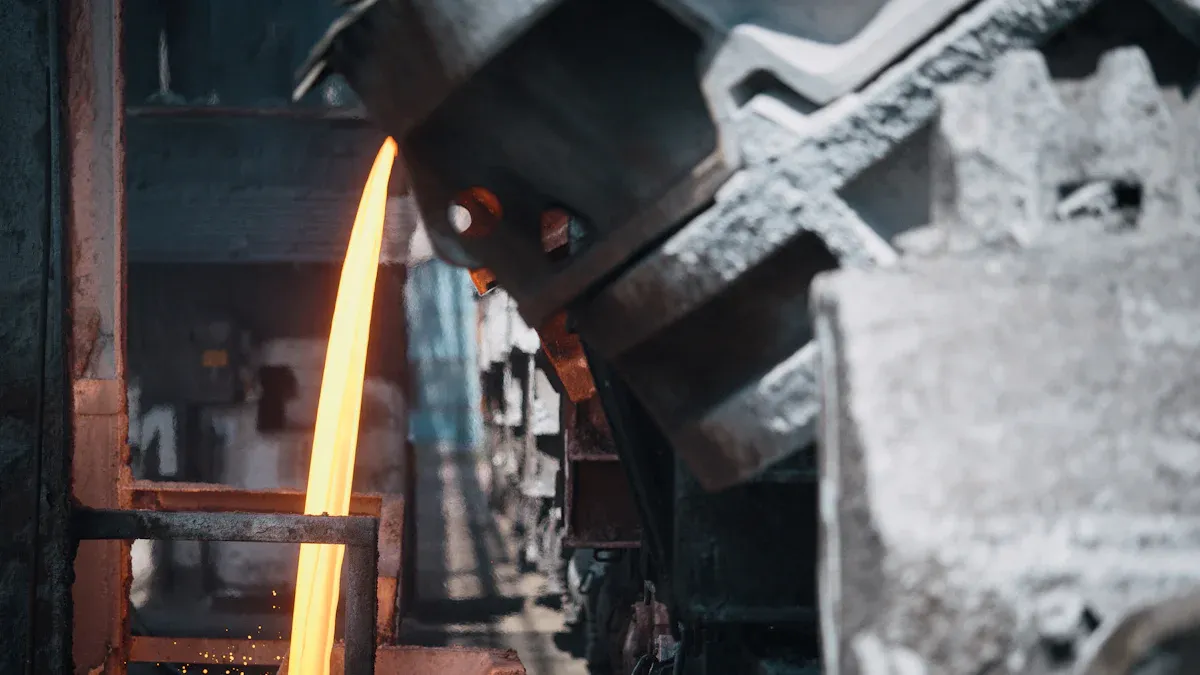
Sintering transforms iron-based powder compacts into solid, functional components. This thermal treatment fuses individual powder particles through atomic diffusion, creating a robust metallic structure. Sintering is critical in powder metallurgy because it dictates the final mechanical properties and density of the manufactured part. Around 1 Mt/y of structural components made from iron-based alloys are produced using powder metallurgy. Furthermore, iron-based materials like iron-copper-carbon (ICC) constitute at least 50% of North American powder Metal Parts. Understanding this sintering behavior is essential for optimizing part performance.
Key Takeaways
- Sintering turns iron powder into strong metal parts. This process uses heat to fuse tiny particles.
- Solid-state sintering happens below melting points. Atoms move to fill gaps and make the material denser.
- Liquid-phase sintering uses a melted part. This helps particles move closer and makes the material much denser.
- Spark Plasma Sintering (SPS) is a fast method. It uses electricity and pressure to quickly make parts dense.
- Small, pure powder particles help sintering work better. They lead to stronger, denser final products.
- Controlling heat, time, and atmosphere is key. These factors change how strong and dense the final part becomes.
- Adding elements like carbon or copper improves parts. They help with densification and make the parts stronger.
- New methods like microwave sintering save energy. They also make parts better and help the environment.
Fundamental Mechanisms of Iron Powder Sintering Behavior
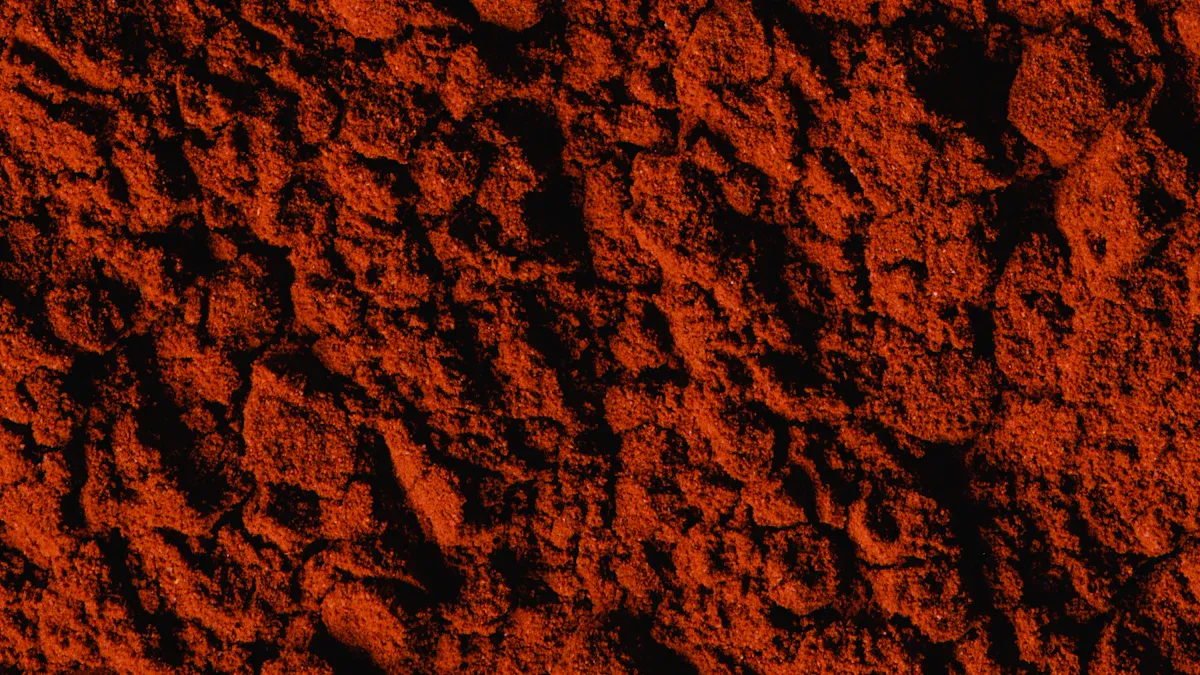
Solid-State Sintering Processes
Solid-state sintering involves the consolidation of powder particles below their melting point. Atomic movement drives this process, leading to neck growth and pore elimination.
Atomic Diffusion Pathways
Atomic diffusion is crucial for material transport during solid-state sintering. Atoms move through various pathways within the iron powder compact. The vacancy mechanism is a primary pathway; atoms move to occupy empty spaces, or vacancies, in the crystal lattice. Thermal energy and the presence of vacancies facilitate this movement. Higher temperatures increase both the number of vacancies and the energy for movement, accelerating diffusion. In metals, vacancies are common and exist in equilibrium. The energy required for this movement combines the energy for vacancy formation and atom movement. Another pathway is the interstitial mechanism. Smaller atoms move through the gaps, or interstices, between larger atoms in the crystal lattice without displacing them. This mechanism is effective when the diffusing atoms are relatively small compared to the lattice atoms, such as hydrogen, oxygen, nitrogen, boron, and carbon in most metallic crystal lattices.
Other significant diffusion pathways include grain boundary diffusion, where atomic transport occurs along the boundaries between grains. Surface diffusion involves atoms moving along the surface of the material. Volume diffusion, also known as diffusion through the crystal, sees atoms moving through the bulk of the crystalline material. Viscous flow can also be significant, particularly during liquid phase sintering.
Neck Growth and Pore Reduction
Neck growth and pore reduction are critical stages in solid-state sintering. In the initial stage, neck growth occurs rapidly while particles remain separate. Surface diffusion allows atoms to move along particle surfaces, initiating neck formation without significant densification. As sintering progresses, the intermediate stage sees the structure recrystallize, particles mix, and substantial densification takes place. Neck growth and pore shrinkage continue, leading to significant densification, often reaching 90–95% of theoretical density. Grain boundary diffusion, where atoms migrate along grain boundaries, promotes neck growth and reduces porosity. In the final stage, isolated pores become spheroidal, and densification continues at a slower rate. Grain growth becomes dominant, closed pores coarsen, and densification approaches completion, typically reaching 95–99% of theoretical density. Lattice (volume) diffusion, where atoms diffuse through the material's bulk, results in substantial densification.
Liquid-Phase Sintering Dynamics
Liquid-phase sintering involves the presence of a liquid phase during the Sintering Process. This liquid phase significantly enhances densification compared to solid-state sintering.
Liquid Phase Formation
The liquid phase forms when one or more components in the powder mixture melt at the sintering temperature. This typically occurs when a lower-melting-point additive is included in the iron powder compact. The liquid phase wets the solid particles, creating capillary forces that pull the particles closer together. This phenomenon promotes rapid particle rearrangement and accelerates the overall densification process.
Particle Rearrangement and Solution-Reprecipitation
Once the liquid phase forms, particle rearrangement occurs rapidly. The liquid acts as a lubricant, allowing solid particles to slide past each other and pack more efficiently under the influence of capillary forces. Following the rearrangement, solution-reprecipitation becomes the dominant mechanism. Solid particles dissolve into the liquid phase, and the dissolved material then reprecipitates onto larger particles or in regions of lower chemical potential. This process leads to particle coarsening and further densification, as smaller particles are consumed and larger particles grow, filling the pore spaces.
Spark Plasma Sintering (SPS) Principles
Spark Plasma Sintering (SPS) is an advanced sintering technique that offers rapid densification at lower temperatures and shorter times compared to conventional methods.
SPS Operational Mechanism
SPS simultaneously applies a pulsed high DC current and uniaxial pressure to densify powders. The process achieves rapid heating through the Joule effect, where the electric current directly heats the powder particles. The efficiency of SPS is attributed to the pulsed electric field, which can induce spark discharges between conductive powder particles. These discharges generate localized high temperatures, cleaning particle surfaces and enhancing atomic diffusion. Fast and efficient sintering is achieved through a combination of spark discharge, Joule heating, electrical diffusion, and plastic deformation.
Rapid Densification in SPS
The rapid densification in SPS results from the synergistic effects of electrical current and applied pressure. The pulsed current generates internal heat within the powder compact, promoting rapid atomic diffusion and particle bonding. Simultaneously, the uniaxial pressure plays a crucial role in particle reorganization and homogeneous densification. This pressure influences particle packing, sliding, fragmentation, and deformation, effectively closing pores and achieving high density in a very short time. This unique combination allows for the effective Sintering Behavior of iron powders, producing high-performance components.
Key Factors Influencing Iron Powder Sintering Behavior
The successful sintering of iron-based powders depends on many interacting factors. These factors include the characteristics of the raw powder, the specific parameters chosen for the sintering process, and the presence of alloying elements or additives. Each element plays a crucial role in determining the final properties of the sintered component.
Powder Characteristics and Their Impact
The inherent properties of the iron powder significantly influence its densification during sintering.
Particle Size and Distribution Effects
Particle size and its distribution profoundly affect the packing density and sintering kinetics of iron powders. Fine particles offer a larger surface area, which increases the driving force for sintering and enhances densification. Conversely, coarse particles lead to slower sintering rates and reduced final density.
| Particle Size Distribution | Packing Density | Flowability | Homogeneity |
|---|---|---|---|
| Narrow | High | Good | Excellent |
| Wide | Low | Poor | Inconsistent |
| Particle Size | Sintering Kinetics | Densification | Final Mechanical Properties |
|---|---|---|---|
| Fine | Increased | Enhanced | Improved |
| Coarse | Decreased | Reduced | Compromised |
Oversized feedstock particles can cause defects. These defects include voids, cracks, and poor density. They weaken the structural integrity of the component. Oversized particles may not fully sinter or bond properly. This leads to weak interparticle bonds. The result is decreased density and inferior mechanical properties in the final sintered part. Undersized feedstock particles also present challenges. They can lead to inadequate sintering, which results in weak or porous parts. They increase the tendency for powder segregation. This causes inconsistent distribution and impacts mechanical properties. Undersized particles reduce strength and durability by creating voids or weak spots. They also contribute to the increased surface roughness of the components.
Particle Shape and Morphology Influence
The shape and morphology of powder particles affect how they pack together. Irregularly shaped particles often result in lower green density due to less efficient packing. However, they can provide higher green strength because of mechanical interlocking. Spherical particles, on the other hand, offer better flowability and achieve higher packing densities. This leads to more uniform shrinkage during sintering.
Powder Purity and Contaminant Role
The purity of the powder is critical for achieving optimal mechanical properties. Impurities, especially oxygen, can hinder densification and degrade the final product. Sintering in a pure hydrogen atmosphere at temperatures above 1100 °C effectively reduces oxide particulates and iron-oxide layers present in micron-sized iron powder. This process results in a final microstructure devoid of oxide particles, even without carbon addition. This occurs due to the high temperature applied in the hydrogen environment. High oxygen content in the base powders does not significantly impact the final density of iron parts. However, it negatively affects the consolidation process. This leads to a substantial reduction in strength, particularly for High Wear-resistant Tool Steels (HWTS).
Green Compact Density Significance
The density of the green compact, formed before sintering, directly influences the final sintered density and dimensional control. A higher green compact density generally leads to a higher final sintered density. It also results in less shrinkage during sintering. This is because the particles are already closer together, requiring less material transport for densification.
Sintering Parameters and Their Control
Careful control of sintering parameters is essential for optimizing the final properties of iron-based components.
Sintering Temperature Optimization
Sintering temperature is a primary parameter. It typically falls within 70–90% of a material's melting temperature. This range balances material properties and open porosity. The specific temperature selection depends on the material type, powder particle size distribution, and particle shape. For pure metal solid solutions, the sintering temperature is generally 2/3 – 3/4 of the melting temperature (Tm). For pure iron (Fe), sintering occurs at 1000°C. In an iron-copper system, liquid-phase sintering is employed. The temperature is set above copper's melting point but below iron's. This allows the molten copper to wet and distribute throughout the iron, enhancing mechanical properties.
Sintering Time Considerations
Sintering time affects both densification and grain growth. Longer times generally lead to higher densification but also promote excessive grain growth. Grain growth in sintering is influenced by time. The formula G^m = G0^m + Kt describes this relationship. Here, G is the final average grain size, G0 is the initial average grain size, t is time, m is a factor between 2 and 4, and K is a temperature-dependent factor. Pores effectively retard grain growth during sintering. The sintered grain size is proportional to the inverse square root of the fractional porosity. A short holding time during sintering contributes to slow grain growth and the formation of ultra-fine porous structures in iron-based materials. Rapid heating rates and relatively lower sintering temperatures, combined with short holding times, facilitate slow grain growth and the formation of ultra-fine porous structures. Rapid sintering techniques achieve desired densification levels in short periods, even without space holders. This indicates their role in pore elimination and densification within a limited timeframe.
Sintering Atmosphere Management
The sintering atmosphere significantly impacts the chemical reactions and physical processes during sintering.
- Sintering in a 95%N2/5%H2 atmosphere leads to incomplete densification. Nitrogen diffusion stabilizes austenite, preventing the transformation to δ ferrite.
- A hydrogen atmosphere results in higher densification and shrinkage compared to vacuum, particularly at lower sintering temperatures (e.g., 1240 °C).
- Shrinkage is influenced by both sintering temperature and atmosphere. Higher shrinkage is observed in hydrogen compared to vacuum, especially at lower temperatures.
- Increasing sintering temperature in both hydrogen and vacuum atmospheres leads to a clear increase in the spheroidization of pores. Gases with higher thermal conductivity, like helium or hydrogen, reduce the lubricant removal temperature. This occurs due to faster heating of green compacts. Smaller gas molecules (e.g., helium, hydrogen) penetrate porous material more quickly. This enhances heat transfer to lubricants and green compacts. A hydrogen atmosphere leads to higher densification compared to vacuum sintering. Sintering in a nitrogen-hydrogen atmosphere results in incomplete densification. Nitrogen stabilizes austenite, preventing its transformation to δ ferrite. The physical properties of different atmospheres, such as gas viscosity, heat capacity, and thermal conductivity, significantly influence sintering. For instance, gas viscosity can create chemical concentration gradients from the surface to the interior of the sintered body, affecting surface properties. The heat capacity and thermal conductivity of gases impact sintering time and cooling rates. In endothermic gas atmospheres, surface cracking can occur. This happens due to carbon deposition from the decomposition of carbon monoxide at 450-700°C. This expands within the pores. A hydrogen-nitrogen mixture or careful control of the atmosphere in the dewaxing zone can avoid this issue.
Applied Pressure in Sintering
Applying pressure during sintering, as in hot pressing or Spark Plasma Sintering, significantly enhances densification. Pressure aids particle rearrangement and deformation. It helps close pores and achieve higher densities at lower temperatures or shorter times. This is particularly effective for materials that are difficult to densify by conventional methods.
Alloying Elements and Additives in Sintering
Alloying elements and additives are crucial for tailoring the properties of iron-based components. They influence the Sintering Behavior and the final mechanical characteristics.
Carbon's Role in Sintering Behavior
Carbon is a common and important alloying element in iron-based powder metallurgy. Increased carbon content reduces the solubility of WC in the binder phase. This impedes the dissolved–precipitated behavior of grains. It results in a decrease in the grain size of the final WC-CoNiFe alloy within a certain range. Graphite addition can enhance material densification by increasing sintering kinetics during laser sintering of iron powder. Higher carbon content can reduce irregular porosity in iron-based alloys during laser sintering due to improved wetting behavior. Increasing carbon content improves the wetting and densification behavior of carbon steel during laser sintering. Increased carbon content raises alloy hardenability. It promotes brittle martensite formation. This leads to susceptibility to cracking defects due to residual stresses after rapid cooling and martensite transformation. The composition, density, microstructure, porosity, hardness, and ductility of iron-based alloys depend on both compaction pressure and carbon content. As carbon content increases, the amount of bainite (a resistant microstructure) and hardness in the alloys also increase. Conversely, the density and ductility of the alloys decrease with increasing carbon content.
Copper Additions and Their Effects
Copper is a widely used additive in iron powder metallurgy, primarily for liquid-phase sintering. Copper additions significantly enhance the densification rate of iron powder. This is especially true when fine iron particles and high laser intensity are employed. Copper functions as a bonding agent, even at low concentrations. Substantial precipitation of copper occurs during the solidification of the liquid phase. High concentrations of copper improve the densification of iron and steel powders through liquid phase formation. However, this may lead to hot shortness, a condition where the material becomes brittle at elevated temperatures.
Nickel and Molybdenum Influence
Nickel and molybdenum are common alloying elements that enhance the mechanical properties of iron-based components.
| Alloying Element | Key Properties |
|---|---|
| Nickel | High permeability, low coercivity (for magnetic applications) |
| Molybdenum | Strength, wear resistance, high temperature strength |
When added to iron powder (with or without copper), nickel helps create high-strength components. These components also possess favorable fatigue strength. Nickel and Molybdenum are used in prealloyed steel powders. They achieve high performance and enhanced hardenability.
Impact of Sintering Aids
Sintering aids are substances added in small amounts to promote densification or improve specific properties. Carbon-coated iron nanopowder (CC NPs) is highly effective as a sintering aid for iron-based components. When added to ASC 300, the carbon content was 0.24 wt.%. This was significantly reduced to 0.01 wt.% after sintering. This indicates that 94% of the carbon was utilized in reducing oxides. Similarly, the oxygen content in the powder mix (0.37 wt.%) was reduced by 97% to 0.013 wt.% after sintering. This demonstrates that the carbon from the nanopowder is highly active in surface oxide reduction. It leads to a final oxygen level well below that observed in conventional press and sinter materials. Nanopowder acts as a sintering aid. It is known to lower the activation energy required for sintering. The addition of nanopowder has been explored in metal injection moulding (MIM). Enhanced properties were observed in these applications.
Impact on Microstructure and Mechanical Properties

Sintering fundamentally transforms iron-based powder compacts. It dictates the final microstructure and, consequently, the mechanical properties of the finished component. Engineers carefully control the sintering process to achieve desired performance characteristics.
Densification and Porosity Control
Densification is a primary goal of sintering. It reduces the empty spaces within the material.
Achieving High Density
Manufacturers employ several strategies to achieve high density in sintered iron components. Optimizing part design helps by adjusting geometry and material distribution. This enhances compaction and density in specific areas. Tweak the material mix; for example, copper-alloyed steels (FC) can reach densities up to 90% (7.1 g/cm³). Iron-nickel (FN), diffusion-alloyed (FD), and pre-alloyed (FL) materials achieve 90-93% density (7.0-7.3 g/cm³) with conventional pressing. Warm die compaction improves powder flow and increases deformation, contributing to higher density. Sintering techniques also play a crucial role. High-temperature sintering, operating furnaces at 2300°F (1260˚C) and beyond, increases density by up to 8% and reduces porosity. Copper infiltration involves assembling copper onto a compacted component before sintering. The copper melts and fills pores, yielding densities of approximately 93% (7.3 g/cm³) and increasing strength. Adding 0.8 wt% boron (B) to AlCoCrFeMoNi alloy powder facilitates liquid phase sintering (LPS). This leads to improved densification and significantly enhanced mechanical properties. It shows a 42% increase in yield strength, 66% in ultimate compressive strength, and 92% in fracture strain.
Managing Residual Porosity
Residual porosity, a characteristic of sintered materials, significantly harms their mechanical properties. The local void morphology and distribution determine the macroscopic mechanical properties of sintered powder metals. Porosity levels can vary between 7% and 15% by weight, depending on machining parameters. Excessive porosity renders the material unusable. Researchers assert that the mechanical behavior of sintered metals is characterized by their porosity. Processing variables, including green density, sintering temperature and time, alloying additions, and initial powder particle size, influence the nature of this porosity. Specifically, the fraction, size, distribution, and morphology of porosity profoundly affect the mechanical behavior of these materials.
Grain Growth and Microstructural Evolution
Sintering also drives changes in the material's internal structure.
Factors Affecting Grain Size
Sintering temperature and time are critical factors affecting grain size. Higher temperatures and longer times generally promote grain growth. Alloying elements and sintering aids can also influence grain growth kinetics, either inhibiting or accelerating it.
Microstructure Homogenization
Sintering promotes microstructure homogenization. Atoms diffuse, leading to a more uniform distribution of alloying elements and phases throughout the material. This reduces compositional gradients and improves overall material consistency.
Mechanical Property Enhancement
The microstructural changes during sintering directly translate into enhanced mechanical properties.
Tensile Strength and Hardness Improvement
Sintering significantly impacts the tensile strength and hardness of iron-based materials. An increase in sintering temperature and time generally leads to an initial rise in both properties. For instance, a maximum tensile strength of 547 MPa and a hardness of 95 HRB were achieved with prediffused powders sintered at 1,150°C for 90 minutes. This improvement occurs due to enhanced diffusion of alloying elements like tungsten and increased densification. It leads to a more uniform microstructure with smaller grain sizes.
Ductility and Toughness Development
Proper sintering conditions enhance the ductility and toughness of iron-based components. Reduced porosity and strong interparticle bonds allow the material to deform plastically without fracturing. This improves its ability to absorb energy.
Fatigue Performance Optimization
Optimized sintering processes improve the fatigue performance of iron-based parts. Minimizing internal defects, such as pores, and achieving a fine, homogeneous microstructure increase the material's resistance to cyclic loading. This extends the service life of components.
Common Challenges and Solutions in Iron Sintering Behavior
Manufacturers encounter several challenges when sintering iron-based powders. Effectively addressing these issues ensures the production of high-quality, functional components.
Porosity Management Strategies
Controlling porosity remains a critical aspect of iron powder metallurgy. Porosity directly impacts the mechanical properties of the final part.
Pore Reduction Techniques
Several effective techniques reduce porosity in sintered iron parts. Manufacturers add alloying elements, which can promote liquid phase formation or enhance diffusion. They increase density through optimized compaction methods. Reducing the initial pore size in the green compact also helps. Controlling heat treating conditions and carefully managing sintering conditions, including atmosphere and temperature, are crucial. Different atmospheres offer distinct advantages for pore reduction. These include endothermic gas atmospheres, disassociated ammonia, vacuum, hydrogen atmosphere, and nitrogen-hydrogen atmosphere. Each atmosphere influences the chemical reactions and material transport mechanisms during sintering.
Controlling Pore Size and Distribution
Beyond simply reducing the total volume of pores, controlling their size and distribution is vital. Fine, uniformly distributed pores generally have less detrimental effects than large, irregularly shaped ones. Optimizing powder characteristics, such as particle size and shape, and carefully selecting sintering parameters helps achieve a desirable pore structure.
Dimensional Control and Shrinkage
Achieving precise dimensions in sintered components presents another significant challenge.
Predicting and Managing Shrinkage
Shrinkage is an inherent part of the sintering process. Numerical simulations, such as those using ANSYS Workbench or finite element methods, predict shrinkage by modeling material behavior and potential defects. The dimensional shrinkage rate is mathematically influenced by particle size, sintering temperature, and time. Smaller particle sizes lead to greater shrinkage due to increased surface area and stronger sintering forces. Managing shrinkage involves understanding how particle size, sintering temperature, and time impact densification and porosity. Incomplete pore filling, oxide formation, or impurity enrichment can hinder densification and increase porosity, affecting dimensional shrinkage. Controlling particle size, sintering parameters, and material homogeneity are crucial for effective shrinkage management.
Minimizing Distortion
Effective shrinkage management directly contributes to minimizing distortion. By accurately predicting and controlling the overall shrinkage, manufacturers can design tooling and processes that account for material movement, ensuring the final part meets dimensional tolerances.
Grain Growth Control
Controlling grain size is essential for optimizing mechanical properties.
Inhibiting Excessive Grain Growth
Excessive grain growth can degrade mechanical properties. Strategies for inhibiting this include adding dissimilar solutes. For example, adding Ni solutes to a TiZrNbHf CCA leads to their segregation at grain boundaries. This reduces grain boundary energy and the driving force for grain growth. Ni segregation also causes solute drag, which suppresses the migration of grain boundaries. While the base TiZrNbHf alloy experiences grain growth under large plastic deformation, the (TiZrNbHf)98Ni2 alloy, with Ni addition, exhibits grain refinement instead. Theoretical models and Density Functional Theory (DFT) methods calculate various grain boundary-related parameters, such as grain boundary segregation energy and strengthening energy, for different grain boundary types. The consistency between DFT results and theoretical model predictions suggests these principles apply to iron-based alloys for understanding grain boundary segregation effects, influencing Sintering Behavior.
Achieving Desired Grain Structure
By inhibiting excessive grain growth, manufacturers achieve a desired grain structure. This often involves a fine, uniform grain size, which enhances strength, hardness, and fatigue resistance.
Oxidation and Contamination Prevention
Manufacturers face several challenges when sintering iron-based powders. Oxidation and contamination significantly impact the final product's quality. Effectively addressing these issues ensures the production of high-quality, functional components.
Preventing Oxidation During Sintering
Oxidation control presents a key challenge when sintering iron. Oxygen reacts with iron, forming oxides that degrade mechanical properties. To prevent this, manufacturers carefully manage the sintering atmosphere. For iron, an endothermic gas or a nitrogen/hydrogen mix provides the preferred atmosphere during sintering. Hydrogen or nitrogen atmospheres effectively prevent oxidation. Argon and vacuum atmospheres also protect the workpiece and remove contaminants. Decomposed ammonia helps reduce existing oxides.
Carbon acts as an oxygen getter during the sintering process. It prevents oxygen from reaching the print and causing oxidation. Manufacturers apply carbon as a layer to the top of the packed crucible. This carbon layer actively scavenges oxygen, protecting the iron powder compact. These atmospheric controls and material additions are crucial for maintaining the purity and integrity of the iron components.
Mitigating Contaminant Effects
Contaminants, beyond oxygen, can also negatively affect sintered iron parts. These include organic binders, lubricants, and other foreign particles. The chosen sintering atmosphere plays a dual role. It prevents oxidation and helps remove these contaminants. For instance, hydrogen atmospheres not only prevent oxidation but also reduce many metallic oxides. Vacuum atmospheres effectively remove volatile contaminants through evaporation.
Proper debinding before sintering is also essential. This process removes organic binders and lubricants introduced during powder compaction. Incomplete debinding leaves carbon residues or other impurities. These impurities can react with the iron or form undesirable phases during sintering. Careful control of the entire process, from powder preparation to final sintering, minimizes contaminant effects. This ensures the production of high-performance iron-based components.
Advanced Sintering Techniques and Future Trends
Powder metallurgy constantly evolves. New sintering techniques and sustainable practices emerge. These innovations aim to improve material properties, reduce costs, and minimize environmental impact.
Field-Assisted Sintering Technologies
Field-assisted sintering technologies use external fields to enhance the sintering process. They offer faster densification and better control over microstructure.
Microwave Sintering Applications
Microwave sintering uses electromagnetic energy to heat materials. This method offers rapid and uniform heating. It reduces sintering time and energy consumption. Microwave sintering applies to specific types of steel. These include FC-0208 and FN-0208 organization steels. For these steels, microwave sintering produces a larger sintered thickness. It also leads to more prominent densification. The mechanical characteristics are superior compared to conventional sintering. Microwave sintering also processes iron ores before steelmaking. This eliminates impurities and concentrates iron content. It improves metallurgical properties. The technology processes fine-grained iron ores into ingots for blast furnace smelting. This addresses issues of low permeability. Researchers use this technology to provide high-quality raw materials. It reduces costs and decreases pollution. It also achieves efficient resource utilization in the iron ore industry. Microwave sintering replaces carbon with electricity. This contributes to energy conservation and carbon emission reduction targets.
Flash Sintering Innovations
Flash sintering is a very rapid densification technique. It applies an electric field to a ceramic compact. This causes rapid heating and densification in seconds. This method holds great promise for iron-based materials. It can significantly reduce processing times and energy use.
Additive Manufacturing and Sintering Integration
Additive manufacturing (AM) builds parts layer by layer. It often requires post-sintering to achieve full density and strength.
Sintering of 3D Printed Iron Parts
Sintering is a crucial step for 3D printed iron parts. It consolidates the green part into a dense, functional component. This process removes binders and fuses the metal particles. The quality of sintering directly impacts the final part's mechanical properties.
Post-Processing Considerations
Post-processing for 3D printed iron parts includes heat treatments and surface finishing. These steps refine the microstructure. They also improve surface quality and dimensional accuracy. Proper post-processing ensures the parts meet performance requirements.
Sustainable Sintering Practices
The industry increasingly focuses on sustainable practices. These practices aim to reduce the environmental footprint of sintering.
Energy Efficiency in Sintering
Improving energy efficiency in sintering processes is a key goal. One strategy involves surface fuel addition in iron ore sintering. This method adds part of the fuel directly to the surface of the sintering bed. It mixes the fuel with the mixture. This technique improves the thermal state of the upper layer. It reduces the fuel ratio of the lower layer. It also enhances fuel combustion efficiency and overall energy utilization. This is especially true in thick-bed sintering technology where temperature distribution can be uneven. A new approach uses surface fuel addition in iron ore sintering. This significantly improves energy efficiency. When the surface fuel addition thickness is 60 mm and the ratio is 0.32 wt%, the fuel ratio can decrease by 7%. This method also extends the existence time of the surface red zone. It increases the maximum temperature and melt holding time. It also decreases the cooling rate. Consequently, energy consumption for a 360 m² sintering machine can reduce by 386.68 TJ per year. This leads to an annual saving of $2,866,448 in production costs. It also reduces 45,400 tons of CO2 emissions.
Material Recycling and Reuse
Recycling and reusing materials reduce waste. They also conserve resources. Powder metallurgy processes can incorporate recycled iron powders. This contributes to a circular economy. It minimizes the environmental impact of manufacturing.
Understanding iron-based powder Sintering Behavior is essential for powder metallurgy. It directly influences component properties. Key factors include powder characteristics, process parameters, and alloying elements. Future directions involve advanced techniques like field-assisted sintering and additive manufacturing integration. Sustainable practices, such as energy efficiency and material recycling, also shape the industry's future. These advancements promise even more robust and efficient metal parts solutions.
FAQ
What is sintering in powder metallurgy?
Sintering is a thermal treatment. It fuses individual powder particles through atomic diffusion. This process creates a robust metallic structure. It transforms powder compacts into solid, functional components.
Why is sintering critical for iron-based powders?
Sintering is critical because it determines the final mechanical properties and density of the manufactured part. It directly influences the strength, hardness, and overall performance of iron-based components.
What are the primary mechanisms of iron powder sintering?
The primary mechanisms include solid-state sintering, liquid-phase sintering, and spark plasma sintering (SPS). Each mechanism involves different atomic transport processes and densification dynamics.
How do powder characteristics influence sintering behavior?
Powder characteristics like particle size, shape, purity, and green compact density significantly influence sintering. Fine particles and higher green density generally lead to better densification and improved final properties.
What role do alloying elements play in iron sintering?
Alloying elements like carbon, copper, nickel, and molybdenum tailor the properties. They enhance densification, improve mechanical strength, and influence microstructure. Sintering aids also promote these effects.
How does sintering affect the mechanical properties of iron parts?
Sintering enhances mechanical properties. It improves tensile strength, hardness, ductility, toughness, and fatigue performance. This occurs through densification, porosity control, and microstructural evolution.
What are common challenges in iron sintering?
Common challenges include managing porosity, controlling dimensional shrinkage and distortion, inhibiting excessive grain growth, and preventing oxidation and contamination. Manufacturers employ various strategies to overcome these issues.
What is Spark Plasma Sintering (SPS)?
SPS is an advanced technique. It applies pulsed DC and uniaxial pressure simultaneously. This achieves rapid heating and densification. SPS offers faster processing times and better microstructural control compared to conventional methods.