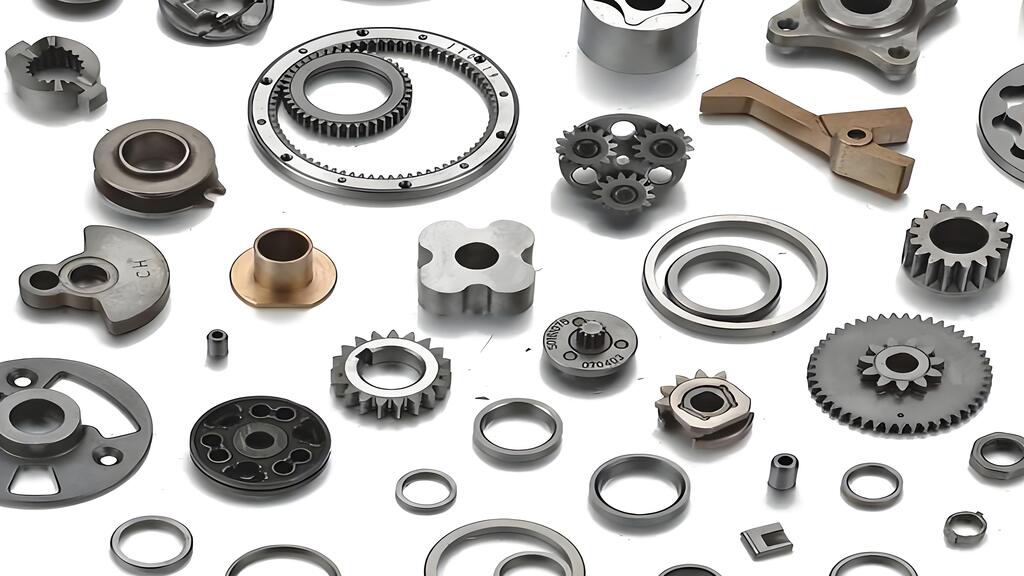


Steel Gears: Expert Guide to Material Selection and Performance

Steel gears pack impressive tensile strength from 490 to 980 N/mm². These gears are the foundations of countless mechanical systems in industries of all types. Their outstanding durability and wear resistance help them excel in demanding applications where reliability cannot be compromised.
Carbon steel gears are the go-to choice because they strike the perfect balance between machinability, wear resistance, and budget-friendly solutions. Engineers can pick from options like stainless steel gears that contain a minimum of 11% chromium with nickel, manganese, and other elements to boost corrosion resistance. Heat treatment during manufacturing can boost hardness up to HRc 63, which creates superior surface durability.
What are gears made of? Carbon steel alloys work great as the standard material for most uses. For tougher environments, specialized tool steels with tungsten, vanadium, molybdenum, and cobalt offer better durability and heat resistance. This piece covers steel types used for gears, heat treatment methods, performance metrics, and how to pick the right material for specific applications. Engineers can use this information to make smart choices when selecting steel spur gears and other gear configurations.
Steel Types Commonly Used in Gear Manufacturing

Material choice leads gear manufacturing and determines how well gears perform in terms of strength, durability, and wear resistance. The right steel type can substantially boost a gear's life and how much load it can handle under specific conditions.
S45C Medium-Carbon Steel for General Gears
S45C is one of the most common medium-carbon steels that manufacturers use for gears. It contains about 0.45% carbon. This balanced mix gives good machinability and decent strength with wear resistance, which makes it perfect for general-purpose steel gears. S45C works well with different heat treatments. Without treatment, it reaches hardness values under 194HB. Thermal refining pushes it to 225-260HB, and induction hardening takes it to 45-55HRC.
Manufacturers use S45C to make spur gears, helical gears, gear racks, bevel gears, and worm gears. The material's accessibility and affordable price make it a go-to choice in the gear industry.
SCM415 and SCM440 Alloy Steels for High Load Applications
When you just need more strength, chromium-molybdenum alloy steels SCM415 and SCM440 are excellent choices. SCM440 packs about 0.40% carbon plus chrome and molybdenum, which makes it stronger than S45C. Thermal refining gets it to 225-260HB hardness, while induction hardening pushes it to 45-60HRC.
SCM415 has less carbon (0.15%) and usually goes through carburizing to reach 55-60HRC surface hardness. This material shines in parts that need high toughness or wear resistance, like cylinder pistons, crankshafts, and heavy-duty gears. Both alloys give you better strength-to-weight ratios than regular carbon steels.
SNCM439 and SNCM420 for Surface-Hardened Gears
SNCM439 and SNCM420 alloy steels are a great way to get top properties for surface-hardened steel gears. SNCM439's high hardness and toughness make it perfect for parts that take heavy hits, such as screws, gears, shafts, and car parts.
SNCM420 works like SCM415 as a carburizing steel with great performance features. The treated surface of SNCM420 becomes super hard with excellent resistance to wear and contact fatigue. The core stays tough enough to handle big impact forces, which makes it perfect for demanding gear jobs that need both surface durability and core strength.
SS400 and SPCC for Low-Strength, Cost-Effective Gears
SS400 and SPCC are affordable options for steel used for gears in light-duty jobs. SS400's tensile strength ranges from 400-510 N/mm². It works best in non-critical structural parts where high strength isn't crucial. SS400 welds and processes easily, but you can't harden it through quenching.
SPCC, a cold-rolled steel plate, contains about 0.15% carbon. Its thin profile works well for smaller, low-strength gears. While it has limits, SPCC gives you an affordable solution when loads stay light.
Stainless Steel Gears: SUS303 vs SUS304 vs SUS440C
Stainless steel gears resist corrosion really well, which makes them perfect for food processing and chemical machinery. SUS303 and SUS304 are austenitic stainless steels with 17-18% chromium and 8-10% nickel.
SUS303 is different from SUS304 because it has more sulfur (≥0.15%). This makes it easier to machine but less resistant to corrosion. Both types reach at least 520 N/mm² tensile strength.
SUS440C, a martensitic stainless steel, contains 16-18% chromium and 0.95-1.20% carbon. Heat treatment can harden this steel, giving it better mechanical properties than austenitic stainless steels. SUS440C's excellent magnetic properties, hardness, and wear resistance make it ideal for specialized gear applications.
Heat Treatment Methods for Steel Gears
Heat treatment changes ordinary steel gears into components that can handle tough mechanical work. Manufacturers can boost material properties like hardness, strength, and wear resistance through controlled heating and cooling. These properties are key to making gears work their best.
Carburizing for Surface Hardness (HRC 55–63)
Carburizing stands out as the most common case hardening method for steel gears that need exceptional surface properties. This thermochemical process heats low-carbon steel parts in a carbon-rich environment. Carbon atoms then move into the surface layer. Gas carburizing is now the most popular method. The gear gets quenched and tempered at low temperatures after carbon soaks in. This creates a surface hardness of 55 to 63 HRC with a hardened layer between 0.3 and 1.2 mm deep.
Carburized steel gears shine because they have two key features - a very hard, wear-resistant surface and a softer, tougher core. This mix helps fight both surface wear and bending fatigue. The process can warp the gear's shape, though, so grinding is needed afterward to keep it accurate.
Induction Hardening for Tooth Surface Durability
Medium-carbon steels with 0.3% carbon or more can use induction hardening as a faster option. This method uses electromagnetic induction to heat specific gear areas before quenching. When working with steel spur gears, this process targets tooth surfaces, tips, and flanks. Sometimes it leaves the root unhardened.
Well-done induction hardening creates a surface hardness of 45 to 55 HRC. The hardened layer goes 1 to 2 mm deep. Large steel gears benefit from this method because it causes less warping than carburizing. This means less machining work afterward.
Thermal Refining: Quenching and Tempering
Thermal refining pairs quenching with high-temperature tempering to improve a gear's mechanical properties throughout. This method affects the whole gear body, not just the surface. It adjusts overall hardness, strength, and toughness to make machining easier.
Steel used for gears that need balanced mechanical properties instead of super-hard surfaces works well with this process. S45C carbon steel reaches 200 to 270 HB after thermal refining. SCM440 alloy steel gets to 230 to 270 HB.
Nitriding for Wear Resistance in Alloy Steels
Nitriding adds nitrogen to the steel surface at 400-600°C, below the critical transformation point. This creates a very hard compound layer. Alloy steels with aluminum, chromium, or molybdenum respond well to this process. The method creates a thin but super-hard case without the warping you get from hotter processes.
Nitriding doesn't need quenching afterward, which helps avoid warping. You can treat finished parts this way and skip costly machining. Nitrided steel gears keep their hardness at higher temperatures (up to 455°C) than carburized ones (only up to 150°C).
Flame Hardening for Localized Strengthening
Flame hardening points an oxyacetylene or oxyhydrogen flame at specific gear spots and quenches them right away. Large steel gears that don't work well with regular processes can use this method effectively and cheaply.
You can flame harden two main ways: spin hardening for gears heavy enough to take heat without warping, and tooth-by-tooth methods that control heat in each section. Water quenching gives you 45-65 HRC hardness, while air quenching reaches 45-63 HRC. This makes it budget-friendly for large gears in small to medium production runs.
Performance Metrics of Steel Gears

Performance metrics are the foundation of proper steel gear selection. Engineers use these measurements to match material properties with application needs. These standards help evaluate material suitability for different operating conditions.
Brinell and Rockwell Hardness Ranges by Material
The hardness of steel gears determines their wear resistance and load capacity. Medium-carbon S45C steel shows hardness values from 194 HB (Brinell hardness) when untreated to 45-55 HRC (Rockwell C scale) after induction hardening. Heat-treated SCM440 alloy steel performs better with hardness values of 28-45 HRC.
Case-hardened gears maintain a core hardness of 30-40 HRC while their surface reaches 55-63 HRC. This creates an ideal mix of surface wear resistance and core toughness. Case-hardened steel gears can handle loads 30-50% higher than through-hardened versions.
Tensile Strength Comparison: S45C vs SCM440
S45C medium-carbon steel has tensile strength ranges of 485-751 MPa, making it ideal for general-purpose uses. SCM440 chromium-molybdenum alloy steel delivers higher tensile strength between 719-1051 MPa. This strength difference matters in high-load applications where failure resistance is vital.
Engineers can estimate tensile strength using hardness-to-strength formulas: Tensile strength = Bhn × 515 (for Brinell numbers up to 175) or Tensile strength = Bhn × 490 (for Brinell numbers above 175).
Tooth Bending Strength and Surface Contact Stress
Steel gears fail primarily through tooth bending and surface contact stress. The Lewis equation helps calculate bending stresses by modeling gear teeth as cantilever beams under load. Hertzian contact stress analysis determines the compressive stress between mating gear teeth.
Smaller tooth sizes and lower pressure angles increase bending stress. This explains why pinions fail before larger gears. Larger gears last longer because their increased radii of curvature result in lower contact stresses.
Dimensional Stability Under Load and Heat
Steel gears change dimensions with temperature. Carbon steel has a thermal expansion coefficient of about 10.8 × 10^-6 mm/mm/°K. This affects precision gear systems that operate across wide temperature ranges.
Manufacturing processes create residual stresses that affect dimensional stability. Surface compressive residual stresses help increase fatigue resistance and delay crack formation. However, uneven stress patterns can cause unexpected deformation, especially in planetary and high-torque transmissions.
Application-Based Steel Gear Selection
The selection of appropriate steel gears depends on how they will be used and their material properties. Different gear types work best under specific conditions, so you must choose them carefully.
Steel Spur Gears for High-Speed Transmission
Steel spur gears lead the way in high-speed power transmission systems because of their high efficiency and simple design. These gears shine in applications that need precision and low noise. Manufacturers commonly use S45C or SCM440 to make steel spur gears for industrial machinery, textile equiPment, and printing mechanisms. The straight-tooth design of these gears helps them mesh smoothly with minimal power loss.
Bevel Gears in High Torque Environments
Bevel gears move power between non-parallel shafts, which makes them perfect for high-torque applications. You'll find them most often in automotive differential systems, where they let wheels spin at different speeds while keeping torque transfer steady. The aerospace industry values their lightweight yet strong properties for control systems. Many industrial machines use spiral and straight bevel gears in their conveyor systems and milling machines.
Worm Gears: Steel Worms with Bronze Wheels
Worm gear systems work best when steel worms pair with bronze wheels because:
- Steel-on-steel components risk galling—their surfaces can weld together under pressure
- Bronze and steel make a great pair with lower friction
- This mix gives excellent wear resistance for tough applications
While worm gears aren't as efficient (30-60%), they are quiet and compact.
Plastic vs Steel Gears in Low-Load Systems
Plastic gears now compete with traditional steel gears in lightweight applications. They run quieter, weigh less, resist corrosion, and cost less. All the same, plastic gears can't handle heavy loads and may change shape over time. Steel remains the top choice when you need continuous operation or work in high temperatures.
Material Pairing and Load Considerations
Material pairing in gear design affects the performance, longevity, and efficiency of mechanical systems by a lot. The right combination depends on the predicted load conditions.
Light Load: Steel vs Resin Combinations
Steel paired with resin materials works great for lightweight applications. Resin gears have tensile strengths of 50–70 MPa, which is nowhere near metallic alternatives. This combination helps with cooling as heat escapes more easily than in resin-to-resin contacts. Tests show that resin gears fail after 500 cycles under load. Broken teeth and powdered material show their limitations. These steel-resin pairings are best suited for applications like instrument drives where loads stay minimal.
Medium Load: Steel vs Copper Alloy Pairing
Copper alloys paired with steel excel in medium-load environments. Brass, which contains copper and zinc, is easy to machine. Phosphor bronze combines copper with tin and phosphorus and delivers excellent wear and corrosion resistance. These copper alloys handle friction against steel components well, making them perfect for moderate-duty applications where steel drives copper-alloy wheels.
Heavy Load: Steel-on-Steel with Heat Treatment
High-stress applications need steel-on-steel configurations with proper heat treatment. Carbon steels must go through hardening processes to reach their best durability, usually hitting 55-63 HRC through carburizing. These combinations won't work reliably in high-stress environments until proper hardness specifications appear on drawings.
Cooling and Lubrication Considerations in Material Pairing
Cooling plays a crucial role in gear longevity. We focused on rotational speed and supply flow rate as they affect heat transfer characteristics. The system's efficiency depends on balancing supply-scavenged oil temperature differences with heat generation power. Metal-polymer pairings can run dry without lubrication, which gives them great damping properties and reduced weight.
Conclusion
Steel gears are the building blocks of many industrial applications because of their strength, durability, and versatility. The choice of material can make or break a gear design and affects both performance and lifespan. Engineers need to know exactly how material properties match operational needs.
We looked at different types of steel in this piece. These range from basic S45C medium-carbon steel to specialized alloys like SCM415 and SCM440 that work well under heavy loads. Stainless steel versions also give better protection against corrosion while keeping the mechanical properties needed for specific uses.
Heat treatment changes steel properties to match particular needs. Carburizing creates very hard surfaces but keeps the cores tough. Induction hardening works faster and causes less distortion. These treatments help engineers find the sweet spot between surface durability and structural strength.
Performance metrics help evaluate which materials work best in different conditions. Hardness associated with wear resistance, and tensile strength shows how much load the gear can handle. The gear's tooth bending strength and resistance to contact stress show how well it handles repeated loads without failing early.
Your application needs to determine the best gear material and setup. Steel spur gears work great in high-speed transmissions, and bevel gears excel with high torque. The way materials pair up is a vital part of how well the system works. Different combinations work better for light, medium, or heavy loads.
Choosing the right material, heat treatment, and pairing creates reliable gear systems that last their expected lifetime. Material science keeps moving forward with new alloys and treatments. Understanding these basic principles gives engineers the knowledge to pick the right steel gear for almost any mechanical system.
Key Takeaways
Understanding steel gear materials and their applications is crucial for engineers designing reliable mechanical systems that must withstand demanding operational conditions.
• Material selection drives performance: S45C medium-carbon steel suits general applications, while SCM440 alloy steel delivers 40% higher tensile strength for heavy-duty systems.
• Heat treatment transforms capabilities: Carburizing achieves 55-63 HRC surface hardness while maintaining tough cores, enabling 30-50% higher load capacity than untreated gears.
• Application-specific pairing matters: Steel-on-steel works for heavy loads, steel-bronze for medium loads, and steel-resin combinations provide cost-effective solutions for light-duty applications.
• Performance metrics guide decisions: Hardness directly correlates with wear resistance, while tensile strength ranges from 485 MPa (S45C) to 1051 MPa (SCM440) determining load-bearing capacity.
• Stainless options expand possibilities: SUS440C martensitic steel offers both corrosion resistance and hardenability, making it ideal for food processing and chemical industry applications.
The key to successful gear design lies in matching material properties with operational demands—considering factors like load capacity, speed, environment, and cost constraints to achieve optimal performance and longevity.
FAQs
Q1. What are the main advantages of using steel gears? Steel gears offer exceptional strength, durability, and wear resistance. They can withstand high loads and provide reliable performance in demanding applications across various industries.
Q2. How does heat treatment affect steel gear performance? Heat treatment processes like carburizing and induction hardening significantly improve the surface hardness and wear resistance of steel gears. This allows them to handle higher loads and increases their overall lifespan.
Q3. What's the difference between S45C and SCM440 steel for gears? S45C is a medium-carbon steel suitable for general-purpose gears, while SCM440 is a chromium-molybdenum alloy steel that offers higher strength and is better suited for high-load applications.
Q4. When should stainless steel gears be used? Stainless steel gears are ideal for applications requiring corrosion resistance, such as in food processing equipment or chemical machinery. They offer a good balance of mechanical properties and rust resistance.
Q5. How do engineers choose the right steel for a specific gear application? Engineers consider factors such as load requirements, operating speed, environmental conditions, and cost constraints. They match these with the material properties of different steel types to select the most suitable option for optimal performance and longevity.