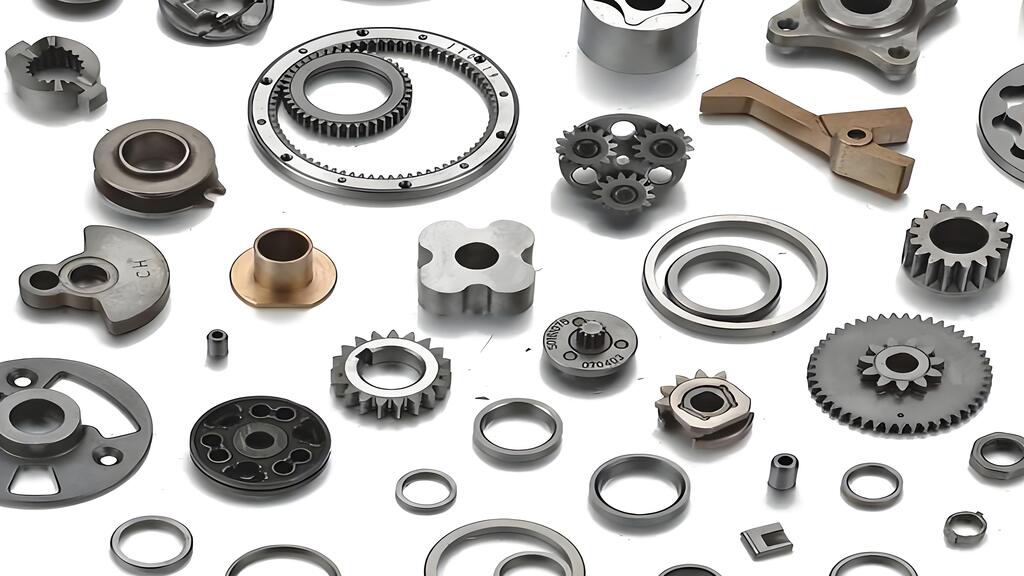


What is Expendable Mold Casting
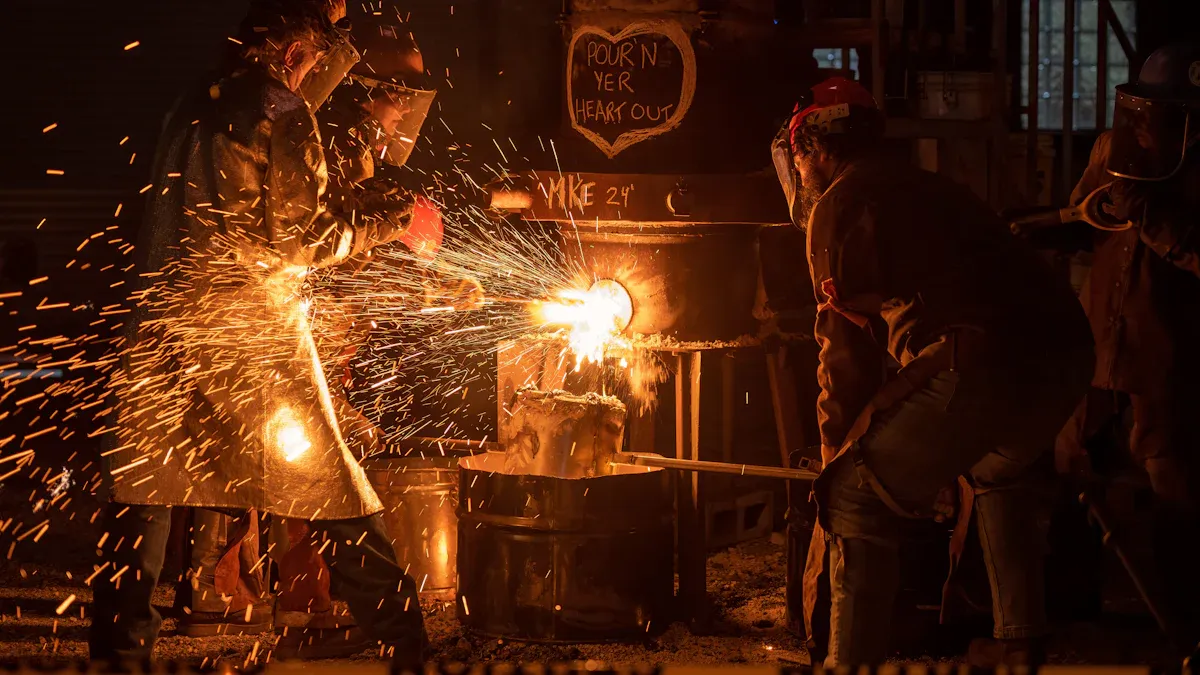
Expendable mold casting represents a unique manufacturing process. It involves creating a mold designed for a single use, which is destroyed after producing Metal Parts. This technique allows manufacturers to achieve intricate shapes and fine details in their castings. The destruction of the mold after each use distinguishes this method from others, making it particularly useful for specialized applications.
Key Takeaways
- Expendable mold casting uses single-use molds, allowing for intricate shapes and fine details in metal parts.
- Common materials for molds include sand, plastic, shell, plaster, and investment materials, each offering unique benefits.
- The process involves creating a mold, pouring molten metal, cooling, and then destroying the mold to retrieve the finished part.
- This casting method is cost-effective for low-volume production, making it ideal for specialized applications.
- Expendable mold casting excels in industries like aerospace and automotive, where precision and design flexibility are crucial.
- While it offers high surface finish quality, the process generates more waste due to the single-use nature of molds.
- Production speed can be slower compared to other methods, making it less suitable for high-volume manufacturing.
- Understanding the advantages and limitations of expendable mold casting helps manufacturers choose the right method for their needs.
The Expendable Mold Casting Process
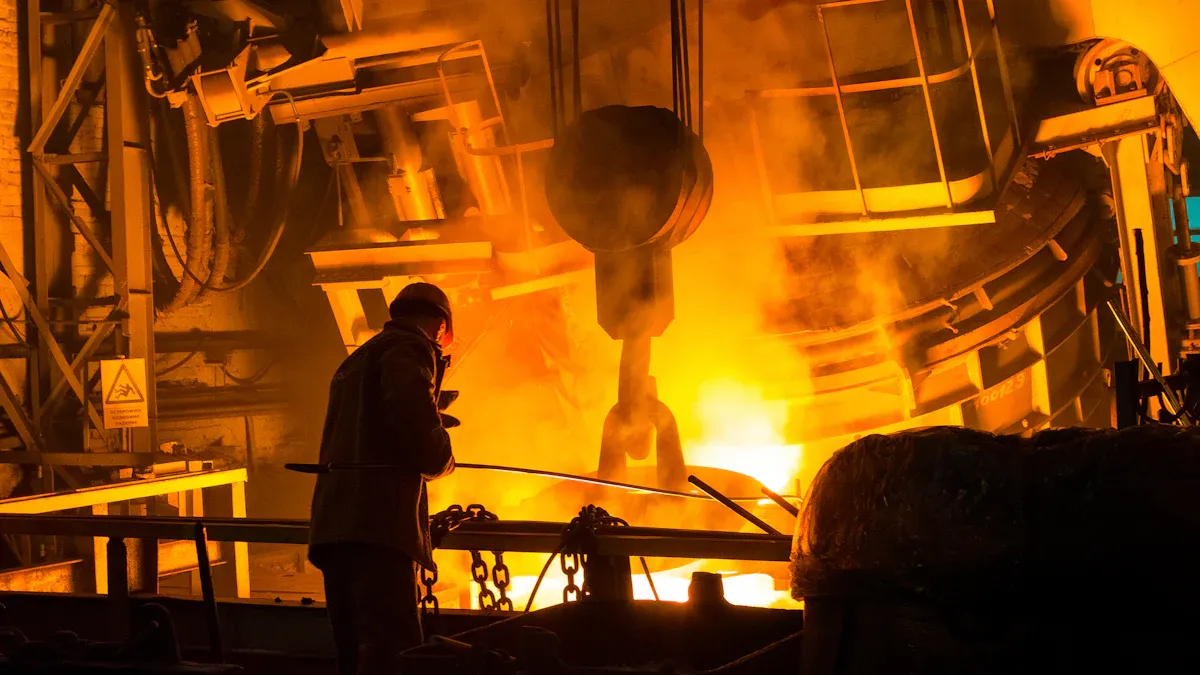
Overview of Expendable Mold Casting
Expendable mold casting is a versatile manufacturing technique that allows for the production of complex metal parts. This process stands out due to its use of temporary molds, which are destroyed after a single use. Manufacturers favor this method for its flexibility and cost-effectiveness. Expendable mold casting enables the creation of intricate geometries, making it ideal for specialized applications where precision is crucial.
Materials Used in Expendable Mold Casting
The choice of materials for expendable molds significantly impacts the casting process. Common materials include:
- Sand
- Plastic
- Shell
- Plaster
- Investment (Lost-Wax Technique)
These materials provide various properties that cater to different casting needs. For instance, sand casting is popular for its availability and ease of use, while investment casting offers superior detail and surface finish.
Steps Involved in Expendable Mold Casting
The expendable mold casting process consists of several key steps:
Mold Creation
The first step involves creating the mold. Manufacturers typically use sand or other materials to form the mold around a pattern. This pattern represents the final product's shape. The mold must be designed to withstand the pouring of molten metal, ensuring it maintains its integrity during the process.
Pouring the Metal
Once the mold is ready, the next step is pouring the molten metal into it. This requires careful handling to avoid spills and ensure that the metal fills all cavities of the mold. Safety precautions are essential during this stage. Workers should wear personal protective equiPment (PPE) such as gloves, safety goggles, and respirators to protect against hazards associated with high temperatures and toxic materials.
Cooling and Solidification
After pouring, the metal needs time to cool and solidify. This cooling period varies depending on the type of metal used and the thickness of the casting. During this phase, the metal transitions from a liquid to a solid state, taking the shape of the mold.
Mold Destruction
Finally, once the metal has cooled and solidified, the mold is destroyed to retrieve the finished part. This step highlights the expendable nature of the process, as the mold cannot be reused. The destruction of the mold allows for quick adjustments and variations in design, making expendable mold casting particularly suited for limited production runs and intricate geometries.
Tip: Always follow the manufacturer's instructions during each step to minimize risks and ensure safety.
Types of Expendable Mold Casting
Expendable mold casting encompasses several methods, each with unique characteristics and applications. Understanding these types helps manufacturers choose the right approach for their specific needs.
Sand Casting
Sand casting is one of the most widely used methods in expendable mold casting. This technique utilizes a mixture of sand and a binding agent to create molds. The flexibility of sand casting allows it to accommodate both ferrous and non-ferrous materials.
Here are some defining characteristics of sand casting compared to other expendable mold casting types:
| Characteristic | Sand Casting | Other Expendable Mold Casting Types |
|---|---|---|
| Mold Material | Sand mixture, reusable after cooling | Various materials, often single-use |
| Flexibility | Can cast ferrous and non-ferrous materials | Varies by method |
| Scalability | Suitable for small and large-scale production | Typically more limited |
| Cost-Effectiveness | Lower costs due to reusable materials | Generally higher costs |
| Typical Applications | Large machinery components, art pieces, pipes | Varies widely |
The cost-effectiveness of sand casting makes it an attractive option for many manufacturers. It is suitable for both small batches and large-scale productions, allowing for efficient use of resources.
Investment Casting
Investment casting, also known as the lost-wax process, offers high precision and intricate detail. This method involves creating a wax pattern, coating it with a ceramic shell, and then melting out the wax to form the mold.
Investment casting has several advantages and disadvantages:
| Advantages | Disadvantages |
|---|---|
| Close dimensional tolerances | Higher cost compared to other casting methods |
| Can cast both ferrous and non-ferrous metals | Longer product-cycle time |
| Good as-cast finish | Limitations on the size of parts that can be cast |
| Capable of complex shapes and intricate details | Costs may overshadow advantages when simpler methods suffice |
| Flexibility in design for difficult-to-machine alloys | N/A |
This method is particularly beneficial for producing components that require tight tolerances and complex geometries. However, the higher costs associated with investment casting may limit its use for simpler parts.
Shell Casting
Shell casting is another method within the realm of expendable mold casting. This technique employs resin-coated sand to create a thin shell mold. The process involves heating a pattern to bond the sand grains, resulting in a mold that offers superior surface detail.
The differences between shell casting and other methods are notable:
| Casting Method | Process Description | Outcome Characteristics |
|---|---|---|
| Shell Molding | Uses resin-coated sand to create a shell mold by heating a pattern and bonding sand grains. | Higher surface detail, minimal draft requirements |
| Sand Casting | Involves creating a mold from sand and pouring molten metal into it. | Generally lower surface finish and detail |
| Investment Casting | Involves creating wax patterns, coating them with ceramic, and melting out the wax. | High precision, complex geometries |
Shell casting provides a balance between the detail of investment casting and the cost-effectiveness of sand casting. It is ideal for applications requiring high surface quality and intricate designs.
Lost Foam Casting
Lost foam casting is an innovative method within the realm of expendable mold casting. This technique utilizes foam patterns that are coated with a refractory material to create molds. When molten metal is poured into the mold, it vaporizes the foam, leaving behind a precise metal part. This process allows for the production of complex shapes with minimal waste.
One of the primary benefits of lost foam casting is its cost efficiency. Manufacturers can create intricate designs at a lower cost compared to traditional casting methods. The process also produces parts with excellent surface finishes and tight tolerances, which reduces the need for additional machining. Furthermore, lost foam casting is versatile, enabling quick production of prototypes and custom parts without the need for expensive molds.
However, challenges accompany this method. Limited material options exist, as not all metals are suitable for lost foam casting. The foam patterns can be fragile and require careful handling to prevent damage. Additionally, the process necessitates specialized equipment and skilled labor to ensure quality and avoid defects.
Here is a summary of the benefits and challenges associated with lost foam casting:
| Benefits | Challenges |
|---|---|
| Cost efficiency | Material constraints |
| Dimensional accuracy | Need for skilled labor |
| Flexibility in design | Delicate foam shapes require careful handling |
Advantages of Expendable Mold Casting
Expendable mold casting offers several advantages that make it a preferred choice for manufacturers. These benefits include design flexibility, high surface finish quality, and material versatility.
Design Flexibility in Expendable Mold Casting
One of the most significant advantages of expendable mold casting is its design flexibility. This method allows manufacturers to produce intricate geometries that are challenging to achieve with permanent molds. The process provides great design freedom and material variability, enabling the creation of customized parts.
- Expendable mold casting is particularly effective for items with complex geometry or internal features.
- Manufacturers can easily modify designs without the need for new molds, which saves time and reduces costs.
This flexibility makes expendable mold casting an ideal choice for industries requiring unique and specialized components.
Surface Finish Quality in Expendable Mold Casting
The surface finish quality achieved through expendable mold casting is another notable advantage. While permanent mold casting typically offers superior surface finishes, expendable mold casting can still produce high-quality results.
- The quality of surface finish on as-cast products is notably high.
- Expendable mold casting provides better dimensional tolerance and more uniform mechanical properties compared to some traditional methods.
Manufacturers often find that the surface finish meets or exceeds their expectations, making it suitable for a wide range of applications.
Material Versatility in Expendable Mold Casting
Expendable mold casting supports a wide range of metals and alloys, enhancing its versatility. This method accommodates various materials, including:
- Iron
- Aluminum
- Tin
- Zinc
- Magnesium
- Copper
- Lead alloys
- Gray iron
- Ductile iron
- Gold
- Silver
Additionally, it can work with other metals such as brass, bronze, and titanium. This broad material compatibility allows manufacturers to select the best metal for their specific application, ensuring optimal performance and durability.
The ability to use diverse materials further solidifies the position of expendable mold casting as a valuable manufacturing process.
Cost-Effectiveness for Low Volumes in Expendable Mold Casting
Expendable mold casting proves to be a highly cost-effective solution for low-volume production runs. This method allows manufacturers to produce parts without the significant upfront costs associated with permanent molds. The affordability of expendable molds makes this process particularly appealing for small-scale operations.
-
Low Tooling Costs: Expendable sand molds are inexpensive and easy to produce. This characteristic enhances cost-effectiveness for small-scale operations. Manufacturers can quickly create molds without incurring high expenses.
-
Ideal for Large Components: Sand casting, a common type of expendable mold casting, is recognized as one of the cheapest casting methods. It is especially suitable for producing large components in low-volume runs. This method allows manufacturers to achieve significant savings while still delivering quality products.
-
Flexibility in Production: The expendable nature of the molds allows for quick adjustments in design. Manufacturers can easily modify their molds to accommodate changes in specifications or to produce different parts. This flexibility further contributes to cost savings, as it reduces the need for new tooling.
-
Efficient Resource Use: By utilizing expendable molds, manufacturers can optimize their resources. They can produce only the quantity needed without the burden of excess inventory. This efficiency is crucial for businesses looking to minimize waste and maximize profitability.
Disadvantages of Expendable Mold Casting
Production Speed Limitations
Expendable mold casting often faces production speed limitations. The process of creating molds for each casting can be time-consuming. Manufacturers must invest time in mold preparation, which can slow down overall production rates. This delay becomes significant when compared to methods like permanent mold casting, where molds can be reused multiple times. Consequently, businesses requiring rapid production may find expendable mold casting less suitable for their needs.
Mold Material Limitations
The choice of mold materials imposes certain limitations on the size and complexity of parts produced through expendable mold casting. The following table outlines some of these limitations:
| Limitation | Description |
|---|---|
| Destruction of molds | Molds are destroyed after use, limiting production. |
| Restricted reusability | Molds cannot be reused, increasing costs. |
| Challenges with smaller runs | Difficulties arise when producing smaller quantities. |
These factors can hinder manufacturers' ability to produce large quantities of complex parts efficiently. The inability to reuse molds not only raises costs but also complicates the production process, especially for smaller runs.
Waste Generation Concerns
Waste generation is another concern associated with expendable mold casting. This method typically results in higher material waste compared to permanent mold casting. The molds used in expendable casting are single-use, leading to significant waste after each production cycle. In contrast, permanent mold casting allows for multiple uses of the same mold, resulting in less overall waste.
- Expendable mold casting generates higher material waste because the molds are used only once and then discarded.
- Permanent mold casting allows for multiple uses of the same mold, resulting in less overall waste.
This increased waste generation can pose environmental challenges and impact the overall cost-effectiveness of the process. Manufacturers must consider these factors when deciding whether expendable mold casting aligns with their sustainability goals and production efficiency.
Not Suitable for High-Volume Production
Expendable mold casting presents significant limitations when it comes to high-volume production. While this method excels in producing intricate and customized parts, it struggles to meet the demands of large-scale manufacturing. Several factors contribute to this challenge:
-
Mold Creation Time: Each casting requires a new mold, which can be time-consuming to create. The process of designing and preparing molds for each part can lead to delays in production schedules. This time investment becomes impractical when manufacturers need to produce large quantities quickly.
-
Cost Implications: The cost of producing individual molds adds up significantly in high-volume scenarios. Manufacturers face increased expenses due to the need for multiple molds, which can outweigh the benefits of using expendable mold casting. In contrast, methods like permanent mold casting allow for the reuse of molds, reducing overall costs.
-
Production Rate: The overall production rate for expendable mold casting is generally slower compared to other casting methods. The sequential nature of mold creation, metal pouring, cooling, and mold destruction limits the number of parts produced within a given timeframe. This slower pace can hinder a manufacturer’s ability to meet market demands efficiently.
-
Material Waste: Each mold's destruction after a single use generates considerable waste. In high-volume production, this waste can become a significant concern, both environmentally and economically. Manufacturers may seek methods that minimize waste and maximize resource efficiency.
-
Quality Control: Maintaining consistent quality across a large number of parts can be challenging with expendable molds. Variations in mold creation and metal pouring can lead to inconsistencies in the final products. This inconsistency can be detrimental in industries where precision is critical.
Tip: For manufacturers focused on high-volume production, exploring alternative casting methods may yield better results. Techniques such as Die Casting or permanent mold casting can provide the efficiency and cost-effectiveness needed for large-scale operations.
Applications of Expendable Mold Casting

Expendable mold casting finds extensive applications across various industries due to its versatility and ability to produce complex shapes. This section explores three significant areas where this casting method excels: aerospace components, automotive parts, and art and sculpture.
Aerospace Components
In the aerospace industry, precision and reliability are paramount. Expendable mold casting plays a crucial role in manufacturing components such as turbine blades, housings, and structural parts. The ability to create intricate geometries allows engineers to design lightweight yet strong components that meet stringent safety standards.
- Benefits:
- High dimensional accuracy
- Capability to use high-performance alloys
- Flexibility in design modifications
Manufacturers often choose expendable mold casting for its ability to produce parts that withstand extreme conditions, such as high temperatures and pressures.
Automotive Parts
The automotive sector also benefits significantly from expendable mold casting. This method produces various components, including engine blocks, transmission cases, and intricate brackets. The flexibility of this casting technique allows for rapid prototyping and small production runs, which is essential in the fast-paced automotive market.
- Advantages:
- Cost-effective for low-volume production
- Ability to create complex shapes that enhance vehicle performance
- Compatibility with a wide range of metals
Automakers appreciate the efficiency of expendable mold casting, especially when developing new models or making design changes. This adaptability helps them stay competitive in a constantly evolving industry.
Art and Sculpture
Expendable mold casting has made a significant impact in the world of art and sculpture. Artists utilize this technique to create unique pieces that require intricate details and complex forms. Notable examples include:
| Artwork Title | Artist | Year Created |
|---|---|---|
| Mamelles | Louise Bourgeois | 1991, cast 2001 |
| Thumb | César (César Baldaccini) | 1965 |
| Three Ways: Mould Hole and Passage | Sir Antony Gormley OBE RA | 1981–2 |
| Tra-La-La | Phillip King | 1963 |
| Michelangelo’s ‘David’ | Sir Eduardo Paolozzi | ?1987 |
| Quartered Meteor | Lynda Benglis | 1969, cast 1975 |
| Head of a Woman (Fernande) | Pablo Picasso | 1909 |
| Ghost | Ron Mueck | 1998 |
| William Jeffrey with Device | John Davies | 1972 |
| Portrait of a Young Man Standing | Leonard McComb | 1963–83 |
| Reclining Figure | Henry Moore OM, CH | 1951 |
| Sculpture to be Lost in the Forest | Jean Arp (Hans Arp) | 1932, cast c.1953–8 |
Artists appreciate the ability to create detailed works that capture their vision. The flexibility of expendable mold casting allows for experimentation with different materials and designs, resulting in innovative art pieces.
Medical Devices
Expendable mold casting plays a vital role in the production of medical devices. This method excels in creating highly detailed and complex geometries, which are essential for the functionality of various medical equipment. Manufacturers often choose expendable mold casting for its precision and ability to accommodate intricate designs.
Medical devices such as surgical instruments, implants, and diagnostic equipment benefit significantly from this casting technique. The following list highlights some common medical devices produced using expendable mold casting:
- Surgical Instruments: Tools like scalpels, forceps, and scissors require precise shapes and sharp edges. Expendable mold casting allows for the production of these instruments with high accuracy.
- Implants: Devices such as hip and knee replacements demand intricate designs to ensure proper fit and function. The flexibility of expendable mold casting enables manufacturers to create customized implants tailored to individual patient needs.
- Diagnostic Equipment: Components for devices like MRI machines and ultrasound equipment often require complex shapes. Expendable mold casting provides the necessary detail and precision for these critical components.
The medical industry prioritizes precision, making expendable mold casting an ideal choice. This method allows for the production of parts that meet stringent regulatory standards. Manufacturers can achieve tight tolerances and high-quality surface finishes, which are crucial for ensuring patient safety and device reliability.
Tip: When selecting a casting method for medical devices, consider the specific requirements of the application. Expendable mold casting often provides the best balance of detail and cost-effectiveness for low to medium production volumes.
In addition to precision, the versatility of materials used in expendable mold casting enhances its appeal in the medical field. Manufacturers can work with various metals and alloys, including stainless steel and titanium. These materials offer excellent biocompatibility and strength, making them suitable for medical applications.
Furthermore, the ability to quickly modify designs without the need for new molds allows manufacturers to adapt to changing market demands. This flexibility is particularly beneficial in the fast-paced medical industry, where innovation is constant.
Comparison with Other Casting Methods
Expendable mold casting differs significantly from other casting methods, particularly permanent mold casting and die casting. Understanding these differences helps manufacturers choose the most suitable method for their specific needs.
Permanent Mold Casting
Permanent mold casting utilizes reusable molds made from metal. This method allows for faster production rates and lower costs per unit in high-volume manufacturing. However, the initial tooling costs are considerably higher compared to expendable mold casting. The following table summarizes the key differences between these two methods:
| Aspect | Expendable Mold Casting | Permanent Mold Casting |
|---|---|---|
| Start-up Costs | Low cost of tooling used on expendable molds. | Very costly tooling of metal molds. |
| Cost Per Unit | More expensive with a high cost per part. | Lower per-part cost at large-volume manufacturing. |
| Production Speed | Slower due to longer cooling processes. | Quicker for large production runs. |
| Grain Structure | Less uniform, larger grains, less strength. | Fine and regular grains, improved strength. |
| Porosity and Defects | More internal defects due to porous molds. | Fewer internal defects, stronger and reliable. |
Manufacturers often prefer permanent mold casting for large production runs due to its efficiency and cost-effectiveness. However, expendable mold casting remains advantageous for low-volume or highly intricate parts.
Die Casting
Die casting is another popular method that involves forcing molten metal into a mold under high pressure. This technique is ideal for producing large quantities of small to medium-sized parts with excellent surface finishes. Die casting typically offers faster production speeds than expendable mold casting. However, it requires higher initial investment costs for the molds.
The following table highlights the differences between expendable mold casting and die casting:
| Aspect | Expendable Mold Casting | Die Casting |
|---|---|---|
| Startup Costs | Low tooling costs used in expendable molds. | High tooling costs for durable metal molds. |
| Unit Costs | More expensive per part due to single-use molds. | Lower costs per part in mass production. |
| Production Speed | Slower due to mold creation and longer cooling. | Faster production rates due to pressure application. |
| Durability | Molds produce only one piece, increasing cost per piece. | Metal molds have a long lifespan, reducing long-term costs. |
| Energy Consumption | Higher energy consumption per unit, especially for complex molds. | Generally requires less energy. |
| Material Utilization | More material waste due to single-use molds. | Minimal waste with great material flow. |
| Recyclability | Molds generally not recyclable; aluminum can be recycled. | Aluminum is easily recyclable and profitable after use. |
Die casting excels in producing high volumes of parts with consistent quality. However, for specialized applications requiring intricate designs, expendable mold casting remains a viable option.
Cost and Efficiency Comparison
When comparing the cost and efficiency of expendable mold casting with other methods, several factors come into play. Expendable mold casting generally incurs lower startup costs but results in higher unit costs due to the single-use nature of the molds. In contrast, permanent mold casting and die casting offer lower costs per unit in high-volume production but require significant initial investments.
Tip: Manufacturers should evaluate their production needs, budget constraints, and desired part characteristics when selecting a casting method. Each method has its strengths and weaknesses, making it essential to choose wisely based on specific project requirements.
Suitability for Different Applications
Expendable mold casting proves highly suitable for various applications across multiple industries. Its unique characteristics allow manufacturers to produce intricate and precise components tailored to specific needs. Below is a summary of how different casting methods align with the requirements of aerospace, automotive, and medical applications.
| Casting Method | Aerospace Applications | Automotive Applications | Medical Applications |
|---|---|---|---|
| High-Pressure Die Casting | Lightweight components, precision parts | Engine parts, fuel injection systems | N/A |
| Low-Pressure Die Casting | N/A | Suspension parts, complex shapes | N/A |
| Investment Casting | Turbine blades, structural components | Precision parts, robust and lightweight | Surgical instruments, prosthetics, implants |
| Sand Casting | N/A | N/A | N/A |
In the aerospace sector, investment casting plays a crucial role. This method allows for the creation of turbine blades and structural components that must endure high temperatures and pressures. The precision and detail achievable through investment casting ensure that these components meet stringent safety and performance standards.
The automotive industry also benefits significantly from expendable mold casting. Manufacturers utilize this method to produce precise engine parts and fuel injection systems. These components are vital for vehicle performance and safety. Additionally, low-pressure die casting is effective for creating suspension parts and complex shapes, enhancing vehicle handling and stability.
In the medical field, investment casting is essential for manufacturing biocompatible components. Surgical instruments and implants require intricate geometries and high precision. The ability to produce these components with tight tolerances ensures their functionality and reliability in critical applications.
Overall, expendable mold casting demonstrates versatility across various sectors. Its ability to accommodate complex designs and diverse materials makes it an attractive option for manufacturers. As industries continue to evolve, the demand for precise and customized components will likely drive further adoption of expendable mold casting techniques.
Tip: When selecting a casting method, consider the specific requirements of the application. Each method has unique advantages that can enhance product performance and efficiency.
By understanding the suitability of expendable mold casting for different applications, manufacturers can make informed decisions that align with their production goals and industry standards.
Expendable mold casting serves as a versatile and effective method for producing complex metal parts. This technique offers unique advantages, such as design flexibility and material versatility, making it suitable for various applications. However, it also presents disadvantages, including production speed limitations and waste generation concerns. By understanding the processes and types of expendable mold casting, manufacturers can make informed decisions that align with their specific needs and production goals.
FAQ
What is the primary advantage of expendable mold casting?
Expendable mold casting offers significant design flexibility. Manufacturers can create intricate shapes and complex geometries that are difficult to achieve with permanent molds.
How does expendable mold casting differ from permanent mold casting?
Expendable mold casting uses single-use molds, while permanent mold casting employs reusable molds. This distinction affects production speed, cost, and the types of parts produced.
What materials are commonly used in expendable mold casting?
Common materials include sand, plastic, shell, plaster, and investment materials. Each material offers unique properties suited for different casting needs.
Is expendable mold casting suitable for high-volume production?
No, expendable mold casting is not ideal for high-volume production. The time and cost associated with creating new molds for each part limit its efficiency in large-scale manufacturing.
What industries benefit from expendable mold casting?
Industries such as aerospace, automotive, art, and medical devices benefit from expendable mold casting. This method allows for the production of complex and precise components tailored to specific applications.
Can expendable mold casting produce parts with tight tolerances?
Yes, expendable mold casting can achieve tight tolerances, especially with methods like investment casting. This precision is crucial for applications requiring high accuracy.
What are the environmental concerns associated with expendable mold casting?
Expendable mold casting generates more waste due to single-use molds. Manufacturers must consider the environmental impact and explore recycling options for materials used in the process.
How does the cost of expendable mold casting compare to other methods?
Expendable mold casting typically incurs higher costs per unit due to single-use molds. However, it remains cost-effective for low-volume production runs compared to permanent mold casting or die casting.