

When to Choose Magnesium Die Casting for Your Project
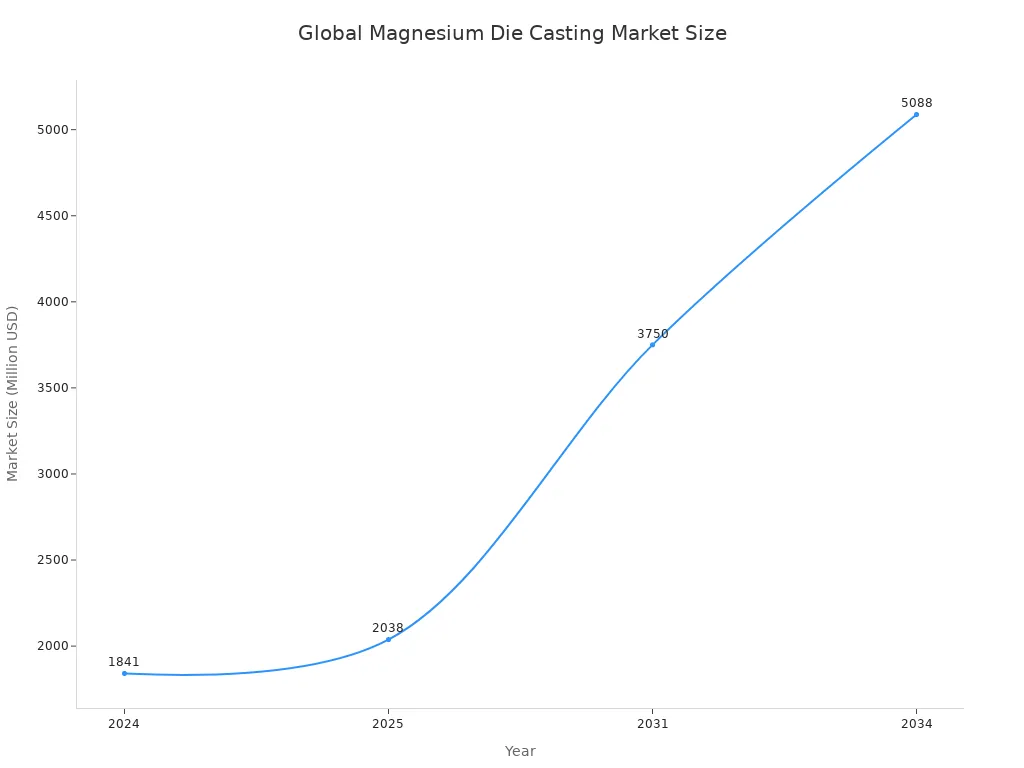
Magnesium Die Casting offers a unique combination of properties. These properties make it an ideal choice for specific project requirements. The global magnesium die casting market is experiencing significant growth. It was valued at USD 1.5 billion in 2024. Projections indicate it will reach USD 3.2 billion by 2033, growing at a CAGR of 10.5% from 2026 to 2033. The automotive parts magnesium die casting market expects a CAGR of 5.05% from 2024-2033. This growth highlights the increasing demand for magnesium components. Engineers and product designers must understand these characteristics. This understanding is crucial for optimal material and process selection.
Key Takeaways
- Magnesium die casting makes strong, light Metal Parts. It uses molten magnesium injected into a mold.
- Magnesium parts are much lighter than aluminum parts. This helps save fuel in cars and planes.
- Magnesium blocks electronic interference well. This protects sensitive electronics in devices.
- Magnesium helps cool down hot parts. It moves heat away from electronics and LED lights.
- Magnesium can make complex shapes with thin walls. This allows for detailed and precise designs.
- Magnesium costs more at first than aluminum or zinc. But its benefits can save money over time.
- Magnesium needs special coatings to prevent rust. It also needs careful handling during manufacturing due to fire risks.
Understanding Magnesium Die Casting: Process and Properties
What is Magnesium Die Casting?
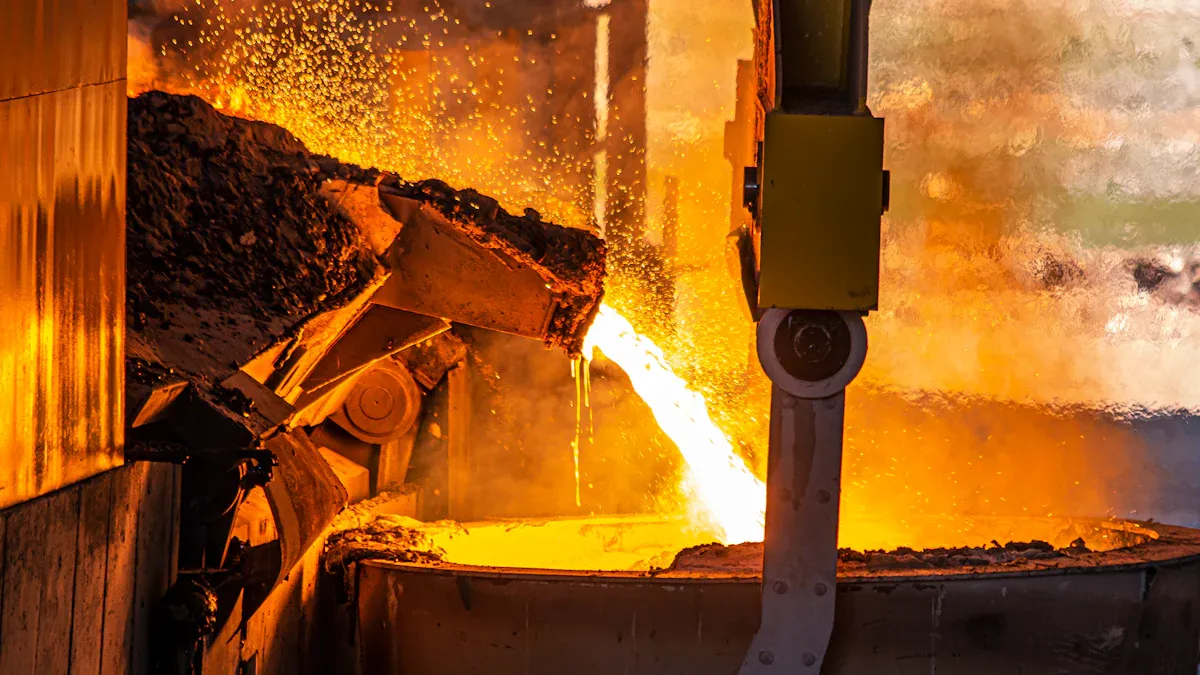
Magnesium die casting is a manufacturing process that produces precisely shaped metal parts. It involves injecting molten magnesium alloy into a steel mold, known as a die, under high pressure. This method allows for the creation of complex geometries with excellent surface finishes.
High-Pressure Injection Molding Process
The high-pressure injection molding process for magnesium is highly efficient. Manufacturers melt magnesium alloys in a furnace. They then inject the molten metal into a die cavity at high speed and pressure. This rapid injection ensures the metal fills the mold, capturing intricate details. The metal solidifies quickly, allowing for fast cycle times and high production volumes.
Advantages of Hot-Chamber Die Casting for Magnesium
Hot-chamber die casting is particularly advantageous for magnesium alloys. This process keeps the melting pot and injection mechanism submerged in the molten metal. This design promotes continuous operation and reduces oxidation. Magnesium alloys are easier to cast than metals like aluminum due to their compatibility with the hot-chamber die-casting process. Die-casting experts prefer magnesium alloys over aluminum alloys for making parts with complex designs. Magnesium alloys exhibit high fluidity and good castability, which helps in reducing porosity during die mold filling.
Unique Properties of Magnesium Alloys
Magnesium alloys possess a distinct set of properties that make them valuable for various applications. These characteristics differentiate them from other common casting materials.
Exceptional Strength-to-Weight Ratio
Magnesium alloys offer an exceptional strength-to-weight ratio. This means they provide significant structural integrity while remaining remarkably light. This property is crucial for applications where minimizing mass is a priority without compromising performance.
Superior EMI/RFI Shielding Capabilities
Magnesium alloys naturally provide superior electromagnetic interference (EMI) and radio frequency interference (RFI) shielding. Their metallic structure effectively blocks unwanted electromagnetic radiation. This makes them ideal for electronic enclosures protecting sensitive components.
Excellent Thermal Conductivity for Heat Dissipation
Magnesium alloys exhibit excellent thermal conductivity. They efficiently transfer heat away from critical components. This property is vital for managing heat in electronic devices and other applications where temperature control is essential for optimal performance and longevity.
High Dimensional Stability and Tight Tolerances
Parts produced through Magnesium Die Casting demonstrate high dimensional stability. They maintain their precise shape and size even under varying temperatures. This process also achieves tight tolerances, ensuring components fit together accurately without extensive post-processing.
Lightweight Characteristics Compared to Other Metals
Magnesium is the lightest structural metal. Its lightweight characteristics significantly reduce the overall weight of finished products. This advantage is particularly beneficial in industries like automotive and aerospace, where every gram saved contributes to improved efficiency and performance.
Key Scenarios for Choosing Magnesium Die Casting
Engineers and designers often select magnesium die casting for projects with specific performance demands. This material excels in applications where its unique properties offer significant advantages over other metals. Understanding these scenarios helps in making informed material choices.
When Weight Reduction is Critical
Weight reduction remains a primary driver for many industries. Magnesium die casting provides an excellent solution for achieving lighter components without sacrificing strength.
Automotive Components for Fuel Efficiency
The automotive industry constantly seeks ways to reduce vehicle weight. Lighter vehicles consume less fuel and produce fewer emissions. Magnesium die casting offers substantial weight savings for various automotive parts. For example, replacing steel with magnesium die casting can reduce the weight of certain components by as much as 50%, especially when incorporating strengthening ribs. A door panel, for instance, can see a 48% weight reduction when switching from steel to magnesium. Magnesium is also approximately 33% lighter than aluminum, making it a superior choice for weight-sensitive applications in vehicles.
Aerospace Parts for Performance Enhancement
In aerospace, every gram saved contributes to improved fuel efficiency and increased payload capacity. Magnesium alloys are crucial for enhancing aircraft performance. Manufacturers use magnesium die castings for critical components such as engine mounts, satellite components, and missile parts. They also appear in interior components, brackets, and panels, where their lightweight nature is highly beneficial.
Portable Electronics for User Convenience
Consumers demand lighter and more portable electronic devices. Magnesium die casting provides the ideal material for casings and internal frames in laptops, tablets, and smartphones. Its low density allows for sleek designs and comfortable handling, directly enhancing user convenience.
Projects Requiring Advanced EMI/RFI Shielding
Electronic devices require protection from electromagnetic interference (EMI) and radio frequency interference (RFI). Magnesium die castings naturally offer superior shielding capabilities.
Telecommunications Infrastructure
Telecommunications equipment, including base stations and network devices, must operate reliably in electromagnetically noisy environments. Magnesium enclosures effectively shield sensitive internal components from external interference. This ensures stable signal transmission and prevents data corruption.
Sensitive Medical Devices
Medical devices often contain highly sensitive electronics. These devices require robust EMI/RFI shielding to function accurately and safely. Magnesium die casting offers effective EMI and RFI shielding, particularly beneficial for electronic enclosures in medical applications. This makes it ideal for surgical instruments, medical robotics, mobile and fixed scanning devices, handheld equipment, microelectronics, and vital signs monitors. Magnesium die casting possesses outstanding EMI and RFI shielding properties, making it ideal for connectors and electrical housings in these critical applications.
Applications Benefiting from High Thermal Conductivity
Efficient heat dissipation is essential for the longevity and performance of many electronic and lighting products. Magnesium alloys excel in thermal management.
LED Lighting Housings and Fixtures
LED lights generate heat, which can reduce their lifespan if not properly managed. Magnesium die-cast housings and fixtures efficiently draw heat away from the LED components. This ensures optimal operating temperatures and extends the product's service life.
Electronic Enclosures for Heat Management
Electronic enclosures often house components that generate significant heat. Magnesium alloy's high thermal conductivity is a critical advantage in die-cast cabinets, enabling efficient heat dissipation. This property is particularly beneficial in electronic applications to prevent overheating and maintain optimal component operation. Magnesium's high thermal conductivity allows it to quickly disperse heat, making it an ideal material for electronic enclosures and heat sinks where efficient heat dissipation is essential for electronic devices. Magnesium alloys possess high thermal conductivity, approximately 150 W/mK, which makes them excellent for dissipating heat. This characteristic is particularly valuable for components in electronics and automotive industries that are exposed to high temperatures (150-200 °C).
| Feature | Magnesium Alloy | Aluminum |
|---|---|---|
| Strength-to-weight ratio | Higher | Lower |
| Thermal conductivity | Superior | Inferior |
Demanding High Precision and Complex Geometries
Magnesium die casting excels in producing components with intricate designs and tight tolerances. The process allows manufacturers to achieve complex shapes that would be difficult or impossible with other manufacturing methods. This capability makes it invaluable for industries requiring highly precise parts.
Intricate Industrial Components
Manufacturers frequently choose magnesium die casting for intricate industrial components. The process allows for the creation of complex geometries, especially with extremely thin walls. It also ensures good dimensional accuracy for durable parts manufacturing. This design flexibility enables engineers to develop highly precise and complex shapes. For example, magnesium die casting produces:
- Laptop frames
- Compact camera housings
- Lightweight surgical instruments
These parts benefit from the ability to cast thin walls and fine details. The process also provides RFI shielding for sensitive electronics, a crucial feature in many modern devices.
Parts with Thin Wall Sections
The high fluidity of molten magnesium alloys allows them to fill complex mold cavities, even those with very thin wall sections. This capability is a significant advantage for designers seeking to reduce material usage and overall part weight without compromising structural integrity. Producing parts with thin walls also contributes to faster cooling times during the casting process, which can improve production efficiency.
When a High Strength-to-Weight Ratio is Non-Negotiable
Many applications demand materials that offer both high strength and minimal weight. In these scenarios, magnesium die casting becomes an indispensable choice. Its superior strength-to-weight ratio allows for robust designs that remain exceptionally light.
Structural Components in High-Stress Environments
Magnesium alloys provide the best strength-to-weight ratio when compared to aluminum and steel. This characteristic allows them to withstand significant stress and force while remaining lightweight. This makes them highly suitable for industries like aerospace and automotive engineering, where weight reduction is crucial for performance and fuel efficiency. Precipitation-hardened magnesium alloys exhibit a strength-to-weight ratio comparable to strong aluminum alloys. While the overall mechanical properties of magnesium alloys generally tend to be lower than the strongest aluminum alloys, magnesium's lower density allows it to handle greater column loading per unit weight and possess a higher specific modulus. Rapidly solidified magnesium alloy powders can achieve tensile strengths of up to 740 MPa. This strength level is twice that of traditional magnesium alloys and comparable to the strongest aluminum alloys. Aluminum alloys typically provide a balanced combination of yield strength and weight, making them versatile for structural applications. However, magnesium alloys, despite having lower yield strengths, are valued for their lightweight properties and are preferred in applications where weight reduction is a primary concern.
Performance-Critical Parts in Sports Equipment
The high strength-to-weight ratio of magnesium alloys also finds extensive use in performance-critical sports equipment. Athletes and enthusiasts demand gear that is both durable and light, enhancing their performance and comfort. Magnesium die casting delivers these benefits.
| Industry | Magnesium Alloy Components |
|---|---|
| Sports Equipment | bicycle frames, skis, golf clubs, snowboard bindings |
These components leverage magnesium's properties to create equipment that is easy to handle, responsive, and resilient under strenuous use.
Magnesium Die Casting Versus Other Materials: A Comparative Analysis
Engineers often compare magnesium die casting with other common materials like aluminum and zinc. Each material offers distinct advantages. Understanding these differences helps in selecting the best option for a project.
Magnesium Die Casting vs. Aluminum Die Casting
Aluminum die casting is a widely used process. However, magnesium die casting presents unique benefits, especially in specific performance areas.
Weight and Density Advantages of Magnesium
Magnesium stands out for its exceptional lightness. It is the lightest structural metal. This property provides significant weight reduction benefits.
| Material | Density (g/cm³) |
|---|---|
| Magnesium | 1.74 |
| Aluminum | 2.7 |
Magnesium has a density of 1.738 g/cm³ at 20°C. This makes it approximately 33% lighter than aluminum. This density difference translates directly into lighter components. For example, a part made from magnesium can be about 35% lighter than the same part made from aluminum. This weight advantage is crucial for industries focused on fuel efficiency and portability.
Cost Considerations and Machinability
Aluminum alloys generally have a lower material cost than magnesium alloys. This often makes aluminum a more economical choice for projects where weight is not the primary concern. Both materials offer good machinability. However, magnesium typically allows for faster machining speeds. This can sometimes offset its higher material cost through reduced production times. Tooling costs for die casting are comparable for both materials.
Performance Differences in Specific Applications
Magnesium excels in applications where weight reduction is paramount. Its superior strength-to-weight ratio makes it ideal for aerospace and high-performance automotive parts. Aluminum, while heavier, often offers better corrosion resistance without special coatings. It also performs well in applications requiring higher operating temperatures. Magnesium's excellent EMI/RFI shielding and thermal conductivity also give it an edge in electronic enclosures.
Magnesium Die Casting vs. Zinc Die Casting
Zinc die casting is known for its strength and ductility. However, magnesium die casting offers advantages in weight and specific performance characteristics.
Strength, Ductility, and Impact Resistance
Zinc alloys generally offer very high tensile strength. They often match or exceed most cast irons in this regard. Zinc also exhibits high impact strength and good ductility. These properties are beneficial for post-casting operations like bending and crimping. They also ensure performance in harsh environments. Zinc's fracture toughness is superior to most aluminum alloys and cast irons. For magnesium alloy (AZ91D), its strength and stiffness are considered fair to good, with excellent strength-to-weight.
| Property | Unit | Zamak 2 | Zamak 3 | Zamak 5 | ZA-8 |
|---|---|---|---|---|---|
| Tensile Strength | MPa (ksi) | 359 (52) | 283 (41) | 331 (48) | 374 (54) |
| Elongation (% in 50mm/2″) | % | ~7 | ~10 | ~7 | ~10 |
Suitability for Different Application Environments
Magnesium and zinc alloys suit different application environments. Magnesium is the lightest of all structural metals. It offers significant weight savings. It also provides the highest strength-to-weight ratio. This makes it suitable for high-performance applications and high-temperature use. Magnesium also offers excellent vibration dampening and shock absorption. It provides EMI/RFI shielding. It withstands higher operating temperatures. Zinc alloys have lower elevated temperature properties. Creep can occur below room temperature, even at low stress levels. Magnesium die castings have mid-range elevated temperature properties. These are generally below aluminum but above zinc and ZA. AS and AE magnesium alloys can be specified for critical creep resistance applications.
| Property / Feature | Zinc Die Casting | Magnesium Die Casting |
|---|---|---|
| Density (g/cm³) | 6.6–6.8 | 1.74–1.84 |
| Weight-Saving Potential | Low (high density) | High (lightest of the three) |
| Typical Applications | Small gears, connectors, enclosures, trims | Laptop frames, automotive steering wheels, casings |
| Strength-to-Weight Ratio | N/A | Best |
Surface Finish and Aesthetic Qualities
Zinc die castings typically offer a very smooth surface finish. This makes them excellent for plating and decorative applications. They can achieve intricate details and a high-quality aesthetic directly from the mold. Magnesium also produces good surface finishes. However, it often requires specific surface treatments for corrosion resistance or decorative purposes. Both materials can achieve complex geometries.
When Magnesium Die Casting Outweighs Alternatives
Magnesium die casting becomes the preferred choice when its unique properties provide critical advantages. These advantages often justify a higher initial material cost.
Justifying Higher Material Costs for Performance Gains
Magnesium alloys typically have a higher material cost per pound than aluminum or zinc. However, the performance gains often outweigh this initial investment. For example, in automotive and aerospace industries, weight reduction directly translates to improved fuel efficiency and reduced emissions. These long-term operational savings can be substantial. The enhanced performance, such as better heat dissipation or superior EMI/RFI shielding, also adds significant value to the final product.
Niche Applications Where Magnesium Excels
Magnesium die casting excels in specific niche applications. Its unique combination of properties makes it indispensable in these areas.
- Automotive Components: Magnesium die casting is used for seat frames and panels. It leverages its lightness and machinability.
- Electronics: Enclosures, housings, and connectors benefit from magnesium die casting. This is particularly true for thin-walled RFI EMI shielding components. Magnesium can incorporate heat sinks and provide necessary shielding.
- Aerospace Industry: Components like electronic equipment housings, structural parts, and internal cabin elements benefit from magnesium's lightweight properties. It also offers exceptional strength and resistance to extreme environmental conditions. This leads to substantial fuel cost reductions.
- Consumer Goods Market: Products ranging from power tools to sporting equipment use magnesium for durable parts. These parts perform under intense conditions. They also offer high-standard aesthetics.
- Commercial Sectors: Common applications include chain saw bodies, computer components, camera bodies, and various portable tools and equipment. Exceptional lightness and rigidity are advantageous in these products.
Considerations and Potential Drawbacks of Magnesium Die Casting
Material Cost Implications
Initial Investment Compared to Aluminum and Zinc
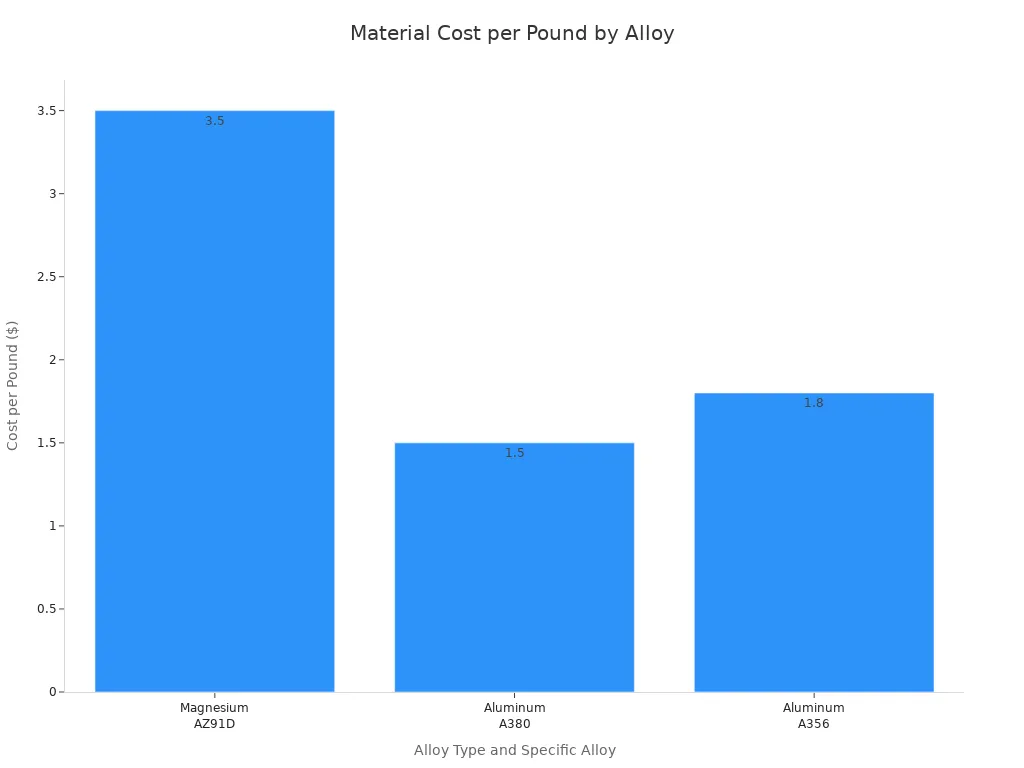
Magnesium alloys typically present a higher initial material cost compared to aluminum and zinc. For instance, AZ91D magnesium alloy costs around $3.50 per pound, with a general range of $3-4. In contrast, aluminum alloys like A380 are approximately $1.50 per pound, and A356 costs about $1.80 per pound, generally ranging from $1-2. This difference in raw material price often makes magnesium a more expensive upfront choice.
| Alloy Type | Specific Alloy | Cost per Pound |
|---|---|---|
| Magnesium | AZ91D | $3.50 |
| Magnesium | General Range | $3-4 |
| Aluminum | A380 | $1.50 |
| Aluminum | A356 | $1.80 |
| Aluminum | General Range | $1-2 |
Long-Term Value Proposition and Lifecycle Costs
Despite higher raw material costs, magnesium can offer long-term value. Its improved machinability can reduce production time and costs. Processing magnesium alloys consumes only 70% of the energy required for aluminum alloys, contributing to reduced overall production costs. However, specialized processing techniques, less developed recycling infrastructure, and specific safety considerations increase expenses. For example, machining magnesium requires specialized tools and equipment, representing a substantial initial investment. Magnesium's lower melting point and higher reactivity necessitate specialized welding methods, increasing labor costs. Surface treatments, essential for durability and corrosion resistance, also add to costs. These factors contribute to a greater overall environmental impact and higher lifecycle costs compared to aluminum in some aspects.
| Factor | Magnesium Alloys | Aluminum Alloys |
|---|---|---|
| Initial Material Costs | Generally higher initial costs | Lower initial costs |
| Production Emissions | Significantly higher emissions | Lower emissions |
| Recyclability | Less developed recyclability | Higher recycling rate |
| Environmental Impact | Greater overall impact | Lower overall impact |
| Corrosion Resistance | Lower resistance | Higher resistance |
| Weight Savings | Significant weight savings | Moderate weight savings |
| Suitability for Production | Non-structural parts | Structural components |
Finishing Requirements and Corrosion Resistance
Specific Surface Treatment Needs for Protection
Magnesium alloys require specific surface treatments to enhance corrosion resistance and durability. Plasma Electrolytic Oxidation (PEO) stands out as a particularly effective coating technology. A Ford study showed PEO provided superior corrosion protection compared to conventional chrome-based conversion techniques. PEO is an electrolyte bath-based conversion coating process. It improves the performance of light metals. The process involves placing the magnesium component in an electrolyte bath and passing an electric current through it. An oxide coating develops on the magnesium substrate. The electrolyte becomes part of the coating. A plasma discharge further modifies the coating. This allows for additional surface coating properties by varying the electrolyte composition. Keronite’s G3Mag PEO coating, which forms a ceramic-like duplex coating on magnesium alloys, showed impressive results in rigorous testing. A six-hour salt spray test using 4% sodium chloride at 80°C on a ZE41A alloy test strip showed absolutely no corrosion. Other treatments include chromate conversion coating and anodizing. Chromate conversion coatings are used as undercoats for paint adhesion or as stand-alone films for corrosion protection in storage and mildly corrosive environments. Anodizing for magnesium differs from aluminum anodization. It occurs in alkaline solutions via a sparking process. Most anodizing treatments provide a hard, corrosion-resistant coating.
Environmental Exposure and Durability
These specialized surface treatments are crucial for magnesium components exposed to various environmental conditions. Without proper protection, magnesium can corrode, especially in humid or saline environments. The right finishing process ensures the component maintains its integrity and aesthetic qualities over its lifespan. This enhances the overall durability of the product.
Processing Challenges and Safety
Flammability Concerns During Melting and Casting
The production of magnesium castings carries significant fire and explosion hazards. Molten magnesium will ignite unless protected from the atmosphere. Manufacturers often use a protective barrier like molten sulfur. Magnesium is highly flammable, particularly in its molten state. During casting, molten magnesium alloy can react violently with oxygen, leading to rapid and intense fires. Magnesium is only flammable when in fine powders and ribbons. Bulk or solid magnesium does not burn until it reaches its melting point of 648 degrees C (1198 degrees Fahrenheit). Machining magnesium is also challenging due to the material's flammability. The machining process generates flammable shavings and dust. This poses a fire and explosion hazard to CNC machinists. Fine chips and dust produced during machining are highly inflammable. They can easily ignite from sparks or excessive heat.
Mitigation Strategies and Best Practices
Manufacturers employ several mitigation strategies to ensure safety during operations. Operator safety features include heat-resistant PPE, ergonomic designs, and training systems. Environmental and fire safety measures involve ventilation systems, fire suppression systems, and dust collection. Robotic automation minimizes human interaction with hazardous zones. Ladle preheating prevents moisture-induced explosions. Tilt-pour furnaces automate metal transfer safely. Proper tooling condition, such as using sharp cutting tools, reduces friction and heat buildup. Avoiding tight clearance angles prevents the formation of long, unbroken chips. Safe handling and disposal of magnesium chips are critical. Manufacturers regularly collect chips with non-static tools and dispose of them in sealed metal containers. They avoid water-based coolants, opting for light mineral oil, compressed air, or argon gas instead. An explosion-proof vacuum is used for chips. Dry, Class-D fire extinguishers or dry sand are necessary for magnesium fires.
| Technology | Function | Example |
|---|---|---|
| Light Curtains | Detect intrusions into danger zones | SICK C4000 Safety Light Curtains |
| Pressure Relief Valves | Prevent over-pressurization in hydraulic systems | Parker Hannifin Valves |
| Thermal Imaging Cameras | Monitor die/metal temperature in real-time | FLIR A Series Thermal Cameras |
| Smart Sensors | Detect misaligned dies or leaks | Balluff BVS Safety Sensors |
Water-based mold release agents improve air quality and worker health. They are non-flammable and provide a cooling effect on the mold surface. Automated or robotic spray systems ensure uniform application.
When Simpler Materials Are More Economical
Not every project demands the advanced properties magnesium alloys offer. Engineers must evaluate project requirements carefully. Sometimes, simpler, more economical materials provide sufficient performance. This approach optimizes costs and streamlines manufacturing processes.
Less Demanding Applications with Lower Performance Needs
Certain applications do not require the exceptional strength-to-weight ratio or specialized shielding capabilities of magnesium. For these projects, selecting a more common and less expensive material proves more practical. Consider the building industry, for example. Magnesium is not preferred in less demanding applications like the building industry primarily due to its higher cost compared to established materials such as steel or aluminum. Additionally, its susceptibility to galvanic corrosion, especially in moist construction environments, raises durability concerns. This makes simpler, more economical, and robust materials a better choice for long-term structural integrity. These applications prioritize factors like bulk strength, low material cost, and ease of fabrication over extreme lightness or thermal management. Components that do not experience high stress, require minimal weight reduction, or operate in non-sensitive electromagnetic environments often fall into this category.
Cost-Effective Alternatives for Basic Requirements
When project specifications are less stringent, several cost-effective alternatives can meet basic requirements. Steel, for instance, offers high strength and durability at a significantly lower material cost. Manufacturers widely use steel in construction, heavy machinery, and many automotive components where weight is not a primary concern. Aluminum, while heavier than magnesium, still provides a good balance of strength, corrosion resistance, and moderate weight. Its widespread availability and established processing techniques make it a popular choice for various consumer goods, automotive parts, and structural elements. Plastics also present an economical option for non-structural components or parts requiring electrical insulation. They offer design flexibility and low production costs for high volumes. Choosing these alternatives over Magnesium Die Casting allows companies to reduce initial investment and overall production expenses. This strategy is particularly beneficial for products with large market volumes where cost efficiency is a critical competitive factor.
Real-World Applications of Magnesium Die Casting
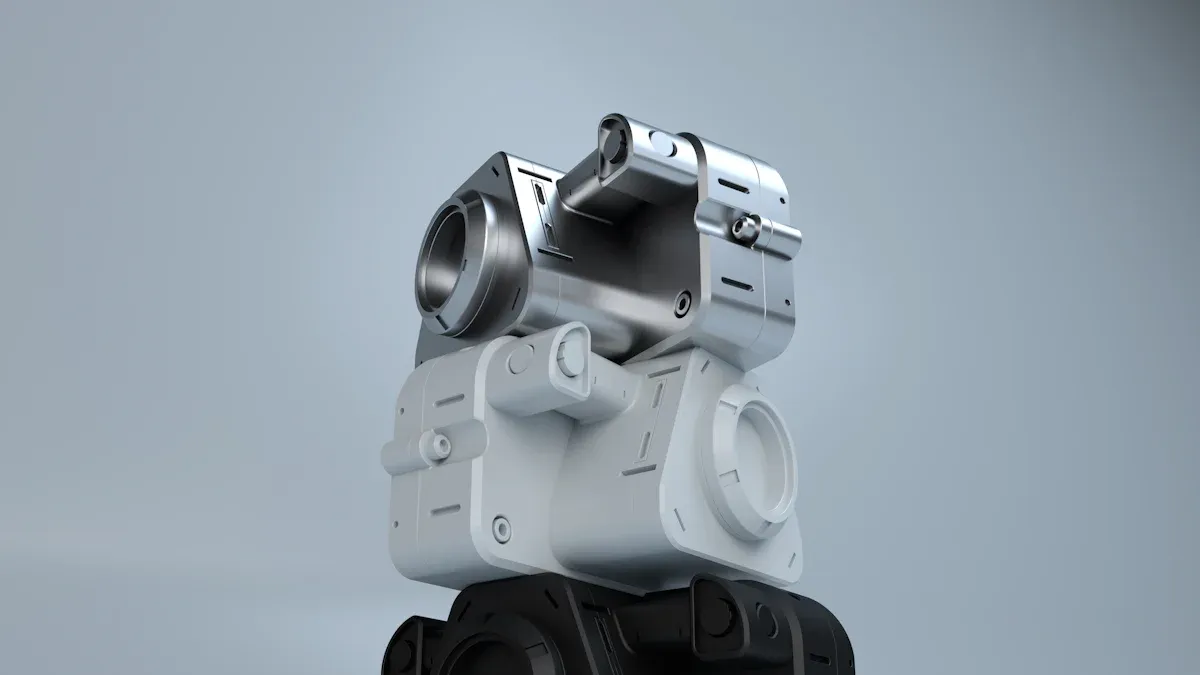
Magnesium die-cast components find extensive use across various industries. Their unique properties make them indispensable for modern product design and manufacturing.
Automotive Industry Innovations
The automotive sector heavily relies on magnesium die-cast parts. Manufacturers use these parts to reduce vehicle weight and improve fuel efficiency.
Steering Wheels, Instrument Panels, and Seat Frames
Automakers utilize magnesium alloys for critical interior components. For instance, AM60B alloy forms safety components such as instrument panel structures and seat frames. These parts provide structural integrity while significantly reducing overall vehicle mass.
Engine Blocks, Transmission Cases, and Brackets
Magnesium die casting also extends to powertrain components. Manufacturers produce engine brackets, transmission cases, and gear cases from magnesium. AZ91D alloy is a common choice for powertrain and other mechanical components, offering a robust yet lightweight solution.
| Magnesium Alloy | Automotive Components |
|---|---|
| AZ91D | Powertrain and mechanical components |
| AM60B | Safety components (instrument panel structures, seat frames) |
| AM50 | Components requiring high ductility beyond AM60 |
Consumer Electronics Advancements
The consumer electronics industry benefits greatly from magnesium's lightweight and durable characteristics.
Laptop and Tablet Casings for Portability
Manufacturers frequently choose magnesium alloys for laptop and tablet casings. These alloys offer lightweight components with high strength-to-weight ratios. This ensures portability while maintaining structural rigidity. Magnesium also provides excellent heat dissipation, acting as a heat sink to prevent overheating. Its high machinability allows for intricate designs. The process offers faster production cycles, meeting tight manufacturing schedules. Furthermore, the smooth surface finish contributes to the premium aesthetic consumers expect. Magnesium housings also provide electromagnetic interference (EMI) shielding, protecting internal electronics. This allows for part consolidation, simplifying assembly and improving structural integrity. Companies like Apple and Samsung use magnesium to create durable, lightweight casings for sleek, more robust devices.
Camera Bodies and Mobile Phone Frames for Durability
Magnesium alloys are also ideal for camera bodies and mobile phone frames. They provide durable, lightweight structures. This enhances user convenience and protects sensitive internal components. The material's ability to dissipate heat and shield against EMI is crucial for these compact, high-performance devices.
Medical Equipment and Devices
The medical field demands precision, reliability, and often, portability. Magnesium die cast components meet these stringent requirements.
Portable Diagnostic Equipment Housings
Medical device manufacturers incorporate magnesium die cast housings into various portable diagnostic equipment. This includes medical monitors, EKG machines, ultrasound equipment, and portable oxygen pumps. The lightweight nature of magnesium makes these devices easier for medical professionals to transport and use.
Surgical Instrument Components
Magnesium also finds application in components for surgical instruments and other medical devices. This includes parts for hospital beds, patient lifts, wheelchairs, dialysis machines, and life-support systems. The precision and strength of magnesium die castings ensure the reliability and safety of these critical medical tools.
Aerospace and Defense Sector
The aerospace and defense sector critically relies on lightweight, high-strength materials. Magnesium components offer significant advantages in these demanding environments. Manufacturers choose magnesium for its ability to reduce weight without compromising structural integrity or performance.
Lightweight Structural Elements for Aircraft
Aircraft design prioritizes weight reduction to improve fuel efficiency and increase payload capacity. Magnesium alloys provide an excellent solution for various structural elements. Engineers utilize magnesium for:
- Cabin and cockpit enclosures
- Electronic housings
- Sensor covers
- Seat frame structures
- Interior panel brackets
- Unmanned Aerial Vehicles (UAVs)
These applications benefit from magnesium's exceptional strength-to-weight ratio. This property allows for robust designs that remain remarkably light, directly contributing to enhanced aircraft performance and operational efficiency.
Avionics Enclosures and Missile Components
In defense applications, components must withstand extreme conditions and protect sensitive electronics. Magnesium excels in these roles due to its inherent properties. Its superior EMI/RFI shielding capabilities are crucial for protecting delicate avionics hardware from electromagnetic interference. Magnesium also offers excellent thermal conductivity, which helps manage heat in compact electronic systems. Key defense applications include:
- Missile systems
- Avionics hardware
- Electro-optics
These components require materials that are both durable and lightweight. Magnesium provides the necessary protection and performance for critical defense technologies.
Other Emerging Applications for Magnesium Die Casting
Beyond traditional sectors, magnesium die casting is finding new applications. Its unique combination of properties makes it suitable for a growing range of products. These emerging uses highlight the versatility and increasing adoption of magnesium alloys.
Power Tools and Sports Equipment
Consumers demand lighter, more durable power tools and sports equipment. Magnesium alloys meet these needs effectively. For power tools, magnesium provides robust housings that reduce user fatigue during extended operation. Its strength ensures the tools can withstand rigorous use. In sports equipment, such as bicycle frames, golf clubs, and snowboard bindings, magnesium contributes to lighter, more responsive, and higher-performing gear. Athletes benefit from the reduced weight and enhanced durability, which can improve their performance and overall experience.
Industrial Machinery Components
Industrial machinery often requires components that are strong, precise, and sometimes lightweight. Magnesium die casting offers solutions for various industrial applications. Manufacturers use magnesium for parts that require high dimensional stability and tight tolerances. This includes intricate components within automated systems or specialized machinery. The ability to cast complex geometries with thin wall sections also allows for innovative designs in industrial equipment. This leads to more efficient and reliable machinery.
Magnesium die casting offers a strategic solution for projects demanding superior strength-to-weight ratios, excellent EMI/RFI shielding, and effective thermal management. Its unique properties necessitate specific material and processing considerations, especially for high-performance, weight-sensitive applications. Engineers must thoroughly evaluate project needs against magnesium's benefits and drawbacks for informed decision-making. Consulting experienced die casting providers, such as Ningbo Jiehuang Chiyang, offers tailored solutions and valuable expertise.
FAQ
What makes magnesium die casting unique?
Magnesium die casting uses molten magnesium alloys injected under high pressure into a mold. This process creates complex parts with excellent surface finishes. It leverages magnesium's exceptional strength-to-weight ratio and lightweight properties. This makes it ideal for applications needing strong, light components.
How does magnesium compare to aluminum in die casting?
Magnesium is approximately 33% lighter than aluminum. It offers a superior strength-to-weight ratio. While aluminum may have lower material costs, magnesium provides better EMI/RFI shielding and thermal conductivity. Designers choose magnesium when weight reduction and specific performance are critical.
What are the primary advantages of magnesium die casting?
Magnesium die casting offers several key advantages. It provides significant weight reduction, superior EMI/RFI shielding, and excellent thermal conductivity. The process also achieves high-dimensional stability and allows for complex geometries with thin walls. These benefits enhance product performance and efficiency.
Which industries benefit most from magnesium die casting?
Industries prioritizing weight reduction and high performance benefit greatly. The automotive sector uses it for fuel efficiency. Aerospace relies on it for lighter aircraft. Consumer electronics utilize it for portable devices. Medical equipment and defense applications also leverage its unique properties for critical components.
Does magnesium die casting offer good EMI/RFI shielding?
Yes, magnesium alloys naturally provide superior electromagnetic interference (EMI) and radio frequency interference (RFI) shielding. Their metallic structure effectively blocks unwanted electromagnetic radiation. This makes them an excellent choice for electronic enclosures protecting sensitive components in telecommunications and medical devices.
What are the cost considerations for magnesium die casting?
Magnesium alloys typically have a higher initial material cost than aluminum or zinc. However, the performance gains often justify this investment. Reduced weight leads to fuel savings in vehicles. Enhanced thermal management and EMI shielding add significant value. Long-term operational benefits can outweigh upfront expenses.
How is heat managed in magnesium die-cast parts?
Magnesium alloys exhibit excellent thermal conductivity. They efficiently transfer heat away from critical components. This property is vital for managing heat in electronic devices and LED lighting. It ensures optimal operating temperatures and extends product lifespan. Magnesium acts as an effective heat sink.