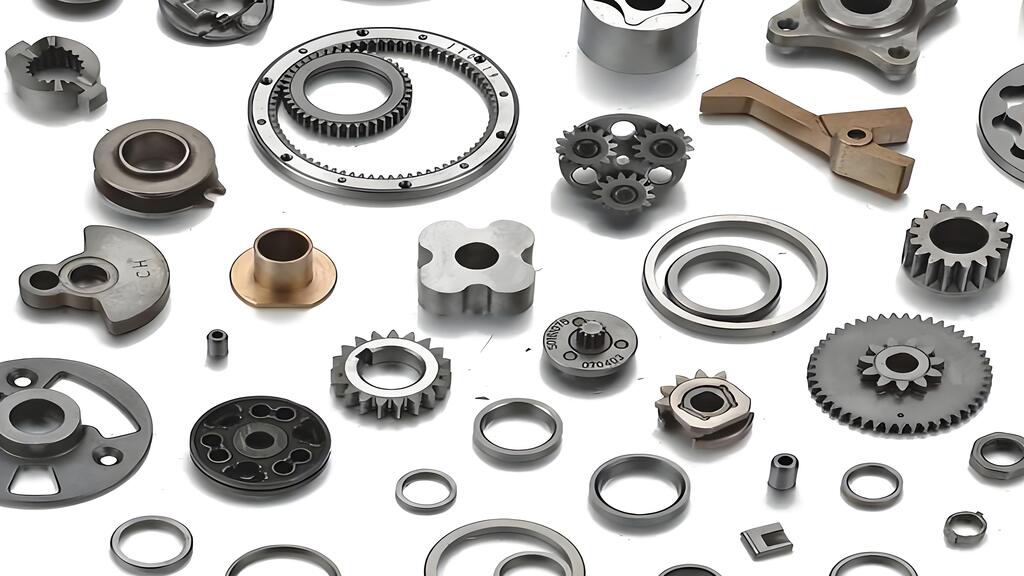


Advances in Sintered Titanium for Science and Industry
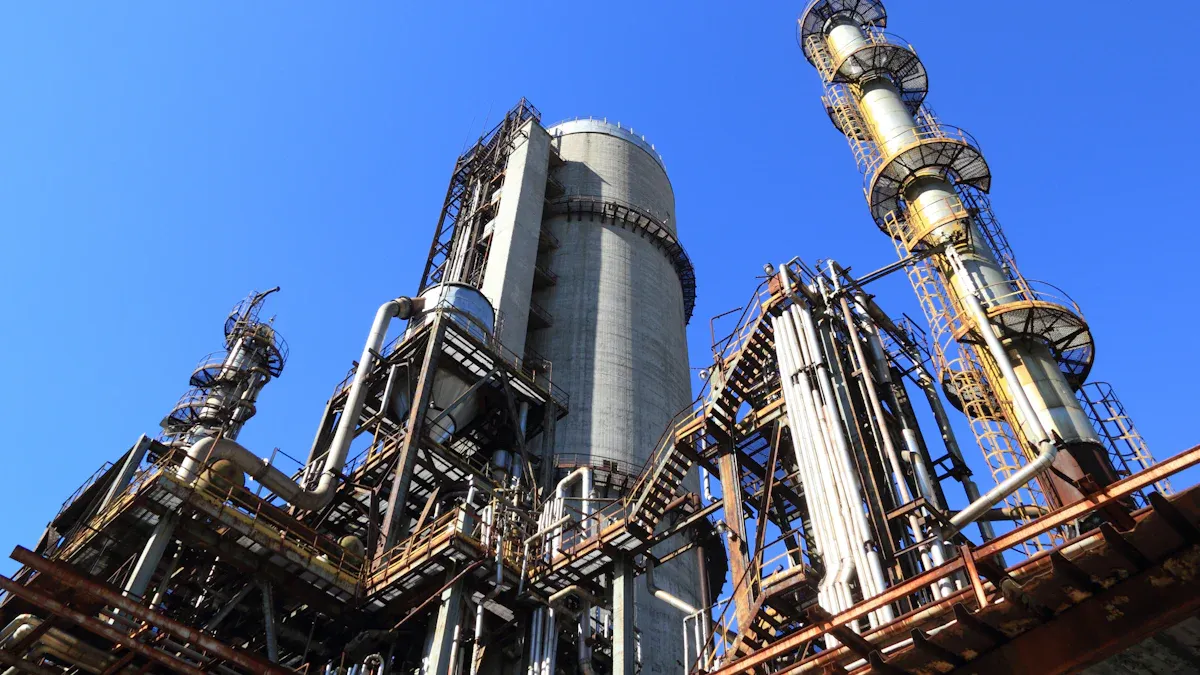
Recent breakthroughs in Sintered Titanium technology have enabled rapid production of high-density components with optimized properties. Spark Plasma Sintering now holds a dominant market share, delivering superior strength and toughness for aerospace and automotive parts. Additive manufacturing methods, such as electron beam powder bed fusion, support custom medical implants and reduce energy use. New α-β titanium alloys improve corrosion resistance and lower costs, expanding industrial applications from geothermal wells to advanced healthcare devices.
Key Takeaways
- New sintering methods like hydrogen sintering and spark plasma sintering produce stronger, denser Titanium Parts faster and at lower cost.
- Controlling grain size, porosity, and oxygen levels during sintering improves titanium’s strength, flexibility, and durability for demanding uses.
- Additive manufacturing enables custom titanium implants and complex parts, reducing waste and supporting medical and industrial needs.
- Titanium coatings on stainless steel enhance corrosion resistance and bonding, making implants safer and more reliable.
- Sintered titanium finds growing use in aerospace, automotive, medical, and energy industries due to its light weight, strength, and corrosion resistance.
Advances in Sintered Titanium Processes
Hydrogen Sintering Technology
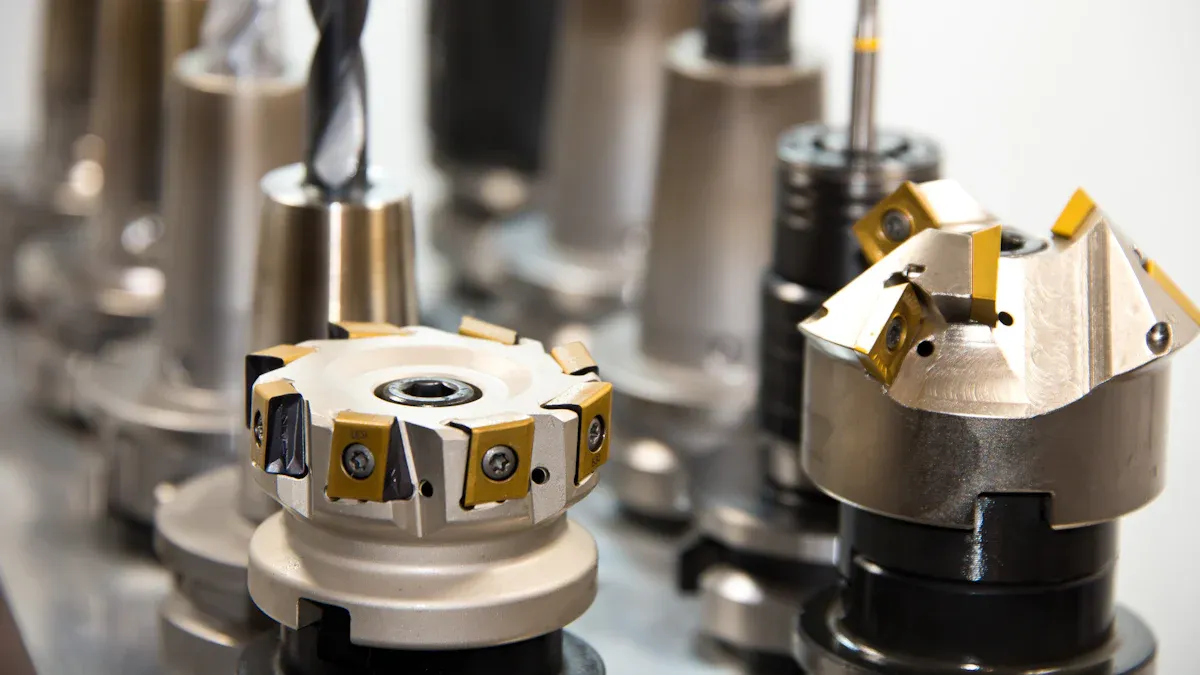
Hydrogen sintering technology has transformed the way manufacturers produce sintered titanium components. This process uses titanium hydride (TiH₂) powders, which release hydrogen at moderate temperatures before high-temperature sintering. The hydrogen acts as a strong stabilizer for the β-phase, helping the powder particles densify and form ultrafine grains. As the hydrogen leaves the material, the microstructure changes, resulting in a dense, fine-grained product.
Researchers have shown that this method produces titanium parts with high strength and ductility, often matching or exceeding the properties of wrought alloys. For example, titanium alloys like Ti-6Al-4V, when processed with hydrogen sintering, achieve strengths above 1 GPa and elongation greater than 15%. The process eliminates the need for expensive post-sintering treatments, making it cost-effective and suitable for near-net-shape manufacturing. Manufacturers can produce parts with minimal porosity and refined microstructures, which improves both tensile and fatigue properties.
Note: Hydrogen sintering reduces manufacturing complexity and cost, making high-performance titanium parts more accessible for industries such as aerospace and medical devices.
Spark Plasma Sintering (SPS)
Spark Plasma Sintering (SPS) stands out as a leading method for producing dense and robust sintered titanium. SPS uses a high-energy pulsed current to generate localized plasma between powder particles. This plasma breaks down oxide layers and speeds up the bonding process, allowing for rapid densification and grain refinement.
Compared to traditional sintering, SPS achieves relative densities above 99% and produces finer grain sizes. The process uses high heating rates and applied pressure, which limit grain growth and allow precise control over phase formation. Researchers have found that SPS can tailor the microstructure of titanium, resulting in improved mechanical properties such as higher tensile strength and hardness. For example, optimal SPS conditions (900–1200 °C, 50–60 MPa) yield equiaxed α grains or α laths, depending on the settings.
| Material / Process | Property Improved | Quantitative Improvement | Reference |
|---|---|---|---|
| Porous Ti and Ti-TiB alloy (37% porosity) | Elastic modulus | Elastic modulus close to that of human bone | [35] |
| TiB₂ ceramics + 25 wt.% SiC whiskers | Vickers hardness | Increased to 29.3 GPa | [141] |
| TiB₂ ceramics + 30 wt.% SiC whiskers | Fracture toughness | Increased from 3.4 MPa·m¹/² to 7.8 MPa·m¹/² | [142] |
| Ti combined with bioactive ceramics via SPS | Young’s modulus | Reduced Young’s modulus, promoting osteogenesis | [24], [25] |
SPS also allows better control over impurities and phase morphologies, which is critical for applications requiring high reliability. The shorter processing times and controlled atmospheres make SPS an efficient and versatile choice for producing sintered titanium parts with tailored properties.
Atmospheric and Graphite Furnace Sintering
Atmospheric and graphite furnace sintering methods offer cost and production advantages for sintered titanium, especially in large-scale manufacturing. Atmospheric sintering can operate in inert gases like argon, enabling continuous mass production and reducing costs compared to vacuum sintering. However, this method requires highly purified atmospheres to prevent embrittlement from reactive gases such as oxygen, nitrogen, and hydrogen.
Graphite furnace sintering uses oxygen-carbon reactions to lower oxygen partial pressure, which helps reduce titanium oxides during sintering. This method enables atmospheric sintering with further cost and production benefits. However, surface contamination by titanium oxycarbonitride scales can affect mechanical properties, and excess carbon or oxygen can reduce ductility.
| Sintering Method | Advantages | Limitations | Mechanical Properties Impact |
|---|---|---|---|
| Atmospheric Sintering | Potential for continuous mass production, reducing cost; can use inert atmospheres like argon | Requires highly purified inert atmosphere; residual porosity can increase with argon pressure | Tensile strength ~630 MPa, elongation 0.15%-0.19%; properties sensitive to interstitial impurities |
| Graphite Furnace Sintering | Reduces oxygen partial pressure; enables atmospheric sintering with cost and production benefits | Surface contamination by Ti(CNO) scale; ductility reduced if C and O exceed critical levels | Tensile strength 300–580 MPa, elongation 5–7%; ductile-to-brittle transition linked to impurity levels |
Both methods require strict control of impurities to maintain mechanical performance. When managed well, they provide a practical route for producing sintered titanium components for industrial use.
Microstructure Evolution in Sintered Titanium
Phase Transformations During Sintering
During sintering, titanium undergoes several important phase changes that shape its final properties.
- New reinforcing phases, such as titanium carbide (TiC) and titanium boride (TiB), form at high temperatures above 1200 °C. These phases increase hardness and stiffness.
- At lower temperatures, between 900 and 1100 °C, titanium alloys show grain boundaries defined by TiAl and Ti₃Al phases. As the temperature rises, aluminum dissolves into titanium, changing the microstructure.
- The transformation from the alpha (α) phase to the beta (β) phase happens between 800 and 1100 °C. This change introduces strain and defects, which help the material become denser.
- Fine alpha precipitates that form during aging at around 500 °C improve both strength and ductility. If the aging temperature is too low, large areas without these precipitates can reduce the material’s performance.
The way these phases form and grow directly affects the strength, flexibility, and toughness of sintered titanium.
Control of Grain Size and Porosity
Grain size and porosity play a major role in the performance of titanium parts. Researchers have found that controlling these features during sintering leads to better results.
- Smaller grains and lower porosity increase hardness, compressive strength, and resistance to wear and corrosion.
- Adjusting sintering temperature, time, and energy input helps control grain growth and pore closure.
- For example, higher laser power during sintering melts the powder more completely, reducing porosity and making the material stronger.
- Slower scan speeds and careful heat treatment can produce coarser grains or transform the microstructure, depending on the desired properties.
A recent study showed that by minimizing porosity to just 0.118%, engineers achieved higher density and improved mechanical strength in titanium composites. This level of control supports the use of sintered titanium in demanding fields like aerospace and automotive engineering.
Oxygen and Interstitial Management
Managing oxygen and other interstitial elements is essential for producing high-quality titanium components. The following table summarizes key factors and methods:
| Factor or Method | Description/Parameters | Impact on Material Quality |
|---|---|---|
| Particle size | Smaller particles hold more oxygen | Higher strength, but too much oxygen causes brittleness |
| Powder flowability and shape | Affects uniformity and oxygen distribution | Poor flow leads to defects and uneven properties |
| Oxygen content limits | <0.2 wt% in components, <0.15 wt% in powders | Ensures ductility and meets industry standards |
| Ti oxide decomposition control | Monitors oxygen during sintering | Achieves high strength without losing flexibility |
| Ball milling + SPS | 1 hour milling, 1000 °C SPS, ~1.8 at% oxygen | Ultra-high yield strength and large ductility through grain refinement |
Careful control of oxygen during sintering allows engineers to balance strength and ductility, making sintered titanium suitable for critical applications.
Mechanical Properties of Sintered Titanium
Strength and Ductility Improvements
Process optimization has led to significant gains in both strength and ductility for sintered titanium. Researchers have developed methods that introduce nitrogen into pure titanium powder, followed by spark plasma sintering and hot extrusion. This approach creates a nitrogen solid solution, which strengthens the material while maintaining flexibility. By adjusting heat treatment temperature and time, engineers can control nitrogen content and optimize mechanical performance. This method also reduces production costs.
A specific heat treatment and water quenching process can transform the microstructure of sintered titanium with high oxygen content. The treatment forms a heteromicrostructure with regions of different oxygen levels. The β phase, which appears during this process, allows the material to stretch more before breaking. For example, elongation at break increases from 6% to 19% after this treatment, even when oxygen content remains at 0.94 mass%. This improvement means that sintered titanium can achieve both high strength and ductility, making it suitable for demanding applications.
| Material / Condition | Oxygen (%) | Elongation at Break (%) | Key Process |
|---|---|---|---|
| As-sintered Ti-0.94% O | 0.94 | 6 | None |
| Heat treated + water quenched Ti-0.94% O | 0.94 | 19 | Dual-phase heat treatment + quench |
Heat treatment and careful control of interstitial elements enable engineers to tailor the mechanical properties of sintered titanium for specific needs.
Fatigue and Fracture Resistance
Fatigue and fracture resistance are critical for components that face repeated loading. Sintered titanium, especially when produced by additive manufacturing, shows lower fatigue strength than conventionally processed titanium. Several factors influence this property:
- Fatigue strength of Ti-6Al-4V made by direct metal laser sintering (DMLS) or selective laser melting (SLM) with hot isostatic pressing (HIP) reaches 195–220 MPa, while conventional titanium achieves about 610 MPa.
- Surface roughness and porosity reduce fatigue performance. Cracks often start at pores near the surface.
- Residual stresses vary by manufacturing method. Electron beam melting (EBM) produces near-zero residual stresses, which can increase fatigue strength but may lower fracture toughness.
- Surface finishing, such as shot-peening, helps reduce defects and extend fatigue life.
Fracture resistance depends on loading conditions and microstructure. Higher strain rates and certain stress states can make the material more brittle. Engineers must consider these factors when designing sintered titanium parts for safety-critical uses.
Corrosion and Wear Performance
Corrosion and wear resistance determine how well sintered titanium performs in harsh environments. Adding ceramic particles like niobium pentoxide (Nb2O5) to titanium improves wear resistance. These particles make the material harder and help it resist both abrasive and adhesive wear. In saline and acidic environments, higher Nb2O5 content lowers wear volume and rate. However, wear rates increase in acidic media due to aggressive chemical attack.
Sintered titanium alloys made by powder metallurgy often show lower corrosion resistance than conventional alloys. Residual porosity allows corrosive agents to penetrate, especially in strong acids. Long-term tests reveal higher corrosion rates for powder metallurgy alloys. Despite this, some sintered titanium alloys, such as Ti35Zr28Nb, display wear rates similar to traditional alloys and good corrosion resistance in simulated body fluids.
Surface treatments, like vacuum rapid oxynitriding, can further enhance corrosion and wear resistance. These treatments form dense oxide and oxynitride layers, which protect the surface and reduce friction. Such improvements expand the use of sintered titanium in challenging industrial and biomedical environments.
Sintered Titanium Coatings and Surface Engineering
Titanium Coatings on Stainless Steel
Engineers use advanced methods to apply titanium coatings to stainless steel. One of the most effective techniques combines Triode Magnetron Sputtering (TMS) with Plasma Electrolytic Oxidation (PEO). TMS deposits a thin titanium layer onto the stainless steel surface. PEO then transforms this layer into a porous, bioactive titanium dioxide coating. This process allows the coating to include helpful elements like calcium, phosphorus, sulfur, and copper. The result is a surface that matches bone better by reducing the elastic modulus by about 50%. Nanoscratch tests show strong adhesion, and biological tests confirm that the coating stops bacteria such as E. coli and S. aureus from growing. The anatase phase formed during PEO increases bioactivity, making this method ideal for medical implants.
Another approach uses dip coating followed by vacuum sintering and heat treatment. This method creates a uniform titanium layer about 100 micrometers thick. The process forms intermetallic phases like Fe2Ti and NiTi, which improve strength. The coated stainless steel shows higher yield strength and better corrosion resistance. Heat treatment further increases corrosion protection without lowering strength. This technique works well for mass production and improves both mechanical and chemical performance.
Interface Microstructure and Bonding
The microstructure at the interface between titanium coatings and stainless steel plays a key role in bonding strength. Researchers have found that certain features lead to better results. The table below summarizes these findings:
| Interface Microstructure Feature | Coating Composition and Morphology | Observed Bonding Strength and Failure Mode |
|---|---|---|
| Well-combined interface without cracks | Sr-P coating on Ti substrate | Good bonding strength, no cracks |
| Cluster-like SrHPO₄ crystals at pH 3.00 | Thicker, micro/nanostructured coating | Improved integrity and bonding strength |
| Discontinuous coating at pH 2.75 | Lower thickness, incomplete coverage | Lower bonding strength (~11.18 MPa), cohesive failure |
| Bulk-like and plate-like SrHPO₄/Sr₄(PO₄)₂ at pH 3.25 | Brittle, thinner coating | Reduced bonding strength due to brittleness |
A well-defined diffusion zone with fine intermetallics, such as FeTi and Fe2Ti4O, provides strong bonding and moderate ductility. If the intermetallic layer grows too thick, the bond becomes brittle and weak. Careful control of the interface ensures reliable performance in demanding applications.
Enhanced Corrosion Resistance
Surface coatings greatly improve the corrosion resistance of titanium and stainless steel components. Researchers use several methods to test these improvements:
- Open Circuit Potential (OCP) measurements track changes over time in simulated body fluids.
- Potentiodynamic polarization tests, following ASTM G-5 standards, measure corrosion potential and current density.
- Electrochemical Impedance Spectroscopy (EIS) checks the resistance of the coating to corrosion.
- Tafel analysis and the Stern–Geary equation help calculate corrosion rates.
Coatings made from chitosan with hydroxyapatite or silver nanoparticles create a strong passive layer. These coatings increase polarization resistance and lower corrosion current density. For example, chitosan-bioactive glass coatings reduce corrosion current by 94% and raise polarization resistance to 14,000 Ω/cm². Surface analysis tools like SEM, EDS, XRD, and AFM confirm the uniformity and roughness of the coatings. In vitro tests show that these coatings also help bone cells attach and grow, proving their value for implants.
Industrial and Scientific Applications of Sintered Titanium
Aerospace and Automotive Uses
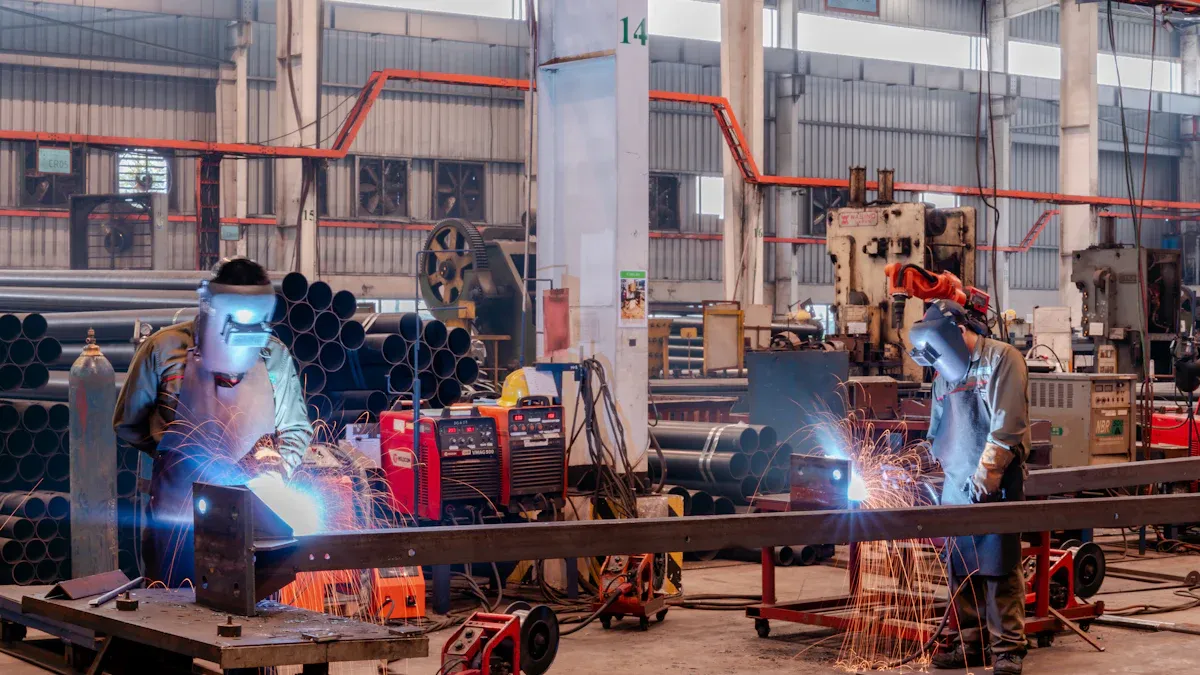
Aerospace and automotive industries rely on titanium alloys for critical components. Engineers select these materials for their high strength-to-weight ratio and resistance to corrosion. In aerospace, titanium alloys such as Ti–8Al–1Mo–1V and Ti–10V–2Fe–3Al reach tensile strengths up to 970 MPa. These alloys form compressor blades, hydraulic lifts, and airframe parts. The low density of titanium allows aircraft to reduce weight while maintaining safety. Automotive manufacturers use titanium in valves, connecting rods, and exhaust systems. These parts weigh 40-45% less than steel alternatives and withstand temperatures up to 600°C. Additive manufacturing enables the creation of complex shapes, reducing waste and supporting lightweight designs. Market trends show that demand grows as emission standards tighten and fuel efficiency becomes more important.
Tip: Titanium’s durability and lightweight nature help vehicles and aircraft achieve better performance and lower emissions.
Biomedical and Implant Applications
Medical device companies use titanium for implants and surgical tools. Direct Metal Laser Sintering (DMLS) allows the production of custom-shaped implants before surgery. This technology reduces operation time and improves patient outcomes. Titanium’s biocompatibility and corrosion resistance make it ideal for dental and orthopedic implants. Studies in animal models show that these implants do not cause harmful effects in the body. Surgeons have used DMLS titanium implants for craniofacial reconstruction and fracture repair with positive results. The ability to recycle powder and create complex shapes makes this approach cost-effective. As populations age, the need for reliable and safe implants continues to rise.
- Dental implants
- Orthopedic implants
- Surgical instruments
Energy and Chemical Processing
Titanium components play a vital role in the energy and chemical industries. Powder metallurgy techniques improve the density and strength of titanium, making it suitable for harsh environments. In chemical processing, titanium parts resist corrosion from acids and other chemicals. Energy sectors use titanium fiber felt as a porous transport layer in hydrogen production systems. This material forms a protective oxide layer, ensuring long-term durability in acidic and oxidizing conditions. Studies show that increasing flow rates during operation enhances the protective layer, slowing down material loss. These properties support the use of titanium in water treatment, fuel cells, and renewable energy systems.
| Application Sector | Primary Uses | Key Benefits |
|---|---|---|
| Aerospace | Engine parts, airframes | Lightweight, strong, corrosion-resistant |
| Automotive | Valves, rods, exhausts | Heat resistance, weight savings |
| Biomedical | Implants, tools | Biocompatibility, custom shapes |
| Chemical/Energy | Filters, reactors, fuel cells | Corrosion resistance, durability |
Emerging Trends in Sintered Titanium
Additive Manufacturing Integration
Additive manufacturing (AM) is changing how engineers design and produce titanium parts. They use methods like Powder Bed Fusion, Direct Energy Deposition, and Binder Jetting. Binder Jetting prints titanium powder with a binder, then sinters the part. This approach allows for complex shapes, less material waste, and faster production. Medical device makers can create custom implants with controlled pore size and density, which helps bone grow into the implant.
| Aspect | Details |
|---|---|
| Integration Methods | Powder Bed Fusion, Direct Energy Deposition, Binder Jetting |
| Benefits | Design freedom, reduced waste, shorter lead times, easy customization |
| Challenges | High equipment costs, process control issues, need for post-processing, and limited material choices |
| Future Prospects | New titanium alloys for AM, automation, and AI for quality, focus on recycling and waste reduction |
AM-produced implants support patient-specific solutions in the dental and orthopedic fields. Engineers continue to improve process control to reduce defects like porosity.
Alloy Development and Customization
Researchers now use advanced sintering and deformation techniques to tailor titanium alloys for specific needs. Spark Plasma Sintering and Hot Isostatic Pressing help create dense materials with strong mechanical properties. Severe Plastic Deformation, such as equal-channel angular pressing, refines the grain structure and boosts strength.
- Customization improves strength, corrosion resistance, and biocompatibility.
- Surface treatments, like coating and texturing, help implants bond better with bone.
- Mathematical models guide engineers in refining grain size for higher yield strength.
These advances allow for precise control over the final properties of titanium parts, making them suitable for demanding applications.
Sustainability and Resource Efficiency
Sustainability is a growing focus in titanium production. Companies use new processes to lower energy use and reduce emissions.
| Strategy | Description | Quantitative Result / Impact |
|---|---|---|
| Armstrong Process | Low-temperature reduction of titanium tetrachloride to powder with less oxygen. | Energy use drops by 53.4%, from 355 to 165 MBtu/ton. |
| Hydride-Dehydride | Uses hydrogen to make low-cost powders, though shapes are irregular. | Low-cost powders; energy data not specified. |
| Low-Carbon Energy | Uses hydrogen, biomass, or carbon capture to power atomization and reduce CO2 emissions. | Expected lower lifecycle CO2 emissions. |
These strategies help make titanium production more efficient and environmentally friendly.
Recent advances have made titanium materials stronger, more reliable, and less expensive to produce. Industries now use these materials in many new ways.
- New titanium alloys show better strength, corrosion resistance, and biocompatibility, helping doctors and engineers create safer implants and devices.
- Modern manufacturing methods, such as 3D printing and spark plasma sintering, allow for custom shapes and improved performance.
- Companies focus on sustainability, digital monitoring, and smart manufacturing to meet global needs and lower costs.
These changes help scientists and manufacturers solve modern challenges and open new possibilities for the future.
FAQ
What makes sintered titanium different from traditional titanium?
Sintered titanium forms from powder, not solid metal. This process allows engineers to control porosity, grain size, and shape. Sintered titanium often costs less and offers custom properties for specific uses.
Can sintered titanium be used for medical implants?
Yes. Sintered titanium works well for implants. Its biocompatibility and strength support bone growth. Doctors use it for dental and orthopedic devices. Custom shapes fit patient needs.
How does sintered titanium resist corrosion?
Sintered titanium forms a stable oxide layer on its surface. This layer protects against rust and chemical attack. Engineers can add coatings or alloying elements to improve corrosion resistance even more.
What industries benefit most from sintered titanium?
- Aerospace
- Automotive
- Medical devices
- Chemical processing
- Energy systems
These industries use sintered titanium for its strength, light weight, and durability.