


Iron-Based Valve Plates Net Shape Manufacturing
Iron-based valve plates demand precise dimensions for optimal function. Net Shape Manufacturing produces these critical components with final or near-final dimensions. This advanced approach significantly minimizes post-processing requirements. Such a reduction in post-processing ensures cost-effective and highly efficient production. These manufacturing methods effectively address the industry's need for high-performance valve plates.
Key Takeaways
- Net Shape Manufacturing makes parts with exact sizes. It uses less material and needs little extra work.
- This method helps make strong iron valve plates. It meets tough needs for how they work.
- Powder Metallurgy, Metal Injection Molding, and Additive Manufacturing are key ways to make these parts.
- Powder Metallurgy uses almost all raw materials. It makes complex shapes and controls how porous the part is.
- Metal Injection Molding creates very detailed parts. It gives a smooth finish and works well for many items.
- Additive Manufacturing lets designers make new shapes. It helps make quick test parts and custom items.
- Net Shape Manufacturing saves money. It uses less material, cuts down on extra work, and uses less energy.
- This method is good for the environment. It makes less waste and uses less power.
Understanding Net Shape Manufacturing for Iron-Based Valve Plates
Definition and Core Principles of Net Shape Manufacturing
Producing components with minimal material removal
Net Shape Manufacturing focuses on creating parts very close to their final form. This approach significantly reduces the amount of material removed during production. Traditional methods often start with a large block of material and cut away much of it. Net shape processes, however, shape the material directly into the desired component. This minimizes waste and makes the process more efficient.
Achieving final or near-final dimensions
The primary goal of Net Shape Manufacturing is to produce components with final or near-final dimensions. This means the parts require little to no additional machining or finishing steps. Achieving these precise dimensions directly from the manufacturing process saves time and resources. It also ensures consistency across all produced valve plates.
Why Net Shape Manufacturing Benefits Iron-Based Valve Plates
Leveraging specific material properties of iron
Net Shape Manufacturing processes are particularly beneficial for iron-based valve plates. They allow manufacturers to customize material properties. Tailored alloy compositions meet specific application requirements. This leads to enhanced performance, such as improved wear resistance and strength, for durable components. Additive manufacturing, a form of net shape production, allows for the direct fabrication of complex iron alloy components. These components feature tailorable microstructures and properties. Such characteristics are often difficult to achieve with conventional methods. This process can generate a wide range of microstructures, from near-equilibrium to far-from-equilibrium. This depends on the steel type and processing parameters.
Meeting demanding application requirements
Valve plates operate in harsh environments. They require high precision and robust material properties. Net shape processes ensure these demanding application requirements are met. They facilitate complex designs, allowing for intricate parts. These parts would be impossible or too costly to produce otherwise. This innovation in production directly translates to better-performing valve plates.
Comparing Net Shape Manufacturing with Traditional Methods
Contrasting with machining from blanks
Net Shape Manufacturing offers significant advantages over traditional methods like machining from blanks. Machining involves cutting away material from a larger piece. This often results in substantial waste. For example, machining can generate 30% to 70% material waste. In contrast, processes like cold heading, a net shape technique, reshape metal. This method produces less than 5% waste. This difference highlights a major efficiency gain.
Highlighting efficiency gains
The efficiency gains from Net Shape Manufacturing are clear. Material utilization is much higher. This drastically reduces raw material costs. Production speed also increases. Net shape processes can produce parts much faster, sometimes hundreds per minute. This leads to reduced lead times and a lower cost per piece for high-volume production. Furthermore, the forming process itself strengthens the part. This occurs through work hardening and continuous grain flow. This enhances tensile strength and fatigue resistance. This allows for potential material reduction in design while achieving superior structural integrity.
Powder Metallurgy for Iron-Based Valve Plates Net Shape Manufacturing
Powder metallurgy (PM) offers a highly effective approach for producing iron-based valve plates through Net Shape Manufacturing. This method involves forming components from metal powders, significantly reducing material waste and post-processing. It provides a precise and efficient way to create complex parts.
Powder Metallurgy Process Overview
The powder metallurgy process involves several distinct stages. These stages transform fine metal powders into robust, functional components.
Material preparation and mixing
The process begins with careful material preparation. Manufacturers blend fine metal powders, typically iron, with various additives. These additives often include lubricant wax, carbon, copper, or nickel. This blending creates a uniform mixture. The characteristics of these initial powders greatly influence the final components' quality. Common methods for powder production include atomization, reduction, and chemical decomposition. Lubricants improve the powder's flow, increase density, and reduce friction during compaction.
Compaction and green strength
After mixing, the powder undergoes compaction. Manufacturers press the metal powder into a mold cavity. This forms a "green compact." This compact has enough strength to be handled before further processing. Compaction methods, such as single-action, double-action, and floating die compaction, aim for uniform density throughout the part. This step is crucial for achieving the desired shape and initial strength.
Sintering and densification
Sintering is the next critical step. This process improves the mechanical strength of the green compact. It involves heating the compressed material under a controlled atmosphere at temperatures below the metal's melting point. During sintering, metal particles diffuse and bond together. This process occurs in three stages: initial neck formation, intermediate densification, and final pore closure and grain growth. Pre-sintering may occur to remove lubricants and binders before the main sintering process. After sintering, a gradual cooling reduces thermal stresses and prevents defects. Additional heat treatment steps may follow sintering to achieve appropriate density, dimensions, and surface finish.
Advantages of Powder Metallurgy
Powder metallurgy offers numerous benefits for manufacturing iron-based valve plates. These advantages contribute to cost-effectiveness and enhanced performance.
High material utilization
Powder metallurgy significantly reduces material waste. It utilizes over 97% of the raw material. This minimizes scrap compared to traditional machining methods. This high material utilization directly translates to lower production costs.
Ability to create complex geometries
This manufacturing method excels at creating intricate or unusual shapes. These designs are often difficult or impossible to achieve with other manufacturing processes. It allows for a wide range of alloy systems. This enables the production of complex internal geometries and features.
Controlled porosity for specific applications
Powder metallurgy provides precise control over material properties. Manufacturers can adjust porosity for specific applications. This feature is beneficial for components requiring filtration or self-lubrication. It also allows for custom solutions regarding strength, corrosion resistance, and thermal conductivity. The uniform microstructure of PM parts enhances wear resistance and dimensional stability.
Challenges in Powder Metallurgy
Despite its advantages, powder metallurgy presents certain challenges. Manufacturers must address these to ensure high-quality production.
Tooling costs and design
The initial investment in tooling can be substantial. The design for powder metallurgy requires precision and expertise. Complex part geometries demand intricate and robust tooling. This can increase upfront costs, especially for low-volume production runs.
Density control and uniformity
Achieving uniform density throughout the component remains a challenge. Sintering deformation is a primary concern. Improper stacking or uneven thermal exposure during sintering can lead to warping. This warping can exceed acceptable flatness limits. While defined external pressure during sintering improves densification, excessive pressure can introduce new deformation risks. This necessitates precise process calibration.
Achieving desired mechanical properties
Ensuring the final product meets specific mechanical property requirements can be complex. Factors like powder characteristics, compaction pressure, and sintering parameters all influence the final strength and durability. Manufacturers must carefully control these variables. This ensures the iron-based valve plates achieve enhanced tensile strength or wear resistance through heat treatment.
Metal Injection Molding (MIM) for Iron-Based Valve Plates Net Shape Manufacturing
Metal Injection Molding (MIM) represents a sophisticated Net Shape Manufacturing technique. It offers an excellent solution for producing complex iron-based valve plates. This process combines the design flexibility of plastic injection molding with the strength and integrity of metal. MIM allows manufacturers to create small, intricate components with high precision and minimal post-processing.
Metal Injection Molding Process Overview
The Metal Injection Molding process transforms fine metal powders into dense, functional parts through a series of carefully controlled steps.
Feedstock preparation and molding
The MIM process begins with feedstock preparation. Manufacturers combine fine metal powder, such as carbonyl iron powder (CIP-S-1641), with a polymer-based binder system. This mixing creates a homogeneous mixture. The binder acts as a temporary carrier for the metal particles. Next, the injection stage involves molding this metallic powder loaded with thermoplastic binders. Manufacturers inject the mixture into a mold cavity under heat and pressure. This forms a "green part." This green part accurately replicates the mold's intricate geometry.
Debinding process
Debinding is a crucial step following the shaping stage. Its primary purpose is to obtain a full metal part by dissolving the polymeric binder. This removal can be achieved using solvents, heat, or a combination of both methods. The debinding process carefully extracts the binder from the green part, leaving behind a fragile, porous "brown part." This brown part retains the component's shape but lacks mechanical strength.
Sintering for final density
Sintering is the final critical step in the MIM process. Manufacturers heat the debound brown part in a controlled atmosphere to temperatures below the metal's melting point. During sintering, the metal particles bond together, and the part densifies. This stage significantly influences the final density and mechanical properties of the component. The part shrinks uniformly as it densifies, achieving its final dimensions and strength. The metal injection molding process, including its sequential stages, is applicable to iron-based materials like SS17-4PH and SS316L.
Advantages of Metal Injection Molding
Metal Injection Molding offers significant advantages for producing iron-based valve plates, particularly for complex designs and high-volume needs.
High complexity and intricate designs
MIM excels at producing parts with intricate shapes and fine details. These designs are often challenging or impossible to achieve with traditional metalworking methods like machining or casting. MIM handles complex geometries, thin walls, or internal features without extensive post-processing. This capability opens new design possibilities for valve plates, allowing for optimized fluid flow paths and improved valve efficiency.
Excellent surface finish
MIM parts typically exhibit an excellent surface finish directly from the molding process. This reduces or eliminates the need for secondary finishing operations. The smooth surface quality contributes to the aesthetic appeal and functional performance of valve plates.
Suitability for high-volume production
MIM is highly suitable for high-volume production runs. Once manufacturers establish the tooling and process parameters, they can produce thousands or even millions of identical parts efficiently. This makes MIM a cost-effective solution for mass-produced iron-based valve plates.
Challenges in Metal Injection Molding
Despite its numerous benefits, Metal Injection Molding also presents specific challenges that manufacturers must address.
Feedstock cost considerations
The specialized feedstock used in MIM, which combines fine metal powders with binders, can be more expensive than raw materials for other manufacturing processes. This higher material cost can impact the overall production economics, especially for larger parts or lower production volumes.
Shrinkage control and prediction
Parts undergo significant shrinkage during the debinding and sintering stages. This shrinkage can be substantial, often ranging from 15% to 25%. Accurately predicting and controlling this shrinkage is critical for achieving precise final dimensions. Manufacturers must design molds to compensate for this shrinkage, requiring extensive experience and sophisticated simulation tools.
Debinding time and efficiency
The debinding process can be time-consuming. The rate at which the binder can be removed without damaging the part often limits the overall production cycle. This step requires careful control to prevent defects like blistering or cracking, which can occur if the binder removal is too rapid.
Additive Manufacturing for Iron-Based Valve Plates Net Shape Manufacturing
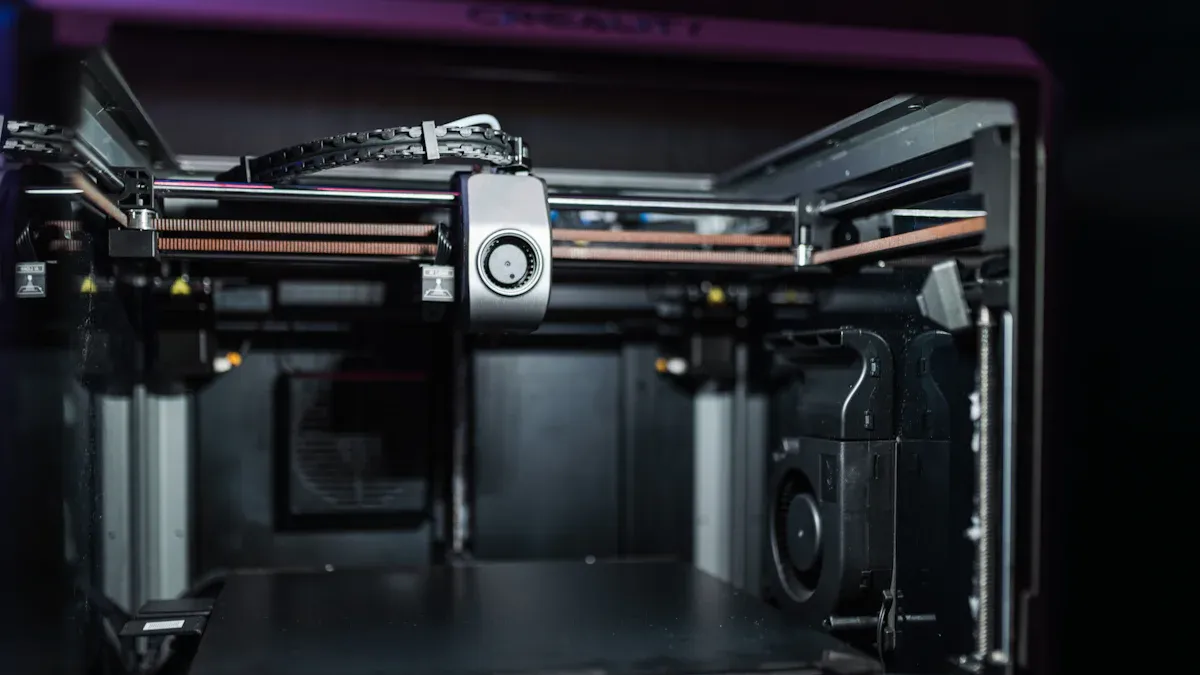
Additive Manufacturing (AM), commonly known as 3D printing, offers transformative capabilities for producing iron-based valve plates. This advanced approach builds components layer by layer directly from digital designs. It provides unparalleled design freedom and efficiency, making it a powerful tool in Net Shape Manufacturing.
Additive Manufacturing Process Overview
Additive Manufacturing processes construct parts by adding material incrementally. This method contrasts sharply with traditional subtractive techniques.
Layer-by-layer fabrication techniques
Additive Manufacturing builds components one layer at a time. This process starts with a 3D digital model of the valve plate. The machine then slices this model into thin cross-sections. For metal parts, common techniques include Powder Bed Fusion (PBF), such as Selective Laser Melting (SLM) or Electron Beam Melting (EBM). These methods use a laser or electron beam to selectively melt and fuse metallic powder particles together. Each melted layer solidifies and bonds to the previous one. This continues until the complete valve plate forms. This precise, controlled deposition allows for intricate internal structures.
Post-processing requirements
Additive Manufacturing parts often require post-processing steps. These steps ensure the final component meets performance specifications. After printing, technicians remove support structures that held the part during fabrication. Heat treatments, such as stress relieving or hot isostatic pressing (HIP), improve mechanical properties and reduce internal stresses. Surface finishing operations, like machining or polishing, enhance surface quality and dimensional accuracy. These post-processing steps are crucial for achieving the desired functional characteristics of iron-based valve plates.
Advantages of Additive Manufacturing
Additive Manufacturing brings significant benefits to the design and production of iron-based valve plates. It unlocks new possibilities for performance and efficiency.
Unprecedented design freedom
Additive Manufacturing provides engineers with extraordinary design freedom. They can create complex geometries and internal configurations impossible with traditional manufacturing methods. This capability allows for optimized internal channels, leading to higher fluid flow and lower pressure drops. For example, designers can create unconventional shapes like curved or square holes instead of round ones. This can increase fluid flow by up to 20% and potentially improve overall efficiency by 30-70%. AM also enables part consolidation, integrating multiple components into a single piece. This eliminates complex assemblies and reduces weak joining points, enhancing structural integrity. Such design flexibility leads to higher performance efficiency, improved design integrity, and reduced weight, space, and material usage. It also allows for leakage-proof designs without the need for plugs, enhancing safety and reducing noise. Additive manufacturing can utilize advanced iron-nickel alloys, such as JBK-75 (Fe-Ni) and NASA HR-1. These materials offer excellent strength and elongation, making them suitable for valve plates operating in harsh environments.
Rapid prototyping capabilities
Additive Manufacturing significantly accelerates product development cycles. Engineers can rapidly produce multiple prototypes of valve plates. This quick turnaround allows for faster design iterations and testing. Companies can validate designs more quickly and bring new products to market faster. This capability reduces lead times and speeds up innovation.
Customization and low-volume production
Additive Manufacturing excels at producing customized parts and handling low-volume production runs. It eliminates the need for expensive tooling, which is a major cost in traditional manufacturing. This makes it economical to produce unique valve plates tailored to specific application requirements. Manufacturers can efficiently produce small batches of specialized components without incurring high setup costs.
Challenges in Additive Manufacturing
Despite its advantages, Additive Manufacturing faces certain challenges, particularly for iron-based valve plates. Addressing these challenges is key to wider adoption.
Material limitations for iron alloys
The range of iron alloys available for Additive Manufacturing is still developing. While some common stainless steels and tool steels are printable, specialized iron alloys may not yet have optimized parameters or readily available powders. Developing new iron alloy powders and processes for AM requires significant research and investment. This limitation can restrict material choices for specific valve plate applications requiring unique properties.
Surface finish and accuracy
Parts produced by Additive Manufacturing often have a rougher surface finish compared to machined parts. The layer-by-layer process can leave visible layer lines. Achieving tight dimensional tolerances and smooth surfaces often requires extensive post-processing. This can add to the overall cost and production time. For valve plates, a precise surface finish is critical for sealing and operational efficiency.
Cost and scalability for mass production
The cost of Additive Manufacturing equipment, materials, and production can be high. This makes it less competitive for mass production compared to traditional methods like casting or stamping. While AM is excellent for prototyping and low-volume custom parts, scaling up for millions of identical valve plates remains a challenge. The speed of printing each part can also be slower than conventional high-volume manufacturing processes.
Cost Reduction through Net Shape Manufacturing
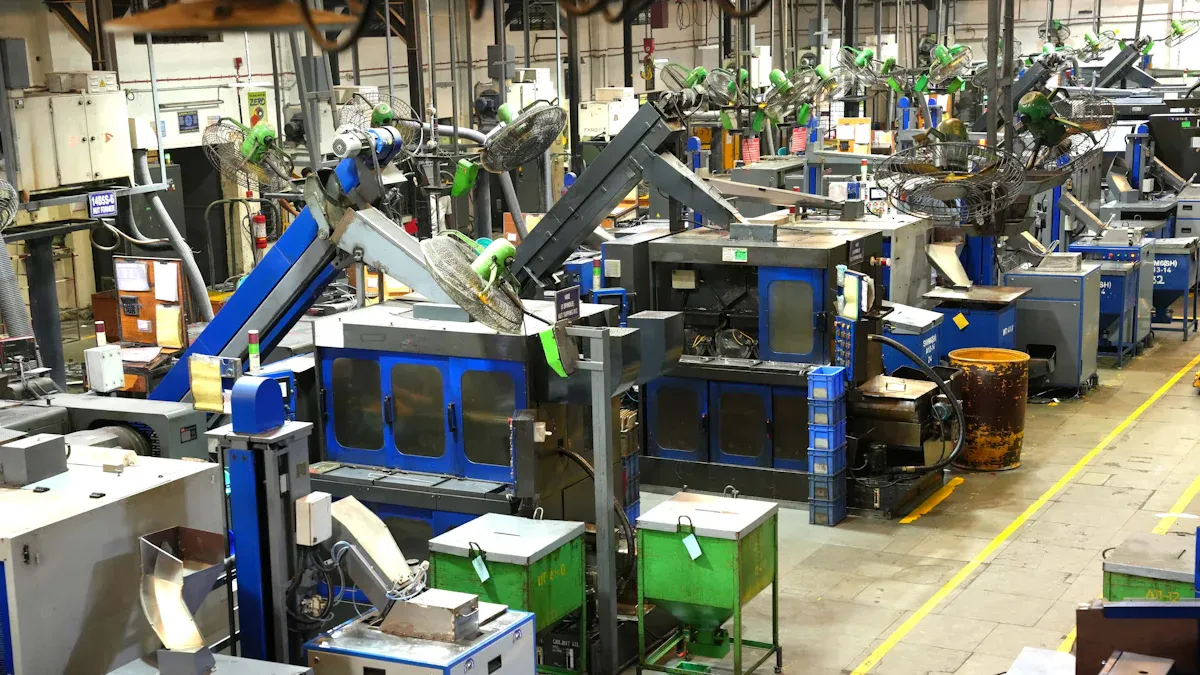
Net Shape Manufacturing significantly reduces production costs for iron-based valve plates. This approach achieves cost savings through minimized material waste, lower machining and labor expenses, and enhanced energy efficiency. These benefits make it an economically attractive option for modern manufacturing.
Minimizing Material Waste
Reduced scrap generation
Net Shape Manufacturing processes inherently generate less waste. Metal powder forming is a near-net-shape process. It significantly reduces material waste compared to traditional methods. For example, using aluminum alloy powder for chassis parts can reduce waste during production and increase material efficiency. Powder metallurgy is a manufacturing process that produces metal parts from powdered materials. During compaction, metal powders are pressed into a desired shape. Then, they are sintered to bond the particles. This results in a high-strength, near-net-shape component requiring minimal post-processing. A significant advantage of powder metallurgy is its exceptional material efficiency. Unlike traditional methods like machining or casting, which often generate substantial scrap, powder metallurgy utilizes nearly 100% of the raw material. It compacts powdered metals into the exact required shape. This minimizes waste and reduces the need for raw material extraction.
Efficient material utilization
Net shape processes maximize the use of raw materials.
- Casting enables the creation of near-net-shape parts. This reduces material waste and machining requirements.
- Forging allows for precise, near-net-shaping with minimal material waste. This makes it efficient and cost-effective.
- Metal Injection Molding (MIM) excels at creating highly detailed, true-net-shape components. It minimizes waste through excellent material utilization and reduced post-processing. Powdered metal processes create near-net-shape parts. This means they are produced very close to their final dimensions. This capability significantly reduces waste. Over 97% of the raw material is utilized in the final product. It also minimizes the need for expensive and time-consuming secondary machining.
Lower Machining and Labor Costs
Decreased post-processing
Net Shape Manufacturing dramatically reduces the need for extensive post-processing. Parts emerge from the manufacturing process with dimensions very close to their final specifications. This minimizes or eliminates subsequent machining operations. This reduction in machining directly translates to cost savings.
Reduced labor intensity
Less post-processing also means lower labor costs.
Investment casting, a net-shape manufacturing process, can significantly reduce or eliminate machining needs. This leads to faster turnaround and less labor cost. For valves, investment cast parts are typically less expensive than machined parts due to high tolerances. This process can replace milling, turning, drilling, and grinding operations. It achieves near net-shapes that often completely eliminate the need for machining. This results in faster production and significantly lower labor costs and material waste. Manufacturers require fewer skilled machinists and less time for finishing. This streamlines the production line and reduces overall labor expenses.
Energy Efficiency Benefits
Lower energy consumption per part
Net Shape Manufacturing processes often consume less energy per part. They avoid the energy-intensive steps of removing large amounts of material. For example, forming a part directly uses less energy than cutting it from a larger block. This contributes to a lower carbon footprint and reduced operational costs.
Streamlined production processes
These manufacturing methods create more efficient production flows. They integrate multiple steps into a single process. This reduces the number of machines and transfers required. The streamlined processes lead to faster cycle times and optimized resource allocation. This overall efficiency contributes to significant energy savings.
Enhanced Performance and Design Freedom with Net Shape Manufacturing
Net Shape Manufacturing significantly enhances the performance and design freedom of iron-based valve plates. This approach allows engineers to create components with superior functional characteristics. It also provides opportunities for innovative designs.
Creating Complex Internal Geometries
Net Shape Manufacturing excels at producing intricate internal structures. These complex geometries are crucial for optimizing fluid dynamics within valve plates.
Optimized fluid flow paths
Manufacturers use Metal Injection Molding (MIM) to create intricate shapes. These shapes include undercuts, thin walls, and internal cavities. MIM also enables net shape features like internal threads and profiled holes. Traditional manufacturing methods often find these features cost-prohibitive. Investment casting also produces highly complex geometries. It offers excellent dimensional accuracy and surface finish. This makes it suitable for pump and valve components with intricate internal passages. The ability to form complex internal shapes allows for optimized flow paths. This reduces turbulence and improves efficiency in pump and valve components. Engineers can design valve plates with internal channels that guide fluid precisely. This minimizes energy loss and maximizes flow rate.
Improved valve efficiency
Optimized fluid flow paths directly lead to improved valve efficiency. Reduced turbulence means less energy dissipates as heat or noise. Superior surface finish, achieved through processes like investment casting, reduces friction and pressure loss in pumps and valves. This enhances overall system efficiency. MIM also contributes to improved vehicle efficiency through lightweight designs and durable materials in automotive valve components. Valve plates can operate more smoothly and effectively. This extends their service life and reduces maintenance needs.
Achieving Superior Material Properties
Net Shape Manufacturing offers precise control over the material's internal structure. This leads to valve plates with enhanced performance characteristics.
Controlled microstructure development
Processes like powder metallurgy and additive manufacturing allow for controlled microstructure development. Engineers can tailor the grain structure and phase distribution within the iron alloy. This precise control results in materials with specific desired properties. For example, they can create a fine, uniform grain structure. This improves the material's strength and toughness. This level of control is difficult to achieve with traditional casting or machining methods.
Enhanced wear resistance and hardness
Controlled microstructure development directly translates to enhanced wear resistance and hardness. Valve plates often operate under high pressure and friction. A material with superior wear resistance lasts longer. It maintains its performance over time. Engineers can design the microstructure to include hard phases or specific grain orientations. This significantly improves the component's durability. This reduces the need for frequent replacements.
Opportunities for Weight Reduction
Net Shape Manufacturing provides significant opportunities for reducing the weight of iron-based valve plates. Lighter components can improve overall system efficiency and reduce operational costs.
Optimized part design
Net shape processes allow for highly optimized part designs. Engineers can remove material from non-critical areas. They can also create hollow structures or lattice designs. This reduces the overall mass of the valve plate without compromising its structural integrity. This design freedom is a key advantage over traditional manufacturing, which often produces solid, heavier parts.
Material distribution efficiency
Net Shape Manufacturing enables efficient material distribution. Manufacturers place material precisely where needed for strength and function. They avoid unnecessary material in other areas. This targeted material placement minimizes waste and reduces the component's weight. Lighter valve plates can lead to lower inertia. This improves response times and reduces the energy required for operation.
Environmental Benefits of Net Shape Manufacturing
Net Shape Manufacturing offers significant environmental advantages. These methods contribute to more sustainable production of iron-based valve plates. They achieve this through reduced waste and lower energy consumption.
Reduced Waste Generation
Less material scrap
Net Shape Manufacturing processes inherently generate less waste. These methods produce parts very close to their final dimensions. Closed-die forging, for example, significantly reduces material waste. It creates near-net-shape parts with minimal excess material. This precision engineering, advanced tooling, and controlled processes lead to substantial cost savings. It also promotes waste reduction. This method reshapes the manufacturing landscape by promoting waste reduction and production efficiency. This means manufacturers use more of the raw material. They send less to landfills.
Lower environmental footprint
Reducing material scrap directly lowers the environmental footprint of valve plate production. Less waste means fewer resources extracted from the earth. It also means less energy used to process and transport waste materials. This approach conserves natural resources. It minimizes pollution associated with waste disposal.
Lower Energy Consumption
Efficient manufacturing processes
Net Shape Manufacturing employs highly efficient processes. These methods require less energy compared to traditional manufacturing. They often involve forming materials rather than removing large amounts. This reduces the energy needed for cutting and machining.
Net Shape Manufacturing utilizes:
- Cutting-edge technology for precision.
- Waste reduction.
- Energy-efficient processes. These characteristics make the production of iron-based valve plates more energy-conscious.
Sustainable production practices
The energy efficiency of Net Shape Manufacturing supports sustainable production practices. Lower energy consumption reduces greenhouse gas emissions. It also decreases reliance on non-renewable energy sources. This contributes to a greener manufacturing industry. Companies can produce high-performance valve plates with a smaller environmental impact. This aligns with global sustainability goals.
Challenges and Considerations in Iron-Based Valve Plates Net Shape Manufacturing
While Net Shape Manufacturing offers significant advantages for iron-based valve plates, manufacturers also face several challenges. Addressing these considerations ensures successful implementation and optimal product performance.
Material Selection and Alloy Development
Choosing the right materials forms the foundation for high-performance valve plates. This process involves careful consideration of specific application demands.
Identifying suitable iron alloys
Manufacturers must identify iron alloys that possess the necessary characteristics for valve plate applications. These characteristics include high strength, wear resistance, and corrosion resistance. The operating environment of the valve plate, such as temperature, pressure, and fluid type, dictates the specific alloy requirements. For instance, some applications demand ductile iron for its toughness, while others require cast iron for its hardness. Developing new iron alloys or optimizing existing ones for Net Shape Manufacturing processes, like powder metallurgy or additive manufacturing, often requires extensive research and testing.
Achieving desired mechanical properties
Beyond selecting the right alloy, manufacturers must ensure the chosen Net Shape Manufacturing process can achieve the desired mechanical properties. Processes like sintering in powder metallurgy or layer fusion in additive manufacturing significantly influence the final microstructure and, consequently, the mechanical performance. Engineers must carefully control process parameters to attain specific tensile strength, hardness, fatigue resistance, and dimensional stability. Sometimes, post-processing heat treatments become necessary to fine-tune these properties, ensuring the valve plates meet stringent performance standards.
Process Control and Quality Assurance
Maintaining stringent process control and robust quality assurance protocols is paramount in Net Shape Manufacturing. These measures guarantee the production of high-quality, defect-free iron-based valve plates.
Ensuring dimensional accuracy
Achieving precise dimensional accuracy is a critical challenge in Net Shape Manufacturing. Manufacturers employ various techniques to verify part dimensions. Coordinate Measuring Machines (CMMs) provide dimensional verification by creating a 3D profile of a part's geometry. They compare this profile to the CAD model, ensuring all dimensions remain within tolerance. This verification is crucial for the precise dimensions of net shape manufactured components. Specialized equipment like profilometers quantify surface roughness, vital for components where surface quality impacts performance, such as wear characteristics. First Article Inspection (FAI) comprehensively validates new setups or process changes. It measures and documents every dimension, feature, and surface finish requirement before full production begins, preventing large batches of defective parts.
Preventing defects
Preventing defects requires continuous monitoring and advanced control strategies. Visual inspection under magnification helps identify defects like burrs, scratches, or material inclusions that might be missed by dimensional measurements, ensuring the overall quality of the part. Statistical Process Control (SPC) monitors manufacturing consistency over time. It tracks key measurements throughout production. This early warning system helps maintain process stability and prevents the creation of defective parts. For Net Shape Manufacturing processes like additive manufacturing, where material microstructure and part geometry form incrementally, advanced process control is essential. Traditional closed-loop control (CLC) systems have limited success due to the stochastic nature of these processes. Emerging machine learning (ML)-based strategies offer greater robustness, flexibility, and scalability. These include offline ML models for optimizing process parameters before a build and online ML models for real-time detection and diagnosis of flaws using in-situ sensory data. Future developments aim for ML models with prognostic capabilities to enable context-sensitive recommendations and corrective actions for in-situ process control, thereby preventing defects and anomalies.
Non-destructive testing methods
Non-destructive testing (NDT) methods play a crucial role in verifying the internal quality of valve plates without damaging the component. Techniques such as X-ray inspection, ultrasonic testing, and dye penetrant inspection verify internal quality. They detect voids, cracks, or delaminations, ensuring the structural integrity of the components. These methods are essential for critical applications where internal flaws could lead to catastrophic failure.
Initial Investment and Scalability
Implementing Net Shape Manufacturing processes often involves significant upfront costs and considerations for scaling production.
High tooling and equipment costs
The initial investment in specialized tooling and equipment for Net Shape Manufacturing can be substantial. For processes like powder metallurgy and metal injection molding, designing and fabricating precision molds and dies requires significant capital. Additive manufacturing machines, while offering flexibility, also represent a considerable investment. These high upfront costs can pose a barrier for smaller manufacturers or those with limited capital.
Scaling processes for mass production
Scaling Net Shape Manufacturing processes for mass production presents another challenge. While these methods excel at producing complex parts, achieving high volumes efficiently requires careful planning and optimization. Manufacturers must ensure consistent quality and throughput as they increase production scale. This often involves investing in multiple machines, automating material handling, and refining process parameters to maintain efficiency and cost-effectiveness at higher volumes.
Net Shape Manufacturing offers substantial benefits for iron-based valve plates. These advanced methods deliver significant cost reductions, unparalleled design flexibility, and enhanced performance. Ongoing innovations actively address existing challenges, continuously improving these processes. Consequently, these efficient and precise manufacturing techniques are becoming essential for future valve plate production.
FAQ
What is Net Shape Manufacturing?
Net Shape Manufacturing produces components with final or near-final dimensions. This process minimizes material removal. It significantly reduces the need for post-processing steps. This approach makes production cost-effective and efficient.
Why is Net Shape Manufacturing beneficial for iron-based valve plates?
Net Shape Manufacturing leverages iron's specific material properties. It meets demanding application requirements for valve plates. This method ensures high precision and robust material characteristics. It also allows for complex designs.
What are the primary Net Shape Manufacturing methods for iron-based valve plates?
Key methods include Powder Metallurgy (PM), Metal Injection Molding (MIM), and Additive Manufacturing (AM). Each method offers unique advantages for creating precise and complex iron valve plates. Manufacturers choose based on part complexity and volume.
How does Powder Metallurgy benefit valve plate production?
Powder Metallurgy offers high material utilization. It creates complex geometries. Manufacturers can also control porosity for specific applications. This leads to cost-effective production and tailored material properties.
What advantages does Metal Injection Molding (MIM) offer?
MIM excels at producing highly complex and intricate designs. It provides an excellent surface finish. This method is also suitable for high-volume production. MIM combines design flexibility with metal strength.
Can Additive Manufacturing create complex valve plate designs?
Yes, Additive Manufacturing offers unprecedented design freedom. It allows for rapid prototyping. This method also supports customization and low-volume production. Engineers can create intricate internal geometries for optimized fluid flow.
How does Net Shape Manufacturing reduce costs?
Net Shape Manufacturing minimizes material waste. It reduces scrap generation. This approach also lowers machining and labor costs. It decreases post-processing needs. These methods also offer energy efficiency benefits.
What environmental benefits does Net Shape Manufacturing provide?
Net Shape Manufacturing reduces waste generation. It creates less material scrap. This approach also lowers energy consumption. It promotes efficient manufacturing processes. These practices contribute to sustainable production.