

Is Magnesium Die Casting Expensive? Cost Breakdown Explained
Magnesium Die Casting does not present an inherently expensive manufacturing solution. Its true cost-effectiveness hinges on the specific application and a detailed analysis of various contributing factors. The global automotive parts market, which heavily utilizes this process, was valued at USD 3.3 billion in 2024. Experts project this market to grow at a Compound Annual Growth Rate (CAGR) of 7.2% from 2020 to 2027, indicating strong industry adoption and value.
Key Takeaways
- Magnesium die casting is not always expensive. Its cost depends on how it is used and many factors.
- Magnesium raw material costs can be higher than aluminum. But magnesium's lower weight means less material is needed for the same part.
- Making the molds for magnesium Die Casting Costs a lot at first. These molds must be very strong and precise.
- Magnesium parts cool faster during casting. This makes production quicker and saves energy.
- Magnesium parts often need extra steps like machining and special coatings. These steps add to the total cost.
- Magnesium is much lighter than steel and aluminum. This helps vehicles save fuel and makes electronics easier to carry.
- Magnesium can catch fire during processing. Factories must use special safety steps to prevent this.
- The future of magnesium die casting looks good. New technologies and the need for lighter products will help it grow.
Understanding Magnesium Die Casting Costs
Understanding the cost structure of magnesium die casting involves analyzing several key components. These include the raw material expenses, the processing costs associated with manufacturing, and the specific demands of various applications. A detailed breakdown of these elements provides clarity on the overall investment.
Raw Material Costs for Magnesium Die Casting
The foundation of any manufacturing cost analysis begins with the raw materials. For magnesium die casting, the price of magnesium alloys significantly influences the final product cost.
Magnesium Alloy Market Prices
Current market trends indicate that the average price of magnesium alloy ranges from $3 to $6 per kilogram. This pricing reflects the inherent challenges in magnesium production. Magnesium is more expensive than some other metals due to its limited supply and complex extraction processes. These factors contribute to a higher base cost for the raw material. Manufacturers must account for these fluctuating market prices when planning production budgets.
Alloy Grades and Purity Impact
Different magnesium alloy grades possess varying compositions and purity levels, directly affecting their market price. For instance, specialized alloys designed for high-performance applications, such as those requiring enhanced corrosion resistance or superior mechanical properties, typically command higher prices. The additional refining and alloying elements necessary to achieve these specific characteristics increase production costs. Consequently, the choice of alloy grade significantly impacts the raw material expenditure for magnesium die casting projects.
Comparing Magnesium and Aluminum Material Costs
A common comparison in die casting involves magnesium and aluminum, two lightweight metals. Analyzing their material costs reveals distinct differences.
Per Unit Weight Analysis
Magnesium's raw material cost typically averages around $2.00 per kilogram. In contrast, aluminum, a more widely available metal, averages approximately $2.50 per kilogram. Despite magnesium's potentially lower per-kilogram raw material price, its complex extraction and refinement processes, coupled with limited natural reserves, often contribute to a higher overall cost for finished components. Some industry analyses even suggest magnesium can be approximately twice as expensive as aluminum per kilogram when considering all factors beyond just the raw material. However, the hot-chamber die-casting process for magnesium is faster and more economical than the cold-chamber process used for aluminum. Furthermore, processing magnesium alloys consumes only 70% of the energy required for aluminum alloys, contributing to reduced overall production costs.
| Metal | Cost per Kilogram (USD) |
|---|---|
| Aluminum | $2.50 |
| Magnesium | $2.00 |
Volume-Based Material Cost Differences
The volume of material purchased significantly influences the per-unit cost for both magnesium and aluminum. Large-volume orders often qualify for bulk discounts, reducing the overall material expenditure. For magnesium, while its per-kilogram price might be lower than aluminum in some instances, its lower density means manufacturers require less material by weight to produce a part of the same volume. This density advantage can lead to lower total material costs for a given number of components, especially when considering the lightweighting benefits of magnesium die casting. Strategic sourcing and volume purchasing play a crucial role in optimizing material costs for both metals.
Processing Expenses in Magnesium Die Casting
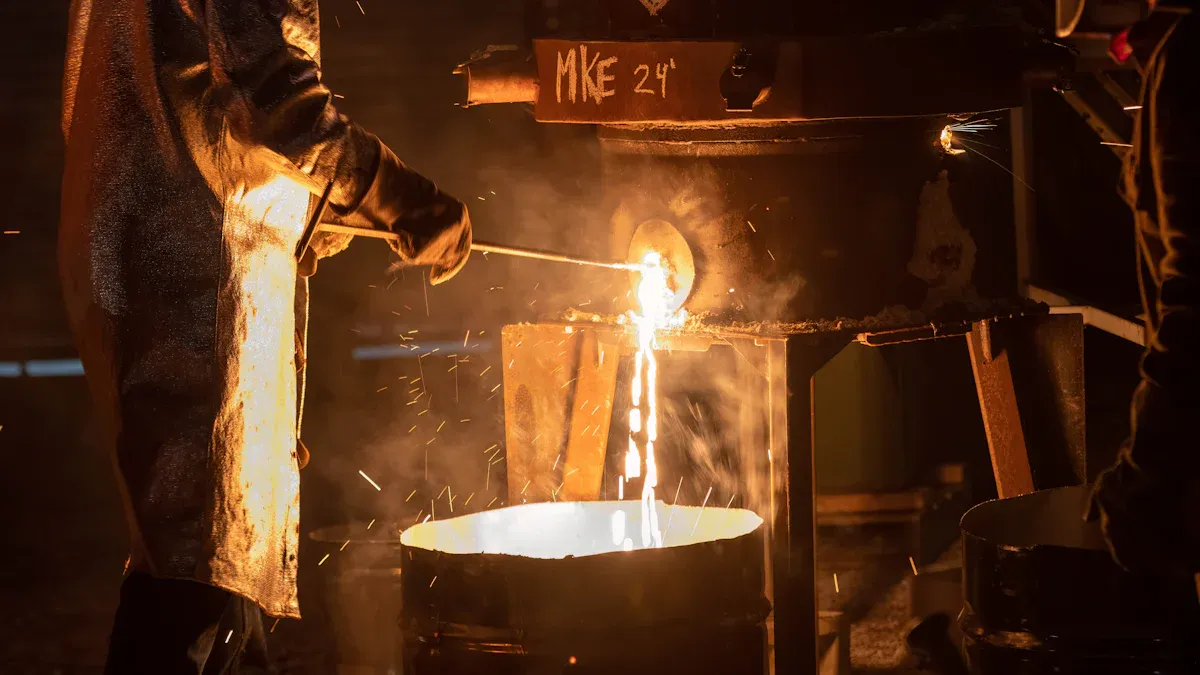
Processing expenses form a significant part of the overall cost in magnesium die casting. These costs encompass tooling, energy consumption, and post-casting operations. Manufacturers carefully manage these factors to optimize production efficiency and control expenditures.
Tooling Investment for Magnesium Die Casting
Tooling represents a substantial upfront investment in the die casting process. The quality and complexity of the die directly impact both initial costs and long-term operational efficiency.
Initial Die Manufacturing Costs
The initial cost of manufacturing dies for magnesium die casting can be considerable. These dies are precision-engineered molds, often made from high-strength steel, designed to withstand extreme temperatures and pressures. Their complexity depends on the part's geometry, requiring intricate machining and specialized design. This initial outlay is a primary factor in the overall project budget.
Die Longevity and Maintenance Factors
Die longevity and maintenance significantly influence the long-term cost of tooling. Manufacturers select hardened tool steels like H13 and DIN 1.2367 for their durability and heat resistance, especially when casting metals like magnesium. Higher casting temperatures increase wear and thermal fatigue, directly impacting die lifespan. Proper cooling, lubrication, and heating cycles are essential to minimize thermal stress, prevent cracking, and ensure consistent performance.
Precision engineering also enhances durability. Accurate design and machining, including tight tolerance standards and effective thermal management systems, extend die life by reducing fatigue and heat-related damage. Design for Manufacturability (DFM) integrates engineering and design to optimize mold production, reduce costs, and improve durability. Key DFM parameters include sufficient draft angles, smooth radii and fillets, structural reinforcements like bosses and ribs, and proper parting line placement.
Die casting tooling operates under high pressure (150MPa-500MPa) and high temperatures (300℃-1000℃), with injection speeds of 70m/s-150m/s. Improper operation under these conditions can lead to cracks, corrosion, and sticking, reducing tooling lifespan. Regular maintenance is vital due to repeated heating and cooling cycles that cause core wear and gate erosion. Strategies include scheduled inspections, regular cleaning, and prompt repairs. Proper maintenance can significantly extend the lifespan of molds; for example, it can extend aluminum mold life beyond 200,000 shots.
Energy Consumption and Production Efficiency
Energy consumption is a critical operational expense in magnesium die casting. Optimizing energy use directly impacts production costs.
Melting and Injection Process Efficiency
The melting and injection processes consume substantial energy. While smelting magnesium alloys generally requires higher energy input compared to aluminum, the subsequent die-casting process for magnesium often consumes less energy. This difference arises from magnesium's lower melting point and specific heat capacity. Efficient furnace designs and precise temperature control systems help minimize energy waste during melting. The hot-chamber die-casting process, commonly used for magnesium, is also more energy-efficient than the cold-chamber process typically used for aluminum.
| Process Step | Magnesium Alloys | Aluminum Alloys |
|---|---|---|
| Smelting | Higher energy | Lower energy |
| Die-casting process | Lower energy | Higher energy |
Recycling processes for magnesium are energy-intensive and require higher temperatures, while aluminum recycling is well-established and energy-efficient. This makes aluminum recycling a distinct advantage in terms of sustainability.
Cycle Times and Throughput Rates
Cycle times directly influence throughput rates and overall production efficiency. Magnesium's excellent thermal conductivity allows for faster cooling times compared to other alloys. For instance, a South Korean firm achieves 9-second cycles for smartphone frames made from magnesium, enabling 1.5 million units monthly. Switching from aluminum to magnesium AM60B for radiator caps dropped cooling time to 9 seconds due to better thermal conductivity.
Magnesium can be faster than other alloys, but it requires precise temperature control to avoid issues. Zinc cools in 5-10 seconds, aluminum in 12-20 seconds. Faster cycle times mean higher throughput, which amortizes fixed costs over more units, reducing the per-unit cost.
Post-Casting Operations for Magnesium Die Casting
After the casting process, parts often require additional operations to meet final specifications. These post-casting steps add to the overall production cost.
Machining Requirements and Costs
Many magnesium die cast components require machining to achieve precise dimensions, smooth surfaces, or integrate features like threads. Common machining operations include drilling, tapping, milling, reaming, and deburring (to remove sharp edges and trim gates/runners). The machinery required for magnesium die casting can be expensive, with machines costing from $30,000 to over $1,000,000. While magnesium is highly machinable, the cost of specialized equipment and skilled labor contributes to the overall expense.
Surface Treatment and Finishing Expenses
Surface treatments and finishing operations enhance the aesthetic appeal, corrosion resistance, or functional properties of magnesium parts. These processes add to the final cost. Examples include anodizing for corrosion resistance and aesthetics, powder coating for a durable colored surface, plating (e.g., chrome) for wear resistance and appearance, and painting for color and protection. The choice of finish depends on the application's requirements and significantly impacts the final product cost.
| Finish Type | Purpose | Typical Cost Impact |
|---|---|---|
| Anodizing | Corrosion resistance, aesthetics | Medium |
| Powder coating | Durable colored surface | Medium-High |
| Plating (e.g., chrome) | Wear resistance, appearance | High |
| Painting | Color, protection | Low-Medium |
Application-Specific Cost Drivers for Magnesium Die Casting

The cost of magnesium die casting varies significantly across different industries. Specific application requirements, performance demands, and production volumes drive these cost differences. Understanding these industry-specific factors helps evaluate the overall economic viability of using magnesium.
Automotive Industry Cost Considerations
The automotive sector heavily utilizes magnesium die casting due to its lightweight properties. This use introduces unique cost considerations.
Lightweighting Benefits vs. Initial Cost
Automotive manufacturers prioritize lightweighting to improve fuel efficiency and reduce emissions. Magnesium die casting offers substantial benefits in this area. High production rates reduce per-unit manufacturing costs, meeting mass production demands. Near-net-shape casting minimizes secondary machining, saving time, reducing material waste, and lowering labor costs. Material efficiency is high; manufacturers can recycle excess material like flash and runners, reducing raw material waste. Magnesium's low density also means less material by weight is needed for a given part. Part consolidation allows for creating complex, multi-functional components as single units. This reduces assembly time, simplifies supply chains, and lowers the total number of parts, leading to significant manufacturing and logistics savings. The cost of raw magnesium is also decreasing, with projections for its price ratio to aluminum to equalize, further enhancing cost-effectiveness.
Structural Components and Housings
Continuous improvements and innovations in manufacturing processes for magnesium alloys have significantly enhanced production efficiency, shortened production cycles, and reduced costs. These advancements facilitate their large-scale adoption in automotive parts. The declining prices of raw magnesium, driven by increased supply from upstream mining companies, are expected to push prices down further. Experts anticipate that when the price ratio of magnesium to aluminum reaches 1.29, the raw material and processing costs for both alloys in automotive parts production will be comparable. This creates favorable cost conditions for magnesium alloy applications. Recent United States tariffs on imported magnesium products have altered sourcing and procurement strategies within the automotive die casting supply chain. Companies are diversifying supply sources, accelerating regional partnerships, and optimizing recycling practices to mitigate pricing volatility, which can impact overall manufacturing costs. A major constraint on the growth of the automotive parts die casting market is the substantial capital investment required for specialized tooling and machinery. Manufacturers must allocate significant financial resources for high-pressure die casting units and precision molds before securing revenue, creating a high barrier to entry and influencing overall manufacturing costs.
Aerospace and Defense Sector Costs
The aerospace and defense sectors have distinct cost drivers for magnesium components. These industries demand extreme reliability and performance.
Performance Requirements and Certification
Aerospace and defense applications require materials that meet stringent performance criteria, including high strength-to-weight ratios and resistance to harsh environments. The certification process for these parts is rigorous and expensive, involving extensive testing and documentation. These high-performance requirements and the associated certification costs contribute significantly to the overall expense of magnesium components in these sectors.
Low Volume, High Value Parts
Aerospace and defense typically involve low production volumes for highly specialized, critical components. The high initial investment in tooling and development is amortized over a smaller number of parts, leading to a higher per-unit cost. However, the high value and critical function of these parts justify the investment, as their failure could have severe consequences.
Consumer Electronics and Medical Device Costs
Consumer electronics and medical devices present unique cost considerations, driven by aesthetic demands, miniaturization, and thermal management.
Aesthetic Demands and Miniaturization
Meeting aesthetic demands and miniaturization requirements for magnesium die castings in consumer electronics involves several cost implications.
| Feature | Magnesium Die Casting | Aluminum Die Casting |
|---|---|---|
| Initial Material Cost | Higher due to complex extraction and refinement | Generally lower and more widely available |
| Processing Cost | Higher initial machinery cost (e.g., $30,000 to over $1,000,000 for machines), but faster casting cycles, longer-lasting tools, and faster machining speeds contribute to long-term efficiency | Lower production costs, efficient processes, and often requires less finishing work |
| Overall Cost-Effectiveness | Higher initial cost, but potential savings over time | Generally more cost-effective due to lower material and production costs |
The initial material cost for magnesium is higher than aluminum due to more complex extraction and refinement processes. Processing costs are also a challenge, with die-casting machines for magnesium ranging from $30,000 to over $1,000,000. Alloy production costs are higher than other lightweight metals. However, magnesium offers advantages like faster casting cycles, longer-lasting tools, and faster machining speeds, which contribute to long-term efficiency. For miniaturization, magnesium die casting excels at producing intricate, high-accuracy parts with complex geometries and ultra-thin walls (0.035 to 0.045 inches), reducing the need for post-casting machining. This capability, along with the ability to create multi-functional components that optimize space and reduce part count, contributes to overall cost-effectiveness. For aesthetic appeal, achieving superior surface finishes requires optimized die design and careful control of the casting process to prevent defects. Magnesium parts readily accept various surface treatments like anodizing, painting, or polishing to enhance durability and visual appeal. Despite the higher initial costs associated with magnesium die casting for consumer electronics, significant long-term value and lifecycle cost considerations exist. Magnesium's lightweight properties can reduce transportation costs, and its durability extends product lifespan, minimizing replacement needs. Furthermore, superior performance benefits such as thermal management and EMI shielding enhance device functionality. The ability to create multi-functional components that combine structural support, heat sinking, and EMI shielding into a single unit optimizes internal space, reduces the total number of parts, and simplifies assembly processes. These factors collectively contribute to a lower total lifecycle cost for electronic products, justifying the initial investment.
Heat Dissipation Advantages
Magnesium alloy die-cast cabinets, used in the electronics sector, help dissipate heat from electronic devices. This ensures they operate within safe temperature ranges. This thermal property leads to energy savings in applications where heat dissipation is critical, thereby lowering operational costs and enhancing overall efficiency.
- Magnesium die-cast housings and fixtures efficiently draw heat away from LED components, ensuring optimal operating temperatures and extending product service life.
- Magnesium alloy's high thermal conductivity (approximately 150 W/mK) is crucial for efficient heat dissipation in electronic enclosures, preventing overheating and maintaining optimal component operation.
- Efficient heat dissipation is essential for the longevity and performance of electronic and lighting products, with magnesium alloys excelling in thermal management.
Hidden Costs and Challenges in Magnesium Die Casting
Magnesium die casting presents specific challenges and hidden costs beyond the obvious material and processing expenses. Manufacturers must consider these factors for accurate project budgeting and successful production.
Tooling Design Complexity and Cost
The design and manufacturing of tooling represent a significant upfront investment. Complex part designs directly impact these costs.
Intricate Part Geometries
Designing tools for intricate part geometries increases complexity and expense. Highly detailed or unusually shaped components require more sophisticated mold designs and precision machining. This complexity extends design time and manufacturing lead times for the dies.
Design for Manufacturability (DFM)
Implementing Design for Manufacturability (DFM) principles helps mitigate tooling costs. Simplifying casting designs, for example, eliminates the need for expensive side cores (sliders) by avoiding holes and undercuts parallel to the parting line. While multi-cavity tools can reduce per-part costs by producing multiple parts per machine cycle, this benefit materializes only if the additional cavities do not necessitate larger, more expensive die casting machines or significantly reduce production yields due to increased complexity.
Safety and Environmental Compliance Costs
Safety and environmental regulations add another layer of cost to magnesium die casting operations.
Fire Hazard Mitigation Strategies
Magnesium is a reactive metal, posing a fire hazard during processing. Manufacturers must implement stringent fire hazard mitigation strategies. These include specialized handling procedures, inert gas atmospheres, and dedicated fire suppression systems. These safety measures require significant investment in equipment and training, increasing operational costs.
Waste Management and Recycling
Proper waste management and recycling are crucial for environmental compliance. Magnesium scrap and dross require specific handling and disposal methods. While magnesium is recyclable, the processes can be energy-intensive and require specialized facilities, contributing to overall production expenses.
Quality Control and Inspection Expenses
Ensuring the quality and integrity of magnesium die cast components involves substantial quality control and inspection expenses.
Defect Detection and Prevention
Effective defect detection and prevention methods are essential. Monitoring cycle times, using calipers and CNC machines for precision measurements, and recording findings help estimate repair costs and prevent unexpected breakdowns. This includes identifying and repairing damaged areas like welding cracks and smoothing welded surfaces, and cleaning cooling channels. Ensuring proper die alignment is also critical. Manufacturers utilize precision engineering with CAD and CNC machines to maintain tight tolerances (e.g., ±0.05 mm). They implement rigorous guidelines such as verifying parallelism with a dial indicator and ensuring proper tightening of bolts and screws to prevent mismatches and burrs. Applying appropriate die coatings also reduces defects. Selecting hardened tool steels (e.g., H13, DIN 1.2367) and applying coatings reduces friction and thermal stress, minimizing defects like soldering and surface pitting. Precision-engineered cooling systems regulate temperature changes and reduce thermal fatigue.
Material Property Verification
Verifying material properties adds to quality control costs. Inspection fees for critical dimensions of the mold, electrodes, and mold cores typically account for 1-2% of the total cost. Mold trial costs for magnesium alloy are higher compared to aluminum alloy die-casting. This is due to higher safety performance requirements for magnesium alloy materials, a higher unit price for magnesium alloy material, and different die-casting furnace requirements for magnesium alloys compared to aluminum alloys.
Supply Chain and Logistics for Magnesium Die Casting
The supply chain and logistics for magnesium present unique challenges. These factors significantly influence the overall cost and availability of magnesium alloys for manufacturers.
Availability of Magnesium Alloys
The global supply of magnesium alloys faces significant concentration risks. China supplies over 85% of global output. In 2023, China provided 99% of all magnesium imports into the European Union. This highlights a significant single-source dependency risk. This monopoly exposes global buyers to high supply chain risk. The 2021 magnesium shortage demonstrated this vulnerability. Chinese production cuts led to price spikes exceeding 400%. This volatility discourages long-term procurement. It also deters original equipment manufacturers (OEMs) from heavily integrating magnesium alloys. The global supply remains highly fragile due to limited secondary production and refining infrastructure outside Asia.
Magnesium was officially listed as a 'critical raw material' by the European Commission in March 2023. This designation reflects its strategic importance and supply risk. The EU aims to domestically extract at least 10% of its magnesium demand by 2030. It also plans to process 40% within Europe and recycle at least 25% of used magnesium. The European Commission targets reducing import reliance. It aims for at least 15% of total magnesium demand, around 40,000 tonnes, to come from EU-based production by 2030. Projects like Verde Magnesium in Romania aim to produce 90,000 tonnes per year by 2027. This could meet about half of the EU’s current demand. The U.S. is also expanding domestic mining and recycling. These efforts aim to reduce import dependency and stabilize prices.
Despite its advantages, magnesium alloy adoption is limited by its inherent corrosion susceptibility. This is especially true in humid and marine environments. This necessitates protective coatings or alloying with rare-earth elements, increasing costs. Magnesium's reactivity also requires careful handling. Fire risks exist during casting or welding. These limitations demand significant research and development investment. Smaller manufacturers may struggle to afford this. This leads to caution in substituting traditional metals.
| Country | Estimated Annual Capacity (tonnes) | Global Output Share |
|---|---|---|
| China | >1.2 million | >80% |
| Russia | ~250,000 | N/A |
| United States | ~80,000 | N/A |
| Other (Israel, India, North Korea) | N/A | N/A |
Transportation Costs
Transportation costs are a critical component of the overall supply chain expense. The heavy concentration of magnesium production in China means long shipping routes for many global manufacturers. This increases freight charges. Geopolitical factors and trade policies, including tariffs on Chinese magnesium, also impact these costs. However, magnesium's lightweight nature can offer some offsetting benefits. Finished products made from magnesium are lighter. This can reduce shipping costs for the final goods. Manufacturers must balance the higher inbound material transport costs with potential outbound savings.
Long-Term Value and Cost Efficiency of Magnesium Die Casting
Magnesium die casting offers significant long-term value and cost efficiency. These benefits extend beyond initial production expenses. They encompass the entire product lifecycle.
Lifecycle Cost Analysis of Magnesium Die Casting
Analyzing the total lifecycle cost reveals magnesium's true economic advantages. These advantages often outweigh higher upfront material costs.
Energy Savings in End Products
Magnesium's lightweight nature directly translates to energy savings in end products. Lighter components require less energy to move. This is particularly true in transportation sectors like automotive and aerospace. Reduced weight improves fuel efficiency. It also lowers operational costs over the product's lifespan.
Reduced Maintenance and Replacement
Magnesium components can contribute to reduced maintenance and replacement needs. Their durability, when properly engineered and protected, extends product life. This minimizes the frequency of repairs or part changes. Such longevity leads to significant cost savings for end-users.
Performance vs. Cost Trade-offs in Magnesium Die Casting
Manufacturers often weigh performance benefits against cost. Magnesium die casting presents compelling trade-offs.
Strength-to-Weight Ratio Benefits
Magnesium offers an exceptional strength-to-weight ratio. This provides significant performance advantages.
- Magnesium is 75% lighter than steel. It maintains comparable strength.
- It is 33% lighter than aluminum. It offers similar or improved mechanical properties.
- Magnesium is comparable in weight to many plastics. However, it provides superior strength, stiffness, wear resistance, and temperature/UV resistance. It also does not require inserts for threaded holes. These properties enable the creation of lightweight yet strong components. They improve fuel efficiency and performance in automotive and aerospace industries. Magnesium also allows for durable, portable, and sleek consumer electronic devices. It offers superior noise and vibration dampening. It provides effective EMI/RFI shielding and good impact resistance.
Thermal Conductivity Advantages
Magnesium alloys possess excellent thermal conductivity. This property is crucial for heat dissipation. Efficient heat transfer helps maintain optimal operating temperatures for electronic components. This extends their lifespan and enhances reliability. It also reduces the need for complex cooling systems.
Durability and Corrosion Resistance Factors
Durability and corrosion resistance are critical for long-term product performance. Magnesium's characteristics in these areas require careful consideration.
Longevity in Harsh Environments
A fundamental challenge for high-pressure magnesium die casting is its poor corrosion resistance. This is especially true in humid air and environments with certain anions like Cl- and SO42-. Magnesium is not inherently corrosion-resistant like aluminum or zinc. Therefore, magnesium die-cast parts require sprays or coatings. These treatments provide necessary galvanic corrosion protection for most components. The operational environment dictates the required protection level. Components exposed to harsh conditions, such as saltwater or corrosive chemicals, need superior corrosion resistance. Parts used indoors may require less robust protection. Temperature fluctuations and UV exposure also influence coating stability.
Protective Coatings and Treatments
Various protective coatings and treatments enhance magnesium's durability.
| Treatment Type | Corrosion Resistance | Adhesion & Durability |
|---|---|---|
| PEO/MAO, Hard Anodizing, Electroless Nickel Plating, PVD/CVD Coatings | Excellent (robust barriers) | Excellent (integral layers) |
| Chromate Conversion Coatings (restricted), Environmentally Friendly Anodizing, Organic Coatings | Good | Good (properly pretreated/applied) |
| Phosphate Conversion Coatings, Conventional Anodizing | Moderate (often needs topcoats) | Challenging (irregular, inconsistent, can initiate fatigue fractures) |
| PEO/MAO can exhibit porosity and a rough structure. This limits long-term corrosion resistance. It requires careful control of parameters and can be expensive. Thick coatings can be brittle. Conventional anodizing results in irregularly formed layers. This prevents adequate protection in harsh environments. It can also initiate fatigue fractures. |
Future Outlook for Magnesium Die Casting Competitiveness
The future of magnesium die casting appears promising. Continuous innovation and evolving market demands drive its competitiveness. Manufacturers anticipate significant growth as industries increasingly recognize magnesium's unique advantages.
Advancements in Magnesium Technology
Technological advancements significantly enhance magnesium's appeal. Researchers develop new alloy designs. These designs, particularly principles involving eutectics with continuous α-Mg, improve the performance of die cast magnesium alloys. These improvements lead to stronger, more durable components. They also expand the material's potential applications. Furthermore, magnesium die casting finds new application areas. Electric vehicles (EVs) and giga-casting represent significant growth opportunities. These new uses could offset recent declines in traditional applications. This demonstrates the industry's adaptability and innovation. These advancements make magnesium a more viable option for various demanding applications.
Market Growth and Adoption
Several factors contribute to the projected market growth and adoption of magnesium. The global push for lightweighting in transportation remains a primary driver. Industries seek to reduce vehicle weight to improve fuel efficiency and lower emissions. Magnesium offers an excellent strength-to-weight ratio, making it ideal for these goals. Its use in structural components and housings will likely increase. The demand for sustainable manufacturing practices also boosts magnesium's profile. Magnesium is highly recyclable, aligning with environmental objectives. As processing costs become more competitive and supply chain risks diversify, more manufacturers will likely adopt magnesium. This broader adoption will further solidify its position as a preferred material for high-performance, lightweight components across multiple sectors. The ongoing research into corrosion resistance and new protective coatings will also expand its usability in challenging environments. This ensures its long-term viability and competitiveness in the global market.
Magnesium die casting offers a compelling value proposition. It provides significant benefits when considering the full spectrum of costs and advantages. Its initial investment finds offset by long-term performance, substantial weight savings, and specific application advantages. Strategic material selection and meticulous process optimization are crucial. These factors maximize cost-effectiveness and ensure successful project outcomes.
FAQ
Is magnesium die casting always more expensive than aluminum die casting?
Not always. While magnesium's raw material cost can be higher, its lower density means less material by weight for the same volume. Faster cycle times and lower energy consumption during the hot-chamber die casting process can also reduce overall production costs.
What are the main factors influencing magnesium die casting costs?
Key factors include raw material prices, tooling investment, energy consumption during processing, post-casting operations like machining and finishing, and specific application requirements. Supply chain stability and quality control also impact costs.
Why is tooling for magnesium die casting expensive?
Tooling is expensive due to the precision required for intricate part geometries. Dies are made from high-strength steel to withstand extreme temperatures and pressures. Complex designs and the need for durability increase manufacturing costs.
How does lightweighting benefit the cost-effectiveness of magnesium die casting?
Lightweighting reduces the overall weight of the final product. This leads to improved fuel efficiency in vehicles and lower transportation costs. It also enhances performance and portability in consumer electronics, adding long-term value.
What are the safety considerations for magnesium die casting?
Magnesium is reactive and poses a fire hazard during processing. Manufacturers implement strict safety measures. These include specialized handling procedures, inert gas atmospheres, and dedicated fire suppression systems. These measures ensure worker safety and prevent incidents.
Does magnesium die casting require special surface treatments?
Yes, magnesium die cast parts often require surface treatments. These treatments enhance corrosion resistance and improve aesthetic appeal. Common treatments include anodizing, powder coating, and various plating options, depending on the application's environment.
What is the future outlook for magnesium die casting?
The future outlook is positive. Advancements in alloy technology improve performance and expand applications. The push for lightweighting in automotive and aerospace industries drives demand. Increased recycling efforts and diversified supply chains also enhance its competitiveness.