


Melting point of iron
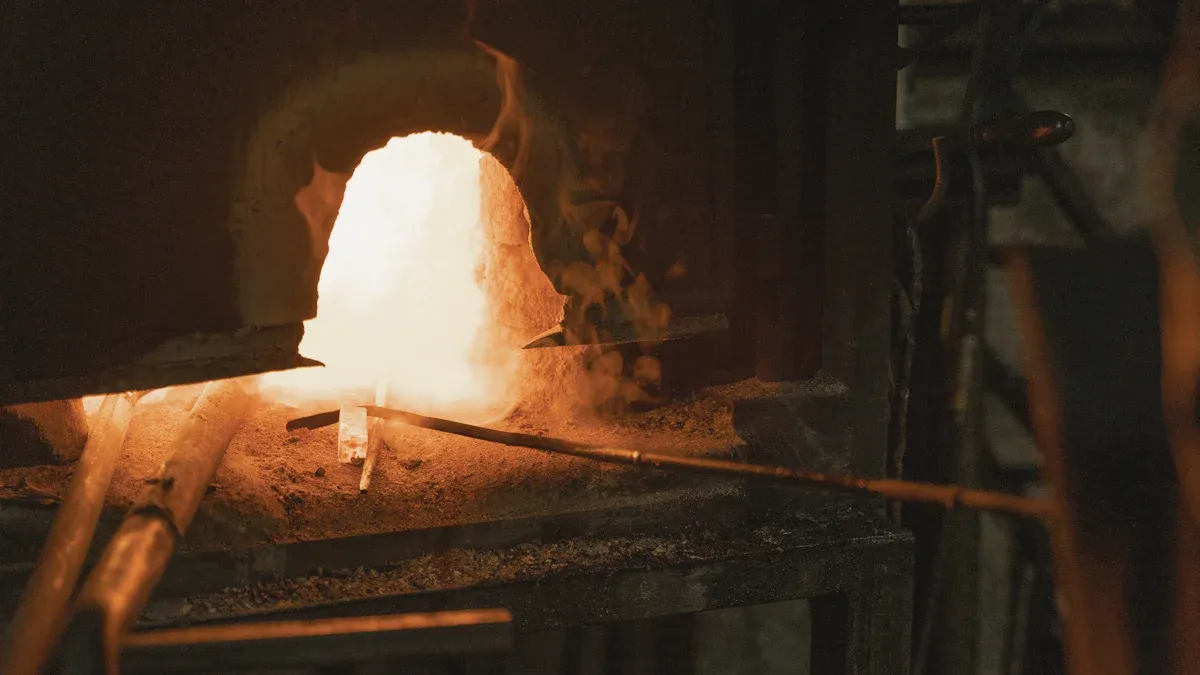
The melting point of iron stands at 1538°C (2800°F or 1811 K), marking the temperature at which iron transitions from solid to liquid.
| Unit of Measurement | Melting Point Value |
|---|---|
| Celsius (°C) | 1538 |
| Fahrenheit (°F) | 2800 |
| Kelvin (K) | 1811 |
This property plays a crucial role in industrial applications such as welding, forging, and casting. Recent studies, including high-pressure experiments, demonstrate that understanding the melting point of iron supports advances in metallurgy and geophysical research.
Key Takeaways
- Iron melts at a high temperature of 1538°C, making it useful for heat-resistant applications.
- Compared to metals like aluminum, copper, gold, and silver, iron has a much higher melting point.
- Adding carbon and other elements lowers iron’s melting point, allowing for different types of steel and cast iron.
- Pressure increases iron’s melting point, especially under extreme conditions like inside the Earth.
- Iron’s melting point guides important industrial processes such as welding, casting, and forging.
- Different furnaces, like blast, electric arc, and induction furnaces, are used to melt iron efficiently.
- Safety gear and strict protocols protect workers from the dangers of handling molten iron.
- Melting iron consumes a lot of energy and produces emissions, so recycling and cleaner technologies help reduce environmental impact.
Melting Point of Iron Compared to Other Metals
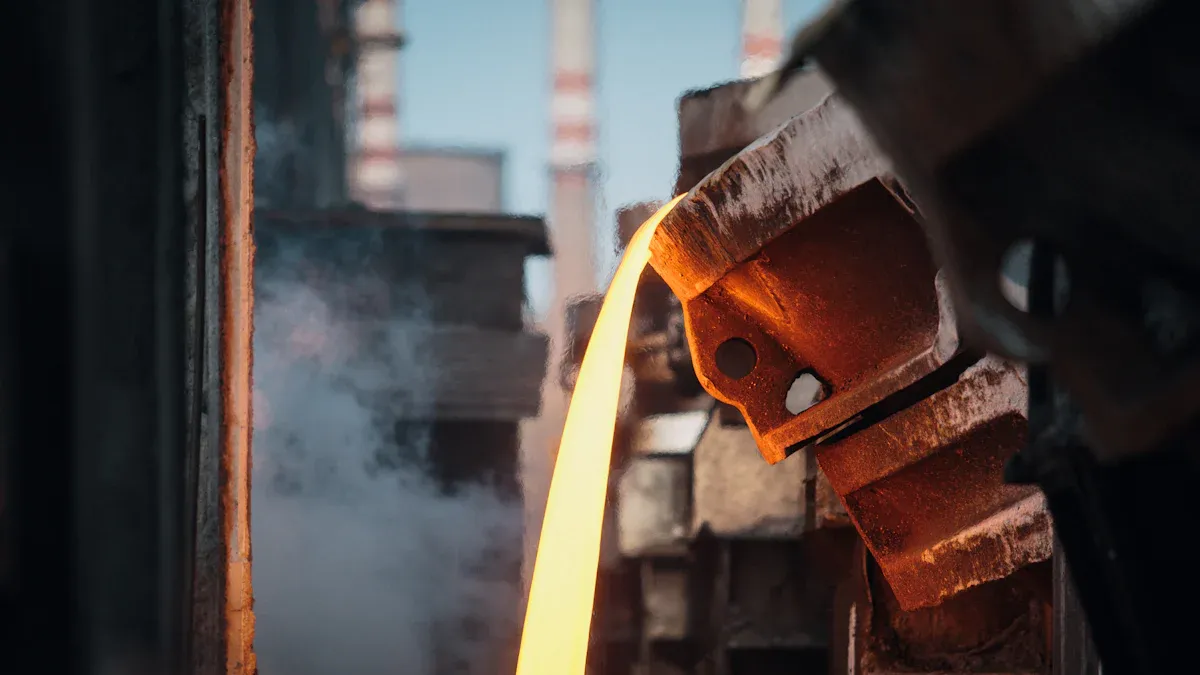
The melting point of iron stands out among common metals, making it a critical reference in metallurgy and engineering. Scientists and engineers often compare iron’s melting behavior to other metals to select suitable materials for specific applications.
Melting Points of Common Metals
Iron vs Aluminum
Aluminum melts at 660°C (1220°F), which is much lower than iron’s melting point. This significant difference means aluminum can be shaped and cast at lower temperatures, reducing energy costs in manufacturing. However, aluminum’s lower melting point limits its use in high-temperature environments where iron remains stable.
Iron vs Copper
Copper has a melting point of 1084°C (1984°F). While copper offers excellent electrical and thermal conductivity, it cannot withstand the same high temperatures as iron. Industries that require materials to maintain strength at elevated temperatures often choose iron over copper.
Iron vs Gold
Gold melts at 1064°C (1947°F), making it easier to process than iron. Jewelers and electronics manufacturers benefit from gold’s low melting point, but gold’s softness and cost restrict its use in structural applications. Iron’s higher melting point and strength make it more suitable for construction and heavy industry.
Iron vs Silver
Silver’s melting point is 961°C (1761°F). Like gold, silver is valued for its conductivity and appearance, but its low melting point and softness limit its industrial uses. Iron’s higher melting point allows it to serve in demanding environments where silver would fail.
Iron vs Steel
Steel, an alloy based on iron, typically melts between 1370°C and 1510°C (2498°F to 2750°F), depending on its composition. The addition of carbon and other elements lowers the melting point compared to pure iron. This property enables manufacturers to tailor steel for specific processes and performance requirements.
Table: Melting Points at a Glance
| Metal | Melting Point (°C) | Melting Point (°F) |
|---|---|---|
| Aluminum | 660 | 1220 |
| Copper | 1084 | 1983 |
| Gold | 1064 | 1947 |
| Silver | 961 | 1761 |
| Iron | 1538 | 2800 |
| Steel | 1370-1510 | 2498-2750 |
| Tungsten | 3422 | 6191 |
Note: Molecular dynamics simulations show that the melting point of iron can rise dramatically under extreme pressures, such as those found in the Earth’s core. Under these conditions, iron’s melting point may reach between 4200 K and 7000 K, demonstrating unique phase transitions not seen in other metals.
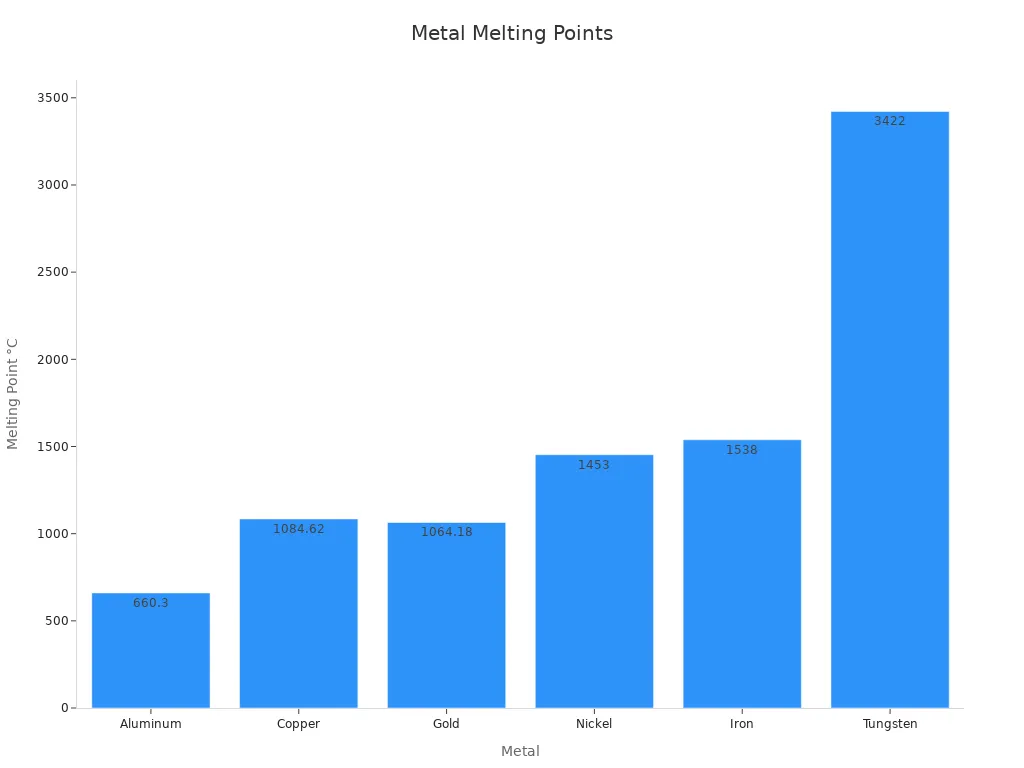
The melting point of iron remains higher than most commonly used metals, except for tungsten. This property ensures iron’s continued importance in applications that demand resistance to heat and structural integrity.
Factors Affecting the Melting Point of Iron
Several factors can alter the melting point of iron, including the presence of impurities, the addition of alloying elements, changes in pressure, and variations in crystal structure. Understanding these influences helps engineers and scientists control iron’s properties for specific applications.
Impurities and Alloying Elements
The chemical composition of iron rarely remains pure in industrial settings. Small amounts of other elements, especially carbon, can significantly change how iron melts and behaves.
Effect of Carbon on Melting Point of Iron
Carbon plays a crucial role in modifying the melting point of iron. When carbon atoms enter iron’s crystal lattice, they disrupt the orderly arrangement of iron atoms. This disruption lowers the energy required for the solid to become liquid. As a result, iron with higher carbon content, such as cast iron, melts at a much lower temperature than pure iron.
| Factor / Composition | Melting Point Range (°C) | Explanation |
|---|---|---|
| Pure Iron | 1538 | Baseline melting point of elemental iron |
| Cast Iron (high carbon) | 1150 - 1300 | Carbon lowers melting point by disrupting iron's crystalline structure |
| Steel (varied carbon) | 1370 - 1480 | Melting point varies with carbon content; higher carbon lowers melting point |
Note: The melting point of iron drops as carbon content increases. This property allows foundries to melt and cast iron at lower temperatures, saving energy and enabling the production of complex shapes.
Other Common Alloying Elements
Besides carbon, other elements such as silicon and manganese also influence iron’s melting behavior.
- Silicon: Silicon stabilizes certain phases in iron alloys and can increase fluidity during melting. This property benefits casting processes by improving mold filling.
- Manganese: Manganese does not significantly change the melting point but enhances the strength and toughness of iron alloys.
Alloying elements allow manufacturers to tailor iron’s properties for specific uses, balancing melting temperature, strength, and workability.
Influence of Pressure on the Melting Point of Iron
Pressure exerts a powerful effect on the melting point of iron. Laboratory experiments using shock compression and laser-heated diamond anvil cells have shown that as pressure increases, iron’s melting temperature rises sharply.
- Shock experiments measured iron’s melting point at pressures between 120 and 141 GPa, confirming that higher pressure leads to higher melting temperatures.
- Melting temperatures at extreme pressures, such as those found at the Earth’s core-mantle boundary (~135 GPa), reach approximately 4300 K. At even greater pressures (~330 GPa), the melting temperature can approach 5950 K.
- Static compression and resistivity measurements also support the trend that iron’s melting point increases with pressure, though some methods show larger uncertainties.
This relationship between pressure and melting temperature helps scientists model conditions inside planets and design materials for high-pressure environments.
Crystal Structure and Phase Changes
Iron exhibits several crystal structures, each stable under different temperature and pressure conditions. These structures, known as phases, include body-centered cubic (bcc), face-centered cubic (fcc), and hexagonal close-packed (hcp) forms.
Crystallographic studies using X-ray absorption spectroscopy and laser-heated diamond anvil cells have mapped the phase transitions of iron. As temperature and pressure rise, iron shifts from one crystal structure to another before finally melting. The transition from solid to liquid involves a breakdown of the ordered crystal lattice, which researchers detect through abrupt changes in X-ray absorption spectra.
These phase changes play a vital role in determining the melting point of iron under various conditions. For example, the presence of the hcp phase at high pressures contributes to the elevated melting temperatures observed deep within the Earth.
Scientists rely on phase diagrams and advanced spectroscopic techniques to pinpoint the exact conditions where iron melts. These tools provide critical data for both industrial metallurgy and geophysical research.
Why the Melting Point of Iron Matters
Understanding the melting point of iron shapes many aspects of modern industry and engineering. This property determines how manufacturers process, shape, and select iron for countless applications. The ability to control temperature with precision ensures both safety and efficiency in manufacturing environments.
Industrial Applications of Iron’s Melting Point
Iron’s high melting temperature influences several core industrial processes. Each application relies on accurate temperature control to achieve desired results and maintain product quality.
Welding
Welding requires careful management of heat to join iron components without compromising their strength. Technicians select welding techniques and adjust heat input based on iron’s melting behavior. Proper fusion occurs only when the metal reaches the right temperature, but overheating can degrade mechanical properties. By referencing iron’s melting point, welders avoid defects and ensure strong, reliable joints.
Casting
Casting involves melting iron until it becomes a liquid, then pouring it into molds to create complex shapes. Foundries set furnace temperatures just above iron’s melting point to achieve optimal fluidity. This approach minimizes defects and produces high-quality castings. Precise temperature control also reduces energy consumption and improves consistency across batches.
Forging
Forging transforms solid iron into new shapes by applying force at elevated temperatures. Workers heat iron below its melting point, typically between 900°C and 1,200°C, to make it malleable. The melting point serves as a critical reference, helping operators avoid overheating and accidental melting. This process produces strong, durable components for the construction, automotive, and machinery industries.
Manufacturers also rely on the melting point to guide alloy production and heat treatment. Adjusting furnace conditions based on iron’s melting behavior ensures thorough mixing of alloying elements and achieves desired material properties.
- Key industrial uses of iron’s melting point include:
- Setting furnace temperatures for casting and alloy production
- Selecting welding techniques and heat input
- Determining forging temperature ranges
- Planning heat treatment cycles for stress relief and microstructure control
Material Selection and Engineering Considerations
Engineers use melting point data to compare materials and select the best option for each application. Numerical studies show that bulk iron in different crystal structures, such as body-centered cubic (bcc) and face-centered cubic (fcc), exhibits melting points of approximately 1746 K and 1726 K, respectively. Researchers have also found that iron nanoparticles display variable melting points depending on size and defect concentration, with stability up to 10% defects.
| Parameter / Condition | Numerical Value / Observation |
|---|---|
| Bulk Iron (bcc) Melting Point | 1746.55 K |
| Bulk Iron (fcc) Melting Point | 1726.24 K |
| Defect Concentration in 3 nm bcc FNPs | Stable up to 10% defects (~1925 K) |
| Nanoparticle Size Effect | Melting points vary with size; non-linear relationship confirmed |
These data help engineers decide when to use pure iron, alloys, or iron nanoparticles. The melting point informs choices for high-temperature environments, structural applications, and advanced manufacturing techniques. By understanding how composition, structure, and defects affect melting behavior, engineers optimize material performance and safety.
How Iron is Melted in Practice
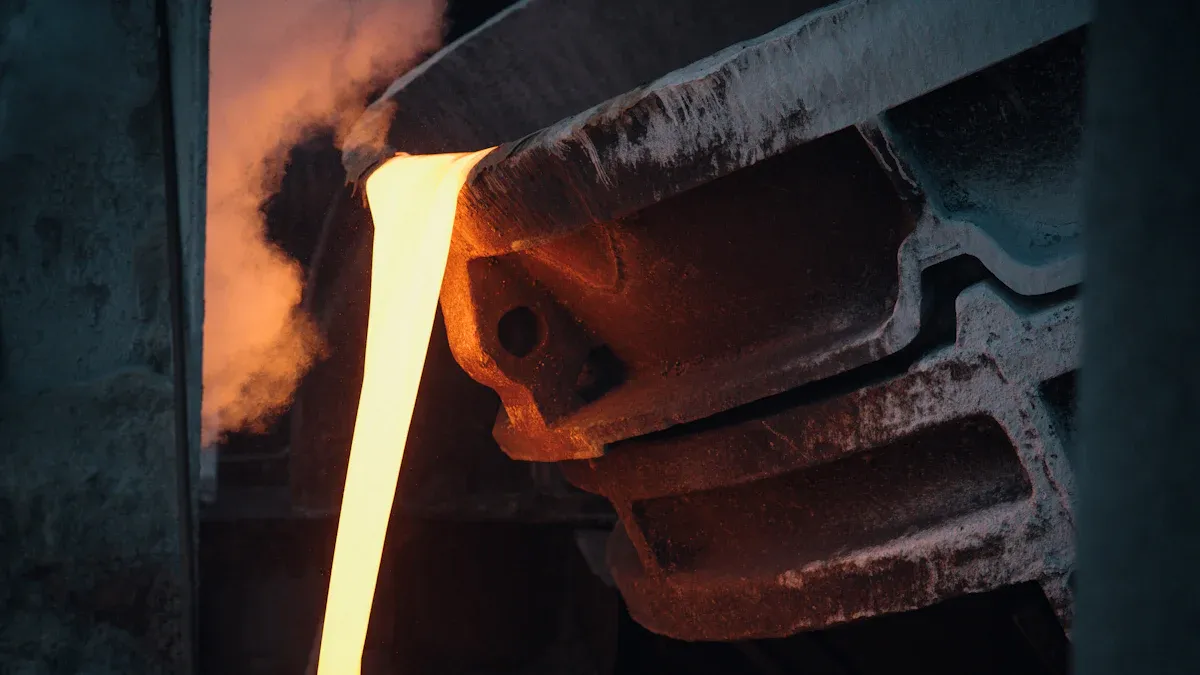
Melting iron in industrial settings involves a series of carefully controlled steps and specialized equiPment. Each phase ensures the transformation of raw materials into high-quality molten iron, ready for further processing or casting.
Main Steps in Melting Iron
Preparation and Charging
Operators begin by preparing raw materials. They source and process iron ore, coke, and fluxes such as limestone and dolomite. Crushing and screening these materials ensures the correct size and composition. The team then charges the furnace with precise amounts of each component. Limestone and dolomite play a vital role by supplying calcium oxide and magnesium oxide. These fluxes react with impurities, forming slag that floats on the molten iron and protects furnace linings. Careful control of flux size and chemistry optimizes impurity removal and furnace efficiency.
Heating and Melting
The furnace heats the charged materials to temperatures above 1,538°C. In a blast furnace, hot air blasts ignite coke, generating intense heat and reducing iron ore to molten iron. The process produces pig iron, which contains carbon and other elements. In modern steelmaking, operators may transfer this molten iron to a basic oxygen furnace or electric arc furnace for further refining. During this stage, additives and oxygen help remove excess carbon and unwanted elements. Sensors monitor temperature and composition, ensuring the molten iron meets strict quality standards.
Pouring and Solidification
Once the iron reaches the desired composition and temperature, workers tap the molten metal from the furnace. They pour it into molds or ladles for casting. As the iron cools, it solidifies into ingots, billets, or custom shapes. The slag, now separated, is removed and processed for other uses. This step requires precision to avoid defects and ensure consistent product quality.
Equipment Used for Melting Iron
Blast Furnace
The blast furnace remains the primary tool for large-scale iron production. It operates continuously, using layers of iron ore, coke, and fluxes. Hot air injected at the base drives chemical reactions that produce molten iron and slag. The design allows for efficient heat transfer and impurity removal.
Electric Arc Furnace
Electric arc furnaces (EAF) use high-voltage electric arcs to melt scrap iron or direct reduced iron. Operators can control temperature and composition with great accuracy. EAFs offer flexibility, making them ideal for recycling and producing specialty steels.
Induction Furnace
Induction furnaces use electromagnetic fields to heat and melt iron. These furnaces provide rapid, clean melting with minimal contamination. They suit smaller batches and applications requiring precise temperature control.
Modern iron melting combines advanced sensors, data analytics, and machine learning to optimize every stage. Case studies show that controlling variables such as charge composition, oxygen flow, and additive use leads to higher quality and efficiency.
Melting Point of Iron vs Steel
How Alloying Changes the Melting Point of Iron
Alloying elements play a critical role in modifying the melting behavior of iron. Pure iron melts at 1538°C, but the introduction of elements such as carbon, chromium, and nickel changes this property. Even small amounts of carbon disrupt the iron crystal lattice, lowering the melting point and altering phase transitions. For example, carbon steel with 0.3% to 1.0% carbon melts between 1425°C and 1540°C, while cast iron with 3% to 5% carbon melts at temperatures as low as 1147°C. Stainless steel, which contains chromium and nickel, typically melts between 1375°C and 1530°C. Tool steels, which include tungsten, molybdenum, and vanadium, show melting points in the range of 1400°C to 1500°C.
| Material Type | Alloying Elements | Melting Point Range (°C) | Effect on Melting Point Compared to Pure Iron (1538°C) |
|---|---|---|---|
| Pure Iron | None | 1538 | Baseline melting point |
| Carbon Steel | Carbon (0.3% to 1.0%) | 1425 - 1540 | Carbon lowers melting point; higher carbon = lower MP |
| Cast Iron | Carbon (3-5%) | 1147 - 1204 | Significant reduction due to carbon |
| Stainless Steel | Chromium (16-26%), Nickel (8-22%) | 1375 - 1530 | Alloying elements lower or vary melting point |
| Tool Steel | W, Mo, V, Cr | 1400 - 1500 | Carbides reduce melting point slightly |
Recent computational studies use density functional theory and molecular dynamics simulations to predict how alloying elements affect melting points under different pressures. These models confirm that carbon and other elements lower the melting point by changing atomic interactions and phase stability. Experimental work using synchrotron radiation and X-ray diffraction further demonstrates that alloying elements shift the solidus and liquidus lines in iron alloys, providing precise data for industrial applications.
Tip: Engineers select specific alloy compositions to achieve desired melting points, balancing ease of processing with mechanical performance.
Practical Differences in Melting Iron and Steel
Industrial processes for melting iron and steel differ in both method and complexity. In a blast furnace, operators smelt iron ore with coke and limestone at temperatures around 1400°C to 1500°C. Fluxes such as lime and dolomite react with impurities, forming slag that separates from the molten iron. This process focuses on reducing iron ore and removing impurities efficiently.
Steel production introduces additional steps. After obtaining molten iron, steelmakers transfer it to a basic oxygen furnace or electric arc furnace. In the basic oxygen furnace, high-purity oxygen oxidizes impurities and generates heat, refining the molten metal. The electric arc furnace melts scrap steel using electrical energy, allowing precise control over temperature and composition. Both methods involve further alloying and oxidation steps not present in iron smelting.
The chemistry of slag, the choice of fluxes, and furnace operation all differ between iron and steel production. Steelmaking requires careful adjustment of alloying elements to achieve specific properties, while iron smelting focuses on maximizing yield and purity. These differences reflect the unique challenges and goals of each process.
Note: The melting point of iron sets the baseline for furnace temperatures, but alloying and refining steps in steelmaking demand even greater control and precision.
Safety and Environmental Considerations When Melting Iron
Handling High Temperatures Safely
Melting iron involves extreme heat, with temperatures often exceeding 1,500°C. Workers in foundries and steel plants face significant risks from molten metal, radiant heat, and hot surfaces. Safety protocols play a crucial role in preventing injuries and accidents.
Operators must wear specialized personal protective equipment (PPE), including heat-resistant gloves, face shields, and flame-retardant clothing. These items protect against burns, splashes, and radiant energy. Facilities install barriers and shields around furnaces to reduce exposure to intense heat. Regular safety training ensures that all personnel understand emergency procedures and proper handling techniques.
Many plants use automated systems to control furnace operations and pouring processes. Automation reduces the need for direct human contact with molten iron, lowering the risk of burns and other injuries. Sensors and alarms monitor temperature and equipment status, providing early warnings of potential hazards.
Tip: Routine maintenance and inspection of equipment help prevent leaks, explosions, and other dangerous incidents. A proactive approach to safety keeps both workers and facilities secure.
Environmental Impact of Melting Iron
The process of melting iron affects the environment in several ways. Large amounts of energy are required to reach and maintain high temperatures, leading to significant resource consumption. Emissions from furnaces include greenhouse gases, particulate matter, and toxic substances that can harm air quality and public health.
A life cycle assessment (LCA) of grey cast iron foundry production reveals that the melting stage causes the largest negative environmental impact, accounting for over 74% of the total burden. This impact includes high resource use and emissions that affect ecosystem quality and human health. The study highlights that melting metal in cupolas contributes most to these environmental challenges. Recycling metal waste during production can reduce the impact of melting by nearly 10%, demonstrating the value of sustainable practices.
Another large-scale LCA study across multiple countries identifies toxicity impacts—such as marine and freshwater ecotoxicity, human toxicity, and particulate matter formation—as the most significant environmental concerns. These effects often exceed those related to climate change. The melting and processing stages contribute substantially to these toxic impacts on surrounding ecosystems. The research emphasizes the need for shared responsibility and technological improvements to reduce ecological harm.
Many modern foundries invest in cleaner technologies, such as advanced filtration systems and energy-efficient furnaces. These upgrades help lower emissions and resource use. Companies also implement recycling programs to minimize waste and promote sustainability.
Note: Environmental regulations require strict monitoring and reporting of emissions from iron melting operations. Compliance with these standards protects both the environment and community health.
Common Questions About the Melting Point of Iron
Does Carbon Lower the Melting Point of Iron?
Carbon has a significant effect on the melting behavior of iron. When carbon atoms enter the iron lattice, they disrupt the regular arrangement of iron atoms. This disruption makes it easier for the solid to transition into a liquid. As a result, iron with higher carbon content, such as cast iron, melts at a lower temperature than pure iron. For example, pure iron melts at 1538°C, while cast iron can melt at temperatures as low as 1147°C. Metallurgists use this property to their advantage when designing alloys for specific applications.
Note: The presence of carbon not only lowers the melting point but also changes the mechanical properties of the final product.
Can the Melting Point of Iron Be Changed?
The melting point of iron is not a fixed value in all situations. Several factors can alter it. Alloying elements, such as silicon, manganese, chromium, and nickel, can raise or lower the melting temperature depending on their concentration and interaction with iron. Pressure also plays a role. Under extremely high pressures, like those found deep within the Earth, the melting point of iron increases dramatically. Scientists use this knowledge to model planetary interiors and to develop materials for high-pressure environments.
A summary of factors that change the melting point of iron:
- Addition of alloying elements (carbon, silicon, chromium, etc.)
- Changes in pressure
- Presence of impurities
Engineers and researchers adjust these variables to achieve the desired melting behavior for industrial processes.
What Happens to Iron at Its Melting Point?
At the melting point of iron, the solid structure breaks down, and the material becomes a liquid. The atoms gain enough energy to overcome the forces holding them in a rigid lattice. This transformation allows iron to flow and fill molds during casting. The process also enables the mixing of alloying elements, which can improve the properties of the final product.
During melting, iron absorbs a large amount of heat without a rise in temperature. This energy, called the latent heat of fusion, is necessary for the phase change. Once all the iron has melted, any additional heat will increase the temperature of the liquid metal.
Tip: Understanding what happens at the melting point of iron helps manufacturers control casting, welding, and refining processes for better quality and efficiency.
The melting point of iron measures 1538°C, 2800°F, or 1811 K. This property shapes decisions in metallurgy, engineering, and scientific research. Industries rely on this data for safe welding, casting, and forging. Accurate knowledge of the melting point of iron ensures efficient processes and high-quality results. Readers who work with metals should always consider this value when planning projects or experiments.
FAQ
What is the melting point of iron in Kelvin?
Iron melts at 1811 K. Scientists use this value in laboratory experiments and theoretical calculations. Kelvin provides a standard unit for temperature in scientific research.
Why does iron have a higher melting point than most metals?
Iron’s strong metallic bonds and dense atomic structure require more energy to break. This property results in a higher melting point compared to metals like aluminum or copper.
Can impurities in iron affect its melting point?
Yes. Impurities such as carbon, silicon, or sulfur disrupt the iron lattice. These elements usually lower the melting point, making the metal easier to melt and cast.
How do engineers measure the melting point of iron?
Engineers use high-temperature furnaces and precise thermocouples. They observe the temperature at which solid iron turns to liquid. Laboratory tests often confirm these values.
Does pressure change the melting point of iron?
Pressure increases the melting point of iron. Deep inside the Earth, iron melts at much higher temperatures due to extreme pressure. Scientists study this effect to understand planetary cores.
Is the melting point of iron important for recycling?
Absolutely. Recycling facilities must heat scrap iron above its melting point to produce new products. Accurate temperature control ensures efficient melting and high-quality recycled metal.
What happens if iron overheats during melting?
Overheating can cause excessive oxidation and loss of alloying elements. This process may weaken the final product. Operators monitor temperature closely to prevent these issues.
Can the melting point of iron be increased for special applications?
Yes. Alloying iron with elements like tungsten or chromium can raise its melting point. Engineers design these alloys for use in high-temperature environments such as turbines or reactors.