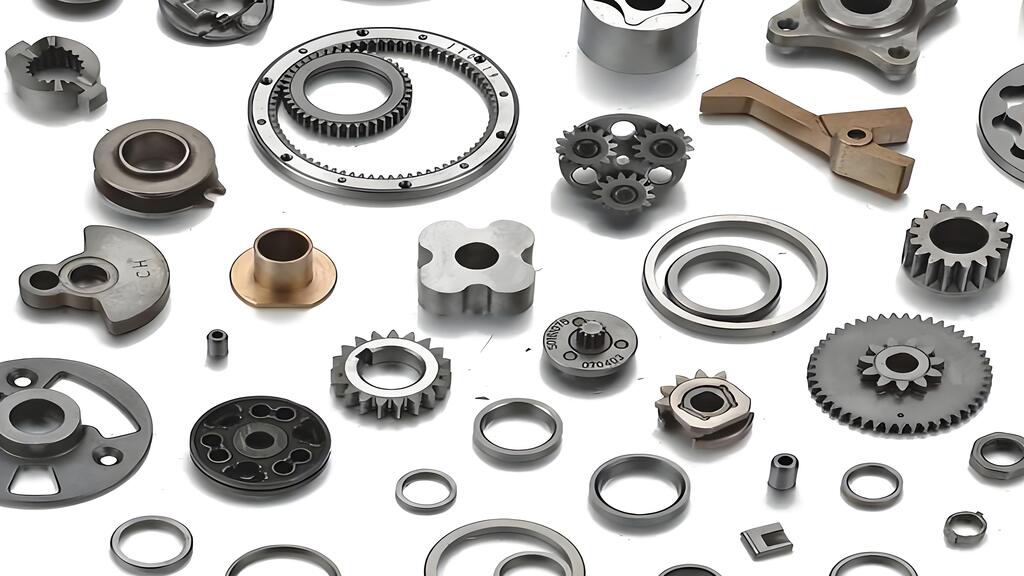


Powder Metallurgy in the Automotive Industry: Key Applications and Benefits

Powder Metallurgy is a manufacturing process. It forms parts from metal powders. Engineers compress these powders into a shape. Then, they heat the shape below its melting point. This process creates strong, precise components.
This technique is highly relevant to automotive manufacturing. It offers significant advantages over traditional methods. For example, it provides superior material efficiency. It also reduces production costs. This is especially true for mass production. Powder Metallurgy allows for complex designs. It enhances material properties. This makes it an attractive option for car makers. The process also supports sustainability efforts. It minimizes waste and uses less energy.
Key Takeaways
- Powder Metallurgy makes strong car parts from metal powders. It shapes and heats the powders to create precise components.
- This method helps car makers save money. It uses less material and needs less extra work on the parts.
- Powder Metallurgy creates many car parts. These include engine parts, gears, and brake system components.
- The process allows for complex designs. It makes parts stronger and more resistant to wear.
- Powder Metallurgy is good for the environment. It recycles materials and uses less energy.
- It helps make cars lighter. Lighter cars use less fuel or go further on a single charge.
- This technology is growing. It is important for electric cars and future car designs.
Understanding Powder Metallurgy for Automotive Components
The Powder Metallurgy Process
The creation of automotive parts through Powder Metallurgy involves several distinct stages. Each step contributes to the final product's quality and performance.
Powder Production for Powder Metallurgy
The process begins with powder production. Manufacturers create metallic powders using various methods. These include high-pressure gas atomization, chemical reduction, electrowinning, or mechanical reduction. The quality, particle size, form, and distribution of this powder are crucial. They directly influence the subsequent steps and the final component's properties. After production, different metal powders, along with additives like oils, binders, or alloying components, are blended in industrial mixers. This ensures even distribution and achieves the desired properties for the final part.
Compaction in Powder Metallurgy
Next, compaction occurs. Workers shape the prepared powder into a 'green compact' by applying high pressure in a mold. This step aims to create a compact with a specific shape, size, density, and strength. Common methods include uniaxial pressing for simple shapes, isostatic pressing for complex or large parts, and powder injection molding for intricate geometries. Compaction densifies the part, but it remains fragile at this stage.
Sintering in Powder Metallurgy
Sintering is a critical thermal treatment. The green compact is heated to a temperature below its melting point. This causes the powder particles to fuse and form a dense, solid part. This process involves intermetallic bonding, shrinkage, and densification. Careful control of temperature, time, and atmosphere achieves the desired material properties. Sintering has three main stages:
- Initial Stage (Neck Formation): Atoms diffuse at contact points, forming 'necks' between particles.
- Intermediate Stage (Densification): Diffusion increases, necks enlarge, porosity decreases, and mechanical strength improves.
- Final Stage (Pore Closure and Grain Growth): Interconnected pores become isolated, and grain growth occurs. This requires a balance between densification and grain growth.
Secondary Operations for Powder Metallurgy Parts
After sintering, parts may undergo further treatments to improve their properties. These post-sintering treatments are known as secondary operations. They enhance dimensional accuracy and surface finish. Examples include:
- CNC Machining: This process creates complex features like holes or threads. It also improves surface roughness and dimensional accuracy.
- Sizing: This restores dimensions (e.g., inner/outer diameter, flatness). It improves tolerance and surface finish by applying pressure in a die.
- Resin Impregnation: This cost-effective method fills pores in Powder Metallurgy products, especially for high-pressure environments, using high pressure or vacuum.
- Oil Impregnation: This method fills pores, often used for self-lubricating bearings.
Material Versatility in Powder Metallurgy
Powder Metallurgy offers exceptional material versatility. It allows engineers to select from a wide range of metallic powders and composites. This enables the creation of components with tailored properties for specific automotive applications.
Ferrous Alloys in Powder Metallurgy
Ferrous alloys are widely used in Powder Metallurgy for automotive components. These include powdered forms of iron and steel. Specific examples include hybrid low-alloy sintered steel, used in minivan door clutch assemblies and four-wheel-drive shifting. Sinter-hardened nickel steel finds application in shift-by-wire actuators. HI-IMPAC copper-infiltrated sintered steel is another ferrous alloy used in four-wheel-drive shifting.
Non-Ferrous Alloys in Powder Metallurgy
Non-ferrous alloys also play a significant role. Powdered brass is a common non-ferrous material. Stainless steel, including 300 series (like 303L, 304L, 310L, and 316L) and 400 series (like 409CB, 410L, 430L, and 434L), offers corrosion resistance and strength. These materials are crucial for various automotive parts.
Composites in Powder Metallurgy
Powder Metallurgy also allows for the creation of composite materials. Engineers can combine different metal powders or add non-metallic particles. This creates materials with unique combinations of properties, such as enhanced wear resistance or specific thermal characteristics.
Key Automotive Applications of Powder Metallurgy
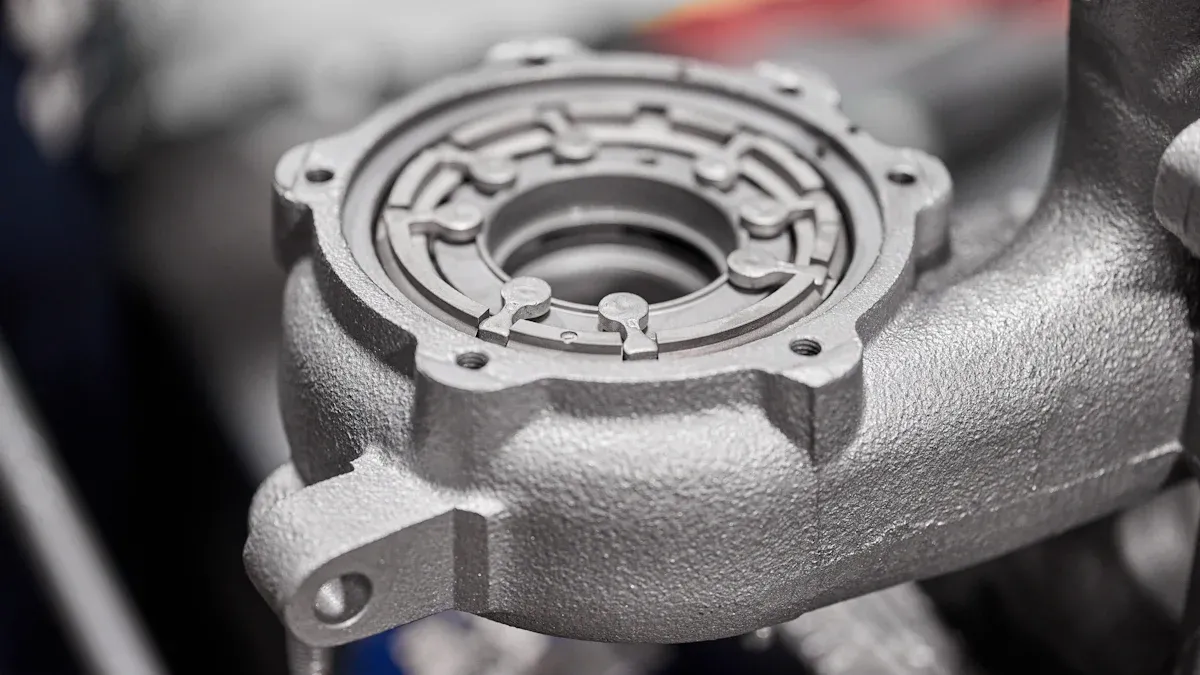
Powder Metallurgy plays a pivotal role in modern automotive manufacturing. It enables the production of numerous critical components across various vehicle systems. This manufacturing method delivers parts with enhanced performance, cost-effectiveness, and design flexibility.
Engine Components Utilizing Powder Metallurgy
Engine components operate under extreme conditions. They require materials with high strength, wear resistance, and thermal stability. Powder Metallurgy provides ideal solutions for these demanding applications.
Connecting Rods from Powder Metallurgy
Connecting rods are vital engine parts. They link the piston to the crankshaft, converting reciprocating motion into rotational motion. Powder Metallurgy produces connecting rods with excellent wear and heat resistance. This is crucial due to the high temperatures and pressures within an engine. Manufacturers utilize nickel-based alloy powders, such as Inconel 718, or iron-based alloy powders. These materials achieve high strength, corrosion resistance, and heat resistance. This leads to improved reliability and durability for the connecting rods.
| System | Components | Recommended Metal Powders |
|---|---|---|
| Engine System | Camshaft, piston, connecting rod, gear | Nickel-based alloy powder (Inconel 718), iron-based alloy powder |
Valve Seats and Guides from Powder Metallurgy
Valve seats and guides control the flow of gases into and out of the engine cylinders. They must withstand constant friction and high temperatures. Powder Metallurgy allows for the creation of these parts with precise dimensions and superior wear properties. This ensures optimal engine performance and longevity.
Sprockets and Pulleys from Powder Metallurgy
Sprockets and pulleys manage the timing and accessory drives within the engine. They require high-dimensional accuracy and wear resistance for reliable operation. Powder Metallurgy manufactures these components efficiently, often achieving net-shape or near-net-shape, which reduces the need for extensive post-processing.
Bearing Caps from Powder Metallurgy
Bearing caps secure the crankshaft within the engine block. They distribute loads and stresses effectively. Powder Metallurgy crankshaft bearing caps offer good fatigue performance and contribute to lightweight designs. This enhances overall engine efficiency and durability.
Transmission and Drivetrain Parts with Powder Metallurgy
Transmission and drivetrain systems transmit power from the engine to the wheels. These components demand high strength, precision, and wear resistance to ensure smooth and efficient power delivery.
Gears from Powder Metallurgy
Gears are fundamental to power transmission. Powder Metallurgy excels at producing various types of gears with high precision and excellent mechanical properties.
- Bevel Gear: These gears connect axes at a 90-degree angle. Powder Metallurgy offers durability, precision, and complex shapes with tight tolerances for stable operation. They also provide excellent impact strength and cost-effectiveness.
- Helical Gear: Helical gears feature inclined teeth. This design allows for greater force transmission, reduced wear and impact, and quieter operation. Powder Metallurgy enables mass production with consistent precision tolerances and excellent impact resistance for these gears.
- Internal Gear: These are cylindrical gears with inner teeth. They offer low vibration and high cost-effectiveness. Powder Metallurgy manufacturing ensures precise shaping, reduced material waste, high dimensional accuracy, and excellent surface quality.
- Spur Gear: Spur gears are common cylindrical gears for power transmission between parallel shafts. They offer excellent impact resistance and wear resistance for high-load and high-speed environments.
- Gear Shaft: Gear shafts are critical components for power transfer. They must withstand high loads. Powder Metallurgy technology ensures high precision and uniform material structure, enhancing overall performance and durability.
Powder Metallurgy powertrain components offer significant cost savings. The technology provides an integrative solution for increasing power density, achieving lightweight designs, and reducing noise emissions. Powder Metallurgy processes offer greater geometric and material property flexibility compared to conventional methods. Acoustic benefits include damping and insulation effects from porous materials. Noise excitation can also be optimized through stiffness-based geometry design of densified Powder Metallurgy gears.
Synchronizer Hubs from Powder Metallurgy
Synchronizer hubs are crucial for smooth gear changes in manual transmissions. They match gear speeds before engagement. Powder Metallurgy synchronizer cone rings reduce wear and offer cost reduction and improved precision compared to forging. Clutch hubs, also made with Powder Metallurgy, aid smooth clutch engagement and disengagement for efficient power transmission and gear shifting.
Planetary Carriers from Powder Metallurgy
Planetary carriers are integral to automatic transmissions. They contribute to smooth and efficient acceleration. Powder Metallurgy produces these complex components with the necessary strength and precision for reliable operation.
Differential Components from Powder Metallurgy
Differential components allow wheels on the same axle to rotate at different speeds, especially during turns. Powder Metallurgy manufactures these parts with the required strength and durability to handle varying torque loads.
Chassis and Braking Systems Using Powder Metallurgy
Chassis and braking systems are critical for vehicle safety, handling, and stability. Powder Metallurgy contributes to these systems by providing robust and precise components.
ABS Sensor Rings from Powder Metallurgy
ABS (Anti-lock Braking System) sensor rings are essential for modern braking systems. They provide wheel speed data to the ABS control unit. Powder Metallurgy produces ABS speed sensor rings with high dimensional precision. This ensures accurate readings and enhances vehicle safety.
Shock Absorber Components from Powder Metallurgy
Shock absorber components manage vehicle suspension, providing a smooth ride and stable handling. Powder Metallurgy manufactures various parts for shock absorbers. These include structural brackets and other chassis components. They offer high-dimensional precision, reduced need for finishing, and excellent chemical homogeneity. These parts also exhibit uniform microstructure, elevated internal strength, and sound/vibration-damping properties. This results in lighter, stronger, and more reliable parts with minimal internal stresses and defects.
Brake Pads from Powder Metallurgy
Brake pads are friction materials that generate the force needed to slow or stop a vehicle. Powder Metallurgy plays a significant role in creating advanced brake pads. These pads offer enhanced safety, superior wear resistance, and consistent friction stability. They also exhibit reduced wear rates and improved mechanical properties at high speeds and temperatures. This ensures reliable braking torque and a long service life.
Electrical and Electronic Components with Powder Metallurgy
The automotive industry increasingly relies on sophisticated electrical and electronic systems. Powder Metallurgy (PM) provides crucial solutions for these components, offering precision, efficiency, and enhanced performance. PM's ability to create complex geometries and achieve tight tolerances makes it ideal for miniaturized sensors and electronic housings. This precision reduces assembly complexity and improves the overall reliability of these critical components.
Soft Magnetic Materials in Powder Metallurgy
Soft Magnetic Composites (SMCs) represent a significant advancement in Powder Metallurgy for electrical applications. Manufacturers produce SMCs by insulating and compacting iron powder particles. These materials offer several advantages for automotive electronics, particularly in electric vehicles (EVs). SMCs improve magnetic performance in motors due to their high electrical resistance, good thermal resistance, and reduced eddy-current losses. Their isotropic magnetic behavior allows engineers to design flexible and innovative 3D circuits and motor cores. This capability leads to smaller and lighter electronic components. Automotive applications for SMCs include electric vehicles, charging piles, sensors, ABS systems, and various electric motors. Furthermore, SMCs enable net-shaping production, which results in less material waste and fewer manufacturing processes. This benefits both the environment and energy conservation.
Electrical Contacts in Powder Metallurgy
Electrical contacts are essential for switching and conducting electricity within a vehicle's electrical systems. Powder Metallurgy manufactures these components with specific material properties tailored for conductivity and durability. Copper alloys, for instance, are frequently processed using metal injection molding (a PM variant) to create complex-shaped electrical components. These alloys provide excellent electrical and thermal conductivity, which is crucial for modern vehicles. Electric vehicles, in particular, require significantly more copper than traditional vehicles, making PM a vital manufacturing method for their electrical contacts and other conductive parts.
Other Automotive Applications of Powder Metallurgy
Beyond the major systems like engines, transmissions, and braking, Powder Metallurgy extends its reach to numerous other automotive applications. These components, while sometimes less prominent, are equally vital for a vehicle's functionality, comfort, and safety.
Oil Pump Rotors from Powder Metallurgy
Oil pump rotors are critical for circulating engine oil, ensuring proper lubrication and cooling. Powder Metallurgy produces these intricate components with high precision and excellent wear resistance. The PM process allows for the creation of complex rotor profiles, which optimize pumping efficiency and contribute to engine longevity.
Door Hinges from Powder Metallurgy
Door hinges endure constant stress and require robust construction for reliable operation. Powder Metallurgy manufactures durable and precise door hinges. This method ensures consistent quality and strength, contributing to vehicle safety and structural integrity.
Seat Mechanisms from Powder Metallurgy
Automotive seat mechanisms involve numerous small, complex parts that allow for adjustment and positioning. Powder Metallurgy produces these components with the necessary strength, precision, and smooth operation. This contributes to passenger comfort and safety. Beyond these, Powder Metallurgy also finds use in various other automotive spare parts. For example, it produces components for automotive compressors, including cylinders, cylinder heads, air valves, valve plates, crankshafts, connecting rods, and piston rods. For automotive wipers, PM creates crankshafts, connecting rods, swing rods, brackets, wiper blade holders, and specialized oil-containing bearings. Additionally, tailgate spare parts, primarily shaft sleeves, also benefit from the precision and efficiency of Powder Metallurgy manufacturing.
Economic Benefits of Powder Metallurgy in Automotive Manufacturing
Automotive manufacturers constantly seek ways to reduce costs while improving product quality. Powder Metallurgy offers significant economic advantages. This manufacturing method streamlines production and optimizes material use. These benefits directly impact the bottom line for vehicle production.
Cost Reduction Through Powder Metallurgy
Powder Metallurgy provides several avenues for substantial cost reduction in automotive manufacturing. It optimizes material usage and minimizes the need for extensive post-processing. This leads to more efficient and economical production cycles.
Material Utilization in Powder Metallurgy
Powder Metallurgy excels in material utilization efficiency. The process uses only the necessary amount of material. This significantly reduces scrap rates compared to traditional machining methods. Such efficiency leads to direct cost savings, especially when working with expensive metals. Companies can offer auto parts at lower costs without compromising alloy quality due to reduced manufacturing waste. This method also offers the opportunity to transform an assembly into a single part. Manufacturers press this single part to net shape, saving time, inventory units, and money.
Reduced Machining with Powder Metallurgy
Powder Metallurgy parts often achieve near-net shapes. They come with tight tolerances directly from the manufacturing process. This minimizes the need for extensive post-processing. Operations like machining or grinding become less frequent or entirely unnecessary. This reduction in secondary operations saves significant time and labor costs.
Mass Production Efficiency of Powder Metallurgy
Powder Metallurgy is ideal for mass production. Once manufacturers prepare the tooling, the process enables rapid and consistent manufacturing. They can produce large quantities of parts quickly. This results in lower per-unit costs. Automated production at a large scale also makes labor costs more affordable. The process requires lower temperatures than forging and casting, which contributes to energy savings.
Design Flexibility and Complexity with Powder Metallurgy
Powder Metallurgy provides engineers with remarkable design flexibility. This allows them to create complex geometries and innovative product designs. This capability helps meet modern manufacturing goals.
Net-Shape Manufacturing with Powder Metallurgy
A significant advantage of Powder Metallurgy is its ability to produce net-shape or near-net-shape parts. Components emerge from the press in their final or near-final form. This minimizes or eliminates the need for additional machining. Achieving complex parts with intricate features, such as gears with splines or multi-level components, relies on precise tooling design. This tooling is critical for shaping the powder and ensuring uniform density. Advanced techniques like contour filling improve density uniformity in complex shapes. Powder transfer before compaction optimizes material distribution. Adaptive feedback provides real-time monitoring for higher precision. Springback compensation ensures dimensional accuracy.
Integrated Features in Powder Metallurgy Parts
Powder Metallurgy allows for consolidating multiple components into a single, complex part. This integration reduces assembly time. It also lowers inventory costs and simplifies supply chains. The process converts single pieces requiring extensive machining or complex multi-piece assemblies into one reliable component. This simplifies the overall design and manufacturing process.
Customization Potential of Powder Metallurgy
Custom tooling and an additive material process give manufacturers shape flexibility. This allows them to optimize designs with complex geometries. Powder Metallurgy enables the creation of complex 3D shapes while minimizing machining losses. It also allows for compacting smaller segments of a larger design. Manufacturers can then bond these segments together using proprietary techniques. This forms a single, intricate shape, regardless of size or complexity. It also maintains electrical and mechanical performance.
Performance and Environmental Advantages of Powder Metallurgy
Automotive manufacturers constantly seek materials and processes that enhance vehicle performance and minimize environmental impact. This section explores how Powder Metallurgy delivers significant advantages in both these critical areas.
Enhanced Material Properties from Powder Metallurgy
Powder Metallurgy offers precise control over material composition and microstructure. This allows engineers to tailor components with specific properties, meeting the rigorous demands of automotive applications.
Strength and Hardness in Powder Metallurgy
Powder Metallurgy produces parts with uniform properties and strength. This is crucial for engine components like sprockets, gears, connecting rods, camshafts, and main bearing caps. The process allows for the creation of custom-tailored alloys through powder blending. These unique alloys cannot be duplicated in the molten state, offering superior strength and hardness for demanding applications.
Wear Resistance in Powder Metallurgy
Components made with Powder Metallurgy exhibit high wear resistance and durability. This makes them ideal for parts subjected to constant friction and stress, such as bearings and bushings. The precise control over material composition ensures these parts maintain their integrity over long periods of use.
Porosity Control in Powder Metallurgy
Powder Metallurgy allows for customization of material properties and part designs. Engineers can achieve specific performance criteria by controlling the porosity of the final component. This capability enables the creation of parts with tailored characteristics, such as self-lubricating bearings or components designed for specific thermal management needs.
Sustainability and Environmental Impact of Powder Metallurgy
The automotive industry increasingly focuses on sustainable manufacturing practices. Powder Metallurgy significantly contributes to reducing the environmental footprint of vehicle production.
Material Recycling in Powder Metallurgy
Powder Metallurgy boasts exceptional material efficiency. It utilizes nearly 100% of raw material, minimizing waste and reducing the need for raw material extraction. This conserves natural resources. Components can be easily broken down, and their materials recovered for reuse at the end of their lifecycle. This makes disassembly and remanufacturing more efficient. Unused metal powders can also be reclaimed and reprocessed into new products. This enables effective resource recycling and minimizes environmental pollution.
Energy Efficiency of Powder Metallurgy
Powder Metallurgy processes are often more energy-efficient than conventional metalworking methods. They operate at lower temperatures during sintering and minimize or eliminate energy-intensive machining and finishing steps. This leads to significant energy conservation. A Life Cycle Assessment for the Bushings product group showed a 30% reduction in CO2 emissions using the Sinter turning process. The Additive Manufacturing process also achieved a 25% reduction compared to conventional methods. Overall, Powder Metallurgy processes significantly reduce carbon emissions, producing 30%-50% less CO2 compared to traditional melting and machining techniques.
Reduced Waste with Powder Metallurgy
The ability to produce near-net shape components results in minimal waste. It eliminates the need for excessive machining and material use. Powder Metallurgy processes generate fewer harmful emissions compared to many traditional manufacturing processes. This considerably lessens the overall environmental impact. The process requires little to no use of cutting fluids or other chemicals, significantly reducing wastewater and chemical waste.
Weight Reduction for Fuel Efficiency with Powder Metallurgy
Reducing vehicle weight is a primary goal for improving fuel efficiency and extending the range of electric vehicles. Powder Metallurgy offers effective solutions for lightweighting.
Lightweighting Opportunities with Powder Metallurgy
Powder metallurgy materials play a significant role in vehicle weight reduction. This leads to improved gas mileage and cost savings. A useful industry guideline for light vehicles indicates that a 10% weight reduction generates a 6% improvement in fuel economy. For electric vehicles, the same 10% weight reduction can lead to a 14% increase in driving range. A typical conversion from a wrought metal part to a powder metal part can provide a 10% reduction in weight. This is because the density of a wrought material is 7.8 g/cc compared to a typical powder metal part at 7.0 g/cc. This weight reduction is achieved because powder metal parts are inherently less dense and can be formed to net shape, placing material only where needed.
Performance Optimization with Powder Metallurgy
Soft Magnetic Composite materials (SMCs) are a key innovation in lightweighting. They can reduce the size of an electric motor by up to 30%. The use of SMCs can also lead to 20% higher peak torque and 40% higher constant torque. Furthermore, SMCs contribute to a 20% greater battery range in electric vehicles and can result in a 20% smaller motor diameter. These advancements directly translate to enhanced vehicle performance and efficiency.
Future Trends and Innovations in Automotive Powder Metallurgy
The automotive industry constantly evolves. Powder Metallurgy (PM) adapts and innovates to meet new demands. Future trends focus on advanced materials, integration with additive manufacturing, and the impact of vehicle electrification.
Advanced Materials Development in Powder Metallurgy
Manufacturers push the boundaries of material science. They develop new materials for enhanced performance and efficiency.
High-Performance Alloys in Powder Metallurgy
Engineers develop advanced alloys for stronger, lighter, and more durable automotive components. These alloys withstand extreme conditions. They improve vehicle performance and longevity.
Smart Materials in Powder Metallurgy
The industry explores smart materials. These materials possess adaptive properties. They can respond to changes in temperature, pressure, or electrical fields. This opens possibilities for innovative automotive applications.
Additive Manufacturing Integration with Powder Metallurgy
Additive manufacturing (AM) and PM are increasingly forming hybrid processes. This integration offers significant advantages for automotive production.
Hybrid Processes with Powder Metallurgy
AM is used for rapid prototyping. Once validated, PM handles mass production. This reduces time-to-market and investment risk. AM also produces complex, conformally cooled dies and molds. This enhances PM processes and enables the fabrication of otherwise impossible cores or inserts. Techniques like Hot Isostatic Pressing (HIP) densify porous AM parts. This improves their mechanical properties. Binder jetting, an AM technique, incorporates PM-style sintering for densification. This combines AM's flexibility with PM's densification capabilities. Companies like GKN and Ford integrate AM for prototyping and complex, low-volume parts. PM continues to be used for mass production.
Prototyping with Powder Metallurgy
AM offers significant opportunities for the automotive industry. These include vehicle weight reduction, improved performance through part consolidation, and tailored material properties. It also enables multifunctional components and simplified manufacturing processes. For instance, a radar mounting bracket redesigned and additively manufactured using a binder-jetting approach achieved a 42% weight reduction. It met performance and safety requirements, simplifying both manufacturing and assembly. In metal additive manufacturing, powder is the most widely used feedstock. Binder jetting relies on post-build heating and sintering to consolidate metal powder. This achieves desired mechanical properties, directly integrating a PM-style process.
Electrification's Impact on Powder Metallurgy
The global rise in EV adoption significantly drives the demand for PM in automotive manufacturing. Over 14 million electric cars were on the road in 2023. This trend creates new opportunities for PM components.
EV-Specific Components from Powder Metallurgy
PM is used for high-performance DC motor parts. These include rotors, stators, and brush holders. It enables precise magnetic properties for maximum efficiency and power. PM also contributes to battery system efficiency. It manufactures thermal management and packaging elements with high conductivity, thermal resistance, and corrosion resistance. PM enables the creation of lightweight yet durable parts. This is crucial for extending EV driving range and improving battery efficiency. Soft Magnetic Composites (SMC) enhance magnetic efficiency. They reduce motor noise and vibration, leading to quieter, more efficient powertrains.
Thermal Management with Powder Metallurgy
PM produces heat exchangers, water pumps, and cooling system parts. These components feature efficient heat transfer channels. They use lightweight, high thermal conductivity materials. This is vital for managing heat in EV battery systems and motors.
Powder Metallurgy has become indispensable in modern automotive manufacturing. It offers comprehensive advantages, including cost reduction, design flexibility, and enhanced material properties. This process also significantly contributes to sustainability through material recycling and reduced waste. The automotive powder metallurgy market is projected to grow from USD 3.4 billion in 2024 to USD 7.1 billion by 2033, with an 8.13% CAGR. This continued growth underscores its vital role and ongoing evolution in the automotive sector.
FAQ
What is Powder Metallurgy (PM)?
Powder Metallurgy forms parts from metal powders. Engineers compress these powders into a shape. They then heat the shape below its melting point. This process creates strong, precise components for various applications.
Why is Powder Metallurgy relevant to the automotive industry?
Powder Metallurgy offers significant advantages for automotive manufacturing. It provides superior material efficiency and reduces production costs. This method allows for complex designs and enhances material properties. It also supports sustainability efforts.
What are the main steps in the Powder Metallurgy process?
The Powder Metallurgy process involves several key stages. These include powder production, compaction into a "green compact," and sintering. Secondary operations like machining or sizing may follow to refine the final part.
Which automotive components commonly use Powder Metallurgy?
Many automotive components utilize Powder Metallurgy. These include engine parts like connecting rods and valve seats. Transmission gears, synchronizer hubs, and ABS sensor rings also frequently use this technology.
How does Powder Metallurgy contribute to cost reduction in automotive manufacturing?
Powder Metallurgy reduces costs through efficient material utilization. It minimizes the need for extensive machining. The process is also highly efficient for mass production, lowering per-unit costs.
What environmental benefits does Powder Metallurgy offer?
Powder Metallurgy significantly reduces environmental impact. It boasts high material recycling rates and uses less energy. The process also generates minimal waste compared to traditional manufacturing methods.
Can Powder Metallurgy help reduce vehicle weight?
Yes, Powder Metallurgy plays a crucial role in lightweighting vehicles. It produces parts with inherently lower density. This contributes to improved fuel efficiency for gasoline cars and extended range for electric vehicles.