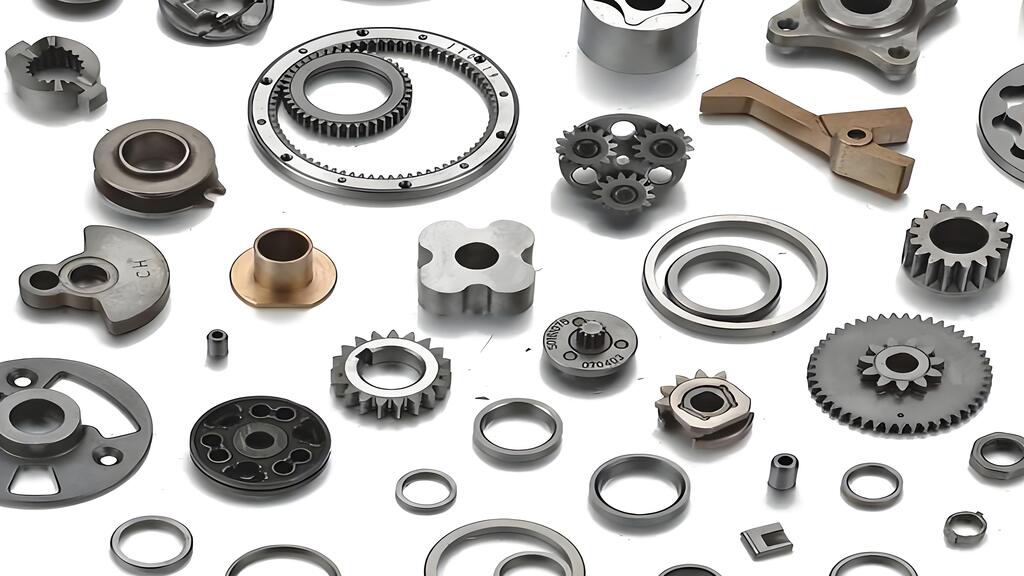


Powder Metallurgy Sintering in the Automotive Industry
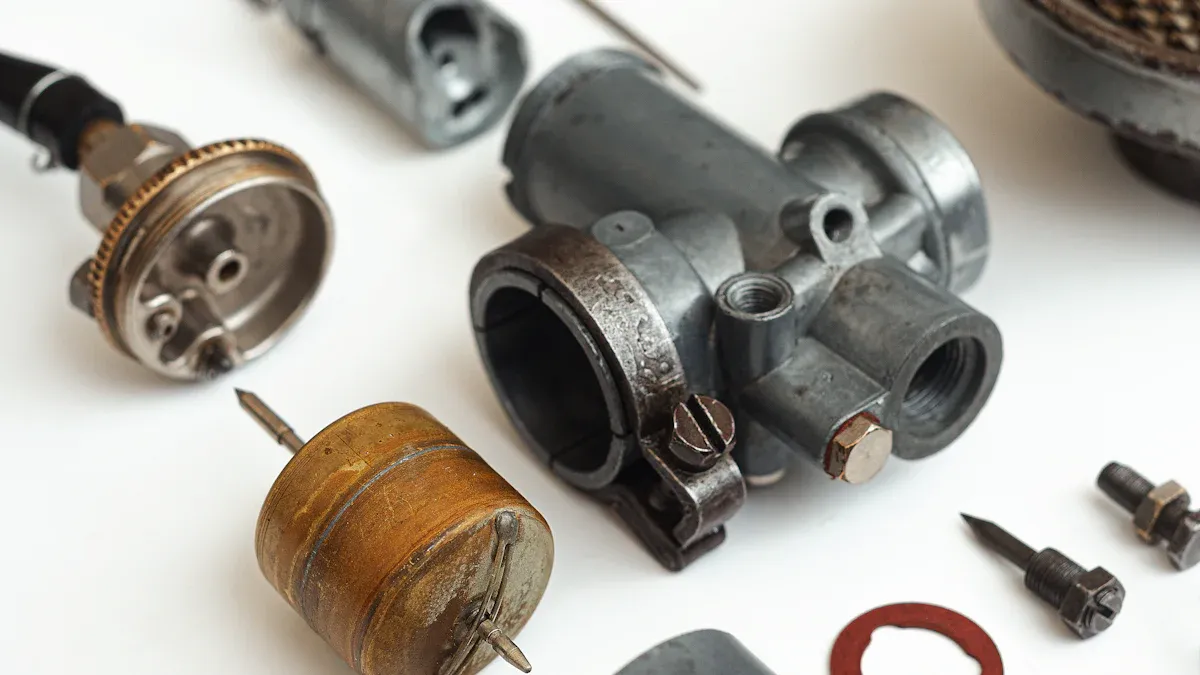
Powder metallurgy sintering is a critical manufacturing process within the automotive industry. This method enables the production of complex, high-performance components. It also offers significant cost and material efficiency. The process involves compacting metal powders into a desired shape. Manufacturers then heat these shapes below their melting point. This action bonds the particles, creating a solid, durable part. Such parts are essential for modern vehicles, including many critical automotive Pm Parts.
Key Takeaways
- Powder metallurgy sintering makes strong, complex car parts. It heats metal powders below their melting point. This process bonds the particles together.
- This method saves money and materials. It makes parts close to their final shape. This means less cutting and less waste.
- Sintering creates many car parts. These include engine parts, gears for transmissions, and brake components. It also makes parts for electric vehicles.
- Sintering helps electric vehicles. It makes lighter parts for motors and batteries. This helps cars go farther on one charge.
- The process is good for the environment. It uses less energy and creates less waste. Materials are often recycled.
- New technologies improve sintering. These include better materials and smart factory methods. This makes car parts even stronger and more efficient.
Understanding Powder Metallurgy and the Sintering Process for Automotive PM Parts

What is Powder Metallurgy (PM)?
Powder metallurgy (PM) is a metalworking process. It forms parts from metal powders. This method offers significant advantages for producing complex shapes. It also minimizes material waste.
The Fundamentals of Metal Powder Production
Metal powder production involves several techniques. These methods create fine, uniform metal particles. Atomization is a common process. It sprays molten metal through a nozzle. This creates small droplets that solidify into powder. Other methods include chemical reduction and electrolysis. The quality of these powders directly impacts the final part's properties.
Compaction: Forming Green Parts
Compaction is the next crucial step. Manufacturers press the metal powders into a die. This forms a "green part." The green part has the desired shape. It holds together due to the mechanical interlocking of the particles. This process occurs at room temperature. It creates a part with sufficient strength for handling.
The Sintering Process Explained
Sintering transforms the green part into a strong, solid component. It involves heating the compacted powder. This heating occurs below the metal's melting point.
Pre-Sintering Stages and Debinding
Before high-temperature sintering, parts often undergo pre-sintering. This stage removes lubricants and binders. These additives help during compaction. Debinding typically involves heating the green part slowly. This allows the organic materials to evaporate or decompose. Proper debinding prevents defects in the final product.
High-Temperature Sintering Mechanisms
High-temperature sintering bonds the metal particles. Atomic diffusion occurs between adjacent particles. This process reduces porosity and increases density. Sintering temperatures typically range from 1200-1600°C (2192-2912°F). The specific temperature varies by material. For example, iron-based PM parts sinter around 2020-2100°F. Stainless steel PM parts often sinter at 2050°F, with high-temperature sintering at 2350°F.
Atmospheric conditions are critical during sintering. Common atmospheres include hydrogen-nitrogen, pure hydrogen, argon, and vacuum. A positive-pressure, dry, reducing atmosphere is essential. It removes surface oxides. This allows for proper diffusion bonding. Vacuum sintering provides the purest atmospheres. It evaporates oxides and impurities. This enhances sintering and creates cleaner microstructures.
Cooling and Post-Sintering Treatments
After sintering, parts cool in a controlled environment. This prevents thermal shock and unwanted phase changes. Post-sintering treatments enhance part properties. These treatments include sizing, coining, or heat treatment. They improve dimensional accuracy, density, or hardness.
Achieving Desired Density and Porosity
Sintering allows precise control over density and porosity. Manufacturers can tailor these properties. This creates parts with specific characteristics. For instance, controlled porosity enables self-lubricating bearings. It also allows for filtration components.
Key Material Considerations in Automotive PM
Material selection is vital for automotive PM parts. It dictates the final component's performance.
Common Metal Powders Used in Automotive Sintering
Iron-base materials are frequently used in powder metallurgy. Iron is typically the base metal powder. Manufacturers often combine it with additives. These include carbon, copper, and nickel. This composition produces structural components. Approximately 1 million tons of these materials are manufactured annually. Copper-base materials are also among the most commonly used powders.
Alloying for Specific Performance Requirements
Alloying customizes material properties. Engineers select specific elements to achieve desired performance. For example, adding 1-4% nickel improves impact resistance. Material properties like tensile strength are crucial. Ferrous PM parts can reach 900 N/mm², increasing to 1200 N/mm² with heat treatment. Yield strength, fatigue strength, and wear resistance are also important. Engineers consider mechanical requirements like strength and hardness. They also evaluate wear resistance and lightweight needs. Corrosion and environmental resistance are vital for many applications.
The Role of Lubricants and Binders
Lubricants and binders play a crucial role. Lubricants reduce friction during compaction. This helps achieve higher green density. Binders provide strength to the green part. They ensure it withstands handling before sintering. Manufacturers carefully select these additives. They must burn off cleanly during debinding.
Key Automotive PM Parts and Their Applications
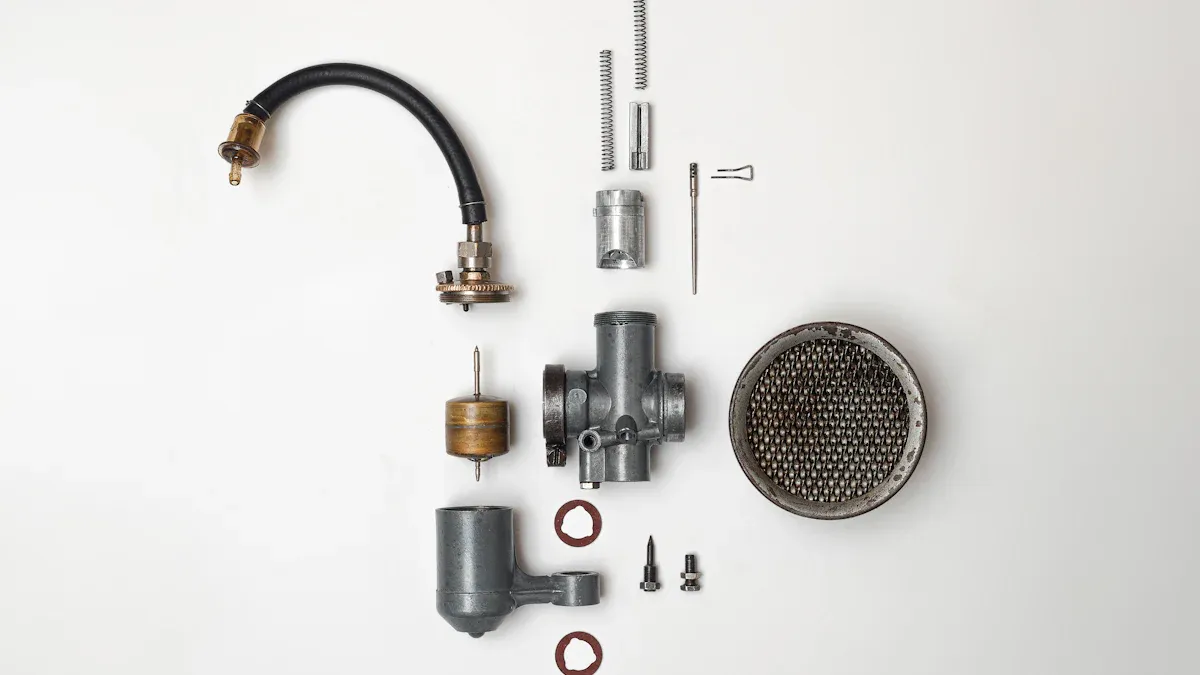
Powder metallurgy (PM) sintering plays a pivotal role in manufacturing numerous critical components across various automotive systems. This process delivers parts with superior performance, cost-effectiveness, and design flexibility.
Engine System Components Made with Sintering
The engine, the heart of any vehicle, relies on precision-engineered components. Sintering provides the necessary accuracy and material properties for many of these parts.
Connecting Rods and Bearing Caps
Connecting rods and their bearing caps are fundamental engine components. They transmit power from the pistons to the crankshaft. Sintered forged connecting rods offer significant advantages over traditionally cast components. These rods exhibit high strength and durability due to the enormous pressure and heat applied during forging. The manufacturing process creates a denser material with a beneficial grain structure. This structure follows the shape of the connecting rod, especially around the big end cap, which significantly increases strength. Manufacturers blend high-tech base powders and alloying elements. They then control melting, atomizing, and annealing to create super fine, impurity-free powders. Compaction under immense pressure follows, then sintering at over 1500 degrees Fahrenheit. Hot forging with a 750-ton press finalizes the material's dense structure. This results in a uniform material structure, even under a micron microscope. It ensures superior material cleanliness and isotropic mechanical properties where alloy materials are evenly distributed. Sintered metal connecting rods require very little finishing work, which contributes to manufacturing efficiency. Original Equipment Manufacturers (OEMs) have adopted powder forged connecting rods due to their excellent ratio of durability and value to performance.
Valve Guides, Seats, and Rocker Arms
Valve guides, seats, and rocker arms are crucial for engine valve operation. PM parts for these applications offer excellent wear resistance and thermal stability. Manufacturers can achieve precise dimensions and intricate shapes, which are essential for optimal engine performance and longevity.
Camshaft Sprockets and Variable Valve Timing (VVT) Components
Engine timing components, such as camshaft sprockets and variable valve timing (VVT) components, benefit greatly from PM sintering. These durable PM gears and guides are engineered to resist wear. They ensure precise valve timing and efficient engine operation. The PM process allows for the creation of complex geometries required for advanced VVT systems.
Piston Rings and Oil Pump Rotors
Piston rings maintain cylinder compression and control oil consumption. Sintered piston rings offer controlled porosity, which aids in lubrication and reduces friction. Oil pump rotors, responsible for circulating engine oil, also utilize PM technology. This ensures high precision and wear resistance for reliable oil delivery.
Transmission and Drivetrain Automotive PM Parts
Transmissions and drivetrains transfer power from the engine to the wheels. They contain numerous components that demand high strength, wear resistance, and dimensional accuracy.
Gears, Pinions, and Planetary Carriers
Powder metal gears are extensively used in transmissions, both automatic and manual. They provide reliable and efficient power transfer, offering high strength and wear resistance. In electric powertrains, PM gears are crucial for electric motor drives, gearboxes, and differentials. They deliver the necessary torque and speed for optimal EV performance. Steering systems also employ PM gears for transmitting power from the steering wheel to the wheels. These gears are valued for their durability, precision, and quiet operation. Common tooth profiles for powder metal gears include spur gears and helical gears. Spur gears have straight teeth parallel to the gear axis, offering high efficiency but can be noisy. Helical gears have teeth cut at an angle, providing smoother and quieter operation with higher load-carrying capacity. For automotive gears, an iron alloy is considered the best material, providing the necessary strength and durability. Most sintered gears are composed of iron-based alloys, such as carbon steel, alloy steel, and stainless steel. Planetary carriers, another critical transmission component, also benefit from the PM process.
Synchronizer Hubs and Rings
Synchronizer hubs and rings are vital for smooth gear changes in manual transmissions. Manufacturers produce these components with tight tolerances for precise engagement. PM sintering ensures the required strength and wear resistance for these frequently stressed parts.
Clutch Plates and Friction Materials
Clutch plates and friction materials are essential for engaging and disengaging power from the engine. PM technology allows for the creation of specialized friction materials. These materials offer consistent performance and extended lifespan under varying operating conditions. Clutch components are frequently manufactured using powder metallurgy.
Differential Gears and Components
Differential gears distribute power to the wheels, allowing them to rotate at different speeds. PM sintering produces robust and precise differential gears. This ensures smooth power delivery and durability in demanding driving conditions.
Chassis and Braking System Sintered Components
The chassis and braking systems are crucial for vehicle safety and handling. Sintered components contribute to their reliability and performance.
Shock Absorber Components and Bushings
Shock absorber components and bushings require materials that can withstand continuous stress and vibration. PM parts offer excellent fatigue resistance and can incorporate self-lubricating properties. This enhances the lifespan and performance of suspension systems.
Brake Pads, Linings, and ABS Sensor Rings
Braking systems rely on durable and effective components. Sintered brake pads offer specific advantages, being generally harder and more wear-resistant compared to organic pads. Companies like DP provide sintered brake pads. NMX Series Nd-Fe-B Sintered Magnets, which are radial oriented ring magnets, are suitable for electric brake motors. Stanley Black & Decker also provides sintered components for braking systems. ABS sensor rings, which are critical for anti-lock braking systems, also utilize PM technology. This ensures the precision and magnetic properties required for accurate wheel speed sensing.
Steering System Components
Steering systems demand precision and durability for safe and responsive vehicle control. PM gears are employed in steering systems. They transmit power from the steering wheel to the wheels. This ensures reliable and quiet operation. Other steering components, such as bushings and linkages, also benefit from the PM process.
Other Critical Automotive PM Parts
Beyond the engine, transmission, and chassis, powder metallurgy sintering contributes to many other vital automotive systems. These applications highlight the versatility and precision of PM technology in modern vehicles.
Turbocharger Components
Turbochargers significantly boost engine power and efficiency. They operate under extreme conditions, including high temperatures and rapid rotational speeds. Powder metallurgy provides an excellent solution for manufacturing various turbocharger components. For instance, manufacturers produce turbine wheels and compressor wheels using PM. These components require materials with exceptional high-temperature strength, creep resistance, and fatigue life. PM allows for the creation of complex geometries with precise tolerances, which is crucial for aerodynamic efficiency. The process also enables the use of specialized superalloys that withstand the harsh operating environment inside a turbocharger. This results in lighter, more durable, and more efficient turbocharger assemblies.
Electric Motor Components for EVs
The rise of electric vehicles (EVs) presents new opportunities for powder metallurgy. Electric motors, the core of EV powertrains, utilize numerous PM components. Manufacturers produce soft magnetic composites (SMCs) through PM. These SMCs form stator cores and other magnetic components within electric motors. SMCs offer isotropic magnetic properties, which means their magnetic characteristics are uniform in all directions. This allows for innovative motor designs that improve efficiency and reduce energy losses. PM also produces gears, bearings, and other structural components for EV motors and transmissions. The ability to create complex shapes with high precision and tailored material properties makes PM ideal for lightweighting and optimizing EV performance. This contributes to extended range and overall vehicle efficiency.
Sensors and Actuator Parts
Modern vehicles rely heavily on an array of sensors and actuators for various functions, from engine management to safety systems. Powder metallurgy sintering plays a crucial role in producing many of these intricate components. For example, PM creates magnetic components for ABS sensors, which accurately measure wheel speed. It also produces parts for oxygen sensors, pressure sensors, and various actuators that control engine functions or vehicle dynamics. These components often require specific magnetic, electrical, or mechanical properties. PM allows for the precise control of material composition and microstructure. This ensures the sensors and actuators perform reliably and accurately under diverse operating conditions. The process also enables the cost-effective production of small, complex shapes, which is common for these critical automotive PM parts.
Why Choose PM Sintering for Automotive Parts?
Powder metallurgy (PM) sintering offers compelling advantages for the automotive industry. This manufacturing method provides significant benefits in cost, design, and performance. Automakers increasingly choose PM sintering for its efficiency and ability to produce high-quality components.
Unparalleled Cost Efficiency in Manufacturing
Powder metallurgy processes are widely used in the automotive sector. This method enables faster vehicle manufacturing at a better cost structure. It aligns with automakers' goals for cost-effectiveness and environmental sustainability. PM-based structural parts reduce manufacturing waste. This allows companies to offer auto parts at lower costs without compromising quality. Conventional methods like melting, casting, or forging cannot easily match this feat.
Near-Net-Shape Production Benefits
PM sintering excels at producing parts very close to their final dimensions. This "near-net-shape" capability significantly reduces the need for extensive post-processing. Manufacturers save time and resources by minimizing additional shaping or finishing steps. This inherent efficiency contributes directly to lower production costs per unit.
Significant Reduction in Machining Requirements
The near-net-shape advantage directly translates into a significant reduction in machining requirements. Traditional manufacturing often involves removing large amounts of material through machining. This generates waste and adds considerable cost. PM parts often achieve precise dimensions and smooth surface finishes directly from the sintering process. This eliminates or greatly reduces the need for expensive secondary operations like grinding, drilling, or deburring. This efficiency saves both time and money.
Minimal Material Waste and Scrap
Powder metallurgy technology is highly sustainable. It generates minimal waste with a scrap rate of only about 3%. This process significantly minimizes material consumption. It uses up to 90% less material compared to traditional machining methods. PM offers a significant cost advantage over machining solid billets due to its high material utilization rates. These rates typically exceed 95%. This represents a substantial improvement compared to conventional methods, where material utilization rates generally range between 60% and 70%. PM utilizes almost all raw materials. Traditional machining, casting, and forging generate significant waste like burrs, gates, runners, and scrap metal. This leads to more affordable final products.
Energy Savings Compared to Traditional Methods
PM sintering operates at lower temperatures than traditional casting. Sintering occurs below the metal's melting point. This results in reduced energy consumption during the manufacturing process. Lower energy input contributes to overall cost savings and a smaller environmental footprint. The automated, large-scale production also makes labor costs more affordable compared to energy-intensive casting or costly forging.
Enhanced Design Flexibility and Complexity
PM sintering offers remarkable design freedom. It allows for intricate shapes often impossible with traditional manufacturing. This flexibility opens new possibilities for automotive component design.
Production of Intricate Geometries and Shapes
Sintering allows for a high level of dimensional accuracy. It can produce complex components and shapes, like those found in engines. The process creates parts with unique or complex forms. Manufacturers use it for complex automotive components such as instrumentation systems, brake systems, airbag safety restraints, Shift-by-Wire, shock absorbers, seating, fuel monitoring, and exhaust systems. PM allows for intricate shapes and internal features impossible with traditional machining or casting. Examples include gears with complex tooth profiles or bearings with precise oil channels.
Integration of Multiple Functions into Single Parts
Advanced powder metallurgy techniques facilitate the incorporation of multiple functions within a single component. This offers advantages such as reduced material waste and improved surface finish. These benefits make PM attractive for high-volume automotive production. For instance, sintering allows for the creation of complex geometries in sensor housings. This enables the direct integration of sensors into these parts. Consolidating several components into a single, complex part reduces assembly time, lowers inventory, and simplifies supply chains.
Customization for Specific Performance Needs
PM sintering allows engineers to precisely tailor material compositions. This enables the creation of parts with specific performance characteristics. Manufacturers can adjust the blend of metal powders and alloying elements. This customizes properties like strength, hardness, wear resistance, or magnetic behavior. This level of customization ensures each component meets its exact operational requirements.
Superior Performance and Tailored Material Properties
Sintered automotive PM parts offer significant performance enhancements over cast or machined parts. This results from the unique control PM provides over material properties.
Controlled Porosity for Self-Lubrication and Filtration
PM sintering allows for precise control over a part's porosity. This unique characteristic enables the creation of self-lubricating components. Porous structures can hold lubricants, releasing them during operation. This significantly reduces friction and wear in bearings and bushings. Controlled porosity also makes PM parts ideal for filtration applications.
Optimized Strength-to-Weight Ratios
Sintered parts offer significant lightweighting potential. This comes through controlled porosity, the use of lower-density materials like titanium or aluminum, and designs with thinner sections due to high specific strength. Part consolidation reduces overall weight by eliminating separate fasteners. Topology optimization allows for strength only where needed. This results in components that are both strong and light. This is crucial for improving fuel efficiency and vehicle performance.
Improved Wear, Fatigue, and Corrosion Resistance
Sintered parts benefit from impregnated lubrication, fine carbides, and custom alloys. These features significantly extend part life compared to traditional methods. Porosity allows continuous lubrication. Rapid cooling creates fine, uniformly dispersed carbides. Compaction work-hardens the material. All these factors contribute to enhanced wear resistance. PM also allows for alloying elements that improve fatigue life and corrosion resistance.
Vibration Damping Capabilities
Sintered gears and bushings offer superior acoustic dampening due to their unique attributes. Their porous structure absorbs and dissipates vibration and sound waves. Interparticle friction dampens vibration transmission. Improved fit minimizes vibration generation. Impregnated lubricants further reduce noise by minimizing metal-to-metal contact. A reduced modulus of elasticity also contributes to vibration damping. This capability leads to quieter and smoother operation in various automotive systems.
Environmental and Sustainability Benefits of Automotive PM Parts
Powder metallurgy (PM) sintering offers significant environmental and sustainability advantages for the automotive industry. This manufacturing method aligns with global efforts to reduce ecological impact and conserve resources. It provides a greener alternative to many traditional metal-forming processes.
Lower Carbon Footprint and Resource Consumption
Powder metallurgy is widely recognized as a Green Technology. It significantly reduces the carbon footprint compared to conventional manufacturing methods. The process uses 15% less energy than other processes, like casting and forging. This contributes to a lower overall carbon footprint. Powder metallurgy sintering achieves a 30% reduction in CO2 emissions compared to conventional methods. This reduction stems from minimal material waste, reduced machining needs, and closed-loop systems. The process operates at lower temperatures during sintering. It also minimizes or eliminates energy-intensive machining and finishing steps due to its near-net-shape capabilities. These factors collectively contribute to lower CO2 emissions. Advanced filtration systems in powder production further minimize particulate emissions. Collaborative optimization frameworks for sintering flue gas circulation can lower CO2 emissions by 50%. Hot air sintering can also reduce CO2 emissions by 17.7% by enhancing fuel combustion heat utilization and heat substitution in iron sintering.
Efficient Material Utilization and Recyclability
Powder metallurgy is a near-net-shape forming process. It leaves little to no excess powder after molding. This process utilizes approximately 99.8% of total material. This minimizes waste and reduces overall costs. Allied Sintering’s powdered metals are often made from scrap and recycled metal. This cuts down on the need for new production. Using precision molds helps eliminate defects or errors. This results in fewer scrapped or reworked parts. Powder metallurgy uses less material than CNC machining would for comparable parts made of solid metal bars or blanks. It also eliminates most secondary processes like grinding, milling, or countersinking. This saves time and energy consumption. The high material utilization rates, typically exceeding 95%, represent a substantial improvement over conventional methods. Traditional methods often have material utilization rates between 60% and 70%. Metal powders and excess materials are often recyclable. This further enhances the sustainability of automotive PM parts.
Reduced Energy Consumption in Production
Powder metallurgy processes inherently consume less energy than many traditional manufacturing techniques. The sintering process operates below the melting point of the metal. This requires less energy input compared to casting, which involves melting the entire material. The near-net-shape capability of PM significantly reduces the need for extensive machining. This directly translates to lower energy consumption. Eliminating most secondary processes like grinding, milling, or countersinking saves considerable energy. These steps are often energy-intensive in conventional manufacturing. The controlled processes in PM also reduce greenhouse gas emissions. This contributes to a more environmentally friendly production cycle. The overall efficiency of PM, from material sourcing to final part production, makes it a sustainable choice for the automotive industry.
Challenges and Innovations in Automotive Sintering Technology
Powder metallurgy sintering offers many benefits. However, the automotive industry faces specific challenges. These challenges drive continuous innovation in materials and processes.
Current Hurdles in PM Sintering for Automotive Applications
Manufacturers encounter several obstacles when applying PM sintering to automotive components. These hurdles often relate to material properties and process control.
Achieving Higher Densities for Critical Parts
A significant challenge involves achieving higher densities for critical automotive PM parts. Increased material density is essential to enhance component strength. Effective and early measurement of density in production remains difficult. Relying on slow or selective quality assurance checks leads to missed opportunities. This can increase scrap rates, prevent green part recovery, and cause costly downstream failures. Undetected density variations often drive scrap, rework, and downtime. Traditional quality assurance methods, such as destructive lab testing or periodic sampling, are too slow, too selective, and too late. They cannot prevent costly mistakes. For instance, a Tier 1 automotive supplier experienced post-sintering failures. These failures resulted from undetected green part density variation due to inconsistent compaction. Their batch sampling failed to catch this issue early enough. This leads to delays in defect detection, missed defects, and inefficient resource use. Defective green parts are sintered before finding issues, wasting energy, time, and material.
Material Limitations for Extreme Operating Conditions
Sintered automotive components face material limitations under extreme operating conditions. The powder metallurgy process restricts the range of usable materials. This makes it difficult to incorporate high-performance alloys requiring specific melting and processing conditions. This limits applications needing extreme strength, corrosion, or heat resistance. Sintered parts inherently contain porosity. Porosity reduces strength and ductility. It makes parts prone to cracking and failure under stress. Porosity also increases susceptibility to corrosion and wear. Density variations, especially in complex shapes, lead to inconsistent mechanical properties. Achieving features like undercuts, thin walls, and sharp corners can be challenging. This occurs without compromising part integrity or increasing defect risk. Sintering can also cause distortion and shrinkage, affecting accuracy and precision. The porous nature results in rough or uneven surfaces. This makes achieving smooth finishes difficult through traditional machining. Porosity also causes cutting tools to wear faster. It can lead to chipping or breaking during machining.
Complex Process Control and Quality Assurance
Controlling the sintering process and ensuring quality remains complex. Many variables influence the final part properties. These include powder characteristics, compaction pressure, sintering temperature, and atmosphere. Maintaining consistent quality across large production volumes requires sophisticated monitoring and control systems.
Advancements in Materials Science for Automotive PM Parts
Materials science continually pushes the boundaries of what PM parts can achieve. Researchers develop new materials and modify existing ones to meet automotive demands.
Development of New High-Performance Alloys
Recent advancements in materials science for automotive powder metallurgy parts are driven by the demand for lightweight vehicles. This leads to increased use of aluminum, magnesium, and steel alloys. These materials offer superior strength-to-weight ratios. The shift towards electric vehicles (EVs) and hybrid electric vehicles (HEVs) also boosts the demand for PM parts in components like motors and gearboxes. Companies actively develop new alloys. Sumitomo launched a new high-strength steel powder for automotive applications in March 2023. Hitachi developed a novel process for producing complex PM parts for electric vehicle motors in June 2024. Miba unveiled lightweight PM parts made from magnesium alloys in December 2024.
High-Strength Composites and Hybrid Materials
Advanced manufacturing techniques, including additive manufacturing combined with PM, enhance part performance. They also reduce production costs. This allows for more complex components with intricate geometries and tighter tolerances. Graphene and its derivatives are being explored for reinforced metal matrix composites (MMCs) in automotive applications. They show promising structural and mechanical properties. However, challenges such as poor wettability between graphene fillers and the metal matrix, as well as weak interfacial bonding strength, still need addressing. This will fully realize their potential in high-performance, complex PM parts.
Nanomaterials and Surface Engineering
Nanomaterials offer potential for superior properties. Researchers develop materials with superior properties using controlled atmosphere sintering and low-temperature sintering. Surface engineering techniques also enhance wear and corrosion resistance.
Evolving Sintering Technologies and Processes
Sintering technologies continue to evolve. These advancements aim to improve density, reduce processing times, and enhance mechanical properties.
Hot Isostatic Pressing (HIP) for Full Density
Pressure-assisted sintering improves density and mechanical properties. Hot Isostatic Pressing (HIP) achieves full density. It applies high pressure and temperature simultaneously. This eliminates internal porosity and enhances mechanical strength.
Spark Plasma Sintering (SPS) for Rapid Processing
High-temperature sintering enhances material properties. Methods such as Spark Plasma Sintering (SPS) and Microwave Sintering are examples. Spark Plasma Sintering (SPS) offers faster production cycles, superior density, and improved mechanical performance. This is especially true when integrated with additive manufacturing and powder metallurgy.
Field-Assisted Sintering Techniques
Rapid sintering technologies focus on reducing processing times and increasing efficiency. Flash Sintering and Plasma Sintering are examples. Microwave Sintering offers uniform heating and reduced processing times. This contributes to the production of high-performance components. Silver (Ag) Sintering is adopted by leading automotive OEMs like Tesla, VW, and BYD. It is used for thermal management in EV power electronics, particularly in mid- to high-end vehicles. It offers superior thermal and mechanical stability compared to traditional solder alloys. Copper (Cu) Sintering is currently in early development stages with pilot projects underway (e.g., VW). It has the potential to mitigate the high costs of Ag sintering. Material costs could be half that of silver. Commercial adoption is projected to begin by early to mid-2025.
Integration with Additive Manufacturing for Automotive PM Parts
Additive manufacturing (AM) and powder metallurgy (PM) sintering increasingly combine to create advanced components. This integration leverages the strengths of both technologies. It offers new possibilities for automotive part production.
Hybrid Manufacturing Approaches
Hybrid manufacturing approaches combine AM and PM processes. Manufacturers use AM for rapid prototyping. This allows quick design validation. Once validated, PM handles mass production. This strategy reduces time-to-market and lowers investment risk. Companies also employ AM to create tooling for PM processes. This includes complex, conformally cooled dies and molds. AM can also produce inserts difficult to make conventionally. This enhances the efficiency and capability of traditional PM. Companies such as GKN Powder Metallurgy and Ford actively integrate additive manufacturing for prototyping and complex, low-volume automotive parts. Powder metallurgy continues for mass production. Future trends indicate the development of smart hybrid manufacturing lines. These lines will combine pressing, printing, sintering, and machining into a single workflow. This creates a highly efficient and flexible production system.
Binder Jetting and Post-Sintering
Binder jetting is an additive manufacturing technique. It inherently integrates with PM-style sintering for densification after printing. This process combines AM's design flexibility with PM's densification capabilities. Binder jetting prints a binder onto a powder bed, layer by layer, to form a "green part." This green part then undergoes a sintering process, similar to traditional PM, to achieve its final density and mechanical properties. This method allows for the creation of complex geometries with high material utilization. Furthermore, PM techniques like Hot Isostatic Pressing (HIP) are used for post-AM densification. HIP applies high pressure and temperature to AM parts. This improves the mechanical properties of porous AM parts by eliminating internal voids. This combination ensures high-performance components for demanding automotive applications.
The Future of Sintering in the Automotive Landscape
The automotive industry constantly evolves. Powder metallurgy (PM) sintering adapts to meet new demands. This includes the shift towards electric vehicles (EVs) and smart manufacturing.
Impact of Electric Vehicles (EVs) on Automotive PM Parts
Electric vehicles are transforming the automotive sector. This creates new opportunities for powder metallurgy sintering.
New Opportunities in EV Motors and Transmissions
The growing demand for durable, efficient, and cost-effective EV components drives a significant market opportunity for powder metallurgy. Approximately 30% of market growth comes from the need for reliable parts like battery components, motor shafts, and gears. About 30% of new product developments focus on advanced sintered components for EV drivetrain systems. These aim for better strength, durability, and reduced weight. This improves vehicle range and efficiency. Investments in the EV market show 45% focused on enhancing high-performance powder metallurgy components for electric motors, drivetrains, and battery packs. Powder metallurgy is used to manufacture high-performance electric (DC) motor components such as rotors, stators, and brush holders. It also produces durable, high-precision gears and transmission system components.
Battery Component Manufacturing
Powder metallurgy contributes to the efficiency of battery systems in EVs. It manufactures thermal management components and battery packaging elements.
Lightweighting Strategies for Extended Range
Powder metallurgy enables lightweight designs. This is crucial for EV efficiency. It minimizes component weight without sacrificing strength. This extends the driving range and reduces energy consumption. Powder metallurgy also produces electric motors used in windshield wiper systems. These parts tend to be durable and long-lasting due to their lightweight and density.
Thermal Management Solutions
Powdered metal components can be engineered for enhanced durability and better thermal management. This allows them to handle the high temperatures and continuous mechanical stress common in EV powertrains. This improves reliability. Powder metallurgy enables the production of heat exchangers, water pumps, cooling systems, and other thermal management parts. These parts feature channels for efficient heat transfer.
Industry 4.0 and Smart Manufacturing in Sintering
Industry 4.0 technologies are revolutionizing manufacturing processes. Powder metallurgy sintering benefits greatly from these advancements.
Automation and Robotics for Enhanced Efficiency
Industry 4.0 involves replacing older equipment with computer-controlled technology. This allows machines to "talk" to each other. They learn optimal process parameters. This leads to improvements in production output. It also reduces energy consumption, furnace atmosphere gases, scrap, and waste. The automotive sector, a significant consumer of PM parts, directly benefits from these advancements.
AI and Machine Learning for Process Optimization
Machine learning predicts sintering-induced swelling and deformation in powder metallurgical alloys. This is crucial for automotive components. This approach helps model sintering behavior. It manages abnormal swelling and enhances dimensional control. This reduces the need for post-sintering machining. A hybrid approach combines machine learning (specifically Artificial Neural Networks) with finite element modeling. This accurately predicts shrinkage and deformation during pressureless sintering. Designers optimize component geometry by considering sintering effects before manufacturing. This improves dimensional control and reduces post-sintering adjustments.
Real-time Quality Control and Predictive Maintenance
Industry 4.0 technologies develop 'Smart Solutions to Improve Sintering Atmosphere and Process.' These solutions integrate atmosphere measurements and other furnace operating parameters. This includes temperature and pressure. They combine with thermodynamic calculations and field experiences. This provides process engineers with enhanced capabilities to manage and optimize production.
Sustainable Manufacturing Practices for Automotive PM
The automotive industry prioritizes sustainability. Powder metallurgy sintering offers environmentally friendly manufacturing practices.
Circular Economy Principles in Material Sourcing
Powder metallurgy components can be easily broken down. Their materials are recovered for reuse. Strategies like using mono-materials, modular design, and carefully selected compatible coatings and additives enhance recyclability. This aligns with a circular economy model.
Energy-Efficient Sintering Furnaces
Powder metallurgy is often more energy-efficient than conventional metalworking processes. It reduces energy consumption by minimizing the need for subsequent machining. PM processes generate fewer harmful emissions compared to many traditional manufacturing methods. This significantly lessens the overall environmental impact.
Reduced Waste Generation and Resource Recovery
PM's ability to produce near-net shape components results in minimal waste. It eliminates the need for excessive machining and material use.
Powder metallurgy sintering remains an indispensable manufacturing process for the automotive industry. It continuously evolves to meet demands for lighter, stronger, and more cost-effective components. Its adaptability and efficiency ensure its continued relevance in traditional internal combustion engine vehicles and the expanding electric vehicle market. Ongoing innovations in materials, processes, and smart manufacturing will solidify its crucial role in shaping the future of automotive technology, especially for critical automotive PM parts.
FAQ
What is powder metallurgy (PM) sintering?
Powder metallurgy sintering is a manufacturing process. It compacts metal powders into a desired shape. Then, it heats them below their melting point. This bonds the particles, creating a solid, durable component. This process is crucial for many automotive PM parts.
Why do automotive manufacturers choose PM sintering?
Automotive manufacturers choose PM sintering for several reasons. It offers unparalleled cost efficiency through near-net-shape production. It also provides enhanced design flexibility for complex geometries. Furthermore, it delivers superior performance with tailored material properties.
What types of automotive parts are made using PM sintering?
PM sintering produces a wide range of automotive parts. These include engine components like connecting rods and valve guides. It also creates transmission parts such as gears and synchronizer hubs. Chassis components, like shock absorber parts and brake pads, also utilize PM.
How does PM sintering contribute to electric vehicles (EVs)?
PM sintering offers new opportunities for EVs. It manufactures components for electric motors and transmissions. It also contributes to battery thermal management solutions. Additionally, PM enables lightweighting strategies, extending EV driving range and efficiency.
Is powder metallurgy sintering environmentally friendly?
Yes, powder metallurgy sintering is environmentally friendly. It has a lower carbon footprint and reduces resource consumption. The process boasts efficient material utilization and high recyclability. It also consumes less energy compared to many traditional manufacturing methods.
What are the future trends in automotive PM sintering?
Future trends include advancements in materials science, like new high-performance alloys. Evolving sintering technologies, such as Hot Isostatic Pressing, are also emerging. Integration with additive manufacturing and Industry 4.0 principles will further optimize processes.