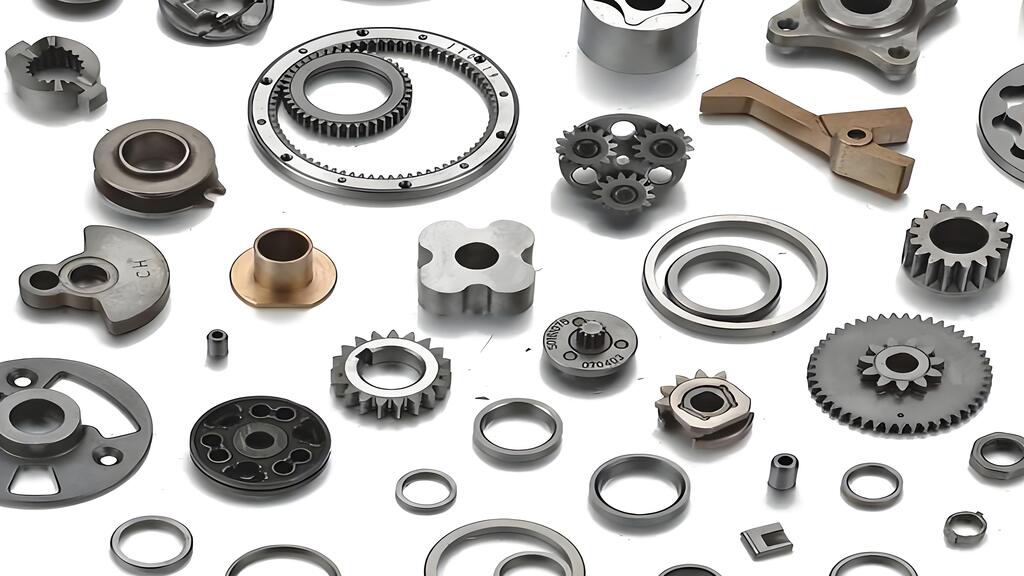
Tungsten Alloy for Oil & Gas Industry

Tungsten Alloy is indispensable for the oil and gas industry. It provides critical solutions for extreme operational challenges. The industry constantly faces harsh environments, high pressures, and corrosive substances. These demanding conditions require materials with superior strength, durability, and resistance. Tungsten alloys deliver the necessary resilience. They ensure reliable performance and operational efficiency in these severe applications.
Key Takeaways
- Tungsten alloy is very strong. It helps oil and gas tools work well in tough places.
- This alloy lasts a long time. It resists wear from drilling and harsh chemicals.
- Tungsten alloy keeps tools safe. It protects sensitive parts from high pressure and heat.
- It helps drill faster. This makes oil and gas work more efficiently.
- Tungsten alloy reduces broken parts. This saves money and keeps workers safe.
- It helps the environment. Tools last longer, so less waste is made.
- New ways to make tungsten alloy are coming. These will make tools even better.
Why Tungsten Alloy is Essential for Oil & Gas Operations
Unrivaled Hardness and Wear Resistance of Tungsten Alloy
The oil and gas industry operates in some of the most abrasive environments on Earth. Drilling through hard rock formations and circulating abrasive drilling muds constantly challenges equiPment. Materials must withstand relentless friction and impact.
Combating Abrasive Drilling Environments
Tungsten alloys possess exceptional hardness, making them ideal for these conditions. This inherent property allows tools to resist wear from abrasive particles and high-speed contact. The material's robust nature ensures components maintain their shape and cutting efficiency over extended periods.
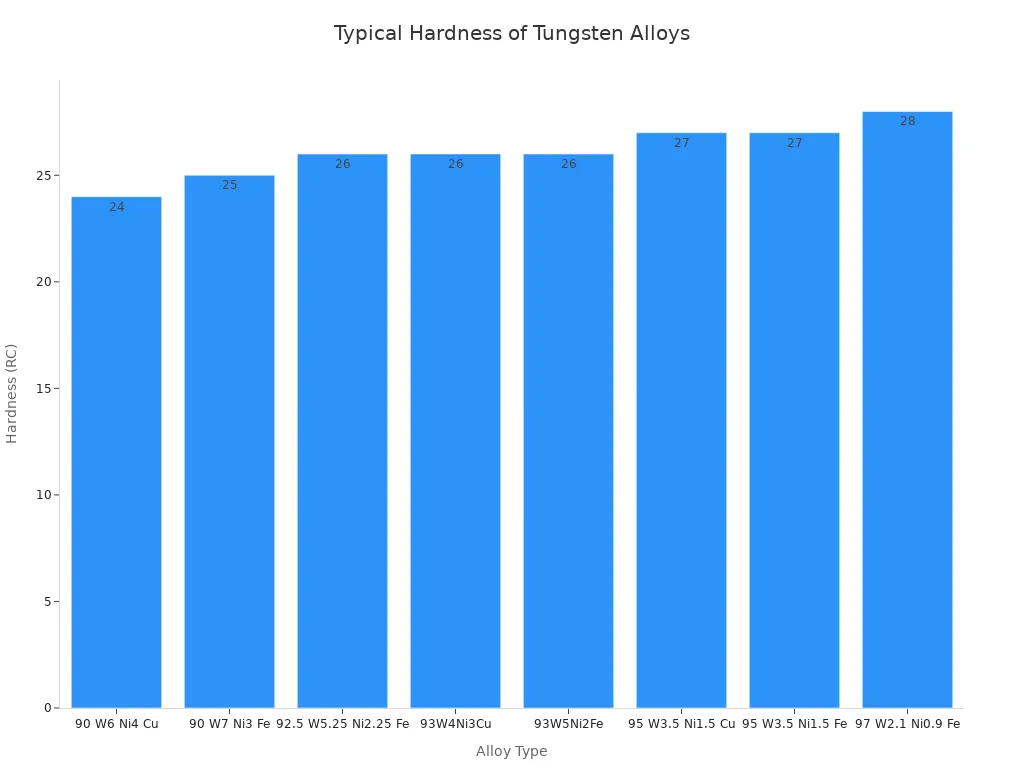
This chart illustrates the impressive Rockwell C hardness values for various tungsten alloy types. These high hardness levels directly translate into superior wear resistance. For instance, tungsten carbide, a common form of tungsten alloy, exhibits a Mohs hardness of approximately 9, approaching diamond-level hardness. This significantly outperforms many other materials in abrasive applications.
| Property | Tungsten Carbide (WC) | Titanium Carbide (TiC) |
|---|---|---|
| Mohs Hardness | 8.5-9 | 9-9.5 |
| Hardness (GPa) | 18-22 | 28-35 |
| Toughness | Higher | Relatively lower |
| Wear Resistance | Good | Usually better, especially at high temperatures |
| Melting Point (°C) | 2870 | 3160 |
| Density (g/cm³) | 15.63 | 4.93 |
This comparison highlights tungsten carbide's strong wear resistance. Several factors influence the wear resistance of tungsten carbide components:
- Grain Size: Fine-grain carbide offers higher hardness and better wear resistance. Coarse-grain carbide provides greater toughness and impact resistance.
- Binder Content: Higher cobalt or nickel content increases toughness but reduces hardness. Lower binder content increases hardness but can lead to brittleness.
- Additives: Materials like titanium carbide (TiC) or tantalum carbide (TaC) improve heat resistance and reduce chemical wear.
- Coatings: Coatings such as TiN, TiAlN, or diamond enhance the lifespan of tungsten carbide in specific applications.
Extending Equipment Lifespan with Tungsten Alloy
The superior wear resistance of tungsten alloys directly translates into extended equipment lifespan. Tools and components last longer in service. This reduces the frequency of replacements and minimizes costly downtime for maintenance. Operators achieve greater efficiency and lower overall operational expenses.
Superior Strength and Durability of Tungsten Alloy
Oil and gas operations, particularly downhole drilling, subject materials to immense mechanical stresses. Equipment must withstand immense forces without deforming or failing.
Withstanding Extreme Pressures Downhole
Downhole environments present incredible pressures. These pressures can crush less robust materials. Tungsten alloys possess high tensile strength, allowing them to endure these forces. They maintain their structural integrity deep within the wellbore.
| Alloy Type/Grade | Tensile Strength (MPa) |
|---|---|
| General Tungsten-Heavy Alloys | 700 to 1400 |
| ASTM B777 (various grades) | 689 to 1400 (specific values like 758, 724, 900-1000, 920-1100) |
This table demonstrates the impressive tensile strength range of tungsten-heavy alloys. These values indicate the material's ability to resist breaking under tension. This property is crucial for components subjected to pulling forces and internal pressures in deep wells.
Maintaining Structural Integrity in Harsh Conditions
Beyond static pressure, downhole tools experience dynamic loads, vibrations, and torque. Tungsten alloys exhibit excellent durability under these combined stresses. They resist fatigue and maintain their dimensional stability. This ensures reliable performance of critical components like drill bits, stabilizers, and MWD/LWD tools.
Exceptional Corrosion Resistance of Tungsten Alloy
Oil and gas reservoirs often contain highly corrosive fluids. These fluids include hydrogen sulfide (H2S), carbon dioxide (CO2), and various chlorides. These chemicals aggressively attack many conventional metals.
Protecting Against Aggressive Chemical Exposure
Tungsten alloys offer significant resistance to chemical degradation. Their inherent chemical stability protects components from corrosive attack. This prevents pitting, cracking, and general material loss. Equipment remains functional and safe even in highly acidic or saline environments.
Preventing Material Degradation in Corrosive Fluids
The robust corrosion resistance of tungsten alloys ensures long-term reliability. It prevents material degradation that could lead to catastrophic failures. This property is vital for components exposed to produced fluids, injection chemicals, and seawater in offshore operations. It safeguards both equipment and personnel.
High Thermal Stability of Tungsten Alloy
Performing Reliably in High-Temperature Wells
Oil and gas exploration often targets deep reservoirs. These reservoirs feature extremely high temperatures. Conventional materials lose strength and deform under such thermal stress. Tungsten alloys, however, exhibit exceptional thermal stability. They maintain their structural integrity and performance even in environments exceeding 200°C (392°F). This property is vital for downhole tools, sensors, and drilling components. These tools must operate reliably in geothermal wells or ultra-deep formations. Their ability to withstand intense heat ensures continuous operation and accurate data acquisition.
Preserving Mechanical Properties Under Thermal Stress
Many metals soften or creep when exposed to prolonged high temperatures. This leads to premature equipment failure. Tungsten Alloy resists these effects. It retains its hardness, tensile strength, and dimensional stability. This characteristic prevents thermal fatigue and stress-induced deformation. Components like drill bits, MWD/LWD tools, and valve parts maintain their precise tolerances and mechanical properties. This ensures consistent performance and extends the service life of critical equipment. The material's low coefficient of thermal expansion also minimizes internal stresses. This further enhances its reliability in fluctuating temperature conditions.
Tungsten Alloy Applications in Drilling and Exploration
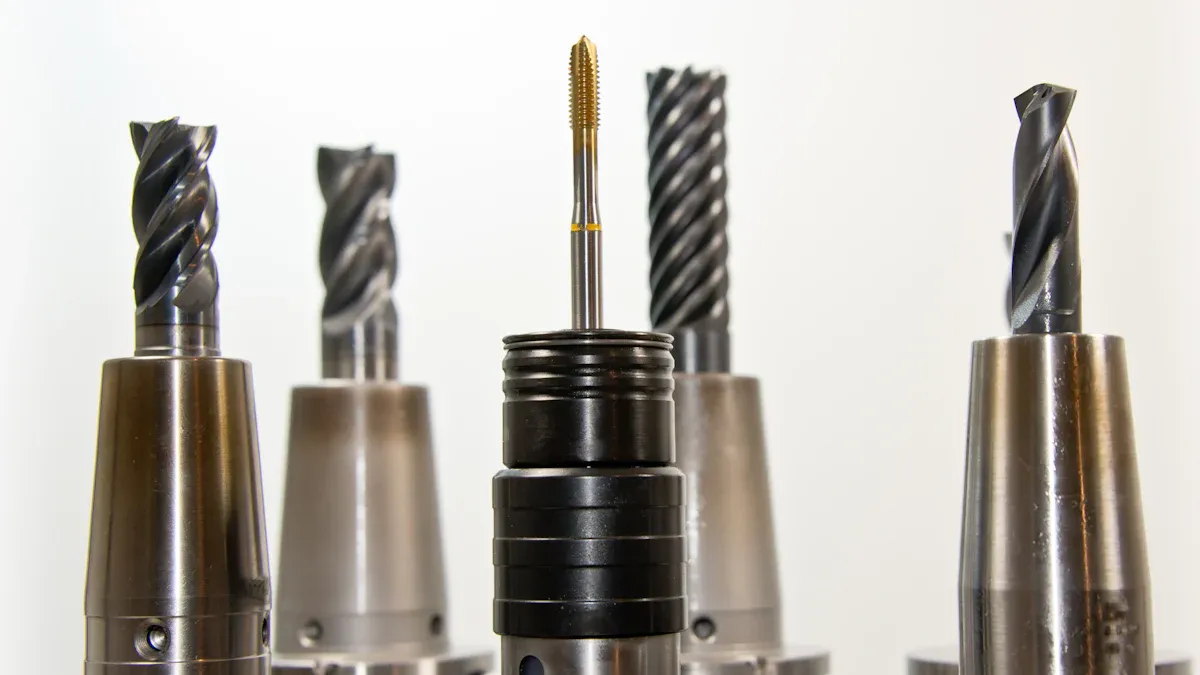
The oil and gas industry relies heavily on specialized tools for drilling and exploration. These tools operate in some of the most challenging environments on Earth. Tungsten Alloy materials provide the necessary performance and durability for these critical applications.
Tungsten Alloy Components for Drilling Bits and Reamers
Drilling bits and reamers are at the forefront of oil and gas exploration. They must withstand extreme forces and abrasive conditions. Tungsten carbide, a common form of Tungsten Alloy, is a primary material for these components. High alloy steel and high-grade tungsten carbide inserts are also frequently used. The K10F grade is available for tungsten carbide reamer blanks, highlighting the material's versatility.
Enhancing Penetration Rates and Efficiency
Tungsten carbide drill bits maintain their hardness and cutting efficiency under strenuous conditions. This allows for faster drilling speeds without compromising tool integrity. These bits can withstand higher temperatures, which is crucial for deep drilling. Tungsten carbide bits can provide twice the penetration rate compared to steel bits. One tungsten carbide bit can replace 4 to 10 steel bits, leading to improved production efficiency and perforation rates. The enhanced hardness, strength, and toughness of tungsten carbide tools allow them to adapt to changing conditions. They maintain wear resistance, which is crucial for achieving high-efficiency perforation.
Reducing Downtime and Tool Replacement
The superior durability of tungsten carbide components directly translates into less frequent tool replacement. This significantly reduces costly downtime associated with changing worn-out bits and reamers. Operators achieve greater operational continuity and lower overall maintenance expenses.
MWD/LWD Tools Utilizing Tungsten Alloy
Measurement While Drilling (MWD) and Logging While Drilling (LWD) tools provide vital real-time data from the wellbore. These sophisticated instruments contain sensitive electronics.
Protecting Sensitive Electronics in Downhole Logging
Tungsten Alloy components offer robust protection for sensitive electronics within MWD/LWD tools. Their high density and strength shield delicate sensors and circuitry from extreme downhole pressures, vibrations, and impacts. This protection ensures the integrity of the internal components.
Ensuring Accurate Data Acquisition
The exceptional stability and resistance to deformation of tungsten materials help maintain the precise alignment and function of MWD/LWD sensors. This reliability is critical for accurate data acquisition. It allows engineers to make informed decisions about drilling direction and formation characteristics.
Downhole Tools and Stabilizers Made with Tungsten Alloy
Downhole tools and stabilizers play a crucial role in maintaining wellbore integrity and optimizing drilling performance.
Improving Wellbore Quality and Stability
Tungsten carbide is approximately twice as stiff as steel and has a hardness of up to 94HRA. This makes it highly suitable for wear-resistant applications like hardfacing. Tungsten carbide hardfacing provides the highest level of abrasion resistance. Tungsten carbide inserts are used in hard-facings for stabilizers to meet demanding drilling conditions. They offer exceptional resistance to wear and tear and extend stabilizer lifespan. Methods like HF2000 (using tungsten carbide bricks) and HF3000 (maximizing premium tungsten carbide application) enhance abrasive and impact durability. Stabilizers made of heavy tungsten alloy are more resilient and durable, leading to a longer lifespan in abrasive downhole conditions. The high density of heavy tungsten alloy enhances stabilization of the drill string. It helps reduce deflection and improve drilling accuracy. Inlaid columnar tungsten carbide cemented carbide is used for the wear-resistant layer to protect the supporting body of the stabilizer.
Minimizing Vibrations and Torque
The high density and stiffness of tungsten alloy in stabilizers effectively dampen vibrations during drilling. This reduces torque fluctuations and minimizes stress on the drill string. Reduced vibrations lead to smoother drilling operations, less wear on equipment, and improved wellbore quality.
Jet Nozzles and Flow Restrictors from Tungsten Alloy
Jet nozzles and flow restrictors are vital components in drilling operations. They precisely control the flow of drilling fluids. Tungsten alloy materials provide the extreme durability and precision these parts require.
Optimizing Fluid Dynamics and Control
Tungsten alloy jet nozzles are engineered for optimal fluid dynamics. They ensure efficient fluid flow and distribution. This is vital for effective hole cleaning and rock removal. These nozzles enhance the flow of drilling fluids. They maximize the cooling and cleaning of the drill bit. Precision engineering enables optimal fluid flow, ensuring efficiency.
Different nozzle designs leverage tungsten alloy's properties to achieve specific fluid dynamic advantages. Straight bore nozzles, with their simple cylindrical bore, provide a concentrated, high-velocity jet. This jet is effective for direct impact and penetration. Tapered bore nozzles feature a gradually decreasing bore diameter. This design increases fluid velocity and maintains a more stable, less turbulent flow. This improves cleaning efficiency. Venturi nozzles include a converging section, a throat, and a diverging section. This structure creates a pressure differential. It enhances fluid acceleration and can be used for mixing or suction effects. This optimizes fluid dynamics for specific applications like enhanced cuttings removal. Multi-orifice nozzles have multiple smaller bores or openings. They distribute fluid flow over a wider area. This improves cooling and cleaning across the entire drill bit face. It also reduces localized wear. Spiral flow nozzles incorporate internal helical grooves or channels. They induce a swirling motion in the fluid. This creates a wider spray pattern and enhances the cleaning action and coverage. This is particularly useful in highly viscous drilling fluids.
Resisting Erosion from High-Velocity Fluids
Drilling fluids often contain abrasive particles. These fluids move at high velocities through nozzles and restrictors. This creates significant erosive wear on conventional materials. Tungsten alloy, with its exceptional hardness and wear resistance, effectively combats this erosion. It withstands the constant bombardment of abrasive particles. This prevents material loss and maintains the precise dimensions of the nozzle orifice. This resistance ensures consistent fluid flow characteristics over extended periods. It also prevents premature failure of these critical components. The ability of tungsten alloy to resist erosion from high-velocity fluids directly translates into longer service life for nozzles and restrictors. This reduces the need for frequent replacements. It also minimizes operational downtime.
Tungsten Alloy in Production and Processing Equipment

The journey of oil and gas from reservoir to refinery involves extensive production and processing. This stage demands equipment capable of handling extreme conditions. Tungsten Alloy materials provide the necessary resilience for these critical applications.
Valves and Chokes Featuring Tungsten Alloy
Valves and chokes control the flow of highly abrasive and corrosive fluids. Their components must withstand constant wear and chemical attack.
Regulating Flow in Highly Corrosive Media
Tungsten Carbide is a preferred material for valves and chokes in highly corrosive media. Manufacturers specifically choose it for its ability to resist erosion, abrasion, and corrosion. This extends the operational lifespan of the valve in severe service conditions. The material's robust nature ensures precise flow regulation even when exposed to aggressive chemicals.
Preventing Erosion and Cavitation Damage
High-velocity fluids can cause significant erosion and cavitation damage to valve and choke components. Tungsten alloy's exceptional hardness and density effectively resist these destructive forces. This prevents material loss and maintains the integrity of critical flow paths. It ensures consistent performance and reduces the risk of leaks or failures.
Pumps and Compressors with Tungsten Alloy Parts
Pumps and compressors are the workhorses of the oil and gas industry. They move vast quantities of fluids and gases under immense pressure.
Enduring High-Pressure Pumping Demands
Tungsten alloy parts, such as plungers, seals, and bearings, endure the relentless demands of high-pressure pumping. Their superior strength and wear resistance prevent premature failure. This ensures continuous operation in critical systems. The material maintains its structural integrity under constant mechanical stress.
Reducing Maintenance Needs in Critical Systems
The durability of tungsten alloy components significantly reduces maintenance requirements. This leads to substantial cost savings and increased uptime.
Tungsten carbide bushings often last ten times longer than steel alternatives, significantly lowering operational costs.
Tungsten carbide parts, such as bushings used in oil exploration, can extend the lifespan of components by a factor of ten compared to steel alternatives. While specifically mentioning bushings, this benefit is applicable to pump parts and other wear-resistant components in similar demanding environments. This implies a significant lifespan extension for pumps and compressors.
Separators and Heat Exchangers Using Tungsten Alloy
Separators and heat exchangers play vital roles in processing crude oil and natural gas. They separate different phases and manage thermal energy.
Withstanding Chemical Exposure and Thermal Cycling
These units often encounter a mix of corrosive chemicals and fluctuating temperatures. Tungsten alloy components resist chemical degradation and thermal fatigue. This ensures their long-term reliability in harsh processing environments. The material maintains its properties through repeated heating and cooling cycles.
Maintaining Optimal Thermal Efficiency
Tungsten alloy's stable mechanical properties at elevated temperatures help maintain the precise geometries of heat exchanger components. This ensures optimal heat transfer efficiency. It prevents deformation that could compromise performance. The material contributes to consistent and efficient processing operations.
Subsea Equipment and Tungsten Alloy
Subsea environments present some of the most formidable challenges in the oil and gas industry. Equipment must endure immense pressures, corrosive seawater, and fluctuating temperatures. Tungsten alloy materials provide essential solutions for these demanding conditions. They ensure the integrity and functionality of critical subsea components.
Resisting Deepwater Pressures and Marine Environments
Deepwater operations expose materials to crushing pressures and aggressive marine elements. Tungsten alloys possess the inherent properties to withstand these extreme forces. Their high density and strength make them ideal for components operating thousands of meters below the surface. These alloys effectively resist the corrosive effects of saltwater and other chemicals present in the deep sea. They also maintain their structural integrity against significant mechanical strains and varying temperatures. This resilience allows the industry to develop previously inaccessible reservoirs.
The table below highlights how tungsten alloys effectively address common subsea challenges:
| Subsea Challenge | How Tungsten Alloys Address It |
|---|---|
| High pressures | Components made from heavy tungsten alloys tolerate these conditions, ensuring integrity and functionality. |
| Corrosive conditions | Heavy tungsten alloys endure corrosive environments found in deepwater. |
| Mechanical strains | The toughness and dependability of heavy tungsten alloys help withstand mechanical strains. |
| Extreme temperatures | Heavy tungsten alloys withstand severe temperatures in deepwater environments. |
| Unreachable reservoirs | Their ability to endure harsh conditions allows for the development of previously inaccessible reservoirs. |
Ensuring Long-Term Reliability for Offshore Operations
The cost and complexity of subsea interventions are extremely high. Therefore, equipment reliability is paramount. Tungsten alloys contribute significantly to the long-term performance of subsea infrastructure. Their exceptional wear and corrosion resistance mean components last longer. This reduces the need for frequent maintenance and costly replacements. For example, tungsten alloy parts in subsea valves and connectors maintain their precision and sealing capabilities over extended periods. This prevents leaks and ensures operational continuity. The material's stability in harsh conditions minimizes the risk of unexpected failures. This protects both personnel and the environment. Tungsten alloys are crucial for the safe and efficient extraction of offshore energy resources.
Specialized Tungsten Alloy Applications for Oil & Gas
The oil and gas industry often requires materials with unique properties for highly specialized applications. Tungsten-based materials provide solutions for these niche, yet critical, operational demands.
Tungsten Alloy for Radiation Shielding in Well Logging
Well logging operations frequently involve radioactive sources to analyze subsurface formations. Protecting both sensitive equipment and personnel from radiation exposure is paramount.
Protecting Instrumentation and Personnel
Tungsten alloy serves as an excellent material for radiation shielding in well logging tools. Its high density effectively attenuates gamma rays and other forms of radiation. This protects delicate electronic instrumentation from damage and ensures accurate data acquisition. The shielding also safeguards personnel handling these tools, minimizing their exposure during operations. Tungsten alloy, a material chosen for radiation shielding due to its high density, is approximately 1.7 times denser than lead, with a density of 18.89 g/cm3 compared to lead's 11.34 g/cm3.
Meeting ALARA Goals for Radiation Exposure
The industry adheres to the ALARA principle ("As Low As Reasonably Achievable") for radiation exposure. Tungsten heavy alloy, used for radiation shielding in applications like 'Down hole logging-Sinker bars' and 'Down hole well logging weights and casings', has a density of up to 18.89 g/cm3. This superior shielding capability helps companies meet stringent safety regulations and minimize radiation doses to workers.
Sinker Bars and Counterweights from Tungsten Alloy
Downhole tools often require significant weight to perform their functions effectively, especially in challenging wellbore conditions.
Providing High Density for Downhole Tools
Tungsten heavy alloy (WHA) is an excellent casing material for down-hole logging of oil wells due to its high density (up to 18.5g/cm3). This density allows components to be sufficiently heavy to readily sink through dense materials like barite mud and withstand the hydrostatic pressure of harsh environments. This makes it ideal for sinker bars and counterweights. These components provide the necessary mass for tools to descend through drilling fluids and maintain stability.
Enhancing Stability and Performance
The high density of tungsten heavy alloy enhances the stability and performance of downhole tools. It helps balance rotating systems and provides downward force for various operations. The material's properties, including high wear-resistance, high impact resistance, and excellent durability, make it suitable for logging underground water, oil, and gas, especially for creating overweight large components for balancing and providing downward force.
Tungsten Carbide Components in Oil & Gas
Tungsten carbide, a composite material, offers extreme hardness and wear resistance, making it indispensable for many oil and gas applications.
Leveraging Extreme Hardness for Wear Parts
Tungsten carbide provides exceptional hardness for wear and abrasion resistance, extending lifespan. This makes it a preferred material for components subjected to continuous movement and friction. Its outstanding wear resistance ensures parts maintain their integrity in abrasive environments.
Applications in Bearings and Seals
Tungsten carbide components find extensive use in bearings and seals within the oil and gas industry. They offer high temperature stability without significant deformation and chemical inertness for corrosion resistance in corrosive fluid environments. These parts also possess high strength and toughness to withstand mechanical stresses. Specific applications include valve seats, balls, stems, bushings, bearings, and seal rings. These components provide critical support for rotating and downhole equipment, ensuring reliable sealing and reduced energy consumption due to their low coefficient of friction.
Casing Materials for Downhole Logging with Tungsten Alloy
Downhole logging tools are crucial for understanding subsurface formations. These tools contain highly sensitive electronics and sensors. They operate in extremely harsh environments. Tungsten alloy provides an ideal material for their protective casings.
Superior Protection for Sensitive Equipment
Tungsten alloy offers exceptional protection for sensitive downhole logging equipment. Its high density creates a robust barrier against extreme external pressures. This density also shields delicate internal components from physical impact and vibrations encountered during deployment and operation. The material's inherent strength prevents deformation. It maintains the structural integrity of the casing. This ensures the sensitive electronics inside remain safe and functional. Tungsten alloy also resists corrosive fluids and high temperatures. This comprehensive protection extends the lifespan of expensive logging tools. It reduces the risk of damage in challenging wellbore conditions.
Tungsten alloy casings effectively shield sensitive electronics from the crushing pressures and abrasive conditions prevalent in deep wellbores. This robust protection is vital for tool longevity.
Ensuring Data Integrity in Harsh Conditions
The reliability of downhole logging data directly depends on the integrity of the tools. Tungsten alloy casings play a critical role in ensuring this data integrity. They prevent environmental factors from compromising sensor performance. The material's thermal stability helps maintain consistent operating temperatures for electronics. This minimizes thermal drift and ensures accurate readings. Its corrosion resistance prevents chemical ingress. This protects sensors from degradation. By safeguarding the internal components, tungsten alloy casings allow logging tools to acquire precise and reliable data. This data is essential for informed decision-making in oil and gas exploration and production. Operators can trust the information gathered from tools protected by tungsten alloy. This leads to more efficient and safer operations.
Key Material Properties of Tungsten Alloy Driving Performance
The exceptional performance of materials in the oil and gas industry stems directly from their inherent properties. Tungsten Alloy possesses a unique combination of characteristics. These properties make it indispensable for demanding operational environments.
High Density and Mass of Tungsten Alloy
Providing Effective Ballasting Solutions
The remarkable density of tungsten materials offers significant advantages for downhole operations. Engineers utilize this property to create effective ballasting solutions. These heavy components help tools descend through dense drilling fluids. They also maintain stability in challenging wellbore conditions. This high mass ensures tools reach their target depth efficiently.
Enhancing Kinetic Energy for Impact Tools
High density directly translates to increased mass for a given volume. This characteristic proves crucial for impact tools. Greater mass enhances the kinetic energy these tools deliver. This allows for more effective breaking of hard rock formations. It improves drilling efficiency and penetration rates.
Excellent Modulus of Elasticity of Tungsten Alloy
Resisting Deformation Under Extreme Stress
Tungsten materials exhibit an excellent modulus of elasticity. This property signifies a material's stiffness. It indicates its ability to resist elastic deformation under applied stress. In downhole environments, tools face immense pressures and mechanical loads. A high modulus ensures components maintain their shape and structural integrity. They do not permanently deform under these extreme conditions.
Maintaining Dimensional Stability in Critical Components
The high modulus of elasticity helps critical components maintain precise dimensions. This stability is vital for the accurate functioning of complex downhole tools. It ensures proper fit and alignment of parts. This prevents operational failures caused by dimensional changes.
Low Thermal Expansion of Tungsten Alloy
Preventing Thermal Fatigue and Stress
Oil and gas operations often involve significant temperature fluctuations. These changes can induce thermal stress in materials. Tungsten carbide-cobalt (WC-Co) composites, a common form of Tungsten Alloy, feature a low coefficient of thermal expansion (CTE). This CTE is less than half that of steel. A lower CTE directly reduces thermal stress, which engineers calculate using the formula: sth = E * α * ΔT. Here, E represents Young's modulus, α is the CTE, and ΔT signifies the temperature gradient. High thermal stress, particularly during thermal cycling, can lead to thermal fatigue, causing small cracks and premature failure. The inherently low CTE of WC-Co effectively mitigates these issues.
Ensuring Precise Component Fit and Function
The low thermal expansion of tungsten materials ensures components maintain precise fit and function across varying temperatures. This property prevents parts from expanding or contracting excessively. It avoids issues like seizing, loosening, or misalignment. This reliability is critical for seals, bearings, and other precision components. It guarantees consistent performance and extends equipment lifespan.
Customizable Tungsten Alloy Compositions
Tungsten alloys are not monolithic materials. Manufacturers can precisely engineer their compositions. This allows for a wide range of properties. Alloying elements like nickel, iron, and copper are often added to pure tungsten. These additions create specific material characteristics. This customization capability makes tungsten alloys highly versatile. They meet the diverse and demanding requirements of the oil and gas industry.
Tailoring Properties for Specific Operational Needs
The ability to tailor tungsten alloy compositions is a significant advantage. Engineers can adjust the balance of density, hardness, ductility, and corrosion resistance. For instance, adding nickel and iron to tungsten creates heavy alloys. These alloys maintain high density while improving ductility. This makes them less brittle than pure tungsten. Other compositions might prioritize extreme hardness for cutting applications. Still others focus on enhanced corrosion resistance for aggressive chemical environments. This precise control over material properties ensures each component performs optimally. It directly addresses the unique challenges of downhole drilling, subsea operations, and processing. Ningbo Jiehuang Chiyang, with its expertise in powder metal manufacturing and metal injection molding, excels at developing custom Metal Parts. This capability allows for the creation of tungsten alloys with properties specifically matched to operational demands.
Optimizing Performance Characteristics for Diverse Applications
Customized tungsten alloy compositions optimize performance across many applications. A drill bit requires maximum hardness and wear resistance. An alloy with a high percentage of tungsten carbide and a specific binder content achieves this. Conversely, a radiation shielding component needs exceptional density. A tungsten heavy alloy with a high tungsten content fulfills this requirement. Seals and bearings demand a balance of hardness, toughness, and corrosion resistance. Specialized tungsten carbide grades provide these combined properties. This optimization extends equipment lifespan. It also enhances operational efficiency. It ensures reliability in critical systems. The flexibility in composition allows engineers to select the ideal material for each specific function. This approach minimizes failures and maximizes productivity in the harsh oil and gas environment.
Economic and Operational Benefits of Tungsten Alloy
The oil and gas industry constantly seeks ways to optimize operations, reduce costs, and enhance safety. Tungsten Alloy materials offer significant advantages in these areas. Their unique properties translate directly into tangible economic and operational benefits.
Reduced Maintenance and Replacement Costs with Tungsten Alloy
Equipment failure in the oil and gas sector leads to costly downtime and extensive repair work. Materials that resist wear and degradation significantly mitigate these expenses.
Extending Service Intervals and Lifespan
Tungsten alloy components possess exceptional durability. This allows them to withstand harsh operational conditions for extended periods. For instance, tungsten alloy inserts in mining drills can extend operational periods by 30-50% compared to conventional materials. This significantly reduces the frequency of equipment replacement. Similarly, tungsten carbide bushings often last ten times longer than steel alternatives. This extended lifespan means tools and parts remain in service longer. It minimizes the need for frequent maintenance interventions.
Lowering Overall Operational Expenses
The extended service life of tungsten alloy parts directly contributes to lower overall operational expenses. Companies spend less on purchasing replacement components. They also reduce labor costs associated with maintenance and repairs. This leads to substantial savings over the operational lifetime of equipment. The initial investment in high-performance tungsten alloy materials pays off through reduced long-term costs.
Increased Operational Efficiency with Tungsten Alloy
Efficiency is paramount in the competitive oil and gas industry. Tungsten alloy materials play a crucial role in improving various operational aspects.
Achieving Faster Drilling Speeds and Productivity
The superior hardness and wear resistance of tungsten alloy drill bits allow for more aggressive drilling parameters. This translates into faster penetration rates through challenging rock formations. Operators can complete drilling projects more quickly. This increases overall productivity and reduces the time required to bring wells online.
Improving Overall Production Rates
Enhanced equipment reliability and faster operational speeds directly contribute to improved production rates. Less downtime for repairs means more time spent on extraction and processing. This consistent performance ensures a steady flow of resources. It maximizes the output from each well.
Enhanced Safety and Reliability with Tungsten Alloy
Safety and reliability are non-negotiable in the oil and gas industry. Equipment failures can lead to severe accidents, environmental damage, and significant financial losses. Tungsten alloy materials significantly enhance both aspects.
Minimizing Equipment Failures and Downtime
Tungsten alloy components offer superior strength and toughness. They resist deformation under heavy loads and impacts. Their enhanced wear resistance allows them to withstand abrasive forces. This maintains their shape in high-stress environments. Furthermore, tungsten carbide tips impart excellent heat resistance. This allows alloys to withstand high temperatures without significant degradation. This is crucial for stability in demanding environments. These properties collectively minimize equipment failures. They reduce unplanned downtime. This ensures continuous and safe operations.
Protecting Personnel and the Environment
The robust nature of tungsten alloy contributes to a safer working environment. For example, tungsten alloys used in radiation shielding can lead to a significant reduction in radiation exposure levels, up to 90% compared to traditional lead shields. This protects personnel during well logging operations. In other applications, the enhanced corrosion resistance of tungsten carbide tips protects alloys from moisture, chemicals, and other corrosive agents. This prolongs their lifespan and ensures reliable performance in corrosive environments. The use of tungsten counterweights in various equipment also improves vibration damping and stability. This leads to better performance and safety. By preventing equipment failures and protecting against hazards, tungsten alloy safeguards both workers and the environment.
Environmental Impact Reduction Through Tungsten Alloy Use
The oil and gas industry faces increasing pressure to reduce its environmental footprint. Tungsten alloy materials offer significant advantages in this regard. Their exceptional durability and performance contribute directly to more sustainable operations.
Less Waste from Component Replacement
The extended lifespan of tungsten alloy components dramatically reduces waste generation. Industrial components coated with CVD tungsten carbide often see their lifespan extended by up to 250 times. This extreme durability directly conserves raw materials. It significantly reduces the need for frequent replacements. These coatings also protect equipment from degradation. This leads to fewer material and energy resources required for maintenance and manufacturing new parts. By enhancing operational efficiency and maintaining optimal equipment performance, these coatings contribute to reduced CO2 emissions and lower overall lifecycle costs.
The environmental benefits of this extended lifespan are substantial across multiple categories:
| Environmental Impact Category | Reduction (%) |
|---|---|
| Metal Depletion | -98% |
| Water Depletion | -91% |
| Agricultural Land Occupation | -83% |
| Human Toxicity | -73% |
| Freshwater Eutrophication | -79% |
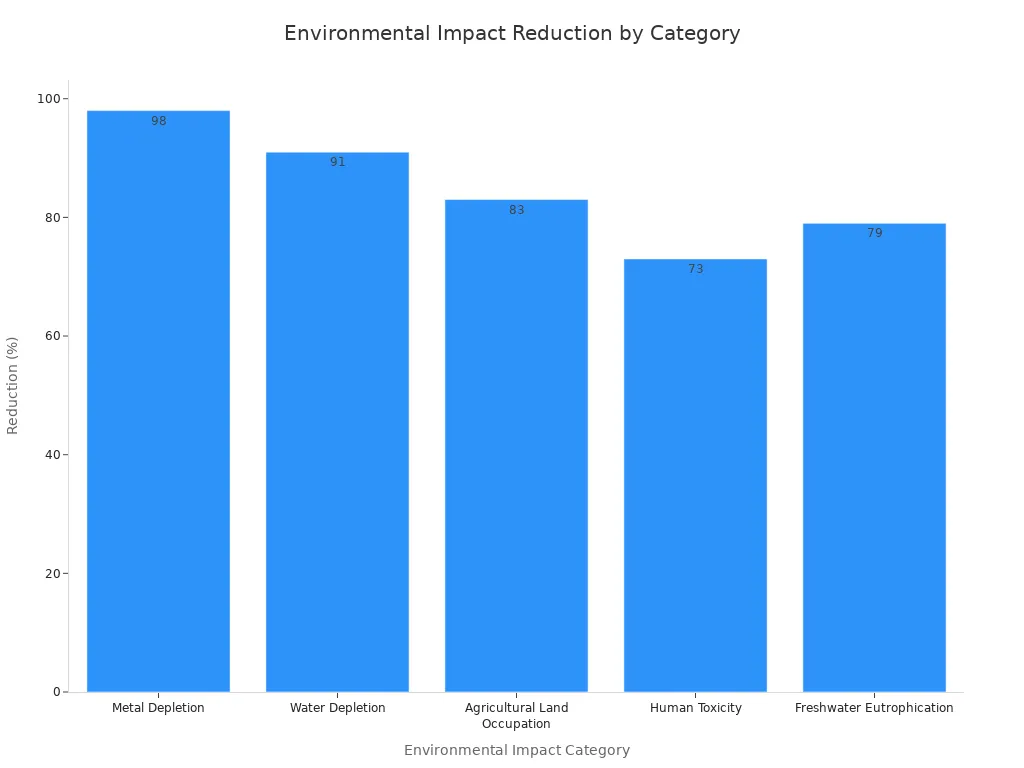
These figures highlight the profound positive impact of using long-lasting tungsten alloy components. Companies significantly reduce their consumption of natural resources. They also minimize the environmental burden associated with manufacturing and disposing of short-lived parts.
Promoting More Sustainable Operations
Tungsten alloy use promotes more sustainable operations throughout the oil and gas lifecycle. The extended product lifespan is a particularly influential parameter contributing to these benefits. Nano-WC-Co coatings, for example, offer more sustainable solutions compared to conventional technology. This indicates a clear path toward greener industrial practices.
- Resource Conservation: Longer-lasting components mean less demand for new raw materials. This reduces mining and processing activities, which often have significant environmental impacts.
- Energy Efficiency: Equipment operating at peak performance due to durable tungsten alloy parts consumes less energy. This translates to lower fuel consumption and reduced greenhouse gas emissions.
- Waste Reduction: Fewer discarded parts mean less industrial waste sent to landfills. This conserves landfill space and reduces the environmental risks associated with waste disposal.
- Reduced Maintenance Footprint: Less frequent maintenance activities decrease the need for transportation, specialized tools, and additional materials. This further lowers the overall environmental footprint of operations.
By integrating tungsten alloy materials, the oil and gas industry can achieve substantial environmental improvements. These materials support a shift towards more responsible and sustainable energy production practices.
Future Trends and Innovations in Tungsten Alloy Technology
The oil and gas industry constantly evolves. This drives continuous innovation in material science. Tungsten alloy technology is no exception. Future trends focus on advanced manufacturing, novel material development, and smart components. These advancements will further solidify tungsten's critical role in energy exploration and production.
Advanced Manufacturing of Tungsten Alloy Components
Traditional manufacturing methods for tungsten alloys often involve complex processes. New technologies offer exciting possibilities for creating more intricate and efficient parts.
Additive Manufacturing for Complex Geometries
Additive manufacturing, or 3D printing, is revolutionizing how engineers design and produce tungsten alloy components. This technology builds parts layer by layer. It allows for the creation of highly complex internal structures and geometries. These designs are impossible with conventional machining. This capability enables lighter, stronger, and more efficient tools. It also reduces material waste during production.
Improved Material Utilization and Design Freedom
Additive manufacturing significantly improves material utilization. It minimizes scrap material. This process also grants engineers unprecedented design freedom. They can create optimized components tailored precisely to specific operational demands. This leads to enhanced performance and longer service life for critical parts.
New Tungsten Alloy Development for Enhanced Performance
Material scientists continue to push the boundaries of tungsten alloy capabilities. They explore new compositions to meet the industry's ever-increasing demands.
Exploring Novel Compositions for Extreme Conditions
Researchers are developing novel tungsten alloy compositions. These new alloys aim to withstand even more extreme conditions. They target higher temperatures, greater pressures, and more corrosive environments. These advancements will unlock new drilling frontiers and improve existing operations. Ningbo Jiehuang Chiyang, with its experience in custom metal parts, actively contributes to this development.
Expanding Application Range in Emerging Technologies
New tungsten alloy developments will expand their application range. This includes emerging technologies within the energy sector. Geothermal drilling, for example, requires materials with exceptional thermal stability. Advanced tungsten alloys will play a crucial role in these high-temperature environments.
Smart Tungsten Alloy Components with Integrated Sensors
The integration of smart technology into materials represents a significant future trend. Tungsten alloy components will become more intelligent.
Real-time Monitoring and Predictive Maintenance
Engineers are exploring embedding sensors directly into tungsten alloy components. These integrated sensors will provide real-time data on tool performance and environmental conditions. This continuous monitoring enables operators to track wear, temperature, and stress levels. This data supports predictive maintenance strategies.
Optimizing Performance and Preventing Failures
Real-time data from smart tungsten alloy components allows for immediate adjustments. Operators can optimize tool performance on the fly. This proactive approach helps prevent catastrophic failures. It reduces unscheduled downtime. This enhances safety and operational efficiency across the oil and gas industry.
Expanding Role of Tungsten Alloy in Renewable Energy
The global energy landscape shifts towards renewable sources. Tungsten alloy's unique properties find new critical applications. This material supports the development of sustainable energy technologies. Its strength, heat resistance, and durability are essential for these emerging sectors.
Geothermal Drilling Applications and Equipment
Geothermal energy harnesses heat from Earth's interior. This process involves drilling deep wells into hot, corrosive rock formations. These environments demand materials with exceptional resilience. Tungsten alloys are ideal for geothermal drilling applications. They withstand extreme temperatures and pressures. They also resist corrosive fluids found deep underground.
- Drill Bits and Reamers: Tungsten carbide drill bits maintain their cutting edge in superheated rock. They ensure efficient penetration rates.
- Downhole Sensors: Tungsten alloy casings protect sensitive electronic sensors. These sensors operate reliably in high-temperature wells. They provide crucial data for geothermal reservoir management.
- Valves and Pumps: Components made from tungsten alloy regulate the flow of hot, corrosive geothermal fluids. They prevent erosion and extend equipment lifespan.
Tungsten alloy's thermal stability and corrosion resistance are paramount here. They ensure the longevity and efficiency of geothermal energy extraction.
Components for Offshore Wind Turbine Systems
Offshore wind energy is a rapidly growing sector. Wind turbines operate in harsh marine environments. They face constant exposure to saltwater, strong winds, and heavy loads. Tungsten alloys offer significant advantages for these systems.
"Tungsten alloy's high density and corrosion resistance make it an invaluable material for critical components in offshore wind turbines, ensuring long-term reliability in challenging marine conditions."
- Ballasting and Counterweights: Tungsten heavy alloys provide high density in a compact form. They are used for ballasting turbine foundations. They also serve as counterweights in nacelles. This enhances stability and reduces vibrations.
- Wear-Resistant Parts: Tungsten carbide coatings protect critical moving parts. These include bearings and gear components. They resist wear from constant operation and environmental factors. This extends the service life of expensive turbine machinery.
- Corrosion Protection: Tungsten alloys offer superior resistance to saltwater corrosion. They protect structural elements and fasteners. This ensures the long-term integrity of subsea and exposed components.
Tungsten alloy contributes to the robustness and efficiency of offshore wind farms. It helps secure a sustainable energy future.
Tungsten alloys are foundational for the oil and gas industry. They enable efficient and safe operations in the most challenging environments. Their unique combination of strength, wear resistance, and thermal stability addresses critical industry demands. Continued innovation in tungsten alloy materials and manufacturing will further solidify their indispensable role. This includes future energy exploration and production.
FAQ
What makes tungsten alloy essential for the oil and gas industry?
Tungsten alloy offers superior hardness, strength, and corrosion resistance. These properties allow equipment to withstand extreme pressures, abrasive environments, and corrosive fluids. It ensures reliable performance in challenging operational conditions.
How does tungsten alloy contribute to extending equipment lifespan?
Tungsten alloy's exceptional wear resistance significantly reduces material degradation. Components last longer in service. This minimizes the need for frequent replacements and costly downtime. It leads to greater operational efficiency.
Where do drilling operations utilize tungsten alloy?
Drilling operations use tungsten alloy in various components. These include drill bits, reamers, MWD/LWD tools, and stabilizers. It enhances penetration rates and protects sensitive electronics downhole.
Does tungsten alloy offer protection against corrosion in harsh environments?
Yes, tungsten alloy provides exceptional corrosion resistance. Its inherent chemical stability protects components from aggressive chemicals like hydrogen sulfide and carbon dioxide. This prevents material degradation and ensures long-term reliability.
What are the environmental benefits of using tungsten alloy in oil and gas?
Tungsten alloy's extended lifespan reduces waste from component replacement. This conserves raw materials and energy. It promotes more sustainable operations by minimizing the environmental footprint of the industry. 🌍
How does tungsten alloy perform in high-temperature well environments?
Tungsten alloy exhibits high thermal stability. It maintains its structural integrity and mechanical properties even at extreme temperatures. This ensures reliable performance of downhole tools in hot wells.
What future innovations are expected in tungsten alloy technology for the industry?
Future innovations include advanced manufacturing techniques like 3D printing for complex geometries. New alloy compositions will target even more extreme conditions. Smart components with integrated sensors will enable real-time monitoring and predictive maintenance.