


What are powdered metal rods?
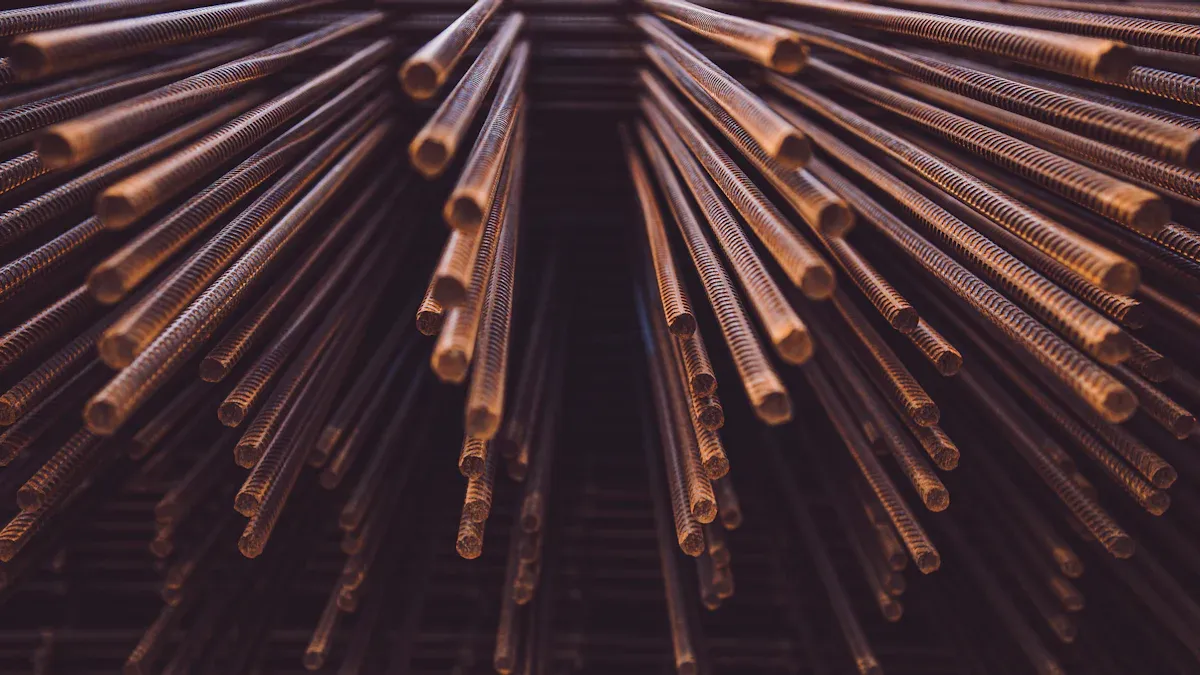
Powdered Metal rods use a unique manufacturing method that involves compacting metal powders into a solid form. This process sets them apart from traditional rods, which companies typically produce through casting or forging. Engineers value powdered metal rods for their ability to achieve precise shapes and material properties. These rods often deliver consistent quality and can be tailored for specific industrial requirements.
Key Takeaways
- Powdered metal rods are formed by compacting fine metal powders, allowing precise shapes and tailored material properties.
- The Powder Metallurgy process offers high production efficiency, minimal waste, and strong control over density and porosity.
- These rods provide good strength and durability, with customization options to meet specific industrial needs.
- Powdered metal rods cost less and support complex designs better than forged rods, making them ideal for high-volume production.
- They find wide use in automotive, industrial machinery, and consumer products due to their performance and eco-friendly manufacturing.
How Are Powdered Metal Rods Made?
Powder Metallurgy Process
Manufacturers create powdered metal rods using a specialized powder metallurgy process. This method starts with the production of fine metal powders, often less than 180 microns in size. These powders are blended with additives to achieve specific properties. The mixture is then pressed into dies under high pressure, forming a compacted shape known as a "green" part.
Powder metallurgy offers several advantages:
- Consistent quality and repeatability in mass production.
- Ability to form complex shapes with minimal waste.
- Control over porosity and density for tailored performance.
Industrial production data highlights the scale and efficiency of this process:
- The annual output of structural iron-based components reaches about 1 million tons.
- Hot isostatic pressing (HIP) produces fully dense parts using gas-atomized powders, reaching 25,000 tons per year for stainless and tool steels.
- Metal injection molding (MIM) uses ultra-fine powders and binders to create intricate shapes, with global production around 12,000 tons in 2014.
- Electric current-assisted sintering (ECAS) can reduce production time from hours to minutes, achieving near-theoretical densities.
The powder metallurgy process allows for precise control over the final properties of powdered metal rods, making it a preferred choice in many industries.
Materials Used in Powdered Metal Rods
The selection of materials plays a crucial role in the performance of powdered metal rods. Commonly used powders include iron-based alloys, which often contain additives such as carbon, copper, and nickel. These elements enhance strength, wear resistance, and other mechanical properties.
| Material Type | Common Additives | Typical Applications |
|---|---|---|
| Iron-based alloys | Carbon, copper, nickel | Automotive, machinery, tools |
| Stainless steels | Chromium, molybdenum | Corrosion-resistant components |
| Tool steels | Tungsten, vanadium | Cutting and forming tools |
| Non-ferrous metals | Aluminum, brass | Electrical, lightweight parts |
Powder production methods include gas and water atomization, electrolytic deposition, and chemical reduction. Recent advances, such as ultrasonic vibration machining, produce powders with uniform size and morphology, suitable for additive manufacturing. This method offers better control over powder size and can improve energy efficiency.
Sintering and Finishing Steps
After compaction, the green rods undergo sintering. This process involves heating the compacted powder below its melting point, typically between 70% and 90% of the melting temperature. Sintering bonds the particles through diffusion, forming strong necks that grow and densify the part.
| Sintering Stage | Driving Force | Dominant Mechanisms | Effect on Bonding and Densification |
|---|---|---|---|
| Initial Stage | Curvature gradient between the particle and the neck | Surface diffusion, grain boundary diffusion | Neck growth begins; little densification |
| Intermediate Stage | Curvature around cylindrical pores | Grain boundary diffusion, plastic flow | Most densification occurs; pores shrink |
| Final Stage | Curvature around spherical pores | Volume diffusion, grain boundary motion | Pores close; densification slows |
Sintering atmospheres vary based on the material:
- Hydrogen reduces oxides and cleans surfaces.
- Nitrogen prevents oxidation in steels.
- Vacuum eliminates contamination, ideal for reactive metals.
- Endothermic and exothermic gases control carbon content in steels.
Finishing steps follow sintering to achieve precise dimensions and surface quality. These steps may include:
- Sizing: pressing rods in rigid dies to correct distortion and improve accuracy (tolerances within ±0.01 mm).
- Coining: applying pressure to enhance surface density and imprint features.
- Secondary operations: machining, grinding, or surface coating for specific requirements.
- Heat treatment: processes such as annealing, quenching, and tempering to improve hardness and ductility.
These carefully controlled steps ensure that powdered metal rods meet strict industry standards for strength, durability, and dimensional accuracy.
Powdered Metal Rods: Material Properties and Features
Density and Porosity
Density and porosity play a critical role in determining the performance of powdered metal rods. Manufacturers use several advanced techniques to measure and control these properties. Helium pycnometry provides highly accurate density measurements by displacing helium gas through the sample, revealing the true density of the metal without internal pores. Bulk mass and volume measurements help calculate the average density and porosity across the entire rod. The Archimedes method, which involves weighing samples in air and water, offers another reliable way to determine density and porosity in small cylindrical rods.
| Measurement Technique | Description | Key Data / Insight |
|---|---|---|
| Helium Pycnometry | Measures powder density by helium gas displacement; assumes fully dense metal without internal pores. | CoCr powder density measured as 8.3046 g/cm³ ± 0.0013 g/cm³ (k=2 coverage factor). |
| Bulk Mass and Volume | Measures mass and dimensions of disks to calculate bulk density and porosity averaged over entire part. | Porosity calculated from disk density relative to full dense CoCr density (~8.3 g/cm³). |
| Archimedes Method | Uses mass measurements in air and water to determine density and porosity of small cylindrical samples. | Sample densities around 7.5–8.2 g/cm³ with porosity ranging from ~1% to over 9%, depending on sample. |
| X-ray Computed Tomography | Non-destructive imaging to reveal pore morphology, distribution, and presence of cracks. | Shows pores are often non-spherical, connected across layers, and cracks present in high porosity samples. |
| Ultrasonic Wave Velocity | Measures wave speed through samples; velocity correlates linearly with porosity level. | Provides indirect porosity estimation; confirms porosity trends and pore shape effects. |
These measurement methods allow engineers to achieve precise control over density and porosity, which directly influence mechanical strength, fatigue resistance, and overall reliability. Lower porosity typically results in higher strength and improved performance, making these properties essential for demanding applications.
Strength and Durability
Powdered metal rods deliver impressive strength and durability, making them suitable for a wide range of industrial uses. Manufacturers often use ASTM 4260 steel powder, which provides tensile and yield strength comparable to high-performance 300M steel. The forging process creates a dense, isotropic grain structure, ensuring uniform material properties in every direction. This uniformity reduces the risk of weak points and enhances the rod's ability to withstand high loads.
Manufacturers validate the strength and durability of these rods through rigorous endurance, tensile, and fatigue testing. For example, powder metal rods used in automotive engines must pass race-worthy load simulations. These tests confirm that the rods can handle extreme conditions without failure. The finished rods also feature tightly controlled weight variation, often within 2 grams, allowing for direct replacement in assemblies without the need for rebalancing.
A proprietary cap fracturing process further improves rod cap alignment and eliminates fretting, which enhances long-term durability. The use of high-quality fasteners and bushings supports the rod's ability to maintain strength under repeated stress. Powder-forging eliminates the variability in grain structure found in traditional forged steel, resulting in more reliable performance. In practical terms, many late-model engines use powdered metal rods as original equipment, demonstrating their proven strength and durability in real-world applications.
Customization Options
Engineers and manufacturers can tailor powdered metal rods to meet specific performance requirements. Powder-fusion additive manufacturing (PF-AM) enables a wide range of customization options. By varying processing conditions, adjusting laser beam shapes, and redesigning alloy compositions, manufacturers can create rods with unique microstructures and properties.
- Key customization options include:
- Processing condition variation
- Laser beam shaping for precise melting
- Alloy composition redesign for targeted properties
- Nano-scale inclusion for heterogeneous nucleation
- High-intensity ultrasound for grain refinement
- Post-processing recrystallization for enhanced strength
- Powder size distribution (PSD) control for microstructure optimization
Machine learning frameworks, combined with numerical simulations, help predict how changes in powder size distribution affect density, thermal conductivity, and microstructural evolution. This predictive approach allows for the creation of rods with tailored grain structures, such as fine equiaxed grains for improved toughness or coarse grains for specific strength requirements. By leveraging these advanced customization techniques, manufacturers can produce powdered metal rods that meet the exact needs of automotive, industrial, or consumer applications.
Tip: Customization through additive manufacturing and advanced process control enables engineers to optimize rod performance for unique operating environments, ensuring the right balance of strength, durability, and weight.
Advantages and Disadvantages of Powdered Metal Rods
Benefits Over Traditional Rods
Powder metallurgy offers several unique advantages compared to conventional forging. Manufacturers can achieve high production rates and create complex shapes with minimal waste. The process allows for the mixing of different metal powders, which enables custom alloy properties tailored to specific applications. Net shape manufacturing reduces the need for secondary machining, saving both time and material. Design flexibility stands out as a key benefit, especially for industries that require intricate or small parts.
Note: Powder metallurgy supports efficient high-volume production, making it ideal for automotive and industrial sectors.
The following table summarizes the comparative benefits and limitations of powdered metal rods and forged steel rods:
| Aspect | Powdered Metal Rods | Forged Steel Rods |
|---|---|---|
| Strength & Durability | Lower strength and durability due to porosity and less dense structure; may have shorter lifespan under fatigue or high-impact conditions. | Superior strength and durability due to aligned grain structure and denser material; better impact resistance and longer lifespan. |
| Cost | Lower upfront cost; efficient material use; less waste; near net shape reduces secondary machining and labor costs. | Higher upfront cost; more labor and energy intensive; more material waste due to cutting from billets; additional finishing costs. |
| Production Efficiency | High production rates; net shape manufacturing reduces machining; suitable for complex shapes and custom alloys. | Longer lead times; more secondary machining required; less flexible for complex or small intricate parts. |
| Design Flexibility | High design flexibility; can produce complex shapes and mix metal powders for custom properties. | Can produce most shapes but less suited for very small or intricate designs without machining. |
| Application Suitability | Best for high-volume production, complex parts, and applications where cost savings and design flexibility are priorities. | Best for high-stress, high-impact, or high-temperature applications requiring maximum strength and durability. |
Potential Drawbacks
While powder metallurgy provides many benefits, some limitations exist. The process can result in lower strength and ductility compared to forged rods, mainly due to residual porosity. This porosity may reduce durability, especially in high-impact or fatigue-prone environments. Size limitations can restrict the use of powder metallurgy for very large parts. Although high-temperature sintering can improve properties, it may not fully match the performance of forged steel in critical applications.
| Criteria | Powder Metallurgy (PM) Advantages & Disadvantages | Forging Advantages & Disadvantages |
|---|---|---|
| Cost | Lower unit cost; less scrap; lower tooling cost; faster delivery; but tooling cost impacts short runs. | Higher upfront cost; more waste; longer lead times; expensive dies; less economical for short runs. |
| Strength & Durability | Generally lower strength and ductility; porosity can reduce durability; improved by high-temp sintering. | Superior strength due to grain flow alignment; denser, no porosity; better for critical applications. |
| Production Volume | Efficient for high-volume runs; tooling amortized over large batches. | Better suited for medium to large parts; less flexible for very small or complex parts. |
| Design & Material Flexibility | Can produce complex shapes; allows mixing powders for custom alloys; size limitations exist. | Can produce large parts; less control over microstructure; limited for porous or multi-metal parts. |
| Secondary Processing | Minimal machining needed due to net shape capability. | Often requires secondary machining, increasing cost and lead time. |
Cost Considerations
Cost efficiency remains a major advantage of powder metallurgy. The process uses less raw material and generates less scrap, which lowers unit costs. Tooling costs spread over large production volumes, making the method especially economical for high-volume manufacturing. Net shape capability reduces the need for expensive secondary machining and finishing. However, for short production runs, tooling costs can impact overall savings. Forged rods typically require more labor, energy, and material, resulting in higher upfront and operational costs.
Tip: Companies seeking to balance performance with cost often choose powder metallurgy for applications where design flexibility and production efficiency matter most.
Applications of Powdered Metal Rods
Automotive Industry
The automotive sector leads global adoption of powder metallurgy components. Manufacturers rely on these parts for gears, bearings, pistons, and valve seats. The demand for lightweight and fuel-efficient vehicles, including electric vehicles (EVs), drives this trend. Powder metallurgy enables the production of high-precision parts with minimal waste, supporting both cost and sustainability goals. The Asia-Pacific region, especially China and India, dominates market share due to rapid industrialization and automotive output. North America and Europe also maintain strong positions, with OEMs such as Aisin Seiki, Mahle, and Federal-Mogul integrating these components into powertrains and chassis systems.
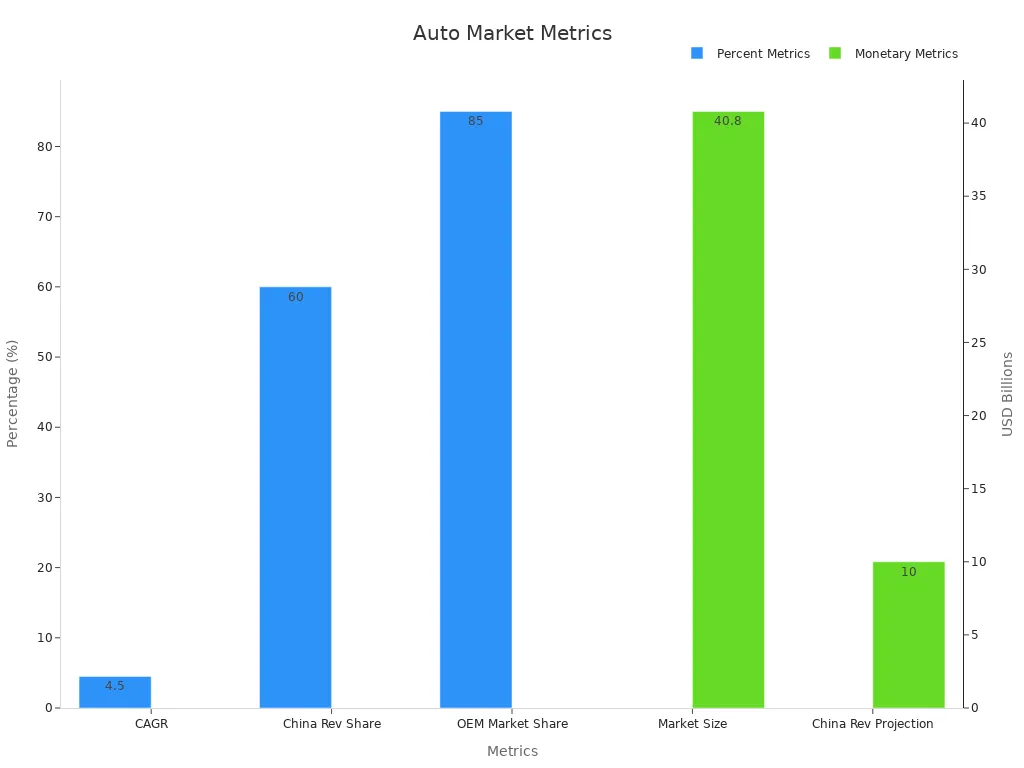
Automotive connecting rod market size reached USD 40.8 billion in 2024, with a projected CAGR of 4.5% through 2034. Powder metallurgy offers nearly 97% raw material utilization, low energy consumption, and net-shape production, reducing waste and supporting emission reduction targets.
Industrial Machinery
Industrial machinery manufacturers benefit from powder metallurgy’s ability to produce dense, strong, and wear-resistant parts. The press-and-sinter process, combined with advanced post-processing like hot isostatic pressing and roll densification, delivers components that compete with wrought metals in high-cycle and high-strength applications. Gears, bushings, and structural rods made using these methods achieve high dimensional accuracy and durability. Customization of powders allows engineers to tailor properties for specific machinery needs, supporting diverse sectors from heavy equipment to robotics.
Operational efficiency improves as near-net-shape manufacturing reduces scrap, machining, and energy costs. Some applications, such as self-lubricating bearings, leverage the controlled porosity of powder metallurgy for functional advantages. Industry recognition, such as the Metal Powder Industries Federation Design Excellence Award, highlights the growing acceptance of these solutions in critical machinery.
Consumer Products
Consumer product manufacturers use powder metallurgy to create durable, cost-effective components for electronics, appliances, and tools. The process supports the production of small, intricate parts with consistent quality. Sectors such as 3C (computer, communication, and consumer electronics) benefit from the ability to produce high-precision connectors, housings, and moving parts. The sustainability of powder metallurgy, with material utilization rates up to 98%, aligns with environmental regulations and consumer expectations for greener products.
Technological advances, including additive manufacturing and improved powder quality, expand the range of possible applications. Companies continue to innovate, using powder metallurgy to deliver reliable and efficient solutions across a broad spectrum of consumer goods.
Performance and Suitability of Powdered Metal Rods
Wear Resistance
Engineers often select powder metallurgy for applications that demand high wear resistance. The microstructure of these rods plays a crucial role in their performance. Several factors influence abrasive wear resistance:
- Carbide size and distribution within the metal matrix.
- The volume fraction of carbides present.
- The mean free path between carbides which should remain smaller than the size of abrasive grooves.
Carbides act as barriers, preventing abrasive particles from penetrating deeply into the matrix. Studies show that a smaller mean free path increases resistance to wear. For example, the Carpenter Technology Micro-Melt Maxamet alloy demonstrates exceptional wear resistance in ASTM G65 abrasion tests. Its fine grain structure and uniform carbide dispersion contribute to this performance. Coatings such as TiN or TiAlN further enhance durability. In machining tests, Maxamet alloy inserts outlasted traditional high-speed steel by three to five times, and production shops reported significant reductions in downtime.
Load-Bearing Capacity
Mechanical testing confirms the robust load-bearing capacity of rods produced by powder metallurgy. Researchers used three-point flexure tests on martensitic stainless steel rods made by selective laser melting. The results showed an average hardness of 452 HV, fracture stress of 1667.8 MPa, and an elastic modulus of 96.8 GPa. These values compare favorably to traditional alloys, which typically have lower fracture stress but higher elastic modulus. Despite minor anisotropy and surface imperfections, the rods maintained structural integrity under significant loads. This performance validates their use in demanding engineering applications.
Environmental Factors
Environmental conditions can affect the long-term performance of metal rods. Powder metallurgy allows for precise control over alloy composition, which helps tailor corrosion resistance and thermal stability. Stainless steel rods resist oxidation and chemical attack in harsh environments. Coatings and surface treatments provide additional protection against moisture, chemicals, and extreme temperatures. Engineers can select specific alloys and finishes to match the intended operating environment, ensuring reliable performance in automotive, industrial, or consumer settings.
Powdered metal rods deliver precise shapes, high material utilization, and eco-friendly production. Their versatility supports automotive, industrial, and consumer applications. The table below highlights how powdered metal rods compare to traditional processes:
| Aspect | Powder Metallurgy (PM) Advantages | Comparison Processes (Forging, Machining, Stamping, Casting) |
|---|---|---|
| Material Utilization | Minimal waste, superior utilization, eco-friendly | Significant material waste |
| Tooling and Setup Costs | Generally lower or variable tooling costs | High capital investment and tooling costs |
| Design Flexibility | Allows complex shapes, intricate features, controlled porosity | Limited by process constraints |
| Production Volume | Suitable for moderate to high volumes | Varies; often with trade-offs in cost and waste |
| Dimensional Accuracy | Close to final specifications | Machining offers tighter tolerances but with more waste |
| Environmental Impact | Eco-friendly due to reduced waste | More waste generated |
| Use Cases | Automotive, medical devices, appliances, tools, industrial, recreational | Various industries with different trade-offs |
Engineers should consider production volume, design complexity, and sustainability when selecting powdered metal rods for their projects.
FAQ
What industries use powdered metal rods most often?
Automotive, industrial machinery, and consumer electronics industries use powdered metal rods frequently. These sectors value the rods for their precision, strength, and cost efficiency.
How do powdered metal rods differ from forged rods?
Powdered metal rods form from compacted metal powders, while forged rods shape through deformation of solid metal. Powdered rods offer design flexibility and material efficiency. Forged rods provide higher density and strength.
Can manufacturers customize powdered metal rods for specific needs?
Yes. Manufacturers adjust alloy composition, density, and shape to meet unique requirements. Advanced techniques, such as additive manufacturing, allow for precise customization.
Are powdered metal rods environmentally friendly?
Powder metallurgy produces minimal waste and uses raw materials efficiently. Many companies choose this process to support sustainability goals and reduce environmental impact.
What quality controls ensure the reliability of powdered metal rods?
Manufacturers use rigorous testing, including density measurement, tensile testing, and dimensional checks. These controls help ensure each rod meets strict industry standards for performance and safety.