

Advantages of Magnesium Die Casting in Lightweight Design

Magnesium Die Casting stands as a premier solution for achieving lightweight designs. It offers an unparalleled combination of material properties and manufacturing efficiencies. This process directly contributes to significant weight reduction, enhanced performance, and cost-effectiveness across various applications. The global automotive parts magnesium die casting market, a key segment, was valued at USD 1,841 million in 2024. This market projects growth to approximately USD 5,088 million by 2034, demonstrating a robust Compound Annual Growth Rate of 10.7%. This growth highlights the increasing importance of Magnesium Die Casting in modern engineering.
Key Takeaways
- Magnesium die casting makes products much lighter. It uses a metal with the lowest density among common structural metals.
- This method creates strong parts. These parts are lighter than those made from aluminum or steel.
- Magnesium die casting builds complex shapes. It can make thin walls and combine many parts into one.
- The process is very precise. It reduces the need for extra work after casting.
- Magnesium parts reduce noise and vibration. They also protect electronics from interference.
- Magnesium die casting saves money. It uses less material and energy, and it speeds up production.
- Magnesium is good for the environment. It is highly recyclable and helps reduce pollution.
- Many industries use magnesium die casting. These include cars, electronics, airplanes, and medical devices.
Superior Strength-to-Weight Ratio in Magnesium Die Casting

Inherent Lightness of Magnesium
Lowest Density Among Structural Metals
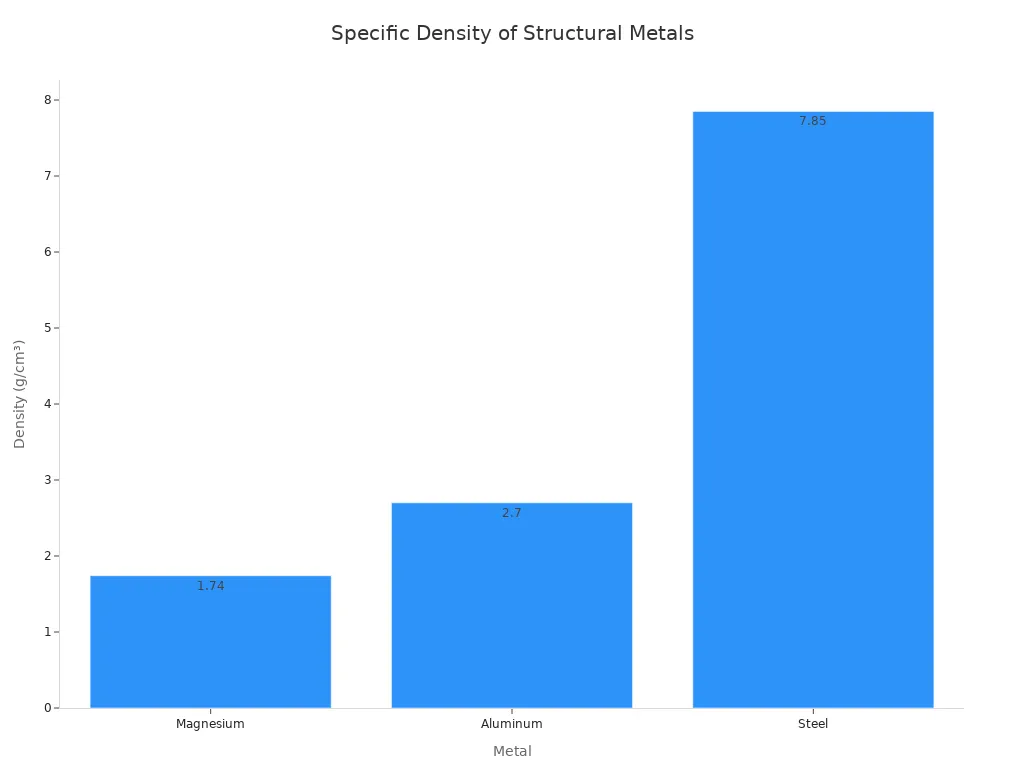
Magnesium stands out among structural metals due to its exceptionally low density. Magnesium alloys have a density of 1.74 g/cm³. This makes them significantly lighter than other common structural metals. For instance, magnesium is 35% less dense than aluminum, which has a density of 2.7 g/cm³. It is also 77% less dense than steel, with a density of 7.8 g/cm³. This inherent lightness provides a fundamental advantage in lightweight design.
| Metal | Density (g/cm³) | Relative Weight (vs. Aluminum) |
|---|---|---|
| Magnesium | 1.74 | 0.64x lighter |
| Aluminum | 2.70 | – |
| Steel | 7.85 | 2.91x heavier |
Direct Impact on Component Weight Reduction
The low density of magnesium directly translates into substantial component weight reduction. Engineers can design parts using less material mass while maintaining required structural integrity. This reduction in individual component weight contributes to a lighter overall product. Lighter products offer numerous benefits across various industries.
Comparative Strength of Magnesium Die Casting
Performance Against Aluminum Alloys
Magnesium die casting produces parts with impressive strength characteristics. While aluminum alloys often boast higher absolute tensile strength, magnesium alloys offer a superior strength-to-weight ratio. This means magnesium parts provide comparable structural performance at a significantly lower weight. Designers can achieve similar load-bearing capabilities with lighter magnesium components.
Superiority Over Steel in Specific Strength
Magnesium alloys demonstrate clear superiority over steel in specific strength. Specific strength refers to a material's strength divided by its density. Despite steel's higher absolute strength, its much greater density makes magnesium a more efficient choice for applications prioritizing weight reduction. Magnesium die cast parts deliver excellent structural performance for their mass.
Implications for Product Performance
Enhanced Dynamic Response and Maneuverability
Weight reduction through Magnesium Die Casting significantly enhances a product's dynamic response and maneuverability. Lighter components reduce inertia, allowing for quicker acceleration, deceleration, and changes in direction. In vehicles, this translates to improved handling and a more agile feel. Structural components also gain increased rigidity, making a car "better on the road."
Improved Fuel Efficiency and Extended Range
The reduced weight from magnesium die cast components directly leads to improved fuel efficiency in transportation applications. Less mass requires less energy to move, resulting in lower fuel consumption and reduced emissions. For electric vehicles or portable devices, this weight saving extends battery range and operational time. This makes magnesium an ideal material for sustainable and high-performance designs.
Advanced Manufacturing Capabilities of Magnesium Die Casting
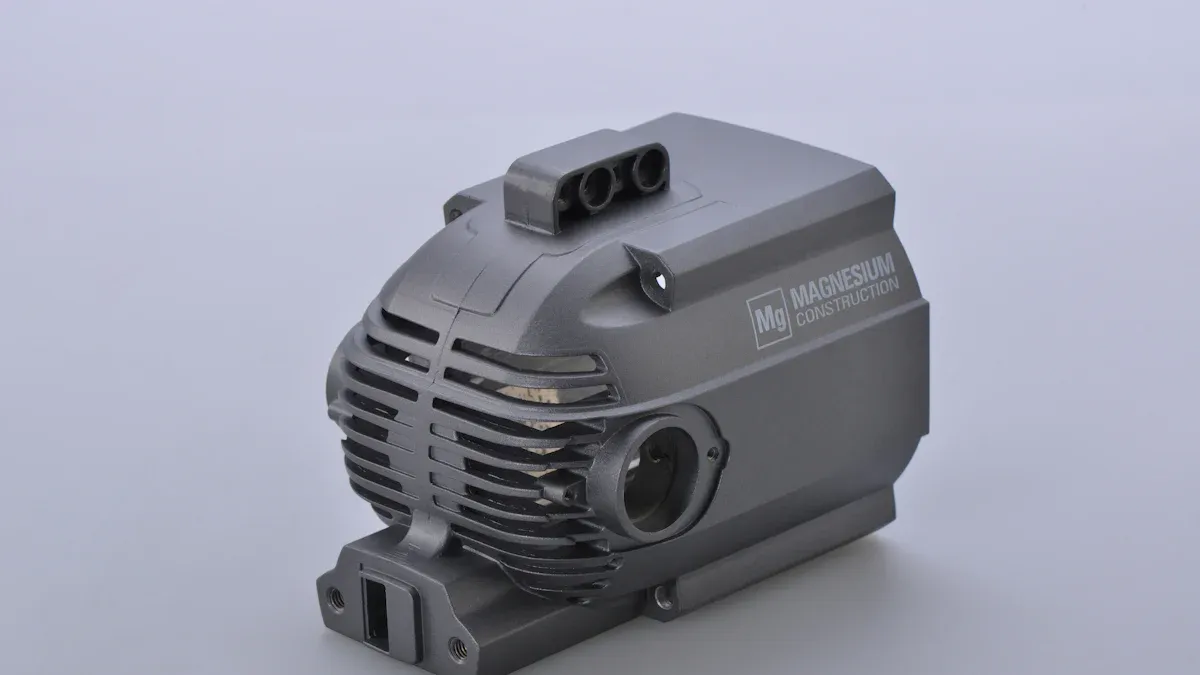
Magnesium die casting offers significant advantages in manufacturing due to its advanced capabilities. This process allows for the creation of intricate parts with high precision and efficiency. Manufacturers can achieve complex designs while maintaining strict quality standards.
Precision in Complex Geometries
Ability to Cast Thin Walls
Magnesium die casting excels at producing components with exceptionally thin walls. This capability is crucial for lightweight designs where material reduction is paramount. Engineers can design parts with minimal thickness, which directly contributes to overall weight savings without compromising structural integrity.
Integration of Multiple Features
The die casting process for magnesium allows for extensive component and feature integration. Manufacturers can consolidate several individual parts into a single, complex component. This simplifies assembly processes and often reduces overall manufacturing costs. Magnesium die casting uniquely facilitates:
- Consolidation of multiple parts into a single component simplifies assembly.
- Production of large, thin-walled, near-net-shape castings, minimizing post-processing.
- Outstanding EMI and RFI shielding properties, ideal for electrical housings.
- Exceptional thin-wall capability, contributing to lighter and more material-efficient designs.
Dimensional Stability and Tight Tolerances
High Accuracy in Production
Magnesium die casting delivers high accuracy in production. The process consistently yields parts with excellent dimensional stability. This means components maintain their precise shape and size throughout their lifespan and under various operating conditions.
Reduced Need for Post-Processing and Machining
The inherent accuracy of magnesium die casting significantly reduces the need for secondary machining operations. Die casting generally yields tight as-cast tolerances, ranging from CT1–CT4, or ±0.05–0.3% of the dimension (equivalent to ±0.05–0.3 mm per 100 mm). According to NADCA standards, precision tolerances for linear dimensions in die casting can be .002” for the first inch and an additional .001” for each subsequent inch. Magnesium die casting can achieve dimensional tolerances of ±0.005 to ±0.010 inches. This precision minimizes material waste and streamlines the manufacturing workflow.
Efficiency in Production Cycles
Faster Die Casting Cycle Times
Magnesium die casting processes are known for their rapid cycle times. This speed contributes to higher production volumes and lower per-unit costs. Hot chamber magnesium die casting offers shorter cycle times compared to cold chamber die casting because the furnace and casting portions are integrated. This eliminates the need to transport molten material and superheat it. Cold chamber die casting has longer cycle times due to separate melting and injection processes.
| Metal | Cycle Time (per part) |
|---|---|
| Magnesium | 20-40 seconds |
| Aluminum | 20 seconds - 1.5 minutes |
Near-Net-Shape Manufacturing Benefits
Near-net-shape manufacturing is a significant advantage of magnesium die casting. This process produces parts very close to their final desired shape. Near-net-shape results in die casting significantly reduce or eliminate the need for secondary machining operations. This directly contributes to increased production efficiency by speeding up the manufacturing process and reducing labor. Near-net-shape manufacturing in die casting is highly material-efficient, producing minimal waste. It allows for the creation of precise parts that require less machining and finishing, thereby conserving material. The process also supports the use of recyclable metals, further enhancing material efficiency.
Enhanced Functional Performance with Magnesium Die Casting
Superior Vibration Damping Properties
Noise, Vibration, and Harshness (NVH) Reduction
Magnesium alloys possess excellent vibration-damping characteristics. This property significantly reduces Noise, Vibration, and Harshness (NVH) in various applications. Components made from magnesium absorb vibrational energy more effectively than many other structural metals. This leads to quieter operation and smoother performance in end products.
Improved User Comfort and Component Longevity
The superior damping capabilities of magnesium directly translate to improved user comfort. Products feel more solid and less prone to annoying vibrations. Reduced vibration also extends the lifespan of components. It minimizes fatigue stress on parts, leading to greater durability and reliability over time.
| Material Type | Damping Characteristic (Relative) |
|---|---|
| Pure Mg | 5 times the damping attenuation coefficient of cast iron |
| Pure Mg | 12 times the damping attenuation coefficient of aluminum alloys |
| Mg-Al alloy | 3 times the shock absorption performance of 110OH18 aluminum alloy |
| Mg-Al alloy | Nearly 4 times the shock absorption performance of quenched and tempered 60 steel |
Electromagnetic Shielding Capabilities
Protection for Sensitive Electronics
Magnesium alloys offer inherent electromagnetic shielding properties. This makes them ideal for protecting sensitive electronic components from external interference. They effectively block electromagnetic interference (EMI) and radio frequency interference (RFI). This ensures the reliable operation of electronic devices in various environments.
Compliance with EMI/RFI Regulations
The excellent shielding effectiveness of magnesium helps products meet stringent EMI/RFI regulations. Manufacturers can design enclosures that comply with industry standards without needing additional shielding materials. This simplifies design and often reduces overall manufacturing costs. Researchers actively work to enhance the electromagnetic shielding capabilities of magnesium alloys, pushing performance boundaries.
| Material Type | Frequency Range (KHz-GHz) | EMI SE (dB) |
|---|---|---|
| AZ91 Matrix | 30 KHz - 1.5 GHz | 71.2 - 81.0 |
| FACs/AZ91 Composite | 30 KHz - 1.5 GHz | 71.2 - 81.0 |
| M-FACs/AZ91 Composite | 30 KHz - 1.5 GHz | 78.9 - 82.5 |
Thermal Management Advantages
Effective Heat Dissipation
Magnesium alloys provide effective thermal management solutions. They exhibit high thermal conductivity, approximately 150 W/mK. This property allows them to efficiently transfer heat away from critical areas within a product. While aluminum alloys are recognized for their excellent thermal conductivity, magnesium offers a strong balance of thermal performance and lightweight properties. This makes it a valuable material for applications where both weight and heat dissipation are crucial.
Benefits for Electronic Enclosures and Components
Magnesium die-cast electronic enclosures significantly enhance heat dissipation. They manage component operating temperatures effectively, which is vital for device performance and lifespan. This high thermal conductivity enables efficient heat transfer from internal components to the exterior. It safeguards sensitive electronics from heat-induced damage and prevents overheating. Furthermore, magnesium casings dissipate heat generated by electronic circuits much more effectively than plastic alternatives. This directly improves component operating temperatures and contributes to overall device longevity and reliability.
Cost-Effectiveness and Sustainability of Magnesium Die Casting
Economic Benefits in Manufacturing
Reduced Material Waste
Magnesium die casting significantly reduces material waste during production. In die casting, material waste rates typically fall between 8% and 10%. This waste primarily consists of molten metal found in runners, sprues, and overflows. Approximately 50% of the raw material in magnesium die casting operations converts into finished products. The remaining 50% becomes scrap. This scrap, however, is largely recyclable, minimizing overall material loss.
Lower Energy Consumption in Production
The die casting process for magnesium requires less energy compared to other manufacturing methods. Its lower melting point contributes to reduced energy consumption during the melting phase. This efficiency translates into lower operational costs for manufacturers.
Decreased Assembly Costs
Magnesium die casting allows for the integration of multiple features into a single component. This near-net-shape manufacturing capability reduces the need for secondary operations and assembly steps. Consolidating parts into one unit simplifies the assembly process, leading to significant cost savings in labor and time.
Sustainability and Recyclability of Magnesium Alloys
High Recyclability of Magnesium Alloys
Magnesium alloys boast high recyclability, making them an environmentally friendly choice. In the US, the recycling rate for magnesium is stated to be 52%. The end-of-life recycling input rate (EoL-RIR) for magnesium is reported as 7% in the EU. This indicates the percentage of magnesium from scrap in the total magnesium entering the region.
Contribution to Circular Economy Principles
Recycling magnesium scrap offers substantial environmental advantages. It decreases the necessity for primary magnesium production, which typically involves energy-intensive processes and generates emissions. Furthermore, recycling magnesium scrap helps conserve valuable natural resources and alleviates waste disposal challenges. This fosters a more sustainable and circular economy. Recycling magnesium alloys reduces reliance on primary production. Secondary magnesium retains its original properties, promoting sustainability. Utilizing recycled magnesium significantly lowers the carbon footprint. The process involves the collection and sorting of scrap, re-melting to create new alloy ingots, and then reforming these ingots into new products.
Lifecycle Environmental Impact
Reduced Emissions in End Products
Magnesium components contribute to reduced emissions in end products, especially in transportation. While magnesium generally shows higher emissions during component production on a per kg basis compared to steel or aluminum, weight savings compensate for these higher emissions during the use phase. This is particularly true in vehicles where fuel consumption is reduced. New magnesium production processes, such as Alliance Magnesium's hydrometallurgical process, aim for GHG emissions lower than 5 kg CO2eq/kg Mg. Recycling of new magnesium scrap has significantly lower GHG emissions compared to primary production, with values around 0.5-0.6 kg CO2eq/kg Mg.
Support for Green Initiatives
The use of magnesium die casting supports various green initiatives. Companies develop processes for production waste and scraps, promoting a circular economy. The Aluminium Stewardship Initiative (ASI) Performance Standard V3, applicable to magnesium alloy products, addresses sustainability issues. Many companies commit to environmentally friendly manufacturing processes. They utilize energy-efficient equiPment and practices to reduce environmental impact. Ibex Solar, for example, enables 40% clean energy power, aiming for 100% by 2025. Ibex's insourcing of magnesium scrap recycling is a significant carbon-saving initiative, creating a closed-loop approach. Certifications like ISO 14001 demonstrate a commitment to environmental responsibility.
Diverse Applications Benefiting from Magnesium Die Casting
Magnesium die casting offers significant advantages across numerous industries. Its unique properties make it an ideal choice for applications requiring lightweight, high-performance components.
Automotive Sector Innovations
Structural Components and Housings
The automotive industry extensively utilizes magnesium die-cast parts for weight reduction and enhanced performance. Historically, the classic Volkswagen Beetle contained approximately 90 pounds of magnesium alloy parts, showcasing its early adoption. Modern vehicles incorporate magnesium in critical structural components and housings. These include steering wheels and transmission housings. Furthermore, manufacturers use magnesium for suspension components like control arms and brackets. Steering system parts, such as steering housings and brackets, also benefit from magnesium's lightness and strength. Electronic control unit (ECU) housings and sensor housings frequently employ magnesium for robust protection and heat dissipation. A one-piece magnesium die-casting component for an instrument panel (IP) improves craftsmanship. It reduces dimensional errors associated with welding and joining multiple elements like steering column brackets, radio, air conditioning, and glove box. This magnesium IP also serves as a precise gauge for defining the frontal vehicle dimension.
Interior and Exterior Parts for Weight Reduction
Automakers also apply magnesium die casting to various interior and exterior parts. These applications directly contribute to overall vehicle weight reduction. Lighter vehicles achieve better fuel efficiency and improved handling.
Consumer Electronics Advancements
Lightweight Device Casings
The consumer electronics sector heavily relies on magnesium die casting for lightweight device casings. Laptops and tablets, such as Surface Pro, HP ENVY models, and Lenovo ThinkPad entries, use magnesium alloys like AZ91D for outer shells and internal structural frames. Smartphones and other mobile devices incorporate magnesium alloys for mid-frames or chassis. Wearables, including smartwatch cases and internal structures, also benefit from magnesium's light weight and durability.
Heat Sinks and Internal Frames
Magnesium die-cast components serve as heat sinks and internal frames in many electronic devices. Professional cameras and high-end drones utilize magnesium die-cast bodies for their robust yet light construction. Gaming consoles and accessories benefit from magnesium components for structural integrity and heat management. Automotive infotainment systems integrate advanced electronics with magnesium for robust protection and efficient heat dissipation.
Aerospace and Defense Applications
Weight-Critical Structural Elements
Aerospace and defense industries demand materials with exceptional strength-to-weight ratios. Magnesium die casting provides weight-critical structural elements for these demanding applications. Spacecraft and satellite applications use magnesium for bus structures, payload adapters, instrument housings, optical benches, deployment mechanisms, and robotic components.
Performance-Enhancing Components
Magnesium also contributes to performance-enhancing components in aerospace and defense. Aircraft interior components, such as lightweight seat frames, structural elements, cabin fittings, panels, and overhead bin components, frequently use magnesium. Electronic enclosures and avionic housings also benefit from magnesium's properties. Structural and engine parts, including gearbox housings, transmission casings, brackets, mounts, support structures, control surface components, and actuation systems, utilize magnesium. Emerging mobility solutions, such as motor housings, power electronics enclosures, and structural supports for electric and hybrid-electric propulsion systems, also employ magnesium. Complex frames and internal components for Urban Air Mobility (UAM) vehicles, like air taxis and drones, increasingly feature magnesium die-cast parts.
Medical and Industrial Equipment
The medical and industrial sectors increasingly adopt magnesium die casting for its unique combination of lightness, strength, and precision. These industries demand materials that ensure reliability, portability, and high performance in critical applications. Magnesium die-cast components meet these stringent requirements effectively.
Portable Device Enclosures
Magnesium die casting provides ideal solutions for portable medical and industrial device enclosures. Manufacturers use magnesium for its lightweight properties and durability, which are crucial for equipment frequently moved or handled. For instance, magnesium forms the casings for ultrasound and X-ray devices, ensuring they withstand demanding clinical environments while remaining easy to transport. Glucose meters also utilize magnesium housings, benefiting from the material's lightness and robust nature. Drug delivery systems, including insulin pens, auto-injectors, and infusion pumps, incorporate magnesium components for their precise fit and reliable operation. Wearable health monitor enclosures, such as smartwatches and vital sign trackers, leverage magnesium for comfortable, durable, and lightweight designs. Furthermore, larger equipment like MRI and CT scanners benefit from magnesium enclosures, which offer excellent EMI shielding and contribute to lighter assembly and transport.
Precision Machine Parts
Magnesium die casting also excels in producing precision machine parts for medical and industrial equipment. The process delivers components with high dimensional accuracy and smooth finishes, essential for intricate mechanisms. Patient beds feature lighter magnesium frames and moving parts, which makes repositioning patients easier for healthcare providers. IV stands benefit from lightweight magnesium bases and poles, enhancing stability and maneuverability within clinical settings. Laboratory apparatus housings often use magnesium to protect sensitive electronics and provide effective EMI shielding. Surgical instrument handles and housings are frequently made from magnesium, offering lightweight, ergonomic designs that improve surgeon comfort and control. Internal mechanism components within advanced surgical instruments, such as endoscopes, staplers, and robotic surgical tools, rely on magnesium die casting for their dimensional accuracy and smooth operational surfaces, ensuring precise and reliable performance during critical procedures.
Magnesium Die Casting stands out as a premier solution for lightweight design. It offers an unparalleled combination of strength, manufacturing efficiency, performance, and environmental advantages. Industries increasingly adopt this process to optimize weight without compromising integrity or cost. The unique properties of magnesium, combined with the efficiency of the die casting process, make it an indispensable choice for modern engineering challenges.
FAQ
What makes magnesium die casting ideal for lightweight design?
Magnesium possesses the lowest density among structural metals. This inherent lightness directly reduces component weight. It allows engineers to create parts with comparable strength to heavier materials, significantly contributing to overall product weight reduction.
How does magnesium die casting achieve complex part geometries?
Magnesium die casting excels at producing components with thin walls. It also allows for the integration of multiple features into a single part. This capability simplifies assembly and reduces the need for additional manufacturing steps.
What are the thermal management benefits of magnesium die casting?
Magnesium alloys exhibit high thermal conductivity. They efficiently dissipate heat from critical areas. This property protects sensitive electronics from overheating, enhancing device performance and longevity.
Is magnesium die casting a cost-effective manufacturing process?
Yes, magnesium die casting offers economic benefits. It reduces material waste and requires less energy during production. The process also decreases assembly costs by consolidating multiple features into a single component.
How does magnesium die casting contribute to sustainability?
Magnesium alloys are highly recyclable. This contributes to circular economy principles by reducing the need for primary production. Recycling magnesium also lowers the carbon footprint and supports green initiatives.
What industries commonly use magnesium die casting?
Diverse industries benefit from magnesium die casting. These include automotive for structural and interior parts, consumer electronics for casings and frames, and aerospace for weight-critical elements. Medical and industrial equipment also utilizes magnesium for portable devices and precision parts.
Does magnesium die casting reduce noise and vibration?
Yes, magnesium alloys have excellent vibration-damping properties. They effectively reduce Noise, Vibration, and Harshness (NVH). This leads to quieter operation, improved user comfort, and extended component longevity.