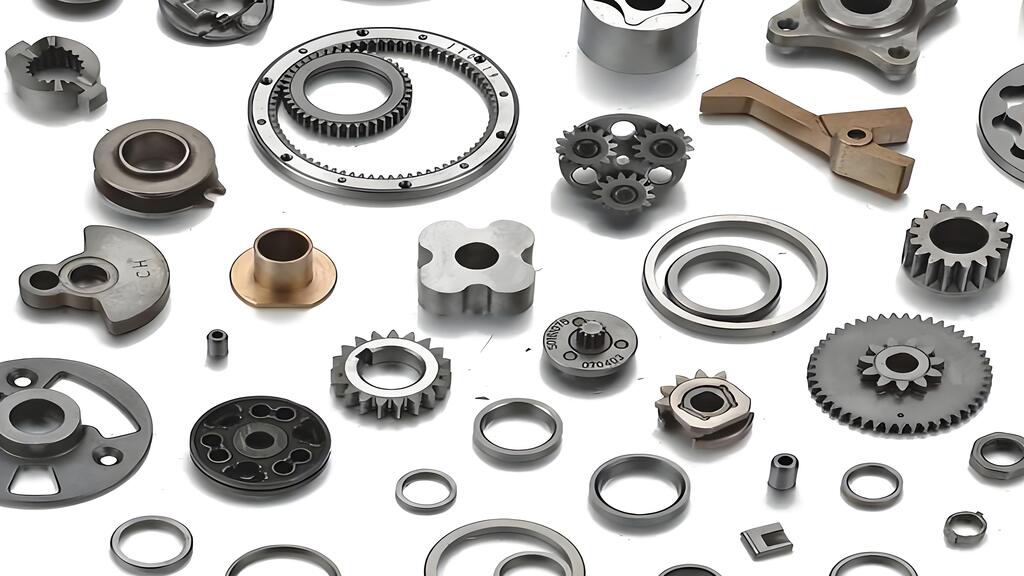


How Powder Size Affects the Sintering Quality
Powder size critically determines Sintering quality. It influences fundamental mechanisms like surface area, packing density, and diffusion rates. These factors collectively shape the final mechanical properties and microstructure of sintered materials. Therefore, precise control over powder size is essential for successful material consolidation.
Key Takeaways
- Small powder particles improve sintering. They increase surface area and energy, which helps materials become denser.
- Smaller particles pack better. This reduces empty spaces in the material before it is heated.
- Atoms move shorter distances with small particles. This makes the material bond faster and removes pores quickly.
- Small powders can lower the heat needed for sintering. This saves energy and helps control how grains grow.
- Very fine powders can clump together. This makes mixing hard and can cause flaws in the final product.
- The mix of different particle sizes is important. Using both small and large particles can make the material denser.
- New ways to make powders help control their size. Computer models also help predict how powders will act during heating.
- Controlling powder size makes better parts for cars, planes, and medical implants. This improves how well they work.
Understanding Sintering Fundamentals for Enhanced Sintering Quality
What Sintering Is
Definition and Purpose
Sintering is a crucial process in materials science. It reduces porosity and enhances various material properties. These properties include strength, electrical conductivity, translucency, and thermal conductivity. The process involves atomic diffusion. This diffusion drives the elimination of powder surface. It begins with neck formation between particles and concludes with the removal of small pores. The primary driving force for densification is the reduction in surface area and surface free energy. Solid-vapor interfaces are replaced by lower-energy solid-solid interfaces during this transformation. This process typically occurs at high temperatures. It can also involve additional external forces like pressure or electric current.
Consolidation Without Melting
Sintering consolidates powder particles into a coherent, solid structure. It achieves this without reaching the material's melting point. The Sintering Process, including densification and grain growth, is thermodynamically driven. This drive comes from the reduction of the total Gibbs free energy of the system. This reduction makes the process intrinsically favorable. Sintering is an irreversible process. The system's surface energy decreases at elevated temperatures. It involves thermal treatment to bond particles through mass transport, often at the atomic scale. This bonding enhances strength and lowers system energy. It leads toimproved density and properties. The primary thermodynamic driving force is the reduction of surface energy. Loose ceramic particles have higher free surface energy than grain boundaries in sintered ceramics. Sintering stress is proportional to the ratio of surface tension and particle radius. Elevated temperatures are necessary for ceramic sintering because diffusion is a thermally activated process.
Key Sintering Mechanisms
Atomic Diffusion Processes
Atomic diffusion processes are fundamental to sintering. They facilitate the movement of atoms, leading to particle bonding and densification. The sintering mechanism is influenced by the applied sintering temperature. Various diffusion modes become activated with increasing temperature. These modes include atomic surface diffusion, volume diffusion, and grain boundary diffusion. The primary atomic diffusion mechanisms active during sintering include grain boundary diffusion, surface diffusion, volume diffusion through the crystal, viscous flow, and vapor transport. These mechanisms work together to eliminate pores and consolidate the material, directly impacting the final Sintering Quality.
Plastic Flow and Particle Rearrangement
Beyond atomic diffusion, plastic flow and particle rearrangement also play significant roles in the initial stages of sintering. Particle rearrangement involves the sliding and rotation of powder particles. This movement allows them to achieve a more compact configuration. It reduces the overall porosity of the green body. Plastic flow occurs when particles deform under pressure or at elevated temperatures. This deformation helps fill voids and brings particles into closer contact. These mechanisms contribute to the initial densification before diffusion processes become dominant.
How Smaller Powder Size Drives Sintering Quality

Increased Surface Area and Energy
Enhanced Driving Force for Densification
Smaller powder particles possess a significantly larger total surface area compared to an equivalent mass of larger particles. This increased surface area directly translates into higher surface energy within the powder compact. The system naturally seeks to minimize this high surface energy. This desire for energy reduction provides a powerful thermodynamic driving force for densification during sintering. The material consolidates to reduce the total surface area. It replaces high-energy solid-vapor interfaces with lower-energy solid-solid interfaces.
Surface Tension Effects
The relationship between particle size and surface area is inverse. As a pigment particle's size decreases, its surface area increases. This phenomenon occurs because the surface area of a particle derives from its surface area integral. A smaller particle yields a greater result from this integration. Conversely, an increase in pigment particle size leads to a decrease in its surface area. This amplified surface area in fine powders enhances surface tension effects. Surface tension acts as a compressive force. It pulls particles closer together. This force becomes more dominant with smaller particles. It further promotes densification and improves the overall Sintering Quality.
Improved Green Body Packing Density
Efficient Particle Arrangement
Smaller particles contribute to a more efficient arrangement within the green body. Fine powders can fill the interstitial voids between larger particles more effectively. This creates a more compact and homogeneous initial structure. This improved packing is crucial for achieving high final densities.
Reduced Initial Porosity
A more efficient particle arrangement directly leads to reduced initial porosity in the green body. Less void space means the material has less distance to densify during sintering. This initial advantage significantly contributes to achieving higher final densities and better mechanical properties. Multimodal powder mixtures consistently achieve higher packing densities compared to using individual powders. There is an optimal mixture ratio that maximizes this packing density. This maximum density changes as the particle size ratios within the mixture are adjusted. For example, consider the following packing densities for alumina powders:
| Powder Distribution | Particle Sizes (μm) | Volume Ratio (vol%) | Packing Density (%) |
|---|---|---|---|
| Bimodal Alumina | 70, 2 | 70:30 | 82.65 |
| Trimodal Alumina | 70, 10, 2 | N/A | 85.7 |
These examples demonstrate how combining different particle sizes optimizes the packing structure.
Shorter Diffusion Distances
Accelerated Neck Growth
Smaller powder particles inherently mean shorter distances between particle centers. During sintering, atoms diffuse to form necks. These necks are the initial bonds between particles. With smaller particles, the atoms need to travel shorter distances to form these necks. This reduced diffusion path significantly accelerates the rate of neck growth. Faster neck growth leads to quicker consolidation of the powder compact.
Faster Pore Elimination
The pores in a compact made from smaller particles are generally smaller and more uniformly distributed. These smaller pores are also closer to grain boundaries. Grain boundaries act as efficient sinks for vacancies. Atoms move to fill these vacancies. This effectively shrinks and eliminates pores. Shorter diffusion distances for vacancies to reach grain boundaries result in faster pore elimination. This rapid pore removal is critical for achieving high final density and superior material properties, directly impacting the final Sintering Quality.
Lower Sintering Temperatures and Shorter Times
Energy Efficiency
Smaller powder particles significantly reduce the thermal energy required for successful sintering. The enhanced surface energy and shorter diffusion distances mean the material needs less external heat to initiate and complete densification. This allows manufacturers to sinter components at lower temperatures or for shorter durations. Such adjustments directly translate into substantial energy savings during production. For instance, studies show nano yttrium stabilized zirconia (YSZ) can sinter at temperatures 200 degrees Celsius lower than micron-sized powders. Nanosized titania also exhibits a much greater temperature difference in sintering compared to commercial TiO2 powders. Furthermore, for WC-Co powders, the entire sintering temperature steadily decreases as the initial average particle size reduces from 30 microns to 10 nanometers. Using finer, nanosized powders generally shifts the densification versus temperature plot to the left. This indicates that sintering occurs at lower temperatures compared to micron-sized powders.
Preventing Excessive Grain Growth
High sintering temperatures and prolonged holding times often lead to excessive grain growth. This phenomenon can degrade the mechanical properties of the final product, such as strength and hardness. By utilizing smaller powder particles, manufacturers can achieve full densification at lower temperatures or within shorter timeframes. This reduced thermal exposure effectively limits grain growth. It allows for better control over the microstructure. Maintaining a fine, uniform grain structure is crucial for optimizing the material's performance and ensuring high Sintering Quality. This approach helps produce materials with superior mechanical integrity and desired microstructural characteristics.
Challenges and Considerations with Very Fine Powders for Sintering Quality
While smaller powder sizes offer significant advantages for sintering, they also introduce several processing challenges. Manufacturers must carefully manage these issues to achieve optimal Sintering Quality.
Agglomeration and Handling Difficulties
Very fine powders, especially those in the nano-scale or a few dozen microns, exhibit strong inter-particle attraction forces. These forces lead to agglomeration. Solid bridges, adhesion, cohesion, and capillary forces from liquid bridges all contribute to particles clumping together. This agglomeration creates significant handling difficulties.
Uniform Mixing Challenges
Agglomerates make achieving a uniform mixture of powders difficult. These clumps resist dispersion, leading to inhomogeneities in the powder blend. This non-uniformity can result in inconsistent material properties in the final product.
Compaction Issues
Handling fine powders presents numerous practical problems. Loading and unloading these materials are primary challenges in industrial facilities. Improper equiPment, such as discharge spouts that are too short or small, can interrupt flow and cause dusting. Fine powders often exhibit fluid-like behavior due to high aeration and slow de-aeration rates. This can lead to uncontrolled discharge, known as flooding or flushing, from process vessels. They can also flow uncontrollably through feeders that rely on cohesion, which fine powders often lack. Dust generation is common when emptying fine powders into bulk bags, and dust explosions pose a significant hazard if electrons build up around particles, creating sparks.
Increased Green Body Defects
Agglomeration directly impacts the quality of the green body before sintering.
Porosity from Agglomerates
Agglomerates hinder homogeneous particle packing. This prevents complete densification during sintering. The irregular arrangement of particles leaves larger voids that are difficult to eliminate. This directly leads to increased porosity in the sintered product. Furthermore, agglomeration creates non-uniform and larger pores. These pores often have high coordination numbers, making them thermodynamically stable and difficult to remove during sintering.
Non-Uniform Density
Agglomeration contributes to non-uniform green body density. This inconsistency causes uneven shrinkage during sintering, which can create defects like holes and cracks. These defects act as fracture sources, potentially leading to cracking of the green body.
Risk of Excessive Grain Growth
Despite the benefits of lower sintering temperatures, very fine powders carry a risk of excessive grain growth if not managed properly.
Degradation of Mechanical Properties
Fine powders have high surface energy, which drives rapid densification. However, if sintering conditions are not precisely controlled, this high energy can also lead to rapid and uncontrolled grain growth. Abnormally large grains can degrade the mechanical properties of the material, reducing its strength, hardness, and toughness.
Microstructural Control Issues
Non-uniform green body density, often caused by powder agglomeration, is a primary cause of abnormal grain growth. When grains grow abnormally, large pores become trapped within these oversized grains. This makes pore removal difficult, hindering the achievement of higher density and worsening material properties. Maintaining a fine, uniform microstructure becomes challenging, impacting the overall performance of the sintered component.
Impact on Final Sintered Product Properties and Sintering Quality
Powder size significantly influences the final properties of sintered components. Manufacturers carefully control powder characteristics to achieve desired material performance. This control directly impacts density, mechanical strength, and microstructural uniformity.
Density and Porosity Control
Achieving optimal density and minimizing porosity are primary goals in sintering. Powder size plays a crucial role in reaching these objectives.
Achieving High Relative Density
Powder particle size and shape directly influence packing efficiency. Efficient packing in the green body translates to higher relative density after sintering. Irregularly shaped particles or a broad distribution of particle sizes can lead to non-uniform densities in sintered materials. This non-uniformity makes achieving maximum density challenging. Furthermore, simply reducing particle size below a certain threshold does not always guarantee improved density. For example, a comparative test using a powder batch with particle sizes less than 45 µm showed no improvement in mechanical properties. This suggests that reducing particle size below 45 µm does not necessarily lead to increased relative density or enhanced mechanical properties. Instead, the sphericity of the powder also plays a significant role. Achievable relative densities and mechanical properties of sintered components increase with the sphericity of the powder used. This indicates that powder shape, not just size, significantly impacts the final density and material performance.
Minimizing Residual Porosity
Smaller powder particles generally lead to smaller, more uniformly distributed pores in the green body. These smaller pores are easier to eliminate during sintering. The shorter diffusion distances associated with fine powders allow for more efficient pore shrinkage and removal. This process results in a final product with minimal residual porosity. Low porosity is critical for many applications, as pores can act as stress concentrators, reducing material integrity.
Mechanical Properties Enhancement
Optimizing powder size directly contributes to superior mechanical properties in sintered components. These properties include strength, hardness, toughness, and fatigue resistance.
Strength, Hardness, and Toughness
Higher density and reduced porosity, achieved through optimized powder size, directly enhance a material's strength, hardness, and toughness. Fewer internal defects mean the material can withstand greater loads before failure. Research demonstrates this relationship. Optimization studies on NiTi-Cu alloys fabricated via spark plasma sintering (SPS) showed that reducing particle size, along with increasing pressure and temperature, led to improved density and microhardness. Specifically, a reduction in particle size to about 6 µm, combined with 25 MPa pressure and 800 °C temperature, resulted in an increase in density up to 6.21 g/cc and hardness up to 766 HV. This evidence highlights the direct link between finer powders and enhanced mechanical performance.
Fatigue Resistance
Fatigue resistance is crucial for components subjected to cyclic loading. Reduced porosity and a finer, more homogeneous microstructure, often achieved with optimized powder sizes, significantly improve a material's resistance to fatigue crack initiation and propagation. Pores and large grains can act as sites for crack formation. Minimizing these features extends the service life of components under dynamic stress.
Microstructure and Grain Size Uniformity
Powder size profoundly influences the final microstructure, including grain size and its uniformity. This microstructural control is essential for tailoring material properties.
Controlling Grain Growth
While fine powders promote rapid densification, they also carry a risk of excessive grain growth if sintering conditions are not precisely controlled. High surface energy in fine powders can drive rapid grain coarsening. This can degrade mechanical properties. Therefore, manufacturers must carefully manage sintering temperature and time to achieve full densification while maintaining a desired fine grain size. This balance is critical for optimizing the overall Sintering Quality.
Homogeneous Microstructure
The initial powder characteristics dictate the final microstructure.
- Fine Powders: Can lead to a coarse-columnar or near-monocrystalline microstructure.
- Coarse Powders: Can result in a diffuse, fine-grained, near-equiaxed microstructure.
The thermophysical properties of the powder bed, directly influenced by powder size, primarily drive these microstructural transformations. This effect is particularly notable in Electron Beam Powder Bed Fusion (E-PBF) processes, where heat dissipation and solidification conditions change with powder characteristics. The widely held belief that fine powders consistently produce fine microstructures and superior mechanical properties is challenged. Research suggests this correlation may only be valid for a restricted range of powder size distributions, indicating that the relationship is more complex than previously generalized. Achieving a homogeneous microstructure requires careful selection and processing of powders to ensure uniform grain size and distribution throughout the material.
Optimizing Powder Size Distribution for Superior Sintering Quality

Importance of Particle Size Distribution (PSD)
Particle size distribution (PSD) is a critical factor for achieving superior sintering outcomes. It significantly impacts the sintering process, where particles bond under heat. Understanding the nuances of PSD allows manufacturers to tailor powder characteristics for specific material requirements.
Broad vs. Narrow Distributions
The range of particle sizes within a powder batch profoundly influences sintering behavior. Finer particles sinter faster due to their larger surface area and lower activation energy. However, they can lead to agglomeration, making it difficult to achieve uniform density and microstructure. Conversely, larger particles may require higher processing temperatures. They also provide better mechanical properties in the final film. A balanced PSD, which includes both fine and coarse particles, optimizes sintering kinetics. Coarser particles provide structural stability, while finer particles enhance diffusion and densification. This leads to improved overall Sintering Quality.
Bimodal Powder Mixtures
Bimodal powder mixtures offer distinct advantages in optimizing packing and sintering. These mixtures increase stacking density because smaller particles effectively fill the gaps between larger ones. This leads to lower shrinkage and reduced shape distortion in the final product. For instance, the stacking density of bimodal powder was enhanced by 3.5% compared to single-sized SS316L powder. The presence of larger particles in bimodal mixtures also aids in powder fluidity, contributing to a smoother powder layer during processing. Furthermore, grains in sintered bimodal powder parts are continuous and neatly arranged, with uniformly rounded pores. This occurs because higher sintering activity from small particles promotes fusion and growth. Bimodal powder mixtures can also lead to a decrease in the apparent activation energy for sintering, indicating improved sintering behavior. A bimodal powder mixture containing 25% nanopowder exhibited the highest green density for both carbonyl and ASC 300 compacts.
Balancing Benefits and Challenges
Optimizing powder size distribution involves carefully balancing the benefits of fine powders against their inherent processing challenges. This strategic approach ensures efficient production and high-performance materials.
Maximizing Densification
Manufacturers aim to maximize densification by selecting an optimal PSD. This involves leveraging the high surface energy and short diffusion distances of fine particles to promote rapid neck growth and pore elimination. Simultaneously, incorporating larger particles helps create a stable green body structure, preventing excessive shrinkage and distortion. This careful balance ensures the material achieves its maximum possible density.
Minimizing Processing Difficulties
Addressing the challenges associated with very fine powders is crucial. To manage packing difficulties like dust control, material loss, and high costs, bottom-up filling machines offer a solution. These machines control dust emissions, protecting operator health and the environment. They also reduce material loss and improve packing accuracy. Such equipment lowers dust explosion risks, contributing to a safer production environment. For mixing challenges, high-shear rotor/stator mixers with inline powder injection are recommended. This method disperses solids instantly by injecting powders directly into the high-shear zone. It prevents the formation of agglomerates and dramatically accelerates the mixing process. Advanced grinding solutions, like the LUM Ultrafine Vertical Mill, integrate grinding, drying, classifying, and transportation into a single system. This offers space efficiency, high-end fines content, an intelligent control system, and reduced maintenance.
Advanced Techniques for Powder Size Control and Sintering Quality
Manufacturers employ advanced techniques to precisely control powder size. These methods ensure optimal characteristics for superior sintering outcomes. They focus on both powder production and process prediction.
Modern Powder Production Methods
Modern powder production methods offer sophisticated control over particle size and morphology. This control is crucial for tailoring material properties.
Atomization Techniques
Atomization techniques transform molten metal into fine powder. Various methods exist, each with specific principles.
| Method | How it Works (Principle) |
|---|---|
| Water Atomization | Molten metal stream is broken up by high-pressure water jets. |
| Gas Atomization | High velocity inert gas is used to atomize molten metal. |
| Centrifugal Atomization | Molten metal is poured through a spinning disk, which disintegrates it. |
| Vacuum Atomization | Metal is vaporized by plasma/electron beams and then condenses in a vacuum. |
Gas atomization processes involve melting a metal block in a crucible. Molten metal then flows through a nozzle. High-pressure gas breaks it into droplets. These droplets solidify into powder during flight. The solidified powder deposits in the atomization chamber. Nozzle design significantly impacts particle size. Confined nozzles place gas close to the molten metal outlet. This leads to immediate atomization, a concentrated spray, and efficient gas energy use. It also increases fine powder particles. Free fall nozzles atomize molten metal below the crucible outlet. This results in lower energy conversion efficiency.
Other advanced atomization methods include Vacuum Induction Melting Inert Gas Atomization (VIGA). VIGA uses a vacuum induction furnace to melt alloys. Supersonic inert gases break the molten stream into fine droplets. Electrode Induction Melting Gas Atomization (EIGA) uses a pre-alloyed metal electrode rod. Induction heating melts the electrode. Molten droplets fall into an inert gas stream for atomization. Plasma Atomization (PA) uses high-temperature plasma torches to melt metal wire feedstock. Inert gas disperses the molten material into droplets. Water atomization uses high-pressure water flow. It shatters molten metal and rapidly cools it. This produces irregular, flake, or angular powder particles. Gas atomization, conversely, uses high-pressure inert gas. It tears molten metal into small droplets. These cool into spherical or nearly spherical powder.
Chemical Synthesis Routes
Chemical synthesis routes offer precise control over particle size, shape, and composition. These methods include precipitation, sol-gel, and hydrothermal synthesis. They produce highly uniform and fine powders. These routes are particularly effective for ceramics and advanced materials. They allow for nanoscale particle production. This enables superior control over the final microstructure.
Predictive Modeling and Simulation
Predictive modeling and simulation tools enhance powder size control and sintering processes. They offer insights into material behavior.
Sintering Behavior Prediction
Computational models predict how powders will behave during sintering. These models consider factors like particle size distribution, temperature, and pressure. They simulate neck growth, densification, and grain growth. This prediction helps engineers understand complex interactions.
Process Optimization
Simulation tools optimize sintering parameters. They identify ideal temperature profiles, holding times, and atmospheric conditions. This optimization minimizes defects and maximizes material properties. It reduces trial-and-error experimentation. This leads to more efficient production and improved Sintering Quality.
Real-World Applications of Optimized Powder Size in Sintering Quality
Optimized powder size plays a pivotal role across numerous industries. It directly influences the performance and reliability of final products. Manufacturers leverage precise powder characteristics to meet stringent application demands. This ensures superior material properties in diverse fields.
Powder Metallurgy Components
Powder metallurgy (PM) extensively utilizes controlled powder sizes. This method produces intricate components with high precision and efficiency.
Automotive Parts
The automotive industry relies on powder metallurgy for various critical components. Manufacturers produce gears, camshafts, and connecting rods using optimized powder sizes. Fine powders ensure high density and excellent mechanical strength. This reduces wear and improves fatigue resistance. Such precision contributes to the longevity and reliability of vehicle systems. It also enables the creation of complex shapes with minimal material waste.
Aerospace Applications
Aerospace applications demand materials with exceptional performance under extreme conditions. Optimized powder size is essential for manufacturing lightweight and high-strength components. These include turbine engine parts, structural elements, and landing gear. Fine, uniform powders facilitate the production of dense, defect-free parts. This enhances thermal stability and corrosion resistance. Such materials are crucial for ensuring the safety and efficiency of modern aircraft and spacecraft.
Advanced Ceramics Manufacturing
Advanced ceramics manufacturing fundamentally depends on precise powder size control. This control dictates the final microstructure and functional properties of ceramic products.
High-Performance Ceramics
Industries produce high-performance ceramics for applications requiring extreme hardness, wear resistance, and thermal stability. Examples include cutting tools, armor plates, and electronic substrates. Optimized powder size enables the creation of dense, fine-grained ceramic structures. These structures exhibit superior mechanical properties and extended service life. This precision ensures the ceramics perform reliably in harsh operating environments.
Biomedical Implants
Biomedical implants, such as dental implants, orthopedic prostheses, and bone scaffolds, require specific mechanical properties and biocompatibility. Manufacturers use optimized powder sizes to achieve desired porosity and strength. This promotes successful integration with biological tissues. Fine powders allow for precise control over pore size and distribution. This is vital for encouraging bone ingrowth and ensuring the long-term success of the implant. The meticulous control over powder characteristics directly contributes to the overall Sintering Quality of these life-critical devices.
The meticulous control and optimization of powder size are paramount for achieving the desired Sintering Quality. This fundamental parameter directly influences material performance through its effects on surface energy, packing, diffusion, and microstructural evolution. Powder size stands as a critical factor influencing how materials sinter, alongside composition, temperature, and processing methods. Materials with smaller grain sizes generally show faster shrinkage rates during sintering, especially when pores are uniformly distributed. This meticulous control over powder size also dictates microstructural features, such as interfaces, which can enhance corrosion resistance or, if fragile, affect mechanical properties. This fundamental parameter is indispensable for successful material consolidation.
FAQ
What makes smaller powder sizes beneficial for sintering quality?
Smaller powder particles increase surface area and energy. This provides a stronger driving force for densification. They also allow for more efficient packing and shorter diffusion distances. These factors accelerate neck growth and pore elimination.
What challenges arise when using very fine powders for sintering?
Very fine powders often lead to agglomeration, making uniform mixing and compaction difficult. This can result in increased green body defects and non-uniform density. There is also a risk of excessive grain growth if not carefully controlled.
How does powder size influence the final density of a sintered product?
Optimized powder size, especially with a good particle size distribution, allows for efficient particle arrangement. This reduces initial porosity in the green body. It leads to higher relative density and minimizes residual porosity in the final sintered product.
Why is particle size distribution (PSD) important for superior sintering quality?
PSD is crucial because it affects packing density and sintering kinetics. A well-designed distribution, such as bimodal mixtures, allows smaller particles to fill gaps between larger ones. This maximizes densification and minimizes processing difficulties.
How do advanced techniques help control powder size for better sintering?
Modern powder production methods, like various atomization techniques and chemical synthesis routes, precisely control particle size and morphology. Predictive modeling and simulation tools also help optimize sintering parameters. They ensure desired material properties and efficient production.
Which industries significantly benefit from optimized powder size in sintering?
Industries like automotive and aerospace rely on optimized powder size for high-performance components. Advanced ceramics manufacturing, including high-performance ceramics and biomedical implants, also critically depends on precise powder size control for superior product quality.