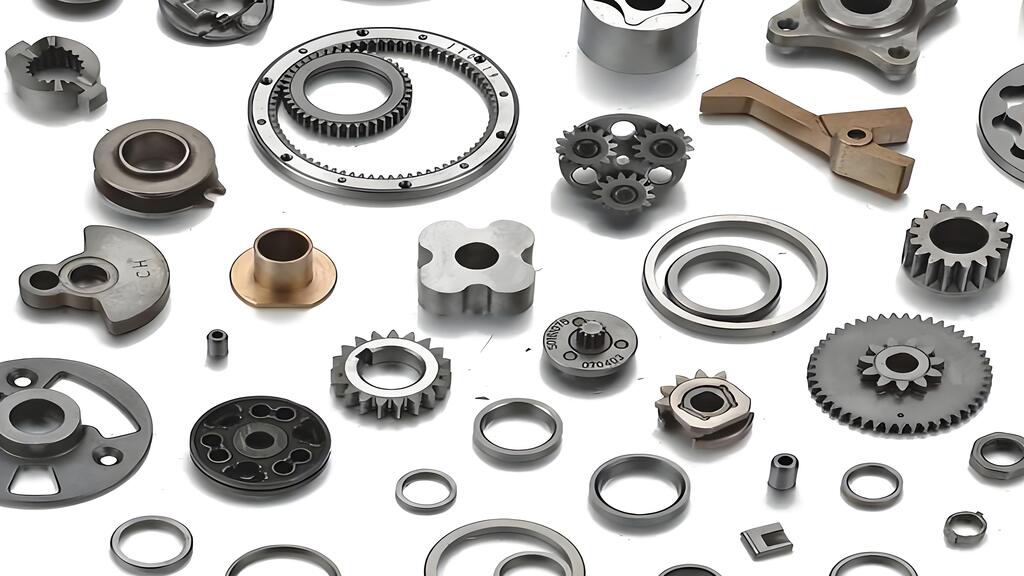


Magnesium Die Casting: The Complete Guide
Magnesium Die Casting profoundly transforms modern manufacturing. This advanced process delivers high-performance components across various industries. Manufacturers consistently choose Magnesium Die Casting for its exceptional properties. It offers unparalleled benefits for diverse projects, meeting the most demanding specifications and driving innovation.
Key Takeaways
- Magnesium die casting makes strong, light parts by injecting melted magnesium into a mold.
- Magnesium is very light, making it great for cars, phones, and planes to save weight.
- This method saves money in large production because it makes parts quickly and requires less extra work.
- Good design is key to magnesium parts being strong and made correctly.
- Different magnesium types are used for different needs, like strength or heat resistance.
- Magnesium parts are used in cars, electronics, planes, and medical tools.
- Handling melted magnesium needs strict safety rules because it can catch fire easily.
- Magnesium is good for the environment because it can be recycled completely.
Understanding Magnesium Die Casting
What is Magnesium Die Casting?
Magnesium die casting is a manufacturing process. It injects molten magnesium alloys into a die (mold) under high pressure. This process creates strong, stable, and lightweight components. Manufacturers value it for its ability to produce complex parts efficiently. Magnesium is the lightest structural metal. It is significantly lighter than aluminum (35%) and iron (75%). This process utilizes magnesium for parts requiring minimal weight. High-pressure injection forces molten magnesium into the die. This ensures it fills every cavity and detail. The metal then cools and solidifies within the die, taking its final shape. Controlled cooling is crucial for mechanical properties and quality.
High-Pressure Die Casting Fundamentals
High-Pressure Die Casting involves injecting molten metal into a steel mold at high speed and pressure. This method ensures precise replication of intricate designs. The rapid injection and solidification create parts with excellent dimensional accuracy and a smooth surface finish. This process is ideal for mass production due to its efficiency and consistency.
Cold Chamber vs. Hot Chamber Magnesium Die Casting
Die casting processes typically use either cold chamber or hot chamber machines. In cold chamber die casting, workers manually ladle molten magnesium into a shot sleeve. A hydraulic plunger then forces the metal into the die. This method suits magnesium alloys because it minimizes contact between the molten metal and the injection system components, reducing corrosion.
Hot chamber die casting uses a gooseneck mechanism submerged in the molten metal. The machine injects the metal directly into the die. This process offers faster cycle times. However, it is less common for magnesium due to its reactivity with iron at high temperatures. This reactivity can cause corrosion of the machine components.
Why Choose Magnesium for Die Casting?
Manufacturers choose magnesium for die casting due to its exceptional properties. It offers significant advantages over other materials.
Lightweight Advantage of Magnesium
Magnesium is the lightest of all structural materials. It is 33% lighter than aluminum and 75% lighter than steel. This characteristic makes it ideal for applications where weight reduction is critical. Components made from magnesium contribute to fuel efficiency in vehicles and enhance portability in electronic devices.
Superior Strength-to-Weight Ratio
Magnesium boasts an excellent strength-to-weight ratio. This allows for the creation of strong parts without adding excessive mass. It provides comparable or improved mechanical properties to aluminum while being significantly lighter. This makes it a preferred choice for high-performance applications.
Excellent Thermal and Electrical Conductivity
Magnesium exhibits excellent thermal and electrical conductivity. This property helps dissipate heat effectively from electronic components. It also ensures efficient electrical pathways. This makes magnesium suitable for casings and housings in various electronic devices.
Effective EMI/RFI Shielding Capabilities
Magnesium provides effective EMI (Electromagnetic Interference) and RFI (Radio Frequency Interference) shielding. This capability protects sensitive electronic components from external interference. It is crucial for devices requiring signal integrity, such as laptops and communication equipment.
Sustainability and Recyclability of Magnesium
Magnesium is a naturally abundant material. It is also 100% recyclable without significant property loss. This makes it an environmentally friendly choice for manufacturing. Its sustainability profile aligns with modern industry demands for eco-conscious production.
Advantages of Magnesium Die Casting
Magnesium Die Casting offers numerous advantages. These benefits contribute to its widespread adoption across various industries.
Cost-Effectiveness in Mass Production
Magnesium die casting is highly cost-effective for mass production. It features faster casting cycles compared to aluminum. This leads to increased output and lower per-unit costs. The process also extends die life and prolongs the life of machining tools.
Net-Shape Manufacturing Capabilities
This process excels in net-shape manufacturing. It produces complex parts with superior dimensional accuracy. The high-pressure injection ensures precise replication of the mold's design. This minimizes the need for extensive post-production machining.
Achieving Excellent Surface Finish
Magnesium die castings typically achieve an excellent surface finish. The smooth surface often requires minimal additional processing. This reduces manufacturing steps and improves the aesthetic appeal of the final product.
Attaining Tight Tolerances
Magnesium die casting allows for the attainment of tight tolerances. This ensures high-dimensional accuracy and stability. Parts maintain their precise dimensions even under varying temperatures. This precision is crucial for components requiring exact fits and functions.
Reducing Post-Casting Machining Needs
The net-shape capabilities and excellent surface finish of magnesium die castings significantly reduce post-casting machining needs. This saves time and cost in the manufacturing process. It also contributes to overall production efficiency.
The Magnesium Die Casting Process Explained
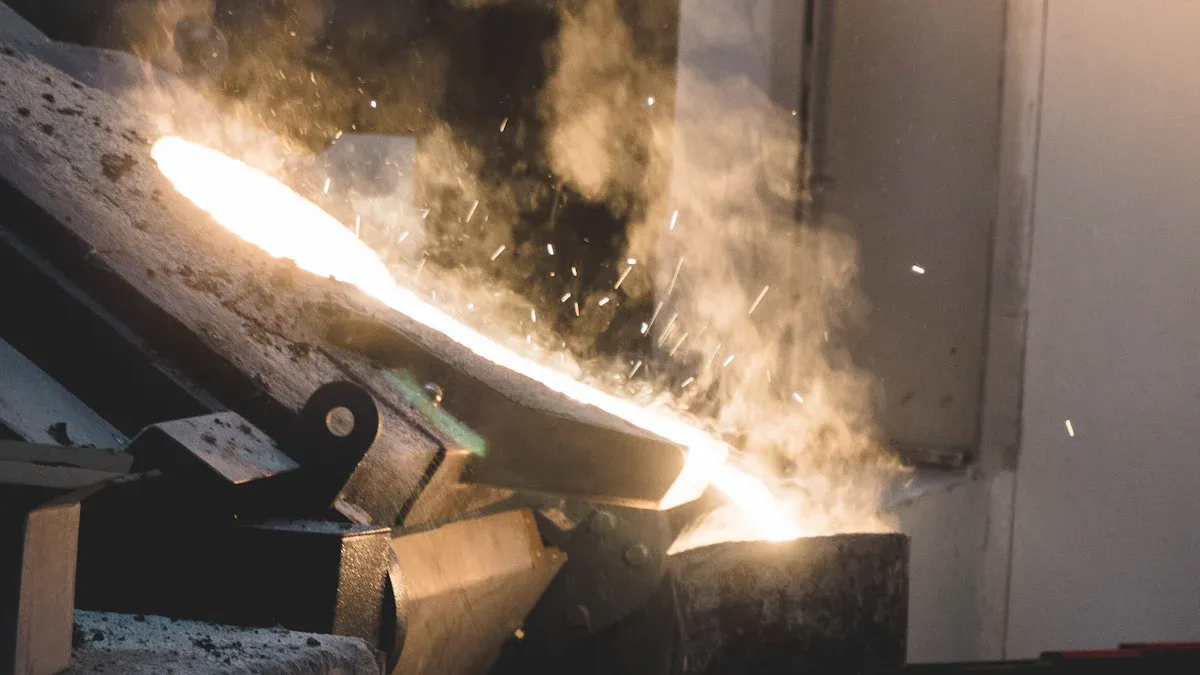
The Magnesium die-casting process involves several distinct stages. Each stage requires precision and careful control to produce high-quality components. Manufacturers meticulously manage these steps from initial preparation to final finishing.
Pre-Casting Preparations
Successful die casting begins long before metal enters the mold. Thorough preparation ensures optimal results and extends equipment life.
Magnesium Alloy Selection and Preparation
Manufacturers first select the appropriate magnesium alloy. This choice depends on the part's intended application, required strength, and corrosion resistance. High-quality metal ingots are then loaded into a melting furnace. Workers heat the alloy to a precise temperature, well above its melting point. This ensures complete melting and proper fluidity for injection. Accurate temperature control is vital; overheating degrades alloy properties, while underheating leads to sluggish flow and incomplete die filling.
Die Design and Manufacturing for Magnesium Die Casting
Die preparation is crucial. The die halves, made from heat-resistant steel, require meticulous cleaning. This removes any residue or contaminants from previous cycles, ensuring a defect-free part. Methods include manual cleaning, ultrasonic cleaning, or laser cleaning. Next, a lubricant or release agent is carefully applied to the mold cavity surfaces. This facilitates part ejection, controls die temperature, and improves molten metal flow. After lubrication, the die halves close and securely clamp together, ready for metal injection.
The Core Casting Cycle
The core casting cycle represents the heart of the Magnesium Die Casting process. It involves a series of rapid, automated steps.
Melting and Holding Magnesium Alloys
The process begins with melting the raw magnesium alloy to a specific molten state. Holding furnaces maintain this molten metal at a precise temperature, ensuring it remains ready for injection.
Injection Phase in Magnesium Die Casting
Once the die is closed, the machine forces molten metal into the die cavity under high pressure. This typically occurs in two stages: a slow shot followed by a high-speed plunger. This high-pressure injection ensures the metal fills every intricate detail of the mold.
Solidification and Cooling of Magnesium Parts
The molten metal then cools and solidifies within the die. Controlled cooling is crucial. It prevents internal defects and ensures the part achieves its desired mechanical properties.
Ejection and Trimming of Castings
After solidification, the die opens. Ejector pins push the casting out of the mold. Workers then remove excess material, including runners, gates, and flash, from the casting. This trimming completes the basic part shape.
Post-Casting Operations for Magnesium Components
After the core casting cycle, several operations refine the magnesium components to meet final specifications.
Deburring and Finishing Techniques
Workers perform deburring to remove any sharp edges or burrs left from the casting process. Finishing techniques smooth out ejector marks and polish edge surfaces.
Machining and Assembly of Magnesium Parts
Some magnesium castings require further machining to achieve tighter tolerances or specific features. Manufacturers then assemble these parts into larger components or final products.
Surface Treatments and Coatings for Magnesium
Surface treatments enhance the durability and performance of magnesium parts. These treatments include:
- Heat treatment: Refines microstructure, boosting tensile strength and increasing ductility.
- Surface treatments: Improve surface finish and increase corrosion resistance. Examples include shot peening and anodizing.
Quality inspection is also critical. Manufacturers check for defects and ensure all components meet specified dimensions, often requiring 100% inspection.
Designing for Successful Magnesium Die Casting
Effective design is paramount for successful magnesium die casting. Thoughtful consideration of part geometry, material flow, and structural integrity ensures high-quality, cost-effective components. Designers must account for the unique properties of magnesium and the specifics of the die casting process.
Wall Thickness Considerations for Magnesium Die Casting
Wall thickness significantly impacts the quality and integrity of a die-cast part. Designers must carefully specify these dimensions.
Minimum and Uniform Wall Thickness Guidelines
Uniform wall thickness is fundamental for effective die casting design. It directly influences the final part's quality and integrity. Non-uniform sections create 'hot spots' that cool slowly. This leads to shrinkage porosity. Consistent thickness ensures even cooling, minimizing defects and producing denser, stronger parts. It also facilitates smooth and consistent molten magnesium flow. This ensures complete die fill, prevents short shots, and distributes pressure uniformly during injection. Magnesium alloys allow for thin-wall casting. Thicknesses typically range from 0.89 to 1.14 mm, depending on the part's surface area.
The following table provides general guidelines for minimum and normal wall thicknesses based on the part's area:
| Area at wall thickness (cm²) | Minimum Wall Thickness (mm) | Normal Wall Thickness (mm) |
|---|---|---|
| ≤25 | 0.8 | 2.0 |
| >25~100 | 1.2 | 2.5 |
| >100~500 | 1.8 | 3.0 |
| >500 | 2.5 | 4.0 |
Designers can also visualize these guidelines:
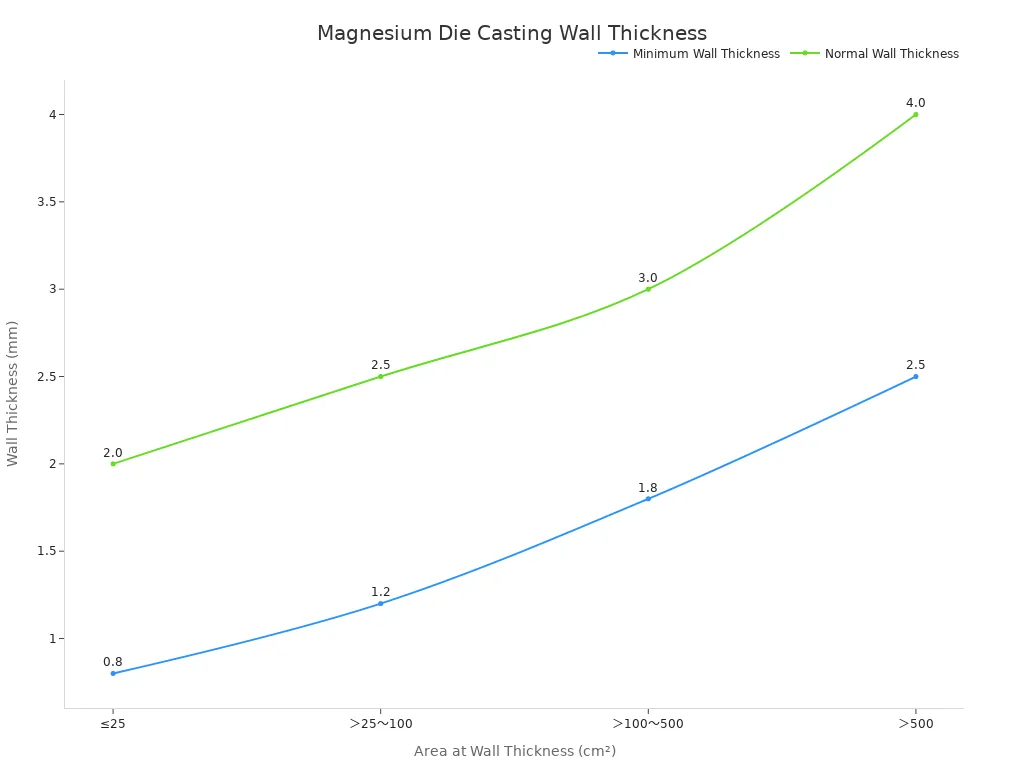
For bosses, the surrounding wall thickness is critical for strength. It should be at least 50% of the boss's nominal diameter. This helps withstand stresses from fastener installation or loading, preventing cracking. Proper rib design is also essential. Recommended rib thickness is between 50% and 80% of the nominal wall thickness. This prevents hot spots and shrinkage. Overly thick ribs can cause localized, slower cooling and porosity. Rib height should generally not exceed three times its thickness. Tapering ribs (e.g., 0.5 to 1 degree per side) also aids in part ejection and improves material flow.
Managing Transitioning Wall Sections
When varying wall thicknesses are necessary, gradual transitions are crucial. Abrupt changes create stress points and disrupt material flow. This leads to defects. Smooth, tapered transitions promote uniform cooling and reduce defect risks.
Draft Angles and Undercuts in Magnesium Die Casting
Proper draft angles and careful management of undercuts are essential for efficient production.
Essential Draft for Part Ejection
Draft angles are tapers applied to the vertical walls of a casting. They allow the solidified part to be easily ejected from the die without damage. Without a sufficient draft, the part can stuck in the mold, causing delays or requiring costly rework. Designers typically specify a minimum draft angle, which varies based on wall height and surface finish requirements.
Strategies for Minimizing Undercuts
Undercuts are features that prevent a part from being directly pulled out of the mold. They require additional, often complex, die components like slides or core pulls. These additions increase tooling costs and cycle times. Designers strive to minimize undercuts through clever part design. They can sometimes redesign features to eliminate the need for complex tooling.
Radii and Fillets in Magnesium Die Casting Design
Radii and fillets are critical design elements that enhance both the structural integrity and manufacturability of die-cast parts.
Reducing Stress Concentration
Fillet radii smooth sharp corners in part designs. They are important for reducing stress concentrations at sharp corners. This helps distribute stress more evenly throughout the part. A minimum fillet radius of 0.4 mm is recommended, with an upper limit of 0.8 mm. Larger fillet radii can reduce stress but may increase material usage and machining costs. Smaller fillet radii might not provide adequate stress relief. Incorporating features like fillets and radii at critical areas can decrease the need for extensive material removal during machining operations. This optimizes the casting design before machining takes place.
Improving Metal Flow Characteristics
Radii and fillets also improve the flow of molten metal within the die cavity. Smooth transitions allow the metal to fill the mold more uniformly. This reduces turbulence and prevents defects like cold shuts or incomplete fills. Well-designed radii and fillets contribute to a more robust and aesthetically pleasing final product.
Ribs and Gussets for Magnesium Die Casting
Designers frequently integrate ribs and gussets into magnesium die-cast parts. These features enhance structural integrity and improve manufacturability. They optimize part performance.
Enhancing Structural Integrity
Ribs and gussets significantly boost a part's stiffness and strength. They achieve this without substantially increasing its overall mass. They act as structural reinforcements. These reinforcements distribute loads and prevent deflection. This is particularly advantageous for lightweight magnesium components. It enables them to endure greater forces while retaining their low-weight benefits. For example, a strategically placed rib can prevent a flat surface from bending under pressure. During the casting process, ribs are crucial for guiding the molten magnesium flow within the die cavity. They ensure complete filling and minimize defects. Gussets, which are triangular or rounded reinforcements, connect ribs to walls or two intersecting walls. They provide additional support at stress points like corners or junctions. Their strategic placement enhances the structural integrity of the part. This is especially true in areas prone to high stress or impact. Gussets distribute stress over a larger area and prevent localized failure.
Preventing Warpage in Castings
Ribs also promote uniform cooling. This helps prevent distortion and warpage as the part solidifies. It leads to more dimensionally stable components. Proper rib design is critical. Recommended rib thickness typically falls between 50% and 80% of the nominal wall thickness. This avoids hot spots and shrinkage. Rib height should generally not exceed three times its thickness. A slight taper (0.5 to 1 degree per side) assists in part ejection and improves material flow.
Parting Line Placement in Magnesium Die Casting
The parting line is where the two halves of the die meet. Its placement is a critical design decision.
Impact on Die Design and Functionality
Designers must determine the parting line early in the design process. Collaboration between the part designer and die-cast engineer is essential. They consider part functionality and the die casting process. Strategic placement prevents the casting from sticking in the cover half. Most geometry often resides in the ejector half. The parting line's position impacts trimming. A well-designed parting line eases the removal of gates, overflows, vents, and flash. For critical dimensions, measurements should ideally remain within one die half. This reduces variations caused by flash at the parting line. Proper positioning also improves die life and casting quality. It allows smoother metal flow. Direct metal impingement erodes surfaces faster. Cosmetic surfaces are typically placed on the cover side of the casting.
Effective Flash Control Strategies
Flash is excess material that escapes along the parting line. Effective flash control is vital for part quality and cost. Strategic parting line placement minimizes flash formation. It also simplifies its removal. Designers can place the parting line in less visible or non-critical areas. This reduces the need for extensive post-processing. Proper die clamping force and precise die alignment also contribute to flash control.
Coring and Inserts in Magnesium Die Casting
Coring and inserts offer significant advantages in die casting. They optimize material use and enhance part functionality.
Reducing Material Usage and Weight
Coring involves creating hollow sections or internal features within a casting. This reduces the amount of material required. It significantly lowers the part's overall weight. For example, a housing with cored-out sections maintains its structural integrity while becoming much lighter. This is particularly beneficial for applications where weight reduction is a primary goal, such as in automotive or portable electronics. Coring also helps to reduce cooling time. This can improve cycle efficiency.
Incorporating Different Materials
Inserts allow the integration of different materials into the magnesium casting. Manufacturers can place pre-formed components, such as steel bushings, threaded fasteners, or electrical contacts, into the die cavity before injection. The molten magnesium then flows around these inserts, permanently bonding them within the cast part. This technique combines the lightweight properties of magnesium with the specific characteristics of other materials. It enhances wear resistance, electrical conductivity, or fastening strength in localized areas. This eliminates the need for secondary assembly operations.
Tolerances and Precision in Magnesium Die Casting
Achieving precise dimensions and maintaining tight tolerances are critical aspects of successful die casting. Designers and manufacturers must understand the capabilities and limitations of magnesium in this regard.
Achieving Desired Dimensional Accuracy
Achieving desired dimensional accuracy is a primary objective in die casting. Magnesium is valued for its lightweight properties, but it presents specific challenges regarding tolerances. Magnesium tends to warp during cooling due primarily to its high reactivity. This reactivity requires careful process control to minimize distortion. Achieving strict tolerances often necessitates secondary machining operations. While magnesium offers significant weight savings, this often involves compromises in tolerance precision compared to other alloys. Magnesium die casting tolerances generally position themselves between those of aluminum and zinc. Magnesium offers good stability, but designs with thin walls may necessitate slightly looser tolerance limits.
Factors Affecting Achievable Tolerances
Several factors influence the achievable tolerances in magnesium die casting. Manufacturers must consider each element to ensure the production of high-quality, dimensionally accurate parts.
-
Part Size and Complexity:
- Small Parts: These parts are easier to control regarding shrinkage and warping. This allows for tighter tolerances, potentially reaching micron-level precision.
- Large Parts: Large parts are more susceptible to thermal distortion during cooling. They often require looser tolerances due to uneven shrinkage.
- Complex designs, including thin walls, deep cavities, and multiple features, are harder to maintain within strict tolerances.
-
Tooling Design and Quality:
- The precision of die machining directly impacts dimensional accuracy. A well-machined die produces more accurate parts.
- Die wear over time can gradually loosen tolerances. Regular maintenance and replacement of worn tooling are essential.
- Parting line location affects flash, alignment, and surface finish. Strategic placement helps maintain tighter tolerances.
-
Material Properties:
- Magnesium alloys are lightweight but more prone to warping compared to aluminum, which offers good tolerance control, or zinc, which provides excellent precision.
- The thermal expansion, shrinkage rate, and fluidity of the material dictate tolerance control. Understanding these properties is crucial for predicting part behavior.
-
Casting Process Parameters:
- Injection speed and pressure significantly influence cavity fill. Optimal parameters ensure complete filling and reduce defects.
- The cooling rate is critical; uneven cooling causes warping and dimensional shifts. Controlled cooling minimizes these issues.
- Lubrication and release agents affect surface finish and dimensional stability. Proper application ensures consistent results.
- Careful process control and monitoring are crucial for consistent tolerances throughout production runs.
-
Post-Casting Operations:
- Machining can enhance dimensional precision, bringing parts to extremely tight specifications.
- Finishing processes, such as grinding or polishing, may alter tolerances. Manufacturers must account for these changes.
- Improper handling or heat treatment can cause distortion, negating the precision achieved during casting.
-
Environmental and Human Factors:
- Temperature and humidity in the manufacturing environment can affect metal cooling behavior.
- Operator skill is important for machine setup and monitoring. Experienced operators can identify and correct issues quickly.
- Maintenance schedules ensure the accuracy of machinery and tooling. Regular calibration and upkeep prevent deviations.
Magnesium Alloys for Die Casting Applications
Manufacturers select specific magnesium alloys for die casting based on the desired properties and application requirements. These alloys offer a range of characteristics, from high strength and ductility to enhanced creep resistance.
Common Magnesium Die Casting Alloys
Several magnesium alloys are widely used in die casting. Each alloy possesses unique properties suitable for different applications.
AZ91D: General Purpose Magnesium Alloy
AZ91D stands as a premier choice among magnesium alloys. Its balanced composition, including aluminum (8.3–9.7%), zinc (0.35–1.0%), and manganese (0.15–0.5%), contributes to its strength and castability. This alloy exhibits commendable mechanical strength, with a tensile strength of 220 MPa and a yield strength of 130 MPa at room temperature. It also offers a balance of ductility (3% elongation at break) and hardness (63 Brinell). While inherently reactive, AZ91D shows improved corrosion resistance compared to pure magnesium. Surface treatments like Keronite coating are crucial for harsh environments. Industries use AZ91D extensively in automotive components like car wheels, gearboxes, and seat frames. It also appears in electronics for laptop casings and mobile phone frames, as well as power tool casings, due to its strength, lightweight properties, and castability.
AM60B: High Ductility and Impact Resistance
AM60B is a prominent alloy known for its high ductility and impact resistance. This makes it particularly important for applications requiring passenger safety. It contains carefully controlled amounts of aluminum and manganese. Manufacturers specifically choose AM60B for automotive components such as steering wheels, seat frames, and instrument panel structures. Its ability to deform and absorb energy during a collision is crucial in these applications. Its lightweight nature also contributes to vehicle weight reduction, improving fuel efficiency and reducing emissions. Beyond automotive uses, AM60B finds application in sports equipment like bicycle frames and racing components due to its high strength-to-weight ratio and durability.
AS41B: Enhanced Creep Resistance
AS41B magnesium alloy is particularly suitable for applications requiring performance at elevated temperatures. It offers enhanced creep resistance and maintains mechanical integrity under thermal stress. Its precise aluminum and silicon content are crucial for its high-temperature capabilities, with silicon primarily enhancing creep resistance. While it may sacrifice some room-temperature strength, AS41B demonstrates superior creep resistance compared to AZ91D and AM60B. This makes it ideal for applications above 120-150°C, such as engine components or parts near exhaust systems. Alloying elements like silicon form stable intermetallic phases that prevent softening and deformation at high temperatures.
AE42: High-Temperature Performance Magnesium Alloy
AE42 is another specialized magnesium alloy designed for high-temperature performance. It offers improved creep resistance and maintains structural integrity in demanding thermal environments. This alloy is often considered for applications where components experience sustained elevated temperatures, similar to AS41B.
Criteria for Magnesium Alloy Selection
Selecting the correct magnesium alloy is crucial for a successful die-cast part. Engineers consider several key criteria during this process.
Evaluating Mechanical Properties
Evaluating mechanical properties is a primary consideration. This includes density, tensile strength (ranging from ~150–260 MPa for high-Mg cast alloys), yield strength (roughly 0.5–0.8 × UTS), elongation (5–15% depending on alloy and processing), and fatigue and fracture toughness. These properties dictate how the component will perform under various stresses and loads.
Assessing Corrosion Resistance
Assessing corrosion resistance is also vital. High-Mg cast alloys exhibit excellent general corrosion resistance, particularly in marine and alkaline environments. They can outperform plain aluminum alloys in chloride-rich environments. However, surface protection may be necessary in severe cases. AZ91D offers very good corrosion resistance, while AM60B provides good resistance.
Considering Cost and Availability
Cost and availability play significant roles in alloy selection. While magnesium alloys offer performance benefits, their material cost and processing requirements influence the overall project budget. Manufacturers must balance performance needs with economic viability.
Applications of Magnesium Die Casting
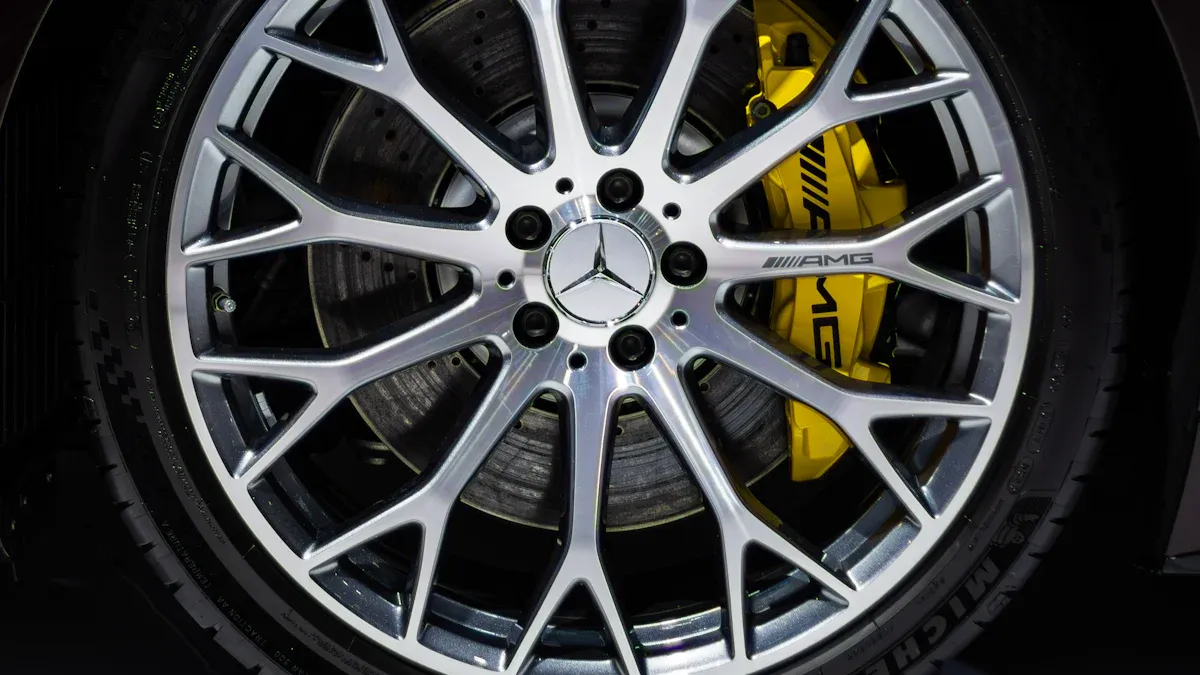
Magnesium die-cast components find widespread use across numerous industries. Their unique combination of lightweight properties, strength, and design flexibility makes them indispensable for modern manufacturing.
Automotive Industry Applications
The automotive sector heavily relies on magnesium die-cast parts. Manufacturers seek to reduce vehicle weight for improved performance and efficiency.
Lightweighting for Fuel Efficiency
Automakers prioritize lightweighting to enhance fuel efficiency and reduce emissions. Magnesium components significantly contribute to this goal. They allow vehicles to achieve better mileage and handling characteristics.
Structural Components in Vehicles
Magnesium die casting produces critical structural components. These include steering wheel frames, which offer stiffness, energy absorption for passenger protection, and vibration damping. Some vehicles, like the 2019 Acura RDX, use one-piece magnesium die castings for cross-car beams. This meets crash and structural needs while reducing weight and eliminating tolerance stack-up issues. Subframes, suspension components, cross members, and body panels also utilize magnesium alloys. This increases rigidity and enhances crash safety.
Interior and Exterior Automotive Parts
Magnesium also forms various interior and exterior parts. These include dashboard or console structures, often produced using high-pressure die casting. Seat frames offer a lighter-weight alternative to steel. Other interior components include steering column support brackets and instrument panel supports. Engine blocks, cylinder heads, transmission cases, and oil pans are made from magnesium alloys. These parts enhance performance and reduce weight, improving fuel efficiency and vehicle dynamics.
Electronics and Consumer Goods
The electronics and consumer goods sectors benefit greatly from magnesium die-cast components. They provide superior thermal management and impact resistance.
Casings for Laptops and Phones
The consumer electronics sector extensively uses magnesium die casting for device casings. Examples include outer shells and internal frames for laptops, such as the Surface Pro, HP ENVY, and Lenovo ThinkPad. Mid-frames or chassis for smartphones and other mobile devices also use magnesium. Wearables like smartwatches incorporate magnesium for their cases and internal structures.
Camera Bodies and Housings
Magnesium die-cast components function as robust yet light bodies for professional cameras and high-end drones. They provide structural integrity and heat management. Gaming consoles and accessories also use these components for structural integrity and heat dissipation. Automotive infotainment systems benefit from magnesium for robust protection and efficient heat dissipation.
Power Tool Components
Magnesium alloy die casting produces lightweight and durable components for various consumer items. This includes power tools, sporting equipment, and furniture.
Aerospace and Defense Applications
The aerospace and defense industries demand materials with exceptional strength-to-weight ratios. Magnesium die casting meets these stringent requirements.
Weight Reduction in Aircraft
Weight reduction is paramount in aircraft design. Lighter aircraft consume less fuel and can carry more payload. Magnesium components contribute significantly to achieving these weight savings.
Missile Components and Systems
Magnesium die-cast parts are vital for missile components and systems. They include satellite bus structures and payload adapters. Instrument housings and optical benches also utilize magnesium. Deployment mechanisms and robotic components benefit from its lightweight properties. Gearbox housings, transmission casings, brackets, mounts, and support structures are also common applications. Next-generation aircraft designs, including electric and hybrid-electric propulsion systems, use magnesium for motor housings, power electronics enclosures, and structural supports. Complex frames and internal components for Urban Air Mobility (UAM) vehicles also incorporate magnesium.
Medical Device Manufacturing
The medical device industry is increasingly adopting magnesium die-cast components. This material offers unique advantages for critical healthcare applications. Manufacturers value magnesium for its ability to create lighter, more functional, and reliable medical equipment.
Surgical Instruments and Tools
Magnesium die casting enables the creation of lighter, more portable medical devices. This reduces patient burden and enhances usability. The process allows for thinner walls and reduced overall dimensions without compromising structural integrity. This supports miniaturization in surgical tools. Precision die design ensures components meet tight dimensional tolerances. It also allows for the production of complex geometries in a single casting operation. This is crucial for intricate surgical instruments. High-Pressure Die Casting (HPDC) is preferred for these components. It offers an excellent strength-to-weight ratio, rapid solidification, and fine-grain structure. HPDC also produces thin-walled components, vital for miniaturized and portable devices.
Equipment Housings for Medical Devices
Magnesium enclosures act as a Faraday cage. They protect sensitive internal electronics from electromagnetic interference (EMI) and radio-frequency interference (RFI). This is crucial for reliable performance in critical medical equipment like MRI and CT scanners. The process allows manufacturers to create intricate components with optimized internal structures. This reduces material waste and production time. Integrating with additive manufacturing can produce parts with internal lattices or porous structures. This enhances functionality for implants or fluid flow. Magnesium die casting is pivotal in creating smaller, more efficient, and user-friendly healthcare technologies. It enables compact diagnostic tools, monitoring equipment, and portable medical solutions. Various post-casting treatments, including surface finishing and specialized coatings, enhance performance. These treatments improve biocompatibility and ensure corrosion resistance. Finishes are selected to withstand rigorous sterilization methods like autoclaving and gamma irradiation.
Challenges and Solutions in Magnesium Die Casting
Manufacturers encounter specific challenges when working with magnesium die castings. However, effective solutions exist for these issues. Addressing these challenges ensures the successful production of high-quality components.
Managing Corrosion in Magnesium Die Casting
Magnesium's inherent properties present some challenges regarding corrosion. Manufacturers have developed various strategies to mitigate these concerns.
Effective Surface Treatment Options
A significant challenge in managing corrosion in magnesium die castings stems from the magnesium alloy's inherent tendency to oxidize readily when exposed to air. This necessitates subsequent surface treatments after the casting process. These treatments enhance both corrosion resistance and the overall surface quality of the parts. Advanced treatments further enhance this resistance. They extend the longevity of magnesium alloys. This makes them suitable for outdoor or industrial settings exposed to harsh conditions.
Several effective surface treatment options exist. Chromate conversion coatings serve as an undercoat for paint adhesion. They also function as stand-alone films for corrosion protection in storage and mildly corrosive environments. Anodizing treatments provide a hard, corrosion-resistant coating. Examples include Chemical Treatment No. 17, HAE, and Cr-22. Electroplating offers a protective coating method for bare magnesium in corrosive environments.
Other advanced techniques include chemical conversion films. These are classified by solution type, such as dichromate, permanganate, and rare earth element systems. These films create a self-protective passive layer. Anodic oxidation provides base coatings with superior wear and corrosion resistance. It also offers good bonding, electrical insulation, and thermal shock resistance. Metal coating, through electroplating and chemical plating, involves an initial chemical conversion film. This is followed by copper plating and then other plating treatments. Laser surface treatments, including laser surface thermal treatment and laser surface alloying, can also enhance corrosion resistance.
Alloy Selection for Corrosion Resistance
Selecting the correct magnesium alloy is crucial for managing corrosion. Some alloys inherently offer better corrosion resistance than others. Engineers consider the intended environment and application when choosing an alloy. This proactive approach minimizes the need for extensive post-casting treatments.
Machinability and Finishing of Magnesium Castings
Magnesium castings require specific considerations during machining and finishing. Its unique properties influence tooling choices and post-processing techniques.
Tooling Considerations for Magnesium
Magnesium's excellent machinability allows for high cutting speeds and long tool life. However, specific tooling considerations are important. Tools must have sharp edges and large rake angles to prevent chip adhesion. Proper chip evacuation is also critical due to magnesium's flammability in fine powder form. Manufacturers often use carbide tools for optimal performance.
Post-Processing Techniques for Magnesium
Post-processing techniques for magnesium castings include deburring, polishing, and grinding. These operations refine the part's surface and remove any residual flash. Specialized techniques, such as vibratory finishing, can achieve specific surface textures. Manufacturers carefully control these processes to maintain dimensional accuracy and surface integrity.
Cost Implications of Magnesium Die Casting
Understanding the cost implications of magnesium die casting involves evaluating both upfront investments and long-term benefits.
Understanding Tooling Investment
Tooling represents a substantial upfront cost. Dies are precision-engineered from high-strength steel. They withstand extreme temperatures and pressures. The complexity of the part's geometry directly influences initial die manufacturing costs. Die longevity and maintenance are significant long-term cost factors. Proper cooling, lubrication, and heating cycles minimize thermal stress. This extends die life. Regular maintenance, including inspections, cleaning, and prompt repairs, is vital. This is due to the high-pressure and high-temperature operating conditions (150MPa-500MPa, 300℃-1000℃). Initial die-casting machine costs for magnesium can range from $30,000 to over $1,000,000.
Material Costs vs. Performance Benefits
| Metal | Cost per Kilogram (USD) |
|---|---|
| Aluminum | $2.50 |
| Magnesium | $2.00 |
While raw magnesium can be cheaper per kilogram ($2.00) than aluminum ($2.50), its complex extraction and refinement often make finished magnesium components more expensive overall. They can be potentially twice as much as aluminum per kilogram when all factors are considered. However, magnesium's lower density means less material by weight is needed for the same volume. This can lead to lower total material costs for a given number of components. Processing magnesium alloys consumes only 70% of the energy required for aluminum alloys. This contributes to reduced overall production costs.
Environmental and Safety Concerns
Magnesium die casting operations present significant environmental and safety concerns. A primary safety concern is the flammability of magnesium, especially high-strength alloys. This increases the risk of fires and explosions during melting and die-casting. The production process also generates waste materials like slag and scrap metal. Disposing of these materials in an eco-friendly manner presents a challenge. Efforts to recycle or reuse them minimize environmental impact.
Safe Handling of Molten Magnesium
Handling molten magnesium requires strict safety protocols. Molten magnesium burns slowly with a flash of light when exposed to oxygen. It forms white magnesium oxide (MgO). It also reacts with nitrogen to form brown magnesium nitride (Mg3N2). This nitride then reacts violently with water, generating high heat. Contact between a moderate amount of water and burning magnesium causes water decomposition. This generates hydrogen and oxygen, leading to explosions and accelerated combustion. Chips and fines containing water are easily ignited and burn violently. Molten magnesium reacts violently with heated iron oxide in a thermite reaction. This can generate dangerous temperatures exceeding 2,200°C.
Workers must wear appropriate personal protective equipment (PPE). This includes fire-retardant clothing, safety hats and shields, goggles, spats, safety boots, and insulated gauntlet gloves. Preventing the ignition of molten magnesium is crucial. Facilities use protective gases like sulfur dioxide mixed with nitrogen, argon, or air and carbon dioxide. These gases form a protective film. Never allow water to come into contact with molten magnesium. Water can expand up to 1000 times its original volume, causing explosions. Avoid installing automatic sprinklers over melting operations or storage areas for finely divided magnesium. Keep the melting pots clean and free of scale. This prevents exothermic reactions between molten magnesium and iron oxide. Proper ventilation is essential to safely dissipate toxic fumes. These fumes include zinc oxide. They also reduce airborne particulates. Fire suppression systems, such as automatic sprinklers or CO₂ extinguishers, are crucial for managing highly combustible magnesium fires. Dust collection systems remove flammable aluminum or magnesium dust from the workspace. This prevents combustion risks.
Sustainable Recycling Practices
The die casting process generates waste materials like slag and scrap metal. These materials require careful management. The challenge lies in disposing of them in an eco-friendly manner. Magnesium is 100% recyclable without significant property loss. This makes it an environmentally friendly choice for manufacturing. Sustainable recycling practices are essential. They minimize environmental impact. Recycling magnesium reduces the need for virgin material extraction. It also conserves energy. This aligns with modern industry demands for eco-conscious production.
Magnesium Die Casting has become a cornerstone for lightweight, high-performance manufacturing. Its success hinges on precise design and meticulous process control. These factors ensure the production of optimal, high-quality components. The technology holds a promising future. Continuous innovation will drive further advancements across diverse industries.
FAQ
What is magnesium die casting?
Magnesium die casting injects molten magnesium alloys into a steel mold under high pressure. This process creates strong, lightweight, and complex components. Manufacturers value its efficiency for mass production.
Why do manufacturers prefer magnesium for die casting?
Manufacturers prefer magnesium for its exceptional lightweight properties. It offers a superior strength-to-weight ratio, excellent thermal conductivity, and effective EMI/RFI shielding. Magnesium is also highly recyclable.
What are the key benefits of magnesium die casting?
Key benefits include cost-effectiveness in mass production and net-shape manufacturing capabilities. The process achieves excellent surface finishes and tight tolerances. It also significantly reduces post-casting machining needs.
Which industries commonly use magnesium die-cast parts?
Many industries use magnesium die-cast parts. These include automotive for lightweighting, electronics for casings, and aerospace for weight reduction. Medical device manufacturing also utilizes magnesium for instruments and equipment housings.
What are the primary magnesium alloys used in die casting?
Common magnesium alloys include AZ91D for general purposes, AM60B for high ductility, and AS41B for enhanced creep resistance. AE42 also offers high-temperature performance. Each alloy suits specific application needs.
What challenges does magnesium die casting present?
Challenges include managing corrosion and specific tooling needs for machining. Manufacturers also consider the initial tooling investment. Safety concerns regarding molten magnesium flammability require strict protocols.
Is magnesium die casting an environmentally friendly process?
Yes, magnesium die casting is environmentally friendly. Magnesium is abundant and 100% recyclable without property loss. This aligns with sustainable manufacturing practices. The process also consumes less energy than aluminum casting.