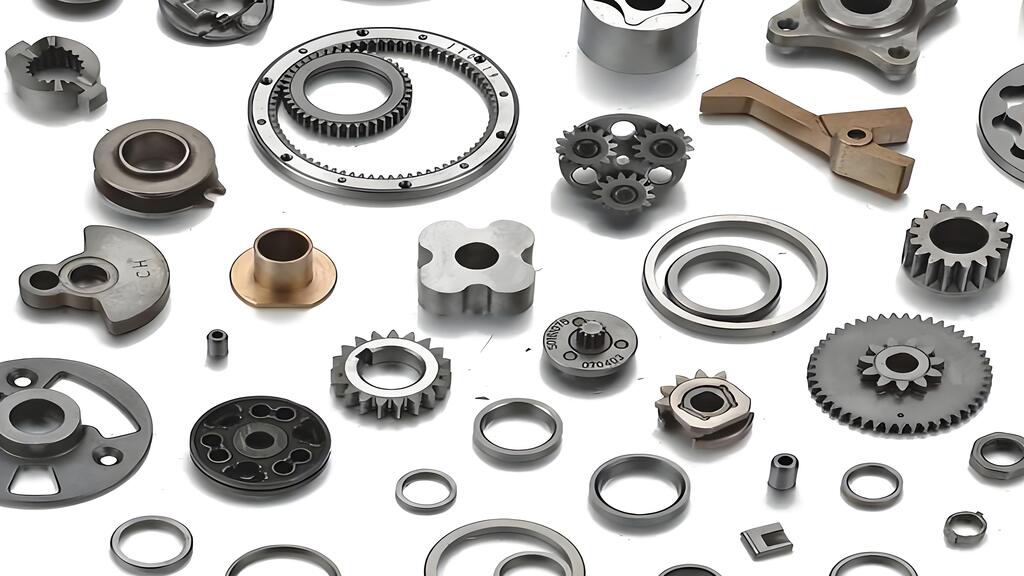


Sintered Bronze Components: Features and Applications

Sintered bronze components are porous Metal Parts created from bronze powder. They offer a unique combination of properties for diverse industrial uses. These specialized parts provide engineers and manufacturers with robust solutions. The global market for Sintered Bronze Components reached a valuation of 5517 million in 2024, highlighting their significant industrial impact. Their unique features, such as controlled porosity and self-lubrication, deliver substantial advantages across various applications.
Key Takeaways
- Sintered bronze parts come from bronze powder. Manufacturers heat the powder below its melting point. This creates a strong, porous structure.
- The powder metallurgy process makes sintered bronze. This process saves material and money. It also creates complex shapes easily.
- Sintered bronze has tiny holes. These holes hold oil. This makes the parts self-lubricating and reduces wear.
- Sintered bronze parts resist wear and rust well. They also handle different temperatures. This makes them last longer.
- Sintered bronze is useful in many places. It is in car parts, home appliances, and filters. It also works in small gears and valves.
- Choosing sintered bronze saves money. It uses less material. It also helps the environment because it is recyclable.
- Design parts carefully for sintered bronze. Consider the shape and size. This helps make good parts.
- Quality checks are important for sintered bronze. Manufacturers test for holes, strength, and size. This ensures good performance.
Understanding Sintered Bronze Components

What Are Sintered Bronze Components?
Definition of Sintered Bronze
Sintered bronze refers to metal parts formed from bronze powder through a process called powder metallurgy. Manufacturers compact fine bronze particles into a desired shape and then heat them below their melting point. This heating process fuses the particles, creating a solid, porous structure. This unique manufacturing method allows for precise control over the material's properties, particularly its porosity.
Core Composition of Bronze Alloys
Bronze alloys primarily consist of copper, typically as the main component, alloyed with tin. Other elements, such as zinc, manganese, or aluminum, can also be present in smaller amounts. These additional elements modify the alloy's properties, enhancing characteristics like strength, ductility, or corrosion resistance. The specific composition of the bronze powder directly influences the final properties of the sintered component.
The Powder Metallurgy Process for Sintered Bronze
Powder Preparation and Blending
The powder metallurgy process begins with carefully preparing and blending the bronze powders. Manufacturers select specific bronze alloy powders based on the desired final properties. They then blend these powders with lubricants and sometimes other additives to ensure proper compaction and material flow during subsequent steps.
Compaction into Green Parts
Next, the blended powder undergoes compaction. High-pressure presses compact the powder into a mold, forming a "green part." This green part has the approximate shape and dimensions of the final component but lacks full strength. The compaction process creates sufficient density for handling and prepares the part for sintering.
The Sintering Stage
Sintering is the critical step in the powder metallurgy process. The green parts enter a controlled atmosphere furnace and undergo a precise heating cycle.
- Lubricant Burnout: The furnace slowly raises temperatures in the early stages. This removes lubricants used during pressing, as they interfere with particle bonding.
- Alloy Activation: In the preheat zone, alloying elements like carbon begin to diffuse into the metal particles. This prepares the material for achieving desired properties.
- High-Temperatures (Sintering): Parts then enter the hot zone. Real sintering occurs here at elevated temperatures, for example, around 1500°F for copper-based parts like bronze. Solid-state diffusion causes metal atoms to bond, creating a dense microstructure.
- Controlled Cooling: Parts pass through cooling zones. Manufacturers carefully manage cooling rates to lock in material properties, minimize distortion, and ensure dimensional accuracy and the desired microstructure.
Post-Sintering Treatments
After sintering, some components may undergo post-sintering treatments. These treatments can include sizing, coining, or machining to achieve tighter tolerances or specific surface finishes. Manufacturers might also impregnate the porous structure with oil or other fluids, especially for self-lubricating applications.
Advantages of Powder Metallurgy for Sintered Bronze
Material Efficiency and Cost Savings
Powder metallurgy offers significant advantages in material efficiency and cost savings for producing Sintered Bronze Components. The process generates minimal material waste. It also reduces the need for secondary processes like extensive machining or finishing. This method achieves high production rates with consistent quality. High material utilization, converting up to 95% of raw material into the final product, contributes to cost-effectiveness. The process minimizes the need for additional processing due to high-dimensional precision, saving both time and cost. It also consumes less energy compared to traditional manufacturing methods.
Production of Complex Geometries
Powder metallurgy excels at producing complex geometries. Sintering enables the creation of intricate designs and patterns. These designs are often difficult to achieve with other manufacturing methods. The process produces nearly net-shaped objects, significantly reducing the need for extensive post-processing. It also allows for the creation of materials with consistent and controlled porosity levels, a specific design requirement for many applications. Powder Metallurgy (PM) offers precision engineering capabilities, allowing for highly accurate components. It enables the creation of parts with tight tolerances and consistent dimensions, crucial for high-performance applications. PM can produce complex parts with minimal post-processing, with typical tolerances around ±0.05 mm depending on design complexity.
Key Features of Sintered Bronze Components

Porous Structure and Its Benefits
Controlled Porosity for Specific Functions
Sintered bronze components possess a unique porous structure. Manufacturers precisely control this porosity during production. This control allows for tailoring the material to specific functional requirements. Engineers can design parts with varying pore sizes and distributions. This capability enables diverse applications, from fluid management to sound dampening.
Self-Lubricating Properties
The inherent porosity of sintered bronze makes it ideal for self-lubricating applications. The material acts like a sponge, absorbing and retaining lubricants. Sintered metal bushings, including those made of bronze, typically exhibit a porosity range of 10% to 40% after the vacuum sintering process and high-pressure compaction technology. This porosity is crucial for achieving stable oil storage. It also ensures maintenance-free operation in self-lubricating applications. Sintered bronze bearings are commonly impregnated with 18% to 20% mineral oil. This indicates a porosity within this range facilitates oil retention for self-lubrication. The component releases this stored lubricant during operation, creating a continuous film between moving surfaces. This reduces friction and wear.
Filtration Capabilities
Sintered bronze also excels in filtration systems due to its controlled porous structure. The interconnected pores create a tortuous path for fluids. This effectively traps solid particles while allowing liquids or gases to pass through. Sintered bronze components offer high filtration accuracy. Achievable filtration ratings range from 5 to 50 micrometers (μm). This makes them suitable for demanding filtration tasks in various industries.
Mechanical Properties of Sintered Bronze
High Strength-to-Weight Ratio
Sintered bronze components offer a favorable strength-to-weight ratio. This makes them suitable for applications where both strength and reduced mass are important. The powder metallurgy process allows for optimizing the material's density. This contributes to its mechanical performance. For example, common sintered bronze alloys exhibit a tensile strength (ultimate) of 22,000 psi (152 MPa) and a yield strength of 22,000 psi (152 MPa). These values demonstrate the material's robust load-bearing capabilities.
Excellent Wear Resistance
Sintered bronze exhibits excellent wear resistance. Its unique structure, especially when oil-impregnated, provides continuous lubrication. This significantly reduces friction and abrasion. Sintered bronze excels in dirty environments and high-frequency/high-speed applications. Its oil-impregnated porous structure retains and releases lubricant during operation. It performs better with moderate to low loads. Cast bronze, with its finer grain structure, proves stronger and more durable. It is ideal for applications with heavier loads and under pressure. Bronze materials generally handle wear and tear effectively, even in the presence of significant friction.
Dimensional Stability
Sintered bronze components maintain their shape and size under various operating conditions. The sintering process creates a stable microstructure. This minimizes deformation or warping. This dimensional stability is critical for precision applications. It ensures consistent performance and reliable operation over time.
Chemical and Environmental Resistance of Sintered Bronze
Inherent Corrosion Resistance
Bronze alloys inherently resist corrosion. This property makes sintered bronze components suitable for harsh environments. They withstand exposure to moisture, chemicals, and other corrosive agents. This extends their lifespan and reduces the need for frequent replacement.
Temperature Tolerance
Sintered bronze components demonstrate good temperature tolerance. They perform reliably across a range of thermal conditions. Sintered bronze bearings are designed to operate effectively within a temperature range of 10 degrees Fahrenheit to 200 degrees Fahrenheit. For applications requiring temperatures beyond this upper limit, consulting with sales associates is recommended. This thermal stability ensures consistent mechanical properties and performance in diverse operational settings.
Design and Manufacturing Advantages of Sintered Bronze Components
Precision and Tight Tolerances
The powder metallurgy process offers exceptional control over the final dimensions of parts. Manufacturers achieve high precision and tight tolerances directly from the sintering process. This capability minimizes or eliminates the need for extensive secondary machining operations. Engineers can design intricate components with confidence, knowing the manufacturing method will meet strict dimensional requirements. This precision ensures optimal fit and function in complex assemblies. It also reduces overall production time and costs associated with post-processing.
Cost-Effective Production
Sintered bronze components offer significant cost advantages in manufacturing. The powder metallurgy technique is highly material-efficient. It produces near-net-shape parts, which means minimal material waste. This efficiency directly translates into lower raw material costs. The process also allows for high-volume production with consistent quality. This reduces labor costs per unit. The ability to create complex geometries in a single step further contributes to cost savings. Manufacturers avoid expensive multi-step machining operations. This makes sintered bronze a highly economical choice for many industrial applications.
Consistent Surface Finish
The powder metallurgy process delivers a consistent surface finish on Sintered Bronze Components. This consistency is crucial for both aesthetic appeal and functional performance. Manufacturers can achieve specific surface roughness requirements directly from the tooling. This often eliminates the need for additional grinding, polishing, or other surface treatment steps. A uniform surface finish contributes to better performance in applications requiring smooth contact or specific fluid flow characteristics. It also enhances the overall quality and appearance of the final product.
Diverse Applications of Sintered Bronze Components
Sintered Bronze in Bearings and Bushings
Automotive Industry
The automotive industry extensively uses sintered bronze for bearings and bushings. These components provide reliable performance in various vehicle systems. They ensure smooth operation and reduce friction in critical moving parts. Manufacturers integrate them into engines, transmissions, and suspension systems. Their self-lubricating properties minimize maintenance requirements for vehicle owners.
Home Appliances and Electronics
Home appliances and electronics also benefit from sintered bronze bearings. These parts contribute to the quiet and efficient operation of many household devices. You can find them in washing machines, refrigerators, and small electric motors. Their compact size and consistent performance make them ideal for these applications. They help extend the lifespan of consumer electronics.
Electric Motors and Industrial Machinery
Electric motors and industrial machinery rely heavily on sintered bronze for durable bearings and bushings. These components withstand continuous operation and heavy loads. They ensure the smooth rotation of shafts in pumps, fans, and conveyor systems. The self-lubricating nature of sintered bronze reduces wear and tear, leading to longer equipment life. This minimizes downtime and maintenance costs in industrial settings.
Agricultural Equipment
Agricultural equipment operates in demanding environments. Sintered bronze bearings and bushings provide robust solutions for tractors, harvesters, and other farm machinery. They resist corrosion and wear, even when exposed to dirt, moisture, and harsh weather conditions. Their reliability ensures agricultural machinery performs consistently during critical farming seasons.
Sintered Bronze in Filtration Systems
Pneumatic and Hydraulic Filters
Sintered bronze excels in pneumatic and hydraulic filtration systems. Its controlled porosity effectively removes contaminants from air and fluid lines. These filters protect sensitive components from particulate damage. They ensure the clean operation of cylinders, valves, and pumps in industrial automation.
Medical and Pharmaceutical Filtration
The medical and pharmaceutical industries demand high purity. Sintered bronze filters meet these stringent requirements. They provide precise filtration for gases and liquids in sterile environments. Manufacturers use them in medical devices, laboratory equipment, and drug production processes. Their inert nature prevents contamination.
Chemical Processing
Chemical processing plants utilize sintered bronze filters for various applications. These filters withstand corrosive chemicals and high temperatures. They separate solids from liquids or gases in chemical reactors and purification systems. Their robust construction ensures safe and efficient operation in challenging chemical environments.
Water and Gas Purification
Sintered bronze plays a vital role in water and gas purification. These filters remove impurities from drinking water and industrial gases. They ensure clean air and water supplies for homes and industries. Their durable and reusable nature makes them an environmentally friendly choice for filtration needs.
Sintered Bronze as Structural and Mechanical Parts
Small Gears and Sprockets
Sintered bronze is an excellent material for small gears and sprockets. These components are crucial for miniaturized drive and positional systems. They offer amazing corrosion resistance and are self-greasing or self-lubricating. This leads to low-maintenance operation because they do not utilize many moving parts. Manufacturers can reduce their size to fit confined spaces, making them suitable for small engines and stepper motors. Sintered sprockets and gears achieve excellent wear resistance through alloy design and surface hardening. Their porosity enables oil impregnation for self-lubrication. The powder metallurgy process allows for high precision in its design, including tooth profile, number of teeth, and pitch.
Cams and Levers
Manufacturers produce cams and levers from sintered bronze for various mechanical assemblies. These parts require precise shapes and consistent performance. Sintered bronze offers the necessary strength and wear resistance for these dynamic components. They ensure accurate motion control in machinery and devices.
Connectors and Fasteners
Sintered bronze also finds use in connectors and fasteners. These components provide reliable joining solutions in electrical and mechanical applications. Their corrosion resistance and dimensional stability ensure long-term performance. They offer a cost-effective alternative to machined parts in many scenarios.
Valve Components
Valve components often utilize sintered bronze for their durability and resistance to wear. These parts control fluid flow in various systems. Sintered bronze provides the necessary strength and precision for valve seats, guides, and other internal mechanisms. This ensures efficient and leak-free operation of valves. Sintered Bronze Components are utilized for manufacturing custom and structural parts. This material is particularly cost-effective for structural components in automotive and yard machines, offering an advantage over machining parts from other casting methods.
Specialized Uses for Sintered Bronze Components
Acoustic Dampeners and Mufflers
Sintered bronze effectively manages sound in various systems. Its unique porous structure absorbs sound waves. The intricate internal pathways trap noise, significantly reducing decibel levels. Manufacturers integrate these components into pneumatic exhaust mufflers, engine noise reduction systems, and other applications requiring quiet operation. This property helps meet noise regulations and improves user comfort.
Flow Restrictors and Regulators
Engineers utilize sintered bronze for precise control over fluid flow. The material's controlled porosity creates a consistent resistance to fluid movement. This ensures accurate delivery rates for liquids and gases. Applications include medical devices, where precise dosage is critical, and pneumatic cylinders, which require controlled air release. It also finds use in instrumentation for maintaining steady flow in sensitive equipment.
Heat Exchangers
Sintered bronze enhances heat transfer efficiency in various thermal systems. Its porous matrix significantly increases the surface area available for thermal exchange. This property allows for more rapid and effective heat dissipation or absorption. Manufacturers employ sintered bronze in compact heat sinks for electronics, industrial cooling applications, and specialized heat recovery units. The material's thermal conductivity, combined with its high surface area, optimizes thermal performance.
Electrical Contacts
Bronze offers excellent electrical conductivity, making it suitable for electrical applications. Sintered bronze contacts provide specific advantages beyond traditional bronze. They exhibit improved wear resistance and arc suppression capabilities. Manufacturers integrate these contacts into switches, relays, and circuit breakers where reliable electrical connections are crucial. The powder metallurgy process allows for tailoring the material's properties to withstand repeated electrical arcing and mechanical stress, ensuring long-term performance in demanding electrical environments.
Advantages of Choosing Sintered Bronze Components
Operational Benefits of Sintered Bronze
Reduced Maintenance Needs
Sintered bronze components significantly reduce maintenance requirements. Their inherent porosity allows for oil impregnation, creating self-lubricating properties. This continuous lubrication minimizes friction and wear between moving parts. Consequently, users experience less downtime and lower labor costs associated with routine servicing. This feature makes them ideal for applications requiring long-term, trouble-free operation.
Extended Component Lifespan
These components offer an extended operational lifespan. Sintered bronze exhibits excellent wear resistance, especially when oil-impregnated. It also possesses inherent corrosion resistance, protecting parts in harsh environments. This durability means components last longer, reducing the frequency of replacements. Manufacturers benefit from increased reliability and customer satisfaction.
Improved System Efficiency
Sintered bronze components contribute to improved system efficiency. Their self-lubricating nature reduces energy loss due to friction. This leads to smoother operation and less heat generation within mechanical systems. Precision manufacturing ensures consistent performance, optimizing the overall efficiency of machinery and equipment.
Economic Benefits of Sintered Bronze
Lower Manufacturing Costs
Choosing sintered bronze often results in lower manufacturing costs. The powder metallurgy process is highly efficient. It produces near-net-shape parts, which minimizes the need for extensive machining. This reduction in secondary operations directly lowers production expenses.
Minimized Material Waste
The powder metallurgy process is inherently material-efficient. It converts a high percentage of raw material into the final product. This significantly reduces scrap and waste compared to traditional machining methods. Minimizing material waste contributes to overall cost savings and a more sustainable manufacturing process.
Competitive Pricing
The combination of efficient manufacturing, reduced material waste, and high production rates allows for competitive pricing. Sintered bronze components offer a cost-effective solution without compromising quality or performance. This makes them an attractive option for various industries seeking value.
Environmental and Sustainability Aspects of Sintered Bronze
Material Recyclability
Bronze is a highly recyclable material. Sintered bronze components can be collected and reprocessed at the end of their lifecycle. This reduces the demand for virgin raw materials. Recycling bronze helps conserve natural resources and minimizes environmental impact.
Energy-Efficient Production
The powder metallurgy process used for sintered bronze is generally more energy-efficient than traditional manufacturing methods. It often requires less energy for forming and shaping parts. This lower energy consumption contributes to a reduced carbon footprint.
Compliance with Environmental Standards
The sustainable aspects of sintered bronze, including recyclability and energy-efficient production, help manufacturers meet environmental standards. Using these components supports eco-friendly practices. It aligns with growing industry demands for sustainable materials and processes.
Specifying Sintered Bronze Components for Your Needs
Material Selection for Sintered Bronze
Bronze Alloy Variations
Selecting the correct bronze alloy is crucial for optimal component performance. Different bronze compositions offer unique properties. Engineers choose specific alloys based on application requirements. One common bronze alloy variation used in sintered components is SAE 841 Sintered Bronze. This material is known for being rigid, temperature-resistant, and strong. A significant property of sintered bronze products, including SAE 841, is their porosity. This porosity makes them particularly useful in lubricating applications, such as bearings and wear plates. Manufacturers can make them self-lubricating through oil impregnation. This leads to smoother action, self-damping features, and quiet operation.
Effects of Additives
Manufacturers often incorporate various additives into bronze powder. These additives modify the material's characteristics. For example, graphite enhances self-lubrication. Iron increases strength and hardness. Lead improves machinability. Engineers carefully select additives to achieve desired mechanical, thermal, or electrical properties. This customization allows for highly specialized components.
Designing for Sintered Bronze Production
Optimizing Part Geometry
Effective design is key for efficient sintered bronze production. Engineers must consider the manufacturing process during design.
- Avoidance of Challenging Features: Minimize or eliminate sharp corners, very thin sections, and deep recesses. These features complicate pressing and sintering processes.
- Uniform Wall Thicknesses: Design parts with consistent wall thicknesses. This ensures even densification and strength, preventing defects.
- Draft Angles: Incorporate a slight taper (e.g., 0.0005 inches per inch of depth) on vertical walls. This facilitates easier ejection from the press mold and reduces damage.
- Tolerances and Shrinkage: Account for material shrinkage during sintering. Anticipate and compensate for dimensional changes to minimize post-sintering machining.
- Holes and Threads: Small and large holes can be pressed directly. Threads typically require post-sintering machining for precision. Surface features like text can be pressed in.
Tolerances and Surface Finishes
Sintered bronze components achieve tight tolerances. The powder metallurgy process allows for high precision. Engineers specify appropriate tolerances based on the component's function. Surface finish is also a critical design consideration. The process delivers consistent surface finishes. This often eliminates the need for secondary finishing operations.
Quality Control and Testing for Sintered Bronze
Porosity Measurement Techniques
Quality control involves rigorous testing. Porosity is a key characteristic of sintered bronze. Manufacturers use various techniques to measure porosity. These include fluid displacement, image analysis, and mercury porosimetry. These methods ensure the component meets specified pore size and distribution requirements.
Mechanical Property Verification
Verifying mechanical properties is essential. Manufacturers conduct tests for tensile strength, hardness, and wear resistance. They perform these tests on samples or finished parts. This ensures the components withstand operational stresses. It confirms the material meets performance specifications.
Dimensional Inspection
Dimensional accuracy is paramount. Manufacturers use precision instruments for dimensional inspection. They check critical dimensions, angles, and features. This ensures the components fit correctly into assemblies. It guarantees consistent performance in their intended applications.
Sintered bronze components provide robust solutions for engineers and manufacturers. Their unique features, like controlled porosity and self-lubrication, offer significant advantages. These components are indispensable across various industries. Their durability and cost-effectiveness make them a preferred choice. Ningbo Jiehuang Chiyang offers expertise in custom metal parts, including powder metal manufacturing. They deliver high-quality, reliable sintered bronze solutions.
FAQ
What is sintered bronze?
Sintered bronze refers to metal parts made from bronze powder. Manufacturers compact the powder and then heat it below its melting point. This process fuses the particles, creating a strong, porous structure.
How does sintered bronze become self-lubricating?
Sintered bronze has a porous structure. This structure allows it to absorb and retain lubricants like oil. During operation, the component releases this stored lubricant. This creates a continuous film, reducing friction and wear.
What are the main benefits of using sintered bronze?
Sintered bronze offers several key benefits. It provides self-lubrication, excellent wear resistance, and good corrosion resistance. Manufacturers also appreciate its high material efficiency and ability to form complex shapes.
Where are sintered bronze components commonly used?
Sintered bronze components find widespread use in various industries. They are essential in bearings, bushings, and filtration systems. The automotive industry, home appliances, and industrial machinery frequently utilize them.
Can sintered bronze be recycled?
Yes, bronze is a highly recyclable material. Sintered bronze components can be collected and reprocessed at the end of their useful life. This practice helps conserve natural resources and reduces environmental impact.
Why is powder metallurgy preferred for sintered bronze?
Powder metallurgy offers significant advantages for sintered bronze. It allows for high material efficiency and cost savings. This process also enables the production of complex geometries with precise tolerances, minimizing waste.
What is the typical temperature range for sintered bronze bearings?
Sintered bronze bearings typically operate effectively within a temperature range of 10°F to 200°F. This thermal stability ensures consistent performance in many applications. For higher temperatures, manufacturers recommend consulting with suppliers.
"Sintered bronze components offer a unique blend of properties, making them indispensable across diverse industrial applications."