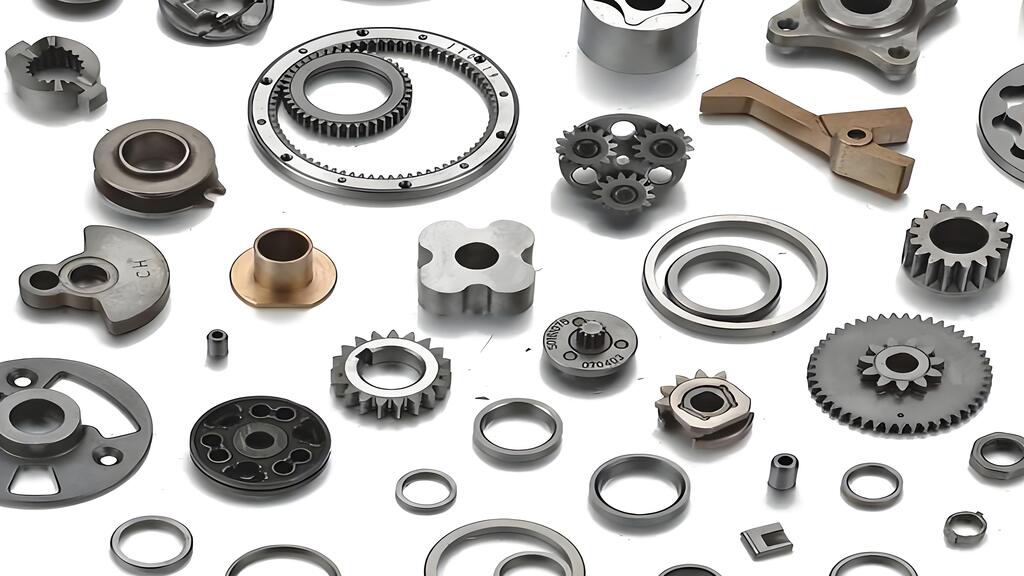


Why Choose Powder Metallurgy for Industrial Tools Production
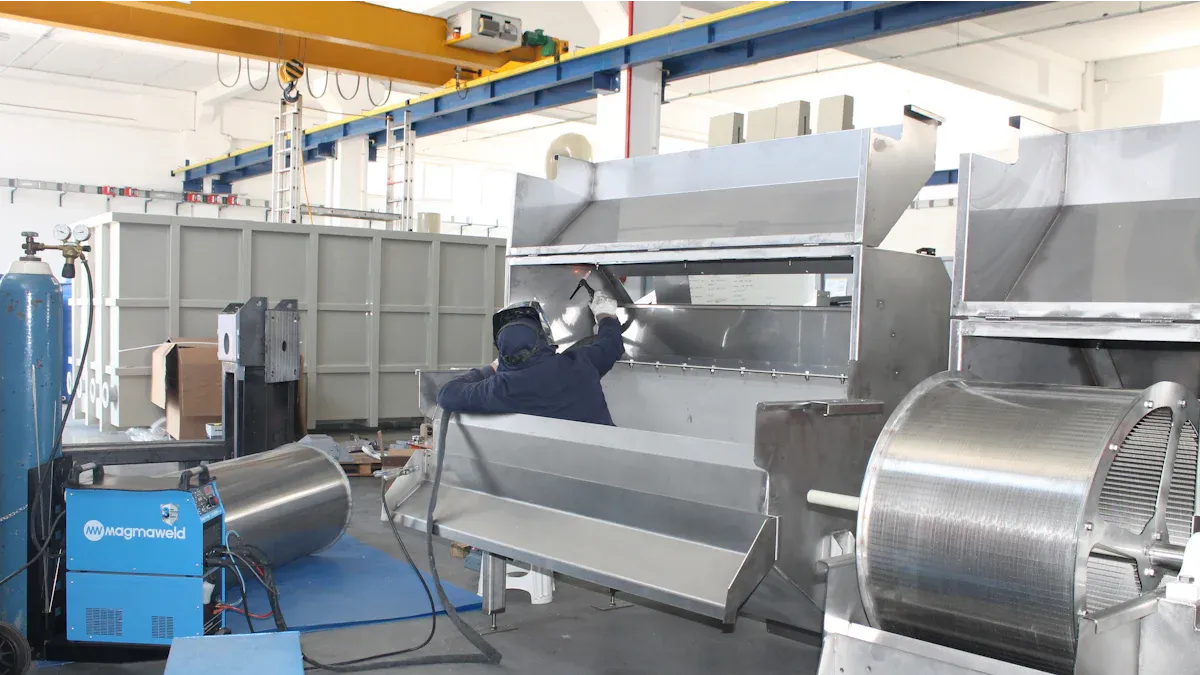
Powder Metallurgy offers superior cost-effectiveness and material utilization for industrial tools. This advanced manufacturing technique utilizes over 97% of the initial raw material, significantly reducing scrap compared to traditional methods like machining or casting. It enables the creation of complex tool geometries with high precision. The process also delivers enhanced mechanical properties and consistent quality in industrial tools, ensuring reliable performance.
Key Takeaways
- Powder Metallurgy saves money. It uses almost all raw materials. This means less waste than other methods.
- This method makes complex tool shapes easily. It allows for new designs. These designs are hard to make with old ways.
- Tools made with Powder Metallurgy are strong. They last longer. They also work the same every time.
- Powder Metallurgy is better than casting or machining. It makes parts with fewer flaws. It also makes parts more exact.
- This process is good for making many tools. It makes them fast. It also keeps costs low for each tool.
- Powder Metallurgy makes many types of tools. These include cutting tools, molds, and gears. It makes them durable and precise.
Cost-Effectiveness and Material Utilization in Powder Metallurgy
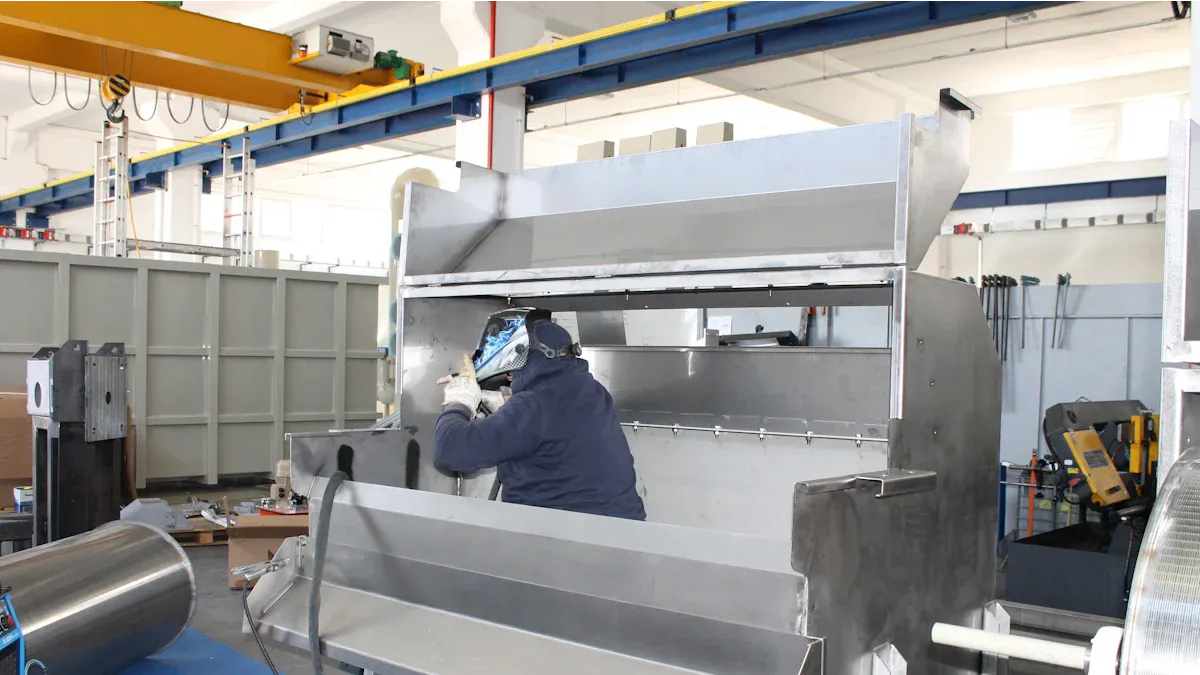
Minimizing Material Waste with Powder Metallurgy
Near-Net Shape Manufacturing
Powder Metallurgy excels in near-net shape manufacturing. This process produces components very close to their final dimensions and shape. Manufacturers significantly reduce the amount of raw material needed at the outset. This approach minimizes the material removed during subsequent processing, leading to substantial savings.
Reduced Machining Requirements
The near-net shape capability directly translates into reduced machining requirements. Parts produced through this method often require little to no secondary machining. This eliminates costly and time-consuming steps. For example, one hand tool manufacturer achieved approximately $1.00 in cost savings per assembly. They converted a three-part subassembly, which included a stamped sprocket, a machined lower body, and a fastener, into a single, multi-level, net-shape powder metal component. This conversion eliminated multiple manufacturing processes and assembly steps, reducing labor and production costs. Overall, the process offers more efficient material use, with scrap rates around 3% compared to machining's potential 50% material waste. This ability to create net-shape parts saves time, energy, and costs.
Optimizing Production Costs with Powder Metallurgy
Lower Energy Consumption
Powder Metallurgy processes generally consume less energy than traditional manufacturing methods. Unlike casting, it does not require melting large volumes of metal. Sintering, the primary heat treatment step, operates at lower temperatures and for shorter durations than many other processes. This translates into reduced energy bills for manufacturers.
High Volume Production Capabilities
This manufacturing approach is highly efficient for high-volume production runs. Once the initial tooling is created, the process allows for rapid and consistent production of numerous identical parts. This capability drives down the per-unit cost significantly. Manufacturers can produce complex components quickly and reliably, making it an ideal choice for industrial tools requiring large quantities. The automated nature of the process further enhances efficiency and reduces labor costs in mass production.
Design Flexibility and Complex Geometries in Powder Metallurgy
Powder Metallurgy offers unparalleled design freedom for industrial tools. This manufacturing method allows engineers to create shapes and features previously considered impossible with traditional techniques. It opens new possibilities for tool design and functionality.
Crafting Complex Geometries with Powder Metallurgy
Intricate Internal Features
Powder Metallurgy excels at producing parts with intricate internal features. Manufacturers can create complex internal channels, undercuts, and cavities directly within the tool. These designs are often difficult or impossible to achieve with conventional machining or casting. The powdered material fills even the most complex mold shapes, ensuring precise replication of detailed designs. This capability allows for optimized fluid flow paths or integrated cooling channels in molds and dies.
Multi-Level Parts Integration
This process also facilitates multi-level parts integration. Engineers can design and produce components that combine several individual parts into a single, cohesive unit. This reduces the need for assembly, simplifies the overall tool structure, and often improves performance. Integrating multiple functions into one component streamlines manufacturing and enhances the tool's durability by eliminating potential weak points from joints or fasteners.
Customizing Tool Designs through Powder Metallurgy
Tailored Performance Characteristics
Powder Metallurgy provides extensive opportunities for customizing tool designs. Manufacturers can precisely control the material composition by blending different metal powders. This allows for the creation of tools with specific performance characteristics, such as enhanced hardness, superior wear resistance, or improved toughness. Engineers can fine-tune the material properties to meet the exact demands of a particular industrial application, ensuring optimal tool performance and longevity.
Rapid Prototyping Advantages
Powder Metallurgy significantly supports rapid prototyping for industrial tool designs. This capability allows for quick iteration and testing of new tool concepts. Rapid metal prototyping processes drastically reduce the time needed to bring new designs to production. For example, a case study involving surgical instruments demonstrated a 65% reduction in production time and a 40% cost savings when redesigning a complex instrument for rapid metal prototyping using stainless steel. Furthermore, a developed method using powdered metal processes can produce production-ready tooling with 1150 MPa TRS strength, hardness exceeding 35 HRC, and shrinkage less than 0.4%. This tooling can be manufactured in just one week. This offers a favorable comparison to traditional production-grade steel tooling, decreasing lead-time without sacrificing critical mechanical properties.
Enhanced Mechanical Properties and Consistency in Powder Metallurgy
Powder Metallurgy significantly improves the mechanical properties and ensures consistent quality in industrial tools. This manufacturing method allows for precise control over material structure and composition. It ultimately delivers superior performance and reliability.
Superior Material Homogeneity in Powder Metallurgy
Uniform Microstructure
Powder Metallurgy processes create a uniform microstructure within the material. This uniformity results from the controlled mixing and sintering of fine metal powders. The absence of large segregations or defects, common in cast materials, ensures consistent properties throughout the tool. Powder metallurgy tool steels offer improved homogeneity and distribution of secondary and carbide phases.
Consistent Hardness and Strength
The uniform microstructure directly translates into consistent hardness and strength across the entire component. PM eliminates secondary stringers, which contributes to better material consistency. This consistency is crucial for industrial tools, as it prevents localized weak points that could lead to premature failure. PM TiAl-based alloys exhibit more homogeneous microstructures compared to cast or wrought alternatives. This enhanced microstructural homogeneity leads to smaller property variability.
Tailored Material Compositions via Powder Metallurgy
Blending Unique Alloys
Manufacturers can blend unique alloys through Powder Metallurgy. This capability allows for the creation of materials with specific performance characteristics. For example, tool steels can incorporate elements like vanadium and tungsten. Vanadium forms fine carbides, significantly increasing wear resistance and hardness. Tungsten forms very hard tungsten carbides, enhancing abrasion resistance in tool steels.
| Alloy System | Typical Composition | Key Properties | Applications |
|---|---|---|---|
| Tool steel | Fe, Cr, V, W, Mo | High hardness, strength, wear resistance | Cutting tools, dies, and machine parts |
| Tool steel for mold tooling | N/A | High hardness, thermal stability | Mold tooling (additive manufacturing) |
Incorporating Non-Metallic Additives
Powder Metallurgy also allows for the incorporation of non-metallic additives. These additives can further enhance specific properties, such as self-lubrication or improved thermal conductivity. This flexibility in material design enables the production of highly specialized tools for demanding applications.
Improved Wear and Corrosion Resistance with Powder Metallurgy
Dense and Fine-Grained Structures
Powder Metallurgy produces dense and fine-grained structures. These structures inherently offer superior resistance to wear and corrosion. The fine grain size increases the material's hardness and toughness, making it more resilient to abrasive forces. PM technology enables the production of materials with superior technological properties compared to those made by conventional methods.
Surface Treatment Compatibility
Tools produced via Powder Metallurgy are highly compatible with various surface treatments. These treatments can further enhance wear and corrosion resistance. The dense and uniform surface provides an ideal base for coatings, nitriding, or other hardening processes. PM steels exhibit high resistance to general abrasive wear. The process effectively eliminates carbide segregation and banding, which contributes to improved material performance. One major producer of powder metal parts experienced up to 100 times more productivity due to enhanced long-term wear resistance in their tooling.
Powder Metallurgy vs. Traditional Manufacturing Methods
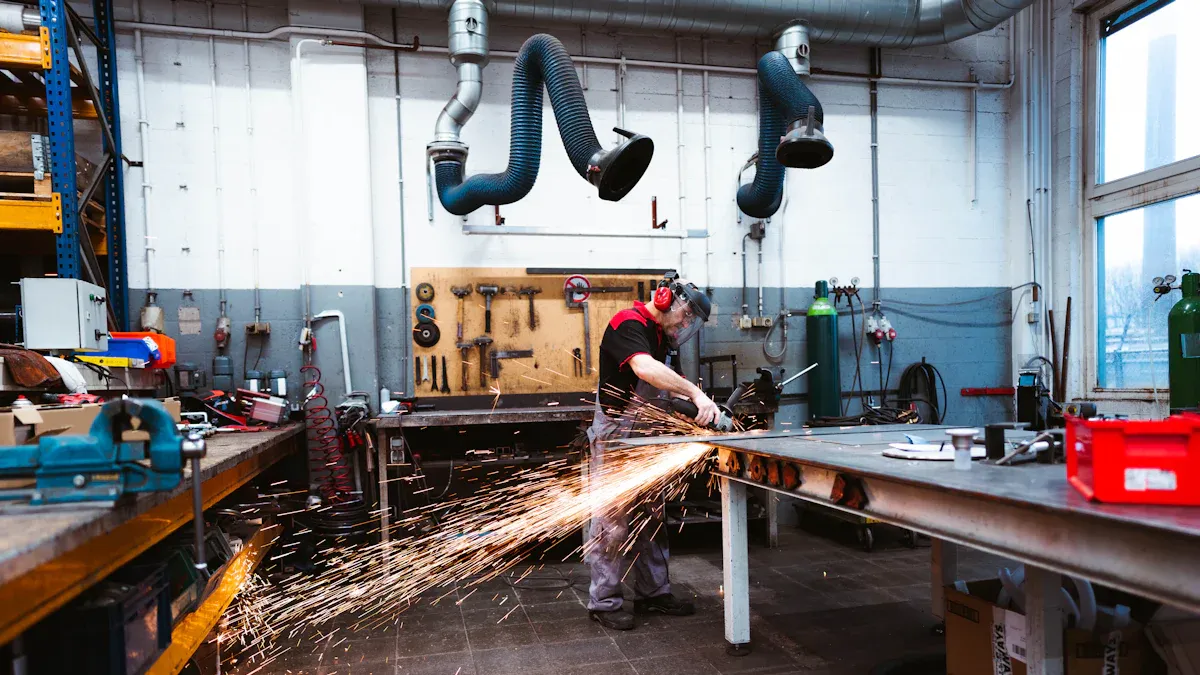
Manufacturers often evaluate various production techniques for industrial tools. Powder Metallurgy presents distinct advantages over traditional methods like casting, machining, forging, and stamping. It offers superior characteristics in terms of material efficiency, design complexity, and overall cost-effectiveness.
Powder Metallurgy Compared to Casting
Reduced Porosity and Defects
Powder Metallurgy significantly reduces porosity and defects compared to casting processes. Casting, especially sand casting, often introduces voids and imperfections as molten metal cools and solidifies. These defects can compromise the structural integrity and performance of industrial tools. Powder Metallurgy, through its controlled compaction and sintering processes, creates components with a much denser and more uniform internal structure, minimizing these detrimental flaws.
Tighter Dimensional Tolerances
Powder Metallurgy achieves tighter dimensional tolerances than casting. Sintered parts typically reach an accuracy of about ± 0.04 mm, particularly after a sizing process. This precision often eliminates the need for additional machining. In contrast, casting processes, depending on the specific alloy and type of casting, exhibit variable dimensional tolerances and surface finishes. This means cast parts frequently require extensive post-processing to meet the required specifications for industrial tools.
Powder Metallurgy Compared to Machining
Significant Material Savings
Powder Metallurgy offers significant material savings when compared to machining. Machining starts with a solid block of material and removes excess to achieve the desired shape, often generating substantial scrap. This process can waste nearly 50% of the raw material. Powder Metallurgy, however, utilizes nearly 95% of the raw material. This near-net shape capability drastically reduces waste and lowers material costs, making it a more sustainable and economical choice for industrial tool production.
| Manufacturing Method | Raw Material Utilization |
|---|---|
| Powder Metallurgy | Nearly 95% |
| Machining | Nearly 50% |
Faster Production Cycles for Complex Parts
Powder Metallurgy enables faster production cycles for complex parts. Machining intricate geometries requires multiple steps, specialized tools, and considerable time. Each feature and contour demands precise cutting and shaping. Powder Metallurgy, once the tooling is established, produces complex parts in a single pressing and sintering cycle. This method significantly accelerates the manufacturing timeline, especially for high-volume production of intricate industrial tools.
Powder Metallurgy Compared to Forging and Stamping
Greater Design Freedom
Powder Metallurgy provides greater design freedom than forging and stamping methods. Forging and stamping are limited by how metal blanks can be deformed, restricting radii, angles, and dimensions. Stamping, for instance, often results in poor edge quality due to its shearing process, frequently requiring secondary finishing. Powder Metallurgy, however, allows parts to be 'sculpted' with material precisely where needed, enabling 3D design freedom. It produces straight, clean angles and intricate internal features that forging and stamping cannot achieve.
| Feature | Powder Metallurgy | Forging |
|---|---|---|
| Design Complexity | Excellent for complex shapes | Limited, especially for internal features |
| Material Customization | Highly customizable | Limited by alloy workability |
Powder Metallurgy offers design flexibility, allowing parts to be 'sculpted' with material precisely where needed, enabling 3D design freedom. Stamping is restricted by how metal blanks can be deformed, limiting radii, angles, and dimensions. Powder Metallurgy can produce straight, clean angles, whereas stamping's shearing process results in poor edge quality and often requires secondary finishing. Stamping typically requires ductile/low-strength metals, limiting it to low-carbon steels and nonferrous materials. In contrast, Powder Metallurgy allows for blending metal powders to achieve exact material compositions.
Lower Tooling Costs for Intricate Shapes
Powder Metallurgy often results in lower tooling costs for intricate shapes compared to forging and stamping. Forging and stamping complex geometries necessitate expensive, multi-stage dies and specialized equipment. These tools are costly to design and manufacture, especially for highly detailed parts. Powder Metallurgy uses a single die set for compaction, which, while precise, generally involves less complex and therefore less expensive tooling for intricate designs. This reduces the initial investment and overall production costs for complex industrial tools.
Quality Control and Reproducibility in Powder Metallurgy
Manufacturers prioritize consistent quality and reliable performance for industrial tools. Powder Metallurgy offers exceptional control over the manufacturing process. This ensures high reproducibility and adherence to stringent quality standards. The method's inherent precision makes it an ideal choice for producing critical components.
Reproducible Part Characteristics in Powder Metallurgy
Powder Metallurgy consistently produces parts with identical characteristics. This consistency is vital for industrial tools. It guarantees that each tool performs as expected.
Automated Process Control
Automated process control is a cornerstone of Powder Metallurgy. Machines precisely manage every step, from powder mixing to compaction and sintering. This automation minimizes variations that could occur in manual processes. The controlled compression and sintering process maintains tight tolerances. This ensures dimensional accuracy in powdered metal gears remains consistent across production runs.
Minimized Human Error
The high level of automation in Powder Metallurgy significantly minimizes human error. Standardized procedures and machine precision reduce the need for constant human intervention. This leads to a more stable and predictable manufacturing environment. Fewer errors translate directly into higher quality and more uniform industrial tools.
Meeting Stringent Industry Standards with Powder Metallurgy
Industrial tools must meet rigorous performance and safety standards. Powder Metallurgy consistently achieves these demanding requirements.
High Precision and Accuracy
Powder Metallurgy delivers high precision and accuracy. This is crucial for the functionality of industrial tools. Parts typically achieve an accuracy of +/-0.02mm. This level of precision often eliminates the need for secondary machining operations. Manufacturers meticulously craft parts to deliver superior performance in electric tool components. They carefully control the composition and density of raw materials. This achieves high precision and consistency, which is critical for reliable and efficient operation.
Reliable Performance Over Time
The consistent quality and precise manufacturing inherent in Powder Metallurgy ensure reliable performance over time. Tools produced by this method exhibit uniform mechanical properties. This reduces the likelihood of premature failure. Industrial users can depend on these tools for consistent operation and extended service life.
Broad Applications of Powder Metallurgy in Industrial Tooling
Manufacturers widely apply Powder Metallurgy across various industrial tooling sectors. This method provides solutions for demanding applications. It enhances tool performance, durability, and precision.
Powder Metallurgy for Cutting Tools and Inserts
High-Speed Steel Tools
Powder Metallurgy significantly improves high-speed steel tools. It produces components like hobs, punches, form tools, taps, end mills, milling cutters, and broaches. These tools achieve high performance in cutting and drilling. They also excel in reaming, threading, gear cutting, and precision machining applications.
Carbide Tooling Components
Carbide tooling components benefit greatly from Powder Metallurgy. This process offers cost-effectiveness in mass production due to lower sintering temperatures and fast compaction presses. It allows precise forming with tight tolerances, achieving high precision. For example, a 25 mm radial dimension can have a tolerance of 0.13% to 0.20%, improving to 0.05% to 0.08% after sizing. The method ensures high batch-to-batch consistency through precise control of mold tolerance, compacting pressure, and sintering temperature. It requires less secondary processing, shortening production time and decreasing costs. Parts form in one pressing operation; gears, for instance, do not need extensive machining or forging. The process creates complex shapes, including internal features, sharp edges, thin walls, and stepped geometries, in a single operation. Powder-metal tools operate at greater production rates and for longer periods. They suit milling and both conventional and synchronous tapping machines. Smoother edges, achieved through PM tools' amenability to grinding, create more precise cutting edges. The process allows precise balancing of alloy content for specific tool characteristics, ensuring structural integrity and consistency. Homogeneous powder blends lead to stronger cutting edges and longer tool life. Increased hardness and sharpness provide flexibility in choosing feeds and speeds, maximizing productivity without premature wear or breakage. Extreme heat and pressurization during sintering add hardness, ductility, strength, and resistance to heat, corrosion, and abrasion. This method enables alloying steel with various metals like tantalum, molybdenum, cobalt, vanadium, and tungsten. This suits diverse applications, from soft metals to hard, exotic compounds like titanium and superalloys.
Powder Metallurgy for Dies and Molds
Pressing Dies
Powder Metallurgy produces pressing dies with superior durability and precision. The process creates dense, uniform structures. These structures withstand the high pressures and abrasive forces inherent in pressing operations.
Injection Molds
Powder Metallurgy enhances injection molds, offering significant durability and precision. Metal powder-infused materials provide superior durability. Metal particles act as reinforcements, preventing cracking, chipping, or breaking under stress. This ensures components withstand harsh environments and prolonged use. Incorporating metal powder enhances structural integrity by distributing stress evenly, reducing deformation or failure. It maintains shape and functionality under various loads. Metal powder injection molding creates complex geometries with high precision and efficiency. It offers significant design flexibility for intricate shapes, often difficult or impossible with traditional methods. The process achieves high levels of dimensional accuracy, ensuring consistent quality for complex components. This is especially important in aerospace, medical, and automotive industries. It produces parts with a near-net shape, minimizing post-processing like machining or polishing. This preserves the surface finish. The ability to achieve intricate designs directly in the molding process ensures a superior surface finish from the outset. Fine particle size and excellent flowability of metal powders contribute to smoother surface finishes and better mold filling, reducing defects.
Powder Metallurgy for Wear Parts and Components
Bushings and Bearings
Powder Metallurgy significantly enhances bushings and bearings in industrial machinery. Oil-impregnated bearings utilize self-lubricating properties. This reduces wear and maintenance needs, making them ideal for low to medium-speed applications. The process allows precise manufacturing, minimizing material waste. It enables cost-effective production of both simple and complex parts. Design flexibility comes from tailored sintered bronze properties. The process enhances durability and strength, ensuring reliable performance under demanding conditions. Components benefit from impregnated lubrication, fine carbides, custom alloys for exceptional hardness and resistance to deformation, and excellent wear resistance. This extends part lifespan. These components offer high precision, strength, and durability, making them ideal for high-load parts. The process of compressing and sintering metal powders produces complex-shaped parts, enhancing gear transmission efficiency and performance. These parts possess high wear resistance and precision, allowing reliable operation in harsh environments while maintaining stable performance. High-quality parts reduce equipment failures, extend equipment lifespan, and improve production line efficiency. They enable tighter gear meshing and smoother motion, ultimately enhancing the efficiency and performance of gear transmissions. Oil-impregnated bushings, produced using this method, offer superior self-lubricating properties. They feature microscopic pores that absorb and gradually release lubricating oil, ensuring long-term friction reduction and minimal maintenance. These bushings withstand high operating temperatures, provide low-noise performance, and function efficiently where regular lubrication is impractical. They enhance operational efficiency and longevity in industrial machinery. Advanced sintering processes ensure consistent performance, excellent wear resistance, and reduced energy consumption.
Gears and Sprockets
Powder Metallurgy is crucial for producing durable gears and sprockets. These components are common industrial wear parts. They include bearings, bushings, pins, seal rings, valve seats, valve stems, and shafts. In mining, oil, and gas industries, they appear as wear bars, drill bits, and flow control components. The aerospace industry uses them for cutting tools, bearings, bushings, landing gear and engine components, and sealing rings. Automotive manufacturing utilizes them for punches, dies, and other cutting and drilling tools, and pump parts. General manufacturing employs them for cutting blades, drill tips, stamping punches and dies, and valve components. Tungsten carbide wear parts last longer due to their strength, hardness, and corrosion resistance, reducing replacement frequency. Tungsten carbide resists abrasion, scratches, and corrosion from chemicals, making it suitable for harsh conditions. This manufacturing method allows customization of material properties to achieve maximum compressive strength and fracture toughness. Longer-lasting parts lead to less downtime for replacements. The manufacturing offers granular control over material properties in finished parts, allowing customization of hardness, corrosion resistance, and wear resistance.
Powder Metallurgy emerges as a superior manufacturing choice for industrial tools. Its inherent advantages distinguish it from traditional methods. The process consistently delivers significant cost savings. It also provides extensive design freedom and enhances material performance. Manufacturers adopting Powder Metallurgy achieve more efficient, durable, and precisely engineered industrial tools.
FAQ
What is Powder Metallurgy?
Powder Metallurgy (PM) is a manufacturing process. It forms parts from metal powders. Manufacturers compact the powders into a desired shape. Then they heat the shape below its melting point. This creates a solid, strong component.
How does Powder Metallurgy reduce manufacturing costs?
PM reduces costs through near-net shape manufacturing. This minimizes material waste. It also lowers energy consumption during production. High-volume capabilities further optimize per-unit costs.
Can Powder Metallurgy create complex tool designs?
Yes, PM excels at creating complex designs. It forms intricate internal features. It also integrates multi-level parts into a single component. This offers significant design freedom.
What mechanical properties does Powder Metallurgy enhance?
PM enhances mechanical properties. It provides superior material homogeneity. It also allows tailored material compositions. This leads to improved wear and corrosion resistance in tools.
How does Powder Metallurgy compare to traditional casting?
PM offers reduced porosity and defects compared to casting. It also achieves tighter dimensional tolerances. This often eliminates the need for extensive post-processing.
Is Powder Metallurgy suitable for high-volume production?
Yes, PM is highly efficient for high-volume production. Once tooling is set, it rapidly produces consistent parts. This makes it ideal for large quantities of industrial tools.
What types of industrial tools commonly use Powder Metallurgy?
PM is widely used for cutting tools, such as high-speed steel and carbide inserts. It also produces dies, molds, and various wear parts like bushings, bearings, gears, and sprockets.