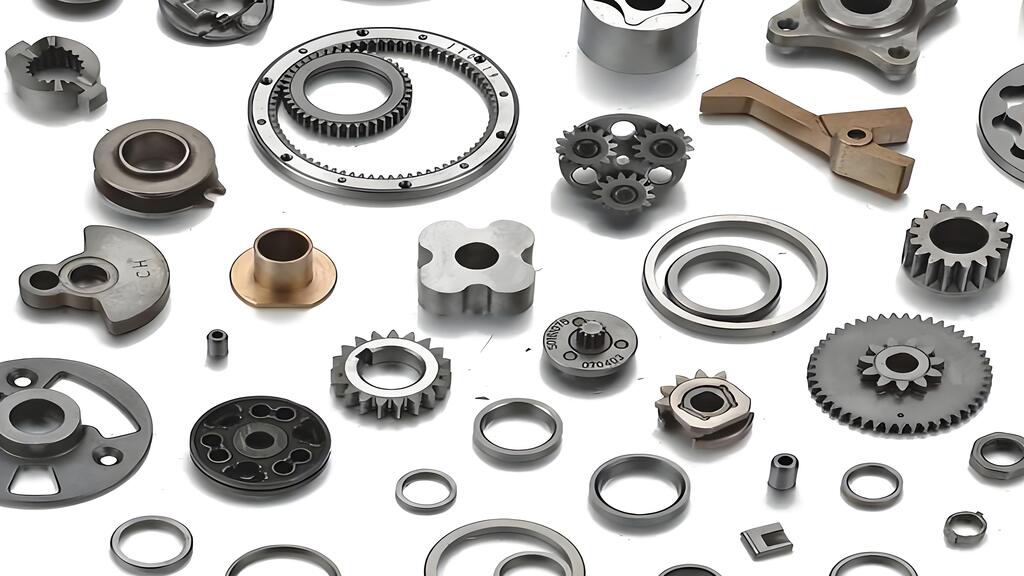


Sintering Applications in Aerospace Powder Metallurgy Components
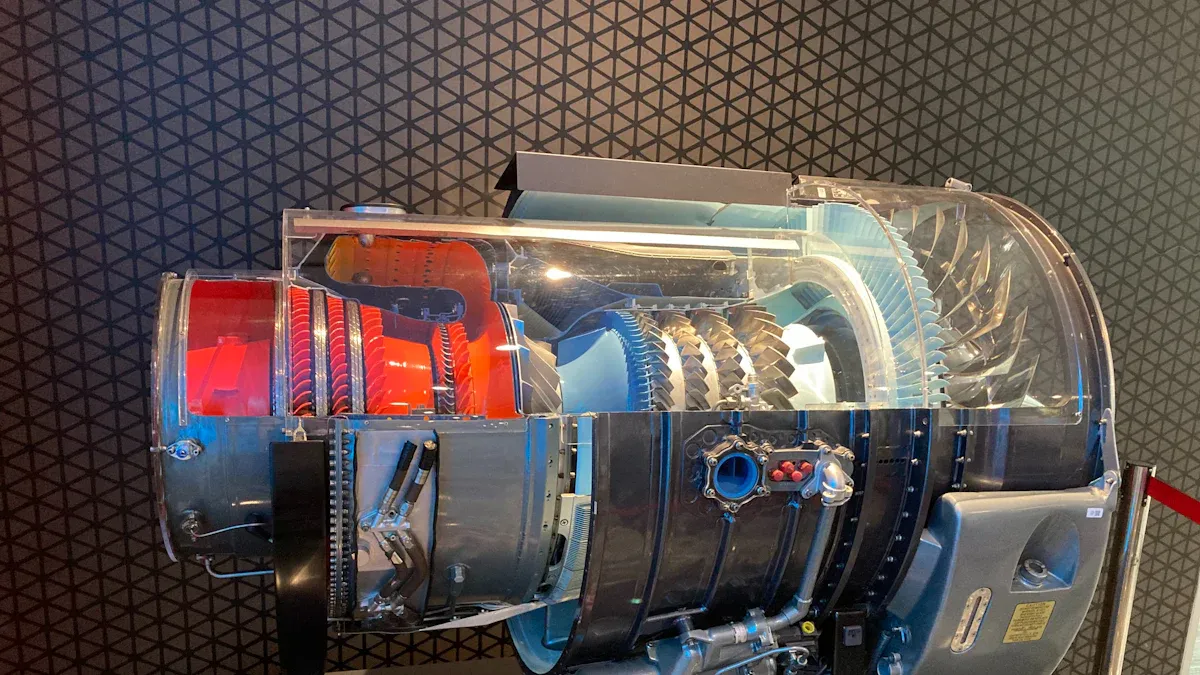
Sintering transforms powdered metal compacts into dense, high-strength components. This thermal process fundamentally alters the material's internal structure. It is crucial for creating complex parts with superior material properties. This process is therefore fundamental to Aerospace Powder Metallurgy, enabling the production of components that meet the industry's rigorous demands.
Key Takeaways
- Sintering turns metal powders into strong parts. This process is key for aerospace components.
- Sintering makes aerospace parts dense and strong. It improves how they handle heat and wear.
- Aerospace uses sintering for engine parts like turbine blades. It also makes structural parts and gears.
- Sintering works with special metals. These include titanium, nickel, and aluminum alloys.
- Sintering saves material and money. It makes complex shapes with less waste.
- New sintering methods like HIP and SPS make parts even better. They help remove flaws and speed up production.
- Strict tests ensure sintered aerospace parts are safe. They meet high industry standards.
- Sintering helps make aircraft lighter and more efficient. It creates reliable parts for tough conditions.
Understanding Sintering in Aerospace Powder Metallurgy
What is Sintering?
Process Overview
Sintering transforms Powdered Metal compacts into solid, functional components through heat treatment below the melting point. This process involves atomic diffusion, which drives the elimination of powder surface, from neck formation to the removal of small pores. The primary driving force for densification in sintering is the reduction in free energy. This reduction occurs due to a decrease in surface area and the lowering of surface free energy as solid-vapor interfaces are replaced by new, lower-energy solid-solid interfaces.
Key Mechanisms
Sintering involves the diffusion of atoms through the microstructure, driven by a chemical potential gradient. Six common mechanisms of solid-state sintering exist. Non-densifying mechanisms, such as surface diffusion, vapor transport, and lattice diffusion from the surface, increase the bond area between grains. Densifying mechanisms, including lattice diffusion from the grain boundary, grain boundary diffusion, and plastic deformation, eliminate porosity and increase density. The process reduces porosity and enhances properties like strength and conductivity. Sintering is highly dependent on temperature, with its rate increasing exponentially with temperature.
Why Sintering is Crucial for Aerospace Powder Metallurgy
Achieving Desired Density
Sintering is crucial for achieving the precise density required in aerospace components. For structural applications, components typically require 85% to 93% relative density. Bearing applications often need 75% to 87% relative density. Rolls-Royce, for critical aerospace engine components, utilizes hot isostatic pressing (HIP) optimization to achieve near 100% density in final components. This ensures uniform density throughout the component, improving overall performance and reliability.
Enhancing Strength and Microstructure
Sintering significantly enhances the strength and refines the microstructure of aerospace parts. It creates a solid structure by bonding metal particles, leading to improved tensile and compressive strength. The process reduces porosity and creates a more uniform material structure, which improves toughness and resistance to impact. This results in high mechanical handling strength and high-strength materials, such as turbine blades.
Meeting Demanding Aerospace Requirements
Sintering enables components to meet the demanding requirements of the aerospace industry. It provides high-temperature resistance, allowing for the creation of turbine blades and combustion chambers that maintain structural integrity and withstand extreme heat and pressure. Sintering also ensures exceptional wear resistance, essential for components like bearings and shafts, for optimal performance and longevity. Furthermore, it contributes to the dimensional stability of components, crucial for the precise operation of parts like bearings and shafts in Aerospace Powder Metallurgy.
Key Sintering Parameters for Aerospace Components
Temperature Control
Temperature control is paramount in sintering. For Inconel 718, low sintering temperatures promote grain refinement, while higher temperatures enhance grain boundary migration. Although high sintering temperatures can inhibit defects, they may also lead to a reduction in overall mechanical properties. Specific temperatures like 950 °C and 1050 °C yield desirable mechanical properties for Inconel 718.
Sintering Time
Sintering time directly influences the final properties of the component. Proper extension of sintering holding time can enhance the densities of specimens. It can also improve the overall properties of specimens. However, prolonged high-temperature heat treatment of high-speed steel (HSS) may lead to the growth of carbides and grains, and can result in a reduced lifetime of graphite dies.
Atmosphere Selection
The selection of the sintering atmosphere is critical. It prevents oxidation and controls the chemical reactions during the process. Different materials require specific atmospheres, such as vacuum, hydrogen, or inert gases, to achieve optimal results and prevent contamination.
Heating and Cooling Rates
Controlled heating and cooling rates are essential for managing thermal stresses and preventing defects. Rapid heating or cooling can induce cracks or warping, especially in complex geometries. Optimized rates ensure uniform temperature distribution and microstructure development throughout the component.
Specific Sintering Applications in Aerospace Components
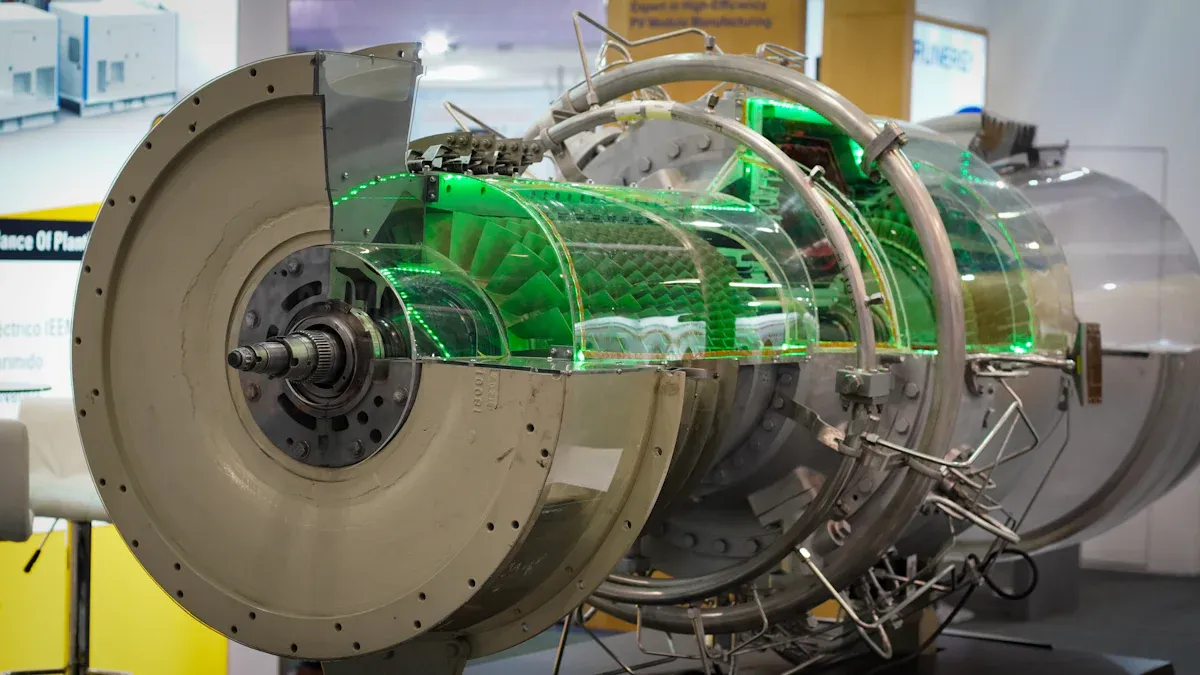
Sintering plays a vital role in manufacturing numerous critical components across various aerospace systems. This process enables the creation of parts with exceptional properties, essential for the demanding conditions of flight.
Engine Components in Aerospace Powder Metallurgy
Sintered components are indispensable for modern aircraft engines, where they withstand extreme temperatures and pressures.
Turbine Blades and Vanes
Sintering produces high-performance turbine blades and vanes. These components operate in the hottest sections of the engine, requiring materials with superior thermal resistance and mechanical strength. The sintering process allows for the precise formation of complex geometries, which is crucial for aerodynamic efficiency.
Impellers and Rotors
Impellers and rotors, vital for compressing air and driving engine stages, also benefit significantly from sintering. Manufacturers commonly produce components like oil pump rotors, water pump pulleys, timing pulleys, and crankshaft sprockets using sintered powder metallurgy. Sintered components for engine and transmission oil pumps, high-density gear wheels, and parts for camshaft phasers, such as stators and rotors, also demonstrate the versatility of this manufacturing method.
High-Temperature Alloys and Superalloys
Sintering is particularly effective for processing high-temperature alloys and superalloys. These materials, including nickel-based and cobalt-based superalloys, offer improved purity and uniformity. The process reduces oxygen content and other impurities, boosting the strength and toughness of sintered parts. Cobalt-based superalloys, for instance, boast melting temperatures above 1300°C, providing excellent high-temperature resistance and corrosion durability. Sintered alloys also withstand thermal cycling, crucial for components like combustion chambers. This technology enables the manufacturing of complex components such as turbine disks, blades, and intricate fuel nozzles. Advanced processing routes, including powder metallurgy, refine alloy purity, eliminate macro-segregation, and enable near-net shaping of complex components, contributing to the overall performance benefits of sintered high-temperature alloys. For example, IN 100 finds use in F100-PW-100 compressor shroud rings and turbine disks, while Rene95 forms high-pressure turbine disks in F101-GE-100 engines.
Structural Components via Aerospace Powder Metallurgy
Sintering also contributes to the integrity and efficiency of an aircraft's structure.
Brackets and Housings
Sintered powder metallurgy produces various brackets and housings. These structural parts require specific tolerances and customized properties, such as resistance to wear, corrosive environments, and high temperatures. Powder metallurgy enables the creation of components from unique alloys tailored to these needs.
Landing Gear Parts
Landing gear components demand exceptional strength and durability. Sintering provides the necessary material properties for these critical parts, ensuring they withstand immense stress during takeoff and landing.
Lightweighting and High Strength-to-Weight Ratio
A key advantage of sintering for structural components is its contribution to lightweighting. Titanium alloys and Al-SiC metal matrix composites (MMCs) produced through sintering offer significant weight reduction, leading to improved fuel efficiency. Sintered parts also exhibit enhanced fatigue resistance, extending service life and reducing maintenance downtime, particularly for MMCs in turbine blades. Powdered metallurgy is essential for manufacturing critical structural parts of aircraft engines that must withstand high temperatures and pressures.
Actuation and Control Systems in Aerospace Powder Metallurgy
Precision and reliability are paramount in actuation and control systems, areas where sintered components excel.
Gears and Cams
Sintering produces high-precision gears and cams for various actuation systems. These components require tight tolerances and excellent wear resistance to ensure smooth and reliable operation.
Valves and Bushings
Valves and bushings, critical for controlling fluid flow and movement, also benefit from the sintering process. Sintering allows for the creation of complex internal geometries and ensures the material integrity needed for consistent performance.
Bearings and Precision Parts
Bearings and other precision parts in hydraulic and pneumatic actuator systems, as well as positioning and locking mechanisms, frequently utilize sintered materials. The process delivers the necessary dimensional accuracy and material density for these intricate components, ensuring their long-term functionality and reliability in aerospace applications.
Specialized Materials for Aerospace Powder Metallurgy
The demanding environment of aerospace applications necessitates the use of specialized materials. Powder metallurgy offers unique advantages in processing these advanced materials, allowing for tailored properties and complex geometries. This section explores some key material classes frequently utilized in Aerospace Powder Metallurgy.
Titanium Alloys
Sintered titanium alloys offer a compelling combination of properties for aerospace applications. They provide a low density combined with excellent strength, crucial for constructing lighter aircraft and spacecraft. This high strength-to-weight ratio directly reduces fuel consumption and operating costs. Titanium also exhibits outstanding corrosion resistance. A protective natural oxide layer allows it to withstand harsh environments, including high-altitude conditions, saltwater, and chemical contaminants. This property ensures structural integrity and reduces maintenance needs. Furthermore, sintered titanium maintains its mechanical properties at elevated temperatures. It possesses a high melting point and good thermal stability, allowing it to function effectively in hot areas like jet engines, contributing to efficiency and performance. Finally, titanium alloys demonstrate excellent fatigue resistance. They can withstand numerous cyclic loading cycles without failure, which is essential for the long-term safety of aerospace components subjected to repeated stresses, such as aircraft take-offs and landings or helicopter rotor blades.
Nickel-Based Superalloys
Nickel-based superalloys are indispensable for components operating under extreme heat and stress within aircraft engines. Sintering processes enhance their already superior properties, making them ideal for turbine disks, blades, and other hot-section parts. These alloys exhibit exceptional creep resistance, meaning they resist deformation under prolonged stress at high temperatures. They also offer excellent oxidation and corrosion resistance, crucial for maintaining performance in aggressive combustion environments. Powder metallurgy routes for nickel-based superalloys often lead to finer grain structures and more uniform compositions, further improving their mechanical performance and extending component life.
Aluminum Alloys
Aluminum alloys are a cornerstone of lightweight construction in aerospace. While traditionally processed by casting or forging, powder metallurgy offers new avenues for enhancing their properties. Sintered aluminum alloys can achieve higher strength and stiffness compared to their conventionally processed counterparts, especially when alloyed with elements difficult to incorporate through traditional melting. Powder metallurgy also allows for the creation of aluminum matrix composites, where reinforcing particles further boost strength and wear resistance. These materials find application in structural components, airframe parts, and other areas where weight reduction is paramount but extreme high-temperature performance is not the primary driver.
Intermetallics
Intermetallics, compounds formed between two or more metals, represent an emerging class of materials with significant potential for aerospace. Titanium aluminides (TiAl) are a prime example. These materials combine the lightweight nature of titanium with the high-temperature strength and stiffness typically associated with ceramics or superalloys. Sintering is a critical processing method for intermetallics, as their inherent brittleness makes traditional manufacturing challenging. Powder metallurgy allows for precise control over microstructure, enabling the production of intermetallic components with improved ductility and fracture toughness. These materials are being explored for applications in engine components, such as low-pressure turbine blades and structural parts, where they can offer substantial weight savings over nickel-based superalloys while maintaining high-temperature performance.
Advantages of Sintering for Aerospace Powder Metallurgy
Sintering offers many significant advantages for manufacturing aerospace components. This process enhances material properties, provides design flexibility, and improves cost efficiency. These benefits are crucial for meeting the rigorous demands of the aerospace industry.
Enhanced Material Properties for Aerospace
Sintering transforms powdered metals into robust components. It significantly improves the mechanical characteristics of the final product.
Improved Strength and Hardness
Sintering creates strong bonds between metal particles. This process results in components with increased strength and hardness. The densification achieved through sintering reduces internal voids. This reduction leads to a more solid and resilient material structure. Components can then withstand higher loads and resist deformation more effectively.
Superior Fatigue and Creep Resistance
Sintering produces parts with high fatigue strength. This property refers to a material's ability to resist breaking under repeated stress. Heat treatment after sintering can relieve internal stresses. This relief further improves the components' fatigue strength. This stress relief particularly benefits aerospace components. These parts experience complex and varying stress loads. Sintering significantly enhances material properties. It leads to a 15% increase in bend fatigue strength. This improvement in fatigue strength is crucial for components. These components are subject to repeated stress cycles, such as those found in aerospace applications.
High-Temperature Performance
Aerospace components often operate in extreme heat. Sintering allows the creation of materials that maintain their structural integrity at elevated temperatures. The process can produce components from high-temperature alloys and superalloys. These materials exhibit excellent thermal stability. They resist softening or deforming when exposed to intense heat. This capability is vital for parts in jet engines and other hot sections of aircraft.
Design Flexibility and Complexity in Aerospace Powder Metallurgy
Sintering provides engineers with remarkable freedom in component design. It allows for the creation of complex shapes that would be difficult to achieve with other manufacturing methods.
Near-Net-Shape Manufacturing
Sintering enables near-net-shape manufacturing. This means the final component requires minimal post-processing or machining. The process forms parts very close to their final dimensions and shape. This capability reduces material waste and manufacturing time. It also lowers production costs.
Intricate Geometries
Near-net-shape sintering is particularly effective for creating components with intricate or complex shapes. This method benefits geometries that would be difficult or costly to produce using traditional machining techniques. It achieves high precision and tight tolerances. These qualities are essential for industries like aerospace. Sintering can produce parts with internal channels, undercuts, and fine features. These features are often impossible to create with conventional methods.
Reduced Machining Requirements
The ability to produce near-net-shape components significantly reduces the need for extensive machining. This reduction saves time and labor. It also minimizes the risk of introducing defects during post-processing. Less machining means fewer steps in the manufacturing process. This leads to faster production cycles and lower overall costs.
Material Utilization and Cost Efficiency in Aerospace Powder Metallurgy
Sintering offers substantial benefits in terms of material usage and overall production costs.
Reduced Material Waste
Powder metallurgy consumes up to 90% less material than machining. Powder metallurgy loses only 1-5% of metal. It achieves a material utilization rate as high as 98%. Powder metallurgy boasts a scrap rate as low as 3%. Traditional machining can have a 94% waste rate in industries like aerospace. This significant reduction in waste makes sintering an environmentally friendly and economically sound choice.
Efficient Use of Expensive Materials
Aerospace components often require expensive, high-performance alloys. Sintering's high material utilization rate is particularly valuable for these costly materials. It ensures that a larger proportion of the raw material ends up in the final product. This efficiency minimizes waste of valuable resources. It also contributes to lower material expenses.
Cost-Effective Production
The combination of reduced material waste, efficient use of expensive alloys, and lower machining requirements makes sintering a highly cost-effective production method. It streamlines the manufacturing process. It also reduces labor and energy consumption. These factors contribute to lower unit costs for aerospace components. This makes high-performance parts more accessible and affordable.
Performance in Extreme Aerospace Environments
Sintered components demonstrate exceptional resilience in the challenging conditions of aerospace. This performance is critical for ensuring the safety and longevity of aircraft.
Corrosion Resistance
Sintered materials exhibit robust corrosion resistance, a vital characteristic for aerospace components exposed to diverse and often aggressive environments. A natural oxide layer forms on the surface of sintered materials, including large pores, when they encounter oxygen. This layer acts as a protective barrier against corrosion. The dense structure of pores within sintered parts limits the penetration of corrosive agents. This limitation reduces the risk of localized corrosion and preserves the material's integrity. Manufacturers can apply additional coatings, such as passivation or ceramic layers, to further enhance corrosion resistance. Surface treatments like electropolishing also improve protection. These measures make sintered materials highly suitable for harsh aerospace environments.
Thermal Stability
Sintered materials possess excellent thermal stability, which is indispensable for components operating under extreme temperatures. In aerospace and high-temperature systems, sintered materials withstand high temperatures and oxidation. This property ensures reliable performance in the extreme conditions encountered by aerospace components, such as those found in jet engines or re-entry vehicles. The ability to maintain structural integrity and mechanical properties at elevated temperatures prevents material degradation and ensures consistent operational efficiency. This thermal resilience is a direct result of the controlled microstructures achieved through the sintering process.
Weight Reduction Benefits
Sintering significantly contributes to weight reduction in aerospace components. This process allows for the creation of complex, near-net-shape parts with optimized material distribution. Engineers can design components with high strength-to-weight ratios, which directly translates into lighter aircraft. Lighter aircraft consume less fuel, leading to reduced operational costs and a smaller environmental footprint. The precision of sintering also enables the use of advanced lightweight alloys, maximizing performance while minimizing mass. This weight advantage is crucial for improving aircraft payload capacity, range, and overall flight efficiency.
Challenges and Innovations in Aerospace Sintering
Sintering processes for aerospace components face ongoing challenges. However, continuous innovation drives advancements in material science and manufacturing.
Current Challenges in Aerospace Powder Metallurgy
Manufacturers encounter several hurdles when producing high-performance parts through sintering. These challenges demand precise control and advanced techniques.
Pore Control and Elimination
Achieving full density remains a significant challenge. Residual porosity can compromise mechanical properties like strength and fatigue resistance. Engineers work to minimize these microscopic voids, which can act as stress concentrators.
Dimensional Accuracy
Sintering involves material shrinkage as particles bond. Controlling this shrinkage precisely is difficult. Maintaining tight dimensional tolerances for complex aerospace components requires careful process optimization and material characterization.
Material Contamination
Preventing contamination during powder handling and sintering is crucial. Impurities can degrade material performance and lead to component failure. Manufacturers implement stringent cleanroom protocols and atmosphere control to mitigate this risk.
Achieving Full Density for Critical Applications
Many critical aerospace parts require near-theoretical density for optimal performance. Achieving this level of densification through conventional sintering alone is often insufficient. This necessitates secondary processes or advanced sintering methods.
Advanced Sintering Techniques for Aerospace
Innovations in sintering technology address many of the current challenges, pushing the boundaries of material performance.
Hot Isostatic Pressing (HIP)
Hot Isostatic Pressing (HIP) significantly enhances the quality of sintered aerospace components.
- HIP dramatically increases material density and improves mechanical properties. These include strength, fatigue resistance, and flexibility.
- A primary advantage of HIP is its ability to eliminate internal voids and porosity. It achieves this without altering the component's dimensions, which is vital for high-performance applications.
- Parts processed through HIP show improved reliability and longer service lives. This reduces the risk of failure in critical applications.
- In aerospace and defense, HIP is essential for improving the durability and fatigue life of parts exposed to extreme conditions. HIP eliminates porosity and ensures uniform density for turbine blades, engine components, and structural parts. This results in components that withstand high stresses and temperatures, enhancing aircraft and defense system safety and performance.
Spark Plasma Sintering (SPS)
Spark Plasma Sintering (SPS) offers distinct advantages over traditional methods.
| Feature | Conventional Sintering | Spark Plasma Sintering (SPS) |
|---|---|---|
| Heating Method | Uses external heating methods like furnaces. | Uses pulsed DC to generate heat internally. |
| Heating Rate | 5 to 10°C per minute (slow). | 100°C per minute (rapid). |
| Temperature | Needs a high external temperature. | Low sintering temperature needed, with about 20–30% reduction. |
| Processing Time | Takes several hours. | Takes minutes. |
| Material Properties | Significant grain growth and changes in microstructure. | Fine grain with minimal growth, preserves intrinsic properties. |
SPS drastically shortens sintering cycles, completing processes in minutes. It operates at significantly lower temperatures, preserving intrinsic material properties. This versatility allows SPS to densify a wide range of materials, from metals to ceramics. SPS is widely used in aerospace for producing lightweight, high-strength components like turbine blades and landing gear.
Field-Assisted Sintering Technology (FAST)
Field-Assisted Sintering Technology (FAST) encompasses techniques like SPS. These methods use electric fields or currents to enhance densification. FAST processes offer rapid heating rates and shorter sintering times. They also allow for better control over microstructure, which is beneficial for advanced aerospace materials.
Future Trends in Aerospace Powder Metallurgy Sintering
The future of sintering in aerospace involves integration with new technologies and continuous material innovation.
Integration with Additive Manufacturing
Combining sintering with additive manufacturing (AM) creates hybrid processes. AM builds complex green parts, and sintering then densifies them. This approach leverages the design freedom of AM with the material property enhancements of sintering.
Novel Alloy Development
Researchers continuously develop new alloys tailored for aerospace applications. Sintering processes adapt to these novel materials, enabling the production of components with enhanced properties like higher temperature resistance or improved strength-to-weight ratios.
Process Automation and Control
Increased automation and advanced control systems will optimize sintering processes. Real-time monitoring and feedback loops will ensure consistent quality and reduce human error. This leads to more efficient and reliable production.
Digital Twin Technology
Digital twin technology creates virtual models of physical sintering processes. Engineers can simulate and optimize sintering parameters in a virtual environment. This reduces development time and costs, predicting material behavior and component performance before physical production.
Case Studies of Sintered Aerospace Powder Metallurgy Components
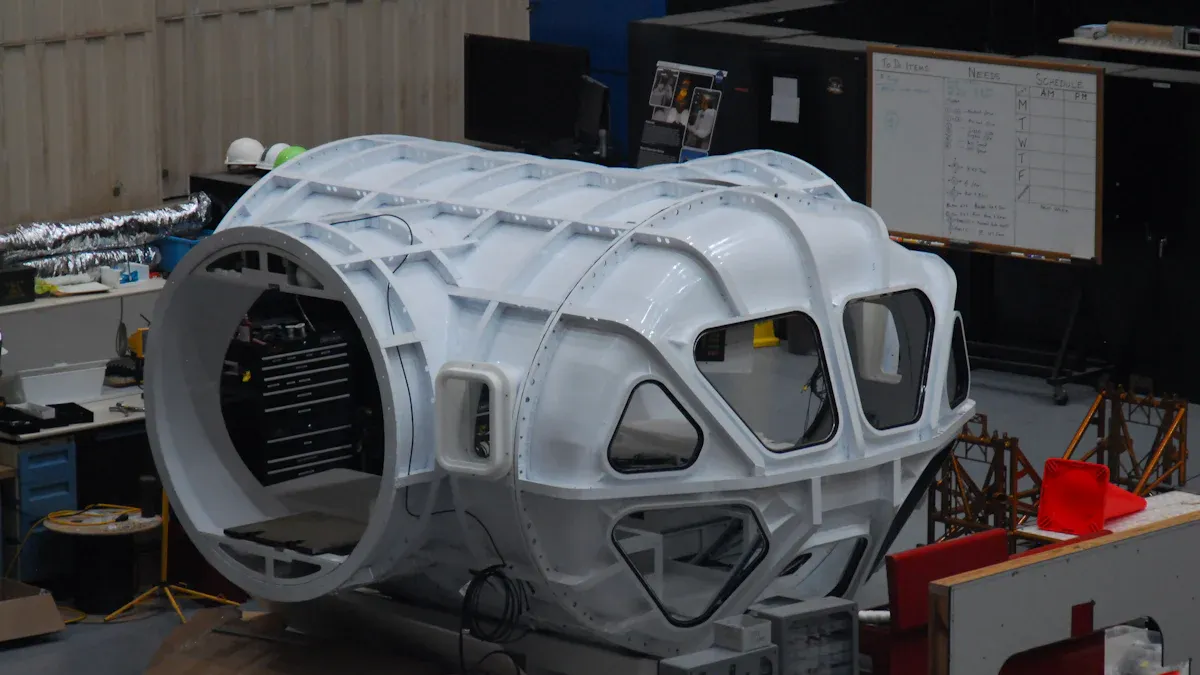
Sintering technology has revolutionized the production of critical aerospace components. These case studies highlight how advanced sintering processes deliver superior performance and efficiency in demanding applications.
High-Performance Turbine Disks
Turbine disks represent a core component in jet engines. They demand exceptional material properties to withstand extreme operational conditions.
Material and Process Selection
Manufacturers often select advanced superalloys, such as TiAl-based alloys, for turbine disks. These materials offer high strength and temperature resistance. The sintering process for these disks involves precise control over temperature and time. This control ensures optimal microstructure development. Engineers carefully choose parameters to achieve the desired density and grain structure.
Performance Gains Achieved
Optimizing sintering parameters significantly enhances the performance of these critical parts. For TiAl-based alloys, optimizing sintering parameters eliminated heterogeneous microstructures and original powder boundaries. This optimization led to an increase in plasticity and improved mechanical properties at 800°C, as well as enhanced hot workability. The optimal sintering parameters identified were 1300°C for 120 minutes. These advancements directly translate into more durable and efficient turbine disks.
Lightweight Structural Brackets
Aerospace structural brackets require a balance of strength and minimal weight. Sintering provides an effective solution for these components.
Design and Manufacturing Considerations
Designers focus on creating complex geometries that maximize structural integrity while minimizing material usage. Powder metallurgy allows for near-net-shape manufacturing, reducing the need for extensive post-processing. This method also enables the use of specialized alloys tailored for specific load-bearing requirements.
Weight Savings and Strength Optimization
Sintered components offer significant advantages in weight reduction. Sintered steel offers a weight reduction of 15–20% when compared to traditional forged components, while still maintaining a high load capacity. This enables compliance with regulations, such as those from the European Commission regarding CO2 emissions, without increasing costs. This weight saving directly contributes to improved fuel efficiency and increased payload capacity for aircraft.
Precision Actuator Gears
Actuator systems in aerospace rely on highly precise and durable gears for reliable operation. Sintering excels in producing these intricate components.
Material Selection for Durability
Engineers select specific metal powders, often alloy steels or specialized composites, for actuator gears. These materials provide excellent wear resistance and high fatigue strength. The sintering process bonds these powders into a dense, robust structure. This structure ensures the gears withstand continuous mechanical stress.
Accuracy and Reliability
Sintering allows for the production of gears with tight dimensional tolerances. This precision is crucial for the smooth and accurate functioning of aerospace actuation systems. The consistent material properties achieved through sintering enhance the overall reliability of these critical components. This reliability ensures long-term performance in demanding flight environments.
Quality Control and Testing for Sintered Aerospace Powder Metallurgy Parts
Quality control and testing are paramount for sintered aerospace powder metallurgy parts. These processes ensure components meet the stringent safety and performance requirements of the aerospace industry. Rigorous inspection protocols guarantee the reliability and integrity of every part.
Non-Destructive Testing (NDT) for Aerospace Components
Non-destructive testing (NDT) methods allow engineers to inspect components without causing damage. These techniques are crucial for identifying hidden flaws.
X-ray and CT Scanning
Radiography, using X-rays or gamma rays, is a crucial non-destructive testing method. It discovers internal defects like voids and fatigue cracks in aerospace components. These flaws are often invisible to the naked eye. This technique produces high-quality imaging. It enables manufacturers and technicians to detect these hidden irregularities within composite materials. X-Ray or Radiographic Testing is also highly effective. It uses X-rays to generate images of a product's internal structure. This process reveals internal flaws such as cracks, voids, or inclusions.
Ultrasonic Inspection
Ultrasonic Testing (UT) is particularly useful for detecting internal defects in sintered aerospace components. It employs high-frequency sound waves to identify imperfections within materials, especially metals and composites. UT is highly effective. It uses high-frequency sound waves that reflect off flaws within the material, providing immediate results. UT applies to metals, plastics, and ceramics, including very thin materials with tiny defects. Electromagnetic Testing (ET), including Eddy Current Testing, is valuable for detecting flaws and conducting measurements in conductive materials. The aerospace industry widely uses it for inspecting aircraft fuselage and engine components. Neutron Radiographic Testing (NR) offers a unique approach. It uses neutrons to reveal internal structures and material properties. This provides a different contrast mechanism compared to traditional radiography.
Destructive Testing for Aerospace Powder Metallurgy
Destructive testing methods provide detailed information about material properties. These tests involve altering or destroying the component.
Tensile and Fatigue Testing
Tensile testing measures a material's strength and ductility. It determines how much stress a material can withstand before breaking. Fatigue testing assesses a component's ability to endure repeated stress cycles. This is critical for parts experiencing continuous loading and unloading in aerospace applications.
Microstructural Analysis
Microstructural analysis examines the internal structure of materials. Engineers use microscopy to observe grain size, porosity, and phase distribution. This analysis helps verify the effectiveness of the sintering process. It also ensures the material possesses the desired properties.
Industry Standards and Certifications for Aerospace Sintering
Adherence to industry standards and certifications is mandatory in aerospace manufacturing. These guidelines ensure quality and safety.
AS9100 and Nadcap Compliance
AS9100 is a widely adopted quality management system for the aerospace industry. It builds upon ISO 9001 with additional requirements specific to aerospace. Nadcap (National Aerospace and Defense Contractors Accreditation Program) provides independent certification of manufacturing processes. This includes special processes like heat treating and materials testing.
Material Specifications and Requirements
Aerospace components must meet strict material specifications. These documents define the chemical composition, mechanical properties, and processing requirements for each material. Compliance ensures components perform reliably under extreme conditions.
Sintering remains indispensable for creating high-performance, complex aerospace components. It delivers the superior material properties and intricate geometries the industry demands. Continuous advancements in sintering technologies drive significant innovation. These innovations push the boundaries of aerospace material science and manufacturing capabilities. They ensure the production of safer, lighter, and more efficient aircraft parts. 🚀
FAQ
What is sintering in aerospace powder metallurgy?
Sintering transforms powdered metal compacts into dense, high-strength components. This thermal process bonds metal particles below their melting point. It creates a solid structure through atomic diffusion. This process is fundamental for aerospace manufacturing.
Why is sintering crucial for aerospace components?
Sintering achieves precise density and enhances material strength. It refines microstructure, improving fatigue and creep resistance. This process enables components to meet demanding aerospace requirements. It ensures high-temperature performance and wear resistance.
What types of materials does sintering process for aerospace?
Sintering processes specialized materials for aerospace. These include titanium alloys, nickel-based superalloys, and aluminum alloys. It also handles intermetallics like titanium aluminides. This allows for tailored properties and complex geometries.
What are the main advantages of using sintering for aerospace parts?
Sintering enhances material properties like strength and hardness. It offers design flexibility for intricate geometries. The process enables near-net-shape manufacturing, reducing material waste. It also provides cost-effective production and excellent performance in extreme environments.
What challenges does sintering face in aerospace manufacturing?
Sintering faces challenges in pore control and elimination. Achieving precise dimensional accuracy is difficult. Preventing material contamination is crucial. Manufacturers also strive for full density in critical aerospace applications.
How do advanced sintering techniques improve aerospace components?
Advanced techniques like Hot Isostatic Pressing (HIP) eliminate internal voids. Spark Plasma Sintering (SPS) offers rapid densification at lower temperatures. Field-Assisted Sintering Technology (FAST) enhances microstructure control. These methods improve component reliability and performance.
How does quality control ensure reliability for sintered aerospace parts?
Quality control uses Non-Destructive Testing (NDT) like X-ray and ultrasonic inspection. Destructive testing includes tensile and fatigue analysis. Adherence to AS9100 and Nadcap certifications is mandatory. These processes ensure parts meet stringent aerospace standards.