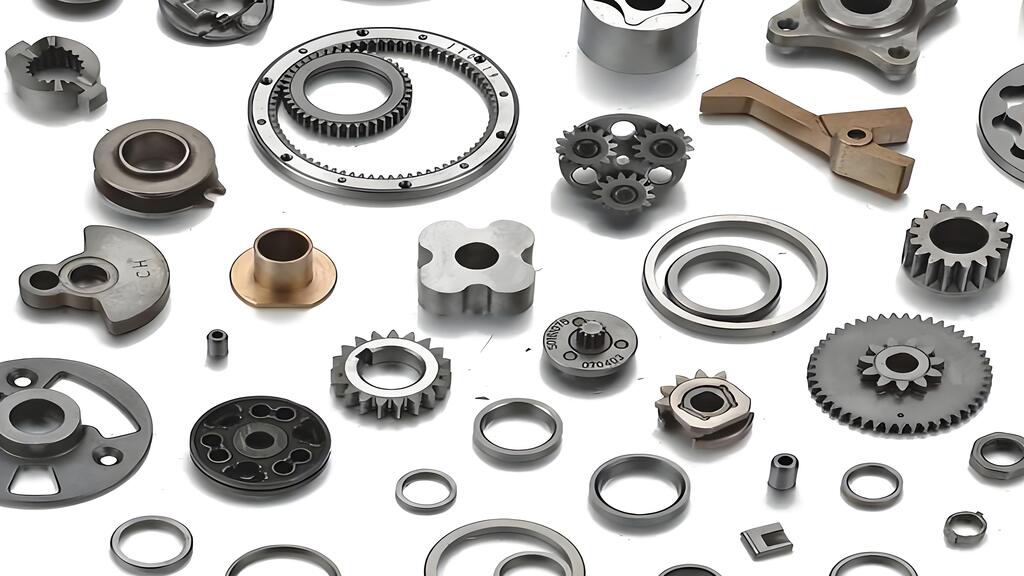


Is Powder Metallurgy Suitable for High-Strength Parts?
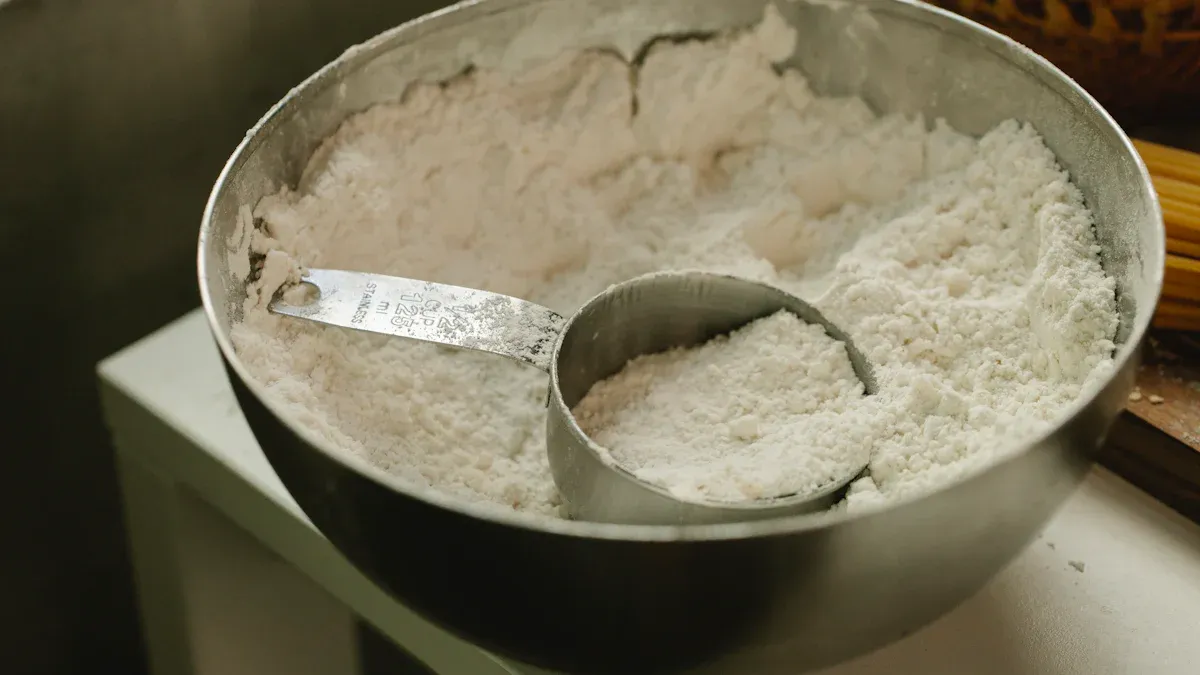
Yes, Powder Metallurgy is highly suitable for producing high-strength parts when specific material and process considerations are met. High-strength components require materials with excellent mechanical properties. These include superior tensile strength, which measures a material's resistance to breaking under tension. Parts also need high impact toughness, allowing them to absorb energy without fracturing. Furthermore, robust fatigue strength is crucial for resisting failure from repeated stress cycles. Achieving high density, typically above 90% relative density, strongly correlates with these high-strength characteristics in Powder Metallurgy parts.
Key Takeaways
- Powder Metallurgy makes strong parts. It uses special materials and processes.
- High density is key for strong Pm parts—advanced methods like warm compaction and hot isostatic pressing help.
- Choosing the right materials is important. Specialized alloys like aluminum, titanium, and nickel make parts stronger.
- Controlling the material's tiny structure helps. Small grains and even material mixes make parts tough.
- Post-processing steps boost strength. Hot isostatic pressing and heat treatments improve part quality.
- PM parts are used in many places. Cars, airplanes, medical tools, and machines all use them.
- PM offers benefits like less waste. It also allows for complex shapes and custom materials.
- PM has some challenges. Special powders can cost more, and making parts needs careful control.
Achieving High Strength in Powder Metallurgy
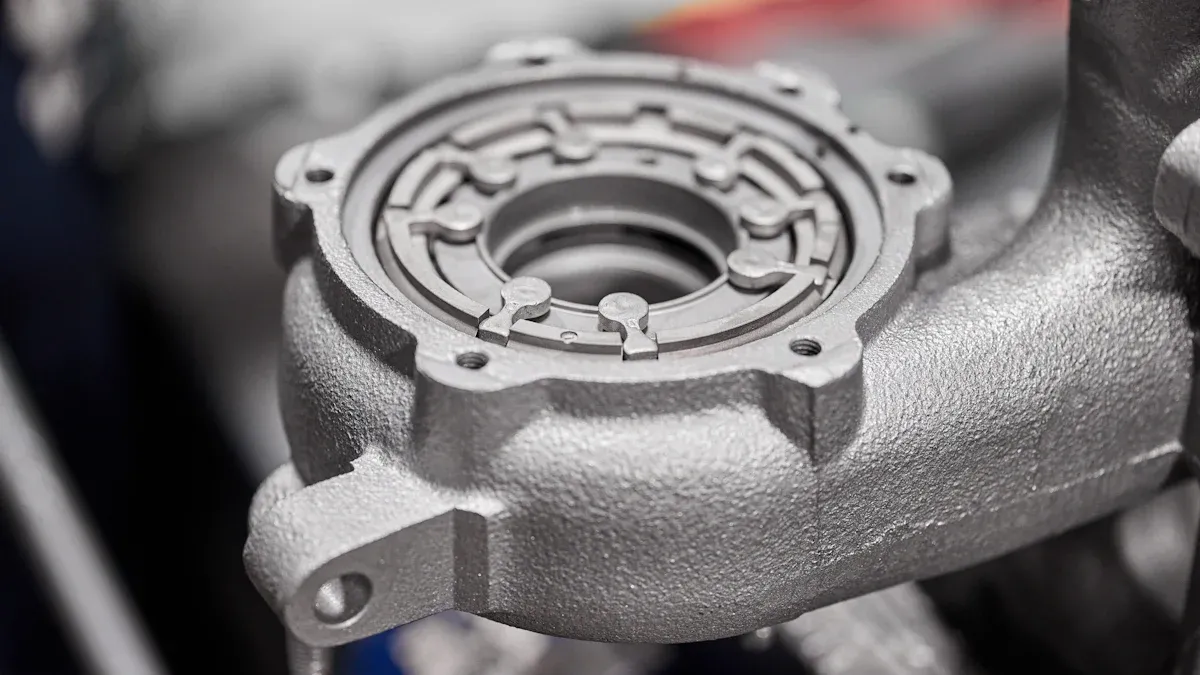
Manufacturers achieve high strength in parts made through Powder Metallurgy by carefully controlling several key factors. These factors include optimizing density, selecting appropriate materials, and managing the microstructure.
Density Optimization in Powder Metallurgy
Achieving high density is crucial for strong Powder Metallurgy parts. Higher density means fewer pores, which translates to better mechanical properties.
Advanced Compaction Techniques
Advanced compaction techniques significantly increase the density of green (unsintered) parts. These methods prepare the powder for subsequent processing.
- Warm Compaction: This technique applies moderate heat, typically between 100°C and 150°C, during the pressing stage. It improves powder plasticity and lubricant flow. This leads to higher green density, better uniformity, and reduced friction and porosity. For example, warm-compacted Finemet magnetic powder cores reached a density of 5.62 g/cm³.
- High-Pressure Compaction: This method uses extremely high shock wave pressures. It achieves green densities close to theoretical maximums. For instance, it can reach 99% for aluminum and 97.6% for tungsten. This results in high green and sintered strength with fewer density variations.
- Vibrational Compaction: This technique uses controlled vibrations along with static normal stress and oscillatory horizontal shear stress. It improves particle packing, reduces interlocking, and minimizes voids. This significantly increases green density and uniformity, especially for irregular powders.
- Isostatic Pressing (Cold Isostatic Pressing - CIP): CIP applies uniform pressure from all directions using a fluid medium. This creates compacts with consistent density and mechanical properties. It is particularly valuable for complex shapes and high-density parts.
- Powder Forging: This method applies intense mechanical force to densify Powder Metallurgy components. It refines the grain structure and achieves densities above 98%, sometimes reaching 99.3%.
- Hot Forging: This process heats sintered parts, often above 1100°C, before applying pressure. It collapses internal pores and promotes material flow. This eliminates most initial porosity (15%-20%) and achieves near-theoretical density.
- Cold Forging: This method applies pressure at room temperature. It relies on strain and work hardening to increase density and refine the microstructure. It achieves near full densification in certain alloys.
- Hot Isostatic Pressing (HIP): HIP uses high temperature (900°C-1300°C) and isostatic gas pressure (up to 200 MPa). It eliminates internal pores and increases density uniformly throughout the component. It closes pores and promotes atomic diffusion. For example, HIP significantly reduces pore defects in Ti-6Al-4V alloy.
Sintering for Maximum Density
Sintering is a critical heat treatment process. It bonds powder particles together and reduces porosity. During sintering, particles fuse at temperatures below their melting point. This process shrinks the part and increases its density. Careful control of sintering temperature, time, and atmosphere ensures maximum densification and optimal strength.
Material Selection for High-Strength Powder Metallurgy
Choosing the right materials is fundamental for producing high-strength parts. Specialized alloy powders and composite materials offer superior properties.
Specialized Alloy Powders
Alloy powders produced through Powder Metallurgy achieve high strength. They form fine grain structures. Grain boundaries in these structures impede dislocation movement. This makes the material stronger. Also, creating solid solutions from different elements within the alloy further enhances material strength.
- Aluminum-Based Alloys: These alloys have low density and a high strength-to-weight ratio. This makes them suitable for lightweight applications needing strength.
- Tungsten-Based Alloys: These alloys are known for excellent mechanical properties and high density. They are essential for applications demanding high strength.
- Titanium-Based Alloys: These alloys offer a unique combination of strength and a high strength-to-weight ratio. They provide exceptional strength with reduced weight.
- Nickel-Based Alloys: These alloys exhibit high-temperature strength and durability. They maintain mechanical properties under extreme conditions.
- Iron-Based Alloys: These alloys provide good mechanical strength and durability. Alloying them with elements like carbon, copper, nickel, or molybdenum enhances their properties.
- Stainless Steel: This material features good mechanical strength and ductility.
- Iron-Phosphorus Materials: These materials are notable for their high induction, strength, and hardness.
Composite Powder Metallurgy Materials
Composite materials combine different substances to achieve enhanced properties. Metal-metal composites are one type. For example, AA5083 matrix-Cr particles reinforced composites are used. AA5083 offers high strength, stiffness, and wear resistance. This makes it suitable for aerospace and automotive applications. Chromium (Cr) reinforces the material. It improves mechanical properties, corrosion resistance, and wear behavior.
Here are some examples of composite materials and their typical strength values:
| Material | Typical Strength Value |
|---|---|
| Cu-Be alloy | >1000 MPa |
| 20 wt% Cu50Zr43Al7/Cu composites | High mechanical strength (balanced with electrical properties) |
| LPBF 420 + 5 wt% WC/W2C MMCs | ~5.5 GPa (compressive strength) |
Microstructural Control in Powder Metallurgy
Controlling the microstructure of a part is vital for its strength. This involves managing grain size and ensuring uniform phase distribution.
Grain Size Management
Grain size significantly impacts a material's strength and fatigue life. Smaller grains generally lead to stronger materials. In Powder Metallurgy Al-Cu-Mg alloys, T39 heat treatment refined grains to average sizes of 3.51 μm (extrusion direction) and 3.46 μm (transverse direction). This resulted in ultimate tensile strengths of 545 MPa and 515 MPa, respectively. Grain refinement, along with precipitation and dispersion strengthening, improved the mechanical performance and fatigue resistance of these alloys. A fine-grained structure effectively suppresses crack propagation, enhancing fatigue life.
For Powder Metallurgy Ni-based superalloys, smaller grains (18.65 μm average) led to a 14.94% increase in ultimate tensile strength compared to larger grains (48.23 μm average). Small grains exhibit higher Mises stress and cumulative shear strain. This suggests more pronounced stress and strain concentration. This enhanced strength and plasticity in smaller grains comes from factors like lower dislocation density, smaller precipitate size, and a higher subgrain fraction.
Phase Distribution and Homogeneity
Uniform distribution of different phases within the material is essential. It prevents weak spots and ensures consistent mechanical properties throughout the part. Homogeneous phase distribution means the material behaves predictably under stress. This is critical for high-strength applications where localized weaknesses could lead to failure.
Enhancing Powder Metallurgy Part Strength Through Processing
Manufacturers significantly enhance the strength of Powder Metallurgy parts through various post-processing techniques. These methods refine the material's internal structure and improve its mechanical performance.
Hot Isostatic Pressing (HIP) for Powder Metallurgy
Hot Isostatic Pressing (HIP) is a crucial post-sintering process. It applies high temperature and uniform pressure to components. This process eliminates internal defects and improves material properties.
Eliminating Internal Porosity
HIP effectively removes residual porosity from sintered components. This is vital for achieving maximum density and strength. The process works through several mechanisms:
- Plastic Deformation: Heat and pressure cause the material to deform plastically. This collapses surface irregularities and pores.
- Creep: Sustained pressure and high temperatures induce material flow at an atomic level. This redistributes material to fill voids and imperfections.
- Diffusion Bonding: Atoms migrate across grain boundaries at high temperatures. This forms strong metallurgical bonds. It effectively eliminates porosity and enhances overall structural integrity.
Improving Mechanical Properties
The elimination of porosity through HIP leads to superior material properties. It enhances fatigue strength, ductility, and fracture toughness. HIP can achieve nearly fully dense samples. This results in simultaneous strength-plasticity enhancement.
For Metal Injection Molding (MIM) parts, HIP offers notable improvements:
| Property | Improvement (MIM parts) |
|---|---|
| Ultimate Tensile Strength | ~4% |
| Ductility | ~10% |
| Impact Resistance | ~40% |
| High Cycle Fatigue Life | Significant improvement |
HIP also improves tensile strength and ductility. Combining HIP with solution and aging treatments, followed by ultra-rapid quenching (URQ), further enhances these properties. This combination achieves ultimate tensile strength (UTS) improvement without sacrificing ductility.
Forging and Repressing Powder Metallurgy Components
Forging and repressing are secondary deformation processes. They further densify and strengthen Powder Metallurgy components.
Increasing Density and Toughness
These processes apply mechanical force to sintered parts. This eliminates residual porosity and increases density. The increased density directly leads to improved mechanical properties. For example, repressing can significantly boost both density and elongation.
| Property | Powder Metal, 84% density | Powder Metal, repressed, 95% density | Percentage Increase (approx.) |
|---|---|---|---|
| Density | 84% | 95% | 13% |
| Elongation | 2% | 25% | 1150% |
The chart below illustrates the substantial improvements in density and elongation after repressing:

Shaping and Strengthening
Forging and repressing not only increase density but also refine the grain structure. This contributes to higher strength and toughness. These processes also allow for the precise shaping of components. They achieve complex geometries with enhanced mechanical integrity.
Heat Treatment for Powder Metallurgy Parts
Heat treatment processes are essential for optimizing the mechanical properties of Powder Metallurgy parts. They enhance hardness, wear resistance, and core properties.
Enhancing Hardness and Wear Resistance
Several heat treatment methods are common for improving surface hardness and wear resistance:
- Quenching: This process involves heating sintered steel above its critical point. Rapid cooling then forms a martensite structure. This enhances strength, hardness, and wear resistance. For Powder Metallurgy parts, it often requires a neutral or carburizing atmosphere. This prevents pore surface oxidation. Oil quenching is a typical method.
- High-frequency quenching: This surface hardening method heats the workpiece rapidly using induced eddy currents. It then quenches the part. This method is effective for Powder Metallurgy gears needing wear resistance. It works especially well when the gear density is at least 6.85g/cm³.
- Carbonitriding: This treatment simultaneously introduces carbon and nitrogen to the surface of Powder Metallurgy gears. It significantly enhances their hardness and wear resistance. It occurs at a lower temperature and for a shorter duration than individual carburizing. It is particularly effective for high-density parts (e.g., 6.85g/cm³ or 7.2g/cm³ for copper infiltration).
- Chemical Heat Treatment: This category includes processes like carburizing, nitriding, and multi-component co-infiltration. These treatments improve wear resistance and surface hardness. They introduce elements like carbon and nitrogen into the material's surface. Carburizing, for instance, can increase surface carbon content to over 2%. This distributes carbides evenly to boost hardness and wear resistance.
- Steam Treatment: This process oxidizes the material's surface with heated steam. It creates an oxide film. This film significantly increases the hardness and wear resistance of Powder Metallurgy materials. It also offers effective anticorrosion properties.
Optimizing Core Properties
Heat treatments do not only affect the surface. They also optimize the core properties of the part. Processes like tempering, often following quenching, reduce brittleness. They improve the toughness of the entire component. This ensures the part maintains its integrity under various stress conditions.
Innovative Materials for High-Strength Powder Metallurgy
Powder Metallurgy offers unique advantages in developing innovative materials for high-strength applications. This manufacturing method allows engineers to create materials with tailored properties for specific demands.
High-Performance Steel Alloys in Powder Metallurgy
This method creates high-performance steel alloys. These alloys often have superior properties compared to conventionally made ones. The process enables higher alloying content. This leads to increased hardness and more hard carbide particles. Both factors contribute to excellent wear resistance. Manufacturers achieve a good combination of hardness, strength, and wear resistance. They do this by selecting the steel grade and applying proper heat treatment.
Tool Steels
Tool steels produced through this method offer exceptional performance. For example, PM 52 Steel (ASP2052) contains high cobalt (8%), vanadium, and tungsten (10%), along with chromium and molybdenum. This alloy heat-treats to HRC 67-69. Its abrasion resistance compares to T15, and its red hardness surpasses M42. It features high hardness, fine grain, and uniform carbide distribution. Manufacturers use it for special-purpose cutting tools. These tools require high red hardness, abrasion resistance, and good toughness. They suit machining nickel-base and titanium alloys. They also work for heavy or interrupted cuts, such as gear hobs, shapers, milling cutters, twist drills, taps, and broaching tools.
PM 60 Steel (ASP2060) is another high-performance PM material. It contains high cobalt, vanadium, chromium, molybdenum, and tungsten. This steel is used for fast, high wear, and chipping machinability. It works with high-grade steel, aluminum, and carbon-containing alloys. Applications include turning/milling tools for roughing/finishing, woodworking tools, highly stressed cold work tools, and tool bits. Other advanced ASP® PM High-Speed Steels include ASP®2078 and ASP®2012.
Stainless Steels
This process also produces high-strength stainless steels. These materials offer excellent corrosion resistance and enhanced mechanical properties. This makes them suitable for demanding environments where both strength and durability are critical.
Superalloys and Refractory Metals in Powder Metallurgy
Superalloys and refractory metals are crucial for extreme conditions. This manufacturing process is ideal for components made from these materials.
High-Temperature Applications
Nickel-based superalloys are common for high-temperature applications. However, their operational limit is approximately 1,100°C. Researchers are developing a chromium-molybdenum-silicon alloy. This alloy could potentially replace nickel-based superalloys. It aims for higher temperature performance.
Extreme Environment Resistance
Refractory metals offer superior high-temperature resistance. Tungsten, molybdenum, and chromium have melting points around or above 2,000°C. However, these metals are brittle at normal temperatures. They also oxidize quickly at 600-700°C. This method helps process these challenging materials. It allows precise control over their microstructure. This can mitigate some inherent weaknesses.
Metal Matrix Composites (MMCs) via Powder Metallurgy
Metal Matrix Composites (MMCs) combine different materials. This creates enhanced properties. This manufacturing technique is a practical and affordable method for developing MMCs. These MMCs often have superior mechanical and tribological characteristics.
Reinforcement Strategies
MMCs are reinforced with various materials. These include particles, whiskers, fibers, or hollow micro balloons. Reinforcements can be metallic, ceramic, or polymeric. They boost mechanical properties, thermal stability, and wear resistance. Common reinforcement materials include B4C, TiC, SiC, WC, Cr3C2, Al2O3, TiO2, ZrO2, SiO2, MoO3, MoS2, AlN, Si3N4, ZrB2, TiB2, and Graphene (Gr). The inclusion of these reinforcements enhances strength, hardness, and stiffness. It also reduces wear and density. Particle-strengthened MMCs show outstanding mechanical properties due to superior strength particle reinforcements.
Tailored Properties
MMCs offer superior property combinations, especially with hybrid reinforcements. They lead to enhanced tensile strength, stiffness, hardness, and fatigue/wear resistance. The strength and stiffness of MMCs increase by adding reinforcements. These reinforcements are typically stiffer and stronger than the matrix material. This allows the load to transfer effectively from the matrix to the reinforcements. Novel strategies in this manufacturing technique aim to overcome challenges. These include non-uniform powder distribution, poor bonding, particle agglomeration, and porosity. Techniques like powder blending, surface modification, optimized sintering, and advanced consolidation methods help. Examples are double pressing-double sintering (DPDS) and hot pressing (HP). These methods ensure proper dispersion of reinforcement. Hybrid reinforcements like carbon nanotubes (CNTs) and graphene (Gr) also advance MMC fabrication.
Applications of High-Strength Powder Metallurgy Parts
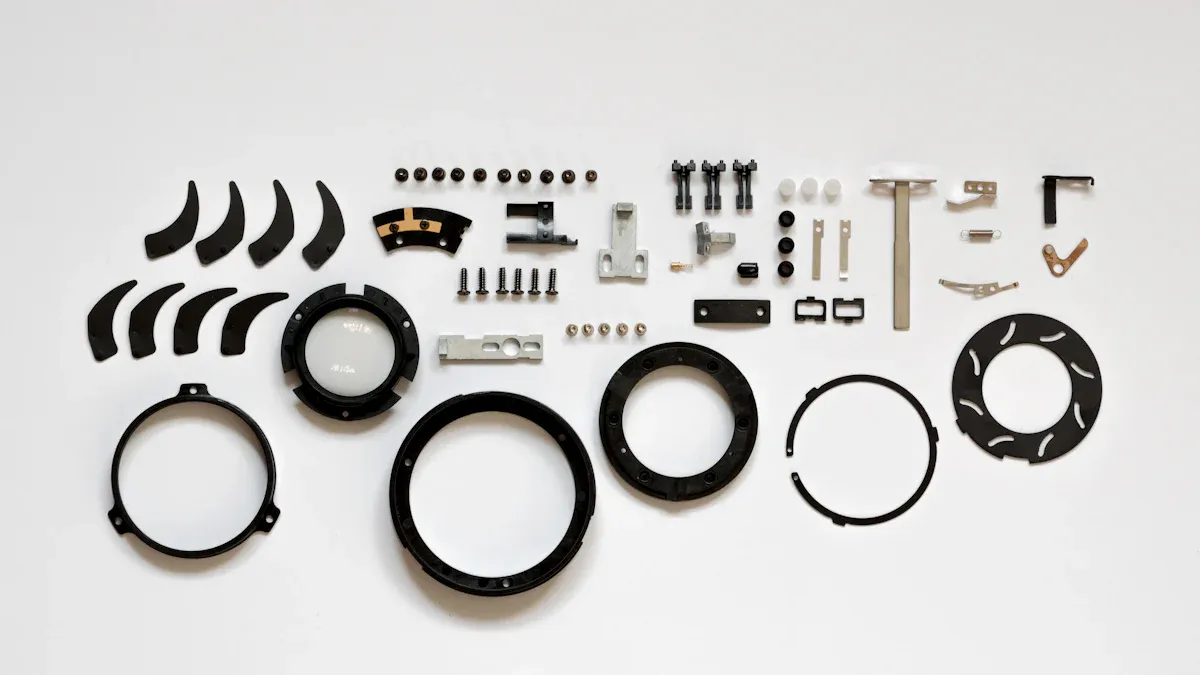
High-strength components manufactured through Powder Metallurgy find extensive use across various industries. This manufacturing method offers unique advantages for demanding applications.
Automotive Industry Powder Metallurgy Components
The automotive industry heavily relies on high-strength components. These parts must withstand extreme conditions and provide reliable performance.
Engine Components
Manufacturers use Powder Metallurgy for various engine parts. These include sprockets, gears, connecting rods, camshafts, and main bearing caps. These components benefit from the uniform properties and strength that the process offers. Connecting rods, for example, are made from high-strength materials like forged steel, aluminum, or titanium. They withstand significant forces during engine operation. They transfer combustion forces from the piston to the crankshaft. They also convert linear motion to rotational motion and maintain piston alignment. Crankshaft bearing caps provide good fatigue performance and are lightweight. Their primary function is to secure the crankshaft within the engine block. They also distribute loads and stresses. Intake valves and timing pulleys can be manufactured using titanium alloys, such as Ti-6Al-4V. These alloys offer low density, high strength, and good corrosion resistance.
Transmission Gears
High-strength transmission gears are crucial for vehicle performance and durability. Powder Metallurgy allows for the production of complex gear geometries with high precision. This results in strong, wear-resistant gears that contribute to efficient power transfer.
Aerospace and Defense Powder Metallurgy Applications
The aerospace and defense sectors demand materials with exceptional strength-to-weight ratios and resistance to extreme environments.
Structural Components
High-strength Powder Metallurgy materials create reinforced brackets and fasteners for aircraft and defense vehicle structures. They also produce crash-resistant and impact-absorbing components for military applications. Lightweight, high-strength brackets and housings are essential for landing gear assemblies. These components ensure safety and performance under critical conditions.
Turbine Blades
Turbine blades are critical components in aircraft engines. They operate under high temperatures and immense stress. Powder Metallurgy enables the production of advanced turbine blades, heat exchangers, and other structural parts. These parts offer superior high-temperature strength and fatigue resistance.
Medical and Dental Powder Metallurgy Solutions
The medical and dental fields require biocompatible materials with high strength and precision for implants and instruments.
Surgical Instruments
Surgical instruments demand high strength, corrosion resistance, and precision. Powder Metallurgy produces complex instrument designs with excellent surface finishes. This ensures durability and reliability in critical medical procedures.
Implants
Powder Metallurgy creates new porous biomaterials suitable for implants. These materials possess remarkable mechanical and physical properties often unattainable through traditional casting methods.
| Implant Material | Key Properties Relevant to Implants |
|---|---|
| Ti 6Al-4V ELI | - Exceptional Biocompatibility: Integrates safely with bone, crucial for osseointegration. - Superior Damage Tolerance: Enhanced fracture toughness and fatigue resistance for enduring chewing forces. - Low Elastic Modulus: Reduces stress shielding on surrounding bone, promoting longevity. |
| CP Ti - Grade 4 (Annealed and Cold Worked) | - High Strength: Ultimate tensile strength up to 950 MPa, allowing for smaller, stronger implant designs. - Exceptional Microstructural Stability: Maintains homogeneity after surface treatments. - Good Ductility and Formability: Ideal for manufacturing intricate implant designs and easy processing. |
High oxygen concentration titanium (HOC-Ti), produced by this method, shows promise for oral implant applications. It exhibits excellent biocompatibility in vitro. It also has a yield strength increased to 800 MPa and elongation-to-failure remaining over 20%.
Industrial Machinery Powder Metallurgy Parts
Industrial machinery operates under demanding conditions. It requires components with exceptional durability and performance. This manufacturing method provides solutions for these critical applications.
Wear-Resistant Components
Industrial machinery relies on wear-resistant components. These parts ensure long operational life and reduce maintenance. Wear-resistant coatings, often fabricated using metal powders, extend the service life of components and equipment. They protect against wear and corrosion. This reduces maintenance frequencies and replacement needs. Ultimately, it lowers operational costs. Manufacturers use this method to produce various wear-resistant parts. These include sprockets, cams, couplings, housings, levers, bushings, and bearings. Composites fabricated with this method can exhibit significantly lower wear rates. For instance, SS316L-Al2O3 composites showed a 7.2 times lower wear rate compared to unreinforced steel. This indicates a substantial improvement in service life for wear applications.
High-Load Bearings
High-load bearings are essential in industrial machinery. They support heavy rotating parts and manage significant forces. Bearings produced through this method offer excellent strength and wear resistance. They withstand continuous stress and friction. This ensures smooth operation and extended service life for heavy machinery. The precise control over material composition and microstructure allows for tailored bearing properties. These properties meet the specific demands of various industrial applications. This results in reliable performance even under extreme loads.
Advantages of Powder Metallurgy for High-Strength Components
Powder Metallurgy offers significant advantages for manufacturing high-strength components across various industries. These benefits stem from its unique processing capabilities.
Net-Shape Manufacturing in Powder Metallurgy
Net-shape manufacturing minimizes waste and production steps. This process creates parts very close to their final dimensions.
Reduced Machining Requirements
Net-shape part fabrication processes in Powder Metallurgy can reduce or even eliminate the need for secondary machining. This leads to time, energy, and cost savings during manufacturing. Manufacturers avoid extensive post-processing, which streamlines production.
Material Utilization Efficiency
Net and near-net shape design in Powder Metallurgy significantly increases raw material utilization. It reduces or eliminates the need for costly secondary machining. This method, particularly when compared to traditional casting, demonstrates a high utilization rate of raw materials, reaching up to 95%. This efficiency translates into lower material costs and less waste.
Complex Geometries with Powder Metallurgy
This manufacturing method excels at producing intricate designs. It offers engineers considerable flexibility.
Design Freedom
Powder Metallurgy allows for the creation of complex shapes and geometries. Engineers can design parts with intricate details, specialized edges, and specific curves. This freedom enables innovative component designs that might be difficult or impossible to achieve with other manufacturing processes.
Integrated Features
The process allows for the combination of multiple sub-assemblies into a single component. It also facilitates the inclusion of internal features and sophisticated surface patterns, integral to modern gear systems. This integration reduces assembly steps and improves overall part integrity.
Tailored Material Properties via Powder Metallurgy
Engineers can precisely control material characteristics. This allows for customized performance.
Custom Alloy Blends
Powder Metallurgy enables the creation of custom alloy blends. Manufacturers can combine different metal powders to achieve specific mechanical, thermal, or electrical properties. This precise control over composition ensures the material meets exact application requirements.
Controlled Porosity
The process allows for controlled porosity within the material. While high-strength parts typically aim for maximum density, specific applications might benefit from controlled levels of porosity. This can influence properties like self-lubrication or filtration capabilities.
Challenges and Considerations for High-Strength Powder Metallurgy
Manufacturers face several challenges when producing high-strength components. These include the initial cost of specialized powders, the complexity of process control, and certain design limitations. Addressing these factors is crucial for successful high-strength part production.
Initial Powder Cost in Powder Metallurgy
The raw materials for high-strength applications often come with a higher price tag. This impacts the overall manufacturing budget.
Specialized Powders
High-strength applications demand specialized metal powders. These powders often have specific compositions, particle sizes, and morphologies. Their production involves advanced techniques, which increase their cost compared to conventional metal powders. For example, the cost difference can be substantial:
| Powder Type | Cost Per Pound |
|---|---|
| MIM Feedstock | $10 - $12 |
| Conventional PM | $1 - $2 |
This table illustrates the significant investment required for specialized materials.
Processing Expenses
Beyond the powder itself, the processes required to achieve high strength also add to the expense. These include advanced compaction, sintering, and post-sintering treatments like Hot Isostatic Pressing (HIP). Each step demands precise control and specialized equipment, contributing to higher production costs.
Process Control Complexity in Powder Metallurgy
Achieving consistent high strength requires meticulous control over every manufacturing stage. Slight variations can compromise part quality.
Sintering Parameters
Sintering is a critical step. It bonds powder particles and densifies the part. Precise control of several parameters is essential:
- Powder Particle Size and Shape: These factors influence how well particles pack together. Irregular shapes or varied sizes can lead to uneven densities.
- Sintering Temperature and Time: Inconsistent temperatures cause uneven densification. Insufficient time lowers density, while excessive time can lead to undesirable grain growth.
- Cooling Rate: This affects the microstructure and final density. Rapid cooling can induce residual stresses, while slow cooling alters microstructural features.
- Powder Mixing and Blending: Inconsistent mixing results in uneven particle distribution and density variations. Homogeneous mixtures are crucial.
- Compaction Speed and Pressure: Variations in pressure during compaction lead to differences in green density. This translates directly to final sintered density variations.
Density Uniformity
Maintaining uniform density throughout a part is vital for consistent strength. Several factors influence dimensional change and density uniformity:
- Material Properties and Powder Characteristics: Particle size, shape, and distribution significantly impact dimensional change. Finer particles may increase shrinkage. Alloy content also plays a role.
- Compaction Pressure and Green Density: These influence the uniformity of the pre-sintered part. Uneven green density causes uneven shrinkage. Higher pressures can reduce porosity and improve dimensional consistency.
- Sintering Temperature and Atmosphere: High temperatures in a controlled atmosphere are typical. Minor variations in temperature or atmosphere can cause shifts in dimensional change. This requires tight process control for consistency.
Design Limitations in Powder Metallurgy
While offering great design freedom, this manufacturing method also presents certain limitations.
Part Size Constraints
The size of components produced can be limited by the capacity of compaction presses and sintering furnaces. Larger parts may require specialized equipment or alternative manufacturing routes. This can restrict the application of this method for very large high-strength components.
Tooling Requirements
Tooling for high-strength applications demands specific considerations. Decisions regarding tooling significantly affect overall manufacturing quality and cost. A knowledgeable vendor considers the entire manufacturing process, including assembly, to ensure tooling choices lead to the most cost-effective project. While a misconception exists that powder metal tooling is inherently expensive, managing tool life through the right combination of coatings, platings, materials, and heat treatment is key to efficiency. The selection of appropriate tooling materials is also critical; using cheaper, unsuitable materials can lead to tool breakage, incurring additional costs and potentially extending lead times due to rework or replacement.
- Compaction Ratios: A typical 2-to-1 fill-to-final compact ratio is used. For multi-level parts, each level requires a unique tool member. The press must drive each member. Most presses handle two levels, with complex ones managing more.
- Tool Strength and Part Design: Thinner part walls necessitate thinner tools. This increases the risk of tool breakage. Tool strength must be considered when specifying wall thickness.
- Tool Material Selection: The choice of tooling material is crucial. Using cheaper materials can lead to tool breakage. Materials must be selected to achieve the required part density.
- Tool Life Management: Optimizing tool life involves finding the right combination of coatings, platings, materials, and heat treatment. An experienced supplier helps determine the most efficient combination.
- Edge Design: Edges can be problematic for tooling. Instead of radii, angles are often preferred where edges meet. Radii can result in razor-sharp edges that are difficult to mold. Secondary operations can achieve a radius from an angle.
Powder Metallurgy is a proven and increasingly vital method for manufacturing high-strength parts across diverse industries. Its ability to achieve high density, utilize advanced materials, and leverage sophisticated post-processing techniques makes it a compelling choice. Continued advancements in this technology, including ultra-high-temperature sintering, novel soft magnetic composites, and the development of high entropy alloys and metal matrix composites, promise even greater capabilities for future high-performance applications.
FAQ
How does Powder Metallurgy achieve high strength?
Powder Metallurgy achieves high strength through density optimization, careful material selection, and precise microstructural control. Advanced compaction and sintering techniques reduce porosity. Specialized alloys and composites further enhance mechanical properties.
Can Powder Metallurgy parts reach full density?
Yes, Powder Metallurgy parts can achieve near-full density. Techniques like Hot Isostatic Pressing (HIP) and powder forging effectively eliminate internal porosity. These processes result in components with densities often exceeding 98%, significantly boosting strength and performance.
What types of materials are used for high-strength Powder Metallurgy?
High-strength Powder Metallurgy utilizes specialized alloy powders like high-performance steels, superalloys, and refractory metals. Metal Matrix Composites (MMCs) also offer tailored properties. These materials provide superior mechanical performance for demanding applications.
How does Hot Isostatic Pressing (HIP) enhance strength in Powder Metallurgy?
Hot Isostatic Pressing (HIP) enhances strength by eliminating internal porosity. It applies high temperature and uniform pressure. This process densifies the material, improving fatigue strength, ductility, and fracture toughness. HIP creates a more robust and reliable component.
Which industries commonly use high-strength Powder Metallurgy parts?
High-strength Powder Metallurgy parts find extensive use in the automotive, aerospace, defense, medical, and industrial machinery sectors. These industries rely on PM for critical components requiring durability, precision, and performance under extreme conditions.
What are the main advantages of using Powder Metallurgy for strong components?
Powder Metallurgy offers net-shape manufacturing, reducing machining and material waste. It allows for complex geometries and integrated features. Manufacturers can also tailor material properties precisely, creating custom alloy blends for specific performance needs.
Are there any limitations when producing high-strength parts with Powder Metallurgy?
Yes, some limitations exist. Initial costs for specialized powders and complex process control can be higher. Part size constraints and specific tooling requirements also present challenges. Careful planning helps mitigate these considerations.