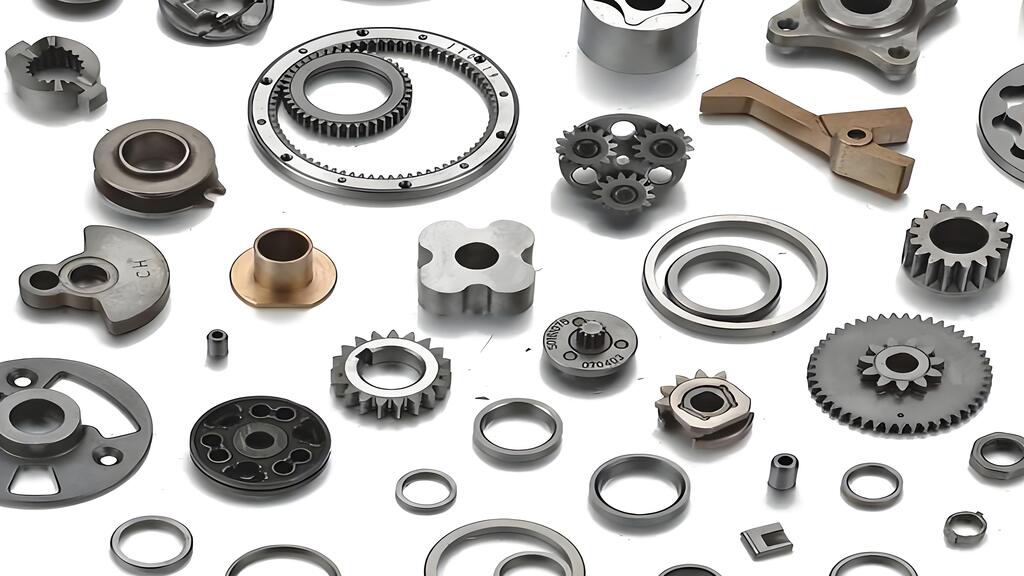


Differences Between PM and MIM for Tungsten Alloy
Powder Metallurgy (PM) manufactures components by compacting metal powders into a specific shape. Sintering then fuses these particles together. Metal Injection Molding (MIM) combines fine metal powders with a binder. This creates a feedstock for injection into a mold. Comparing PM and MIM helps manufacturers select the optimal production method for specific Tungsten Alloy components.
Key Takeaways
- Powder Metallurgy (PM) makes parts by pressing metal powders into a shape, then heating them.
- metal injection Molding (MIM) mixes fine metal powders with a binder, then molds and heats them.
- PM works best for simple, larger tungsten alloy parts and costs less for medium production.
- MIM is great for small, complex tungsten alloy parts needing high detail and precision.
- MIM parts usually have a smoother finish and higher density than PM parts.
- Choose PM for lower tooling costs and larger parts; choose MIM for complex designs and mass production.
- MIM parts are stronger and more uniform inside, good for tough jobs.
- Consider part size, shape, strength needs, and how many parts you need when choosing PM or MIM.
Understanding Powder Metallurgy (PM) for Tungsten Alloy Production

Powder Metallurgy (PM) offers a robust manufacturing route for various components, including those made from Tungsten Alloy. This process involves several distinct stages, each critical to the final product's quality and performance.
The PM Process for Tungsten Alloy Components
The PM process for creating components from tungsten alloy begins with careful preparation and progresses through compaction and sintering.
Powder Preparation and Blending for Tungsten Alloy
Manufacturers start by preparing fine metal powders. For tungsten alloy, this often involves blending tungsten powder with other alloying elements like nickel, iron, or copper. This blending ensures a homogeneous mixture, which is crucial for achieving desired material properties in the final part.
Compaction Methods for Tungsten Alloy
After blending, the mixed powder is compacted into a "green" compact. This step typically uses high pressure to press the powder into a mold cavity, forming the desired shape. Common compaction methods include uniaxial pressing, where pressure applies from one direction, or isostatic pressing, which applies pressure uniformly from all directions, leading to higher green density.
Sintering Process for Tungsten Alloy
The green compact then undergoes sintering. This heat treatment process occurs at temperatures below the melting point of the main constituent. During sintering, particles bond together, increasing the part's strength and density. The high temperatures facilitate atomic diffusion, which consolidates the material and reduces porosity.
Advantages of PM for Tungsten Alloy Parts
PM offers several compelling benefits for manufacturing tungsten alloy components, particularly concerning material use and cost.
Material Utilization Efficiency for Tungsten Alloy
Powder metallurgy boasts high material utilization efficiency. The process fabricates parts close to their final dimensions, significantly reducing the need for extensive machining. This approach means less scrap, with most parts incorporating over 97% of the raw material. This virtually eliminates waste compared to other processes where significant material is wasted, and recycling incurs additional costs.
Cost-Effectiveness for Large Tungsten Alloy Parts
PM proves highly cost-effective, especially for large tungsten alloy parts and high-volume production. It significantly lowers manufacturing yield losses and reduces overall manufacturing costs. The process minimizes machining by creating parts with final or near-final dimensions. Furthermore, PM offers lower tool costs compared to some alternative methods, making it particularly economical when manufacturing more than 10,000 parts per year.
Tailored Material Properties in Tungsten Alloy
PM allows for precise control over the composition and microstructure of the final product. This enables manufacturers to tailor material properties, such as hardness, strength, and thermal conductivity, to meet specific application requirements for tungsten alloy components.
Limitations of PM for Tungsten Alloy Manufacturing
Despite its advantages, PM also presents certain limitations when producing tungsten alloy parts.
Part Complexity Restrictions for Tungsten Alloy
PM typically faces restrictions regarding part complexity. The compaction process makes it challenging to produce parts with intricate geometries, undercuts, or very thin walls. Designs often require simpler shapes that allow for easy ejection from the die.
Post-Processing Requirements for Tungsten Alloy
While PM produces near-net shapes, many parts still require post-processing. This can include machining, sizing, or surface finishing to achieve precise dimensions or desired surface quality. These additional steps can add to the overall manufacturing time and cost.
Density and Porosity Control in Tungsten Alloy
Controlling density and porosity can be a challenge in PM. While tungsten has a high density of approximately 19.25 g/cm³, PM parts may exhibit some residual porosity. Class 4 Tungsten Heavy Alloy (WHA) can achieve densities ranging from 18.25 to 18.85 g/cm³. However, achieving full theoretical density is difficult, and some applications may require specific porosity levels. For instance, porous tungsten can achieve continuously adjustable porosity ranging from 20% to 40%, with specific fabrication methods yielding controlled porosity between 21.98% and 38.16%.
Typical Applications of PM Tungsten Alloy
Powder Metallurgy (PM) offers a versatile manufacturing method for Tungsten Alloy, enabling its use in diverse and demanding applications. The unique properties of PM tungsten parts make them ideal for several critical industries.
Radiation Shielding Components
PM Tungsten Alloy excels in radiation shielding applications across various industries, including medical. Manufacturers use it to create components that effectively absorb and block radiation. This ensures the safety of both equipment and personnel. Specific applications include:
- Collimators (1D and 2D) for Computed Tomography (CT) and imaging technologies
- X-Ray shielding
- Shielding, dose containers, and wire for nuclear medicine
- Multileaf collimators for advanced radiation therapies
- Syringe shields
- Radioactive source containers
- Radiotherapy machines
- X-Ray and CT security machines
- Oncology instruments and treatment systems
- Gamma radiography shields
- Source holders for oil-well logging and industrial instrumentation
- Syringe protection for radioactive injections
Counterweights and Balancers
The high density of PM tungsten alloy makes it an excellent material for counterweights and balancers. Engineers use these components in various systems to reduce vibration and improve stability. Examples include aircraft, automotive parts, and rotating machinery. PM allows for the creation of precise shapes, ensuring accurate balancing.
Electrical Contacts
PM tungsten alloy finds extensive use in electrical contacts. Its high melting point, excellent electrical conductivity, and resistance to arc erosion are crucial for these applications. Manufacturers produce contacts for circuit breakers, switches, and relays using PM. The process ensures the necessary material properties for reliable electrical performance.
Heavy Duty Tooling
The exceptional hardness and wear resistance of PM tungsten alloy make it suitable for heavy-duty tooling. This includes cutting tools, dies, and wear parts. PM allows for the production of complex tool geometries with superior mechanical properties. These tools withstand extreme conditions and offer extended service life in demanding industrial environments.
Understanding Metal Injection Molding (MIM) for Tungsten Alloy Production
Metal Injection Molding (MIM) represents an advanced manufacturing process for creating complex metal components. This method combines the design flexibility of plastic injection molding with the material properties of powdered metals. It offers a precise way to produce intricate parts from various alloys, including Tungsten Alloy.
The MIM Process for Tungsten Alloy Components
The MIM process involves several key stages, transforming fine metal powders into high-density, complex parts.
Feedstock Preparation for Tungsten Alloy
The MIM process begins with feedstock preparation. Manufacturers mix very fine metal powders with a polymeric binder system. This mixture creates a homogeneous material called feedstock. The binder provides the necessary flow characteristics for injection molding.
Injection Molding Phase for Tungsten Alloy
Next, the feedstock is heated and injected into a mold cavity under high pressure. This step forms a "green" part, which accurately replicates the mold's intricate features. The binder holds the metal powder particles together during this stage.
Debinding Process for Tungsten Alloy
After injection molding, the green part undergoes a debinding process. This step removes the polymeric binder from the component. Debinding can occur through thermal, solvent, or catalytic methods, leaving behind a "brown" part composed primarily of metal powder with some residual binder.
Sintering and Densification for Tungsten Alloy
Finally, manufacturers sinter the brown part in a high-temperature furnace. During sintering, the metal particles bond together, and the part densifies. This process significantly reduces porosity and shrinks the part to its final dimensions, achieving high strength and density.
Advantages of MIM for Tungsten Alloy Parts
MIM offers distinct advantages for producing intricate and high-performance tungsten alloy components.
High Part Complexity and Detail for Tungsten Alloy
MIM excels at producing parts with high complexity and fine detail. The injection molding phase allows for intricate geometries, undercuts, internal threads, and thin walls that are difficult or impossible to achieve with traditional powder metallurgy or machining.
Near-Net Shape Production for Tungsten Alloy
MIM typically produces parts in a near-net shape, minimizing the need for extensive post-processing. This reduces material waste and manufacturing costs. Molds for aerospace Metal Injection Molding (MIM) components are typically designed to achieve tolerances of ±0.1% or better. For metal injection molded pure tungsten parts, the dimensional precision can be controlled within ±0.09% after sintering in a hydrogen atmosphere.
Excellent Surface Finish for Tungsten Alloy
MIM parts often exhibit an excellent surface finish directly out of the sintering furnace. This reduces or eliminates the need for secondary finishing operations, saving time and cost.
Limitations of MIM for Tungsten Alloy Manufacturing
Despite its benefits, MIM also presents certain limitations for tungsten alloy manufacturing.
Higher Initial Tooling Costs for Tungsten Alloy
MIM requires specialized and precise molds, leading to higher initial tooling costs. For metal injection molding, the initial tooling costs for professional industrial equipment typically range from $50,000 to $200,000. This cost can vary based on factors such as the complexity of the mold and specific customization requirements. Investing in high-quality molds is crucial for durability, precision, and to minimize future maintenance expenses while ensuring consistent part quality.
Part Size and Wall Thickness Constraints for Tungsten Alloy
MIM has limitations regarding part size and wall thickness. The maximum dimension can reach up to 150 mm (6 inches). Wall thickness also presents constraints; engineers generally avoid sections over 12.5 mm (0.5 inches) thick, though some alloys allow thicker sections. Conversely, walls thinner than 0.1 mm (0.0039 inches) are typically avoided, with 0.030 mm possible in some cases. The wall thickness should typically be a minimum of 1.5 mm (0.060 inches). Wall sections less than 6 mm are most appropriate for MIM.
Material Selection Limitations for Tungsten Alloy
While MIM can process a wide range of metal powders, material selection can be more limited compared to traditional PM. The powders must be fine enough to mix with the binder and flow effectively during injection.
Typical Applications of MIM Tungsten Alloy
Metal Injection Molding (MIM) excels at producing small, complex parts. This makes it ideal for various high-tech applications where precision and intricate designs are crucial.
Small, Intricate Medical Devices
MIM Tungsten Alloy finds extensive use in the medical field. Manufacturers utilize MIM tungsten alloy (W-Ni-Fe) for radiation shielding in medical imaging devices. They also employ it for radiation shielding in cancer treatment equipment. Its high density and non-toxic nature make it an effective lead replacement in these critical applications. Furthermore, MIM tungsten electrodes are employed in surgical ablation devices. These electrodes leverage tungsten's properties to efficiently reach and maintain the high temperatures required for tissue removal. Tungsten's ability to sustain high temperatures for longer periods offers an advantage over other alloys in this application.
Micro-Electronic Components
The micro-electronics industry demands extremely small and precise components. MIM is well-suited for producing these parts. It creates intricate shapes with tight tolerances. This includes connectors, heat sinks, and other miniature components essential for modern electronic devices. The process ensures high density and excellent surface finish, crucial for reliable performance in compact electronic assemblies.
Aerospace Miniaturized Parts
Aerospace applications often require components that are both lightweight and incredibly strong. They also need to be very small. MIM produces miniaturized parts for aircraft and spacecraft. These include sensor housings, small gears, and intricate valve components. The process delivers high strength-to-weight ratios and complex geometries. This meets the stringent demands of the aerospace industry.
Precision Weaponry Components
MIM tungsten alloy is also valuable in precision weaponry. It produces small, high-performance components for firearms and defense systems. These parts often require exceptional strength, wear resistance, and precise dimensions. MIM delivers intricate trigger mechanisms, firing pins, and other critical internal components. The process ensures the reliability and accuracy necessary for these demanding applications.
Direct Comparison: PM vs. MIM for Tungsten Alloy Manufacturing
Manufacturers often weigh Powder Metallurgy (PM) and Metal Injection Molding (MIM) when producing Tungsten Alloy components. Each method offers distinct advantages and limitations, particularly concerning part complexity, precision, and material properties.
Part Complexity and Design Freedom for Tungsten Alloy
The manufacturing process significantly dictates the geometric complexity achievable for Tungsten Alloy parts.
PM's Geometric Limitations for Tungsten Alloy
PM typically faces limitations in producing intricate geometries. The high-pressure uniaxial compression process makes it best suited for simpler shapes. Creating complex internal structures, undercuts, or very thin walls proves challenging with traditional PM methods. Designs often require simpler forms to facilitate easy ejection from the compaction die.
MIM's Intricate Shape Capabilities for Tungsten Alloy
MIM offers significantly greater design freedom for Tungsten Alloy components. It excels at producing parts with intricate internal structures, thin walls, and complex shapes. MIM allows for complex internal cavities, undercuts, threads, knurling features, and overhangs that traditional methods cannot produce. This process can create walls as thin as 0.4mm, a challenging but achievable feat for tiny applications. MIM can even achieve walls as thin as 0.1mm, making it suitable for highly complex parts. Furthermore, MIM consolidates multiple components into a single part, reducing assembly work and boosting reliability. This contrasts with PM, where complex assemblies often require separate parts to be put together. MIM offers significant advantages in achieving complex geometries without extensive machining, streamlining production and reducing costs, unlike forging, which is typically constrained to simpler shapes due to its inherent limitations.
Precision and Dimensional Tolerances for Tungsten Alloy
Achieving precise dimensions and tight tolerances is crucial for many applications of Tungsten Alloy parts.
PM's Typical Tolerances for Tungsten Alloy
PM generally achieves good dimensional control, but its typical tolerances are broader than MIM. The compaction and sintering processes introduce some variability. The following table illustrates typical tolerances for various PM Tungsten Alloy part types:
| Part Type | Dimension | Tolerance |
|---|---|---|
| Rectangle | Width & Thickness | +.015/-.000 |
| Slabs | Thickness | +.015/-.000 |
| Slabs | Width | Clean Up |
| Discs | Diameter 0"-2" | +.015/-.000 |
| Discs | Diameter > 2" | +.060/-.000 |
| Rings | Inside Diameter | +.000/-.020 |
| Rings | All other dimensions | Follow standard O.D. and Thickness Tolerances |
MIM's Tighter Tolerances for Tungsten Alloy
MIM offers superior precision and tighter dimensional tolerances. The injection molding process, combined with controlled sintering, allows for highly accurate replication of mold features. Tungsten alloy parts produced by metal injection molding can achieve dimensional tolerances as tight as ±0.1%. This level of precision often minimizes or eliminates the need for post-sintering machining.
Density, Strength, and Mechanical Properties of Tungsten Alloy
The manufacturing method significantly impacts the final density, strength, and overall mechanical properties of Tungsten Alloy components.
PM's Achievable Density for Tungsten Alloy
PM can achieve high densities for Tungsten Alloy, but often falls slightly short of full theoretical density. Extrusion can achieve 97% of theoretical density. Final sintering can reach approximately 96% theoretical density. The specific type of tungsten powder also influences the achievable density:
- Pure tungsten: ≥18 g/cm³
- Doped tungsten: ≥18.5 g/cm³
- Tungsten-nickel-iron: ≥18 g/cm³
- Tungsten heavy alloys: ≥17.5 g/cm³
- Tungsten composites: up to 21 g/cm³
MIM's High Density and Strength for Tungsten Alloy
MIM generally produces Tungsten Alloy parts with higher densities, often approaching full theoretical density. The fine powders and controlled sintering process in MIM lead to a more homogeneous microstructure with minimal porosity. This higher density directly translates to superior mechanical properties, including increased strength, hardness, and wear resistance, making MIM parts suitable for demanding applications.
Internal Uniformity and Porosity in Tungsten Alloy
Internal uniformity and porosity significantly influence the performance of Tungsten Alloy components. The manufacturing method plays a crucial role in determining these characteristics.
PM's Potential for Porosity in Tungsten Alloy
Powder Metallurgy (PM) parts can exhibit some residual porosity. The compaction and sintering processes, while effective, do not always achieve full theoretical density. This means small voids or pores can remain within the material structure. While some applications might benefit from controlled porosity, excessive or uneven porosity can compromise mechanical properties like strength and fatigue resistance. Achieving a homogeneous green structure is crucial for improving the liquid phase sintering response in these materials, which helps minimize porosity.
MIM's Homogeneous Microstructure for Tungsten Alloy
Metal Injection Molding (MIM) generally produces parts with a highly homogeneous microstructure and minimal porosity. The use of very fine powders and a controlled sintering process allows for greater densification. This results in a more uniform material structure. MIM utilizing ultrafine tungsten and its alloy powders is noted for providing a homogeneous microstructure. Microwave sintering, a technique used in powder metallurgy, can significantly enhance microstructures in WC-Co alloys (a type of tungsten alloy) by promoting fine grain size and uniform cobalt distribution. This leads to superior mechanical properties and consistent performance.
Tooling and Production Costs for Tungsten Alloy
Tooling and production costs represent significant factors when choosing between PM and MIM for Tungsten Alloy manufacturing. These costs vary depending on the complexity of the part and the production volume.
PM's Lower Tooling Investment for Tungsten Alloy
Powder Metallurgy (PM) typically involves lower initial tooling costs. The dies used for compaction are generally simpler and less expensive to produce compared to the intricate molds required for MIM. This makes PM an attractive option for projects with smaller budgets or when prototyping.
MIM's Higher Tooling Investment for Tungsten Alloy
Metal Injection Molding (MIM) requires a higher initial investment in tooling. The molds are complex and precision-engineered to withstand high pressures and temperatures. They also need to replicate intricate part geometries accurately. This higher upfront cost is a consideration for manufacturers.
Cost-Effectiveness at Different Volumes for Tungsten Alloy
The cost-effectiveness of PM versus MIM depends heavily on production volume. PM offers a cost-effective solution for medium to large production runs, especially for simpler parts. Its lower tooling costs make it economical for moderate volumes. MIM becomes highly cost-effective for very high-volume production of complex, small parts. The higher initial tooling cost is amortized over a large number of units, leading to a lower per-part cost.
Production Efficiency and Scalability for Tungsten Alloy
Production efficiency and scalability are critical considerations for manufacturers. Both PM and MIM offer distinct advantages in these areas for Tungsten Alloy components.
PM for Medium to Large Batches of Tungsten Alloy
Powder Metallurgy (PM) is well-suited for producing medium to large batches of Tungsten Alloy parts. The compaction process allows for relatively fast cycle times once the tooling is set up. Manufacturers can produce thousands of parts efficiently, making it ideal for applications requiring consistent supply without extreme complexity.
MIM for High-Volume Production of Small Tungsten Alloy Parts
Metal Injection Molding (MIM) excels in high-volume production, particularly for small and complex Tungsten Alloy parts. The injection molding process is highly automated and offers rapid cycle times. This allows for the mass production of intricate components with excellent repeatability. MIM's ability to produce near-net shapes also reduces post-processing, further enhancing overall production efficiency for large quantities.
Surface Finish and Post-Processing for Tungsten Alloy
The manufacturing process significantly influences the final surface finish and the need for post-processing in metal parts. Both Powder Metallurgy (PM) and Metal Injection Molding (MIM) produce different surface qualities, which impacts subsequent manufacturing steps.
PM's Need for Finishing for Tungsten Alloy
Powder Metallurgy (PM) parts often require additional finishing operations. The compaction process, followed by sintering, typically results in a surface that exhibits some roughness. This roughness comes from the granular nature of the powder particles and the slight irregularities that occur during compaction and sintering. Therefore, PM parts usually need secondary operations to achieve a smoother surface or tighter dimensional tolerances. These post-processing steps can include:
- Machining: Removing material to achieve precise dimensions or specific features.
- Grinding: Improving surface flatness and reducing roughness.
- Polishing: Creating a highly smooth and reflective surface.
- Sizing/Coining: Applying pressure to improve dimensional accuracy and surface finish.
These additional steps add to the overall manufacturing cost and time. They also introduce potential for material waste.
MIM's Near-Net Surface Quality for Tungsten Alloy
Metal Injection Molding (MIM) generally produces parts with a superior surface finish directly out of the sintering furnace. The injection molding process, similar to plastic molding, allows the feedstock to fill intricate mold cavities precisely. This results in a "near-net shape" part with excellent surface quality. The fine powder particles and the binder system contribute to this smooth finish. Consequently, MIM parts often require minimal or no post-processing for surface enhancement. This significantly reduces manufacturing steps, lowers overall production costs, and shortens lead times. The inherent smoothness of MIM parts makes them highly suitable for applications where aesthetic appeal or precise surface contact is critical.
How to Choose: PM or MIM for Your Tungsten Alloy Part

Selecting the right manufacturing process for a component is a critical decision. For parts made from Tungsten Alloy, manufacturers often weigh Powder Metallurgy (PM) against Metal Injection Molding (MIM). Each method offers distinct advantages. Understanding these differences helps engineers make informed choices.
Factors Influencing the Decision for Tungsten Alloy
Several key factors guide the selection between PM and MIM. These considerations ensure the chosen process aligns with the part's requirements and project constraints.
Part Geometry and Size for Tungsten Alloy
The complexity and physical dimensions of the desired part significantly influence the process choice. PM generally suits simpler, larger components. MIM excels at producing small, intricate parts with complex features.
Required Mechanical Performance for Tungsten Alloy
The mechanical properties a part needs are crucial. MIM typically delivers superior mechanical performance compared to traditional PM.
| Feature | Tungsten MIM | Powder Compression Molding (PCM) |
|---|---|---|
| Sintered Density | Exceeds 95% | 85% to 92% |
| Tensile Strength | Up to 700 MPa | Around 600 MPa |
| Internal Uniformity | Excellent, consistent density and structure | Good, but may be lower than MIM, especially for parts with tapers and uneven stress structures, leading to reduced physical properties at tips. |
| Suitability | Demanding applications requiring robust and intricate parts, high precision, and exceptional strength. | Cost-effective alternative with good strength, suitable for various applications where extreme properties are not required. |
MIM-processed parts also exhibit remarkable fatigue performance. This is crucial for applications under cyclic loads. MIM allows for the production of materials with excellent wear resistance. This is vital for durability and longevity in demanding environments. MIM enables the achievement of high densification levels and control over microstructure. This leads to improved mechanical integrity, a critical factor in high-performance applications.
Production Volume and Budget for Tungsten Alloy
The number of parts needed and the available budget play a significant role. Tooling costs and per-part costs vary greatly between the two methods.
| Method | Production Volume Suitability | Tooling Investment | Cost-Effectiveness |
|---|---|---|---|
| MIM | High production volumes (to amortize tooling) | Higher (complex molds) | Cost-effective at high volumes |
| PM | Medium to high-volume (simpler geometries) | Lower (simpler dies) | Economical for simple, high-volume parts |
| Method | Production Volume Threshold | Tooling Costs | Feedstock Costs (per pound) |
|---|---|---|---|
| MIM | >10,000-20,000 units (especially >200,000 annually) | Higher initial | ~$12 |
| PM | Medium to high-volume | Lower initial | ~$1-2 |
Surface Finish and Aesthetic Needs for Tungsten Alloy
The desired surface quality and aesthetic requirements also influence the choice. MIM generally produces parts with a smoother surface finish, often requiring less post-processing. PM parts typically need additional finishing steps to achieve a comparable surface quality.
Scenarios Favoring PM for Tungsten Alloy
PM offers distinct advantages for certain types of Tungsten Alloy components. Manufacturers often choose PM when these specific conditions apply.
Simpler Geometries for Tungsten Alloy
PM is ideal for parts with simpler shapes. The compaction process works best with designs that do not have complex internal features, undercuts, or very thin walls. This makes PM suitable for basic forms like blocks, rods, or rings.
Larger Part Sizes for Tungsten Alloy
PM can produce larger components more economically than MIM. The tooling for PM can accommodate bigger parts without the same cost escalation seen with large MIM molds. This makes PM a good choice for substantial components like radiation shields or counterweights.
Lower Production Volumes for Tungsten Alloy
PM is often more cost-effective for lower to medium production volumes. Its lower initial tooling costs make it a more accessible option when manufacturers do not need to produce tens of thousands of units annually.
Scenarios Favoring MIM for Tungsten Alloy
MIM excels in applications demanding high complexity, precision, and large-scale production. Manufacturers select MIM when these requirements are paramount.
Complex, Small Parts for Tungsten Alloy
MIM is the preferred method for small parts with intricate designs. It can create complex internal geometries, fine details, and thin walls that PM cannot achieve. This makes MIM perfect for miniature components in medical devices or electronics.
High Precision Requirements for Tungsten Alloy
MIM delivers superior dimensional accuracy and tighter tolerances. The injection molding process precisely replicates mold features. This results in parts that often require minimal or no post-machining to meet strict specifications.
Mass Production Needs for Tungsten Alloy
MIM is highly efficient for mass production. Its automated process and rapid cycle times allow for the cost-effective manufacturing of hundreds of thousands of small, complex parts. The higher initial tooling cost becomes negligible when amortized over very large production runs.
This comparison highlights key differences between Powder Metallurgy (PM) and Metal Injection Molding (MIM) for Tungsten Alloy manufacturing. PM suits simpler, larger components for medium volumes, offering cost-effectiveness. MIM excels at producing complex, small parts with high precision for mass production. Manufacturers must align the chosen process with specific part geometry, required mechanical performance, and production volume. Both technologies continue to advance, providing versatile solutions for diverse industrial demands.
FAQ
What is the primary difference between PM and MIM for tungsten alloy?
PM compacts metal powders into a shape before sintering. MIM mixes fine metal powders with a binder, injects this feedstock into a mold, then debinds and sinters the part. MIM offers greater complexity.
Which process is better for complex tungsten alloy parts?
MIM excels at producing complex tungsten alloy parts. Its injection molding phase allows for intricate geometries, undercuts, and thin walls. PM is generally limited to simpler shapes due to its compaction method.
Which process is more cost-effective for high-volume production of tungsten alloy?
MIM becomes highly cost-effective for very high-volume production of small, complex tungsten alloy parts. While MIM has higher initial tooling costs, these costs amortize over large quantities, leading to lower per-part costs.
Can PM achieve the same density as MIM for tungsten alloy?
MIM generally produces tungsten alloy parts with higher densities, often approaching full theoretical density. PM can achieve high densities but typically falls slightly short, potentially having more residual porosity.
What kind of surface finish can one expect from PM vs. MIM tungsten alloy parts?
MIM parts typically exhibit an excellent surface finish directly after sintering, often requiring minimal post-processing. PM parts usually have a rougher surface and often need additional finishing operations like machining or polishing.
Which process is better for larger tungsten alloy components?
PM is generally more suitable for producing larger tungsten alloy components. Its tooling can accommodate bigger parts more economically. MIM has limitations regarding maximum part size and wall thickness.
Are there specific applications where MIM tungsten alloy is preferred over PM?
Yes, MIM tungsten alloy is preferred for small, intricate medical devices, micro-electronic components, aerospace miniaturized parts, and precision weaponry components. These applications demand high complexity, precision, and excellent surface finish.