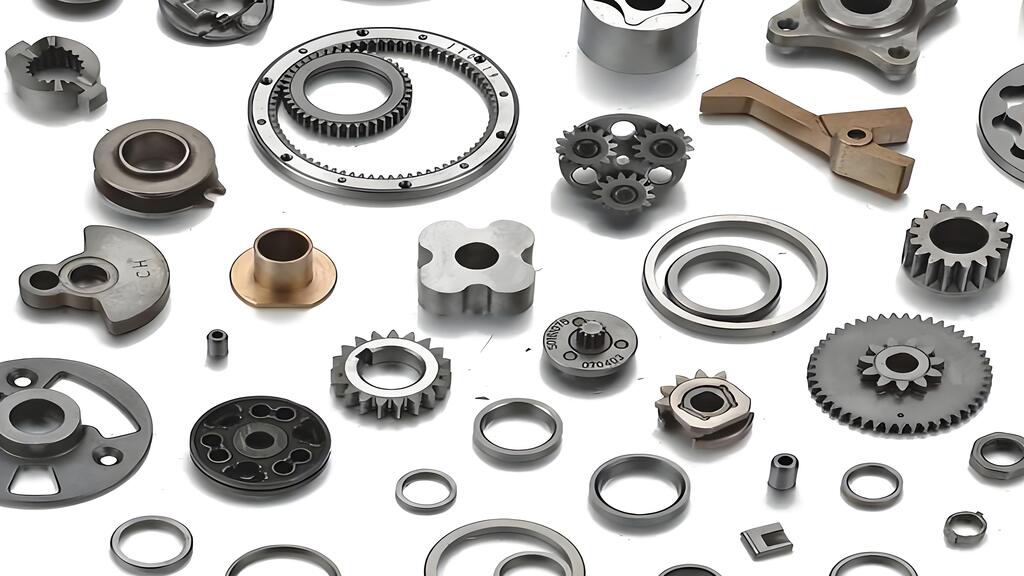


How Powder Metallurgy Can Benefit Electric Motors?
Powder Metallurgy significantly enhances electric motor performance through its superior material properties. This advanced manufacturing technique offers unparalleled design flexibility, enabling engineers to create innovative motor architectures. Furthermore, Powder Metallurgy provides highly cost-effective manufacturing solutions for various electric motor applications, optimizing production processes and material utilization.
Key Takeaways
- Powder Metallurgy makes electric motors work better and last longer.
- This method uses metal powders to create strong and precise motor parts.
- It helps make motor parts with complex shapes that are hard to make otherwise.
- Powder Metallurgy uses special materials called Soft Magnetic Composites (SMCs) to save energy in motors.
- SMCs allow motors to be smaller, lighter, and more powerful.
- This manufacturing process wastes very little material, which is good for the environment.
- Powder Metallurgy helps make motors quieter and reduces vibrations.
- Many important motor parts, like cores and gears, are made using this method.
Understanding Powder Metallurgy for Electric Motors
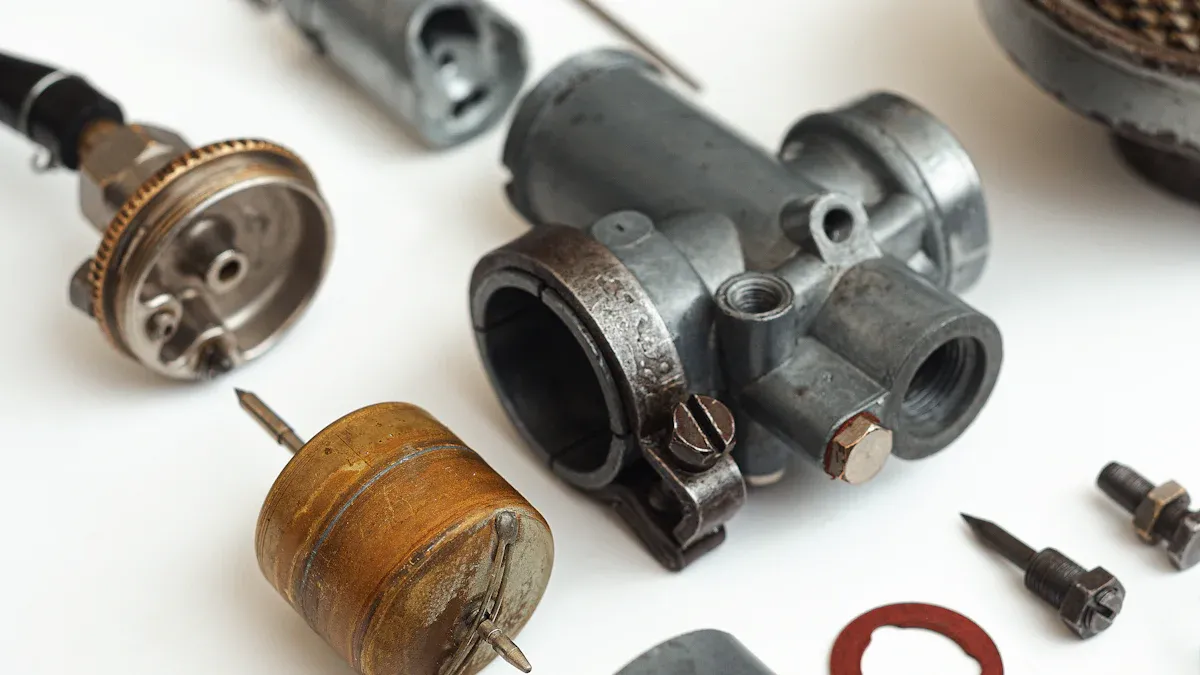
The Fundamental Powder Metallurgy Process
This manufacturing method forms components from metal powders. It involves several key stages, transforming raw materials into precision parts.
Powder Production and Blending
Manufacturers create fine metal powders through processes like atomization or chemical reduction. They then carefully blend these powders with alloying elements or lubricants. This blending ensures a uniform distribution of properties throughout the final component, which is crucial for consistent motor performance.
Compaction and Sintering
The process begins with compaction. Fine metal powder is compacted under controlled pressure to create a component with the desired shape and geometry. This initial pressing forms a "green part." Next, sintering occurs. The resulting green compact is then sintered at a high temperature, below the material's melting point, to produce the final component. This heating fuses the particles at an atomic level, giving the part strength and density without melting it.
Secondary Operations and Finishing
After Sintering, parts often undergo secondary operations. These can include machining for tighter tolerances, oil infiltration for self-lubrication, or heat treatment to enhance hardness or other mechanical properties. These finishing steps ensure the component meets specific performance and durability requirements for electric motor applications.
Unique Capabilities of Powder Metallurgy for Motor Components
This technique offers distinct advantages for electric motor components, surpassing traditional manufacturing methods.
Forming Complex Geometries
Powder Metallurgy allows for the creation of intricate designs. It enables the shaping of Soft Magnetic Composites (SMCs) into complex geometries. This capability is challenging or impossible with conventional manufacturing methods, especially while preserving critical magnetic properties.
Tailoring Magnetic Properties
Engineers can precisely control the magnetic characteristics of components. Powder Metallurgy facilitates the use of SMCs in electric motor stators, significantly reducing energy loss and enabling the design of high-torque motors. This provides a key advantage over traditional materials like silicon steel, particularly at higher frequencies.
Near-Net Shape Manufacturing
The process produces parts very close to their final dimensions. This minimizes the need for extensive post-processing. Powder Metallurgy boasts a low scrap rate of only 3%, contributing to resource efficiency and sustainability in manufacturing electric motor parts. It also delivers durable, heat-resistant, and high-performance components tailored for modern automotive needs, including electric motors.
Enhancing Electric Motor Efficiency with Powder Metallurgy
Electric motor efficiency is paramount for modern applications, especially in electric vehicles. Powder Metallurgy offers significant advancements in this area through innovative materials and precise manufacturing.
Soft Magnetic Composites (SMCs) for 3D Flux Paths
Soft Magnetic Composites (SMCs) represent a breakthrough in motor design. These materials possess isotropic magnetic properties, which means their magnetic characteristics are uniform in all directions. This offers a distinct advantage over traditional laminated sheet metal, which only exhibits good magnetic properties in two directions. SMCs are produced from compressed powder, allowing manufacturers to create workpieces with highly complex geometries.
Reducing Eddy Current Losses
SMCs inherently exhibit low iron loss, particularly at high frequencies. This characteristic directly translates to reduced eddy current losses within the motor. Unlike laminated materials, which restrict complex three-dimensional magnetic flux paths, SMCs enable true 3D magnetic flux control. This capability significantly improves electromagnetic performance and reduces energy waste.
Enabling Novel Motor Architectures
The unique 3D magnetic and electrical properties of SMCs unlock new possibilities for motor design. They facilitate the creation of compact designs by fully utilizing three-dimensional geometries. SMCs are especially suitable for motor topologies like axial flux motors and transverse flux machines (TFMs). These designs inherently feature 3D flux paths, which are challenging to construct efficiently with traditional laminations.
Improving Power Density
Utilizing the 3D capacity of SMCs in motor design leads to several advantages. Engineers can achieve reduced motor size and weight, fewer component parts, and lower overall costs. This ability to create more compact and efficient designs directly improves the power density of electric motors, delivering more power from a smaller package.
Optimized Material Properties from Powder Metallurgy
Powder Metallurgy provides precise control over material composition, porosity, and microstructure. This allows for the tailoring of specific properties crucial for electric motor performance.
High Permeability and Low Coercivity
Components produced via Powder Metallurgy can achieve high magnetic permeability and low coercivity. High permeability allows materials to easily conduct magnetic flux, while low coercivity means they can be easily magnetized and demagnetized. These properties are essential for efficient energy conversion in electric motors, minimizing hysteresis losses.
Controlled Electrical Resistivity
The ability to control electrical resistivity is another key benefit. Higher electrical resistivity in magnetic core materials helps to further reduce eddy current losses, especially in high-frequency applications. This precise control contributes directly to the overall energy efficiency of the motor.
Superior Thermal Conductivity
Powder Metallurgy also enables the development of materials with enhanced thermal conductivity. Efficient heat dissipation is critical for electric motors to maintain optimal operating temperatures and prevent performance degradation. Improved thermal conductivity helps manage heat effectively, contributing to motor longevity and consistent performance.
Design Freedom and Customization in Powder Metallurgy
Powder Metallurgy offers engineers unprecedented design freedom and customization capabilities for electric motors. This manufacturing method allows for the creation of highly specialized components, perfectly tailored to specific performance requirements.
Unlocking Motor Design Flexibility
Powder Metallurgy significantly expands the possibilities for electric motor design. It moves beyond the limitations of traditional manufacturing.
Creating Intricate Stator and Rotor Cores
Soft Magnetic Composite (SMC) materials, produced through Powder Metallurgy, consist of ferromagnetic particles with an insulating coating. These materials provide 3D magnetic performance, enabling complex motor geometries. The insulating layer in SMC materials reduces eddy current losses, enhancing motor efficiency at high frequencies. Manufacturers can mold SMC materials into intricate shapes, simplifying assembly and maintaining high material efficiency, often exceeding 95%. Their structure also facilitates better heat dissipation, crucial for high-performance applications. Merging SMC materials with laminated steel in hybrid stators allows for complex motor architectures that laminated steel alone cannot achieve. This hybrid approach leverages the high saturation flux density of laminated steel with the reduced eddy current losses and 3D magnetic flux paths of SMC materials. Integrating SMC materials and laminated steel into yokeless axial flux motor designs represents a paradigm shift, unlocking unprecedented performance and design versatility.
Integrating Multiple Functions into Single Parts
SMCs allow for the creation of complex, rounded components with features like step-down regions in a single press stroke. This capability integrates shape and magnetic properties. It enables reductions in copper cost, copper loss, motor winding material, and end windings by eliminating air gaps. The ability to form unique 3D shapes with SMCs, unlike 2D laminations, allows for more efficient winding and a more compact final assembly. This integrates space optimization with magnetic performance.
Reducing Assembly Complexity
By creating intricate, multi-functional components, Powder Metallurgy inherently reduces the number of individual parts in an electric motor. This simplification directly translates to less complex assembly processes. Fewer components mean fewer connections and alignment challenges, streamlining manufacturing and potentially lowering labor costs.
Tailored Material Compositions via Powder Metallurgy
Powder Metallurgy provides precise control over material composition, allowing engineers to fine-tune properties for optimal motor performance.
Alloying for Specific Magnetic Needs
Powder metallurgy enables tailored material compositions by blending ferromagnetic powders with binders. Manufacturers then press and sinter these blends into desired shapes. This process allows for the creation of components with precise magnetic properties, including high magnetic permeability and low coercivity. This method minimizes hysteresis loss and eddy current loss, improving the overall efficiency of high-frequency magnetic circuits and power systems. Each part can be precisely customized to meet specific design requirements, ensuring long-term reliability and performance in diverse industrial and electronic applications.
Incorporating Non-Metallic Additives
Engineers can incorporate non-metallic additives into the powder blend. These additives can further enhance specific properties, such as electrical insulation, thermal conductivity, or wear resistance. This fine-tuning capability allows for highly specialized motor components.
Gradient Materials for Performance Zones
Powder Metallurgy also facilitates the creation of gradient materials. In these materials, properties vary across different zones within a single component. For example, one section might optimize for magnetic flux, while another optimizes for mechanical strength or thermal dissipation. This allows for highly efficient and durable designs.
Cost-Effective and Sustainable Powder Metallurgy Manufacturing
Powder Metallurgy offers a cost-effective, reliable way to meet the EV industry’s strict requirements for lightweight, high-performance components. This manufacturing method also champions sustainability through efficient material use and streamlined processes.
Reduced Material Waste and High Utilization
Manufacturers significantly reduce waste with Powder Metallurgy, making it an environmentally friendly choice.
High Material Utilization Rates
Powder metallurgy processes efficiently utilize over 98% of input materials. Manufacturers recycle and repurpose any remaining excess. This high utilization rate directly contributes to reducing material waste. This method boasts a scrap rate of only about 3%, significantly less than conventional processes.
Eliminating Machining Scrap
Powder metallurgy is an additive process. Manufacturers only use the amount of material required for the design, leading to significantly less waste. In contrast, machining operations generate substantial material costs, much of which is discarded as scrap, even if recyclable. The table below illustrates the difference in scrap rates:
| Method | Scrap Rate |
|---|---|
| Powder Metallurgy | 3% |
| Traditional Machining | 50% |
This net-shaping approach builds up material rather than cutting it away, minimizing waste.
Recycling Powder Materials
The inherent nature of Powder Metallurgy allows for easy recycling of unused or excess powder. This further enhances material conservation. It also contributes to lighter and more compact motor designs, using less material while maintaining high strength.
Streamlined Production Processes with Powder Metallurgy
Powder Metallurgy simplifies manufacturing, leading to faster and more economical production.
Fewer Manufacturing Steps
Powder metallurgy enables the mass production of near-net shape materials. This minimizes the need for further production steps. It offers minimal required secondary machining, which saves time and cost.
High Volume Production Capabilities
The process is highly efficient for medium-to-high volume production. Its ability to produce parts close to their final dimensions reduces the need for extensive post-processing. This contributes to faster turnaround times.
Lower Labor Costs
Automated, large-scale Powder Metallurgy production makes labor costs affordable. This is especially true when compared to traditional methods like casting, forging, and machining, which often require more manual intervention and elaborate finishing.
Improved Durability and NVH with Powder Metallurgy
Electric motors benefit from enhanced durability and reduced noise, vibration, and harshness (NVH) when using Powder Metallurgy components.
Enhanced Mechanical Strength
Powder metallurgy enhances durability in electric motors. It allows components to be hardened and strengthened through the sintering process. This results in lightweight parts that possess the same strength, durability, and hardness as heavier metals. Manufacturers can construct lighter engine configurations and motion control systems. Iron-based alloys, for example, offer good mechanical strength and durability. They can be alloyed with elements like carbon, copper, nickel, or molybdenum to enhance properties.
Superior Wear Resistance
Components made with Powder Metallurgy exhibit superior wear resistance. Copper-based alloys are known for good wear resistance and self-lubricating properties. These properties effectively reduce friction and wear in mechanical components. Stainless steel also provides good mechanical strength and high temperature and wear resistance.
Damping Vibrations and Noise
Powder metal components significantly improve NVH characteristics. They eliminate imperfections like laminations, scratches, and seams common in traditional manufacturing. The seamless, smooth finish achieved through compacting and heating powder, along with the inherent porosity, provides sound-dampening characteristics. This reduces noise and shaking. Powder-based parts effectively dampen sound and vibration due to their porous nature. This design is particularly beneficial for components like gears.
Real-World Applications and Addressing Powder Metallurgy Misconceptions
Powder Metallurgy has moved beyond niche applications. It now plays a crucial role in various real-world electric motor components. This technology also addresses common misunderstandings about its capabilities.
Key Electric Motor Components Made with Powder Metallurgy
Powder Metallurgy offers significant advantages for manufacturing critical parts in electric motors.
Stator and Rotor Cores
Manufacturers widely use Powder Metallurgy to produce stator and rotor cores. Soft Magnetic Composites (SMCs) are particularly effective for these components. They enable unique 3D-magnetic flux stator designs. These designs lead to higher torque and power densities. They also allow for innovative motor types like axial and yokeless axial flux motors. These motors are found in applications such as wheel hub motors in the automotive sector.
Bearings and Bushings
Self-lubricating bearings are a common application for powdered metal components in industrial and electric motors. Sintered bushings are widely used in electric vehicle motors. They offer self-lubricating properties, long service life, and cost efficiency. Powder Metallurgy's porosity benefits durability and reduced friction in these components.
Gears and Actuator Components
Powder Metallurgy produces high-precision gears for motor and reduction mechanisms. These gears offer high strength and wear resistance. The process also creates various actuator components. These include brush holders for high-performance DC motors. Connectors, such as output shafts linking the motor to the spool and reducer, also benefit from Powder Metallurgy's precise dimensions. Sprockets, which drive curtain spools in electric rolling doors, are highly suitable for this process. Powder Metallurgy components are also found in auxiliary automotive devices like air conditioning systems, vacuum-assisted power brakes, and power steering. They are also used in electric vehicles, hybrid cars, power tools, lawn and garden equipment, speed reducers, stationary hydraulic devices, robotics, and wearable robotics.
Overcoming Common Powder Metallurgy Misconceptions
Some misconceptions about Powder Metallurgy persist. However, its advanced capabilities demonstrate its suitability for modern demands.
Suitability for High-Performance Applications
Powder Metallurgy is highly suitable for high-performance applications. Soft Magnetic Composites (SMCs), made from pure iron powder with an isolation layer on each particle, significantly reduce eddy current losses. This leads to higher efficiency in SMC-based e-motor types. These motors meet high expectations for overall efficiency. They also contribute to smaller and lighter motor sizes. Engineers can analyze BH characteristics, magnetizing current, and core losses at different frequencies to confirm performance.
Scalability for Mass Production
Powder Metallurgy is a highly scalable manufacturing process. It supports mass production of complex components. The process allows for easier assembly due to less complex winding of copper coils. This simplifies the assembly process and can reduce investment in winding equipment. This makes it an efficient choice for large-scale manufacturing.
Advanced Material Capabilities
Powder Metallurgy offers advanced material capabilities. It allows for precise control over material composition. This enables the creation of materials with tailored magnetic properties. These properties are crucial for optimizing motor performance. This includes high permeability and low coercivity. The ability to customize materials ensures components meet specific design requirements.
Powder Metallurgy offers transformative benefits for electric motors, enhancing efficiency and design freedom. Soft Magnetic Composites (SMCs) play a critical role in future motor development, enabling novel architectures. This manufacturing pathway provides sustainable and cost-effective solutions. Engineers are encouraged to explore Powder Metallurgy for next-generation electric motor innovation. They can leverage advancements like soft magnetic technology for compact e-motors and aluminum PM for significant weight reduction. Despite challenges such as material cost fluctuations and competition, Powder Metallurgy presents vast opportunities for creating more efficient and powerful electric motors.
FAQ
What is Powder Metallurgy?
Powder Metallurgy forms components from metal powders. It involves compacting and sintering these powders. This process creates precise parts for various applications. It offers unique advantages over traditional manufacturing methods.
How does Powder Metallurgy enhance electric motor efficiency?
Powder Metallurgy improves efficiency through Soft Magnetic Composites (SMCs). These materials reduce eddy current losses. They also allow for optimized magnetic properties. This leads to higher power density and less energy waste in motors.
Can Powder Metallurgy create complex motor geometries?
Yes, Powder Metallurgy excels at forming complex geometries. It enables intricate stator and rotor cores. This capability allows for novel motor architectures. It also integrates multiple functions into a single part.
Is Powder Metallurgy a cost-effective manufacturing method for electric motors?
Powder Metallurgy is highly cost-effective. It reduces material waste significantly. The process also streamlines production steps. This leads to lower labor costs and efficient high-volume manufacturing.
What are Soft Magnetic Composites (SMCs)?
Soft Magnetic Composites (SMCs) are materials made from insulated ferromagnetic particles. They offer isotropic magnetic properties. SMCs enable 3D magnetic flux paths in motors. This significantly reduces eddy current losses and improves performance.
Which electric motor components commonly use Powder Metallurgy?
Powder Metallurgy produces critical motor components. These include stator and rotor cores. It also makes bearings, bushings, and gears. Actuator components also benefit from this manufacturing method.
Is Powder Metallurgy suitable for high-performance electric motor applications?
Yes, Powder Metallurgy is highly suitable for high-performance applications. SMCs, for example, reduce losses and increase efficiency. This allows for smaller, lighter, and more powerful motors. The technology supports advanced material capabilities.