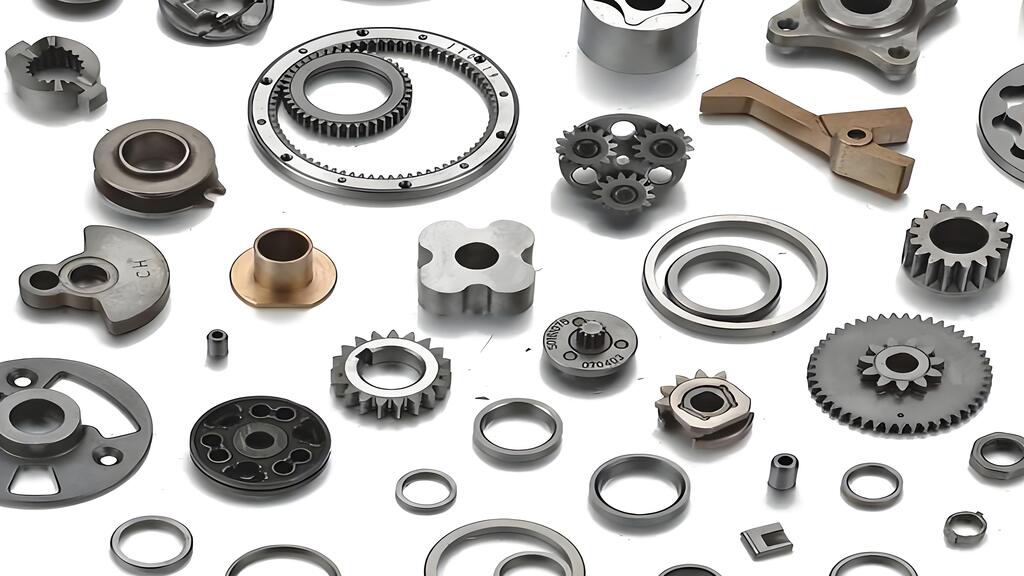


Lock Parts Made Easy: Powder Metallurgy Solutions
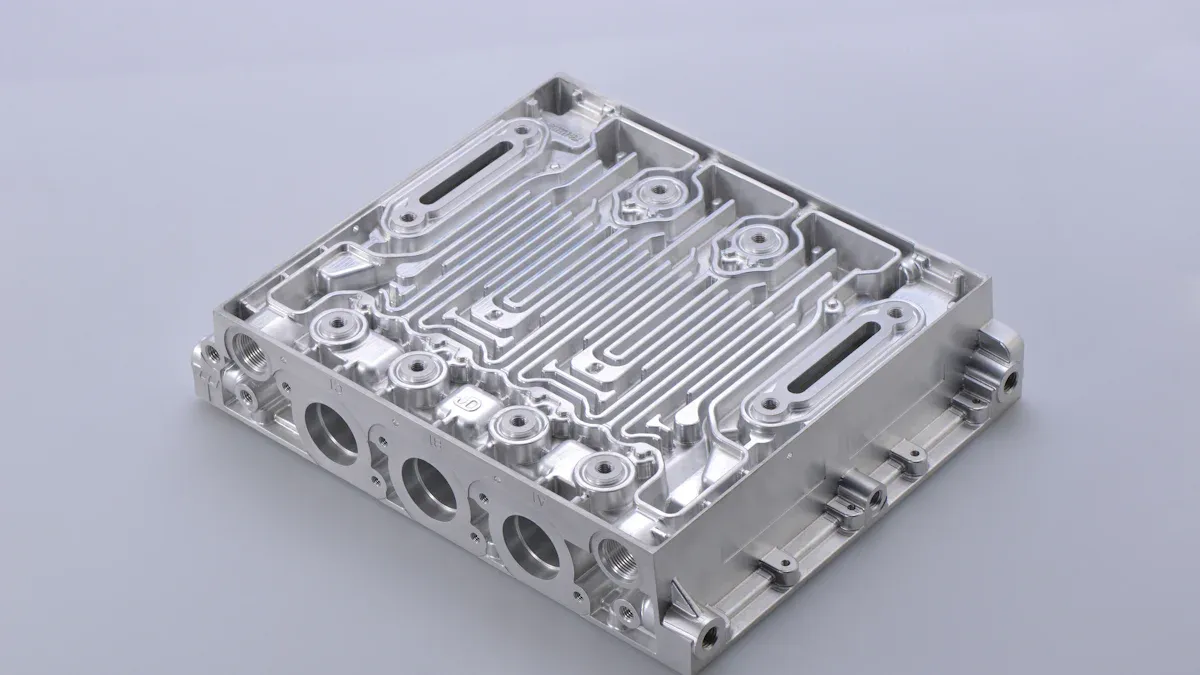
Powder metallurgy (PM) fundamentally changes intricate lock parts manufacturing. This advanced process provides a cost-effective and efficient alternative to traditional methods for creating lock components. PM allows for the production of complex lock designs with exceptional precision and minimal material waste. It delivers superior quality for various lock parts.
Key Takeaways
- Powder metallurgy makes complex lock parts. It saves money and reduces waste.
- This method creates intricate lock designs. It combines many functions into one part.
- Powder metallurgy ensures high precision. All parts are consistent and reliable.
- Manufacturers choose the best materials. This makes locks strong and durable.
- Powder metallurgy produces many lock parts. These include cylinders, levers, and bolts.
- The process turns metal powder into strong parts. It involves blending, pressing, and heating.
- Powder metallurgy uses less material than other methods. It also makes parts faster.
- This technology helps create new lock designs. It makes existing locks work better.
Why Powder Metallurgy for Your Lock Parts? Key Advantages
Powder metallurgy (PM) offers numerous compelling advantages for manufacturing lock components. This method provides significant benefits over traditional production techniques, making it an ideal choice for modern security solutions. Manufacturers gain efficiency, precision, and design freedom by adopting PM.
Cost-Effectiveness and Material Utilization for Lock Parts
Powder metallurgy significantly reduces manufacturing expenses and optimizes material usage. This process inherently minimizes waste, leading to substantial savings.
Reducing Material Waste in Lock Production
Traditional manufacturing methods often involve extensive material removal, generating considerable scrap. Powder metallurgy, however, is a near-net-shape process. It forms parts directly from metal powders, drastically reducing the amount of raw material wasted. This efficiency translates into significant material cost savings. Companies report material cost reductions of 35-40% through waste elimination. This makes PM an environmentally friendly and economically sound choice for producing various lock parts.
Minimizing Machining Costs for Lock Components
The near-net-shape capability of powder metallurgy also leads to fewer secondary operations. Parts emerge from the Sintering furnace very close to their final dimensions, requiring minimal or no additional machining. This directly lowers labor costs and reduces the need for expensive machining equipment and tools. Overall, manufacturers can achieve production cost reductions of up to 40% compared to conventional machining. Labor efficiency also improves by 65% due to united processing steps, further enhancing cost-effectiveness.
Design Flexibility for Complex Lock Parts
Powder metallurgy excels in creating intricate and complex designs that traditional methods struggle to achieve economically. This flexibility opens new possibilities for lock mechanisms.
Crafting Intricate Geometries for Lock Mechanisms
PM allows engineers to design highly complex shapes directly into the part during the compaction process. This capability is crucial for modern lock mechanisms that demand precise and elaborate internal structures. Powder metallurgy enables the creation of complex lock part geometries for:
- Lock Cylinder Components: Manufacturers produce these as near-net-shape parts with tight dimensional tolerances, minimizing secondary machining.
- Transmission Parts: Examples include pawls, forks, cams, and shafts, which transfer motion and require high mechanical strength.
- Auxiliary Parts: Such as sleeves, plates, levers, clips, and positioning blocks, which are crucial for maintaining stability and alignment within the lock mechanism. This ability to form intricate features in a single step streamlines production and enhances functional design.
Integrating Multiple Functions into a Single Lock Part
One of PM's most powerful features is its ability to combine several functions into a single component. This reduces part count, simplifies assembly, and improves overall system reliability. Powder metallurgy enables the creation of highly intricate features and complex shapes directly during the forming process, including tooth profiles, mounting features, and oil channels in a single compaction step. This process facilitates the integration of multiple functions within a single part, which streamlines assembly and enhances overall system reliability.
Powder metal products are not just components; they are solutions to manufacturing challenges. By controlling density and porosity, manufacturers can produce parts that are lighter yet stronger, reduce waste, and integrate multiple functions into a single component. Complex shapes that would require multi-step machining or expensive tooling can now be created in one process. Additionally, MPM ensures high consistency in powder metal parts, making them ideal for large-scale production while maintaining strict quality standards. Recent innovations in powder metal technology have expanded the potential of MPM beyond conventional limits. Advanced powder metallurgy allows the use of hard-to-machine alloys like titanium, high-strength steels, and composite powders. Techniques such as Metal Injection Molding (MIM) and additive-assisted sintering enable manufacturers to create micro-porous structures, integrated cooling channels, or weight-optimized components, all while ensuring material integrity. These innovations open doors for functional integration and performance enhancement that traditional machining cannot match.
High Precision and Repeatability for Lock Components
Precision and consistency are paramount in lock manufacturing. Powder metallurgy delivers both, ensuring reliable and high-quality products.
Ensuring Tight Tolerances for Reliable Locks
Powder metallurgy produces components with exceptional dimensional accuracy. This precision is critical for the smooth operation and security of lock mechanisms. For lock components manufactured using powder metallurgy, typical tolerance ranges vary depending on the processing stage and specific dimensions. After sintering, radial dimensional accuracy generally falls within IT8 to IT9. With a subsequent sizing process, this can improve significantly to IT6-IT7, with small parts potentially achieving tolerances as tight as ±5 μm. For self-lubricating sintered bushings, diameter accuracy can reach IT5-IT7. However, tolerances for the length or height of sintered metal parts are typically larger, around IT12.
| Nominal Size (mm) | IT5 (μm) | IT6 (μm) | IT7 (μm) | IT8 (μm) | IT9 (μm) | IT10 (μm) | IT11 (μm) | IT12 (μm) |
|---|---|---|---|---|---|---|---|---|
| over 0 up to 3 | 0.3 | 0.5 | 0.8 | 1.2 | 2 | 3 | 4 | 6 |
| over 3 up to 6 | 0.4 | 0.6 | 1 | 1.5 | 2.5 | 4 | 5 | 8 |
| over 6 up to 10 | 0.4 | 0.6 | 1 | 1.5 | 2.5 | 4 | 6 | 9 |
| over 10 up to 18 | 0.5 | 0.8 | 1.2 | 2 | 3 | 5 | 8 | 11 |
| over 18 up to 30 | 0.6 | 1 | 1.5 | 2.5 | 4 | 6 | 9 | 13 |
| over 30 up to 50 | 0.6 | 1 | 1.5 | 2.5 | 4 | 7 | 11 | 16 |
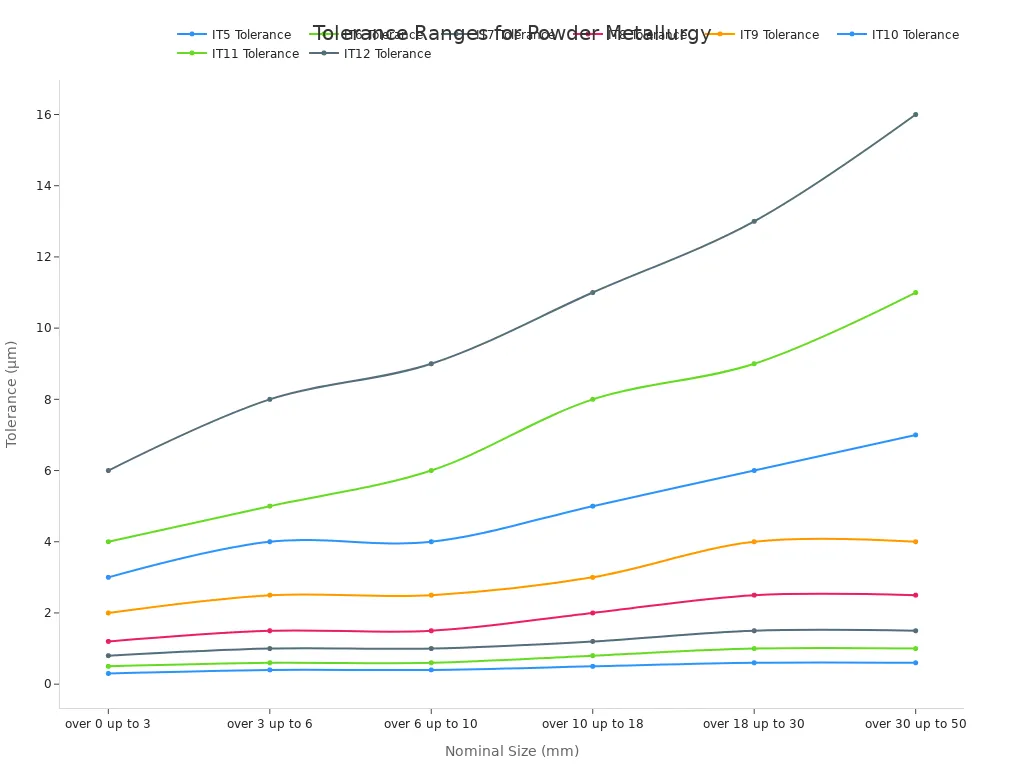
These tight tolerances ensure components fit together perfectly, leading to smooth operation and enhanced security.
Guaranteeing Part-to-Part Uniformity in Lock Manufacturing
Consistency across all manufactured parts is essential for mass production and product reliability. Powder metallurgy processes are highly controlled, ensuring that every component meets the exact specifications. Tightly controlled processing parameters ensure excellent repeatability and uniform material properties, allowing for the production of thousands or millions of identical components with reliable performance. This consistency stems from several key stages:
- Powder Blending and Mixing ensures uniform material composition, consistent mechanical properties (like strength and hardness), and repeatable performance across large production batches. Proper blending is crucial for maintaining quality and minimizing variability.
- Compaction influences final part geometry, dimensional accuracy, green density uniformity, and mechanical strength after sintering. Accurate compaction is essential for achieving tight tolerances and uniform density.
- Sintering provides stable dimensional control, improved structural integrity, and enhanced material properties, transforming green parts into functional components. This meticulous control guarantees repeatable quality and performance across thousands or millions of parts, making PM ideal when tight dimensional tolerances and consistent part-to-part accuracy are critical.
Material Versatility for Enhanced Lock Part Performance
Powder metallurgy offers unparalleled material versatility. This allows manufacturers to select and customize materials precisely for specific lock part requirements. This capability ensures optimal performance and extends product lifespan.
Selecting Optimal Alloys for Lock Durability
Powder metallurgy provides a wide range of material options. Manufacturers can choose the best alloy for each lock component. This ensures maximum durability and reliability. For instance, various materials are specifically used for powder metallurgy door lock components. These include FC-0205, FC-0208, FN-0205, FN-0208, FX-1000, FX-1005, and FX-1008. These materials ensure the stability of locks during daily use. They also resist external damage and extend product lifespan.
Stainless steel sintered components are also crucial for door locks. Manufacturers make these from materials like SS-303L, SS-304L, and SS-316L. These stainless steels offer excellent oxidation and corrosion resistance. This makes them ideal for various lock applications. These applications include fire doors, electronic locks, and mechanical/electromechanical lock structures. The ability to select such specific alloys significantly enhances the overall durability of lock systems.
Customizing Strength and Wear Resistance for Lock Components
Powder metallurgy excels at tailoring material properties. This allows manufacturers to customize strength and wear resistance for specific lock components. This ensures optimal performance in demanding environments. Different material types offer distinct advantages:
| Material Type | Example | Key Properties |
|---|---|---|
| Stainless Steels | 316L, 17-4 PH | High strength and corrosion resistance |
| Low Alloy Steels | 4140 | Excellent wear-resistance and toughness |
| Tool Steels | H13, M2 | Designed for high hardness and durability |
This table illustrates how PM allows for precise material selection to meet specific performance needs. Metal Injection Molding (MIM) is also used for locks and security devices. It enables the creation of intricate internal locking elements and housings. These components are tamper-resistant and high-performing.
Furthermore, sinter-hardened parts offer significant advantages for customizing strength and wear resistance.
- Sinter-hardened parts offer high hardness and strength. This makes them suitable for high-load environments.
- They provide excellent wear resistance for applications with frequent friction.
- The process results in good dimensional stability. This reduces deformation and machining errors, which enhances precision.
- Their dense structure ensures strong mechanical performance and long-term durability.
This customization capability allows lock manufacturers to produce components that withstand harsh conditions and frequent use. This ensures long-lasting security solutions.
Common Lock Parts Benefiting from Powder Metallurgy
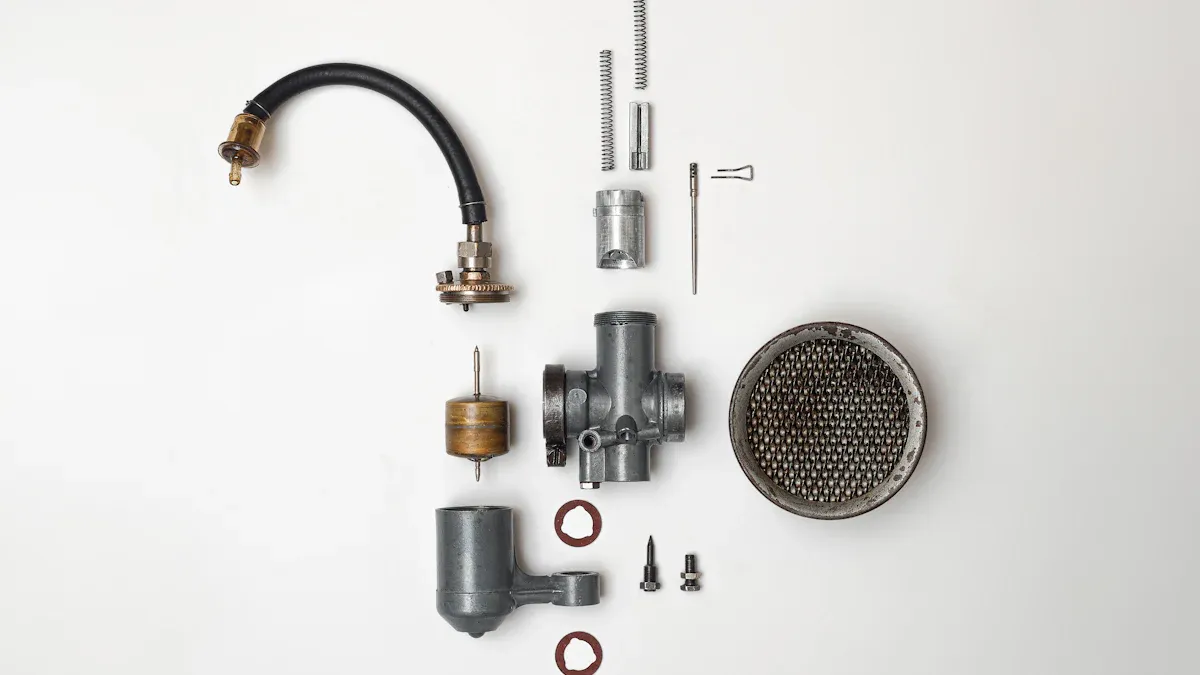
Powder metallurgy (PM) offers significant advantages for manufacturing many common lock components. This process enhances the performance, durability, and cost-effectiveness of various critical parts within a lock assembly.
Precision Cylinders and Plugs for Lock Mechanisms
Lock cylinders and plugs are central to a lock's security. Powder metallurgy ensures these components meet strict requirements.
High Accuracy for Core Lock Components
PM produces lock cylinders and plugs with exceptional precision. This high accuracy is vital for the smooth operation of the lock mechanism. Precise dimensions ensure pins align correctly and the key turns without obstruction. Manufacturers achieve the tight tolerances necessary for reliable security functions through PM.
Smooth Surface Finishes for Lock Functionality
Smooth surface finishes are crucial for lock functionality. They reduce friction between moving parts, ensuring a key turns easily and the lock operates reliably. Powder metallurgy inherently creates parts with good surface quality, often minimizing the need for extensive post-processing. This contributes to the overall longevity and user experience of the lock.
Intricate Levers and Cams in Lock Assemblies
Levers and cams are essential for the internal movement and locking action of many lock types. PM excels at creating these complex shapes.
Complex Profile Creation for Lock Movement
Powder metallurgy allows for the creation of highly intricate geometries directly from powder. This capability is perfect for lock components that require complex profiles for precise movement. Manufacturers commonly produce:
- Lock levers
- Flat cams
- Irregular links
- Levers
- Dead Locking Levers
- Lockset Slide Retractors
These components guide the internal mechanisms, ensuring the lock engages and disengages correctly.
Durable Movement Components for Long-lasting Locks
The durability of levers and cams directly impacts a lock's lifespan. PM parts offer excellent wear resistance and strength. This ensures these moving components withstand repeated use without degradation. Locks maintain their functionality and security over many years.
Robust Bolts and Latches for Secure Lock Parts
Bolts and latches are the primary security elements that physically secure a door or object. Powder metallurgy enhances their strength and reliability.
Enhanced Strength and Durability for Security
Powder metallurgy latchbolts offer excellent strength properties. They include impressive impact resistance. These components also demonstrate the ability to withstand fire and harsh environmental elements. They exceed ANSI standards for Grade 1 Locksets, satisfying an 800,000 minimum cycle test. This robust construction provides superior security.
Reliable Locking Mechanisms for Peace of Mind
PM ensures the reliability of locking mechanisms. It produces components with close dimensional tolerances, often eliminating additional machining. This process provides excellent part-to-part reproducibility and repeatability. It offers long-term performance reliability in critical applications. Materials can also be heat-treated for increased strength or wear resistance.
Ningbo Jiehuang Chiyang uses high-quality alloy powders, precision Powder Metallurgy, and advanced heat treatment technology. They produce high-precision and high-strength lock parts. Their products have precision dimensional accuracy, tensile strength of 500-800MPa, and a service life twice that of traditional products.
This commitment to quality ensures consistent performance and peace of mind for users.
Small, Critical Lock Parts: Pins, Springs, and Detents
Powder metallurgy offers significant advantages for producing small, critical components within a lock mechanism. Pins, springs, and detents are often tiny, yet they play crucial roles in a lock's functionality. PM efficiently manufactures these intricate pieces.
Efficient Production of Tiny Lock Components
The powder metallurgy process excels at creating small, complex components with high efficiency. It forms intricate shapes directly from metal powders, eliminating the need for extensive machining. This method drastically reduces material waste and production time for tiny lock components. It ensures high-volume production of consistently shaped parts. Manufacturers can produce thousands of identical pins, springs, and detents quickly and cost-effectively. This efficiency is vital for meeting the demands of modern lock manufacturing.
Consistent Performance for Internal Lock Parts
Consistent performance is paramount for internal lock components. Powder metallurgy ensures these small parts operate reliably over time. PM achieves superior precision, with dimensional accuracy often reaching ±0.05mm. Critical diameters can achieve IT-6 (±0.013mm) after sizing. This precision guarantees flawless operation of lock mechanisms. Sintered parts offer excellent part-to-part consistency. Size variations remain under 0.08% (20μm) for 25mm dimensions. This consistency is crucial for high-volume production. The controlled heating cycle during sintering ensures predictable dimensional stability. Components maintain their shape and reliability under repeated stress cycles. PM also enhances performance. It achieves material properties like hardness (45-70 HRC) and wear resistance. Secondary treatments, such as steam processing and surface densification, further improve these properties. Stainless steel variants provide exceptional corrosion resistance. The process also allows for complex geometries. It creates internal passages and helical forms up to 35° angles. Traditional machining finds these shapes difficult or impossible to produce. This capability contributes to optimized lock designs and overall reliability for all internal lock parts.
The Powder Metallurgy Process: From Powder to Precision Lock Parts
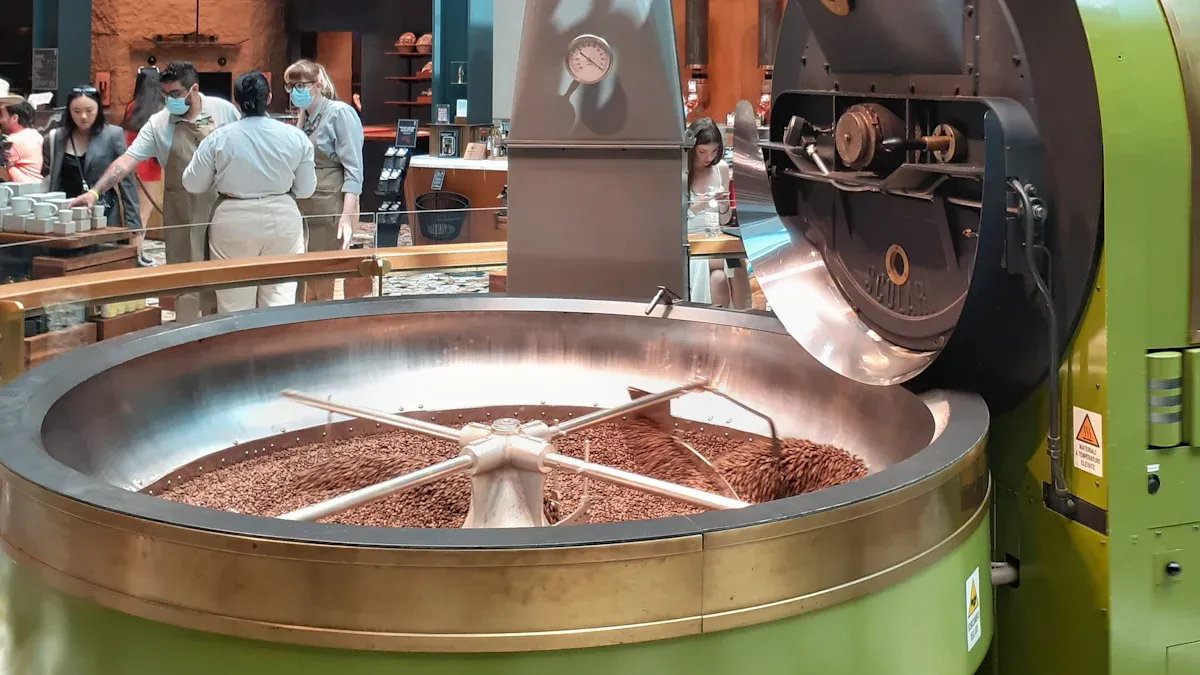
The powder metallurgy process transforms raw metal powders into high-performance lock components. This multi-step method ensures precision and durability for every part. It begins with careful powder preparation and ends with a strengthened, ready-to-use component.
Powder Production and Blending for Lock Components
The journey of a lock part begins with its fundamental building blocks: metal powders. Manufacturers carefully select and prepare these powders.
Sourcing Metal Powders for Lock Manufacturing
Metal powders form the base material for lock components. Producers create these powders using specific methods. Atomization uses gas or water to break molten metal into fine droplets. Reduction extracts pure metal from oxides through chemical reactions. These methods ensure uniform particle size and composition. They apply to common materials like iron-based alloys, stainless steel, copper, and nickel. Ningbo Jiehuang Chiyang sources high-quality alloy powders for their lock parts.
Achieving Homogeneous Mixtures for Consistent Lock Parts
Achieving a homogeneous powder mixture is crucial for consistent lock parts. Uniform distribution of particles ensures predictable material properties. Manufacturers use various techniques to blend powders. Small-volume V-shaped or Y-shaped mixers are common. Some even use manually agitated plastic bags for rudimentary mixing. A newer device, the 3-axis mixer, also helps achieve uniformity. After blending, compaction with hydraulic presses further ensures homogeneity. This process eliminates air gaps and variations in particle distribution. It creates a consistent, solid form.
Compaction: Forming the Green Compact for Lock Parts
After blending, the powder mixture undergoes compaction. This step shapes the powder into its initial form.
Pressing Powders into Desired Lock Shapes
The compaction process involves pressing powders into desired lock shapes. Manufacturers load the powder mixture into a rigid steel die cavity. A punch, driven by a hydraulic press, applies immense pressure. This pressure deforms individual powder particles. They lock together and conform to the die's shape. This results in a 'green compact' or a finished analytical pellet. Modern automatic hydraulic presses use microprocessor control. They allow for precise, multi-stage pressure cycles. This ensures repeatability and consistent quality. Every part is created under the exact same conditions.
Controlling Density for Optimal Lock Performance
Controlling density is vital for optimal lock performance. The density of the final part directly relates to its strength, durability, and performance. The compaction process forms and densifies powdered materials into solid parts. Heated hydraulic presses can achieve greater densification. This leads to parts with superior mechanical properties. Manufacturers carefully manage pressure during compaction. This ensures the green compact has the correct density.
Sintering: Strengthening the Lock Part
Sintering is the next critical step. It transforms the green compact into a strong, functional lock part.
High-Temperature Bonding for Durable Lock Components
Sintering involves high-temperature bonding for durable lock components. Manufacturers heat the green compacts in a controlled atmosphere furnace. Temperatures remain below the melting point of the main metal. The heat causes the powder particles to bond together. This forms a solid, coherent structure. This process significantly increases the part's strength and integrity.
Developing Final Properties for Reliable Locks
Sintering develops the final properties for reliable locks. The high-temperature process enhances mechanical strength and hardness. It also improves wear resistance. The controlled atmosphere prevents oxidation. This ensures the material maintains its desired characteristics. The resulting lock components exhibit excellent durability and performance.
Secondary Operations for Finished Lock Parts
After sintering, lock components often require additional processing. These secondary operations refine the parts. They ensure the components meet precise specifications for functionality and appearance. Powder metallurgy significantly reduces the need for extensive post-sintering work compared to other manufacturing methods.
Minimal Post-Sintering Steps for Lock Components
Powder metallurgy parts typically require minimal post-sintering steps. The near-net-shape capability of PM means parts emerge from the furnace very close to their final dimensions. This significantly reduces the need for costly and time-consuming machining. Manufacturers often perform operations such as:
- Sizing or Coining: This process involves pressing the sintered part in a die. It improves dimensional accuracy and surface finish.
- Machining: While minimized, some features may require machining. This includes threading, drilling, or tapping.
- Heat Treatment: This enhances mechanical properties. It increases hardness, strength, or wear resistance.
- Surface Finishing: Processes like plating, coating, or tumbling improve corrosion resistance or aesthetics.
These operations are often less intensive than those required for parts made by casting or traditional machining. This efficiency contributes to overall cost savings and faster production cycles. The inherent precision of PM reduces the workload in these final stages.
Ensuring Dimensional Accuracy for Quality Locks
Ensuring dimensional accuracy is paramount for producing high-quality lock components. Precise dimensions guarantee smooth operation and reliable security. Powder metallurgy offers excellent control over part dimensions.
Manufacturers employ several techniques to achieve and verify accuracy:
- Sizing and Coining: As mentioned, these mechanical processes refine dimensions. They achieve tighter tolerances than sintering alone.
- Gauging and Inspection: Quality control teams use precise gauges and optical inspection systems. They verify critical dimensions against design specifications.
- Statistical Process Control (SPC): This method monitors the manufacturing process. It identifies and corrects variations early. This ensures consistent part-to-part uniformity.
The ability to produce parts with tight tolerances directly impacts a lock's performance. Accurate components fit together perfectly. This minimizes friction and wear. It also enhances the lock's security features. High dimensional accuracy ensures reliable engagement of internal mechanisms. This leads to a durable and trustworthy lock product.
Powder Metallurgy vs. Traditional Methods for Lock Parts
Manufacturers often evaluate different production techniques for lock components. Powder metallurgy (PM) offers distinct advantages over traditional methods like machining and casting. Understanding these differences helps manufacturers make informed decisions for their lock parts.
PM vs. Machining: Efficiency and Waste for Lock Components
Comparing powder metallurgy with traditional machining reveals significant differences in efficiency and material usage. These factors directly impact production costs and environmental footprint.
Material Utilization Comparison for Lock Parts
Powder metallurgy excels in material utilization. It is a near-net-shape process. This means PM forms parts very close to their final dimensions. Traditional machining, conversely, is a subtractive process. It removes material from a larger block to create the desired shape. This generates considerable waste. The table below highlights these differences.
| Feature | Powder Metallurgy (PM) | Traditional Machining |
|---|---|---|
| Material Utilization | High (exceeds 95%) | Subtractive |
| Waste | Minimized | Material becomes scrap |
| Process Type | Near-additive | Subtractive |
PM's high material utilization reduces raw material costs. It also minimizes scrap disposal. This makes PM a more sustainable manufacturing choice for lock parts.
Production Speed Differences in Lock Manufacturing
Powder metallurgy significantly enhances production speed for lock components. The process allows for rapid and large-scale manufacturing. Manufacturers can produce complex parts in a single pressing and sintering cycle. Traditional machining often requires multiple setups and operations. Each step adds to the overall production time. Powder metallurgy technology significantly reduces manufacturing costs. It enables rapid and large-scale production of lock components when compared with traditional metal manufacturing processes. This speed advantage is crucial for high-volume production runs. It helps meet market demand efficiently.
PM vs. Casting: Precision and Surface Finish for Lock Parts
Powder metallurgy also offers superior precision and surface finish compared to casting methods. These qualities are vital for the functionality and aesthetics of lock components.
Dimensional Accuracy Advantages for Lock Components
Powder metallurgy provides exceptional dimensional accuracy. This precision is critical for the reliable operation of lock mechanisms. Casting processes, such as sand casting, generally offer lower precision. They often require extensive post-processing to achieve desired tolerances. The table below illustrates the difference in accuracy.
| Feature | Powder Metallurgy (PM) | Casting (e.g., Sand Casting) |
|---|---|---|
| Dimensional Accuracy | Very high | Generally lower |
| Typical Tolerance | ± 0.04 mm (after sizing) | Less precise |
Powder metallurgy offers significant advantages in dimensional accuracy for lock components. It provides outstanding dimensional repeatability. This is especially true in medium-to-high volume production. Once tooling is established, each compacted part forms under identical conditions. This leads to highly consistent geometries across production batches. This consistency is crucial for smooth lock operation. It prevents issues like jamming or premature wear. It also ensures reliable mechanical engagement between lock parts without costly manual adjustments. Many PM lock components are produced in near-net-shape. This minimizes or eliminates the need for secondary machining.
Surface Quality Improvements for Aesthetic Locks
Powder metallurgy parts typically exhibit a smoother surface finish than cast parts. Casting often leaves a rougher surface. This requires additional finishing operations like grinding or polishing. PM parts often emerge from the sintering furnace with a surface quality suitable for direct use. This reduces secondary processing steps. It also lowers manufacturing costs. A superior surface finish contributes to the aesthetic appeal of visible lock components. It also improves the functional performance of internal moving parts by reducing friction.
Cost-Benefit Analysis of PM Adoption for Lock Parts
Adopting powder metallurgy involves evaluating both initial investments and long-term savings. This analysis helps manufacturers understand the overall economic benefits.
Long-Term Savings Potential in Lock Production
Powder metallurgy offers substantial long-term savings in lock production. Its high material utilization reduces raw material expenses. The near-net-shape capability minimizes machining costs and labor. Reduced scrap generation also lowers disposal costs. Furthermore, PM's ability to integrate multiple features into a single part simplifies assembly. This further reduces labor and inventory costs. Over the lifespan of a product line, these cumulative savings can be significant.
Initial Investment Considerations for Lock Manufacturers
Manufacturers considering powder metallurgy must account for initial investment costs. Tooling for PM, such as compaction dies, can be more expensive upfront than tooling for some traditional methods. However, these tooling costs amortize over large production volumes. The initial setup for PM equipment, including presses and sintering furnaces, also represents a capital expenditure. Despite these initial costs, the long-term benefits in material savings, reduced labor, and faster production often outweigh the upfront investment. This makes PM a cost-effective solution for high-volume lock component manufacturing.
Real-World Applications: Case Studies of PM Lock Parts
Powder metallurgy (PM) has significantly impacted the lock manufacturing industry. Leading companies successfully integrate PM into their production processes. This section explores how PM transforms lock parts, showcasing its practical benefits and innovative potential.
Leading Lock Manufacturers Adopting Powder Metallurgy
Major lock manufacturers recognize the advantages of powder metallurgy. They actively incorporate PM technology into their production lines. This strategic adoption leads to superior products and more efficient manufacturing.
Examples of Successful Implementations in Lock Production
Leading lock manufacturers utilize powder metallurgy for various critical components. They produce intricate lock cylinders and plugs with high precision. These components ensure smooth key operation and enhanced security. Manufacturers also create robust latch bolts and deadbolts using PM. These parts offer exceptional strength and durability, exceeding industry standards. Furthermore, companies employ PM for small, complex internal mechanisms like levers, cams, and detents. This allows for the creation of sophisticated locking systems.
Benefits Realized by Industry Leaders in Lock Parts
Industry leaders realize significant benefits by adopting powder metallurgy. They achieve substantial cost savings through reduced material waste and minimal machining requirements. PM's near-net-shape capability lowers production expenses. Manufacturers also experience improved product quality and consistency. PM ensures tight tolerances and uniform part-to-part performance. This leads to more reliable and longer-lasting lock products. The ability to produce complex geometries in a single step also streamlines assembly processes.
Innovations Driven by Powder Metallurgy in Lock Technology
Powder metallurgy drives innovation in lock technology. It enables the development of advanced designs and enhances the performance of existing products. PM pushes the boundaries of what is possible in security solutions.
New Lock Designs Enabled by PM
Powder metallurgy facilitates the creation of novel lock designs. Engineers can now design highly complex internal geometries previously impossible with traditional methods. This includes integrated multi-functional components that reduce part count and simplify assembly. PM also supports the miniaturization of lock mechanisms. This allows for more compact and aesthetically pleasing lock bodies. These new designs often incorporate enhanced security features, making locks more resistant to tampering and forced entry.
Performance Improvements in Existing Lock Products
PM significantly improves the performance of existing lock products. Manufacturers enhance the strength and wear resistance of critical components like bolts and levers. This extends the lifespan of locks, even under heavy use. PM also allows for the use of specialized alloys. These materials offer superior corrosion resistance, making locks suitable for harsh environments. The consistent quality and precision of PM parts ensure reliable operation over many years. This provides greater peace of mind for end-users.
Future Trends: The Evolution of Powder Metallurgy in Lock Technology
Powder metallurgy (PM) continues to evolve. It promises even greater advancements in lock technology. Future trends focus on new materials, smart manufacturing, and expanded applications.
Advanced Materials and Alloys for Lock Parts
The development of advanced materials and alloys will significantly impact lock parts. Researchers constantly explore new compositions. These materials offer enhanced properties for security solutions.
Developing New Performance Characteristics for Locks
New alloys will bring superior performance characteristics to locks. Engineers develop materials with increased hardness and wear resistance. These advancements make locks more durable. They also improve resistance to tampering and forced entry. Future materials will also offer better corrosion resistance. This extends the lifespan of locks in harsh environments. These innovations ensure locks maintain their integrity under extreme conditions.
Exploring Sustainable Options for Lock Components
The industry explores sustainable options for lock components. Manufacturers focus on recyclable metal powders. They also develop processes with reduced energy consumption. This commitment to sustainability minimizes environmental impact. It aligns with global efforts for greener manufacturing. Sustainable practices ensure a responsible approach to lock production.
Automation and Industry 4.0 Integration for Lock Manufacturing
Automation and Industry 4.0 integration will transform lock manufacturing. These technologies enhance efficiency and control. They lead to more consistent and reliable lock parts.
Smart Manufacturing for PM Lock Parts
Smart manufacturing will optimize PM lock part production. Integrated sensors monitor every stage of the process. Real-time data analysis identifies potential issues. This proactive approach ensures consistent quality. It also minimizes waste and downtime. Smart factories will produce lock components with unprecedented precision.
Enhanced Process Control for Consistent Locks
Enhanced process control guarantees consistent locks. Automated systems precisely manage powder blending and compaction. They also control sintering temperatures and atmospheres. This meticulous control reduces variability between parts. It ensures every lock component meets exact specifications. Consistent processes lead to reliable and high-performing locks.
Expanding Applications in Security Systems with PM Lock Parts
Powder metallurgy expands its applications in security systems. It offers solutions for both electronic and high-security lock components. PM's versatility drives innovation in the security industry.
PM for Electronic Lock Components
Powder metallurgy is crucial for electronic lock components. Manufacturers use PM for intricate parts in smart locks. These include gears and housings for electronic mechanisms. Steering column ignition key systems use PM ignition-key lock gears. Door lock parts are also manufactured using powder metallurgy. PM's precision enables the miniaturization of these components. This supports the development of compact and sophisticated electronic locking systems.
High-Security Lock Innovations through PM
PM drives innovations in high-security locks. It produces high-precision and high-strength lock parts. These include components for car door locks and other high-security applications. These parts exhibit precision dimensional accuracy. They also offer tensile strength between 500-800MPa. Their service life is twice as long as that of traditional products. The manufacturing process uses high-quality alloy powders. It also employs precision powder metallurgy techniques and advanced heat treatment. This ensures superior security and durability.
Powder metallurgy (PM) offers significant advantages for lock part manufacturing. It provides cost-effective production, high precision, and material versatility. PM delivers high-performance and intricately designed lock components. Manufacturers achieve superior security solutions and future lock innovations by adopting powder metallurgy. This process transforms the industry. Ningbo Jiehuang Chiyang, for example, leverages PM to produce high-precision, high-strength lock parts with extended service life.
FAQ
What is powder metallurgy (PM)?
Powder metallurgy is a manufacturing process. It forms parts from metal powders. Manufacturers compact the powders into a desired shape. They then heat the shape in a furnace. This process creates strong, precise components.
Why do lock manufacturers use powder metallurgy?
Lock manufacturers use PM for several reasons. It offers cost savings through reduced material waste. PM also allows for complex designs. It ensures high precision and consistent part quality. This makes it ideal for intricate lock components.
What types of lock parts can PM produce?
PM produces many types of lock parts. These include precision cylinders and plugs. It also creates intricate levers and cams. Manufacturers use PM for robust bolts and latches. Small, critical parts like pins and detents also benefit from PM.
How does PM reduce manufacturing costs for locks?
PM reduces costs by minimizing material waste. It is a near-net-shape process. This means parts require less machining. Less machining saves labor and tooling expenses. This efficiency leads to significant overall cost reductions.
Is powder metallurgy environmentally friendly?
Yes, powder metallurgy is environmentally friendly. It significantly reduces material waste. This process uses raw materials efficiently. It also often requires less energy than traditional methods. This makes PM a sustainable manufacturing choice. ♻️
Can PM parts be as strong as machined parts?
Yes, PM parts can achieve high strength. Manufacturers select optimal alloys. They also use advanced heat treatments. This enhances the mechanical properties of PM components. Many PM lock parts exceed industry strength standards.
What is the typical lead time for PM lock components?
Lead times for PM lock components vary. They depend on part complexity and order volume. Once tooling is established, PM offers rapid production. This allows for efficient large-scale manufacturing.