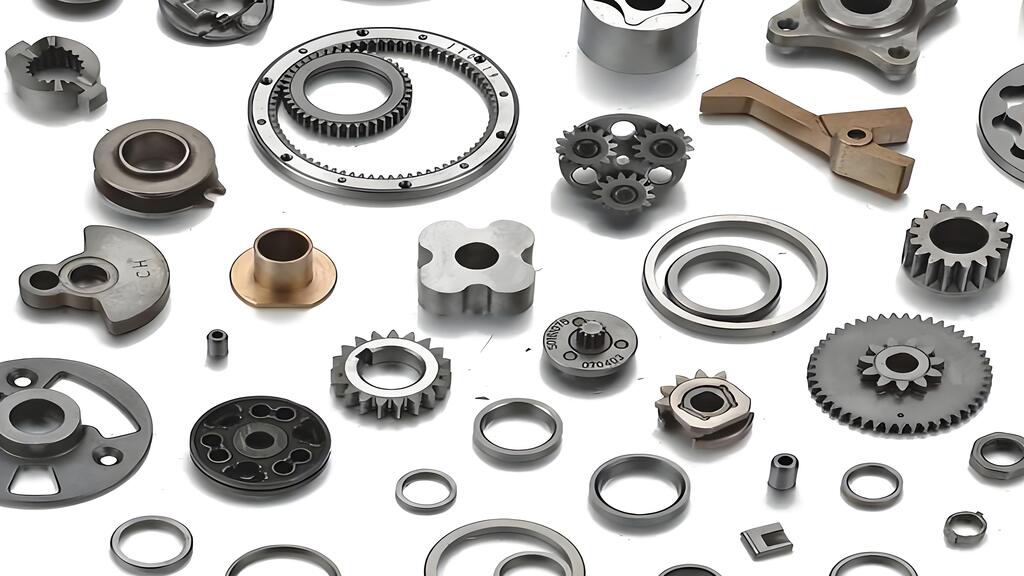


Powder Metallurgy Gears for Electric Tools
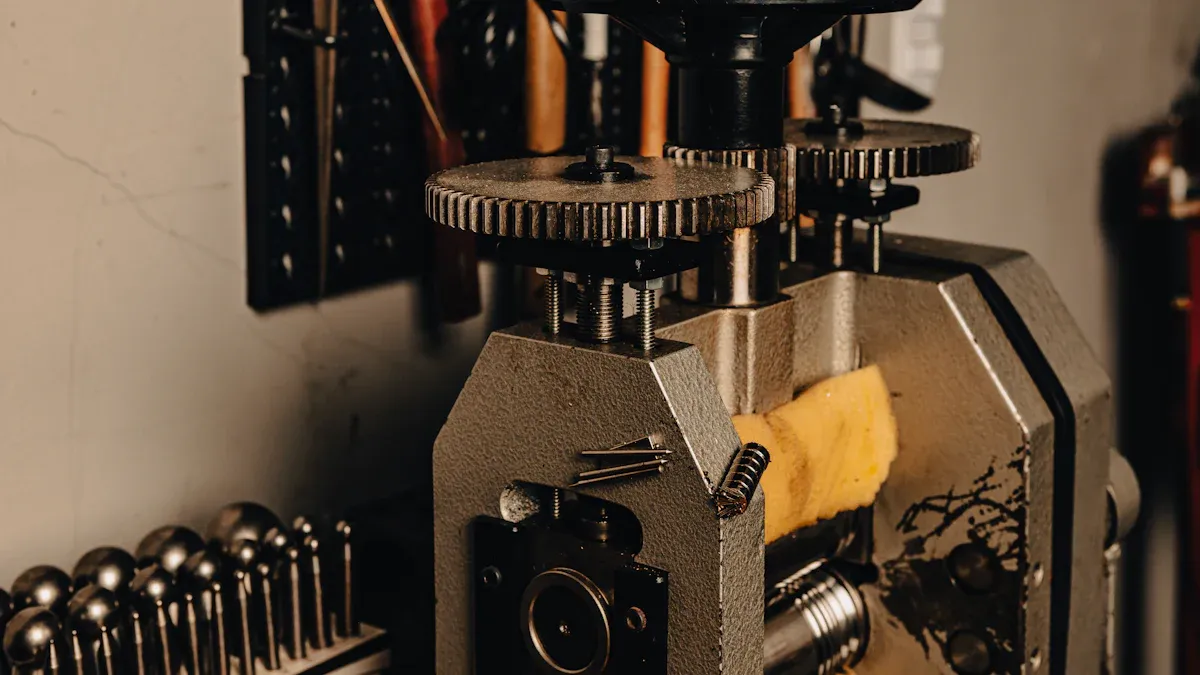
Powder Metallurgy Gears are crucial components in modern electric tools. They consistently deliver a unique combination of high performance and significant cost-effectiveness. The demanding electric tool industry increasingly recognizes its value. This post thoroughly explores the compelling reasons behind their widespread adoption in various applications.
Key Takeaways
- Powder Metallurgy (Pm) gears are strong metal parts made from metal powders. They are very important for modernelectric tools.
- PM gears save money because they use less material and need less extra work. This makes them good for making many tools at once.
- These gears allow for complex designs that are hard to make with other methods. This helps engineers create better tools.
- PM gears are very strong and last a long time. They can handle tough jobs with electric tools like drills and saws.
- The way PM gears are made helps reduce noise and shaking in tools. This makes tools work more smoothly.
- PM gears are made with great care. This means every gear is the same and works well, making electric tools reliable.
- Making PM gears uses less energy and creates less waste. This is better for the environment than older ways of making gears.
Defining Powder Metallurgy Gears
What is Powder Metallurgy?
Powder metallurgy (PM) represents a sophisticated manufacturing process. It forms metal parts from metal powders. This method offers significant advantages over traditional manufacturing techniques.
The Basic Principles of PM
The powder metallurgy process fundamentally involves several key steps. First, Powder Production creates the metal powders. This initial stage is crucial. The characteristics of these powders directly influence the quality of the final components. Common methods for powder production include atomization, reduction, and chemical decomposition. Second, Blending and Mixing combine the metal powder with lubricants or other alloying elements. This step ensures a uniform mixture. Third, Compaction forms the powder. Metal powder is pressed into a mold cavity. This creates a 'green compact', a fragile pre-form of the final part. Finally, Sintering heats the green compact below its melting point. This high-temperature treatment enhances mechanical strength. It bonds the particles, leading to desired mechanical properties and dimensional stability.
Key Advantages of the PM Process
The PM process offers numerous benefits. It allows for the creation of complex shapes with high precision. The method minimizes material waste. It also enables the production of parts with tailored properties. This makes PM a highly efficient and versatile manufacturing solution.
Understanding Powder Metallurgy Gears
Powder Metallurgy Gears are components specifically designed for power transmission. They are manufactured using the PM process. These gears are integral to many mechanical systems.
Unique Characteristics of PM Gears
PM gears possess distinct characteristics. They can be engineered for High Tensile Strength, effectively resisting pulling forces. They also exhibit Excellent Fatigue Strength, which is crucial for parts undergoing repetitive stress. Manufacturers can achieve High Impact Resistance through careful material selection and processing. Incorporating corrosion-resistant alloys allows for Enhanced Corrosion Resistance. The Tailorable Yield Strength can be adjusted to meet specific load requirements. Furthermore, controlled porosity allows for Controlled Ductility, offering design flexibility. Components can also be produced with Adjustable Hardness for optimal wear resistance.
Compared to regular steel gears, powder metallurgy materials typically have lower Young's modulus and Poisson's ratio. These differences affect bending stiffness. However, studies indicate that the influence of these elastic property differences on gear transmission efficiency in FZG gear geometry can be neglected. PM-PM gear combinations can even be more efficient than standard steel-on-standard steel combinations under intermediate load conditions. Running a standard material gear against a PM gear can also improve efficiency.
Material Versatility in PM Gear Production
PM gear production benefits from extensive material versatility. Manufacturers can use various metal powders. These include different types of steel, stainless steel, and specialized alloys. This wide range of material options allows for precise customization. Engineers can select specific powder compositions. This ensures the final gear possesses the exact mechanical, thermal, and wear properties required for its application.
The Unmatched Benefits of Powder Metallurgy Gears for Electric Tools
Powder Metallurgy (PM) gears offer significant advantages for electric tools. These benefits span cost, design, and performance, making them a preferred choice for manufacturers.
Cost-Effectiveness and Efficiency with Powder Metallurgy Gears
PM technology provides substantial cost savings and enhances manufacturing efficiency. This makes it an attractive option for high-volume production.
Reduced Material Waste
Powder metallurgy significantly reduces material waste compared to traditional manufacturing methods. The process forms parts directly from powder, minimizing the need for extensive machining. This inherent efficiency leads to considerable material savings.
| Method | Material Utilization | Material Waste |
|---|---|---|
| Powder Metallurgy | 97% | 3% |
| Traditional Machining | 60-70% | 30-40% |
This table clearly shows PM's superior material utilization. Manufacturers achieve more with less raw material.
Minimized Machining Requirements
PM parts often emerge from the sintering furnace in a near net-shape or net-shape condition. This means they require little to no additional machining. Eliminating or greatly reducing secondary machining operations saves time, labor, and energy. It also reduces the need for specialized tooling and coolants.
High Volume Production Savings
The PM process excels in high-volume production. Once manufacturers establish the tooling, they can produce thousands of identical parts quickly and consistently. This repeatability and speed translate into significant economies of scale, lowering the per-unit cost for electric tool components.
Design Freedom and Complexity with Powder Metallurgy Gears
Powder metallurgy offers unparalleled design flexibility. This allows engineers to create complex and innovative gear designs.
Net-Shape and Near Net-Shape Capabilities
PM's ability to produce net-shape or near net-shape components is a major advantage. This means the final part closely matches the desired dimensions and geometry directly from the molding and sintering process. This capability reduces the need for post-processing, saving time and resources.
Integrating Multiple Features into One Part
Manufacturers can integrate multiple features into a single PM component. This eliminates the need for assembling several smaller parts. Combining features simplifies the overall design, reduces assembly time, and often improves the part's structural integrity.
Custom Gear Profiles and Geometries
PM technology allows for the creation of highly customized gear profiles and complex geometries. This capability is difficult or impossible to achieve with other manufacturing methods.
- PM enables the production of intricate, multilevel components.
- It creates intricate geometries that challenge or defy other techniques.
- The process forms complex shapes and intricate features, even with controlled porosity when needed.
- PM achieves closer tolerances than casting due to precision dies, punches, and core rods.
- It allows for 3D designs impractical or impossible with methods like stamping.
- Manufacturers can use sinter brazing or sinter bonding for more complex shapes, similar to metal injection molding or additive manufacturing.
- This includes complex shapes, intricate designs, and features such as holes.
Superior Performance Attributes of Powder Metallurgy Gears
Powder Metallurgy Gears deliver exceptional performance characteristics. These attributes are critical for the demanding environment of electric tools.
High Strength and Durability
PM gears exhibit high strength and durability. The controlled sintering process creates strong metallurgical bonds between powder particles. This results in components capable of withstanding significant operational stresses and loads common in electric tools.
Excellent Wear Resistance
PM gears are engineered for maximum wear resistance and durability. They are ideal for high-performance applications, including power tools. The sintering process creates a hard, abrasion-resistant material, leading to longer life cycles. Customized alloy selections can be used in PM to withstand high-stress conditions. PM gears are suitable for high-torque applications, especially with reinforced materials and appropriate design. They are commonly employed in torque-demanding environments such as power tools and transmission systems.
Tailored Material Properties
The PM process allows for precise control over material composition. Engineers can select specific metal powders and alloying elements. This enables them to tailor the mechanical, thermal, and wear properties of the gears to meet exact application requirements. This customization ensures optimal performance for each specific electric tool.
Noise and Vibration Reduction
PM gears can contribute to reduced noise and vibration in electric tools. The inherent porosity of some PM components can absorb vibrations. Additionally, the precision of the PM process ensures tight tolerances and smooth tooth profiles. This minimizes backlash and friction, leading to quieter and smoother operation.
Consistency and Reliability of Powder Metallurgy Gears
Electric tool manufacturers demand components that perform reliably and consistently. Powder metallurgy delivers these critical attributes. The process ensures that every gear produced meets stringent quality standards. This consistency is vital for the overall performance and lifespan of electric tools.
Repeatability in Mass Production
Powder metallurgy excels in mass production environments. The manufacturing process is highly controlled and repeatable. Once engineers establish the tooling and process parameters, the system produces identical parts with remarkable consistency. This means that the first gear off the line will have the same properties and dimensions as the ten-thousandth gear. This inherent repeatability minimizes variations between individual components. It also reduces the need for extensive post-production inspection and sorting. Manufacturers can trust that each batch of gears will perform as expected. This reliability is a cornerstone for building high-quality electric tools that consistently meet consumer expectations. The controlled nature of powder compaction and sintering ensures uniform density and microstructure across all produced parts.
Tight Tolerances and Precision
Precision is paramount for gears in electric tools. Even slight deviations can lead to increased wear, noise, and reduced efficiency. Powder metallurgy offers exceptional precision. The process can produce parts with extremely tight tolerances. This capability is a significant advantage for complex gear geometries.
- Manufacturers can achieve tolerances within ±0.001 inches.
- This precision often reduces or eliminates the need for secondary machining operations.
- The process directly forms the final shape, minimizing material removal steps.
This high level of precision ensures optimal gear mesh and smooth operation. It contributes directly to the overall performance and longevity of the electric tool. The precise control over die dimensions and powder compaction allows for the creation of intricate features with high accuracy. This precision is a key factor in the widespread adoption of Powder Metallurgy Gears in demanding applications.
The Manufacturing Journey of Powder Metallurgy Gears
The creation of Powder Metallurgy Gears involves a precise, multi-step manufacturing journey. Each stage contributes significantly to the final product's quality and performance.
Powder Selection and Preparation for Powder Metallurgy Gears
The journey begins with careful selection and preparation of metal powders. This initial phase dictates many characteristics of the finished gear.
Types of Metal Powders Used
Manufacturers utilize various metal powders for PM gear production. These include iron, steel alloys, stainless steel, copper, and bronze. The specific application of the gear determines the choice of powder. For instance, high-strength applications often require specialized steel alloys.
Blending and Alloying for Specific Properties
After selecting the base powder, manufacturers blend it with other elements. This blending process introduces alloying elements, lubricants, and binders. Alloying elements, such as nickel, molybdenum, or carbon, enhance mechanical properties like hardness and wear resistance. Lubricants reduce friction during compaction and aid in part ejection. Binders improve the green strength of the compacted part. This precise blending ensures the final gear possesses the exact desired properties.
Compaction: Shaping the Green Part of Powder Metallurgy Gears
Compaction forms the metal powder into a "green part." This stage gives the gear its initial shape and density.
The Pressing Process
During compaction, a press applies high pressure to the blended powder within a rigid die. The powder particles interlock and deform, creating a coherent, albeit fragile, component. This "green compact" holds the shape of the final gear.
Achieving Desired Density
Achieving the desired density is crucial during compaction. Several parameters influence this outcome. Particle shape and size affect how well materials pack together; irregular shapes often pack more efficiently. Chemical composition also plays a role, as different alloys exhibit varying compressibility. For example, iron, nickel, and copper compact more easily than prealloyed materials. Hardness also matters; harder materials are less compressible. Lubrication significantly impacts particle sliding, boosting green strength, preventing work hardening, aiding part ejection, reducing tooling wear, and increasing compressibility.
Key parameters influencing density and density distribution uniformity include:
- Initial Parameters: Powder formulation (high purity metal powders compact more easily), height-diameter ratio (inversely proportional to density uniformity), and powder size and ratio (smaller particles require more energy, but multiple sizes improve compaction).
- Compaction Process Conditions: Mold structure (single upper die and one lower die can benefit die life), initial bulk density (affects green body strength), and friction lubrication condition (lubricants improve density).
- Environmental Condition Parameters: Temperature (increasing temperature initially enhances density), and suppression times (secondary compaction often yields higher densities).
The general pressure applied during compaction is a critical parameter. It varies based on the metal type and desired part characteristics. Softer metals typically require pressures between 200 and 400 MPa. Harder metals like steel demand higher pressures, ranging from 400 to 800 MPa.
Sintering: Bonding for Strength in Powder Metallurgy Gears
Sintering transforms the fragile green compact into a strong, functional gear. This heat treatment process is vital for mechanical integrity.
High-Temperature Furnace Treatment
Sintering involves heating the green part in a controlled atmosphere to a temperature below the metal's melting point, typically 70–90% of it. This process causes atomic bonding and densification, increasing strength. For Powder Metallurgy Gears, sintering provides the necessary structural strength for real-world applications. Various controlled atmospheres prevent oxidation and manage chemical reactions. These include hydrogen (for stainless steels), nitrogen (for iron-based parts), vacuum (for reactive alloys), and endothermic gas (for standard operations).
Formation of Metallurgical Bonds
During sintering, the high temperatures cause the metal particles to bond metallurgically. Atoms diffuse across particle boundaries, forming strong necks between them. This process reduces porosity and increases the density and strength of the material. The result is a robust, homogeneous structure capable of withstanding the stresses of electric tool operation.
Secondary Operations for Enhanced Powder Metallurgy Gears
After sintering, Powder Metallurgy Gears often undergo secondary operations. These steps further enhance their precision, hardness, and surface quality. Each operation plays a vital role in meeting the demanding requirements of electric tools.
Sizing and Coining for Precision
Sizing is a crucial secondary operation. It involves repressing a sintered part in a high-precision die. This process significantly improves dimensional accuracy and surface finish. It also corrects any distortion from sintering. Sizing can increase accuracy by 50% compared to sintering alone. This makes it particularly valuable for components with rotational or sliding interfaces. Coining is a similar process. It applies pressure to specific areas. This creates precise features or improves surface density.
Heat Treatment for Hardness
Heat treatment processes are essential for enhancing the hardness of these gears. Hardness directly impacts a gear's wear resistance and overall lifespan. Carburization is a common heat treatment. It introduces carbon into the surface layer of the gear. This process creates a hard, wear-resistant surface while maintaining a tougher core. Nitriding is another effective method. It diffuses nitrogen into the surface. Both carburization and nitriding increase surface hardness and wear resistance. These treatments are crucial for gears operating under high stress and friction.
Surface Finishing and Coatings
Manufacturers also apply various surface finishing techniques to these components. These operations improve aesthetics and functional properties. Vibratory finishing, for example, removes rough edges, burrs, and surface defects. It can also create a polished surface. Polishing and grit blasting further enhance surface finish. They reduce friction and prepare surfaces for additional treatments. Coatings, such as plating, add thin metal layers. These layers improve surface properties like corrosion and abrasion resistance. These finishing steps ensure reliability, functionality, and better overall part quality for high-precision applications.
Machining for Critical Features
Even with the inherent precision of PM, some machining operations remain necessary. These operations achieve ultra-tight tolerances and fine surface finishes for critical features. Machining involves material removal. Grinding is a specific machining operation. It achieves high precision and a smooth surface finish. Lapping is another technique. It provides an even finer surface finish and extremely tight tolerances. These targeted machining steps ensure that critical gear features meet the most demanding specifications.
Key Applications of Powder Metallurgy Gears in Electric Tools

Powder Metallurgy Gears find extensive use across a wide range of electric tools. Their unique properties make them ideal for demanding applications. They provide the necessary strength, precision, and durability for optimal tool performance.
Powder Metallurgy Gears in Drills: Corded and Cordless
Drills, both corded and cordless, rely heavily on efficient power transmission. Powder Metallurgy Gears play a critical role in their robust operation.
Platetary Gear Sets
Planetary gear sets are common in drills. They offer high torque multiplication in a compact design. Powder Metallurgy Gears are excellent for these applications. They allow for the creation of intricate gear teeth with high precision. This precision ensures smooth operation and extended lifespan, even under heavy loads.
Bevel Gears for Angle Drills
Angle drills require bevel gears to transmit power at a 90-degree angle. The PM process excels at producing these complex, conical shapes. It achieves the necessary accuracy and strength for reliable performance. This capability eliminates the need for extensive machining.
Powder Metallurgy Gears in Impact Drivers and Wrenches
Impact drivers and wrenches subject their internal components to extreme forces. Powder Metallurgy Gears are specifically engineered to withstand these harsh conditions.
High-Torque Gear Requirements
These tools demand gears capable of handling very high torque. Powder metallurgy gears, particularly those from Miba, are engineered for excellent strength, durability, and precision. A patented densification process allows these gears to achieve a density exceeding 7.6 g/cm³. This density is crucial for high-load applications. This process enables the surface of powder metal gears to attain a strength comparable to that of solid steel. This makes them highly suitable for demanding conditions found in impact drivers and wrenches.
Durability Under Impact Loads
Impact tools experience sudden, high-impact loads. Helical gears are particularly effective in high-load scenarios. Their design allows multiple teeth to be in contact simultaneously. This distributes the load more evenly. It enables them to handle greater torque compared to spur gears. Helical gears also contribute to increased gear life and system reliability. They reduce backlash and lower impact forces. This benefits tools experiencing sudden, high-impact loads.
- Helical Gears: Their inclined teeth design increases tooth overlap. This allows for greater force transmission. It simultaneously reduces wear and impact. This makes them ideal for power tools. They ensure excellent impact resistance.
- Spur Gears: These gears offer excellent impact resistance and wear resistance. This makes them suitable for operation in high-load and high-speed environments, including power tools.
Powder Metallurgy Gears in Grinders and Saws
Grinders and saws operate under conditions requiring both high speed and resistance to abrasive elements.
Gears for High RPM Applications
Grinders and saws often run at very high revolutions per minute (RPM). PM gears can be designed for these high-speed applications. They maintain dimensional stability and minimize vibration. This ensures smooth and efficient cutting or grinding.
Wear Resistance in Abrasive Environments
These tools frequently operate in environments with dust and abrasive particles. Powder Metallurgy Gears can be formulated with materials offering superior wear resistance. This protects them from premature degradation. It extends the operational life of the tool.
Powder Metallurgy Gears in Other Power Tools
Beyond drills and impact tools, Powder Metallurgy Gears enhance the performance of many other electric tools. Their unique properties make them indispensable for various specialized applications.
Sanders and Polishers
Sanders and polishers require smooth, consistent power delivery. These tools demand gears that operate with minimal vibration and noise. Precision is crucial for achieving a uniform finish on surfaces.
- Smooth Operation: Powder metallurgy allows for the creation of gears with precise tooth profiles. This precision minimizes backlash and friction. It results in smoother operation and reduced vibration.
- Durability: Gears in sanders and polishers experience continuous use. They require materials that resist wear over long periods. PM gears offer excellent wear resistance, extending tool life.
- Consistent Performance: Manufacturers can tailor PM gear materials for specific applications. This ensures consistent torque delivery and speed, which is vital for achieving high-quality finishes.
Reciprocating Saws
Reciprocating saws convert rotary motion into linear motion. This conversion places significant stress on internal gearing. The gears must withstand constant, rapid directional changes and high impact forces.
Reciprocating saws operate under demanding conditions. Their gears must endure repetitive shock loads and high-frequency cycles. Powder metallurgy provides the necessary strength and fatigue resistance for these applications.
- High Strength: PM gears offer superior strength. They effectively handle the dynamic loads inherent in reciprocating saw mechanisms.
- Wear Resistance: The continuous back-and-forth motion generates significant friction. PM gears are engineered to resist wear, maintaining performance over time.
- Compact Design: The PM process allows for complex gear designs in a compact form. This helps keep reciprocating saws lightweight and maneuverable.
Rotary Hammers
Rotary hammers combine rotary drilling with a powerful hammering action. This dual function subjects their gears to extreme impact and torque. The gears must be exceptionally robust to prevent premature failure.
- Impact Resistance: Rotary hammers deliver powerful blows. Their gears require high impact resistance to absorb these shocks without deforming or fracturing.
- High Torque Capacity: The drilling function demands gears capable of transmitting substantial torque. PM gears can be designed with high density and specific alloys to meet these requirements.
- Longevity: The harsh operating environment necessitates durable components. Powder Metallurgy Gears provide the resilience needed for extended service life in rotary hammers.
Powder Metallurgy Gears Versus Traditional Manufacturing Methods
Manufacturers of electric tools constantly seek methods to improve product performance and reduce costs. Powder metallurgy (PM) offers significant advantages over traditional manufacturing techniques like machining and casting for gear production. These benefits make Powder Metallurgy Gears a superior choice in many applications.
Advantages of Powder Metallurgy Gears Over Machined Gears
Powder metallurgy presents compelling benefits when compared to gears produced through traditional machining. These advantages primarily stem from efficiency and design flexibility.
Cost Savings in Complex Geometries
Powder metallurgy offers substantial cost savings, especially for complex gear geometries. The PM process produces intricate shapes that would otherwise require additional assembly or extensive machining steps with alternative production techniques. This method eliminates or minimizes scrap material, which directly reduces costs. PM facilitates the manufacture of complex or unique shapes that would be impractical or impossible with other metalworking processes. For example, PM can form helical gears up to 35° with zero waste, a task both difficult and wasteful for machining. The process also allows for the production of parts with internal features and stepped geometries in a single operation. This would otherwise necessitate additional assembly or machining.
Material Utilization Efficiency
Powder metallurgy boasts exceptional material efficiency. It utilizes nearly 100% of raw material by compacting powdered metals into the exact required shape. This contrasts sharply with traditional machining, which often generates substantial material waste that cannot be reused. The typical material utilization of conventional powder metallurgy is approximately 97%.
| Manufacturing Method | Material Utilization Efficiency |
|---|---|
| Powder Metallurgy | Up to 97% |
| Traditional Machining | 60-70% |
PM is a near-net-shape technology. It significantly reduces the need for extensive secondary processing. For complex geometries like gears, PM allows for precise forming with tight tolerances. For instance, it achieves 0.13% to 0.20% for a 25mm radial dimension, improving to 0.05% to 0.08% after sizing. This results in the final product size after sintering and eliminates issues like excessive flash or burrs. Machining gears is slow and wasteful, and forging requires multiple secondary steps.
Production Speed and Scalability
Powder metallurgy gears offer significant advantages for high-volume orders due to their 'Near Net Shape Production.' This means manufacturers produce them very close to their final dimensions. This greatly reduces or even eliminates the need for machining. This drastically reduces post-processing time. Furthermore, PM boasts 'Cost-Effective Mass Production' through high automation and streamlined workflow. This lowers labor and processing costs. The process also achieves 'High Material Utilization' above 95%. This minimizes waste and contributes to a more efficient and scalable production cycle compared to traditional machining.
Advantages of Powder Metallurgy Gears Over Cast Gears
Powder metallurgy also provides distinct benefits when compared to gears produced by casting. These advantages relate to material quality, precision, and post-production effort.
Superior Mechanical Properties
Powder metallurgy products exhibit a more uniform microstructure. This leads to consistent mechanical properties. This consistency is often harder to achieve in casting due to issues like segregation and porosity. Cast pieces typically show higher tensile and yield strength because they form a more compact structure during solidification. However, the strength of finished powder metallurgy products may be lower compared to forged counterparts, particularly for large gears that are subjected to high stress. PM's strength lies in its uniformity and ability to tailor properties precisely.
Tighter Tolerances and Surface Finish
The PM process inherently offers tighter tolerances and a superior surface finish compared to casting. Casting often results in rougher surfaces and requires more extensive post-processing to achieve desired dimensions. The precision of PM comes from the rigid dies used during compaction. These dies ensure that the green compact accurately reflects the final part's geometry. This precision minimizes dimensional variations and reduces the need for corrective machining.
Reduced Post-Processing
Powder metallurgy's near-net-shape capability significantly reduces the amount of post-processing required. Cast gears frequently need extensive machining, grinding, and surface finishing to meet specifications. PM parts, however, often emerge from the sintering furnace ready for assembly or with minimal additional steps. This reduction in secondary operations saves time, labor, and overall production costs. It also streamlines the manufacturing workflow.
Advanced Material Science for Powder Metallurgy Gears
Advanced material science continuously pushes the boundaries for Powder Metallurgy (PM) gears. Researchers develop new alloys and composites. These innovations enhance durability and enable lightweighting solutions. This directly improves the performance and efficiency of electric tools.
High-Performance Alloys for Enhanced Durability
Manufacturers utilize high-performance alloys to create PM gears with superior strength and longevity. These specialized materials withstand the rigorous demands of electric tool operation.
Specialized Steel Alloys
Specialized steel alloys form the backbone of many high-performance PM gears. Engineers incorporate elements like nickel, molybdenum, and chromium into the steel powder. Nickel significantly increases toughness and strength. Molybdenum enhances hardenability and wear resistance. Chromium improves corrosion resistance and hardness. These alloying elements create gears that resist fatigue, impact, and abrasion. This ensures a longer lifespan for electric tools operating under heavy loads.
Composite Materials for Specific Needs
Composite materials offer tailored solutions for unique gear requirements. Manufacturers combine different metal powders or add non-metallic particles. For example, they can integrate graphite into a metal matrix. This creates self-lubricating gears. These gears reduce friction and wear in applications where external lubrication is difficult. Other composites might include ceramic particles. These particles enhance hardness and wear resistance in abrasive environments. This material versatility allows for highly customized gear properties.
Lightweighting Solutions for Powder Metallurgy Gears
Lightweighting is a critical goal in electric tool design. It improves ergonomics and efficiency. Powder metallurgy offers several inherent advantages for creating lighter gears.
Optimizing Density and Strength
Powder metallurgy inherently provides solutions for lightweighting. The controlled porosity within sintered parts naturally reduces their mass and density. This leads to an intrinsic weight reduction. Manufacturers also use lower-density materials. For example, they incorporate elemental powders like titanium or aluminum in the sintering process. This allows for the creation of lightweight components. The high specific strength achieved in sintered parts enables designs with reduced wall thicknesses. These thinner sections maintain structural integrity, thereby cutting down on weight. PM also facilitates part consolidation. Complex assemblies integrate into a single sintered component. This eliminates separate fasteners and joints that add weight. Furthermore, topology optimization creates organic shapes and voided structures. This places material only where strength is essential, thus optimizing weight. Consistent tolerance control permits the creation of very thin and precise wall thicknesses and cross-sections. Other manufacturing methods might not achieve this. The presence of fine-dispersed carbides and work hardening effects in sintered parts results in an excellent specific strength relative to their weight.
Impact on Tool Ergonomics and Efficiency
Lighter gears directly translate into lighter electric tools. This significantly reduces user fatigue during prolonged operation. Improved ergonomics enhance user comfort and productivity. Lighter tools are also more maneuverable. This allows for greater precision and control. Reduced mass in rotating components also improves dynamic performance. It lowers inertia. This leads to faster acceleration and deceleration. Ultimately, lightweighting contributes to the overall energy efficiency of electric tools. It requires less power to operate.
Innovations in Manufacturing Processes for Powder Metallurgy Gears
The powder metallurgy industry constantly evolves. Manufacturers adopt cutting-edge technologies to enhance gear production. These innovations lead to superior products and more efficient processes.
Automation and AI in Powder Metallurgy Gear Production
Automation and artificial intelligence (AI) are revolutionizing powder metallurgy gear manufacturing. They bring unprecedented levels of control and efficiency.
Precision Control and Quality Assurance
Automation and AI significantly improve precision control and quality assurance. AI-powered process monitoring systems continuously analyze production data. These systems detect anomalies and predict potential issues before they occur. Robotic automation handles repetitive tasks with extreme accuracy. This minimizes human error. Automation and AI transform powder metallurgy. They enhance production efficiency and quality control. This ensures the consistent production of high-quality components.
Streamlining Production Workflows
These technologies also streamline production workflows. Automated systems manage material handling and machine operation. This reduces cycle times. AI algorithms optimize production schedules. They minimize downtime and maximize throughput. This integrated approach leads to faster production. It also lowers operational costs.
Additive Manufacturing Integration for Powder Metallurgy Gears
Additive manufacturing (AM), or 3D printing, offers new possibilities for powder metallurgy gears. It complements traditional PM techniques.
Hybrid Manufacturing Approaches
Manufacturers increasingly use creative hybrid manufacturing approaches. They combine the strengths of different technologies. For example, some processes combine forging and 3D printing. This allows for the creation of parts with complex internal geometries. These parts also possess the high density and strength of forged components. This hybrid method expands design possibilities. It also improves material properties.
Rapid Prototyping and Customization
Additive manufacturing excels in rapid prototyping. Engineers can quickly produce and test new gear designs. This accelerates the development cycle. AM also enables high levels of customization. Manufacturers can produce small batches of specialized gears efficiently. This caters to unique application requirements without extensive retooling.
Sustainability and Environmental Impact of Powder Metallurgy Gears
Powder metallurgy (PM) gears offer significant environmental advantages. Their production methods contribute to a more sustainable manufacturing landscape. These benefits include reduced energy consumption and effective waste minimization.
Reduced Energy Consumption in Powder Metallurgy Gear Production
The powder metallurgy process inherently promotes energy efficiency. This leads to a smaller environmental footprint compared to traditional manufacturing.
Efficient Manufacturing Processes
Powder metallurgy significantly reduces energy consumption through its efficient manufacturing processes. The net-shape capability minimizes the need for energy-intensive secondary machining. This leads to lower overall energy use. The sintering process, a core part of PM, uses lower temperatures than melting-based methods like casting. This saves approximately 15% energy compared to conventional techniques. These efficiencies make PM a more environmentally friendly choice for gear production.
Lower Carbon Footprint
Powder metallurgy significantly reduces the carbon footprint in gear manufacturing. Its net-shape capability minimizes the need for energy-intensive secondary machining. This results in fewer emissions. The process also boasts zero waste, as it precisely shapes parts without generating scrap. This contrasts sharply with traditional methods. Furthermore, PM's resource efficiency maximizes material utilization by employing finely powdered metals. This minimizes environmental impact and positions it as a sustainable metal-forming practice.
Material Recycling and Waste Minimization with Powder Metallurgy Gears
Powder metallurgy excels in material efficiency and waste reduction. This makes it a highly sustainable manufacturing option.
Near Net-Shape Manufacturing Benefits
Near net-shape manufacturing is a key benefit of powder metallurgy. This process creates parts that closely match final dimensions. It significantly cuts down on machining requirements, reducing waste and lowering production costs. Only minimal machining is needed for precision surfaces, as the main shape forms in the initial process. This approach reduces scrap, especially for high-value metals, by controlling geometry from the start. Powder metallurgy can produce gears with virtually zero waste. This contrasts with traditional methods like casting and machining, which involve significant material removal. This not only minimizes material scrap but also reduces processing time and costly finishing steps. Components are practically market-ready after the initial process. Complex gear geometries can be achieved in a single powder metal net-shaped part. This further eliminates the need for multiple operations and associated waste.
Recyclability of Metal Powders
Powder metallurgy also supports material recycling. Excess powders can be sieved, treated, and reused. Using one tonne of recycled stainless steel scrap saves approximately 4.3 tonnes of CO2 emissions. This reduces reliance on virgin materials and their associated carbon footprint. After printing, the amount of residual powder can be up to 40 wt.%. Up to 10 wt.% of the original material cannot be reused. However, manufacturers can recycle the majority of metal powders. They melt the powders and then subject the melted metal to gas atomizing. This process allows for the reintroduction of materials into the production cycle.
Powder Metallurgy Gears are indispensable for modern electric tools, providing the necessary precision, durability, and cost efficiency. Their continued evolution promises even greater advancements in tool performance and manufacturing efficiency. Ningbo Jiehuang Chiyang is a leading one-stop metal parts solution provider in China, with extensive experience in developing custom metal parts, including powder metal manufacturing.
FAQ
What are Powder Metallurgy Gears?
Powder Metallurgy (PM) gears are metal components. Manufacturers create them from metal powders. The process involves compacting powder into a specific shape. Then, they heat it below its melting point. This forms strong, precise gears.
Why do electric tools use Powder Metallurgy Gears?
Electric tools use PM gears for many reasons. They offer cost-effectiveness and design freedom. PM gears also provide superior strength and wear resistance. Their consistent quality ensures reliable tool performance in demanding applications.
How does one manufacture Powder Metallurgy Gears?
Manufacturing PM gears involves several steps. First, they select and blend metal powders. Next, compaction shapes the powder into a "green part." Sintering then bonds the particles for strength. Secondary operations enhance precision and hardness.
What electric tools commonly feature Powder Metallurgy Gears?
Many electric tools use PM gears. These include drills, impact drivers, and wrenches. Grinders, saws, sanders, and rotary hammers also benefit from PM gear technology. They provide durability for demanding applications.
Are Powder Metallurgy Gears more cost-effective than traditional gears?
Yes, PM gears are often more cost-effective. The process reduces material waste. It also minimizes machining requirements. High-volume production further lowers per-unit costs. This makes them an economical choice for manufacturers.
How do Powder Metallurgy Gears contribute to tool performance?
PM gears enhance tool performance significantly. They offer high strength and excellent wear resistance. Manufacturers can tailor material properties for specific needs. This leads to durable, efficient, and quieter tool operation.
What are the environmental benefits of Powder Metallurgy Gears?
PM gears offer environmental benefits. The manufacturing process uses less energy. It also produces minimal waste. Near-net-shape production and metal powder recyclability contribute to a lower carbon footprint.