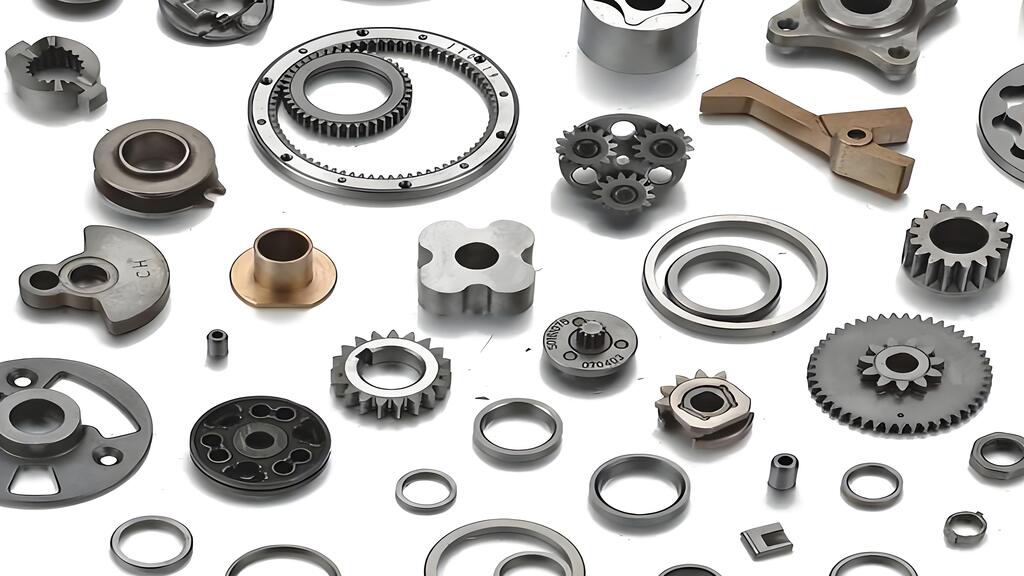


What Are Oil-Impregnated Bearings?

Oil-Impregnated Bearings represent a class of self-lubricating components. They ingeniously store lubricant directly within their porous structure. Engineers design these bearings for maintenance-free operation, ensuring an extended service life in various applications. Manufacturers typically produce Oil-Impregnated Bearings through advanced Powdered Metal technology, which forms their unique, efficient design. This manufacturing method allows for precise control over the bearing's porosity and lubricant retention capabilities.
Key Takeaways
- Oil-impregnated bearings lubricate themselves. They store oil inside their porous structure.
- These bearings work without much maintenance. They save money on upkeep and lubrication.
- Heat makes the oil come out to lubricate. When it cools, the oil goes back inside.
- Manufacturers make these bearings using metal powders. This process creates tiny holes for the oil.
- Oil-impregnated bearings work well in many devices. These include cars, home appliances, and office machines.
- These bearings have limits. They cannot handle very heavy loads or very high speeds.
- High temperatures can harm the oil. Dirt can also get inside and cause damage.
- They help machines run quietly. They also make parts last longer by reducing wear.
Understanding Oil-Impregnated Bearings
Defining Self-Lubrication in Oil-Impregnated Bearings
Oil-impregnated bearings possess a unique ability to lubricate themselves, a critical feature for their maintenance-free operation. This self-lubrication mechanism relies on a dynamic interaction between the bearing material and its stored lubricant.
Continuous Oil Release Mechanism
The self-lubricating action begins when the bearing operates. As the bearing moves, friction generates heat. This heat causes the oil, stored within the bearing's porous structure, to expand. Capillary action then draws the expanded oil from the pores to the bearing's sliding surface. This process forms a continuous, thin film of lubricant between the moving parts. The lubricating film effectively reduces the friction coefficient and prevents wear. This constant supply of oil ensures smooth operation without external lubrication.
Oil Reabsorption Process
When the bearing cools down or stops operating, the oil's volume contracts. The capillary forces within the porous metal matrix then draw the lubricant back into the pores. This reabsorption process prevents lubricant loss and contamination. The cycle of oil release during operation and reabsorption during rest ensures a continuous, long-term supply of lubricant. This dynamic process makes the bearings highly efficient and extends their service life significantly.
Key Components of Oil-Impregnated Bearings
Two primary components define the structure and function of oil-impregnated bearings: the porous metal matrix and the impregnated lubricant. Each plays a vital role in the bearing's performance.
Porous Metal Matrix Structure
The core of an oil-impregnated bearing is its porous metal matrix. Manufacturers create this structure using powder metallurgy techniques. This process results in a solid yet highly porous material. The pores act as tiny reservoirs, holding the lubricating oil. Common materials for this matrix include porous bronze and porous iron. These materials offer excellent mechanical properties and a consistent pore structure, which is essential for effective oil retention and release. The interconnected pores allow the lubricant to move freely within the bearing.
Impregnated Lubricant Function
The lubricant impregnated into the porous matrix is crucial for the bearing's performance. This lubricant reduces friction and wear between moving surfaces. Manufacturers use various types of lubricants, often synthetic, to suit different application requirements. For example, some bearings use USDA-approved lubricants for specific applications. Other options include fully synthetic impregnation lubricants like the CHEMLUBE® 645 SERIES or polyalkylene glycol (PAG) based lubricants such as the CHEMLUBE® PAG SERIES. Some lubricants, like OMNILUBE® 300 SERIES, are specifically developed for electric motors and ensure compatibility with plastics. For cold ambient conditions, specialized synthetic lubricants like OMNILUBE® 60, 100 & 170 provide optimal performance. These diverse lubricants ensure the bearings can operate effectively across a wide range of temperatures and environmental conditions.
The Manufacturing Process of Oil-Impregnated Bearings
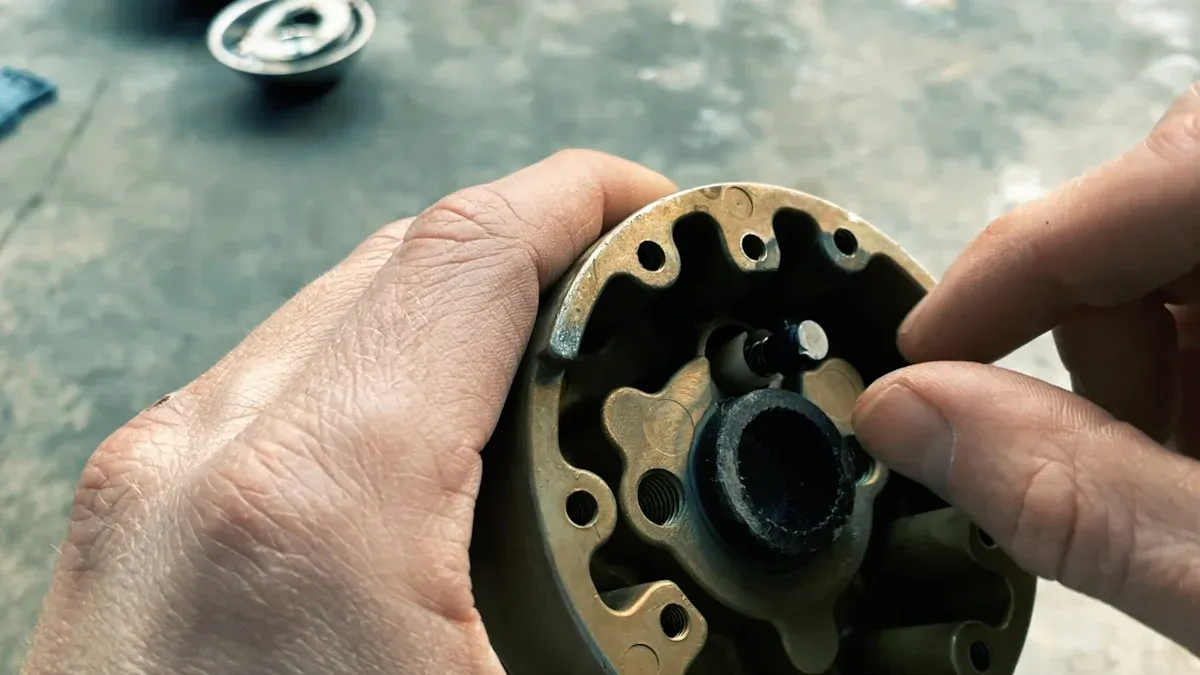
Manufacturers create Oil-Impregnated Bearings through a precise and multi-stage powder metallurgy process. This method allows for the intricate control of material properties and the creation of the porous structure essential for self-lubrication.
Powder Metallurgy Fundamentals for Oil-Impregnated Bearings
Powder Metallurgy forms the foundation for producing these specialized bearings. It involves transforming metal powders into finished components with specific characteristics.
Powder Blending Techniques
The manufacturing process begins with carefully blending selected metal powders. These often include copper, bronze, or iron. Manufacturers mix these powders with various additives and powdered lubricants to achieve a homogeneous composition. This blending uniformly introduces alloying elements, ensuring consistent material properties throughout the final product. Pressing lubricants, such as stearic acid or metallic stearates, are crucial additions. They reduce friction during compaction, minimize ejection forces, and prevent cracking in the compacted part. Typical mixing vessels for this process include double-cone, V-shaped, W-shaped, and Y-shaped sections, which facilitate a tumbling action for thorough mixing. This step ensures the composition is tailored to attain desired material properties and prevents inconsistencies that could negatively impact subsequent sintering performance.
Compaction Methods
After blending, manufacturers compact the powder mixture into a 'green compact' or 'green part'. This process involves applying high pressure to the loose metal powders within a closed die. Compaction increases particle contact, creating mechanical bonds and preliminary density. One common method is cold pressing, where pressure is applied at room temperature. This technique includes axial pressing, also known as conventional pressing, and isostatic pressing, which applies pressure uniformly to the metal powders. Another method, low-tonnage compaction, compacts raw material powders at lower tonnages. This facilitates rapid and consistent production, especially for micro bearings. Hot pressing, primarily used for carbide cutting tools and specialized applications, compacts and sinters metal powders simultaneously at elevated temperatures. For Oil-Impregnated Bearings, manufacturers typically compact the mixture under high pressure, ranging from 200 to 800 MPa, to form the green compact.
Sintering and Impregnation of Oil-Impregnated Bearings
Following compaction, the green compacts undergo sintering and then oil impregnation, which are critical steps for achieving the self-lubricating properties.
Sintering for Optimal Porosity
Sintering is a thermal treatment that bonds the metal particles in the green compact. Manufacturers heat the compacts in specialized furnaces below their melting point, for example, 750-850°C for copper alloys. This process allows solid-state diffusion, where atoms move and form strong metallic bonds between particles. Sintering is crucial for oil impregnation because it creates a strong yet porous structure, typically around 25% porosity, with interconnected capillaries. This controlled porosity is essential for the bearing's ability to store oil. The process also reduces porosity and increases density and strength. Sintering temperatures induce recrystallization, refining the microstructure and enhancing mechanical properties like tensile strength and hardness. The porous structure created by sintering allows for lubricant impregnation, providing self-lubrication and reducing friction without frequent reapplication. This inherent self-lubricating property is not achievable with solid metals and also helps dampen noise and vibration.
Vacuum Oil Impregnation Process
After sintering, the porous structure is ready for oil impregnation. This process ensures the bearing's self-lubricating capabilities. First, manufacturers clean the sintered bushings. Then, they place the porous structure in a vacuum chamber. A vacuum pump removes air from the pores. Visible air bubbling indicates the removal of trapped air pockets from the porous material. This extraction ensures thorough impregnation and optimal lubrication retention. Next, manufacturers introduce heated lubricant into the vacuum chamber, which fills the evacuated pores via capillary action. Finally, a curing step solidifies the oil within the pores, creating a durable seal and ensuring the lubricant remains effectively trapped within the bearing's structure.
Advantages of Oil-Impregnated Bearings
Oil-impregnated bearings offer numerous benefits across various industries. These advantages stem from their unique self-lubricating design and manufacturing process. They provide practical solutions for many mechanical systems.
Maintenance-Free Operation of Oil-Impregnated Bearings
These bearings significantly reduce the need for ongoing attention. Their design promotes consistent performance without frequent intervention.
Eliminating External Lubrication Needs
Oil-impregnated bronze bushings require minimal maintenance. Their self-lubricating nature means no need for constant monitoring and replenishment of lubricant. This eliminates the requirement for external lubrication systems. It also removes the associated labor and material costs. This leads to lower overall maintenance expenses for equipment.
Reducing Equipment Downtime
Solid lubrication, a feature of these bearings, can eliminate the need for bearing maintenance. Greased bearings typically require regular and ongoing maintenance. Maintenance errors contribute to nearly 80% of premature bearing failures. By replacing greased bearings with solid-lubricated ones, the human element in maintenance is removed. This reduces risks associated with over- and under-lubrication. Equipment experiences less downtime for repairs and lubrication schedules.
Cost-Effectiveness of Oil-Impregnated Bearings
The economic benefits of these bearings are substantial. They offer savings both initially and over their operational lifespan.
Lower Initial Investment
Manufacturers produce oil-impregnated bearings using powdered metal technology. This process is often more cost-effective than machining traditional bearings. This results in a lower initial purchase price for the components.
Decreased Operating Expenses
The self-lubricating nature of these bearings reduces operating costs. Users save money on lubricants and the labor required for their application. The extended service life also means fewer replacements, further cutting expenses.
Performance Benefits of Oil-Impregnated Bearings
Beyond cost and maintenance, these bearings deliver strong performance characteristics. They enhance the functionality of many mechanical devices.
Quiet Operation Characteristics
The continuous oil film provided by the impregnated lubricant dampens vibrations. This results in significantly quieter operation compared to unlubricated or intermittently lubricated bearings. This feature is crucial for applications in household appliances and office equipment.
Enhanced Wear Resistance
The constant presence of a lubricating film minimizes metal-to-metal contact. This significantly reduces friction and wear on bearing surfaces. The result is a longer operational life for the bearing and the components it supports.
Compact Design for Space Saving
Oil-impregnated bearings do not require external lubrication lines or reservoirs. This allows for a more compact and streamlined design in machinery. Engineers can save valuable space in product designs. This makes them ideal for small motors and intricate mechanisms.
Limitations and Considerations for Oil-Impregnated Bearings
While oil-impregnated bearings offer significant advantages, they also present specific limitations. Engineers must consider these factors during the design and selection process. Understanding these constraints ensures optimal performance and avoids premature component failure.
Load and Speed Restrictions of Oil-Impregnated Bearings
These bearings have specific operational boundaries regarding the forces they can withstand and the speeds at which they can rotate.
Lower Load Capacity Limits
Oil-impregnated bearings are generally not suitable for applications involving heavy loads. Their porous structure, while excellent for lubricant retention, inherently limits their ability to support high static or dynamic forces. The material's density is lower than solid metal bearings, which reduces its overall load-bearing capability. Designers must carefully assess the expected load to prevent deformation or failure.
Limited High-Speed Performance
High rotational speeds can pose a challenge for oil-impregnated bearings. Excessive speed generates significant heat within the bearing. This heat can cause the impregnated lubricant to thin out or degrade rapidly. When the oil's viscosity drops too low, it cannot maintain an effective lubricating film, leading to increased friction and wear.
One user on a practical machinist forum, discussing Oilite-type bronze bushings, stated: 'Never, never use oilite except for very low speed applications. Even 120 RPM is too high. Use a ball bearing.'
This highlights the importance of selecting these bearings for appropriate speed ranges.
Temperature Sensitivity of Oil-Impregnated Bearings
Temperature plays a crucial role in the performance and longevity of oil-impregnated bearings.
Oil Degradation at High Temperatures
Elevated operating temperatures can accelerate the degradation of the impregnated lubricant. High heat causes the oil to oxidize and break down, losing its essential lubricating properties. Degraded oil can become thicker, form sludge, or evaporate, leaving the bearing without adequate lubrication. This leads to increased friction, accelerated wear, and eventual bearing failure.
Viscosity Changes Impact
The viscosity of the impregnated oil changes with temperature. As temperatures rise, the oil becomes thinner, reducing its ability to form a protective film between moving surfaces. Conversely, very low temperatures can make the oil too thick, hindering its flow and release from the porous matrix. Both scenarios compromise lubrication effectiveness and can lead to premature wear.
Contamination Vulnerability of Oil-Impregnated Bearings
The porous nature of these bearings makes them susceptible to contamination from the operating environment.
Abrasive Particle Ingress Risks
External abrasive particles can enter the porous structure of the bearing. Once inside, these particles act as grinding agents, causing significant damage.
- Solid particle contaminants or debris overrolled in the bearing's rolling contact area cause indentations (deformations) in raceways and rolling elements. The damage scope is influenced by particle size, type, and hardness. These indentations can subsequently lead to surface-initiated fatigue.
- Abrasive wear involves the progressive removal of material, often due to abrasive particles or inadequate lubrication. This wear is characterized by dull surfaces and can destroy the microgeometry of rolling surfaces, quickly wearing down raceways, rolling elements, and cage pockets. It can be caused by contaminated material entering the lubricant and bearing, or by lubricant starvation.
- Contaminant particles entering the bearing can lead to indentations due to overrolling, which generate noise and can initiate material fatigue.
- Abrasive contaminants cause wear on rolling contact surfaces and progressively increase bearing clearance, reducing running accuracy and eventually leading to bearing failure.
This ingress can lead to increased friction, accelerated wear, and ultimately, bearing failure.
Chemical Compatibility Issues
The materials used in oil-impregnated bearings, including the metal matrix and the lubricant, can react adversely with certain chemicals in the operating environment.
- Backing Metal Corrosion: Corrosive environments can weaken the backing metal, leading to a loss of structural integrity and potential system failure.
- Porous Metal Layer Clogging: Corrosion can obstruct the pores in the metal layer that hold the lubricating oil, preventing proper oil release and increasing friction and wear.
- Lubricating Oil Degradation: Chemicals in the environment can react with the lubricating oil, altering its properties (e.g., reduced viscosity) or forming sludge, which further impairs lubrication and clogs pores.
Engineers must carefully consider the chemical environment to ensure material compatibility and prevent degradation.
Common Applications of Oil-Impregnated Bearings
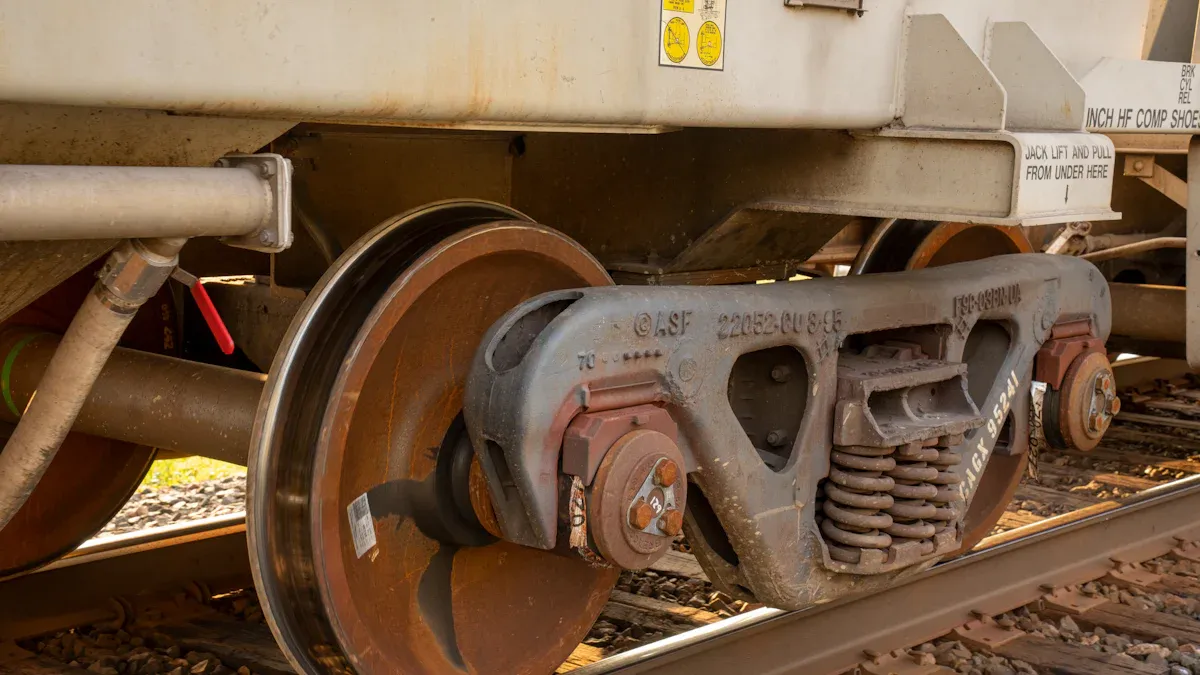
Oil-impregnated bearings find extensive use across numerous industries. Their self-lubricating properties and maintenance-free operation make them ideal for many mechanical systems. These bearings contribute to the efficiency and longevity of various products.
Automotive Industry Uses for Oil-Impregnated Bearings
The automotive sector heavily relies on oil-impregnated bearings for their reliability and durability. These components ensure smooth operation in critical vehicle systems. Oil-impregnated bearings are commonly used in automotive components.
Starter Motors Integration
Starter motors frequently incorporate oil-impregnated bearings. These bearings support the motor's armature, allowing it to spin freely and engage the engine. Their self-lubricating nature ensures consistent performance even under intermittent, high-load conditions during engine start-up.
Wiper Systems Components
Vehicle wiper systems also benefit from oil-impregnated bearings. These bearings facilitate the smooth, consistent movement of wiper arms across the windshield. They withstand varying weather conditions and provide reliable operation without requiring external lubrication. Other automotive applications include:
- Engine components
- Transmission parts
- Cooling fan bearings
Home Appliances Utilizing Oil-Impregnated Bearings
Many household appliances use oil-impregnated bearings. These bearings contribute to the quiet and efficient operation of everyday devices. Sintered oil-impregnated bearings are utilized across a diverse range of sectors, including home appliances.
Washing Machines Applications
Washing machines often feature oil-impregnated bearings in their motors and drum support mechanisms. These bearings handle the rotational forces and vibrations associated with washing cycles. They provide long-lasting, maintenance-free performance in a demanding environment.
Fans and Blenders Components
Small electric motors in fans and blenders also use oil-impregnated bearings. These bearings ensure quiet operation and extended product life. They reduce friction, allowing the motor to run efficiently and reliably. Kitchen appliances frequently use these bearings.
Office Equipment with Oil-Impregnated Bearings
Office equipment requires precise and quiet operation. Oil-impregnated bearings meet these demands effectively. Oil-impregnated bearings are commonly used in office equipment.
Printers Mechanisms
Printers integrate oil-impregnated bearings into various mechanisms. These include paper feed rollers and print head carriages. The bearings ensure smooth, accurate movement of components, contributing to high-quality print output.
Copiers Internal Parts
Copiers also utilize oil-impregnated bearings in their internal parts. These bearings support rollers and gears, facilitating the complex paper handling and imaging processes. Their self-lubricating properties reduce wear and extend the copier's operational lifespan. Other office equipment applications include:
- Scanners
Other Industrial Uses for Oil-Impregnated Bearings
Oil-impregnated bearings extend their utility beyond common consumer products. They serve critical roles in various industrial sectors. Their self-lubricating properties make them ideal for applications requiring consistent performance and minimal maintenance. These bearings contribute significantly to the efficiency and longevity of diverse industrial machinery.
Small Motors Integration
Small motors power countless industrial devices. Oil-impregnated bearings are essential components in these motors. They provide reliable support for rotating shafts. This ensures smooth and quiet operation. The bearings' self-lubricating nature eliminates the need for external grease or oil. This simplifies motor design and reduces maintenance requirements. Manufacturers integrate these bearings into motors for:
- Industrial equipment
- Medical equipment
- Precision machinery
- Multimedia equipment
These applications benefit from the bearings' compact size and long service life. The consistent oil film reduces friction. This enhances motor efficiency and extends operational lifespan.
Agricultural Machinery Components
Agricultural machinery operates in demanding environments. It often faces dust, dirt, and varying temperatures. Oil-impregnated bearings offer robust solutions for these challenges. They provide reliable performance without frequent lubrication. This is crucial for equipment operating in remote fields. Farmers rely on their machinery to function consistently. These bearings support various moving parts within agricultural equipment. They ensure the smooth operation of:
- Pumps
- Conveyors
- Gearboxes
The bearings' enhanced wear resistance helps them withstand harsh conditions. Their self-contained lubrication system prevents contamination from external elements. This reduces the risk of premature failure. It also minimizes downtime for maintenance. This contributes to the overall productivity of agricultural operations.
Oil-impregnated bearings provide a practical, efficient self-lubricating solution for many applications. Their unique manufacturing process and inherent self-lubricating nature offer significant advantages in maintenance and cost. Understanding their specific characteristics is crucial. This knowledge ensures proper selection and optimal performance in diverse mechanical systems. 💡 These bearings simplify design and extend operational life.
FAQ
What is an oil-impregnated bearing?
An oil-impregnated bearing is a self-lubricating component. It stores lubricant within its porous structure. Manufacturers design these bearings for maintenance-free operation and extended service life. Powdered metal technology typically produces them.
How do oil-impregnated bearings achieve self-lubrication?
Friction generates heat during operation. This heat causes the stored oil to expand and release onto the bearing surface. When the bearing cools, capillary action draws the oil back into the pores. This cycle ensures continuous lubrication. 🔄
What materials are used to make oil-impregnated bearings?
Manufacturers primarily use porous metal matrices like bronze or iron. They impregnate these matrices with various lubricants, often synthetic. The choice of lubricant depends on the application's specific requirements, including temperature and environmental conditions.
What are the main advantages of using oil-impregnated bearings?
These bearings offer maintenance-free operation, eliminating external lubrication needs. They are cost-effective due to lower initial investment and decreased operating expenses. Performance benefits include quiet operation, enhanced wear resistance, and compact design. ✨
What are the limitations of oil-impregnated bearings?
Oil-impregnated bearings have load and speed restrictions. They also show sensitivity to high temperatures, which can degrade the oil. Furthermore, they are vulnerable to contamination from abrasive particles and chemical incompatibility.
Where are oil-impregnated bearings commonly applied?
Oil-impregnated bearings find extensive use in various sectors:
- Automotive industry (e.g., starter motors, wiper systems) 🚗
- Home appliances (e.g., washing machines, fans) 🏠
- Office equipment (e.g., printers, copiers) 🏢
How does the manufacturing process create the porous structure?
Powder metallurgy creates the porous structure. Manufacturers blend metal powders and compact them into a 'green compact'. Sintering then bonds the particles, forming a strong, porous matrix with interconnected capillaries. This structure is essential for oil retention.