

Low Volume vs Mass Production: Is Magnesium Die Casting Suitable
Magnesium Die Casting offers distinct advantages for both low-volume and mass production. Its optimal application depends on specific project demands. While often associated with high-volume manufacturing, its unique properties can also benefit specialized low-volume needs under the right conditions. This process delivers solutions for diverse industrial requirements.
Key Takeaways
- Magnesium die casting works for both small and large production runs.
- Magnesium parts are very light but also very strong.
- Magnesium die casting costs more to start because of special tools.
- Small production runs have higher costs for each part.
- Large production runs make magnesium parts cheaper per item.
- Magnesium helps make cars lighter and electronics stronger.
- Magnesium parts can block electronic interference.
- Design and budget are important when choosing magnesium die casting.
Understanding Magnesium Die Casting: Core Characteristics
What is Magnesium Die Casting?
The Process Explained
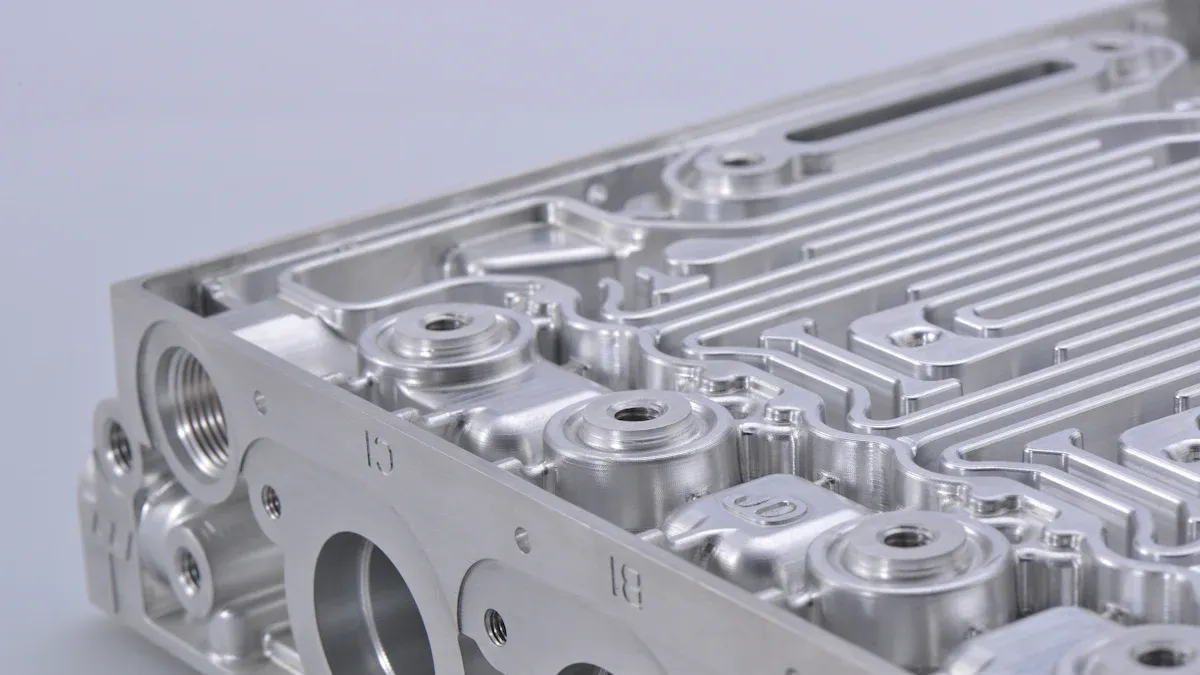
Magnesium die casting involves injecting molten magnesium alloys into a steel mold under high pressure. This high-pressure process creates complex, near-net-shape parts with excellent precision. Magnesium exhibits greater fluidity compared to other casting methods, allowing manufacturers to produce intricate designs and components with very thin walls. This capability makes it suitable for parts requiring detailed features.
Key Magnesium Alloys
Several magnesium alloys are commonly used in die casting. AZ91D is a widely utilized alloy, known for its good castability and mechanical properties. Other significant alloys include AM60B, which offers improved ductility, and AS41, valued for its creep resistance at elevated temperatures. Each alloy provides a specific balance of strength, ductility, and corrosion resistance, catering to diverse application needs.
Advantages of Magnesium Die Casting
Unmatched Lightweight Properties
Magnesium is the lightest structural metal available. Components produced through Magnesium Die Casting significantly reduce the overall weight of a product. This weight reduction is critical in industries like automotive and aerospace, where every gram saved contributes to fuel efficiency and performance.
Superior Strength-to-Weight Ratio
Despite its low density, magnesium alloys offer an excellent strength-to-weight ratio. This means parts are robust and durable without adding excessive mass. Products can achieve high structural integrity while remaining remarkably light.
Effective EMI/RFI Shielding
Magnesium naturally provides effective electromagnetic interference (EMI) and radio frequency interference (RFI) shielding. This property is invaluable for electronic enclosures, protecting sensitive internal components from external interference and preventing internal emissions from affecting other devices.
Excellent Thermal Conductivity
Magnesium possesses good thermal conductivity. This characteristic allows magnesium components to efficiently dissipate heat. It is beneficial for applications where heat management is crucial, such as in electronic devices or engine parts.
Dimensional Stability
Magnesium die-cast parts exhibit high dimensional stability. They maintain their precise dimensions even under varying temperatures and environmental conditions. This ensures consistent performance and accurate fit within complex assemblies.
Disadvantages of Magnesium Die Casting
Material Cost Considerations
Magnesium alloys present unique material cost considerations. While some analyses suggest magnesium can have lower material costs per weight, overall part costs often become higher than those of aluminum. Aluminum, despite potentially higher raw material costs per pound, benefits from lower tooling costs and greater mold durability. This allows for more production cycles before tool wear becomes an issue, often leading to lower overall unit costs for Aluminum Parts.
Tooling Complexity and Investment
The specialized nature of magnesium die casting requires complex and precise tooling. This translates into a significant upfront investment for mold design and manufacturing. The intricate designs possible with magnesium's fluidity demand highly engineered molds.
Corrosion Management
Magnesium is susceptible to corrosion, particularly in certain environments. Effective corrosion management strategies are therefore essential. These strategies include purifying magnesium alloys by removing impurity elements like iron, nickel, and copper, which accelerate corrosion. Grain refinement techniques, such as High-Pressure Torsion (HPT), also improve corrosion resistance by creating a more compact film layer and uniform ultra-fine grain structures.
Specialized Handling Requirements
Magnesium's reactivity with the atmosphere necessitates specialized handling during processing. Manufacturers must use fluxes or reactive cover gases and employ methods to reduce magnesium vapor pressure. These precautions prevent fires during the casting process, adding to operational complexity and cost.
Suitability of Magnesium Die Casting for Low-Volume Production
When Low Volume Justifies Magnesium Die Casting
Prototyping and Product Development
Manufacturers often utilize magnesium die casting for prototyping and product development. This process allows engineers to create functional, high-fidelity prototypes that accurately represent the final product. They can test designs rigorously, evaluate performance characteristics, and make rapid iterations. This capability accelerates the development cycle for new products, ensuring optimal design before committing to mass production.
Specialized Component Manufacturing
Low-volume production of specialized components frequently benefits from magnesium die casting. These components often require unique material properties, such as extreme lightweighting, superior strength-to-weight ratios, or effective EMI/RFI shielding. When other manufacturing methods cannot achieve these specific requirements, magnesium die casting provides a viable solution for producing these critical parts.
Niche Market Applications
Niche market applications, characterized by limited production runs, find magnesium die casting particularly suitable. Products in high-end sports equipment, custom robotics, or specialized medical devices often demand premium performance and precise specifications. Magnesium's properties deliver these advantages, allowing manufacturers to serve these exclusive markets with high-quality, performance-driven components.
Performance-Critical Parts
For parts where performance is paramount and failure is unacceptable, low-volume magnesium die casting becomes essential. These components might operate in extreme conditions or form part of safety-critical systems. The inherent strength, dimensional stability, and thermal conductivity of magnesium alloys ensure these parts meet stringent performance criteria, providing reliability and durability where it matters most.
Cost Implications for Low-Volume Magnesium Die Casting
High Initial Tooling Investment
The initial tooling investment represents a high cost for low-volume magnesium die casting. Designing and manufacturing the robust steel molds requires substantial capital. This upfront expense can be challenging to amortize over a small number of units, making the per-part cost higher compared to mass production.
Higher Per-Part Material Costs
Low-volume production typically involves smaller material purchases. This prevents manufacturers from leveraging bulk discounts. Consequently, the per-part material cost for magnesium alloys remains higher than in large-scale operations. This factor contributes to the overall increased unit cost for low-volume runs.
Setup and Changeover Expenses
Each production run in low-volume manufacturing incurs setup and changeover expenses. These costs include preparing the die casting machine, adjusting parameters, and conducting initial test shots. Labor, machine downtime, and material waste during this phase add to the overall cost per unit, especially when spread across fewer parts.
Absence of Economies of Scale
Low-volume production inherently lacks economies of scale. Manufacturers cannot distribute fixed costs, such as tooling and overhead, over a large number of units. This absence means each part bears a larger share of these fixed expenses, resulting in a higher unit cost compared to high-volume manufacturing, where these costs are significantly diluted.
Benefits of Low-Volume Magnesium Die Casting
Achieving Specific Performance Goals
Low-volume magnesium die casting allows manufacturers to achieve very specific performance goals. The unique combination of lightweight properties, high strength, and excellent thermal management enables the creation of components that meet demanding specifications. This capability is crucial for products requiring optimal functionality in specialized applications.
Critical Weight Reduction for Niche Products
For niche products where every gram counts, magnesium die casting offers critical weight reduction. This benefit enhances portability, improves efficiency, or contributes to a superior user experience. Specialized equipment, such as drones or portable electronic devices, greatly benefits from the significant weight savings magnesium provides.
Complex Geometry Realization
The process excels at realizing complex geometries. Magnesium die casting produces intricate shapes with thin walls and fine details. This capability often reduces the need for extensive post-machining or the assembly of multiple smaller parts. It simplifies the manufacturing process and can lead to more integrated, robust designs.
Faster Iteration for Specialized Designs
Low-volume production with magnesium die casting facilitates faster iteration for specialized designs. Engineers can quickly produce and test design modifications. This agility allows for rapid refinement and optimization of components. It supports innovation and ensures the final product meets precise requirements efficiently.
Challenges in Low-Volume Magnesium Die Casting
Justifying High Upfront Costs
Justifying the high upfront costs presents a significant challenge for low-volume Magnesium Die Casting projects. The substantial initial investment primarily goes into tooling. The dies, precision-engineered from high-grade tool steel, must endure extreme pressures and temperatures while maintaining tight tolerances. Their complex design, coupled with premium materials and advanced manufacturing techniques, leads to significant upfront expenses. These costs can reach tens or hundreds of thousands of dollars per die. This high initial cost becomes a considerable barrier for small production runs or prototyping. Manufacturers typically amortize these costs over much larger production volumes to make them economical. High initial investment costs are explicitly identified as a challenge within the magnesium die casting machine industry, directly impacting the justification for projects, especially those with low volumes where cost amortization is difficult.
| Solution Type | Volume Range | Lead Time |
|---|---|---|
| Rapid Soft Tooling | 100-5,000 parts | 3-5 weeks |
Limited Supplier Options for Small Runs
Companies often face limited supplier options when seeking low-volume magnesium die casting services. Many manufacturers prioritize larger, more profitable contracts. They may hesitate to take on small-batch orders due to the lower return on investment. The specialized equipment and expertise required for magnesium die casting are not universally available. This scarcity further restricts choices for businesses needing custom, low-volume magnesium parts. Finding a supplier willing to dedicate resources to smaller projects can be difficult.
Higher Unit Cost
Low-volume production inherently results in a higher unit cost for magnesium die-cast parts. The significant upfront tooling investment spreads across a small number of units. This means each part bears a larger share of the fixed costs. Furthermore, small material purchases prevent manufacturers from leveraging bulk discounts, leading to higher per-part material expenses. Each production run also incurs setup and changeover expenses, including machine preparation and initial test shots. These costs, when divided by fewer parts, disproportionately increase the unit price. The absence of economies of scale ensures that the cost per part remains substantially higher compared to mass production, where these expenses dilute over vast quantities.
Suitability of Magnesium Die Casting for Mass Production
When Mass Production Optimizes Magnesium Die Casting
Mass production truly unlocks the full potential of magnesium die casting. This manufacturing method becomes highly efficient and cost-effective when producing large volumes of identical parts. Industries requiring lightweight, high-strength components at scale often turn to this process.
Automotive Industry Components
The automotive industry extensively uses magnesium die casting. Manufacturers produce critical components for vehicles. These include instrument display panels, seating frames, and various powertrain components. Engine components also frequently utilize this process. The lightweight nature of magnesium directly contributes to improved fuel efficiency and reduced emissions in modern vehicles.
Consumer Electronics Casings
Consumer electronics benefit greatly from magnesium die casting. Devices like laptops, tablets, and smartphones require strong yet lightweight casings. Magnesium provides excellent EMI/RFI shielding, protecting sensitive internal electronics. Its ability to form thin walls allows for sleek, compact designs.
High-Volume Industrial Applications
High-volume industrial applications, particularly in aviation and aerospace, leverage magnesium die casting. These sectors demand parts with superior strength-to-weight ratios. Magnesium components help reduce overall aircraft weight, leading to better performance and fuel economy. The process delivers consistent quality for these critical applications.
Medical Device Manufacturing
Medical device manufacturing also finds magnesium die casting highly suitable for mass production. Many medical instruments and equipment require precise, lightweight, and durable components. Magnesium's biocompatibility and ability to create intricate shapes make it ideal for various medical applications, from surgical tools to diagnostic equipment housings.
Cost Efficiencies in Mass Production with Magnesium Die Casting
Mass production significantly enhances the cost-effectiveness of magnesium die casting. High volumes allow manufacturers to spread initial investments over many units, leading to lower per-part costs.
Amortization of Tooling Costs
Mass production allows for the amortization of tooling costs. The substantial upfront investment in high-quality steel dies becomes negligible when spread across hundreds of thousands or even millions of parts. This distribution makes the initial expense economically viable.
Bulk Material Procurement Advantages
Manufacturers gain significant advantages through bulk material procurement. Purchasing large quantities of magnesium alloys often results in lower per-unit material costs. Suppliers offer discounts for volume orders, directly reducing the overall production expense.
Optimized Cycle Times and Throughput
Mass production optimizes cycle times and throughput. Cold-chamber die casting, commonly used for magnesium, typically achieves cycle times of 20–25 seconds. These machines can produce 500 to 800 castings per hour. Such setups easily meet yearly demands exceeding 250,000 pieces.
Automation and Robotics Integration
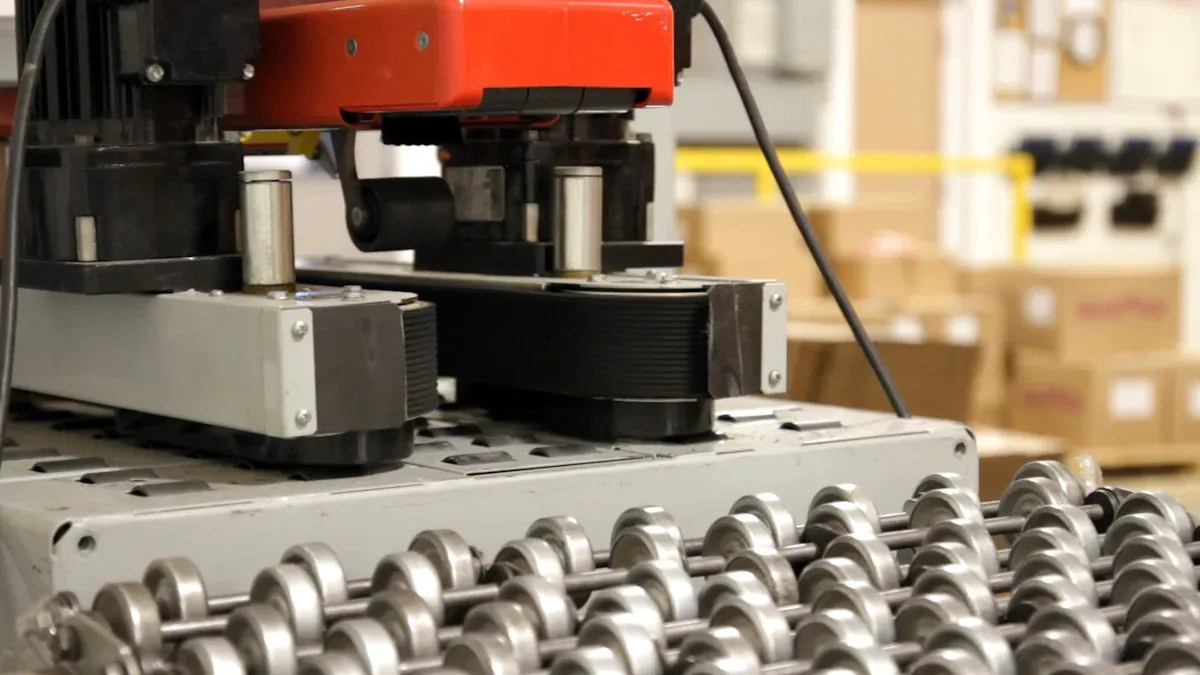
Automation and robotics integration further boost efficiency. These systems sustain throughput beyond 500,000 units per year. Robotic metal transfer in cold chamber systems increases cycle times by 15–20%. This integration reduces labor costs, minimizes human error, and ensures consistent production speeds.
Benefits of Mass Production Magnesium Die Casting
Mass production with magnesium die casting offers numerous advantages beyond cost efficiency. It delivers consistent quality, significant weight savings, and streamlined assembly processes.
Consistent Quality and Repeatability
Mass production ensures consistent quality and repeatability. Automated processes and precise tooling minimize variations between parts. Each component meets exact specifications, which is crucial for industries with strict quality standards. This consistency builds product reliability and customer trust.
Significant Weight Savings Across Units
Manufacturers achieve significant weight savings across units. Magnesium is the lightest structural metal. Using it in mass-produced items, such as automotive parts or consumer electronics, dramatically reduces the overall product weight. This leads to benefits like improved fuel efficiency, enhanced portability, and better performance.
Part Consolidation and Assembly Reduction
Part consolidation and assembly reduction are major benefits. Combining multiple smaller components into a single magnesium casting simplifies product design. This directly reduces the total number of parts. It also significantly cuts down assembly time and lowers labor costs by eliminating secondary operations like drilling, tapping, welding, and extensive machining. Furthermore, it simplifies supply chains and inventory management, leading to substantial manufacturing and logistics cost savings.
Enhanced Product Performance at Scale
Mass production of magnesium components enhances product performance at scale. The superior strength-to-weight ratio, excellent thermal conductivity, and EMI/RFI shielding properties are consistently replicated across all units. This ensures every product delivers optimal functionality and durability to a wide market.
Challenges in Mass Production Magnesium Die Casting
Mass production with Magnesium Die Casting presents specific challenges. Companies must carefully consider these factors. They impact project feasibility and long-term success.
Substantial Upfront Capital Investment
Mass production requires a substantial upfront capital investment. This investment primarily covers specialized machinery and facility setup. Die casting machines for high-volume production are large and expensive. They demand significant floor space and robust infrastructure. Companies also invest heavily in automation systems. These systems include robotic arms for part extraction and trimming. The initial outlay can reach millions of dollars. This high entry barrier limits participation to well-capitalized organizations.
Extended Tooling Lead Times
Mass production projects often face extended tooling lead times. The creation of high-durability steel molds is a complex process. It involves precise design, machining, and heat treatment. Tooling manufacturers require several months to complete these intricate dies. This extended period impacts project timelines. It delays the start of mass production. Companies must plan carefully to accommodate these lead times.
Requirement for Stable Market Demand
Mass production necessitates a stable market demand. Companies commit significant resources to produce large quantities of parts. A fluctuating or declining market can lead to overproduction. This results in excess inventory and financial losses. Businesses must conduct thorough market research. They need to project demand accurately. This ensures the sustained viability of mass production efforts.
Design Freezing Necessity
Mass production requires design freezing. Once tooling is complete, design changes become extremely costly. Modifying a hardened steel die is expensive and time-consuming. It can even necessitate creating entirely new tooling. This means product designs must be finalized before mass production begins. It limits flexibility for late-stage modifications. Companies must ensure their designs are robust and thoroughly tested. This prevents costly revisions during the production phase.
Key Factors Influencing Magnesium Die Casting Suitability
Several critical factors determine whether magnesium die casting is the right manufacturing choice for a project. Project managers must carefully evaluate each element. These considerations ensure optimal performance and cost-effectiveness.
Part Design and Complexity
The intricacy of a part's design significantly impacts the manufacturing process. Engineers must consider the part's geometry and features.
Impact on Tooling Design
Complex part designs directly influence tooling design. High-Pressure Die Casting (HPDC) excels at producing intricate designs with tight tolerances quickly. However, its high speed can introduce defects in more intricate parts. Low-Pressure Die Casting (LPDC) suits complex geometries and thicker components requiring greater structural integrity. Its slower production speed, however, can increase costs for complex designs.
Manufacturability Considerations
Design complexity also affects manufacturability. Parts requiring post-processing or additional finishing steps will incur higher total costs. This applies irrespective of the casting method used. Designers aim for designs that minimize secondary operations.
Required Material Properties
The desired characteristics of the final product guide material selection. Magnesium offers a unique set of properties.
Weight Reduction Targets
Magnesium is extremely lightweight. It is 75% lighter than steel and 33% lighter than aluminum. Projects prioritizing significant weight reduction often choose magnesium. This lightness improves fuel efficiency and portability.
Strength and Durability Needs
Magnesium alloys offer an excellent strength-to-weight ratio. They provide good fatigue and creep resistance, especially with specific alloys like AS and AE. AM alloys enhance ductility and impact resistance. A fine microstructure contributes to enhanced durability. These properties ensure parts handle stress effectively.
Thermal and Electrical Performance
Magnesium exhibits good thermal and electrical conductivity. It also provides excellent vibration and noise-dampening properties. Good EMI/RFI shielding capabilities are another benefit. These characteristics are crucial for electronic enclosures and heat-sensitive applications.
Budget and Cost Targets
Financial considerations play a pivotal role in manufacturing decisions. Project budgets must align with process capabilities.
Tooling Budget Allocation
Magnesium processing equipment costs more due to stringent safety protocols. This requires a higher initial investment. However, these higher costs can balance against long-term benefits. Fuel cost efficiency and other advantages can lead to overall long-term profits.
Per-Part Cost Objectives
Magnesium historically involves higher material and tooling costs. Digital manufacturing advancements, such as real-time monitoring and predictive maintenance, reduce defect rates. They also enable thinner wall sections. This improves the economics of magnesium die-cast parts.
Finishing and Post-Processing Costs
Strategic sourcing and regionalization of raw materials are crucial. Trade policy volatility and concentrated primary magnesium production affect costs. Investment in recycling and alloy substitution strategies accelerates due to cost pressures and supply chain concerns. Tariffs and trade friction also influence the cost basis of imported magnesium.
Production Volume and Product Lifespan
Total Unit Requirements
The total number of units a project requires significantly influences manufacturing process selection. For high-volume production, magnesium alloys offer distinct advantages. Their low latent heat of fusion and high thermal conductivity cause rapid solidification. This significantly shortens production cycle times for each part. Shorter production cycles allow manufacturers to produce more components in less time. This increases throughput and operational speed. Rapid solidification and shorter production cycles directly result in lower manufacturing costs. This happens due to less energy consumption per part and more efficient use of machinery and labor. This efficiency makes magnesium die casting a cost-effective solution for high-volume production. It reduces the overall unit cost of components.
Product Life Cycle Projections
A product's expected lifespan also plays a crucial role in determining the suitability of magnesium die casting. For products with long life cycles, the durability of tooling becomes important. Magnesium causes decreased wear on molds. This directly extends die life. Longer-lasting dies reduce the need for frequent replacement or refurbishment. This lowers tooling expenses. Extended die life minimizes production downtime. This further enhances the overall efficiency and cost-effectiveness of the die-casting process. Furthermore, the lightweight nature of magnesium components leads to substantial energy savings during the operational phase of products. In portable electronic devices, lighter components extend battery life. This improves user convenience and reduces charging frequency. These operational energy savings provide long-term economic and environmental benefits. This makes magnesium attractive for industries focused on efficiency and sustainability.
Time-to-Market Demands
Production Speed Requirements
Meeting aggressive time-to-market demands often necessitates rapid production capabilities. Magnesium die casting excels in this area. The process allows for quick cycle times, especially in high-volume settings. Manufacturers can produce complex parts efficiently and consistently. This speed helps bring products to market faster. It provides a competitive edge.
Iteration and Development Cycles
The need for rapid iteration and development cycles also impacts manufacturing choices. While initial tooling for die casting requires time, the process itself supports quick production once the dies are ready. For prototyping and early development, other methods might offer faster initial parts. However, for scaling up production after design finalization, die casting provides consistent, high-quality parts quickly. This allows for efficient testing and validation of designs in later stages of development.
Comparative Analysis: Magnesium Die Casting vs. Alternatives
Manufacturers often evaluate magnesium die casting against other common manufacturing methods. This comparison helps determine the most suitable process for specific product requirements.
Magnesium Die Casting vs. Aluminum Die Casting
Weight and Performance Differences
Magnesium alloys are the lightest structural metals. They have a density of about 1.8 g/cm³. This makes them approximately 33% lighter than aluminum alloys, which have a density of about 2.7 g/cm³. Magnesium offers a superior strength-to-weight ratio, allowing significant weight reduction without compromising strength. Aluminum provides a good balance of strength and weight, but its ratio is lower than magnesium's.
| Property | Magnesium Alloys | Aluminum Alloys |
|---|---|---|
| Density | Around 1.8 g/cm³ | About 2.7 g/cm³ |
| Strength-to-Weight Ratio | Superior | Good balance, lower than magnesium |
| Corrosion Resistance | Higher vulnerability (requires surface treatments) | Excellent (naturally forms a protective oxide layer) |
| Thermal Conductivity | Moderate | Excellent |
Magnesium's corrosion resistance is lower than that of aluminum, especially in salty or humid environments. It requires protective coatings like anodizing or powder coating. Aluminum naturally forms a protective oxide layer, giving it excellent corrosion resistance. Aluminum also exhibits excellent thermal conductivity, making it preferred for efficient heat dissipation. Magnesium has moderate thermal conductivity.
Cost and Process Comparisons
Magnesium generally involves higher base material costs. For instance, magnesium can cost around $4.1/kg, while aluminum averages $2.2/kg. This difference means 10,000 cases of magnesium might cost $41,000 in material, compared to $22,000 for aluminum. Magnesium prices can also fluctuate significantly, unlike aluminum, which has historically been more stable.
| Feature | Aluminum Die Casting | Magnesium Die Casting |
|---|---|---|
| Cycle Time | 60 seconds | 40 seconds (20-30% quicker) |
| Tool Cost | $50,000 | $70,000 |
| Tool Life | 100,000-150,000 runs | 50,000-80,000 runs (due to hotter flows) |
| Finishing Costs | Little extra | Barriers cost $0.50 per unit (vs. $0.20 for aluminum) |
| Reactivity | Low | High (requires SF6 gas protection) |
Magnesium die casting offers quicker cycle times, often 20-30% faster than aluminum. However, tooling for magnesium can be more expensive, around $70,000 compared to $50,000 for aluminum. Magnesium tools also have a shorter life, typically 50,000-80,000 runs, due to hotter flows. Aluminum tools last longer, up to 150,000 runs. Magnesium's higher reactivity requires protective gases, increasing power consumption by about 10%.
Magnesium Die Casting vs. Engineering Plastics
Strength, Durability, and Thermal Properties
Magnesium die-cast parts are significantly stronger and stiffer than engineering plastics. They offer greater wear resistance and higher temperature resistance. Magnesium also provides superior UV resistance and better energy absorption or impact resistance. Unlike plastics, magnesium parts do not require inserts for threaded holes. Magnesium is 100% recyclable, while plastics often have limited recyclability.
| Property | Magnesium Die Casting | Engineering Plastics |
|---|---|---|
| Strength | Stronger | Less strong |
| Stiffness | Stiffer | Less stiff |
| Wear Resistance | Greater | Lower |
| Temperature Resistance | Higher | Lower |
| Energy Absorption/Impact Resistance | Better | Lower |
| Threaded Holes | No inserts required | Requires inserts |
Cost and Tooling Considerations
Initial tooling costs for die casting, including magnesium, range from $10,000 to $80,000. This is generally higher than for injection molding of engineering plastics, which typically costs $5,000 to $50,000. Material costs for thermoplastics vary widely, from $1-$3/lb for common grades to over $10/lb for engineering grades. Die casting equipment is also 20-30% more expensive than injection molding equipment. Die casting becomes more cost-effective at higher volumes, typically above 10,000 units, while injection molding is more economical for shorter runs.
Tool design is critical for both processes. Poor design leads to defects and higher costs. Optimized runner and vent systems, along with strategic cooling circuit design, improve part consistency and extend tool life. High-grade tool steels, like H13, are essential for magnesium dies to withstand heat and toughness demands.
Magnesium Die Casting vs. CNC Machining
Geometric Complexity and Production Speed
Die casting excels at producing complex geometries rapidly, especially for high-volume production. It creates near-net-shape parts with intricate details in a single cycle. CNC machining, conversely, is ideal for highly intricate parts, prototypes, or low-volume runs where design changes are frequent. It offers exceptional precision and surface finish but is a slower, subtractive process.
Material Utilization and Waste
Die casting is a highly efficient process in terms of material utilization. It produces parts close to their final shape, minimizing material waste. CNC machining, being a subtractive method, generates more material waste in the form of chips and shavings. While these can often be recycled, the initial material consumption is higher.
Real-World Applications of Magnesium Die Casting
Manufacturers successfully apply magnesium die casting across various industries. It serves both specialized, low-volume needs and large-scale mass production. These real-world examples demonstrate its versatility and unique advantages.
Low-Volume Success Stories
Specialized Aerospace Components
The aerospace industry frequently uses magnesium die casting for specialized components. Engineers design these parts for critical weight reduction and high performance. Examples include intricate housings for avionics systems or structural brackets for unmanned aerial vehicles (UAVs). The process allows for complex geometries and thin walls, which are essential for maximizing efficiency and payload capacity in aircraft.
High-Performance Sports Equipment
High-performance sports equipment also benefits from low-volume magnesium die casting. Manufacturers create lightweight frames for racing bicycles, specialized camera housings for extreme sports, or components for professional athletic gear. The superior strength-to-weight ratio of magnesium enhances performance without adding unnecessary bulk. This gives athletes a competitive edge.
Custom Medical Device Enclosures
Custom medical device enclosures represent another area of low-volume success. These devices often require precise dimensions, excellent EMI/RFI shielding, and biocompatibility. Magnesium die casting provides durable, lightweight, and aesthetically pleasing enclosures for portable diagnostic equipment, surgical tools, or patient monitoring systems. The ability to produce intricate designs ensures a perfect fit for sensitive internal components.
Mass Production Success Stories
Automotive Powertrain Components
The automotive industry extensively utilizes magnesium die casting for mass-produced components. Manufacturers produce automatic transmission housings, which operate above 120 degrees Celsius. They also create instrument panel structures and seat frames, both critical safety components. Other applications include steering column support brackets, various engine components, subframes, suspension components, cross members, and even body panels. These parts contribute significantly to vehicle lightweighting, improving fuel efficiency and reducing emissions on a large scale.
Consumer Electronics Casings
Consumer electronics casings are a prime example of mass production success. Devices like laptops, tablets, and smartphones require strong, lightweight, and aesthetically pleasing enclosures. Magnesium provides excellent EMI/RFI shielding, protecting sensitive internal electronics from interference. Its ability to form thin walls allows for sleek, compact designs, which are crucial in the competitive electronics market.
Power Tool Housings
Power tool housings also benefit from mass-produced magnesium die castings. Manufacturers need durable, impact-resistant, and lightweight materials for drills, saws, and grinders. Magnesium provides the necessary strength and rigidity while keeping the tools manageable for users. The efficient heat dissipation properties of magnesium also help extend the life of internal motors and components.
Magnesium die casting offers a highly versatile manufacturing solution. It proves suitable for both low-volume and mass production when projects align with specific parameters. For low-volume applications, it provides unique performance advantages for specialized parts, despite higher per-unit costs due to tooling. In mass production, it delivers significant cost efficiencies, consistent quality, and substantial weight savings across high volumes. The ultimate decision hinges on a detailed cost-benefit analysis. This analysis considers part requirements, budget, volume expectations, and desired performance outcomes.
FAQ
Is magnesium die casting suitable for low-volume production?
Yes, magnesium die casting suits low-volume production. It benefits specialized components and prototyping. Manufacturers use it for parts needing specific performance, like critical weight reduction or complex geometries. However, higher per-unit costs occur due to significant tooling investment.
What are the primary advantages of magnesium die casting?
Magnesium die casting offers unmatched lightweight properties and a superior strength-to-weight ratio. It provides effective EMI/RFI shielding and excellent thermal conductivity. Parts also exhibit high dimensional stability. These benefits make it ideal for performance-critical applications.
Why is tooling for magnesium die casting expensive?
Tooling for magnesium die casting requires complex and precise engineering. Manufacturers use high-grade steel to withstand extreme pressures and temperatures. This specialized design and material lead to a significant upfront investment. The intricate nature of the molds contributes to their high cost.
How does magnesium die casting compare to aluminum die casting in terms of weight?
Magnesium is significantly lighter than aluminum. It is approximately 33% lighter than aluminum alloys. This density difference allows magnesium die casting to achieve greater weight reduction in final products. This makes it preferable for applications prioritizing minimal mass.
Can magnesium die casting be used for prototyping?
Yes, manufacturers frequently use magnesium die casting for prototyping. It creates functional, high-fidelity prototypes. Engineers can rigorously test designs and evaluate performance characteristics. This capability accelerates the development cycle for new products.
What industries commonly utilize mass production magnesium die casting?
The automotive industry extensively uses mass production magnesium die casting for powertrain and structural components. Consumer electronics also widely adopt it for device casings. High-volume industrial applications and medical device manufacturing also benefit from its properties.
What are the main challenges in mass production magnesium die casting?
Mass production with magnesium die casting requires substantial upfront capital investment. It also involves extended tooling lead times. Manufacturers need stable market demand to justify the large production scale. Design freezing is also necessary before production begins.
Is magnesium die casting environmentally friendly?
Magnesium is 100% recyclable. This makes it an environmentally friendly material choice. Its lightweight properties also contribute to energy efficiency in end products, such as improved fuel economy in vehicles. This reduces overall environmental impact.