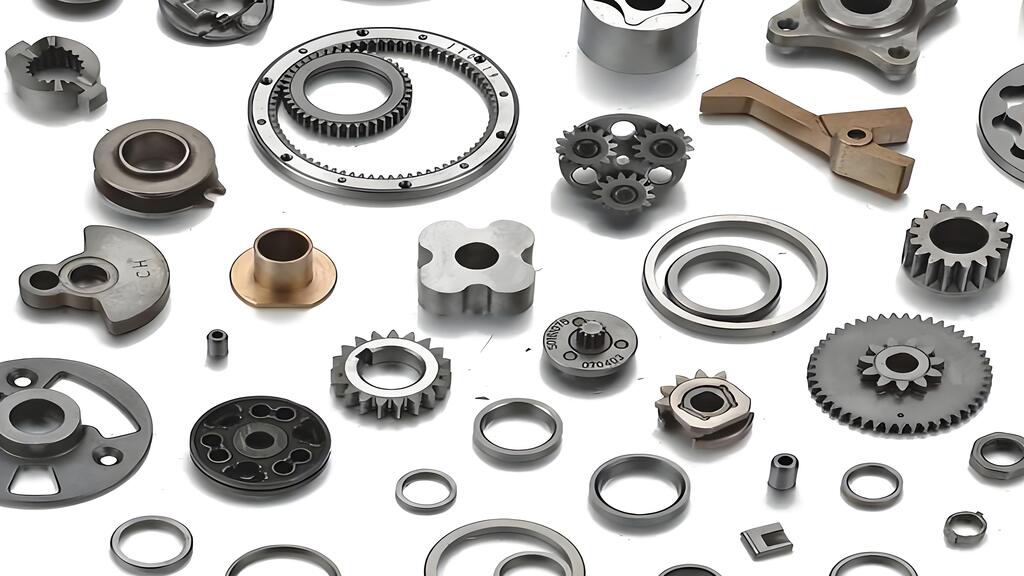


Sintered Structural Components in Industrial Equipment
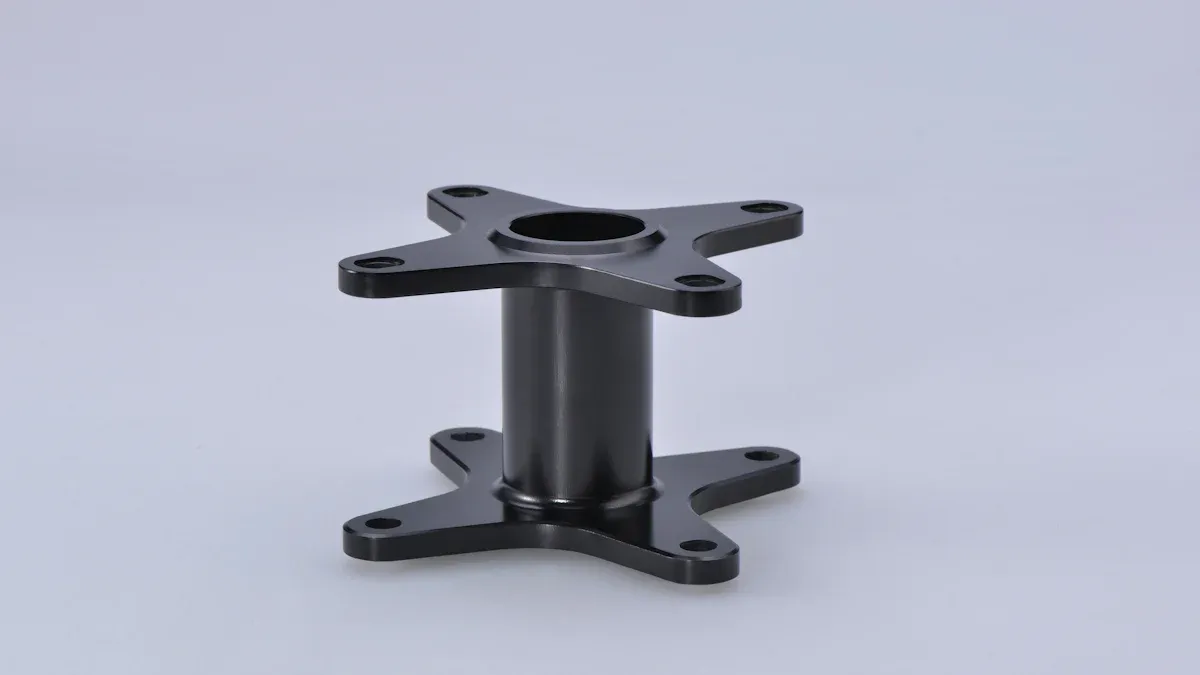
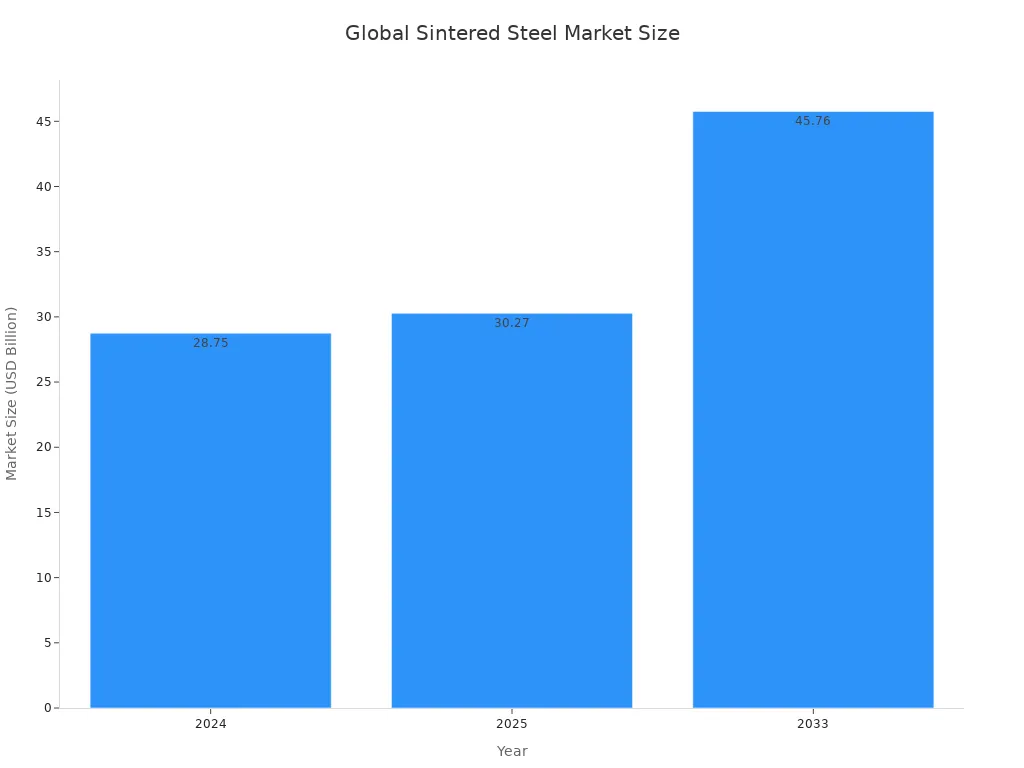
Sintered Structural Components originate from powdered materials. Manufacturers compact these powders, then heat them below their melting point to bond the particles. This process creates parts with a unique combination of properties essential for industrial equiPment. These components are crucial because they produce complex shapes with high precision. They also offer excellent material utilization and tailored mechanical properties, directly addressing the need for durable and efficient industrial machinery. The global sintered steel market, a significant segment of this industry, reached USD 28.75 billion in 2024. Experts project its growth to USD 45.76 billion by 2033, demonstrating a robust 5.3% CAGR from 2025 to 2033. This growth underscores the increasing demand for these advanced materials in various industrial sectors.
Key Takeaways
- Sintered Components are made from powdered materials. Manufacturers heat these powders to create strong, precise parts for machines.
- These components save money. They create parts very close to their final shape, which means less material waste and less extra work.
- Engineers can change how strong or hard Sintered Parts are. This helps parts work well in tough industrial jobs.
- Sintering allows for complex designs. It can make parts with tricky shapes that are hard to make with other methods.
- Sintered parts are used in many machines. You can find them in car engines, power tools, robots, and electrical devices.
- The process starts with powder. Then, the powder is pressed into a shape and heated to make it strong.
- Sintering is good for the environment. It uses less energy and creates less waste than older ways of making parts.
The Advantages of Sintered Structural Components in Industrial Applications
Sintered structural components offer numerous benefits that make them indispensable in modern industrial equipment. These advantages span cost savings, superior material performance, and unparalleled design freedom.
Cost-Effectiveness and Material Efficiency of Sintered Structural Components
Sintering provides significant economic benefits through its efficient manufacturing processes. These methods minimize waste and reduce the need for extensive post-processing.
Near-Net-Shape Manufacturing Benefits
Near-net-shape manufacturing is a core advantage of sintering. This process produces parts very close to their final dimensions and shape. It significantly reduces the amount of material that manufacturers must remove later. This precision means less material is needed from the start, leading to lower raw material costs. It also simplifies the overall production workflow.
Reduced Machining and Material Waste
The near-net-shape capability directly translates into substantial reductions in machining and material waste. Traditional manufacturing methods often generate considerable scrap. For example, when machining a gear from a steel bar, only about 60% of the original material may become the final product. The remaining 40% turns into waste. Powder metallurgy, however, can produce the same gear with virtually zero waste or only a few percentage points of waste. This efficiency is particularly evident in complex parts. In gear production, near-net-shape manufacturing can reduce material waste by up to 50% compared to typical machining methods.
| Manufacturing Method | Waste/Scrap Rate | Material Utilization |
|---|---|---|
| Traditional Machining (Aerospace) | 94% (17:1 buy-to-fly ratio) | N/A |
| Powder Metallurgy | As low as 3% | Exceeds 95% |
Tailored Mechanical Properties of Sintered Structural Components
Sintering allows engineers to precisely control the material properties of components. This control ensures parts meet specific performance requirements for demanding industrial applications.
Optimized Strength and Hardness
Manufacturers can tailor the strength and hardness of sintered components by selecting specific powder compositions and processing parameters. This customization allows for parts that withstand high stresses and resist deformation. For instance, copper-infiltrated materials can achieve ultimate strengths up to 830 MPa, while certain PM irons offer a range of strengths suitable for various applications.
| Material Type | Material Designation | Ultimate Strength (MPa) | Yield Strength (MPa) | Hardness |
|---|---|---|---|---|
| Copper Infiltrated | FX-1010-25 | 350 | 220 | 65 HRB |
| Copper Infiltrated | FX-1005-110HT | 830 | / | 38 HRC |
| Copper Infiltrated | FX-2005-45 | 520 | 410 | 85 HRB |
| Stainless Steel | SS-303N1-25 | 270 | 220 | 62 HRB |
| Stainless Steel | SS-304L-18 | 390 | 180 | 45 HRB |
| Stainless Steel | SS-316L-22 | 390 | 210 | 45 HRB |
| PM Iron | F-0000-10 | 120 | 90 | 40 HRF |
| PM Iron | F-0000-15 | 170 | 120 | 60 HRF |
| PM Iron | F-0000-20 | 260 | 170 | 80 HRF |
| Iron-Copper/Copper Steel | FC-0205-40 | 340 | 310 | 60 HRB |
| Iron-Copper/Copper Steel | FC-0205-90HT | 690 | / | 36 HRC |
| Iron-Copper/Copper Steel | F-0208-50 | 410 | 380 | 73 HRB |

Enhanced Wear and Fatigue Resistance
Industrial equipment often operates under harsh conditions, requiring components that resist wear and fatigue. Sintering processes can create microstructures that significantly improve these properties. For example, specific heat treatments during sintering can induce phase transformations. These transformations lead to the formation of microstructures like lower bainite, which is known for its high hardness and excellent abrasion resistance. This metallurgical change directly contributes to the improved tribological properties of the components.
| Material | Abrasive Wear Index (Ai3) (μm/20 m) | Abrasive Wear Index (Ai2) (μm/20 m) |
|---|---|---|
| BDCM50 (heat-treated) | 18.1 ± 3.9 | 95.9 ± 11.8 |
| Base materials (implied, for comparison) | Higher (less resistant) | Higher (less resistant) |
Controlled Density and Porosity
Sintering offers precise control over the density and porosity of the final part. This control is crucial for applications requiring specific characteristics. For example, high-density parts offer maximum strength, while controlled porosity can create self-lubricating bearings or filter elements. Engineers can fine-tune these properties to meet exact application needs.
Design Flexibility and Complexity for Sintered Structural Components
Sintering provides engineers with exceptional freedom in designing complex parts. This flexibility often surpasses the capabilities of traditional manufacturing methods.
Intricate Geometries and Internal Features
Powder metallurgy, with sintering as its core thermal process, frees engineers from many limitations inherent to traditional design. It allows for the creation of intricate shapes and internal features that would be impossible or extremely costly to achieve with other methods. This includes complex curves, undercuts, and precise internal channels.
Part Consolidation and Assembly Simplification
The ability to produce complex geometries means manufacturers can often consolidate multiple smaller parts into a single, integrated component. This consolidation reduces the number of individual parts needed for an assembly. It simplifies the assembly process, lowers labor costs, and often improves the overall reliability of the equipment by eliminating potential failure points between joined parts.
| Manufacturing Process | Sintering Design Flexibility | Limitations of Other Processes |
|---|---|---|
| Casting | Allows for complex shapes and intricate features | Limited by the need for draft angles, parting lines, and wall thickness |
| Forging | Produces complex shapes with high precision | Limited by the size of the press |
| Machining | Enables production of complex net-shape or near-net-shape parts, eliminating extensive machining | Achieving intricate designs can be challenging and costly |
| Stamping | Excels in producing complex shapes with high precision | Intricate designs may be difficult or expensive to achieve |
Sintering offers intricate shape-making and features not possible with stamped rotors for synchronous motor designs. Advanced powder metallurgy processes can provide design flexibility superior to casting. Powder metallurgy also requires less secondary machining, allowing for more material flexibility than forging.
Consistency and Repeatability of Sintered Structural Components
Sintering processes deliver exceptional consistency and repeatability. These qualities are vital for industrial applications where every part must meet exact specifications. Manufacturers rely on these characteristics for predictable performance and reduced variability in their equipment.
High Dimensional Accuracy
Sintering excels at producing components with high dimensional accuracy. The controlled nature of the powder metallurgy process, from compaction to sintering, ensures that each part closely matches its design specifications. This precision minimizes the need for post-sintering machining, which saves time and reduces production costs. For instance, after the initial sintering process, components typically achieve radial dimensional accuracy between IT8 and IT9. Length and height tolerances are around IT12. Further sizing operations can refine these tolerances significantly. After sizing, radial dimensional accuracy often improves to IT6 or IT7. Small parts can achieve tolerances as tight as ±5 μm. Self-lubricating sintered bushings, for example, often feature diameters with IT5 to IT7 tolerances. Some specialized sintered parts can even achieve a precision of ±0.01 mm.
| Component/Process | Radial Dimensional Accuracy | Other Tolerances |
|---|---|---|
| After sintering | IT8 to IT9 | Length/height: IT12 |
| After sizing | IT6 to IT7 | Small parts: ±5 μm |
| Self-lubricating sintered bushings (diameters) | IT5 to IT7 | |
| Some sintered parts | ±0.01 mm |
Reliable Performance in Mass Production
The inherent consistency of the sintering process translates directly into reliable performance for mass-produced industrial equipment. Sintered Structural Components achieve high reliability and consistency in high-volume industrial production. This is partly due to a guaranteed dimensional accuracy rate of ±0.3%. This precision is a key factor in ensuring the reliability and consistency of the parts. Several factors contribute to this dependable output:
- Stable tools: Manufacturers use robust and precise tooling that maintains its integrity over long production runs.
- Sophisticated production devices: Advanced machinery controls every step of the sintering process with high accuracy.
- Statistical Process Control (SPC) systems: These systems continuously monitor production parameters. They identify and correct any deviations quickly, ensuring consistent quality across large batches.
This combination of precise manufacturing and rigorous quality control makes sintered components a dependable choice for critical industrial applications.
Key Applications of Sintered Structural Components in Industrial Equipment
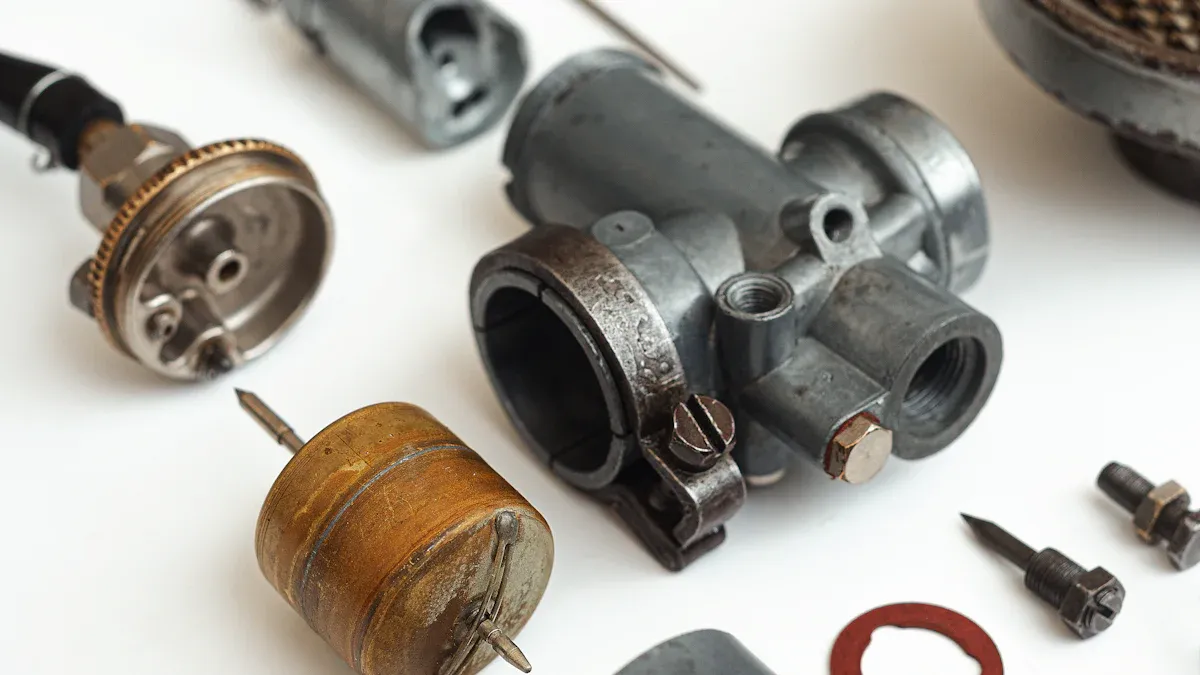
Sintered Structural Components find widespread use across various industrial sectors. Their unique properties make them ideal for demanding applications where precision, durability, and cost-effectiveness are paramount.
Sintered Structural Components in Automotive and Heavy Machinery
The automotive and heavy machinery industries heavily rely on sintered parts for critical functions. These components contribute to the efficiency, reliability, and performance of vehicles and large equipment.
Engine and Transmission Components
Sintered materials form many essential engine and transmission components. Manufacturers produce cams, pawls, and connecting rods using powder metallurgy. The process also creates a wide array of valve train parts, including valve seats, valve guides, and even titanium valves. For variable valve timing systems, sintered arms, rotors, housings, sprockets, and shaft eccentrics are common. Turbochargers utilize sintered vane nozzles, plates, thrust metals, and bushings. Other engine parts like sprockets, exhaust flanges, sensor bosses, oil pumps, and wear-resistant rings also benefit from sintering. In automatic and continuously variable transmissions (A/T and CVT), sintered carriers, drive sprockets, parking lock sleeves, rotors, cam rings, and side plates are prevalent. Manual transmissions (M/T) incorporate sintered synchronizer rings, hubs, control system parts, and spacers. Torque vectoring systems and transfer cases also feature sintered components, such as disconnect product families and oil pump gears.
Hydraulic System Parts
Sintered components offer significant advantages in hydraulic systems for heavy machinery. They minimize material waste and reduce machining costs, especially in high-volume production. This process uses nearly all raw material, leading to less waste. Sintering enables the production of intricate geometries, which are often difficult to achieve with traditional machining. It creates near-net-shape components with minimal dimensional variation, reducing or eliminating secondary machining. This material versatility allows for a wide range of custom alloys to meet specific performance needs. Furthermore, parts can be impregnated with lubricants, providing self-lubricating capabilities that reduce external lubrication and maintenance. Controlled porosity can also be adjusted for applications like filtration or fluid control. These consistent properties ensure uniform density and composition, leading to reliable performance in mechanical parts for machinery, power tools, and hydraulic systems.
Structural Brackets and Mounts
Heavy machinery requires robust structural brackets and mounts to secure various subsystems. Sintered components provide the necessary strength and precision for these applications. Their ability to achieve complex shapes and high-dimensional accuracy ensures a perfect fit and reliable support for heavy loads and vibrations. This manufacturing method allows for optimized designs that reduce weight without compromising structural integrity.
Sintered Structural Components in Power Tools and Appliances
Power tools and appliances demand durable, precise, and cost-effective components. Sintering meets these requirements, enhancing both performance and longevity.
Gears and Cams
Sintered gears are widely used in power tools due to their precision and performance. These qualities are crucial for user satisfaction and tool longevity. Electric screwdrivers often feature double gears for speed and torque adjustment, along with planetary gears for compact size, high precision, and efficient force transmission. Nail guns commonly use sintered gears and cams. Electric drills benefit from sintered bevel gears, which change drive direction, typically at a 90-degree angle. Common types of sintered gears include spur gears for parallel shafts, helical gears for smoother and quieter operation, and bevel gears for power transmission between intersecting shafts. The sintering process offers advantages like high precision, cost-efficiency, reduced waste, and enhanced production efficiency. This results in gears with high tensile strength and durability suitable for demanding applications.
High-Strength Structural Elements
Power tools and appliances often contain high-strength structural elements that withstand repetitive stress and impact. Sintering produces components with optimized strength and hardness, making them ideal for these demanding roles. Examples include housings, levers, and internal supports that require excellent fatigue resistance and dimensional stability over the product's lifespan.
Sintered Structural Components in Fluid Power and Pneumatics
Fluid power and pneumatic systems rely on precise and durable components to control the flow and pressure of liquids and gases. Sintered parts offer tailored properties for these critical applications.
Valve Components and Seats
Precision is paramount in valve components and seats. Sintered materials provide the necessary dimensional accuracy and surface finish for effective sealing and reliable operation. Their enhanced wear resistance ensures a longer service life, even with constant movement and exposure to various fluids. This makes them suitable for intricate valve designs in hydraulic and pneumatic systems.
Filter Elements and Porous Structures
Sintering allows for precise control over porosity, making it an excellent method for producing filter elements and other porous structures. These components can filter out contaminants from fluids or gases, protect sensitive equipment, and ensure system cleanliness. Engineers can tailor the pore size and distribution to meet specific filtration requirements, offering efficient and durable solutions for various industrial applications.
Sintered Structural Components in Electrical and Electronic Equipment
Electrical and electronic equipment increasingly relies on advanced materials for optimal performance. Sintered components offer unique properties that meet the demanding requirements of these applications, from thermal management to electrical conductivity.
Heat Sinks and Thermal Management
Effective thermal management is crucial for the longevity and performance of electronic devices. Sintering produces heat sinks with complex geometries and controlled porosity. These features enhance surface area and airflow, leading to superior heat dissipation. Materials like copper and aluminum, often processed through sintering, create efficient pathways for heat transfer away from sensitive electronic components. This process ensures devices operate within safe temperature limits, preventing overheating and extending their lifespan.
Electrical Contacts and Connectors
Electrical contacts and connectors demand high conductivity, reliability, and wear resistance. Sintered metal parts meet these requirements effectively. Manufacturers utilize sintered metal composites in various electrical applications. These materials offer excellent conductivity and reliability, crucial for consistent electrical connections. For instance, novel Cu-SnO2(CuO)/Ag-SnO2(CuO) heterogeneous materials, prepared through powder metallurgy, optimize the performance of Ag- and Cu-based contact materials. Furthermore, sintered or infiltrated tungsten-copper, tungsten-silver, and tungsten carbide-silver are common choices for high-performance electrical contacts. These materials withstand high currents and resist arc erosion, ensuring stable and long-lasting electrical connections in demanding environments.
Magnetic Components
Sintering plays a vital role in producing magnetic components for various electrical and electronic applications. This process allows for the creation of soft magnetic materials with specific permeability and saturation characteristics. These components are essential in motors, sensors, and inductors. Sintered magnetic materials offer excellent magnetic properties, often with reduced eddy current losses due to their unique microstructure. This capability enables the design of more efficient and compact magnetic devices.
Sintered Structural Components in Industrial Robotics and Automation
Industrial robotics and automation systems require components that combine precision, durability, and often lightweight characteristics. Sintered Structural Components provide these critical attributes, enabling the development of advanced robotic solutions.
Precision Gears and Actuator Parts
Robotics and automation rely heavily on precision gears and actuator parts for accurate movement and control. Sintering allows for the creation of these components with tight dimensional tolerances, often without the need for post-machining. This precision is vital for the smooth and accurate operation of robotic arms and automated machinery. The process also enables custom material blends, fitting specific mechanical specifications for gears and actuator components. These parts are designed with internal structures that improve fatigue life and reduce stress concentrations, ensuring long-term reliability in repetitive motion applications. Sintering offers superior dimensional repeatability and design flexibility for complex structures, making it ideal for fabricating intricate robotic machine parts quickly and efficiently.
Lightweight Structural Elements
Industrial robots, especially mobile systems, benefit significantly from lightweight structural elements. Sintering produces components with a high strength-to-weight ratio, which is ideal for these applications. This process allows manufacturers to optimize parts for weight, stiffness, hardness, and strength. It offers higher strength, enhanced dimensional accuracy, and lighter weight at a lower cost compared to traditional methods. Sintering is a near-net or net manufacturing process, minimizing material waste. This efficiency contributes to cost-effectiveness for fabricating parts that are difficult to produce with other methods. These lightweight yet robust components improve the energy efficiency and dynamic performance of robotic systems.
The Sintering Process: From Powder to Precision Sintered Structural Components
The journey of a metal part from raw powder to a high-performance component involves several critical steps. The sintering process transforms fine metallic particles into robust, precision parts.
Powder Production and Blending for Sintered Structural Components
The initial stage focuses on creating and preparing the metallic powders. This step is fundamental to the final product's quality.
Material Selection and Characteristics
Manufacturers carefully select materials based on the desired properties of the final component. This selection considers factors like strength, hardness, corrosion resistance, and magnetic properties. The characteristics of the powder itself, such as particle size, shape, and purity, significantly influence the subsequent processing steps and the ultimate performance of the part.
Homogenization for Desired Properties
After selecting the raw powders, blending occurs. This process mixes different metallic powders and additives to achieve a uniform composition. Homogenization ensures that the final component possesses consistent mechanical and physical properties throughout its structure. Common powder production methods include:
- Conventional Press and Sinter: This method blends fine metal powders, often less than 180 microns, with additives like iron, carbon, copper, or nickel. Manufacturers then press these into a die and sinter them in a controlled atmosphere. This process yields precise parts with 5–15% porosity.
- Powder Forging: A 'preform' from a conventional press and sinter undergoes heating and hot forging. This achieves full density, resulting in properties comparable to wrought materials.
- Hot Isostatic Pressing (HIP): Spherical, gas atomized powder is placed in a metallic 'can'. It is then vibrated, evacuated, and sealed. Heating occurs to about 0.7 times the melting point, followed by subjection to approximately 100 MPa external gas pressure for several hours. This yields a fully dense, shaped part.
- Metal Injection Moulding (MIM): Very fine spherical powder, typically less than 25 microns, mixes with a plastic or wax binder. This mixture is then injection molded into a complex geometry. The binder is removed, and the part is sintered, shrinking by about 18% to achieve 95–99% density.
- Electric Current Assisted Sintering (ECAS): This method uses electric currents to sinter powders. It significantly reduces production time, from 15 minutes to microseconds. It also allows for near-theoretical densities, though it typically limits production to simpler shapes.
Compaction (Pressing) of Sintered Structural Components
Compaction is the next crucial step, where the blended powder takes its initial form.
Forming the Green Compact
Manufacturers load the homogenized powder into a die cavity. A press then applies high pressure, compacting the powder into a "green compact." This compact is a fragile, unsintered part that holds the desired shape.
Density Control and Shape Retention
The compaction pressure directly influences the density of the green compact. Higher pressure generally leads to higher density. Controlling this density is vital for achieving the final part's mechanical properties. The green compact must also retain its shape after ejection from the die, a property known as "green strength."
Sintering (Heat Treatment) of Sintered Structural Components
Sintering is the heat treatment process that transforms the green compact into a strong, functional component.
Particle Bonding Mechanisms
During sintering, the green compact heats to a temperature below the material's melting point. This heat causes the powder particles to bond together. The primary particle bonding mechanisms include:
- Surface diffusion
- Vapor transport (evaporation-condensation)
- Lattice diffusion from the surface
- Lattice diffusion from the grain boundary
- Grain boundary diffusion
- Plastic deformation
Mechanisms contributing to densification are lattice diffusion from the surface, lattice diffusion from the grain boundary, and plastic deformation. Other important mechanisms include diffusion (the main mechanism), plastic flow, recrystallization, grain growth, liquid phase material transport, and vapor phase material transport.
Temperature and Atmosphere Control
Precise control over temperature and atmosphere is essential during sintering. The temperature profile ensures proper bonding without melting the material. The atmosphere, often inert or reducing, prevents oxidation and controls the carbon content in ferrous materials.
Densification and Microstructure Development
As particles bond, the material densifies, reducing porosity and increasing strength. The heat treatment also promotes microstructure development. This includes grain growth and the formation of specific phases, which further enhance the mechanical properties of the final component.
Secondary Operations and Finishing for Sintered Structural Components
After the primary sintering process, many components undergo secondary operations. These steps refine the parts, ensuring they meet precise specifications and enhance their performance. These post-sintering treatments are crucial for achieving the final desired characteristics.
Sizing and Machining for Tolerances
Secondary machining operations are essential for achieving tight tolerances in sintered parts. These steps address specific functional or cosmetic features that compaction and sintering alone cannot easily obtain. Dimensional changes during sintering often necessitate these operations. For example, sizing or grinding ensures tight tolerances for high-precision bores, shafts, or mating surfaces. These processes often meet requirements within ±0.001 inches.
Manufacturers employ various techniques to achieve these precise dimensions:
- Machining: This includes grinding for refining tolerances and surface finish. Turning creates exact tolerances and complex cylindrical features. Milling produces slots, contours, and undercuts.
- Sizing: This repressing operation requalifies parts for tighter tolerances. It can improve dimensional limits by up to 50%.
- Coining: This process achieves precise dimensions and improves surface finish. Other operations like deburring, impregnation, plating, shot-peening, and steam treating also contribute to meeting tight tolerances and enhancing the final product.
Infiltration and Impregnation
Infiltration and impregnation are two distinct but related processes. Infiltration involves filling the pores of a sintered part with a lower-melting-point metal, such as copper. This process increases density, strength, and thermal conductivity. Impregnation, on the other hand, fills pores with a non-metallic material, often oil or resin. Oil impregnation creates self-lubricating bearings, reducing friction and wear. Resin impregnation seals pores, improving pressure tightness and corrosion resistance.
Heat Treatment for Property Enhancement
Heat treatment significantly enhances the mechanical properties of sintered components. Processes like hardening and tempering modify the microstructure of the material. Hardening increases the hardness and wear resistance of the part. Tempering then reduces brittleness while maintaining sufficient hardness and toughness. Carburizing introduces carbon into the surface layer, creating a hard, wear-resistant case. These treatments tailor the component's properties for specific application demands.
Surface Finishing Techniques
Surface finishing techniques improve the appearance, corrosion resistance, and wear properties of sintered parts. Plating applies a thin layer of another metal, such as nickel or chrome, for enhanced corrosion protection or aesthetics. Coatings, like phosphating or black oxide, offer corrosion resistance and a uniform appearance. Polishing and tumbling smooth the surface, reducing friction and improving cosmetic appeal. These finishing steps ensure the components perform optimally and look professional.
Material Science Behind Sintered Structural Components
Material science forms the bedrock for developing high-performance components. It dictates the properties and capabilities of parts used in industrial equipment. Understanding the underlying material science allows engineers to design and produce parts that meet rigorous demands.
Powder Metallurgy Fundamentals for Sintered Structural Components
Powder metallurgy relies on specific characteristics of metallic powders to achieve desired outcomes. These fundamentals guide the entire manufacturing process.
Understanding Powder Characteristics
Manufacturers meticulously analyze powder characteristics. These include particle size, shape, and purity. These attributes profoundly influence subsequent processing steps and the final part's performance. For instance, finer and more uniform particles generally lead to higher sintering driving force, better densification, lower porosity, and more consistent mechanical properties like hardness and shrinkage.
| Material | Particle Size Characteristics | Sintering Densification | Shrinkage | Porosity | Hardness Distribution |
|---|---|---|---|---|---|
| 17-4PH | Finer and more uniform | Significant, higher driving force | Highest, uniform | Low | More consistent |
| 316L | Moderate | Moderate | Moderate | Moderate | Moderate, stable |
| 304 | Large and uneven | Low, insufficient driving force | Lowest | Highest | Lower and less uniform, largest fluctuation range |
Role of Particle Size and Shape
Particle size and shape play a critical role in molding performance and final product quality.
- Smaller and more uniform particle sizes generally lead to higher sintering driving force, better densification, lower porosity, and more consistent mechanical properties like hardness and shrinkage.
- Spherical and fine particles contribute to lower viscosity and higher stability in feedstocks, improving moldability.
- Tailoring powder size distribution, such as using bimodal feedstocks (e.g., ~6 and ~20 μm powders), can reduce raw powder costs without compromising sintered density.
- Higher sphericity of particles enhances the final properties of sintered parts and improves feedstock processability.
Alloy Development for High-Performance Sintered Structural Components
Engineers continuously develop new alloys to push the boundaries of performance for industrial applications.
Customizing Material Formulations
Customizing material formulations allows for tailored properties. Steel, particularly alloyed and stainless varieties, and iron remain widely used due to their excellent mechanical properties and cost-effectiveness. Advanced alloys like Inconel 625 and Steel 316L find use in binder jetting and sintering processes. High-strength Fe is fabricated using mechanical alloying and spark plasma sintering. Inconel 718 is consolidated through pressureless sintering of cold-sprayed deposits.
Enhancing Mechanical and Thermal Properties
These advanced formulations significantly enhance mechanical and thermal properties. NTN Corporation, for example, developed a 'sintered alloy' manufacturing technology. This technology achieves an absolute density ratio of 95% or higher and an endurance strength of 300 MPa or higher (with a maximum stress of 700 MPa). This advancement allows for replacing traditionally cut drivetrain components, such as gears, with high-density and high-strength sintered alloys.
Microstructural Control in Sintered Structural Components
Controlling the microstructure is paramount for optimizing component performance.
Grain Growth and Density Optimization
During sintering, grain growth occurs as particles bond. Controlling this growth, along with density optimization, directly impacts the material's strength and toughness. Engineers carefully manage temperature and time to achieve the ideal microstructure for specific applications.
Porosity Management for Specific Applications
Porosity management is crucial for meeting diverse application requirements.
- Pore size
- Pore distribution
- Thickness and density
- Shape and dimensions
- Material composition
- Surface finish and coatings
- Support structures
Powder metallurgy offers precise control over porosity. This control allows for customization across various metals and grades. While high porosity benefits applications like porous filters for particle removal, low porosity is crucial for structural components requiring high strength. This precise control enables applications such as filtration, lubrication, and fluid flow.
Quality Assurance for Sintered Structural Components
Quality assurance (QA) is paramount for sintered components. Manufacturers implement rigorous testing protocols to ensure these parts meet stringent performance and reliability standards. This comprehensive approach guarantees the integrity and functionality of components in industrial equipment.
Non-Destructive Testing of Sintered Structural Components
Non-destructive testing (NDT) methods allow manufacturers to inspect components without causing damage. These techniques are crucial for identifying internal flaws and ensuring structural integrity.
Ultrasonic and Eddy Current Testing
Ultrasonic testing employs high-frequency sound waves to detect internal defects. Technicians send ultrasonic waves into the material and track reflections. This method precisely determines the type, location, and size of a defect. It performs well for both flat and voluminous components, often providing superior results for flat defects compared to X-ray inspection. Eddy current testing, another NDT method, uses electromagnetic induction to detect surface and near-surface flaws, material thickness, and conductivity variations.
X-ray Inspection for Internal Defects
X-ray inspection, also known as radiographic testing, provides a detailed view of a component's interior. This method identifies the type and exact location of internal defects. Digital X-ray inspection, including computed tomography (CT), offers advantages for storing and evaluating results. CT scans capture numerous 2D images from various perspectives to construct a 3D model of the object's internal structure. This technique offers higher resolution than other NDT methods, enabling the detection of very small or hard-to-find defects, such as core breaks, small pores, and voids.
Dimensional and Microstructural Analysis of Sintered Structural Components
Beyond defect detection, quality assurance involves precise analysis of component dimensions and internal structure. These analyses confirm that parts conform to design specifications.
Precision Measurement Techniques
Manufacturers use advanced precision measurement techniques to verify dimensional accuracy. These include coordinate measuring machines (CMMs), optical comparators, and laser scanning. These tools ensure that critical dimensions, tolerances, and geometric features meet the required specifications. This precision is vital for proper fit and function within complex industrial assemblies.
Metallographic Examination
Metallographic examination provides critical insights into the material's microstructure. This process involves several steps:
- Specimen Preparation: Technicians select an interior plane parallel to the pressing direction. They mount and polish this specimen until pores become visible and their area fraction accurately reflects the part's density. For parts with interconnected porosity, impregnation with liquid epoxy prevents void distortion during grinding or polishing.
- Initial Examination (Unetched Condition): Always examine sintered parts first in their unetched state. In a well-sintered part, original particle boundaries appear minimal or absent at 200X magnification. The roundness of pores indicates higher strength, ductility, and impact resistance.
- Etching Procedures: Apply specific etchants based on the material. For ferrous parts with carbon, use 2% nital or a nital/picral combination. For austenitic stainless steel, etch with glyceregia or Marble's reagent. Bronze requires specific solutions for grain boundaries or copper-rich regions. Brasses and nickel silver also have tailored etching solutions.
Performance Testing of Sintered Structural Components
Performance testing validates a component's ability to withstand operational stresses and environmental conditions. These tests simulate real-world applications.
Fatigue and Wear Resistance Testing
Industrial components often experience repetitive loading and abrasive contact. Fatigue testing assesses a part's ability to endure cyclic stresses without failure. Wear resistance testing evaluates how well a material resists surface degradation from friction or abrasion. These tests ensure components maintain their integrity over extended operational periods.
Load-Bearing Capacity Verification
Manufacturers verify the load-bearing capacity of components through various mechanical tests. These include tensile strength tests, compression tests, and hardness tests. These evaluations confirm that the components can safely support the expected loads and stresses encountered in their intended industrial applications.
Future Trends and Innovations in Sintered Structural Components
The field of powder metallurgy constantly evolves. New advancements promise to push the boundaries of what is possible with sintered parts. These innovations will lead to even more efficient, durable, and versatile industrial equipment.
Advanced Materials and Alloys for Sintered Structural Components
Material science drives many future innovations. Researchers develop new compositions to meet increasingly demanding industrial requirements.
High-Performance Composites
High-performance composites are emerging as a key area. These materials combine different powders to achieve superior properties. For example, metal matrix composites offer enhanced strength and wear resistance. Ceramic-metal composites provide excellent high-temperature stability. These new composites will enable components to operate in harsher environments.
Functionally Graded Materials
Functionally graded materials (FGMs) represent another significant trend. FGMs possess properties that vary continuously throughout their volume. Sintering allows manufacturers to create parts with a hard, wear-resistant surface and a tough, ductile core. This tailored property distribution optimizes performance for specific applications.
Nanostructured Powders
The use of nanostructured powders is gaining traction. These ultra-fine particles lead to materials with exceptionally fine microstructures. Nanostructured powders can significantly improve mechanical properties like hardness, strength, and fatigue resistance. They also enable the creation of novel materials with unique electrical or thermal characteristics.
Additive Manufacturing (3D Printing) Integration with Sintered Structural Components
Additive manufacturing (AM) offers exciting synergies with traditional sintering processes. This integration opens new avenues for design and production.
Complementary Manufacturing Approaches
AM and sintering often work as complementary manufacturing approaches. Manufacturers can 3D print complex green parts, then sinter them for densification and strength. This hybrid method combines the design freedom of AM with the material properties achievable through sintering.
Rapid Prototyping and Customization
AM excels at rapid prototyping and customization. Engineers can quickly produce prototypes of complex designs. This speeds up development cycles. It also allows for the cost-effective creation of highly customized parts for specialized industrial equipment.
Complex Geometries for Niche Applications
AM enables the creation of complex geometries previously impossible with conventional powder metallurgy. This capability is particularly valuable for niche applications. It allows for intricate internal channels, lightweight lattice structures, and optimized designs that enhance performance in specific industrial settings.
Enhanced Process Control and Automation for Sintered Structural Components
Advanced control systems and automation are transforming the sintering process. These technologies ensure higher quality, consistency, and efficiency.
Real-time Monitoring and Feedback Systems
Real-time monitoring and feedback systems are becoming standard. Sensors collect data on temperature, atmosphere, and dimensional changes during sintering. These systems allow for immediate adjustments. They ensure optimal processing conditions and consistent product quality.
Artificial Intelligence in Process Optimization
Artificial intelligence (AI) significantly enhances the sintering process. It enables the development of predictive models for crucial parameters. These include tumbler strength, carbon efficiency, and energy consumption. All these factors directly influence product quality. AI also facilitates the optimization of sintering parameters. It forecasts dimensional variations in parts during this critical stage. AI-assisted simulations are being developed to integrate molding and sintering stages for improved optimization. Future advancements in machine learning will lead to more powerful simulation and optimization tools. These tools will predict ideal parameters for desired material properties and dimensional accuracy. Data-driven modeling, including neural networks and hybrid models, improves prediction accuracy. It adapts to complex, non-linear sintering conditions. This ultimately leads to enhanced product quality and efficiency.
Predictive Maintenance for Sintering Equipment
Predictive maintenance for sintering equipment uses data analytics and AI. It forecasts potential equipment failures before they occur. This approach minimizes unplanned downtime. It also optimizes maintenance schedules. This ensures the continuous and efficient operation of sintering facilities.
Sustainability and Green Manufacturing of Sintered Structural Components
The manufacturing industry increasingly prioritizes sustainability. Powder metallurgy, particularly in the production of sintered parts, offers significant advantages in this area. It promotes environmentally friendly practices throughout the production cycle.
Energy-Efficient Sintering Processes
Manufacturers continuously develop energy-efficient sintering processes. These advancements reduce the environmental footprint of component production. Key strategies include implementing heat recovery systems. These systems capture and reuse waste heat. They preheat combustion air or fulfill other heating needs. This significantly reduces overall energy consumption. Optimal insulation techniques also play a crucial role. Advanced insulation materials minimize heat loss and maximize heat retention. This reduces the energy input required for temperature maintenance. Optimized airflow management systems further improve thermal efficiency. They ensure better heat transfer and distribution, minimizing energy wastage.
The Cold Sintering Process (CSP) offers a highly economically attractive option. It provides lower capital costs and a better return on investment. CSP also delivers significant energy and emission savings. It stands as a competitive and sustainable alternative to other sintering techniques. Furthermore, manufacturers explore fuel substitution. They utilize cleaner and more efficient energy sources. Examples include semi-coke, biomass, and natural gas. These replace traditional coke powder and coal. Efficient combustion and material ratio optimization also contribute. They involve a rational combination of fuel components and precise monitoring of key parameters. This includes optimizing low-carbon batching schemes. Comprehensive treatment of air leakage and air volume control further enhances efficiency. Reducing air leakage rates in large-scale sintering machines is a goal. Full recovery and use of waste heat from flue gases and sensible heat from sintered ore are also priorities. These efforts lead to reduced overall resource consumption and promote sustainable manufacturing schedules.
Recycling of Powder Materials
Recycling powder materials is a growing focus in powder metallurgy. This practice enhances sustainability and reduces costs. Research targets preserving powder integrity after multiple reuse cycles. Strategies explored include sieving to remove contaminants. Re-spheroidization reshapes irregular particles. Blending recycled and virgin powders also helps maintain material quality. These methods ensure efficient material utilization and minimize waste.
Reduced Environmental Impact
The combined efforts in energy efficiency and material recycling lead to a significantly reduced environmental impact. Sintering processes inherently produce less material waste. They achieve near-net-shape production. This conserves raw materials. The processes also require less intensive cooling infrastructure compared to traditional high-temperature methods. This results in water conservation. Environmentally compatible material choices are also possible. Sintering allows the incorporation of temperature-sensitive sustainable materials. These include biodegradable components, recycled materials, and various composites. These advancements contribute to a greener manufacturing landscape. They ensure the production of durable components with minimal ecological consequences.
These components are indispensable for the performance, efficiency, and cost-effectiveness of modern industrial machinery. They deliver complex, high-precision parts with tailored properties. This makes them a cornerstone of industrial innovation. Continuous evolution in materials, processes, and integration with advanced manufacturing techniques ensures their growing importance in future industrial applications.
FAQ
What are sintered structural components?
Sintered structural components are parts made from powdered materials. Manufacturers compact these powders and then heat them below their melting point. This process bonds the particles, creating strong, precise components for industrial equipment.
Why do industries use sintered components?
Industries use sintered components for their cost-effectiveness, material efficiency, and ability to create complex shapes. They offer tailored mechanical properties, such as optimized strength and wear resistance, crucial for durable industrial machinery.
How does sintering save costs in manufacturing?
Sintering saves costs through near-net-shape manufacturing. This process produces parts very close to their final dimensions, significantly reducing material waste and the need for extensive machining.
Can sintered components have customized properties?
Yes, engineers can precisely control the material properties of sintered components. They select specific powder compositions and processing parameters to achieve optimized strength, hardness, density, and porosity for various applications.
What types of industrial equipment use sintered parts?
Sintered parts appear in diverse industrial equipment. These include automotive engines, heavy machinery hydraulics, power tools, fluid power systems, electrical devices, and industrial robotics.
How does the sintering process work?
The sintering process involves several steps. First, manufacturers produce and blend metallic powders. Next, they compact the powder into a "green compact." Finally, they heat the compact below its melting point to bond the particles and form a dense, strong part.
Are sintered components environmentally friendly?
Sintered components contribute to green manufacturing. The process is energy-efficient, and manufacturers can recycle powder materials. This approach reduces material waste and minimizes the overall environmental impact compared to traditional methods.